


Article sur l'application de l'open big data comme moyen de prévention du cancer. Epidemium :le programme participatif pour lutter contre le cancer.

Données de santé, études et rapports : qualité, interopérabilité, recherche, IA, cybersécurité et gouvernance. Une veille sélectionnée par Lionel Reichardt, Pharmageek, pour comprendre les chiffres, examiner les méthodes et relier les données à leur utilité pour le soin et les décisions.
 Your new post is loading...
 Scoop.it! Article sur l'application de l'open big data comme moyen de prévention du cancer. Epidemium :le programme participatif pour lutter contre le cancer. 
No comment yet.
Sign up to comment
Scoop.it!

A new collaborative initiative founded by the American Medical Association (AMA) announced it is working to unleash a new era of better, more effective patient care by introducing a data evolution for improving, organizing and sharing health care information.
Scoop.it!

Healthcare blockchain continues to emerge as organizations look for efficient infrastructure solutions for value-based care.
Scoop.it!

Data quality processes have become more prominent in organizations, often as part of data governance programs.... For many companies, the growing interest in quality is commensurate with an increased need to ensure that analytics data is trustworthy. That's especially true with data quality for big data; more data usually means more data problems. One of the main challenges of effective data quality management is articulating what quality really means to a company. What are commonly referred to as the dimensions of data quality include accuracy, consistency, timeliness and conformity. But there are many different lists of dimensions, and even some common terms have different meanings from list to list. As a result, solely relying on a particular list without having an underlying foundation for what you're looking to accomplish is a simplistic approach to data quality. This challenge becomes more acute with big data. In Hadoop clusters and other big data systems, data volumes are exploding, and data variety is increasing. An organization might accumulate data from numerous sources for analysis -- for example, transaction data from different internal systems, clickstream logs from e-commerce sites and streams of data from social networks. Additionally, the design of big data platforms exacerbates the potential problems. A company might create data in on-premises servers, syndicate it to cloud databases and distribute filtered data sets to systems at remote sites. This new world creates issues that aren't covered in conventional lists of data quality dimensions. We need to re-examine what is meant by quality in the context of a big data analytics environment. To compensate, we need to re-examine what is meant by quality in the context of a big data analytics environment. Too often, we equate the concept of data quality with discrete notions such as data correctness or currency, putting in place processes to fix data values or objects that aren't accurate or up to date. But managing data quality for big data is also likely to include measures designed to help data scientists and other analysts figure out how to effectively use what we have. In other words, we must transition from simply generating a black-and-white specification of good versus bad data to supporting a spectrum of data usability.
Via Chanfimao
Scoop.it!

HIPAA Breach Notification Rules under the HITECH and GINA Act were issued on January 25, 2013, resulting in modifications to HIPAA Privacy, Security, and Enforcement. This is commonly known as the Omnibus Rule. The Omnibus Rule mandates covered entities (CEs) and business associates (BAs) provide the required HIPAA breach notifications following an impermissible use or disclosure of protected health information (PHI). What is a HIPAA Breach?A HIPAA breach notification may be required because of an impermissible use or disclosure under the Privacy Rule that compromises the security or privacy of the protected health information (PHI) of an individual. An impermissible use or disclosure is presumed to be a breach unless the CE or BA demonstrates that there is a low probability that the protected health information has been compromised. A risk assessment must include consideration of at least the following factors:
How Does a HIPAA Breach Notification Work?(1) HIPAA Breach Notification Rule: Following a breach of unsecured PHI, CEs must notify affected individual(s) and the Secretary of Health and Human Services (HHS).” In instances where the breach affects more than 500 residents of a State or jurisdiction, notice must be provided to prominent local media. In addition, BAs must notify CEs that a breach has occurred. Individual HIPAA breach notifications must occur without delay, but not later than 60 days from the date of the breach discovery. A breach is considered to be “discovered” when at least one employee of the entity knows of the breach. This does not include the person responsible for the breach. (2) Covered Entities HIPAA Breach Notification: Covered entities are required to notify affected individuals following the discovery of a breach of unsecured PHI. The CE must provide the individual notice in written form by first-class mail. Notices by email are permissible if the affected individual has agreed to receive notices electronically. What about Business Associates?(1) Business Associates HIPAA Breach Notification: If a breach of unsecured PHI occurs by a business associate, the BA must notify the CE following the discovery of the breach. A business associate must provide notice to the covered entity no later than 60 days from the day of discovery of the breach. BAs are required to provide the identification of each individual affected by the breach. The covered entity is responsible for ensuring the individuals are notified of a breach by a business associate even if the covered entity is charged with the responsibility of providing individual notices to the business associate. (2) Out-of-date Information: If the CE or BA has insufficient or out-of-date information for more than 10individuals, the CE must provide a substitute individual notice by one of two methods. It may post the notice on the home page of its website for at least 90 days. Or it may provide the notice in major print or broadcast media where the affected individuals reside. This notice must include a toll-free number that remains active for at least 90 days. If the CE or BA has insufficient or out-of-date information for less than 10 individuals, the covered entity may provide a substitute notice by an alternative form of written, telephone, or other means of notification. HHS Wall of ShameAs required by section 13402(e)(4) of the HITECH Act, the Secretary posts a list of HIPAA breaches of unsecured protected health information affecting 500 or more individuals. These HIPAA breaches can range from a laptop theft to a hacking/IT incident.In 2015 there were over 113 million breaches of individual records reported, and the number of incidents related to “hacking” and “IT incidents” have doubled since 2014. And this only includes breaches involving 500 or more individuals! Most recently, St. Joseph Health (SJH) has agreed to settle potential violations of HIPAA Privacy and Security Rules following the report that files containing ePHI were publicly accessible through internet search engines from 2011 until 2012. The public had unrestricted access to PDF files containing the ePHI of 31,800 individuals, including patient names, health statuses, diagnoses, and demographic information. SJH will pay a settlement amount of $2,140,500 and adopt a comprehensive corrective action plan. This plan requires the organization to conduct an enterprise-wide risk analysis, develop and implement a risk management plan, revise its policies and procedures, and train its staff accordingly. The HIPAA Security Rule’s specific requirements to address environmental and operational changes are critical for the protection of patient information. Entities must not only conduct a comprehensive HIPAA risk analysis, but must also evaluate and address potential security risks when implementing enterprise changes impacting ePHI.
Scoop.it!

Posted By Dr. Anastasia Greenberg Big data has become a buzz word, a catch-all term representing a digital reality that is already changing the world and replacing oil as the newest lucrative commodity. But, it is often overlooked that big data alone is literally useless – much like unrefined oil. If big data is the… Via Thierry Kermorvant, Lionel Reichardt / le Pharmageek, DIRECT MEDICA by Webhelp

Richard Platt's curator insight,
October 17, 2017 8:49 AM
Big data has become a buzz word, a catch-all term representing a digital reality that is already changing the world and replacing oil as the newest lucrative commodity. But, it is often overlooked that big data alone is literally useless – much like unrefined oil.
Scoop.it!
Value-based care arrangements are placing healthcare institutions in unfamiliar situations, introducing most providers to risk for the first time. As providers begin to shoulder risk, it is critical hospital leaders determine the appropriate metrics to measure physician performance, track costs and use data to bring about continuous quality improvement and other operational enhancements.
Scoop.it!

Premier site français d’information en continu sur les technologies de l’information et de la communication (TIC, NTIC) dans la santé
Scoop.it!

Article sur l'application de l'open big data comme moyen de prévention du cancer. Epidemium :le programme participatif pour lutter contre le cancer.
Scoop.it!

Pour aider les professionnels dans la mise en conformité à la loi Informatique et Liberté et au règlement général sur la protection des données, ce guide rappelle les précautions élémentaires qui d… Via Market iT
Scoop.it!

When it comes to AI systems making diagnoses or reporting findings, it is important to ensure that novel technologies are also
Via Philippe Marchal
Scoop.it!

It’s the new millennium, and instilled therewith came the progressive cycle of technological development, bringing in the age of Big Data analytics and secure cloud resources. The past decade has brought on breath-taking advances which coordinate the way we routinely store mass amounts of information. This new trend is being called Big Data, and whether you know it or not, this new source is helping businesses of every industry to become more productive and efficient in every way, including the healthcare sector. Big Data analytics and cloud storage is simply trying to make the world a better place. The in-depth growth of efficiency tools we use in today’s medicine started with archaic remedies carved in wood tablets, setting off a task to conquer each sickness one by one for the prosperity of health and happiness. By having the ability to store vast amounts of medical information today into one single majority grouping, the medical industry has a more fortified and intuitive basis from which it can determine the exact general needs of a given population, and most importantly, a single patient. This information is giving rise to new medical approaches every day which goes beyond relying on a single doctor’s perspective. These coming changes will have a dramatic impact on medical capacity and the way doctors operate. The prestigious medical profession of late has always had its pros, yet, when a doctor’s opinion of extensive professional experience is matched with the hard facts of Big Data analytics, the human error in us takes the disadvantage. As a patient’s condition can be assessed and speculated about by groups of doctors, the simple fact remains that computers produce much more reliable results many times faster than any human without the plethora of inconsistencies to grapple with afterward. With access to Big Data, the program can be harnessed to scour and analyze thousands, even millions, of patient histories and similar cases. A large 600-bed hospital’s records of 20 years can be stored on just four terabytes of cloud memory, which is quite minute considering what immense amounts of information we process daily. According to Healthcatalyst.com, a fleet of Southwest’s 607 Boeing 737 aircraft generate more than 260,000 terabytes of data each day. However, they are not equipped to store the information, but that will be in the future. Healthcare institutions have many enormous supplies of data coming in electronic medical record systems. Most of that is collected for recreational purposes.
Via Chanfimao
Scoop.it!
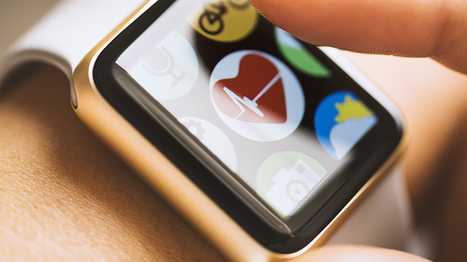
Clinicians need new skills as more patients carry their own health information into appointments.
|
Scoop.it!

Les aspects juridiques tout comme les perspectives d’exploitation qu’offrent les données de santé « sensibles » imposent non seulement de sécuriser leur stockage mais aussi et surtout d’encadrer strictement leur utilisation. Via Bruno Demay
Scoop.it!

The genealogy service says it is changing its terms and conditions after being criticised.
Scoop.it!

Les données du répertoire national des professionnels de santé (RPPS) sont de plus en plus utilisées pour assurer l’identification des professionnels de santé dans le cadre des différents projets e-santé. Via Philippe Bédère
Scoop.it!

Notre dossier Spécial Data & Digital est dédié cette semaine au Big Data. Re-découvrez les évolutions et dernières tendances du domaine. Via Julien Gadrat, Chanfimao

Jean Artaud's comment,
January 31, 2021 6:51 AM
il faut aussi évoquer Le développement de l'Intelligence Artificielle dans le domaine de la santé qui exige un grand nombre de données , en disposant d’un gigantesque gisement à exploiter pour tous les patients mais aussi pour tous les salariés (Health Data Hub (HDH) France, plateforme de partage et guichet unique des données de santé, créé fin 2019) : https://www.officiel-prevention.com/dossier/formation/formation-continue-a-la-securite/big-data-intelligence-artificielle-et-sante-au-travail
Scoop.it!

It’s time to take stock of big data so we can move forward and turn it into knowledge, experts at the Big Data & Healthcare Analytics Forum say. Via Florian Morandeau

Florian Morandeau's curator insight,
October 26, 2017 2:39 AM
The goal is to turn data into information, into knowledge, and ultimately into actions and outcomes.
Scoop.it!

Les fuites de données liées à un mauvais paramétrage d’espaces de stockage cloud d’Amazon s’enchaînent. Et oui, pas toujours besoins de « méchants hackers » pour que les données s’évaporent dans la nature. Une simple négligence d’un administrateur suffit.
Via Philippe Marchal
Scoop.it!

Watson : l’Intelligence artificielle en ses limites
Via Alain Codaccioni
Scoop.it!

Les sous-traitants qui traitent des données personnelles pour le compte de leurs clients ont de nouvelles responsabilités au regard du Règlement européen sur la protection des données (RGPD). La CNIL publie un guide pour les sensibiliser et les accompagner dans la mise en œuvre concrète de leurs obligations. Via Frédéric DEBAILLEUL
Scoop.it!

La dataviz permet de comprentre les liens entre les différents articles du règlement Via FrancoisMagnan
Scoop.it!

The CDC is testing the use of blockchain to simplify information sharing about public health events between the agency and state and local health departments, with potential applications planned for next year. The technology would help simplify complex data usage agreements and privacy regulations that handcuff real-time data sharing among public health agencies. Via Pharmacomptoir / Corinne Thuderoz
Scoop.it!

Un volume considérable de données est généré chaque jour par l’ensemble des acteurs de l’écosystème de santé. Cette explosion de données de santé, issues notamment d’une utilisation croissante des objets connectés, est une source de connaissance inestimable pour améliorer la prise en charge des patients.
Scoop.it!

Nowadays, the term “artificial intelligence” is being tossed around more than ever in healthcare. It’s being applied to everything from patient scheduling to waste and inefficiency. A report from Accenture even highlighted the 10 AI applications that are poised to have the greatest value in healthcare by 2026.
|




