Free Lesson from Subjet to Climate: In this interdisciplinary lesson, students learn about the benefits of the Amazon rainforest and the technology-based solutions that people are using to protect it.
By Rosanna Ruiz, EdD, Morpho Institute, Board President Unlearning to Learn: How Awe Clears the Way for Deeper Learning What if one of the most powerful tools in education isn’t…
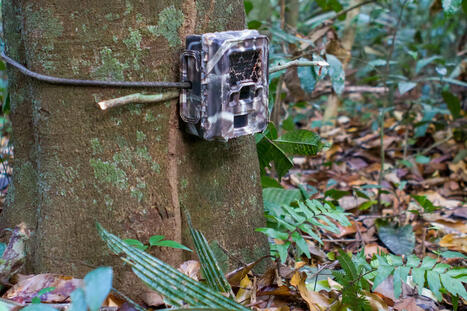
Morpho Institute's Camera Trap Project records first jaguar spotting in Explorama's Napo-Sucusari Biological Reserve. Time Stamp: July 3, 2025. More videos coming soon to our YouTube channel: https://www.youtube.com/@morphoinstitute
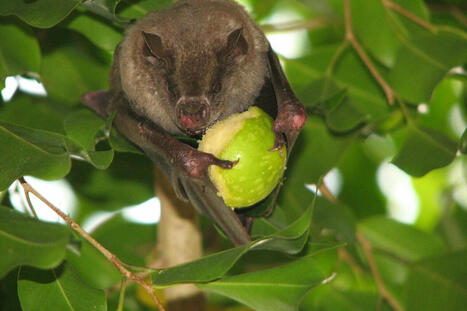
alot of attention has been paid to the decrease in bee populations and other pollinators, but a recent review article makes the case that we should be equally alarmed by the declining numbers of seed-dispersing animals, which are crucial for healthy forests.
How much do you know about the GBF? Morpho is collaborating with WWF and the IUCN to promote education as a tool for achieving its ambitious targets. Want to get involved? Let us know! Click here to learn more about the Kunming-Montreal Global Biodiversity Framework: https://www.cbd.int/gbf
Great video for classroom use if you are teaching evolution! The perception and use of visual information to guide behavior is critical for many animals. This new study establishes how subtle differences in the light environments within tropical forests can drive visual system evolution. To read the full study, click here: https://www.pnas.org/doi/10.1073/pnas.2422397122
Summary: The Morpho butterfly illustrates the link between curiosity-driven research and much later innovations. Current threats to research funding portend a regression to days where basic research is limited to the wealthy.
In episode two, Jon meets the people trying to make sure the rainforest is worth more standing than cut down – from a government minister attempting to establish Brazil’s ‘bioeconomy’ to a startup founder creating superfood supplements and a scientist organising night-time tours hunting for bioluminescent fungi. Jon explores new ways of finding value in the forest and asks whether they will be enough to secure its future survival
In the final episode of a three-part series, Jon Watts encounters a radical new view of the Amazon’s history being uncovered by archaeologists. Far from an uninhabited wilderness, the rainforest has been shaped by indigenous peoples for thousands of years. Jon finds out how their expert knowledge could be harnessed to secure the Amazon’s future
For the first time in history, the world’s largest climate conference is heading to the heart of the Amazon. From November 10 to 21 2025, Belém do Pará, a vibrant city rich in biodiversity and culture and home to 1.3 million people, will host the 30th Conference of the Parties to the United Nations Framework […]
The frog’s loud croaking turned out to be a call to its own demise. The researchers walking along the steep muddy bank on a rainy November day in 2022 in the Imeri Range on the Brazil-Venezuela border were alerted by the unfamiliar sound. They found the frog sitting outside the opening to a tarantula’s burrow […]
The term “field station” has an air of mystery, conjuring images of some tropical or icy outpost where scientists go to “do science.” And while it’s true that scientific research is the backbone of field stations, these places also provide many overlooked benefits and a huge return on investment for conservation
More Intense El Niños May Be Driving Loss of Tropical Insects Insects and spiders are declining in tropical forests around the world. Mysteriously, losses are underway even in areas untouched by logging, mining, or farming.
A study published in PNAS on July 28, 2025, highlights the role Indigenous Territories (ITs) and Protected Areas (PAs) in maintaining ecosystem connectivity. In the Amazon drainage basin, human activity is disrupting ecosystem connectivity—the unimpeded movement of species and the flow of natu
In episode one of a three-part series, the Guardian’s global environment editor Jon Watts explores what’s at stake if we fail to protect the Amazon. He hears about the crucial role of the rainforest for the global climate, and looks back at how cattle ranching came to dominate and destroy huge swathes of the forest – pushing it to a dangerous tipping point today
Researchers have wondered for decades why mixed flocks exist in the Amazon, and why they are so stable. But now, new research has shown that it may come down to a successful neighborhood watch program.
To get content containing either thought or leadership enter:
To get content containing both thought and leadership enter:
To get content containing the expression thought leadership enter:
You can enter several keywords and you can refine them whenever you want. Our suggestion engine uses more signals but entering a few keywords here will rapidly give you great content to curate.


 Your new post is loading...
 Scoop.it!