I'm in the rainforest and I've brought with me a small steady cam - the XCAM Sabre II. I wanted to show you how smooth and dynamic the shots can be. If you'r...
Ecologists may be underestimating the impact of logging in old-growth tropical forests by failing to account for subtleties in how different animal groups respond to the intensity of timber extraction, argues a paper published today in the journal Current Biology. The study, led by Zuzana Burivalova of ETH Zurich, is based on a meta-analysis of 48 studies that evaluated the impact of selective logging on mammals, birds, amphibians, and invertebrates in tropical forests.
The rubber industry sees renaissance in Peruvian jungle Peru this Week In 1915, the Peruvian Amazon no longer smelled of burnt wood, resin, and acid: the rubber boom had died down. It had also stopped smelling of barbarity.
After exceeding an ambitious fundraising target to launch a near-real time forest monitoring system in the Congo Basin, a San-Francisco based start-up is now eyeing expansion in the Amazon where it hopes to help an indigenous rainforest tribe fight illegal logging.
A family of rare crested eagles has settled in the Cuyabeno Wildlife Reserve, a lush, species-rich swath of the Amazon and Ecuador’s second largest protected area.
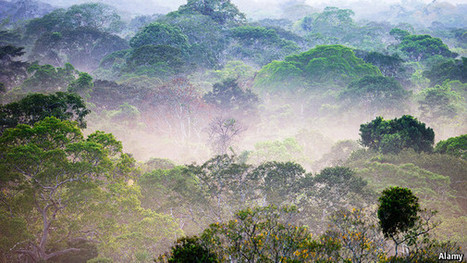
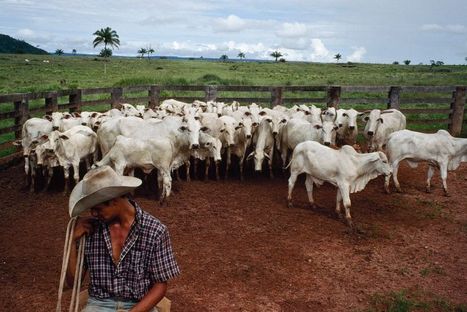
IN THE 1990s, when an area of Brazilian rainforest the size of Belgium was felled every year, Brazil was the world’s environmental villain and the Amazonian jungle...
According to this great article by the economist, "there was no silver bullet but instead a three-stage process in which bans, better governance in frontier areas and consumer pressure on companies worked, if fitfully and only after several false starts." What does this mean for the future of all tropical forests? Time will tell
In 2008, images of an uncontacted tribe in the Amazon rainforest in Brazil created ripples. With bodies painted in bright colors, members of the tribe aimed their arrows at a Brazilian government plane flying overhead, occupants of which were attempting to photograph the tribe to prove their existence. Now, a new study has found another way to survey such tribes safely and remotely—using satellite images.
With the start of the World Cup just days away, protesters from the Kayapo people of the Amazon join other indigenous people in clashes with the riot police....
A camera trap program in Ecuador's embattled Yasuni National Program has struck gold, taking what researchers believe is the first ever film of a wild nocturnal curassow (Nothocrax urumutum). In addition, the program has captured video of other rarely-seen animals, including the short-eared dog and the giant armadillo.
Climate change may be taking a hidden toll on intact rainforests in the heart of the Amazon, finds a new study based on 35 years of observations. The research, published in the journal Ecology, focused on the ecological impacts of fragmentation but unexpectedly found changes in the control forests.
Not a single tree was harmed in the Amazon. Paddy Power admits it was a bit out of left field to raise awareness of deforestation by pretending to chop down the Amazon, but we’ve been twiddling our...
If you're going to film in the rainforest, it's hot an humid and you can't get everything you need at the local Best Buy. Here is what I bring when I go to t...
Amazon video series from Untamed Science is in production! They filmed during a r recent visit to the Peruvian Amazon with Dr. Meg Lowman's Citzen Science Expedition - which Amazon Rainforest Workshops/EcoTeach helped to coordinate! Stay tuned for more!
One of the world’s last isolated tribes has ‘emerged’ from the forest. Is it to make contact, or have darker reasons forced them out? Rachel Nuwer investigates.
Latin Post Brazil's indigenous tribes: The low cost solution to climate change? Responding to Climate Change “Without the indigenous people protection of the forest, climate change will get much worse.
When a new road centipedes its way across a landscape, the best of intentions may be laid with the pavement. But roads, by their very nature, are indiscriminate pathways, granting access for travel and trade along with deforestation and other forms of environmental degradation. And as the impacts of roads on forest ecosystems become clear, governments and planning agencies reach a moral crossroads.
When they emerged from the forest on the outskirts of an Ashaninka indigenous community on the upper reaches of Brazil's Envira river, it was the first time in recent history that members of an uncontacted tribe of Amazonian Indians had chosen to leave their home and visit a settled population. But 80 tribe members have now returned to the forest on the Peru-Brazil border, despite the threat of violence and disease.
14 Million Soccer Fields Of Amazonian Rain Forest Saved From Clearcutting CleanTechnica Although this may be a questionable connection, perhaps it would be wise to reduce or eliminate one's consumption of McDonald's hamburgers, if there is any...
Habitat fragmentation and hunting are both distinct critical issues facing forests today that require their own countermeasures. Yet, much research has chosen to conflate the two, potentially leading to ineffective ecosystem management. According to a new study, the interaction of both factors can contradict the effects of hunting and fragmentation alone, revealing a research and management gap that urgently needs to be filled.
SACRAMENTO, Calif. — Peru's Amazon rainforest is extensively contaminated from decades of oil and gas drilling, researchers reported yesterday (June 12) here at the annual Goldschmidt geochemistry conference. In the past decade, volatile demonstrations by indigenous groups and tangled lawsuits against oil companies have exposed the toxic legacy of decades of oil drilling in the Western Amazon. But lax government regulations during the early years of oil exploration, combined with a lack of environmental monitoring, mean there's little data on the true extent of contamination in the richly diverse rainforest. "I was surprised by how little has been published," said study co-author Antoni Rosell-Melé, an environmental chemist at the Autonomous University of Barcelona in Spain.
"In the jungle, one basic best practice is to not build roads. Once you build a road you provide access to outsiders who may want to log valuable wood, hunt or capture rare animals, or squat on land that has belonged historically to indigenous peoples. You don’t build roads." ~ Bill Powers, chief engineer at E-Tech International, a USA-based consultancy.
To get content containing either thought or leadership enter:
To get content containing both thought and leadership enter:
To get content containing the expression thought leadership enter:
You can enter several keywords and you can refine them whenever you want. Our suggestion engine uses more signals but entering a few keywords here will rapidly give you great content to curate.


 Your new post is loading...


 Scoop.it!










More tips on how to be a film maker in the rainforest. Thanks #untamedscience