WondWorking in the field always makes research more challenging, and doing atmospheric science deep in the rainforest is especially tricky. Ben Langford describes how mosquito repellent, gaffer tape and children's balloons helped keep his project on track.
Pristine Amazon forests pull in more carbon dioxide than they put back into the atmosphere, according to a new study. The findings confirm that natural Amazon forests help reduce global warming by lowering the planet's greenhouse gas levels, the researchers said.
A general record of the fauna and flora observed by Dr. Meg Lowman's 2014 Citizen Science Expedition participants while in the Yanamono, Shimigay, Sucusari, and CONAPAC Biological Reserves.
Are you using iNaturalist? If not, you need to check it out - starting with the Amazon project started by Dr. Meg Lowman and the participants of her 2014 Citizen Science Expedition
In part three of this series, Laurel actually gets into the Amazon, taking a swim after a reported lack of caiman sightings. That was after finding dozens of the world's most venomous spiders and prior to a close encounter with ayahuasca.
Species of poison frogs that utilize bright warning coloration as protection from predators are more likely to develop louder, more complex calls than relatives that rely on camouflage. New research indicates that because these visual cues establish certain species as unsavory prey, they are free to make noisy calls in plain sight and better attract possible mates.
“Indigenous communities need to safeguard 20 million hectares in order to slow the climate crisis...Peru lost 246,000 hectares to deforestation in 2012, twice the previous year’s total, as expanded agriculture and logging of hardwoods hacked away at the forests’ ability to contain global carbon emissions...With the world’s fourth largest share of tropical forests and 10 to 15 percent of the planet’s species, Peru is especially vulnerable to climate change."
With the world’s fourth largest share of tropical forests and 10 to 15 percent of the planet’s species, Peru is especially vulnerable to climate change
The great Amazon rainforest. Image courtesy of Wikimedia Commons Bones. Charcoal. Ash. Blood. Feces. Food waste. Pottery shards. Before I began my journ
Despite the worsening situation in the Amazon – and São Paulo’s most severe drought since records began – the environment has played little part in the debates between the two presidential candidates.
Satellite data indicates a 190% surge in land clearance in the Amazon in August and September of 2014 compared to the same time last year...not a trend we are a fan of. :-(
Sunday is International Sloth Day, which aims to draw the public's attention not only the creature's cuteness factor, but also promote the respect of its natural environment and protection. And The Slot...
"They say this is the worst pain known to man. That might not be true, but it’s certainly close to if not the worst pain known to man from an insect. The insect, of the order Hymenoptera, is an ant, the “bullet ant” or Paraponera clavata. Why is this ant called a bullet ant? Because the feeling of being stung supposedly simulates the pain of being pierced by a bullet."
What's on your Amazon #bucketlist? I created my own own top 10 list after our recent trip to the Peruvian Amazon! Special thanks to Meg Lowman and the Explorama Lodges for the amazing time....
Once obscure Amazon fruits like açaí are riding health claims to supermarket success. Could a scaly palm fruit with three times the vitamin A of carrots be the rain forest's next popular export?
This is a 20 minute nearly one take walkthrough of the rainforest canopy. If you have the time, this is really a fun way to virtually transport yourself to t...
Great video footage of one of our Amazon Rainforest Workshops study sites: The canopy walkway at the Amazon Conservatory for Tropical Studies (ACTS) in Loreto Peru. This was shot during a citizen science workshop we helped to coordiante for Dr. Meg Lowam from the California Academy of Sciences in July of 2014.
Mission: A citizen science biodiversity assessment project for students, educators, naturalists, and researchers interested in cataloging the biodiversity near the confluence of the Amazon and Napo rivers in the Peruvian Amazon."
Weekend Wildlife: Did you know that Amazon Rainforest Workshops has a "crowdsourced" virtual field guide to our study sites in Peru? Our participants and faculty upload their wildlife spottings and field notes onto our mission on Project Noah. Check it out! (Rainbow Katydid photo credit: Phil Wittman)
Gold mining is on the rise in the Guiana Shield, a geographic region of South America that holds one of the world’s largest undisturbed tract of rainforest. A new mapping technology using a radar and optical imaging combination has detected a significant increase in mining since 2000, threatening the region's forests and water quality.
How has the financial crisis impacted the Amazon? With the dramatic increase in global gold prices, the Amazon faces a growing threat from mining - from small scale miners to multinational compnaies...everyone wants a piece of it.
This week's #AmazingSpecies is the lovely Blue-and-yellow Macaw, Ara ararauna, listed as Least Concern. The species benefits from a very large range but is nevertheless under pressure from the illegal pet trade.http://bit.ly/1pAI2A
In the 1990s, the rapid expansion of the banana industry in Central America was causing monumental environmental destruction and worker abuse. That’s when the Rainforest Alliance stepped in.
To get content containing either thought or leadership enter:
To get content containing both thought and leadership enter:
To get content containing the expression thought leadership enter:
You can enter several keywords and you can refine them whenever you want. Our suggestion engine uses more signals but entering a few keywords here will rapidly give you great content to curate.


 Your new post is loading...


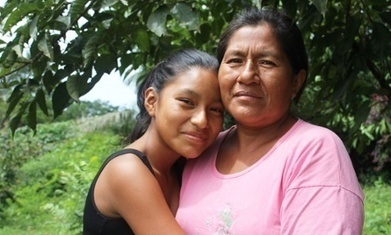


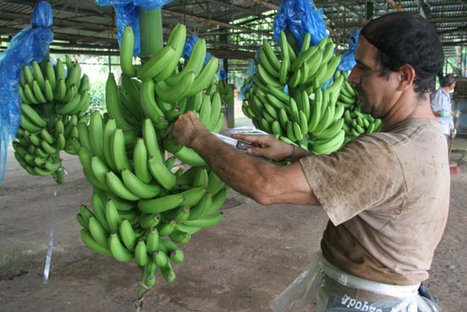





Wonderful feature on the rewards and challenges of taking science out of the lab into the field. Great teaching resource for science career lesson!