


A huge tower dwarfing some of the world's greatest landmarks has been erected in the heart of the Amazon rainforest in a bid to gather new data on the state of our atmosphere.

 Your new post is loading...
 Scoop.it!
A huge tower dwarfing some of the world's greatest landmarks has been erected in the heart of the Amazon rainforest in a bid to gather new data on the state of our atmosphere.

No comment yet.
Sign up to comment
Scoop.it!

Peru is proposing a huge hydroelectric dam in the Amazon that, if built, will be one of the most powerful on Earth, do significant harm to the environment, and flood the homes of thousands of people.
Scoop.it!

2015 Student Field Reporter Project: We've enlisted the help of several students to share their 2015 Amazon experiences with us. Over the coming months we will regularly feature their posts, photo...
The Morpho Institute's insight:
The Gunston School departs TODAY for the Amazon. They are armed and ready for a full on research expedition with their FANTASTIC teacher leaders, Ms. Vooris, and Ms. Beck - with extra special support fromRainforest Trust, education coordinator, Jesse Lewis! Check out this pre-departure field report from Kailani C. She'll be sharing more from the field and upon return!
Scoop.it!

If you're visiting the Amazon Rainforest in Peru, Brazil, Ecuador, or even Africa or Asia. This packing list will help you be prepared for the jungle!
The Morpho Institute's insight:
Great advice and a nice supplement to the packing list we provide to all of our travelers!
Scoop.it!

So, you already know you have the third highest number of plants and animal species after Brazil and Colombia, right?
The Morpho Institute's insight:
Saturday May 9th is the Annual GLOBAL BIG DAY brought to you by our friends at the Cornell Lab of Ornithology! Cornell organizes the event to help get a better handle on just how many birds there are in the world, where they are, and what they need, by encouraging people to go out and look for them all at once. Sightings will be recorded in realtime using a special eBird project.
Scoop.it!

Peru is planning a series of huge hydroelectric dams on the 1,700-kilometer (1,056-mile) Marañón River, which begins in the Peruvian Andes and is the main source of the Amazon River. Critics say the mega-dam projects could destroy the currently free-flowing Marañón, resulting in what Peruvian engineer Jose Serra Vega calls its 'biological death'.
The Morpho Institute's insight:
ughh...
Scoop.it!

From
fusion

Spoiler alert: We haven't saved the rainforests yet, so what happened? Let's find out.
The Morpho Institute's insight:
For those of us who remember the "heyday" of rainforest awareness, this article is poignant. It should cause us all to pause and reflect on what "hooked us" in the first place and what we need to do now re-engage on that very personal and visceral level when we were young...and most importantly, how can we channel that emotional connection into action and policy in the age of climate change?
Scoop.it!

Tropical forests support the greatest diversity of species in the world, yet we are rapidly destroying them. Most deforestation in the tropics is due to agricultural development and livestock production, the two greatest causes of declines in terrestrial biodiversity. However, one strategy that has been gaining attention for its potential to preserve biodiversity is shade-grown agriculture.
Scoop.it!

NGOs allege illegal deforestation of primary rainforest to plant cacao and oil palm
The Morpho Institute's insight:
Sadly this is happening right near our study sites
Scoop.it!

Ever since he was 5, Jasper Bagley’s idol has been E. O. Wilson, the renowned biologist, widely considered the world’s leading ant expert.
Scoop.it!

Pristimantis mutabilisA tale of loss, discovery and a shape-shifting frog, set in the mountain forests of South America.
Scoop.it!

Has global warming made it harder for environmentalists to care about conservation?
The Morpho Institute's insight:
A very, very thought provoking essay...put it on your must read list.
Scoop.it!
Plane wings could de-ice themselves by secreting anti-freeze.
|
Scoop.it!

From
www
When the price of gold skyrocketed, illegal miners flooded into the country's Amazon basin, eager to find even the tiniest bits of the precious metal. Trees and villagers have paid a price.
Scoop.it!

The Amazon is home to myths and legends that are as vast and mysterious as the jungle itself. Some have ancient roots, and others are urban legends that ev
The Morpho Institute's insight:
Great collection of myths and legends from the Amazon!
Scoop.it!

Scientists have theorized that tropical birds in mountainous regions will move uphill as the climate warms. But new research in the Peruvian Andes suggests that the birds will stay put and face a new threat — predator snakes that will climb into their territory to escape the heat.
Scoop.it!

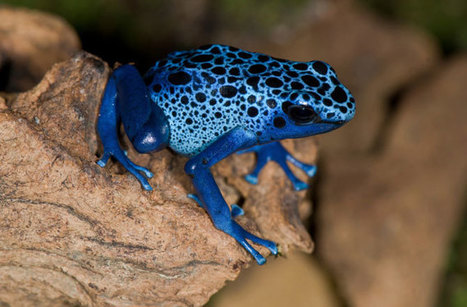
Poison dart frogs (Dendropatidae), named for their poisonous secretions used by indigenous tribes to coat blow gun darts, may possess another less deadly talent. According to a recent study, published in the journal Biology Letters, the curiously named brilliant-thighed poison frog (Allobatis femoralis) can use its memory to find its way home through the rainforest.
Scoop.it!

The up-coming documentary, Uncharted Amazon, promises to highlight both the little-seen wildlife and the people of the Las Piedras River system in the Peruvian Amazon, one of the most remote wildernesses on the planet.
The Morpho Institute's insight:
From the filmmaker: "I don't think any part of it was easy but most of it was fun and when we did finally get what we were after, there was a great sense of achievement. I mean who knows, everything in that short trailer could be gone in 50 years." - Tristan Thompson
Scoop.it!
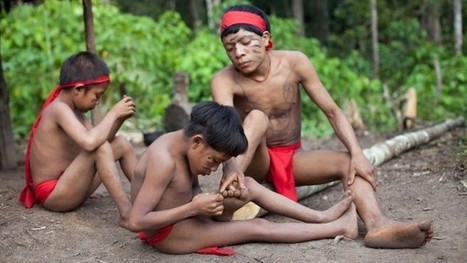
Villagers evolved antibiotic resistance without being exposed to Western medicine Via VERONICA LESTER
The Morpho Institute's insight:
A great way to bring the Amazon into your HS biology classrooms!

The Morpho Institute's curator insight,
April 23, 2015 7:48 PM
great classroom connection for HS bio teachers!
Scoop.it!
Sao Paulo, one of the largest cities in the world, may run out of water in the next few months leaving 20 million people high and dry. Who is to blame?
Scoop.it!
Güido Lombardi, a Peruvian journalist, tells in his news radio program at RPP Noticias the impressions that he got after overflying the affected areas by the...
Scoop.it!

A pilot study with the shamanic brew hints at its therapeutic potential
Scoop.it!

Meeting the howler monkeys was my trip highlight! I was amazed at the instant bond that was created with them. I also loved meeting and spending 10 sweaty days with so many amazing educators!
Scoop.it!

Native groups in a remote corner of Peru just took over 14 oil wells for a month.
Scoop.it!
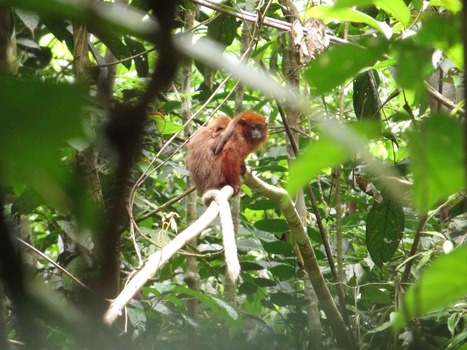
Last year I spent three weeks with an incredible team of scientists exploring the Tapiche-Blanco watersheds, a remote region in the Peruvian Amazon. Our team was about 200 kilometers from any of the nearest cities--Iquitos, Pucallpa, and Tarapoto--and 40 kilometers from the border with Brazil. The trip was filled with discoveries (three new plants, four new fishes, four new frogs, a savanna habitat none of us expected in this part of Peru) but the biggest discovery was a mystery monkey.
|




