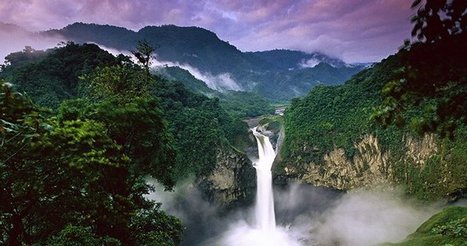
The Amazon rainforest is a treasure trove of biodiversity, containing 10% of the planet’s species in its 6.7 million square kilometers. How it got to be that way has been fiercely disputed for decades. Now, a new study suggests that a large section of the forest was twice flooded by the Caribbean Sea more than 10 million years ago, creating a short-lived inland sea that jump-started the evolution of new species. But the new evidence still hasn’t convinced scientists on the other side of the debate.
"Devil's gardens are large stands of trees in the Amazonian rainforest that consist almost entirely of a single species, Duroia hirsuta, and, according to local legend, are cultivated by an evil forest spirit," write Frederickson and her colleagues in Nature. "Here we show that the ant, Myrmelachista schumanni, which nests in D. hirsuta stems, creates devil's gardens by poisoning all plants except its hosts with formic acid. By killing other plants, M. schumanni provides its colonies with abundant nest sites—a long-lasting benefit, as colonies can live for 800 years."
SOURCE The Amazon is home to thousands of local indigenous communities spread across very remote areas. As a result, these sparsely populated communities rarely have... Read More →
Taushiro and Resigaro, two indigenous languages, are among 17 that are critically endangered in Peru, where modern life's advance into the isolated Amazon basin region has wiped out many native peoples' way of life, and their languages along with it.
This week – after months of negotiation and uncertainty – the Brazilian government, the soy industry and civil society organizations, including Greenpeace, indefinitely renewed an agreement keeping huge swathes of Amazon rainforest from being destroyed for soybean farming. This is big news for the Amazon, for Indigenous Pe
Over the course of the next four months, the Houseboat Amazon expedition will endeavor to locate the mysterious Vanzolini’s bald-faced saki in a remote corner of the Brazilian rainforest.
It's believed Amazon fauna diversity is on the decline, so we're creating a wireless network of sensors to give us better information about biodiversity.
Mark Plotkin, groundbreaking ethnobotanist and author of seminal books including "Tales of a Shaman's Apprentice", works closely with Indigenous peoples an
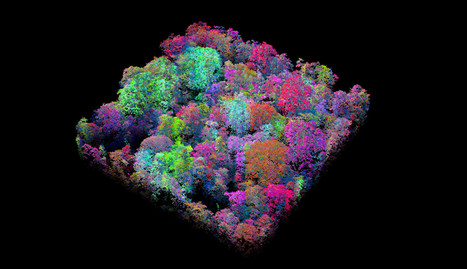
The massive green swaths of Peru’s Andean and Amazonian forests host a more diverse array of life than previously thought — much of which has been hidden beyond the visible spectrum of light.
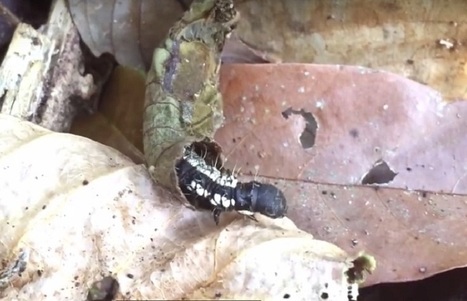
YouTube star and real-life biologist, Joe Hanson, discovered a unique caterpillar while filming his documentary show in the Peruvian Amazon. The crawling insect builds its own moving shelter out of leaves.
Conservationists are cautiously optimistic about new moves by Peru to invest in ecosystem services, protect forests, mitigate climate change and offset biodiversity losses.
To get content containing either thought or leadership enter:
To get content containing both thought and leadership enter:
To get content containing the expression thought leadership enter:
You can enter several keywords and you can refine them whenever you want. Our suggestion engine uses more signals but entering a few keywords here will rapidly give you great content to curate.


 Your new post is loading...
 Scoop.it!