Your new post is loading...

|
Scooped by
The Morpho Institute
January 13, 2021 8:00 AM
|
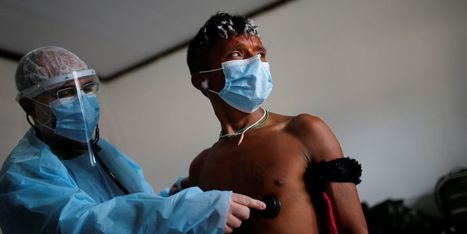
LUCAS LANDAU, of Thomson Reuters Foundation, reports on how one Indigenous community in Brazil is responding to the coronavirus pandemic...
|
|
Scooped by
The Morpho Institute
December 20, 2020 9:23 AM
|
Although climate change is a complex, global problem, it will ultimately be solved by action on the ground; on the land where forests thrive, in the neighborhoods where energy is generated, on the soil where our food is grown. It’s clear that frontline communities and nature are vital to solve the climate crisis, but their importance has been underestimated for too long. Now, we must radically scale support for the groups on the ground leading change. The solutions to the climate crisis already exist. The One Earth Climate Model and a growing body of science supports three main pillars of action to stay below 1.5°C — a shift to 100% renewable energy by 2050, protection and restoration of half of the world’s lands and oceans, and a transition to regenerative, climate-friendly agriculture. The good news is that on-the-ground action is already happening. While we wait for governments and businesses to set and keep commitments, there are millions of people in communities around the world working to stay below 1.5°C. They’re installing renewables, protecting nature, and changing how our food is grown. This is no small thing. These people are part of a huge global movement without a name — they are guardians, innovators, farmers, organizers, activists. They’re both the last line of defense protecting what we cannot afford to lose, and the leading edge of progress, driving the transitions we need. So, when we think of action for climate change, we need to think of people like Nemonte Nenquimo of the Waorani Nation in the Amazon rainforest. Her work—supported by Ceibo Alliance and Amazon Frontlines—has protected 500,000 acres of Amazon rainforest and provided a legal precedent to protect another 7 million acres from oil auctions. Nemonte and her community are just one example — more than a third of the lands that science tells us we need to protect are held by Indigenous Peoples. They’re fighting hard to protect their lands, their waters, their home, their families’ future - and ours. When we think of transforming agriculture and feeding 10B+ people, we need to remember that more than 75% of nutrition in the Global South is provided by smallholder farmers. And we need to think of people like Chukki Nanjundaswamy – a leader of the farmers movement in Karnataka, India. She’s helping to train half a million farmers in agroecology and aims for many millions more. And as drought—exacerbated by climate change—ravages southern India, she helps farmers thrive by avoiding expensive and harmful chemicals, restoring soil, increasing food productivity, and storing carbon in the ground. Leaders like Nemonte and Chukki do this work with limited resources, against seemingly insurmountable odds, and in many cases risking their lives. These leaders need support, but they are massively underfunded. Currently, environmental groups and causes get less than 2% of global philanthropy. And most climate philanthropy has gone towards top-down strategies to shift policy, reform industry or jump-start carbon markets. Few resources have been directed to community-based efforts, and less than 0.2% of all foundation funding goes to women led environmental action. This must change. We need to 10x climate philanthropy. One Earth is dedicated to mobilizing significant philanthropic capital from high-net-worth families, companies, and everyday citizens. But we don’t just want to increase climate philanthropy, we want to reimagine it. It’s an approach we call philanthro-activism. Guided by the science of a 1.5°C pathway, philanthro-activism directs the resources of philanthropy to the activism of communities doing the work on the front lines of climate change. Read the full article on Climate Week NYC.
|
|
Scooped by
The Morpho Institute
December 17, 2020 8:42 AM
|
What if we start taxing carbon-intensive products such as electricity and gasoline, and at the same time compensate low-income households? Hauke Ward and colleagues did just that in a computer simulation for Peru, with a remarkable outcome. Not only does the approach tackle climate change, but it could…
|
|
Scooped by
The Morpho Institute
November 6, 2020 8:44 PM
|
Fires in Brazil's Amazon rainforest surged in October and the number of blazes is up 25 percent in the first 10 months of 2020, compared to 2019, data from government space research agency Inpe showed on Sunday.
|
|
Scooped by
The Morpho Institute
October 26, 2020 9:07 AM
|
Paper suggests climate crisis reducing insects in lowlands and central jungle, as fruit-eaters not affected
|
|
Scooped by
The Morpho Institute
September 12, 2020 8:28 AM
|
This image, captured by the Copernicus Sentinel-1 mission, shows the Amazon River meandering through one of the most vital ecosystems in the world – the Amazon rainforest in South America. This image has been processed in a way that shows water bodies, such as the Amazon River, in blue. The Amazo
|
|
Scooped by
The Morpho Institute
September 4, 2020 1:53 PM
|
Yasuni Man tells the story of Ecuador's Indigenous Waorani people and their fight to protect the area of rainforest they call home. The film follows Director Ryan Patrick Killackey as he visits the home of a Waorani man named Otobo Baihua and his family in the Yasuni community of Boanamo.
|
|
Scooped by
The Morpho Institute
September 4, 2020 1:42 PM
|
The vast rainforest is experiencing a repeat of last year’s devastating fires and critics say Bolsonaro bears ultimate responsibility...
|
|
Scooped by
The Morpho Institute
September 4, 2020 1:42 PM
|
Where there’s smoke, there’s fire; and where there’s fire, there’s greed. One year later & rainforest FIRES are back in the Amazon & Indonesia, driven by corporate greed, polluting our planet, & destroying lives and livelihoods.
|
|
Scooped by
The Morpho Institute
August 23, 2020 10:04 PM
|
The historical record shows that Indigenous reserves are only safe from invasion by illegal deforesters once fully protected by government — protections rapidly eroding in Bolsonaro’s Brazil.
|
|
Scooped by
The Morpho Institute
August 7, 2020 12:41 PM
|
Researchers want to use this information to predict and stop future outbreaks.
|
|
Scooped by
The Morpho Institute
July 24, 2020 1:11 PM
|
The front lines of the fight against the virus outbreak in Brazil have shifted to poor, remote corners of the country.
|
|
Scooped by
The Morpho Institute
July 24, 2020 1:09 PM
|
BOGOTA (Thomson Reuters Foundation) - Ecuador's indigenous groups in the Amazon have launched an information dashboard to monitor the coronavirus and identify contagion hotspots as the disease spreads through the rainforest and threatens ancient cultures, a leading rights group said on Tuesday.
|
|
|
Scooped by
The Morpho Institute
December 20, 2020 10:34 AM
|
Researchers say that these trees are evidence of early crop cultivation by ancient humans in Amazonia.
|
|
Scooped by
The Morpho Institute
December 17, 2020 8:46 AM
|
|
|
Scooped by
The Morpho Institute
December 9, 2020 11:41 AM
|
Good news we need right now!
|
|
Scooped by
The Morpho Institute
November 6, 2020 8:39 PM
|
Environmental science and conservation news...
|
|
Scooped by
The Morpho Institute
September 29, 2020 8:18 AM
|
Covid-19 has now reached some of the most remote regions of the world, including regions of the Amazon rainforest where the isolated Yanomami have lived for more than a millennium.
|
|
Scooped by
The Morpho Institute
September 4, 2020 1:53 PM
|
The vast rainforest is experiencing a repeat of last year’s devastating fires and critics say Bolsonaro bears ultimate responsibility...
|
|
Scooped by
The Morpho Institute
September 4, 2020 1:48 PM
|
August 2020 just ended its run as a severe Amazon fire month.k Our novel Real-time Amazon Fire Monitoring app has detected 646 major fires in the Brazilian Amazon thus far in 2020.* k Of these, 88…...
|
|
Scooped by
The Morpho Institute
September 4, 2020 1:42 PM
|
Environmental science and conservation news...
|
|
Scooped by
The Morpho Institute
September 4, 2020 1:39 PM
|
Environmental science and conservation news...
|
|
Scooped by
The Morpho Institute
August 18, 2020 10:54 AM
|
Everyone agrees that massive deforestation is an environmental disaster. But most of the standard solutions — scolding the Brazilians, invoking universal morality — ignore the one solution that might actually work
|
|
Scooped by
The Morpho Institute
July 24, 2020 2:30 PM
|
A new study published today in Science outlines a groundbreaking plan to decrease the risk of future pandemics by 27 percent or more — with a 10-year investment that is 50 times less than the cost of coronavirus response efforts to date.
|
|
Scooped by
The Morpho Institute
July 24, 2020 1:09 PM
|
Tres Unidos, an indigenous village in Brazil's Amazon rainforest, locked out all visitors, hoping that isolation would keep it safe. And yet the new coronavirus still came.
|




 Scoop.it!