Your new post is loading...

|
Scooped by
hpc
April 18, 2015 1:32 AM
|
Ok. Let me say first up: this is only about ME and my experiences, and how I feel about my Business, and the Wedding Photography I have done. I am not criticizing anyone else. I am writing this just to share my frustrations, and ultimately how it has broken me.
I like to think I’m a creative type. More so than a Business person. I do what I do for the sheer love of the craft. Taking photos is the way I want to express myself, and the idea of making money from it came along as an accident. I fell into it, and never really chased it. It evolved that way, naturally, and never forced.
|
|
Scooped by
hpc
April 16, 2015 12:51 PM
|
The April issue of Photo District News features an article I wrote about managing photographers’ legacies. This is an important topic, but one that isn’t discussed or written about much. Photograph...
|
|
Scooped by
hpc
April 15, 2015 4:16 PM
|
After a brief hiatus, ISO 400 is back. This week, we hear from Robert Larson, a documentary photographer based in Los Angeles. Larson got his start in photography in 2007 at a small town newspaper. It was the death of his grandfather in 2009 that marked a turn in his photography from the single image to the photo story.
|
|
Scooped by
hpc
April 12, 2015 8:17 AM
|
For those of you who don’t know, cyc is short for cyclorama. They are in most professional studios and have replaced the seamless paper almost entirely. Why? Because with a cyc, you have complete control over your background. A cyc is where the corners and seams are not visible. Cycs normally cover two sides of the studio.
|
|
Scooped by
hpc
April 12, 2015 5:42 AM
|
|
|
Scooped by
hpc
April 11, 2015 3:47 PM
|
“Il panorama dei nostri sogni è invisibile durante la nostra vita da svegli.
La sua realtà è confinata in un luogo tra immaginazione e fantasia.
Come possiamo esplorare un sogno se non possiamo portare le nostre macchine fotografiche con noi durante il viaggio?”
(Henri Cartier-Bresson)
|
|
Scooped by
hpc
April 11, 2015 3:46 PM
|
Nella seconda parte di questa serie analizzeremmo come Henri Cartier-Bresson usi le contraddizioni per minare la stabilità della vita quotidiana. Le cose più strane accadono ogni giorno intorno a noi, ma c’è bisogno di un occhio attento per riuscire a catturarle attraverso la fotocamera.
|
|
Scooped by
hpc
April 8, 2015 5:07 PM
|
This is a photograph that has been shot with a Yashica Electro 35 CC with Kodak T-MAX 100 film, in Rethymno, Crete, Greece.
I don’t remember when exactly I made this photograph, but it was a summer and it must have been sometime after 19:00 judging by the height of the sun. What I do remember though is how thrilled I was to be using Kodak T-MAX 100 film in my little Yashica Electro 35 CC. It was the same period of time that the Yashica was the only camera I shot.
I was in the Rethymno gardens. The Rethym
|
|
Scooped by
hpc
April 6, 2015 3:00 AM
|
Md Shahnewaz Khan is a documentary photographer and freelance photojournalist born in Chittagong, Bangladesh.
|
|
Scooped by
hpc
April 3, 2015 4:40 PM
|
Photographer's include Larry Sultan, Chuck Samuels, and more.
|
|
Scooped by
hpc
April 1, 2015 4:55 PM
|
British Street Hunter Rob Heron, now based in Spain gives us his list of "10 Reasons Why I Love Street Photography".
|
|
Scooped by
hpc
March 29, 2015 5:20 AM
|
Photography is my inside joke with God. He alone knows that time doesn't exist. I use photography as a tool to extend the now; not to preserve the past. The past cannot be preserved because it does not exist. So to me, photography is a testament to time's vulnerability.
|
|
Scooped by
hpc
March 29, 2015 5:06 AM
|
Matt Stuart is from North West London where he was born in the 70s. His first involvement with Photography was when his dad got him two photography books as a gift. He was in his late teens at the time and became fascinated by the works of Henri Cartier Bresson and Paul Frank. Since that pivotal moment Matt has been a practicing Street Photographer for more than 18 years! He manages to capture unique candid moments using his patience, his optimism and his small camera to his advantage. Even though for commercial work Matt uses a digital camera, for Street Photography he prefers shooting old school and uses a mechanical Leica MP with one prime 35mm lens and his favourite Fujifilm Superia 200/400 film. Matt’s approach to Street Photography is a humorous one. He has a talent for seeing moments that when captured through his lens bring a smile the the viewers face.
|
|
|
Scooped by
hpc
April 16, 2015 12:53 PM
|
I have been using a prototype of this lovely lens for just over a month now and I have to say I have rather fallen for it. This is a problem as I already have and love the XF10-24mm! When I first received it, I wasn’t entirely sure what I would use it to photograph, but it quickly became apparent that this lens, despite being a relatively large prime, is extremely flexible.
|
|
Scooped by
hpc
April 15, 2015 4:17 PM
|
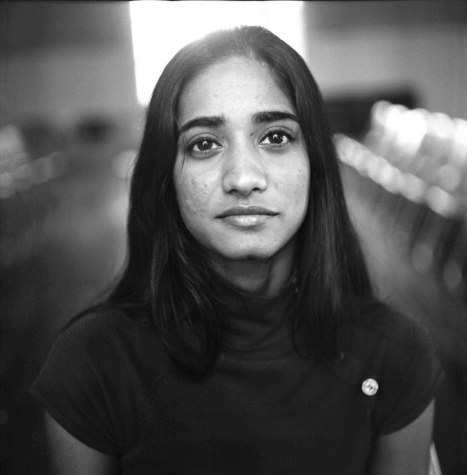
When it comes to portraits, composition can mean a heck of a lot. But when you add the simplicity of black and white to the mix and a dash of what the square format can do for you, you can create something infinitely beautiful. Photographer Niall Hartnett tries to do this with large format film, careful compositions, a meticulous and exacting process, and by working with the person to create an image that is very telling about them.
|
|
Scooped by
hpc
April 13, 2015 5:04 PM
|
I never thought hiking would be one of my favourite hobbies. I HATED typical family sundays -spending hours in the wilderness- and walking miles after miles. How times have changed! The Franconian Forest lies in the northern part of Bavaria, next to the former German-German border which can be seen from several points on the hills. It’s absolutely quiet there, just woodpeckers and other birds are audible. Absolutely perfect for a timeout.
I just picked my X-E1 with the “Kit Lens” XF 18-55 and had a marvelous morning walk.
|
|
Scooped by
hpc
April 12, 2015 8:13 AM
|
Dans les différentes histoires de la photographie, la place des femmes est surtout devant l’objectif plutôt que derrière. Or, il semblerait qu’on assiste à un mouvement souterrain et imperceptible qui mènera à une sorte de rééquilibrage des sexes dans la façon de raconter l’évolution de la photographie. Une évidence dont il y a tout lieu de se réjouir ou un combat jamais gagné ?
|
|
Scooped by
hpc
April 12, 2015 5:37 AM
|
Looking for perfection is to insist on the total realization of a goal and to reject any compromise.
This decreases the chance of achieving even a part of that goal.
Many photographers are hung-up on the pursuit of technical perfection. They obsess over MTF charts and other measurable aspects of image quality. But, the pursuit of perfection is to worship a false god. Perfection is unattainable. ...
|
|
Scooped by
hpc
April 11, 2015 3:47 PM
|
Il mondo che vediamo in pubblicità raramente è un riflesso della realtà. I cartelloni pubblicitari delle nostre città sono manipolati esattamente come lo era la scuola di Raffaello ad Atene. Ambientati sullo sfondo di un “mondo perfetto”, rappresentano un’ottima occasione per un fotografo che vuole giocare con le contraddizioni dell’immaginazione contrapposta alla realtà (come Henri Cartier-Bresson).
|
|
Scooped by
hpc
April 11, 2015 3:46 PM
|
Cosa hanno in comune il Manifesto Surrealista e Cartier-Bresson? Dopo la sua mostra presso il Museo di Arte Moderna nel 1947 Robert Capa ha detto a Cartier-Bresson di smettere di farsi chiamare Fotografo Surrealista. Anni dopo Cartier- Bresson ha ammesso che il consiglio di Capa era corretto.
|
|
Scooped by
hpc
April 6, 2015 8:43 AM
|
Riverside Avenue is where my mother has lived for the past year. Her eco-friendly home is located at the end of the quarter mile long, dead-end residential street. This isn’t just any street. It is a diverse community of people who represent a wide variety of cultures, races, and social economic standing. The residents mix and mingle outdoors on a daily basis in groups of all ages and in a wide array of backgrounds. As you drive down the street, you pass on your left section-8 housing (low income) and on your right are five “eco-homes” occupied by middle class citizens. Further down the street are working class homes, a group home, a church and a playground.
|
|
Rescooped by
hpc
from Fujifilm X Series APS C sensor camera
April 6, 2015 2:58 AM
|
Although this article is not the easiest one to write, I just need to get this off my chest. In case you haven’t noticed, street photography means the world to me. I pour all my heart and soul into it and to be honest, just like you I couldn’t imagine living without it anymore. If something or someone has a special place in your heart, you are willing to go out of your way and speak out inconvenient truths that may or may not offend certain people. Whether you may fully agree with what I’m saying or can’t believe that I have the audacity to do so, I’m only saying this, because I deeply care.
|
|
Scooped by
hpc
April 2, 2015 4:56 PM
|
Ever since the release of the Fuji X-E1 I have fell in love with Fujifilm. I was getting a little bit of camera lust when Sony released the A7 and A7r a few months ago, although I already have a full frame DSLR (I own the Nikon D800 and love it!) – Nikon released the Nikon Df and I almost bought one, but held out thinking to myself that Fuji had to have something in the works!
|
|
Scooped by
hpc
March 29, 2015 5:22 AM
|
Vision is an often discussed topic in photography, especially in fine art photography. Depending on who discusses it, it can be either an abstract concept, or a very concrete concept. Sometimes it’s the way we, as photographers, see a specific subject or scene in our mind – driven by the emotion of the moment and a very personal view on the world he/she lives in – not with our eyes, and how it can be concretely depicted and translated onto a tangible photograph. Other times the word ‘vision’ is used to describe how the photographer thinks the end result should look like, thereby often using phrasings such as: ‘I want the sky to be dark’, or ‘I want the water to be more bright’ or ‘the leading lines should be more ‘contrasty’. In the example of the latter it sometimes looks like the photographer is more often following a trend or movement in photography, rather than his own mental visualization initiated by how the artist feels and sees the world in his own unique way, which is more my understanding of vision.
|
|
Scooped by
hpc
March 29, 2015 5:19 AM
|
Charles Paul Azzopardi is a physician and writer, as well as a multiple international award-winning black & white fine art architectural and performing arts photographer, an (en)VisionographerTM, with high distinctions in the most important photography competitions worldwide (IPA, PX3, Monochrome Awards etc.), published internationally in numerous books and magazines, always imbuing every image with as much impact as those pixels can tolerate. Visit his website here
|