Via Gilles Jourquin
|
|
Rescooped by
Lionel Reichardt / le Pharmageek
from Health3.0- Migration towards Health as a Service
May 21, 2012 1:15 AM
|
Une veille sur la santé numérique en France et à l’international : politiques publiques, données, infrastructures, IA, services et usages. Études, rapports et retours de terrain sélectionnés par Lionel Reichardt, Pharmageek, pour comprendre les transformations et éclairer les décisions.
Your new post is loading...
Stroke victim Catherine Armstrong says she has noticed improvement since he began to play a computer game as part of her recovery.
Via Gilles Jourquin No comment yet.
Sign up to comment
To list your practice in Google Places, and customize your page, simply head on over to Google Places and click “Get started.”...
Via Dean Berg
With the Apple iPad the most popular mobile device, doctors have almost doubled their use of tablets in the last year, according to a new report by Manhattan Research. Via uri goren
Imaginez un établissement hospitalier dont une initiative médicale et digitale d'ampleur soit entièrement tournée autour du patient, et de l'expérience de ce dernier au moment et par-delà son hospitalisation.
Via Pharmacomptoir / Corinne Thuderoz
From
mashable
The number of Americans who own smartphones rocketed past the number who own basic mobile phones this year, and marketers have been expanding their mobile budgets at a similarly rapid rate.
A new report from Surescripts finds that 36% of U.S. prescriptions were sent electronically by the end of 2011. The report also found that about 58% of office-based physicians were electronically prescribing by the end of last year.
The new Boehringer Ingelheim oncology media resource centre for journalists and healthcare professionals.
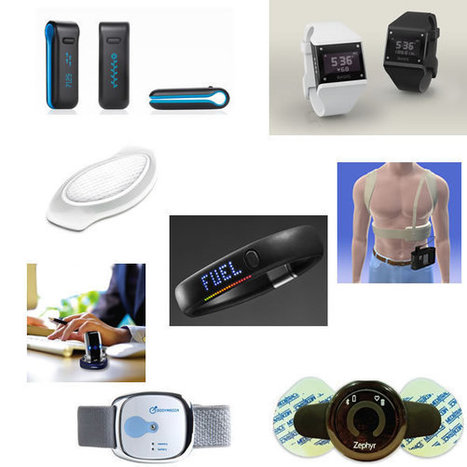
Smartwatches may be cool, but wearable health monitoring devices could save your life. These gadgets now run the gamut in goals, from managing chronic disease to optimizing fitness programs.
"This isn't an addition to your job. This is part of your job," says Farris Timimi, Mayo Clinic cardiologist and Medical Director of Mayo Clinic's Center for Social Media.
This article suggests that you health future may contain:
* GPS pacemakers and defibrillators. * Targeted medicine using nanorobots. * Embedded tracking chips. * Artificial intelligence to boost lost human function. * Rare visits to healthcare professionals
[AS: AI and wearable tech we already have. However, IMO embedded tech is going to have a short history, if it has one at all. Non-invasive technologies, scans and triggers seem more likely.]
With the close of the American Telemedicine Association's 2012 Conference and Exposition this week, I have seen a number of articles regarding the confluence of tele and mobile health in care delivery innovation.
Via Bernard Strée
Various Pharma companies are dipping into health technology—or at least skimming the surface. Bristol-Myers Squibb is a new player at this week’s Health 2.0 matchmaking conference which seeks to pair health technology start-ups with deep-pocketed partners. Novartis asked a team of developers to formulate a solution that allows patients to better manage their cardiovascular health, such as blood pressure. In January, Glaxo launched a free mobile phone-based asthma management app which helps patients track their symptoms, and scores them on how well they’re doing it. UCB has been ahead of the curve by partnering two years ago with online patient community site PatientsLikeMe to form a community for people suffering from epilepsy. “Pharma is showing a lot of interest in Health2.0, and trying to figure out how to deal with it”, says Marco Smit, president of Health 2.0 Advisors.
|
When patients show up at a hospital, something dangerous happens: They’re looked at by humans.
Via Gilles Jourquin
According to research from the Pew Internet & American Life Project, 80 percent of Internet users (making up 59 percent of U.S.
Sure, the ubiquity of Internet access in modern society has changed the way Americans seek out information, in general. But in the case of healthcare, the widespread online availability of medical information is both helpful and troubling.
Online Health Information Can Be Good
Effective use of high-quality healthcare resources on the Internet by interested individuals can positively impact medical outcomes. Often, patient research opens up a more informed, intelligent dialogue between patient and provider.
In fact, in a 2010 Epocrates study, the majority of physicians surveyed said that they found the online health information patients brought with them to encounters was helpful and increased enhanced doctor-patient communication. Via nrip
NEW YORK – A Johnson & Johnson executive at IAB’s Innovation Day conference said that although mobile is being tapped as a promotional tool, it is best used as a strategic tactic in emerging markets. Via uri goren
Demain, votre téléphone portable sera votre ange-gardien. Il prendra votre tension, éloignera les moustiques et vous avertira des tremblements de terre.
Via Pharmacomptoir / Corinne Thuderoz
Diagnosing diseases just got more innovative. A team of researchers at UCLA have created a crowd-sourced online game to assist the public in diagnosis of malaria. Via Alex Butler, Dimitra Kontochristou
Pharmaceutical Industry | NEWS | | World's first mental health electronic patient record goes online - South London and Maudsley NHS Foundation Trust teams up with Microsoft to unveil MyHealthBox | PMLiVE (RT @lygidakis: MT @kgapo @drpenzesjanos: ...
Via Gilles Jourquin
Doctors canât be everywhere at once, but new and emerging technology is helping them communicate face-to-face with more patients.
Charles Arthur: The Newton was two decades ahead of its time, says the former Apple chief executive – and the future of healthcare will be driven by cloud computing...
Via Alex Butler
Everyone knows patient-centric healthcare apps and websites have been around for a while. Sites like WebMD, Patients Like Me and others have been in use for years and web-based personal health record abound. Still, patients are seemingly not as engaged as they could be. Why?
Last year, I decided that I wanted to drop a few pounds. To guide that venture, I downloaded an app called My Fitness Pal. It was nice and easy because I could log calories by scanning bar codes on food. I used it religiously for a couple of months, lost some weight and haven’t touched it since. Why?
When I or someone I care about is sick, I might do a web search to find out about the condition or ways toward relief – usually finding what I am looking for through someone like the Mayo Clinic and confident that their information is trustworthy… but that interest is over in a flash. Why?
Clearly, I am not an engaged patient. The reason is simple. I am not sick all the time. In general, I am quite healthy, but for the occasional head cold. At the same time, I have known people with more serious conditions like diabetes, cancers, etc. The funny thing is, those people are not sick all the time either or at least they don’t want sick all the time.
Even though I work in healthcare and am immersed in healthcare daily, I don’t find personal healthcare interesting. It is terrible to say, I cannot even recall the last time I had a physical. It’s not that I have any aversion to taking care of my health, but amid work and day-to-day life things – I just don’t think about it. As for doctors, well… to be honest, I have seen the business side of healthcare so long that I cannot be engaged with someone when I know he/she is not engaged with me.
All these healthcare apps and websites are great when I need them, but when I don’t – I forget them. Initially one might say that’s ok. If you don’t need it, don’t use it. That, however, is wrong. Prevention and a healthy life style are key to controlling healthcare costs.
So, if people like me are not interested enough to seek information – the powers that be should send it to me, right? Wrong! Currently, my email inbox has 8,498 unread emails (no, I am not exaggerating). I scan through the senders, read very few subject lines, open even fewer emails, and ignore the rest. My email is a black hole for junk mail (haha spammers, I just ignore you!). Via nrip
Et si Facebook servait vraiment à quelque chose ? Jusqu’à présent, j’estimais que ce réseau social apportait très peu à la vie personnelle d’un individu. Quant aux entreprises, elles ne proposent que très rarement des offres ou des services dont l’innovation repose sur le réseau social fondé par Mark Zuckerberg. J’ai revu ma position depuis le 1er mai dernier. Et c’est Facebook lui-même qui a lancé cette initiative novatrice et, surtout, utile : Britanniques et Américains peuvent désormais ajouter le statut de donneur d’organes à leur profil. Cette fonction devrait s’étendre à d’autres pays...
L'iPhone devient le compagnon idéal des médecins. Tensiomètre, température, ECG, il sait tout faire. Désormais il pourra également mesurer la glycémie des patients diabétiques. Sanofi vient de met ...
Take a look at seven of the best infographics about SPAM and email deliverability.
|
Your new post is loading...