


With IP addresses now depleted, the Internet Society is leading the launch of IPv6 to allow the web to continue growing.


Une veille sur la santé numérique en France et à l’international : politiques publiques, données, infrastructures, IA, services et usages. Études, rapports et retours de terrain sélectionnés par Lionel Reichardt, Pharmageek, pour comprendre les transformations et éclairer les décisions.
 Your new post is loading...
 Scoop.it!
With IP addresses now depleted, the Internet Society is leading the launch of IPv6 to allow the web to continue growing.

No comment yet.
Sign up to comment
Scoop.it!

More often than not there is a perception that using digital devices and e-detailing technology to communicate with physicians and provide product information is going to eliminate the need for sales representatives. Via Thierry Geufroi
Scoop.it!

Scoop.it!

Pendant longtemps, l’investigation diagnostique via l’imagerie médicale a été accusée d’amplifier une rupture dans la relation médecin/patient.
Scoop.it!

We’re kicking off an entire month dedicated toward exploring the mobile health industry, the best tools on the market, and strategies that we are... Via uri goren
Scoop.it!
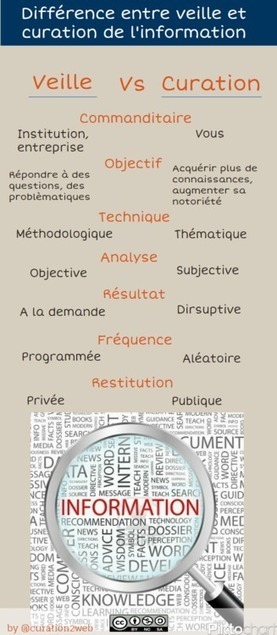
Aujourd’hui le métier de veilleur s’est démocratisé pour devenir un usage grand public permettant de diffuser de l’information déjà triée, évaluée et présentée sous une nouvelle forme. Ce nouvel usage...
Via Veille digitale
Scoop.it!
From
www

DrEd's online doctor service provides discreet, affordable online consultations and prescription treatments without needing to see a doctor face-to-face.
Via uri goren
Scoop.it!
Pharma spending more on digital marketing this year, study reveals | News Article | For many pharmaceutical brands, digital marketing investment is set to surpass budgets for traditional media | Communiqué...
Via uri goren
Scoop.it!

IN A windowless room on a quiet street in Framingham, outside Boston, Rob Goudswaard and his colleagues are trying to unpick the knottiest problem in health care: how to look after an ageing and thus sick......
Scoop.it!

En mars dernier, le Ministère chargé de la Santé diffusait une campagne d’information sur le bon usage du médicament intitulée « Les médicaments, ne les prenez pas n’importe...
Scoop.it!

Santé et Hôpitaux “Autrement” Dans son rendez-vous bimestriel accordé à MyDSI-Tv -le média des DSI créé par Accenture- Maître Alain Bensoussan, présente les aspects juridiques de la e-santé.
Scoop.it!
Sur le site de l'assemblée nationale on trouve deux rapports relativement récents qui méritent à mon sens une lecture, ils ont tout les deux été produits par l'Office Parlementaire d'Evaluation des Choix Scientifiques et Technologiques (OPECST ) saisi dans les deux cas par la Commission des affaires sociales de l'Assemblée.
Le premier "Maladies monogéniques, état des lieux" date du 28 mars 2012, et porte comme son nom l'indique sur les maladies monogéniques et plus largement sur les nouveaux enjeux autour des maladies rares pour les industriels, les patients... et les payeurs. Via dbtmobile
Scoop.it!

Ouest France EntreprisesTout le dossier médical sur un iPadOuest France EntreprisesElle est plus grande et permet désormais d'y glisser un iPad, la tablette tactile d'Apple. Via dbtmobile, AttractiveHealthcare
|
Scoop.it!

Medical Communication Strategies: e-Detailing -> Advantages in Medical communication http://t.co/u7nCadXc via @DigMedCom... Via Thierry Geufroi
Scoop.it!

Vous trouverez ci-dessous une interview de Marisol TOURAINE, ministre des Affaires sociales et de la Santé, publiée dans La Voix du Nord au sujet des nombreux chantiers sanitaires que la ministre souhaite conduire. Via Giovanna Marsico
Scoop.it!
Présentation Atelier e-santé du 24 mai 2012 sur la Carte de Professionnel de Santé (CPS) sous l’angle usages et déploiement par JY ROBIN, directeur de l'A (Check out this SlideShare presentation : Asip sante atelier_e-sante_cps_24.05.2012 Via Paris Healthcare Week
Scoop.it!

We can all agree that waiting in a doctor’s office can be one of the most frustrating and painful ways to interrupt your daily schedule. While it may certainly be important to see your doctor, the accompanying wait can lead to anger, frustration, a sense of helplessness, as well as a loss of productivity in your work schedule or delay or cancellation of planned activities.
Many doctors in a typical day may have unexpected delays oremergencies develop which prevent them from seeing you on time. In the past 10-15 years, physician assistants and nurse practitioners, serving as “mid level” providers, have greatly helped doctors manage a busy office schedule. The advent of hospitalists (doctors who exclusively take care of admitted patients in the hospital) has further helped physiciansremain on schedule in the office.
Some doctors, however, are quite punctual and remain on track throughout a day, seeing their patients at their scheduled appointment times. Depending on the type of physician, as well as the time of day, or day of the week, a delay in the schedule becomes an unfortunate and accepted part of the day by many patients.
In a recent healthcare commentary in the Baltimore Sun, “The High Cost of Waiting”, Ritu Agarwal concedes that “a physician’s time is perhaps the scarcest resource in our healthcare system, and needs to be utilized optimally”. While she agrees that doctors play a “noble” role in society by alleviating pain and suffering, she concedes that their time is seen as more valuable–so it is inevitable that the patient must wait, as opposed to the doctor. She explains further that although she may not have a job involved in”curing cancer”, her time is also valuable, in that she teaches and works with students who will eventually make positive contributions to our society. She expresses frustration reading the 3 month old Food and Wine magazine in her doctor’s office.
With the average wait time nearly 23 minutes for all hospitals and clinics according to 2010 data she cites, (with some patients obviously waiting much longer), Ms Agarwal proceeds to quantify the economic cost of waiting in terms of lost wages and productivity,($8.90 for 23 minutes spent waiting) based on an average hourly wage of $23.16 per hour (non- farm payroll). With nearly 110.5 million outpatient clinic visits according to Stratasan in 2010,(www.stratasan.com) and with nearly 61 million visits in the 25-65 age range (considered the productive workforce), it works out to nearly 500 million dollars lost per year (61 million x $8.90). With federal spending on healthcare projected to go to 3.4 trillion dollars in 2015 by Center for Medicare and Medicaid Services (CMS), 500 million is not so trivial, since the true estimate of lost productivity is likely to be significantly higher.
The ways a doctor’s office can help to alleviate prolonged waiting: - Using text messages to alert patients if a doctor is running late, or in fact, has a cancellation to fill for an earlier appointment. Have data on typical wait times and best times and days to have “on- time” appointments. -Offering house calls for patients who may only need blood draws and vital signs checked. - Having an updated online listing of all appointment times through an App or MD website - Offering free WiFi and computer tablets to increase patient satisfaction - Offering “no-wait” guarantees for added fees. Via Parag Vora
Scoop.it!
Information regarding cost, quality, procedures, diseases, medications, and providers is becoming increasingly available to the public via information technology media, including mobile smartphone apps, which are coming to serve as empowering tools to consumers.
Via nrip
Scoop.it!

Toshiba’s R&D department built ApriPetit as a successor to their larger ApriPoco. This little guy is about six inches tall and follows along to conversations by moving its slug-like body and eyes in ways that resemble proper conversation.
This wee fellow is designed to help older folks with their daily chores. Its eyes are expressive and will follow the user across a room and it can ask and answer simple questions relating to health and mood. Via Alex Butler
Scoop.it!

Pharmaceutical Industry | NEWS | | Digital Intelligence roundup - Includes Pfizer’s Dupuytren’s disease campaign, a Facebook app from ViroPharma, new marketing spend analysis and a digital tip of the week | PMLiVE...
Via uri goren
Scoop.it!

Most physicians own iPads or other tablet computers, and they are finding creative ways to integrate them into patient interactions and other aspects of medicine....
Scoop.it!

The vast majority of European internet users are watching TV, reading newspapers, and listening to the radio online, finds IAB Europe in a study released in May 2012....
Scoop.it!

Découvrez les dernières nouveautés de l’Internet santé francophone au cours du mois de mai 2012....
Scoop.it!

From
www
Etude Accenture – santé connectée : la France progresse dans l’adoption des technologies de santé...
Via Pharmacomptoir / Corinne Thuderoz
Scoop.it!

UBIFRANCE is bringing a delegation of French companies to the U.S. to enable professionals from both sides of the Atlantic to meet and share their expertise.
Via Gilles Jourquin
|




