Via Henri Lefèvre
|
|
Rescooped by
Lionel Reichardt / le Pharmageek
from E-Health
August 3, 2012 9:52 AM
|
Une veille sur la santé numérique en France et à l’international : politiques publiques, données, infrastructures, IA, services et usages. Études, rapports et retours de terrain sélectionnés par Lionel Reichardt, Pharmageek, pour comprendre les transformations et éclairer les décisions.
Your new post is loading...
Se tourner vers un système ouvert basé sur l'Opensource permettrait d'améliorer le partage d'informations et le diagnostic des médecins. Mais le succès dépendrait de la bonne volonté de la communauté de santé à contribuer au système.
Via Henri Lefèvre No comment yet.
Sign up to comment
Consumer health app iTriage is providing mobile appointment scheduling for Walgreen Co.’s Take Care Health Systems clinics in two major markets in a pilot program announced Wednesday.
Via Pharmacomptoir / Corinne Thuderoz
By Herve GABRIEL 03/08/2012 COMMENTS(0). Debut 2012 le cabinet Millward Brown a livré les 12 tendances qui, selon lui, chambouleront le Digital marketing en 2012. Profitons de cette période estivale pour faire le point ...
L'Agence des systèmes d'information partagés de santé (ASIP Santé) poursuit sa promotion de la carte professionnelle de santé (CPS) en lui consacrant un nouvel espace web. Retour sur les avantages de cet outil.
RT @NoelDominique: Quand la révolution du numérique impacte l'exercice médical.
With the American healthcare system ailing, more and more are turning to mobile health (mHealth) to provide the cure.
Top Five Trends Changing the Game in Global Healthcare IT http://t.co/WsQXBgXs...
This week a new San Francisco-based startup, Mango Health, which is developing a medication adherence app with social gaming elements, announced that it had scooped up $1.45 million in venture funding. Investors include Floodgate Fund, First Round Capital, Steve Anderson with Baseline Ventures, Zynga co-founder and CEO Mark Pincus and Square COO Keith Rabois, according to GigaOM. Via Henri Lefèvre
More than a quarter of the average worker's day is spent answering and reading emails, according to a new survey.
Le ProgrèsPourquoi nous cons ommons moins de médicamentsLe ProgrèsC'est la fin d'une exception française : nous ne sommes plus les champions de la consommation de médicaments en Europe.
[hopital.fr]Longtemps considéré comme le plus gros consommateur de médicaments, la France se situe dans une moyenne européenne depuis 2011.
Overview of results of 12 case studies where doctors’ reputations were improved with mobile technology and the impact they made on the profitability of their medical practices.
Via Dean Berg |
Do you want to rate your GP practice and give your doctor feedback about the care you have received? Do you want to know how well your local hospital is doing? NHS local is working with WMQI to provide clear information sourced from official data, patient surveys, your feedback and our partners. You can find out how we collect the data about GPs here and for hospitals on the What do these scores mean? page. Via David Foord
“We can just Google it!” is becoming our standard response to unanswered questions in life. Whether we are looking for the title of an irritating 80s song, a restaurant serving authentic Icelandic food or the quickest bus route to the Star Trek convention, the Internet usually offers the long-sought answers. However, when we enter key words in a search engine such as Google, we end up with thousands of websites – many of which are barely relevant to what we are looking for or are rife with inaccuracies.
Identifying the websites with the most accurate and relevant information are critical skills that are necessary for navigating our way in the digital information jungle, but unfortunately, these skills are rarely taught. In most cases, inaccurate or irrelevant information on the internet merely delays us for a few minutes until we do find the answer to what we are looking for. However, when it comes to medical information, inaccurate or irrelevant information could potentially have a major detrimental impact on our well-being. Via nrip
Le QR Code est un code barre à 2 dimensions qui permet de stocker des informations numériques (textes, adresses de site web, etc.).
Avec la complicité de l'agence JWT de New york et la collaboration de Jonhson & Jonhson , la Fondation Band-aid a mis en vente les premiers pansements à réalité augmentée.
A l'effigie des célèbres Muppets, ces pansements, présentés devant un iPhone ou un iPad font chanter Kermitt, déchainent Gonzo ou font se temousser Miss Piggy et font oublier l'espace d'un instant, le grand chagrin de vos bambins.
Une jolie idée certes qui détourne l'attention des enfants mais qui ne remplace pas un gros calin et un bisou de sa maman ou de son papa. Tous les petits vous le diront.
Une belle idée dont pourrait s'inspirer notre Télévie ...avec , pourquoi pas, la collaboration des pharmaciens pour la vente en officine ? Via zemoutonacinqpattes, Philippe Marchal
Whilst the whole interactive infographic is fascinating, the interfaces, sensors, robotics, biotechs and materials columns make interesting reading from a healthcare perspective.
Payers are taking the lead when it comes to achieving consumer engagement with mobile health (mHealth) tools.
Les ÉchosLa peur de perdre le tiers payant fait rebondir les génériquesLes ÉchosDans une majorité de départements, les patients qui refusent qu'un pharmacien leur délivre une version moins chère de leur traitement doivent désormais faire l'avance...
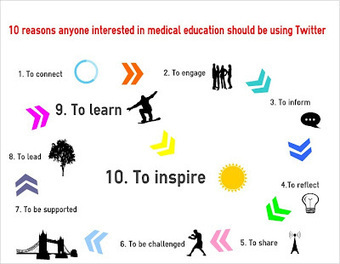
Anne Marie Cunningham (@amcunningham) writes:
'"My very first tweet was made in May 2008. preparing for a seminar on medicine and the media- thinking about health 3.0" — AnneMarie Cunningham (@amcunningham) May 27, 2008
I was invited to join Twitter by a friend who works in IT. It just happens that at the time I was still at work thinking about a teaching session so my first tweet has quite a strong medical education flavour.
Like many people I wasn't sure what to actually make of Twitter after this and I left it for several months until I went to two medical education conferences and decided that social media could serve a purpose for me.
But I'm not a techno-evangelist. I believe we have to be very careful about how we use technology and to consider how it impacts on relationships.
If you google web 2 (a term for newer social technologies including social media) sceptic then the top result is actually about me, because I have disputed with other doctors in the past that these technologies are having any impact on our clinical practice. And I am still uncertain about this.
However I am certain, and have decided that I can allow myself to be evangelical, about the benefits that can be had for anyone who is at this conference and is therefore interested in improving medical education. I started becoming aware of this a short while after starting my own blog in October 2008 which is why in 2009 I gave a presentation at [the Association for the Study of Medical Educaton Annual Scientific Meeting] ASME about how social media and networks could develop and support scholarship in medical education. However, this did not lead to the expected paradigm shift in scholarly communication. So I have decided that I might need to be a little more direct with you this time. And this is why I am going to give you 10 reasons why you should be on Twitter now.' Via AnneMarie Cunningham
ZDNetHôpital et patient connecté : pourquoi autant de retard en France ?ZDNetHôpital et patient connecté : pourquoi autant de retard en France ?
Algérie - le programme 2013 d'importation de médicaments sera ...Maghreb EmergentLe ministre de la Santé, de la population et de la réforme hospitalière, Djamel Ould Abbes, a affirmé, mardi à Alger, que les importateurs de médicaments recevront le...
On ne le sait peut-être pas assez mais les faux médicaments sont toujours plus nombreux et continuent de circuler à travers toute l'Europe. Il y a peu la Commission Européenne a dénoncé une explosion des retenues de ...
Proteus Digital Health has received FDA clearance for its ingestible sensor. The sensor (formally referred to as the Ingestion Event Marker or IEM) is part of the Proteus digital health feedback system, which also includes a wireless skin patch (previously called Raisin Personal Monitor) with which the sensor communicates. The sensor can be integrated into ingested products such as pharmaceuticals, to track when one actually swallows one of these substances. Via Henri Lefèvre |
Your new post is loading...