Your new post is loading...
Impact of Interactive Web-Based Education With Mobile and Email-Based Support of General Practitioners on Treatment and Referral Patterns of Patients with Atopic Dermatitis: Randomized Controlled Trial...
Via Giuseppe Fattori
Des milliards d'objets connectés : LeWeb12 se penche sur le futur ...La Tribune.frLa conférence LeWeb a pour thème cette année l'Internet des objets : domotique, e-santé, les applications d'appareils connectés sont multiples.
Via nathalie Bissot-Campos
Here’s a look at some of the key healthcare changes occurring right now, and some suggestions for how best to respond.
Via Richard Meyer

|
Rescooped by
Lionel Reichardt / le Pharmageek
from Healthcare
December 5, 2012 10:41 AM
|
Drug companies and universities are spending 55.6 million euros ($72.7 million) to develop a bank of stem cells to use in testing potential treatments for hard-to-treat diseases. The effort, known as Stembancc and managed by the University of Oxford in England, will focus on generating 1,500 induced pluripotent stem cell lines, researchers said at a London news conference. The cells will be used by drugmakers including Pfizer Inc. (PFE), Sanofi (SAN) and Roche Holding AG (ROG) to test treatments for peripheral nervous disorders, pain, dementia, migraine, autism, schizophrenia, bipolar disorder and diabetes and to perform toxicology tests.
Via OMP Digital
|
|
Rescooped by
Lionel Reichardt / le Pharmageek
from MedSM
December 5, 2012 9:43 AM
|
La « m-santé », ou santé mobile, définie comme la fourniture de soins de santé ou d’informations liées à la santé via un appareil mobile, est-elle une mode passagère ou un véritable mode alternatif de prise en charge ? L’étude « Emerging mHealth : paths for growth », réalisée par PwC auprès de 10 pays – Afrique du Sud, Allemagne, Brésil, Chine, Danemark, Espagne, États-Unis, Inde, Royaume-Uni et Turquie – montre notamment que l’adoption généralisée de la technologie mobile dans le domaine de la santé, ou m-santé, est aujourd’hui considérée comme inéluctable par plus de la moitié des médecins et des patients dans les pays développés et émergents du monde entier. Les attentes des patients sont élevées : environ la moitié d’entre eux prévoient qu’au cours des trois prochaines années, la m-santé améliorera la facilité d’accès, le coût et la qualité des soins. Ils sont convaincus que la m-santé modifiera la façon dont sont gérées les maladies chroniques, leur traitement et la santé en général. Ils anticipent que la m-santé modifiera les modalités de recherche des informations sur les problèmes de santé et sont convaincus qu’elle changera la manière de communiquer avec les médecins. Le rythme d’adoption sera probablement tiré par les marchés émergents où les soins manquent et les abonnements à la téléphonie mobile se sont généralisés. Ainsi, la m-santé y est perçue comme une manière de permettre l’accès à la santé, tandis que dans les marchés développés, elle est considérée comme un moyen d’améliorer la commodité, le coût et la qualité des soins.En revanche, les professionnels de santé – médecins et organismes payeurs – sont plus réservés. 42 % des médecins interrogés s’inquiètent de la trop grande indépendance que la m-santé donnera aux patients. D’ailleurs, parmi les patients qui utilisent déjà les services de m-santé, 59 % déclarent que ces services ont déjà remplacé des consultations de médecins ou des soins infirmiers. Les débouchés pour les industriels existent donc à condition de se focaliser sur des applications intelligentes à forte valeur ajoutée pour les patients et dont l’efficacité clinique est reconnue par les professionnels de santé. Les industriels doivent créer des solutions qui dépassent la technologie et s’approchent de la valeur ajoutée qu’un médecin pourrait apporter. Car les services demandés par les patients sont ceux qui aident à communiquer avec les professionnels de santé, à gérer leur bien-être, à donner des informations sur la santé et les médicaments, et enfin à diffuser des informations sur leur état de santé aux professionnels concernés. Élisabeth Hachmanian, associée, consulting secteur public, PwC elisabeth.hachmanian@fr.pwc.com
Via Henri Lefèvre, dbtmobile
ISR's report compares and contrasts prescribers' experiences with electronic and in-person detail sessions across three European countries (United Kingdom, Germany, and France) and three therapeutic specialties (Respiratory / Pulmonology, Cardiovascular,...
Via Nikos Papaioannou
US : les mobinautes consacrent 30% de leur surf aux réseaux sociauxJournal du NetLe mobile, Pinterest et Twitter auront été les principaux leviers de croissance des réseaux sociaux en 2012, aux Etats-Unis, selon le Social Media Report de Nielsen.
Via Esposito Christelle
|
|
Scooped by
Lionel Reichardt / le Pharmageek
December 5, 2012 12:52 AM
|
'Inspiratio, les pouvoirs du masque magique' : nom et base line du serious game qui vient d’être conjointement lancé avec respiradom.fr, site communautaire autour du patient atteint d’un syndrome d’apnées du sommeil… Avec deux idées-forces :...
Brian Temple’s wife finally persuaded him to have a doctor check the large mole on his head.
Via dbtmobile
Motivating behavior change has long been one of the biggest challenges and opportunities in mobile health. One avenue for addressing that challenge is to take lessons from a field that doesn’t suffer from any engagement problems: gaming.
Via Olivier Delannoy
|
|
Scooped by
Lionel Reichardt / le Pharmageek
December 5, 2012 12:38 AM
|
Deux récentes études menées par le Pew Research Center aux Etats-Unis sur les comportements des utilisateurs de smartphones révèle que l'utilisation première d'un terminal mobile n'est pas la téléphonie.
Data-driven healthcare won’t replace physicians entirely, but it will help those receptive to technology perform their jobs better. This is type of suggestion is dangerous. Nothing can replace a physician
Via Richard Meyer
|
Healthcare organizations are rapidly trying to reinvent themselves in light of the new rules of the game. One could argue it officially started October 1st of this year with Medicare’s readmission penalties. People are calling this the “no outcome, no income” era. While it may look the same from the outside, I can’t think of a bigger change facing an industry. Almost overnight, what a healthcare provider was previously rewarded for (e.g., ordering tests, hospitalizations, etc.) they will now get penalized either directly or indirectly. In my role introducing patient relationship management systems, I’ve had the opportunity to speak with and observe many “Innovation” organizations that have been set up in virtually every health system in the country (and most health plans and pharma as well). The innovation groups have been established to respond to the daunting changes their organizations are facing. I’ll draw an analogy to distinguish two approaches to tackling a changing industry landscape. Having spent the 90′s at Microsoft, I saw two major efforts to push into a new areas with MSN and Xbox where the rules of competition were radically different. In the last 15 years, I’d argue Xbox is one of only two stand-alone successes Microsoft has had (the other is Expedia). This, despite spending billions on MSN. Unfortunately, I am observing most healthcare providers choosing the path MSN took. Innovation Through the Filter of Existing Operations Ensures Failure Let me describe what happened with MSN and you’ll find it has striking similarities with what most health systems are doing today. That is, applying old strategies in a new landscape where the rules are very different. Microsoft’s Achilles Heel in online services was that it’s historic success was putting laser focus on an established competitor. That’s fine when there is a WordPerfect, Lotus or Mac who has already developed a market. The challenge is it’s hard for a big company to take seriously a new market segment when its initial revenue impact is a tiny fraction of their existing business. Microsoft, after all, was in the search business well before Google was founded. However, since Search didn’t appear to have much impact on gaining marketshare in the ISP business, it didn’t get sufficient focus until it was too late. Through the ISP lens, Search didn’t have much effect, but that viewpoint blinded Microsoft to the massive opportunity Search became. Interestingly, there was a short period of time where MSN’s advertising business was off the radar of Microsoft’s senior executives (they were focused on MSN as an ISP trying to build an “AOL Killer”) and thus was unshackled. During that time, MSN’s ad business became a billion dollar, profitable enterprise. Shortly after abandoning the ISP business, MSN’s fate was sealed when it was infused with former Windows and Office leaders. Those two businesses, as two of the most successful franchises in the history of business, have continued to fund Microsoft’s online services losses. However, bringing in Windows and Office leaders shackled MSN with thinking that these businesses were applicable to MSN’s business. Many of MSN’s decisions were put through the lens of Windows/Office. It became a running joke about how many times one would hear “this is just like Windows/Office” come from the Windows/Office alums. Actually, what it takes to succeed in Internet services has almost nothing to do with Windows/Office. If it did, you’d see a bunch of Windows/Office alums leading Google, Facebook and Twitter...
Via Thibaud Guymard
Modernizing Medicine has raised $12 million in funding to continue its efforts to bring medical records into the cloud. The South Florida-based company known for its electronic medical record (EMR) application for the iPad. It said the investment was led by Pentland Group and included many of its physician customers.
Via Alex Butler
|
|
Scooped by
Lionel Reichardt / le Pharmageek
December 5, 2012 12:41 PM
|
The first International Urology Journal Club #UROJC discussion on Twitter took place over a 48-hour period as physicians from around the world weighed in...
|
|
Scooped by
Lionel Reichardt / le Pharmageek
December 5, 2012 10:00 AM
|
|
|
Scooped by
Lionel Reichardt / le Pharmageek
December 5, 2012 9:07 AM
|
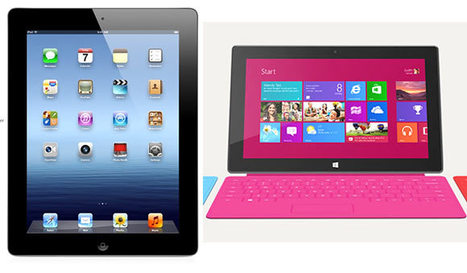
Cegedim Relationship Management today announced the release of its thought leadership report, 2012 US Pharma Insights, which provides the results of its third annual survey of life sciences decision makers on current challenges, upcoming business developments, preferred strategies and next generation technology. Leveraging analysis from three years of responses, the report delivers a holistic view of present and future trends. The Shape of Change in Decision Making, Industry Concerns and the Future Sustained industry concerns, evolved decision making leadership and new future strategies top 2012’s trends. Aligning with previous years’ responses, 74% of respondents ranked the changing commercial business model as their first, second or third priority of concern; followed by regulatory reform (62%) and market access (53%). Additionally, decision making leadership now sources from executive management for most technology decisions (46%); and strategy/business development for main business model/process changes (55%). Further, respondents clearly defined the following prioritized changes for the near future: increased focus on market access strategies (64%), primary sales force realignment (38%) and increased focus on managed markets (35%). Boosts in Field Centric Tablet Usage, Preference for Apple® Mobile OS and Noteworthy Social Media Gains Surveyed executives cite continued focus on field centric tablet usage, their preferred mobile OS and social media. Eight out of ten (80%) currently use or will be using tablets, and unsurprisingly, field sales/account management (61%) account for the most active tablet users. Further, exactly half selected Apple OS as their favorite mobile platform. In terms of social media trending, the report underscores significant increases in usage between 2011 and 2012. LinkedIn (96%) and Facebook (70%) represent respondents’ leading channels with marketing (64%), PR (42%) and sales (38%) make up the most active departments. Lastly, despite minor social media budgets, those surveyed exhibited notable gains according to the report. “The 2012 US report details exactly how and where our current industry climate is impacting strategy and operations. Respondents report strong focus on business model changes, as well as next generation and mobile technologies,” said Angela Miccoli, President of North America, Cegedim Relationship Management. “In order to further our standing as the leader in pharma CRM, data and compliance solutions, we strive to consistently monitor the pulse of the industry, and empower our customers with our proven insights and expertise.”
Report from M2 Research projects tremendous growth (Gamification market to reach $2.8 billion in 2016, by Steve Peterson http://t.co/dUyuOM9T games based learning game #gbl...)...
Via Matmi
Hervé Gisserot, président-directeur général de GlaxoSmithKline (GSK) France et vice-président senior Europe, vient d’être élu pour deux ans président du LEEM (Les Entreprises du Médicament).
Via Pharmacomptoir / Corinne Thuderoz
45 Mind Blowing Digital Health Statistics and Trends as the second installment of our 4 part Mind Blowing HIT Stats and Facts series...
Via Dan Baxter
|
|
Scooped by
Lionel Reichardt / le Pharmageek
December 5, 2012 12:51 AM
|
RT @oseo : #Interview : @jeromeleleu présente l'activité du Groupe Interaction http://t.co/cKiD8Hhk #numérique #web #esante #seriousgame...
In corporate offices, on the street, in coffeehouses, and in the home, smartphones and tablets are becoming ubiquitous, changing the way people interact with each other and interface with the world. Doctor’s offices are no exception to this trend, as mobile devices like iPads, laptops, and smartphones revolutionize the way physicians capture information and connect with patients. Laptops and workstations on wheels remain the most popular devices for physician use, since they provide direct access to the full EHR interface, but tablets are catching up quickly. With the popularity and relative cost-effectiveness of tablets like the iPad, Kindle Fire, and other Android devices, even devices not specifically designed for healthcare are finding a place in the consultation room. According to the survey, approximately 30% of physicians and non-physician clinicians use mobile devices to facilitate between one quarter to three quarters of patient services, while 9% indicate that 75% to all of their services rely on mobile technology to some degree.
Via nrip
A Healthcare Information and Management Systems Society survey finds that 45% of surveyed IT workers at health care organizations say clinicians use mobile devices at a patient's bedside.
(...) "The report found that about half of surveyed IT professionals believe that the use of mobile technology will significantly affect patient care. It also found that: - 45% of respondents said clinicians at their organization use mobile devices to collect data at a patient's bedside, up from 30% last year;
- 38% said clinicians use mobile devices to read bar codes, up from 23% last year;
- 34% said clinicians monitor data from mobile devices, up from 27% last year (Walsh, Clinical Innovation & Technology, 12/3); and
- 27% said clinicians use the camera on their mobile device to capture patient data, up from 13% last year.
About 25% of respondents said that all patient data captured by clinicians' mobile devices are integrated with the patient's electronic health record (MobiHealthNews, 12/4).
Read more: http://www.ihealthbeat.org/articles/2012/12/4/surveys-many-clinicians-use-mobile-devices-in-patient-care.aspx#ixzz2E7EuBJ8v
[CE: Health Information Security Experts banging their heads on their desks in 3, 2, 1...]
Via Camilo Erazo
|
|
Rescooped by
Lionel Reichardt / le Pharmageek
from Pharma Hub
December 5, 2012 12:37 AM
|
Distinct concerns with the flux of the current commercial model and reinforces the support for digital solutions.
Via Philippe Marchal
|