Your new post is loading...
Merck, AstraZeneca, Pfizer top list of biggest pharma job-cutters
FiercePharma
Declining productivity in Big Pharma R&D. The shift to specialty drugs that can be promoted without a small army of sales reps.
Via Antoine POIGNANT, MD
New York, NY-based non-profit Stupid Cancer, one of the largest pediatric cancer non-profits in the country, launches a crowdfuding campaign to raise funds
Via Sam Stern

|
Scooped by
Lionel Reichardt / le Pharmageek
October 10, 2013 4:50 PM
|
Une étude publiée par Xerfi-Precepta estime le marché de l'e-santé à 2,4 milliards d'euros pour l’année 2012. Et cela devrait progresser de 4% à 7% / an d'ici 2017.
|
|
Scooped by
Lionel Reichardt / le Pharmageek
October 10, 2013 12:07 PM
|
Reproduced with the permission of the author.
At EyeNetra, the startup he cofounded, goofy curiosities like plastic eyeballs line the shelves, and a 3-D printing machine whirs in the background. It’s printing out prototypes of a device that will attach to your smartphone and, in a minute or two, tell you what kind of eyeglasses you need. The device, called the Netra-G, is based on some clever optics and software Pamplona came up with—a way to measure the refractive error of the eye using a smartphone screen and an inexpensive pair of plastic binoculars. The whole setup might cost a few dollars to make. It does the job of a $5,000 instrument called an autorefractor.
More important, just about anyone could use it. That’s where the disruption comes in—and the trouble. Right now, only doctors or optometrists can prescribe glasses or contact lenses. Pamplona, a brash Brazilian programmer who arrived in the U.S. a few years ago, thinks that won’t always be the case. “We’re changing medicine by providing the user the right to measure themselves,” he says. “We see doctors as more of a coach.”
Via Alex Butler, Dan Baxter
|
|
Scooped by
Lionel Reichardt / le Pharmageek
October 10, 2013 12:19 AM
|
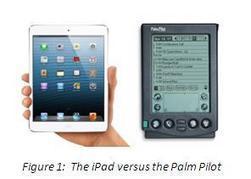
edical device and pharma companies extol the importance of their sales forces. They provide face time with customers that help drive product sales. On many occasions, marketing and sales representatives literally have only seconds to pitch their product to a busy doctor. Many medical device industry leaders I have spoken to throughout the years have joked about the literal nature of the proverbial "elevator" pitch. The iPad allows for innovative and engaging ways for reps to communicate product information to doctors, without having to worry about long boot times and wasted precious interaction moments. A representative of Novartis states: "... IPad use will save sales teams 250 hours a year allowing for 35,000 more customer visits." According to the Manhattan Research Group's research on the advantages of iPad aided interactions with doctors and its relation to increased sales2: "... Among ePharma Physicians interacting with an iPad Rep, 35 percent say they are more likely to request a sample and 29 percent say they are more likely to consider prescribing the drug.
Amazon, Cemex, 23andMe, Xerox et Hilti... Ces entreprises ont repensé leur business model en se centrant sur les besoins clients, en modifiant leur offre, leurs mode de revenus, ou en misant sur leurs ressources. Extraits du livre "Business Model, Nouvelle Génération".
Via Herve Perret, Michel Onkur, Lockall, Augustin
|
|
Scooped by
Lionel Reichardt / le Pharmageek
October 9, 2013 7:20 AM
|
|
|
Scooped by
Lionel Reichardt / le Pharmageek
October 9, 2013 3:33 AM
|
El evento tendrá lugar el 14 de noviembre en Madrid en el Centro de Innovación del BBVA
|
|
Scooped by
Lionel Reichardt / le Pharmageek
October 9, 2013 1:43 AM
|
À l’appui des recommandations du rapport Cordier, la ministre de la Santé a dévoilé ce matin la feuille de route gouvernementale pour la...
|
|
Scooped by
Lionel Reichardt / le Pharmageek
October 9, 2013 1:30 AM
|
A patient-facing app from CyberDoctor is taking a new approach to addressing the $290 billion a year problem of medication adherence.
|
|
Scooped by
Lionel Reichardt / le Pharmageek
October 8, 2013 3:48 PM
|
Ce document est une mise à jour de l’étude « Biomédicaments en France : état des lieux 2011 ».
|
iMedicalApps' breaks down the recent final guidance from the FDA on how it intends to regulate mobile medical apps. (Are you unsure on what FDA regulations state about mobile apps?
Via Gilles Jourquin
Interview with Unity Stoakes
The 1st of October 2013 marks another memorable date in the US healthcare history of change and revolution. An
Via Bart Collet
|
|
Rescooped by
Lionel Reichardt / le Pharmageek
from Doctors Hub
October 10, 2013 1:34 PM
|
|
|
Scooped by
Lionel Reichardt / le Pharmageek
October 10, 2013 3:36 AM
|
The new tools aim to help patients and providers better track blood glucose levels and administer insulin.
|
|
Scooped by
Lionel Reichardt / le Pharmageek
October 10, 2013 12:24 AM
|
Selon une enquête menée par le Groupe Pasteur Mutualité/Viavoice, 56 % des Français voient dans les applications smartphone un progrès pour la médecine.
In our second instalment on CEE startups in the medical and health sectors, we look at the prospects in the EU
Via Bart Collet
|
|
Rescooped by
Lionel Reichardt / le Pharmageek
from Pharmabook
October 9, 2013 7:12 AM
|
"My doctor may not even want the data from my mobile phone that tells me about my health, but I can use that data to start a conversation with my doctor and that may be one of the most important ways we create social interoperability around these...
Via Philippe Loizon
|
|
Scooped by
Lionel Reichardt / le Pharmageek
October 9, 2013 1:44 AM
|
Vous et votre téléphone intelligent êtes inséparables? Si c'est le cas, vous n'êtes pas seul(e) – de nombreuses recherches montrent que nous devenons de plus en plus accros à nos téléphones.
|
|
Scooped by
Lionel Reichardt / le Pharmageek
October 9, 2013 1:33 AM
|
Le Collège des anesthésistes va mettre en place un numéro vert pour aider les praticiens en épuisement professionnel. (Tél. : 0.800.00.69.62 : Une ligne d’écoute pour médecins en souffrance| La-Croix :
|
|
Scooped by
Lionel Reichardt / le Pharmageek
October 8, 2013 6:14 PM
|
Consumer technology and telecom companies are changing the pace of innovation in health care, putting traditional med tech firms in an uncomfortable position, according to a new report from PricewaterhouseCoopers.
|


 Scoop.it!