


by Christiane Truelove (chris.truelove@ubm.com)
Cegedim Relationship Management is casting its lot in the online doctor social community category in the United States with its own offering, Docnet.


Une veille sur la santé numérique en France et à l’international : politiques publiques, données, infrastructures, IA, services et usages. Études, rapports et retours de terrain sélectionnés par Lionel Reichardt, Pharmageek, pour comprendre les transformations et éclairer les décisions.
 Your new post is loading...
 Scoop.it! by Christiane Truelove (chris.truelove@ubm.com) 
No comment yet.
Sign up to comment
Scoop.it!

The BMJ is using Pinterest, an online pinboard to collect and share what inspires you. Via Family Doctor
Scoop.it!

Personalized medicine is the tailoring of a medical treatment to the individual characteristics, needs and preferences of a patient. Many recent advances involve using a patient's genetic information to guide his or her treatment. Developing a truly personalized approach to patient care will require fundamental advances in the understanding of the biological, anatomical and physiological mechanisms that underlie disease, and how they are affected by environmental, genetic, social and cultural factors. To describe its unique responsibilities and its efforts in facilitating the advancement of personalized medicine, the Food and Drug Administration (FDA) has released a new report entitled "Paving the Way for Personalized Medicine: FDA's Role in a New Era of Medical Product Development FDA's commitment to personalized medicine dovetails with its focus on advancing regulatory science, which is the science of developing new tools, standards and approaches to assess the safety, effectiveness, quality and performance of FDA-regulated products. Here are some examples from the report of how FDA is using regulatory science to help speed the development of promising new personalized medicine therapies. Virtual patient: Advances in medical imaging and the power of computers to create virtual, anatomically correct models of the human body have enabled the use of patient-specific computer simulations in clinical practice and medical device development. This has facilitated the creation of personalized, custom-built medical devices. FDA's Center for Devices and Radiological Health (CDRH) is developing a publicly available digital library of such models and simulations. This space for collaboration and sharing will help advance the personalization of medical device development and use. Clinical Trial Designs and Methods: FDA is working to refine clinical trial design and statistical methods of analysis to address issues that often arise in the development of targeted therapeutics. The agency is also looking specifically at clinical trials for the development of cancer drugs. For example, FDA is participating in the "I-SPY 2 Trial," a groundbreaking clinical trial model that will help scientists quickly test the most promising drugs in development for women with rapidly growing breast cancers. Biology of cancer: FDA's National Center for Toxicological Research (NCTR) conducts research to improve the understanding of cancer's underlying biology. A research project focused on the KRAS oncogene, for example, established that many tumors carry subpopulations of KRAS mutant cells, which can contribute to an acquired resistance to some cancer treatments. Identification of genetic risk factors for vaccine reactions: FDA's Center for Biologics Evaluation and Research is involved in research collaborations that focus on identifying genetic risk factors associated with negative reactions to vaccines. Genetics and cardiovascular risk: In collaboration with researchers at the University of Maryland, scientists at NCTR are conducting research to identify genetic factors that interact with common lifestyle factors—such as diet and drug exposure—to contribute to cardiovascular disease. Personalized medicine for heart devices: Researchers at CDRH have made major advances in understanding the underlying biology of heart disease. They have used new methods to analyze electrocardiograms to identify the causes of heart disease and to predict which patients will benefit from specific cardiovascular treatments. These new methods are being used by outside research groups and may be used to design more efficient clinical trials in the future. more at the original: http://www.fda.gov/ForConsumers/ConsumerUpdates/ucm372427.htm
Via nrip

Joel Finkle's curator insight,
November 25, 2014 10:33 AM
New FDA report on personalized medicine. We're not quite to the home "autodoc" but more treatments will be tailored to each patient's genome, for greater safety, efficacy, and probably cost.
Scoop.it!
Scoop.it!
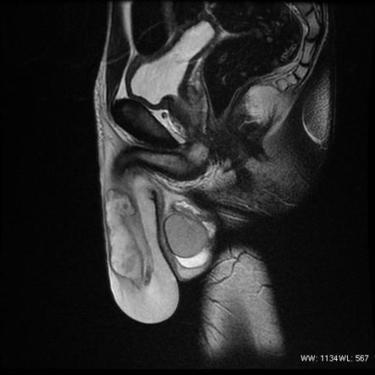
Radiopaedia.org, the online collaborative radiology resource
Radiopaedia.org is a rapidly growing open-edit radiology resource primarily complied by radiologists and radiology residents/registrars and fellows from across the globe. The site aims to create the best radiology reference available, and to make it available for free, forever and for all. It is designed to facilitate a meaningful collaboration between all our contributing users, as well as allow non-contributors to browse through thousands of articles and interesting and illustrative cases. Read more about getting involved. The open credentials and desire to create a fee world-class resource are similar to those of wikipedia. However, the importance of accurate information means that additions checks and balances are required for Radiopaedia.org and our section editors provide this. They constantly review additions and changes to articles and cases, something that is facilitated by being spread around the globe through a variety of time zones. (...) Radiopaedia.org is more than just a reference site. - case of the day - highlights a selected case which is presented on this page every day - subscribe to RSS feed - radiology channel - our youtubeTM channel which contains video tutorials on various topics - radiology signs tumblrTM blog - high quality radiological signs added on Monday, Wednesday and Friday - playlists - collate, group or share your favourite cases from either your own case library or from others - tumblr feed - a dedicated tumblrTM feed for the site - iOS radiology teaching files - contains collections of cases with questions, illustrations, answers as well as relevant articles with pathology - twitter feed and facebook page - includes the case of the day and other information about the site and organisation - pinterest board - a dedicated pinterestTM board - instagram page - projects interesting images through instagramTM - collaborative publications - a great way to team up with other users and submit posters and publications for international conferences and journals - the radiopaedia blog - subscribe to upcoming events and comment on discussions
Scoop.it!

Knowing your customer has become increasingly complex as the customer is rapidly transforming into a multichannel user who communicates with a Retail Brand through various channels or touch points. By building a single customer view ... Via Antonios Bouris, Gerrit Bes
Scoop.it!

Le père de la « relance » duDMP quittera à la fin du mois la direction de l’Agence des systèmes d’information partagés de Santé (ASIP-Santé), annonce ce jeudi le ministère de la Santé. Jean-Yves Robin, qui avait pris la direction du GIP-DMP en décembre 2008 (transformé en ASIP-Santé au printemps suivant), n’aura pas survécu aux difficultés rencontrées dans le déploiement du dossier médical, voulu dès 2004 par Philippe Douste-Blazy. Via Thibaud Lopez, Henri Lefèvre
Scoop.it!

NRW innovates Healthcare Meetup @ Bayer powered by Grants4Apps. Funding opportunities for Life Sciences and Healthcare IT Startups from NRW will be presented, Startups will pitch their projects. Via Bart Collet
Scoop.it!

Découvrez Natom Viewer, l'application d'images médicales pour tablette et smartphone qui révolutionne la communication entre médecin et patient. Via Guillaume de DURAT
Scoop.it!

Continuing our blog series discussing where we expect pharma marketers to be with their digital marketing strategies in 2014, we continue this week w Via COUCH Medcomms, Ricard Robledo
Scoop.it!

Take a look at this list, if you need some inspiration for your next hospital app. (5 examples of health mobile apps http://t.co/mxpnVmW4vj) Via Family Doctor
Scoop.it!

ompanies marketing products without the proper clearance are happening all over the digital landscape from prestigious institutions like the Cleveland Clinic. Via Bart Collet
Scoop.it!

Via eMedToday
|
Scoop.it!

A diagnosis of bad advertising Time and time again, I see the typical healthcare advertising image--the empowered customer, the smiling patient, the striding athlete and the achieving child. Via Sam Stern
Scoop.it!

Gaming in healthcare is a rapidly developing industry within the digital health space, which aims to bridge the gap between medicine, entertainment, technology and education.
Scoop.it!
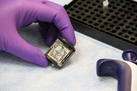
New tools for analyzing genes are allowing doctors to personalize treatment for some lung cancer patients. Imagine your doctor being able to scan your DNA from a biopsy and pinpoint the medicine that will work best for you. This type of high-tech approach is a clinical reality for advanced lung cancer at The Ohio State Comprehensive Cancer Center – Arthur G. James Cancer Hospital and Richard J. Solove Research Institute (OSUCCC – James). The technology, known as next generation "multiplex" gene sequencing, analyzes 50-plus genes in DNA extracted from a tumor biopsy for particular genetic mutations. Previous technology required pathologists to analyze one mutation per tube in a sequencing reaction, but next-generation genome sequencing assesses more than 2,500 mutations in a single reaction. Knowing which mutations are present in lung tumors can help doctors tailor a patient's treatment to the unique genetic features present in his or her cancer cells. The knowledge can also help in the development of new drugs that target previously unrecognized gene mutations in lung tumors. I often compare these genes to the gas pedal in a car — when activated, these genes make the cancer grow. By breaking the linkage between the gas pedal and the motor (or interfering with these "driver" mutations) with specific targeted drugs, doctors can stop this growth and often make the cancer shrink. That's especially important in lung cancer because the majority of patients with this disease are diagnosed in the later stages, meaning it's important to start effective therapies quickly. For example, a patient could be given a standard chemotherapy and expect a 25- to 30- percent response rate/shrinkage of a tumor. But if the treatment team knows that a patient has a mutation in a gene called EGFR, we can offer him or her a pill (erlotinib and afatinib are approved for this use in the United States), which has a 75-percent response rate and fewer side effects. Gene sequencing is now considered the standard of care for stage-4 lung cancer patients at The OSUCCC – James and a handful of other centers across the United States — and several clinical trials evaluating molecular targeted therapies for patients with stage-3 lung cancers will soon start at The OSUCCC – James. Lung cancer remains the number one cause of cancer death in the United States, and in the world, among both men and women. More than 200,000 cases are diagnosed annually in the United States. Each year during the month of November, physicians and others observe lung cancer awareness month, which sheds light on this terrible disease. Via nrip
Scoop.it!
In a healthcare system that emphasizes "getting it quickly," Best Doctors is singularly focused on "getting it right." Best Doctors helps our members with vi... Via Best Doctors
Scoop.it!

Being a medical futurist means I work on bringing disruptive technologies to medicine & healthcare; assisting medical professionals and students in using these in an efficient and secure way; a... Via Naturalpad, AttractiveHealthcare
Scoop.it!
Scoop.it!

Des adultes majoritairement préoccupés par leur santé, des jeunes stressés, la santé mentale des Français n’est pas au beau fixe, selon ce second Baromètre de la Santé des Français proposé par AXA Prévention. Via Marie Françoise de Roulhac
Scoop.it!
It’s a pretty good bet that many of the doctors, nurses, allied health professionals and pharmacists in your organization have a smartphone and use it on a regular basis. But what are they using it for? To connect with friends through social media? To search for healthcare information relevant to their jobs? To network with others in their profession? Yes, yes, and yes. AMN Healthcare recently released the results of its 2013 Survey of Social Media and Mobile Usage by Healthcare Professionals: Job Search and Career Trends. The results showed that healthcare professionals are constantly refining their use of social media, as well as their use of mobile technology. According to the survey, three out of four healthcare professionals now use a smartphone, with a growing number using their smartphones to access healthcare-related content and job information. In fact, the use of social media for job searching purposes has almost doubled since the first social media survey was conducted in 2010, and now reaches 41 percent. Via Marie Ennis-O'Connor
Scoop.it!

Would our demo sessions be interesting for you? They should be, if you’re looking for a closed loop marketing solution. Via eMedToday
Scoop.it!
|

|
Rescooped by
Lionel Reichardt / le Pharmageek
from Patient Centered Healthcare
December 1, 2013 2:41 AM
|
Scoop.it!
As a family doctor based in Brooklyn, New York, who has served the needs of my community since completing residency in 1982, I find myself with a unique privilege and opportunity to observe disease and wellness, the effects of lifestyle, policy and the collective efforts of myself and others, as we attempt to keep our patients well and affect the statistical bottom line. I’m typing this as I also think about the more than 10% of diabetics who are listed in my practice. A prime example of a need for population management if there ever was one.
Given my large population of diabetes patients and years, upon years of experience diagnosing and treating this disease, I wanted to share my story and approach to managing this population.
While there has been some improvement due to total team effort between my staff, insurance company reminders, patient education and incentives to patients, still greater than 50% remained uncontrolled with A1c levels greater than 7.0% and 20% with A1c levels greater than 10.0%. Tragically, we have had patients that have lost sight, limbs and kidneys in the last year to uncontrolled diabetes, Every cardiovascular complication has been manifest in one way or the other.
Read more at: http://www.kevinmd.com/blog/2013/11/diabetes-word-diagnosis.html
|
|
Rescooped by
Lionel Reichardt / le Pharmageek
from Health Care Social Media And Digital Health
December 1, 2013 2:38 AM
|
Scoop.it!

UCLA Health made excellent use of social media in their healthcare marketing with their live Twitter and Vine coverage of Brad Carter's brain surgery.






