E-SANTÉ : COMPRENDRE. RELIER. TRANSFORMER.
315.6K views | +1 today
E-SANTÉ : COMPRENDRE. RELIER. TRANSFORMER.

Une veille sur la santé numérique en France et à l’international : politiques publiques, données, infrastructures, IA, services et usages. Études, rapports et retours de terrain sélectionnés par Lionel Reichardt, Pharmageek, pour comprendre les transformations et éclairer les décisions.

ESSAI
Your new post is loading...
Rescooped by Lionel Reichardt / le Pharmageek from Social Media and Healthcare
September 5, 2014 1:29 AM
Scoop.it!

Technology in Academic Medicine: Integrating Digital Literacy into Medical Education

Technology in Academic Medicine: Integrating Digital Literacy into Medical Education | E-SANTÉ : COMPRENDRE. RELIER. TRANSFORMER. | Scoop.it

As social media plays an increasingly important role in health care delivery, a growing number of medical educators are helping future physicians develop what they call digital literacy and digital professionalism.

Bertalan Meskó, M.D., Ph.D., a medical futurist who travels the world consulting and lecturing on digital literacy in health care, frames digital literacy as “the way that medical professionals can use digital devices as well as online solutions in communication with patients and their peers.” Meskó believes that “today’s medical professionals must be masters of different skills that are related to using digital devices or online solutions” and argues that mastering those skills “is now a crucial skill set that all medical professionals require.”

Bryan S. Vartabedian, M.D., an assistant professor of pediatrics at Baylor College of Medicine, suggests that because digital tools have become so pervasive in medicine, medical schools have an obligation to help medical students learn how to be smart about them and to apply professional standards in their use. The rise of social media and networked communications means that “physicians now have to learn to manage and maintain their identity in the public space,” Vartabedian said.

“This is brand new. For the better part of modern civilization, physicians only had to worry about their image during a 15-minute encounter with the patient,” Vartabedian said. “Now, the democratization of media has made every physician an independent publisher. That brings a whole new set of responsibilities for which physicians need to be trained. Under what context do we discuss certain items? How do we manage our online identity? What can we do and what should we not do with smartphones?”

While digital literacy is not yet part of the core curricula in medical schools, it is beginning to appear more regularly and more formally as extracurricular learning.

At the University of California, Irvine, School of Medicine (UC Irvine), for example, medical students can take the elective Health 2.0 + Digital Literacy. Designed to fill gap in student understanding about emerging trends in health care technology and social media, the course focuses on such topics as how to manage requirements for the Health Insurance Portability and Accountability Act (HIPAA), data security, health record protection, and the emerging importance that digital tools have in patient-centered health care.

The school periodically offers short training sessions on digital literacy. “We catch students at their first-, second-, and third-year orientations and again before they graduate,” said Warren Wiechmann, M.D., M.B.A., associate dean of instructional technologies at the school. “We talk about the basics of social media and professionalism, and also cover newly emerging technologies like Google Glass and 3-D printing. We’ve also put on a session about how to curate content on the Web.”

In addition, he said, the school offers workshops on what qualifies as a good website or smartphone app. Other sessions look more broadly at topics in health information technology, including the business of technology and how the startup market works.

At Baylor, Vartabedian developed a course called Digital Smarts, which helps medical students develop a professional, safe, and intentional strategy for their interactions with social media. Like UC Irvine, Baylor takes a longitudinal approach.

“Digital Smarts aims to prepare our students for the realities of the digital age,” Vartabedian said. “We effectively touch our students at three or four points over the course of three or four years. At orientation, we cover very broad issues about students’ online identity and topics like the permanence of digital messaging. When they hit 18 months, right before they go to the ward, we talk about more specific clinical scenarios they will face, such as what you should and shouldn’t do when communicating with patients on platforms like Twitter.” For fourth-year students, the focus switches to such topics as how students can build a digital footprint and how they can present themselves online as they advance into residency and start to groom themselves for new jobs.

Under the aegis of the AAMC Group on Information Resources, Vartabedian and Wiechmann collaborated with Katherine Chretien, M.D., an associate professor of medicine at the George Washington University School of Medicine & Health Sciences, and Neil Mehta, M.D., an associate professor of medicine at the Cleveland Clinic Lerner College of Medicine at Case Western Reserve University, to develop a digital literacy toolkit for educators and learners. Available online through the AAMC, the toolkit includes case studies and guidelines on the use of social media, educator notes, and other resources.

“The concept behind the toolkit was to put together a set of materials that any faculty member, from the most junior faculty member to a dean, can use to host a meaningful discussion about social media, digital literacy, and digital professionalism,” Wiechmann said. “You don’t need to have an expert on campus or in a program to be able to have these discussions.”

Vartabedian said that because social media “now represents the modern means of both sharing information and communicating,” tomorrow’s physicians need specific training that can help them be professional in their use of digital tools. “The public presence of the physician is something that needs to be taken very seriously,” he said. “I might even go further to suggest that medical schools have a civic if not a moral obligation to be preparing our students for how to maintain themselves in the public space. Medical schools have a responsibility to help students understand where the limits are.”


Via Plus91
No comment yet.
Rescooped by Lionel Reichardt / le Pharmageek from Digital News in France
September 4, 2014 3:56 AM
Scoop.it!

Après la 3D, voici la 4D, qui inclut... le sens du toucher

Après la 3D, voici la 4D, qui inclut... le sens du toucher | E-SANTÉ : COMPRENDRE. RELIER. TRANSFORMER. | Scoop.it
Des images 3D virtuelles mais qu'on a la sensation de toucher réellement, c'est ce que proposent des chercheurs japonais pour améliorer l'expérience de jeu. Comment est-ce possible ?

Via Rémy TESTON
No comment yet.
Rescooped by Lionel Reichardt / le Pharmageek from Actualités monde de la santé
September 4, 2014 3:51 AM
Scoop.it!

En 2020, le cancer deviendra-t-il une maladie chronique ?

En 2020, le cancer deviendra-t-il une maladie chronique ? | E-SANTÉ : COMPRENDRE. RELIER. TRANSFORMER. | Scoop.it
Ce 3 septembre, le président du groupe hospitalier Unicancer est revenu lors d'un colloque sur une étude présentant l'évolution du traitement de cette maladie.

Via EVELYNE PIERRON
No comment yet.
Rescooped by Lionel Reichardt / le Pharmageek from Digitized Health
September 4, 2014 3:47 AM
Scoop.it!

Will lower prices for genomic tests raise medical costs?

Will lower prices for genomic tests raise medical costs? | E-SANTÉ : COMPRENDRE. RELIER. TRANSFORMER. | Scoop.it
The first time scientists sequenced a person’s entire genome, it took more than a decade and cost hundreds of millions of dollars. Currently, such sequencing takes less than twenty-four hours and costs less than $5,000.

Via Emmanuel Capitaine
No comment yet.
Rescooped by Lionel Reichardt / le Pharmageek from Doctors Hub
September 2, 2014 2:51 PM
Scoop.it!

E-santé : la bataille des géants du Web chinois

E-santé : la bataille des géants du Web chinois | E-SANTÉ : COMPRENDRE. RELIER. TRANSFORMER. | Scoop.it
Le géant chinois Tencent vient d'investir 70 millions de dollars dans DXY, l'un des plus grands réseaux de services de santé en ligne du pays avec 4 millions d'utilisateurs parmi le personnel médical et les laboratoires. Ces derniers pourraient bénéficier d'un accès aux services de Tencent, comme la messagerie WeChat ou le réseau social QQ. De quoi faciliter l'échange de conseils avec la population.Cette opération fait écho à l'acquisition récente par Alibaba de la start-up CITIC 21 CN afin de développer une application pour vérifier l'authenticité des médicaments.Par ailleurs, l'e-commerçant cherche à s'implanter dans les hôpitaux et les pharmacies du pays en facilitant l'utilisation de ses produits comme le service de paiement Alipay ou sa plateforme de stockage en cloud.Crédit Photo : Flickr / CC / Ted Eytan

Via Philippe Loizon, Philippe Marchal
No comment yet.
Rescooped by Lionel Reichardt / le Pharmageek from Santé, eSanté, mSanté, santé numérique, Quantified Self et télémédecine... Toute l'actualité sur la santé de demain (en français)
September 2, 2014 5:20 AM
Scoop.it!

Quel est votre niveau de confiance dans la e-santé ?

Quel est votre niveau de confiance dans la e-santé ? | E-SANTÉ : COMPRENDRE. RELIER. TRANSFORMER. | Scoop.it
L’Indice de confiance numérique & santé revient pour une 3e édition. L'année dernière, la 2ème édition  avait révélé une progression faible mais encourageante de la confiance des Français en la e-santé par rapport à 2012. 

Via Celine Sportisse
No comment yet.
Rescooped by Lionel Reichardt / le Pharmageek from Hospitals: Trends in Branding and Marketing
September 2, 2014 3:04 AM
Scoop.it!

Changing Healthcare one SMS at a Time

Changing Healthcare one SMS at a Time | E-SANTÉ : COMPRENDRE. RELIER. TRANSFORMER. | Scoop.it
In many ways developing countries are ahead of the U.S., as innovative text-messaging programs bring life-saving information and supplies to remote areas and

Via Nancy Gertrudiz, eMedToday
No comment yet.
Rescooped by Lionel Reichardt / le Pharmageek from Digital Healthcare Trends
September 2, 2014 2:59 AM
Scoop.it!

How The Digital Revolution Can Fix Scientific Publishing And Speed Up ... - TechCrunch

How The Digital Revolution Can Fix Scientific Publishing And Speed Up ... - TechCrunch | E-SANTÉ : COMPRENDRE. RELIER. TRANSFORMER. | Scoop.it
TechCrunch
How The Digital Revolution Can Fix Scientific Publishing And Speed Up ...
TechCrunch
This mindset is especially pervasive in the biomedical sciences, which are connected to the huge industries of medtech, biotech, and pharma.

Via Ricard Robledo
No comment yet.
Rescooped by Lionel Reichardt / le Pharmageek from Health Care Business
August 30, 2014 3:20 AM
Scoop.it!

Healthcare IT: Top Five Digital Trends Fueling Disruption in Healthcare - Accenture

Healthcare IT: Top Five Digital Trends Fueling Disruption in Healthcare - Accenture | E-SANTÉ : COMPRENDRE. RELIER. TRANSFORMER. | Scoop.it

Explore the five health technology trends that healthcare leaders should pay attention to as they shape the future of healthcare.

Healthcare IT is changing every day, and digital is driving the evolution. Accenture has identified five health technology trends that healthcare leaders should pay attention to as they shape the future of healthcare.

Digital-physical blur: Enabling location-independent care

The digital-physical blur enables location-independent care through healthcare IT. In fact, one Spanish hospital’s telehealth platform is reducing the cost per patient by 7 percent.

From workforce to crowdsource: Enabling new data sources for population management

Moving from workforce to crowdsource opens up a new world of data sources. One group of individuals self-organised a clinical trial to reveal that a relatively dangerous off-label drug did not deliver expected benefits.

Data supply chain: Putting information into circulation

The data supply chain puts information into circulation for powerful analysis. Texas Medical Center empowers its people to analyse complex big data sets through data visualisation and built-in statistical tools.

Harnessing hyperscale: Hardware is back (and never really went away)

Harnessing hyperscale means that hardware never really went away. Healthcare is data-intensive, and providers and payers need lower cost, higher speed healthcare IT solutions to store and share data.

Business of applications: Software as a core competency in the digital world

The business of applications will grow as software becomes a core competency in healthcare IT. Consumers increasingly want access to electronic health records and other shared platforms for decision making among patients and clinicians.


View the infographic to learn more about the technology trends that are disrupting healthcare.


Via rob halkes
rob halkes's curator insight, August 29, 2014 9:44 AM

Of course, there's some promotional intention behind this all. But still, Accenture points at 5 inspiring IT-trends relevant to the development of health care. Do reflect upon them regarding HealthIT. Read them!

Rescooped by Lionel Reichardt / le Pharmageek from NTIC et Santé
August 30, 2014 3:17 AM
Scoop.it!

E-Santé et financement de la santé: trois enjeux

Dans le cadre de sa réflexion sur le financement de la santé à l'ère du numérique, Renaissance Numérique propose une série de vidéos d'experts sur le sujet. ...

Via ACETIAM, Paris Healthcare Week, dbtmobile
No comment yet.
Rescooped by Lionel Reichardt / le Pharmageek from Digitized Health
August 30, 2014 3:07 AM
Scoop.it!

Study: Video Scanning Technology Can Diagnose Cardiac Disease

Study: Video Scanning Technology Can Diagnose Cardiac Disease | E-SANTÉ : COMPRENDRE. RELIER. TRANSFORMER. | Scoop.it

A recent study conducted by researchers at the University of Rochester revealed that web cameras and software algorithms can help cardiologists diagnose patients with atrial fibrillation, a dangerous heart condition that often goes undetected.


Via Emmanuel Capitaine
No comment yet.
Scooped by Lionel Reichardt / le Pharmageek
August 29, 2014 3:43 AM
Scoop.it!

E santé et santé connectée au MEDEF - PHARMAGEEK

E santé et santé connectée au MEDEF - PHARMAGEEK | E-SANTÉ : COMPRENDRE. RELIER. TRANSFORMER. | Scoop.it
E santé et santé connectée au MEDEF
No comment yet.
Rescooped by Lionel Reichardt / le Pharmageek from Pharma: Trends and Uses Of Mobile Apps and Digital Marketing
August 29, 2014 3:15 AM
Scoop.it!

Pharma puts Watson brain to work to speed up R&D, cut drug development costs

Pharma puts Watson brain to work to speed up R&D, cut drug development costs | E-SANTÉ : COMPRENDRE. RELIER. TRANSFORMER. | Scoop.it
Johnson & Johnson and Sanofi are using IBM Watson’s computer brain/big data cruncher to support research and development.

Via Emmanuel Capitaine , Philippe Marchal, eMedToday
No comment yet.
Scooped by Lionel Reichardt / le Pharmageek
September 5, 2014 1:23 AM
Scoop.it!

e-santé : le numérique au service des "sans-dents" - #hcsmeufr #esanté #msanté #sansdents

e-santé : le numérique au service des "sans-dents" - #hcsmeufr #esanté #msanté #sansdents | E-SANTÉ : COMPRENDRE. RELIER. TRANSFORMER. | Scoop.it
e-santé
No comment yet.
Rescooped by Lionel Reichardt / le Pharmageek from Buzz e-sante
September 4, 2014 3:51 AM
Scoop.it!

Acrophobie, ou peur du vide : le CNRS met au point une "cyberthérapie" - EurekaSante.fr par VIDAL

Acrophobie, ou peur du vide : le CNRS met au point une "cyberthérapie" - EurekaSante.fr par VIDAL | E-SANTÉ : COMPRENDRE. RELIER. TRANSFORMER. | Scoop.it
La peur du vide peut angoisser, paralyser, compliquer la vie quotidienne. Comme pour toute phobie, la confrontation à sa peur peut soulager le patient, mais il n'est pas toujours simple d'emmener que

Via Rémy TESTON
No comment yet.
Rescooped by Lionel Reichardt / le Pharmageek from Innovation, Big Data, Open Data, Internet of Things, Smart Homes & Cities, 3D printing
September 4, 2014 3:50 AM
Scoop.it!

Google launches quantum processor, artificial intelligence project | ZDNet

Google launches quantum processor, artificial intelligence project | ZDNet | E-SANTÉ : COMPRENDRE. RELIER. TRANSFORMER. | Scoop.it
The tech giant is partnering with UCSB to build quantum processors designed for applications in the field of artificial intelligence, poaching an acclaimed physicist in the process.

Via Celine Sportisse
No comment yet.
Rescooped by Lionel Reichardt / le Pharmageek from Health, Digital Health, mHealth, Digital Pharma, hcsm latest trends and news (in English)
September 4, 2014 3:45 AM
Scoop.it!

Google announces $1.5 billion research center for its project to 'cure death'

Google announces $1.5 billion research center for its project to 'cure death' | E-SANTÉ : COMPRENDRE. RELIER. TRANSFORMER. | Scoop.it
The Google backed startup, Calico, has partnered with pharmaceutical giant AbbVie to create a new San Francisco R&D facility. The lab will attempt to discover, develop, and market drugs for diseases associated with aging

Via Celine Sportisse
No comment yet.
Scooped by Lionel Reichardt / le Pharmageek
September 2, 2014 7:33 AM
Scoop.it!

WPP Stream - Stream Health 2014 #placetogo #hcsm cc @lynnvos

The WPP (un)conference for (un)conventional thinkers.
No comment yet.
Rescooped by Lionel Reichardt / le Pharmageek from Digital #MediaArt(s) Numérique(s)
September 2, 2014 3:34 AM
Scoop.it!

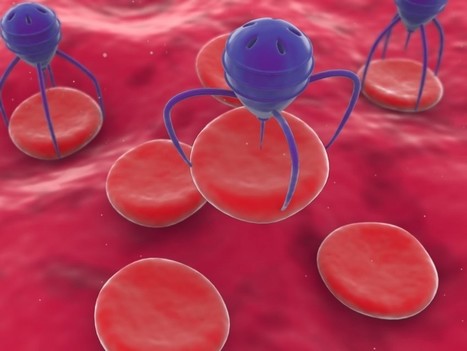
New cancer-hunting 'nano-robots' to seek and destroy tumours

New cancer-hunting 'nano-robots' to seek and destroy tumours | E-SANTÉ : COMPRENDRE. RELIER. TRANSFORMER. | Scoop.it

It sounds like a scene from a science fiction novel – an army of tiny weaponised robots travelling around a human body, hunting down malignant tumours and destroying them from within.


A nanometre is a very small unit of length, just one billionth of a metre. Nanotechnology looks at building up incredibly tiny, nano-level structures for different functions and applications.


One such nanoparticle-based application is the development of precise cancer diagnostic technology and safe, efficient tumour treatment. The only problem is nanoparticles must be tailored to specific jobs. They can be time-consuming and expensive to research and build...

A nanometre is a very small unit of length, just one billionth of a metre. Nanotechnology looks at building up incredibly tiny, nano-level structures for different functions and applications.

One such nanoparticle-based application is the development of precise cancer diagnostic technology and safe, efficient tumour treatment. The only problem is nanoparticles must be tailored to specific jobs. They can be time-consuming and expensive to research and build


Read more at: http://phys.org/news/2014-08-cancer-hunting-nano-robots-tumours.html#jCp

A nanometre is a very small unit of length, just one billionth of a metre. Nanotechnology looks at building up incredibly tiny, nano-level structures for different functions and applications.

One such nanoparticle-based application is the development of precise cancer diagnostic technology and safe, efficient tumour treatment. The only problem is nanoparticles must be tailored to specific jobs. They can be time-consuming and expensive to research and build.


Read more at: http://phys.org/news/2014-08-cancer-hunting-nano-robots-tumours.html#jCp

Via Jacques Urbanska
No comment yet.
Rescooped by Lionel Reichardt / le Pharmageek from Hospitals: Trends in Branding and Marketing
September 2, 2014 3:03 AM
Scoop.it!

Moving into the Age of Digital Health

Moving into the Age of Digital Health | E-SANTÉ : COMPRENDRE. RELIER. TRANSFORMER. | Scoop.it

Via eMedToday
No comment yet.
Rescooped by Lionel Reichardt / le Pharmageek from Digitized Health
September 1, 2014 2:58 AM
Scoop.it!

8 companies working on healthcare price transparency | mobihealthnews

8 companies working on healthcare price transparency | mobihealthnews | E-SANTÉ : COMPRENDRE. RELIER. TRANSFORMER. | Scoop.it

RT @gvanantwerp: 8 companies working on #healthcare price #transparency http://t.co/cKVWyBxHVX #mHealth


Via Emmanuel Capitaine
No comment yet.
Rescooped by Lionel Reichardt / le Pharmageek from mHealth: Patient Centered Care-Clinical Tools-Targeting Chronic Diseases
August 30, 2014 3:18 AM
Scoop.it!

How technology can help tackle the rising cost of healthcare in Asia Pacific

How technology can help tackle the rising cost of healthcare in Asia Pacific | E-SANTÉ : COMPRENDRE. RELIER. TRANSFORMER. | Scoop.it

Throughout the world, governments are grappling with the growing challenge of providing quality, affordable healthcare. Increasingly, they’re turning to technology for the solution.

In the Asia Pacific region, the challenge is particularly acute. Healthcare costs are rising and putting pressure on many government budgets. The Australian Institute of Health and Welfare calculates annual spending on healthcare services now exceeds $A 6,200 per person. Other developed countries in the region are facing similar burgeoning costs.


Via ET Russell
No comment yet.
Rescooped by Lionel Reichardt / le Pharmageek from Santé, eSanté, mSanté, santé numérique, Quantified Self et télémédecine... Toute l'actualité sur la santé de demain (en français)
August 30, 2014 3:09 AM
Scoop.it!

Les nouvelles technologies prennent d'assaut le secteur de la santé

Les nouvelles technologies prennent d'assaut le secteur de la santé | E-SANTÉ : COMPRENDRE. RELIER. TRANSFORMER. | Scoop.it
Le marché mondial de la santé attire de nombreux capitaux. En 2012, il représentait 2,4 millions d'euros. La croissance de ce marché est prévue d'augmenter de ...

Via Celine Sportisse
No comment yet.
Rescooped by Lionel Reichardt / le Pharmageek from Digitized Health
August 30, 2014 3:06 AM
Scoop.it!

20 Questions for Health IT

20 Questions for Health IT | E-SANTÉ : COMPRENDRE. RELIER. TRANSFORMER. | Scoop.it

September arrives next Monday, signifying for most the end of summer, which means families with children are starting to settle back into a steady schedule and routine that allows for more consistent time to focus on work, on learning, and on...


Via Emmanuel Capitaine
No comment yet.
Rescooped by Lionel Reichardt / le Pharmageek from Digitized Health
August 29, 2014 3:20 AM
Scoop.it!

First FDA Clearance for 3D Printed Polymeric Implants for Facial Reconstruction

First FDA Clearance for 3D Printed Polymeric Implants for Facial Reconstruction | E-SANTÉ : COMPRENDRE. RELIER. TRANSFORMER. | Scoop.it
Oxford Performance Materials out of South Windsor, Connecticut received the first FDA clearance for a 3D printed polymeric implant for facial reconstruction.

Via Emmanuel Capitaine
No comment yet.