Les comptes Twitter des influenceurs et professionnels du domaine de la santé
|
|
Scooped by
Lionel Reichardt / le Pharmageek
March 14, 2015 6:01 AM
|
Une veille sur la santé numérique en France et à l’international : politiques publiques, données, infrastructures, IA, services et usages. Études, rapports et retours de terrain sélectionnés par Lionel Reichardt, Pharmageek, pour comprendre les transformations et éclairer les décisions.
Your new post is loading...
From
twhit20
Les comptes Twitter des influenceurs et professionnels du domaine de la santé No comment yet.
Sign up to comment
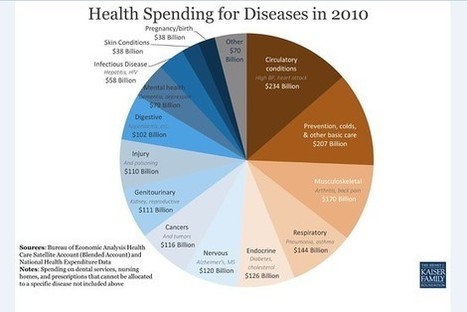
Drew Altman: The Bureau of Economic Analysis has made health spending more comprehensible by analyzing health spending and price growth by common diseases and diagnoses such as cancer, heart disease, diabetes, and even the common cold. Via Richard Meyer
Le Conseil national de l'ordre des médecins rend public, mardi 3 février, son Livre blanc sur la santé connectée. Voici ce qu'il préconise. Via Festival Communication Santé, Chanfimao
Santé publique : la charrue avant les boeufs ? #hcsmeufr #santépublique
E-santé : « La grande évolution, c’est la nécessité de développer un système de santé beaucoup plus axé sur la prévention. »
http://www.ibm.com/healthcare As the global healthcare industry begins to redefine value and success for a more sustainable and value-based healthcare system... Via Philippe Marchal
It's alarming that doctors use such haphazard and unscientific methods to find other doctors for their patients.
You may be familiar with Doximity, an online physician platform and social networking site. To date, more than 50% of U.S. physicians have joined—upwards of 400,000 people—meaning the site has more physician members than the American Medical Association. That’s more than double what it was at this time last year. To fuel that growth, the company has raised $81 million. In the early stages, Doximity’s clinical functionalities drove adoption, especially in rural markets. Physicians on Alaska’s North Slope needed peer input but did not have the time or money to medvac their patients. Doximity’s secure HIPAA compliant messaging and faxing presented an easy, convenient solution. Connect physicians online, connect the dots between care However, CEO and co-founder Jeff Tangney (also the co-founder of Epocrates) believes that beyond driving clinical impact, the app has the power to transform the business of medicine. In his words, “medical school teaches the science of medicine, but not the business of medicine.” Tangney and his team are taking aim at two business targets worthy of medical group executives’ attention: the ability to influence physician recruiting and the opportunity to create greater connectivity among physicians, which has the potential to disrupt referral patterns. With physician recruitment, the site seeks to “level the playing field with HR departments” so that physicians are able to find and appropriately evaluate the best opportunities. To provide physicians greater transparency—as well as autonomy and control—in the search process, the site recently launched what it claims to be the first-ever local compensation map, which shows physician salaries across the U.S. by county and specialty. The tool allows physicians to explore compensation within their specialty, possibly highlighting unrecognized opportunities like in niche rural areas where the pay can be 60% higher than in competitive urban markets. Job opportunities are also directly linked to the tool, and physicians can apply instantly. Doximity has been able to build this salary treasure chest by asking physicians for anonymous data in exchange for access to the tool and map. In addition to postings for salaried positions, the site advertises consulting opportunities that average $375/hour. At the same time, medical groups and health systems have the opportunity to connect with physician recruits and monitor competitor activity through the site. Further down the physician engagement chain, medical group executives have raised concerns about whether this new physician watering hole really does have the potential to disrupt established referral patterns, potentially increasing out of network referral leakage. Unlikely. If anything, the app is more likely to strengthen existing referral lines. Social media networks tend to act as “extenders,” meaning they enhance connections that already exist. New connections may be made and relationships may be formed between new parties, but the frequency of these new relationships or developments will likely pale in comparison to the increase in activity between existing connections. In other words, a platform like Doximity reduces the activation energy or barriers of working with someone you already know, but can’t do much to remove the barriers from someone you’ve never met. Much like Facebook in the early-to-mid 2000’s, we expect to see a lot of activity and a lot of change as Doximity unfolds and finds its footing in the market. We look forward to following these developments and reporting them back to you here on Practice Notes. Via Plus91 |
Abstract
Mark Macalinao's curator insight,
March 23, 2015 10:34 AM
Mobile technology is becoming more incorporated into our lives especially with wearable technology linking to mobile technology to monitor our own health.
La question n’est plus de savoir si les multiples technologies de suivi et de prévention vont impacter le métier de médecin traitant, mais comment faire pour que ce dernier devienne un coordinateur des infrastructures santé.
Sean Hartigan attended IIR's ePharma Summit 2015 conference and shares key takeaways from his attendance and lively peer discussions.
La multiplication de données permet d’envisager un écosystème basé sur la prévention et le service du patient. Mais pour y parvenir, il faut que les acteurs santé soient capables de collaborer et co-construire.
Along with other programs, the digital health platforms met the evidence-based standards of the National Diabetes Prevention Program. Sean Duffy, CEO of San Francisco-based Omada, expressed excitement that the CDC “has chosen to embrace 21st century tools to fight chronic disease.” Via Giuseppe Fattori
POST SUMMARY: When it comes to managing your health no digital tool, app, website, is going to replace the knowledge and skill of your doctor. It’s therefore essential that physicians learn to reach out to patients and treat the whole person at a time when our health care system is in the midst of a new era.
Dans le tumulte de l’actualité tragique de ce début d’année, l'événement est passé inaperçu mais il marque pourtant l’entrée dans une nouvelle ère : le 20 janvier dernier, lors du traditionnel discours sur l'état de l'Union, le Président Barack Obama a évoqué "l'initiative pour une médecine de précision". Derrière ce vocable un peu hermétique, c’est bien une révolution majeure qui se prépare et qui consiste à permette à l’ensemble des médecins américains de disposer de manière quasi-instantanée de l’immense masse de données médicales accumulée et stockée dans tous les serveurs et les ordinateurs du pays.
Selon Jean-Michel Billaut, pionnier de l'Internet, le développement de l'intelligence artificielle et des sciences cognitives aura un impact inévitable sur l'avenir des sachants, et notamment dans la domaine de la santé. Via Chanfimao, Philippe Loizon
Digital health is one of the most popular verticals in tech right now. Here are 12 companies doing super innovative research and offering revolutionary services. Via Sam Stern |
Your new post is loading...