 Your new post is loading...

|
Scooped by
Lionel Reichardt / le Pharmageek
June 20, 2015 5:54 AM
|
Technology entrepreneur Jonathan Bush says he was recently watching a patient move from a hospital to a nursing home. The patient's information was in an electronic medical record, or EMR. And getting the patient's records from the hospital to the nursing home, Bush says, wasn't exactly drag and drop.
You’ve probably read plenty about the trendiest fitness consumer gadgets, like the Fitbit, Jawbone or Apple HealthKit.
Via Alex Butler
Medical devices and information technologies have flooded the airwaves with health-related data, but the underlying question of whether the onslaught of digital-health products has made people healthier remains.Now the Massachusetts Institute of Technology is aiming to help answer that question.Billions of dollars were spent last year on digital-health products, and billions more were invested in startup companies making wearable sensors, big-data platforms, analytics, fitness trackers, apps and telemedicine programs that seemed out of reach 20 years ago.
Via Alex Butler
|
|
Scooped by
Lionel Reichardt / le Pharmageek
June 20, 2015 5:28 AM
|
The NHS is going high-tech with new proposals announced today which could see conditions being monitored remotely to free up doctors' appointments
Des dizaines de start-up sont à l'offensive pour changer les règles du jeu. Etat des lieux d'un grand chambardement accompli dans la santé à coups d'applis innovantes et de services ultrapersonnalisés.
Via Philippe Loizon, Philippe Marchal
The concept of the ePatient - someone who is equipped, enabled and empowered by digital technology and social networks to make better decisions about their health care (and that of their loved ones) - is no longer a novelty. We have become increasingly familiar with the term and its leading proponents over the past few years. What is perhaps more novel is the idea that the ePatient of the future will be the norm rather than the exception. New technologies will enable all of us to monitor our health and gather sophisticated data which in turn will empower us to interact with our healthcare providers in a partnership. Forced to increasingly take responsibility for our own care in a complex system, digitally savvy health consumers will combine information from doctors, the Web, electronic medical records and other sources to “hack” the health system to educate ourselves, navigate loopholes and ultimately get better, lower cost and faster care. How this will come about is the subject of a new book by Rohit Bhargava (author of Likeonomics: The Unexpected Truth Behind Earning Trust, Influencing Behavior, and Inspiring Action) and healthcare futurist Fard Johnmar. Featuring original research and stories of healthcare innovators from across the world, ePatient 2015: 15 Surprising Trends Changing Health Care acts as a guide to the rapid changes taking place in health. It shares 15 trends that are poised to fundamentally change the way health and medical care is delivered and received in the near future. I recently interviewed Fard Johnmar on the main themes presented in the book. I started by asking him what he thinks is the biggest challenge facing health care today?
Via Plus91, Giuseppe Fattori
|
|
Scooped by
Lionel Reichardt / le Pharmageek
June 14, 2015 12:14 PM
|
Since its launch three months ago, the number of users of the new MyHeart Counts iPhone app has continued to steadily climb.
For every digital health company that produces clinically relevant data, the inevitable question at sales meetings is: “Can you integrate with our EHR system?” But the better question is not can we integrate, but should we?The core domain of the EHR is to house the legal health record (LHR) in an electronic format. When it comes to data integration from other systems, they come up short. Digital health companies are pressured by clinical customers to “integrate” with the EHR. API relief via FHIR and Meaningful Use Stage 3may come. But for now, discrete data integration remains a costly and time-consuming endeavor that may not be worth the trouble. The assumption is that customers need data exchange, when in fact what providers largely want is clinical workflow integration to deliver meaningful insights that are actionable at the right time.
Via Alex Butler
|
|
Scooped by
Lionel Reichardt / le Pharmageek
June 12, 2015 1:52 PM
|
Zélée, mais désorganisée. L’Agence nationale de sécurité du médicament (ANSM) a fait de gros efforts pour tourner la page après le...
|
|
Scooped by
Lionel Reichardt / le Pharmageek
June 11, 2015 5:59 AM
|
#LexEhealth - tweets and pics - 10 of june 2015
|
|
Scooped by
Lionel Reichardt / le Pharmageek
June 9, 2015 12:06 PM
|
#LexEhealth - tweets and pics - 8 of june 2015
|
|
|
Scooped by
Lionel Reichardt / le Pharmageek
June 20, 2015 5:53 AM
|
Commandé en octobre 2014 par le Premier ministre, un rapport du Conseil national du numérique (CNNum) devra inspirer la stratégie du gouvernement sur la e-santé.
Sur les 70 recommandations du rapport, plusieurs mesures concernent directement le secteur de la santé, dont les professionnels de santé.
|
|
Scooped by
Lionel Reichardt / le Pharmageek
June 20, 2015 5:51 AM
|
CVS Health is opening today a new Digital Innovation Lab in Boston, accelerating its digital transformation
Directrice de recherche à l’École supérieure d’informatique électronique automatique (ESIEA), Evelyne Klinger nous détaille les nouveaux enjeux de la réalité virtuelle dans le monde médical à l’heure où de plus en plus de projets naissent.
Via Rémy TESTON, CIP /ACL au coeur de la distribution de la santé
Les nouvelles technologies ont déjà bouleversé les habitudes des entreprises, qui ont recours au numérique pour améliorer leurs performances, ou tout simplement pour gagner du temps. La démographi...
Via Philippe Marchal
|
|
Scooped by
Lionel Reichardt / le Pharmageek
June 17, 2015 1:41 AM
|
C’est avec attention que je lis les différents articles sur la transformation digitale et ses conséquences. Rien que depuis le début du mois il y a …
La santé est la préoccupation majeure des Français qui s’informent de plus en plus par le biais de tous les canaux. La culture de la communication santé a beaucoup évolué en 20 ans pour se tourner aujourd’hui vers les patients. Future Thinking France* et la FNIM (Fédération Nationale de l’Information Médicale) ont réalisé une enquête sur « Les Français et les campagnes Santé » qui permet de mieux comprendre et cibler leurs attentes en 2015.
Via Philippe Marchal
|
|
Scooped by
Lionel Reichardt / le Pharmageek
June 15, 2015 7:41 AM
|
LEO PHARMA : un laboratoire pas comme les autres
|
|
Scooped by
Lionel Reichardt / le Pharmageek
June 14, 2015 2:50 PM
|
Suise Le géant jaune a conclu des partenariats avec médecins et pharmaciens pour numériser les données. Le marché intéresse aussi Swisscom
Le modèle économique de l'industrie pharmaceutique, bâti autour de « blockbusters » susceptibles de traiter les maladies les plus répandues tout en générant des profits importants, a vécu. L'industrie est entrée dans l'ère de la médecine personnalisée. « L'innovation s'oriente vers les domaines de spécialité pour traiter des pathologies touchant peu de personnes mais avec un niveau de sévérité élevé. Le domaine de l'oncologie est particulièrement actif », explique Vincent Genet, directeur de l'activité santé au sein du cabinet de conseil Alcimed.
Via Florentin Clère
|
|
Scooped by
Lionel Reichardt / le Pharmageek
June 12, 2015 1:54 PM
|
« Les avancées technologiques, notamment en matière d'information et d'objets connectés, modifient et réinventent la relation médecin-patient, autrefois asymétrique. On assiste à un rééquilibre des savoirs », constate le professeur Franck Chauvin, membre du Haut Conseil de la Santé publique, président de la commission « Évaluation, prospective et stratégie ». « La formation des médecins doit donc être repensée », pose Philippe Kourislky, immunologiste et professeur émérite au Collège de France. « Nous entrons dans l'ère de la co-construction du diagnostic entre le patient et son médecin, le traitement étant souvent établi dans le cadre d'un processus de négociations », avance Franck Chauvin, par ailleurs cancérologue au centre Hygée, centre régional de prévention des cancers.
|
|
Scooped by
Lionel Reichardt / le Pharmageek
June 11, 2015 10:08 AM
|
La révolution digitale, ce n’est pas demain, c’est aujourd’hui. Découvrez l’expérience #Digitalforallnow d’Econocom et mobilisez-vous !
|
|
Scooped by
Lionel Reichardt / le Pharmageek
June 11, 2015 5:58 AM
|
eSanté – les chroniques de la Silicon Valley CHAPITRE 3 : Sherlock plutôt que Watson… ‘How often have I said to you that when you have eliminated the impossible, …
|


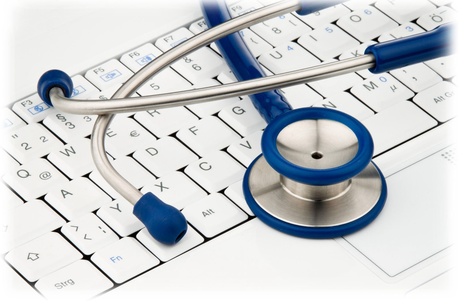







In an era when most industries easily share big, complicated, digital files, health care still leans hard on paper printouts and fax machines. The American taxpayer has funded the installation of electronic records systems in hospitals and doctors' offices — to the tune of $30 billion since 2009. While those systems are supposed to make health care better and more efficient, most of them can't talk to each other.
Bush lays a lot of blame for that at the feet of this federal financing.
"I called it the 'Cash for Clunkers' bill," he says. "It gave $30 billion to buy the very pre-internet systems that all of the doctors and hospitals had already looked at and rejected," he says. "And the vendors of those systems were about to die. And then they got put on life support by this bill that pays you billions of dollars, and didn't get you any coordination of information!" - Bush's assessment is colored by the fact that the company he runs — athenahealth — is cloud-based, and stresses easily sharing electronic health records. The firm also got a lot of the federal cash. - Dr. Robert Wachter, with the University of California, San Francisco, says sure — in hindsight, the government could have mandated that stimulus money be spent only on software that made sharing information easy. But, he says, "I think the right call was to get the systems in. Then to toggle to, 'OK, now you have a computer, now you're using it, you're working out some of the kinks. The next thing we need to do is to be sure all these systems talk to each other.' " - Right now, the ability of the systems to converse is at about a 2 or 3 on a scale of 0 to 10, Wachter and Bush agree.