Une veille sur la santé numérique en France et à l’international : politiques publiques, données, infrastructures, IA, services et usages. Études, rapports et retours de terrain sélectionnés par Lionel Reichardt, Pharmageek, pour comprendre les transformations et éclairer les décisions.
Digital health companies offering virtual diabetes prevention programs – in the form of app or web education and coaching to support weight loss and other healthy lifestyle behaviors – have already proven their worth, as evidenced by their increasing popularity with consumers, the growing number of efficacy studies, and their partnerships with providers.
En premier lieu, développer la médecine connectée à travers un plan « big data » en santé qui permettra, par exemple, la mise au point de nouvelles applications de suivi à distance ou d’interprétation des données médicales pour assister les médecins dans leurs diagnostics.
Second axe prioritaire, l’encouragement à la co-innovation entre professionnels de santé, citoyens et acteurs économiques par le lancement d’appels à projets dédiés à l’e-santé ou le développement de living labs afin d’imaginer, en lien direct avec les utilisateurs, la médecine de demain.
Troisième priorité, simplifier les démarches administratives des patients et outiller la démocratie sanitaire à l’aide d’une plateforme numérique facilitant la consultation et la participation des usagers. Dernier axe enfin, renforcer la sécurité des systèmes d’information en santé grâce à un plan d’action dédié. Des mesures qui viennent compléter les actions déjà menées par le ministère depuis 2012, telles que le programme hôpital numérique, le plan « Territoires de soins numérique », la relance du dossier médical partagé et les expérimentations de télémédecine.
Rappelons aussi que Marisol Touraine a par ailleurs annoncé, en mai dernier, un plan d’investissement de 2 milliards d’euros dont l’un des volets porte sur le numérique et les systèmes d’information dans les territoires ...
La nouvelle formule d'Enquêtes de Région, tournée désormais en extérieur, se décline sur le territoire de la Nouvelle-Aquitaine.
Via L'Université d'été de la e-santé
Le Club Digital Santé partenaire de l’Argus de l’Assurance pour la conférence Assurance santé: quels enjeux stratégiques entre réglementation et innovation?
Teens use smartphones successfully to do almost anything: learn new skills, communicate with friends, do research and catch Pokémon. But a new study finds smartphones aren't as useful for helping teens maintain weight loss.
Via Philippe Marchal
The health care industry will see a 21% increase in IT jobs by 2020, according to research by the University of Chicago. Across all health care sectors, there is a demand for creative, thoughtful uses of health informatics, mobile technology and digital diagnostics.
Many of these new inventions have yet to be approved by the FDA, a process that can take up to 10 years. But that's not stopping the research and development of new technologies. Here are 10 types of tech that are changing the course of health care.
Digital diagnostics
Making health care more accessible includes providing digital diagnostics options for people who need it, especially those who can't get to a doctor's office. This is one of the main themes of digital health. One example of digital diagnostics is Neurotrack, a software-based Alzheimer's diagnostic test that can detect impairments on the hippo campus (the first area of the brain to be affected by the disease) by evaluating eye movement.
Ultra-fast scans
GE showcased its breakthrough ultra-fast CT scanner earlier this year, which can capture a still image of a heart in one beat. The company said that according to research, about 60% of patients have heart rates of higher than 60 beats per minute and are turned away from scans because their heart beats too fast to scan. With this Revolution CT, doctors can see specific areas of the heart that they could not before.
Wearables
Wearable technology is going to play a huge role in health care in years to come. The Consumer Electronics Association reports that sales of fitness trackers and smart watches will reach $1 billion this year. But monitoring fitness is only the beginning. For instance, Intel teamed up with the Michael J. Fox Foundation to use wearables to find certain characteristics of Parkinson's disease.
Health informatics
More than half of US hospitals use some type of electronic records system, but only 6% meet all the federal mandates, according to a recent study out of the University of Michigan. According to researchers at the University of Chicago, 50% of health care dollars are wasted on inefficient record keeping processes. Electronic records have been shown to save large hospitals anywhere between $37 and $59 million. It streamlines the medical care process and lowers malpractice claims, and increases coordination between providers. The federal government set a mandate to have some electronic system in place by this year.
Digital therapy
Digital therapy is important for patients who need at-home care, can't afford to travel to a clinic, or have no way to get to a clinic for therapy. Well frame is a platform that combines mobile technology with artificial intelligence to provide patients with care after they've returned home from the hospital or doctor's office. It's been described as a "GPS navigation system for patients." There is a daily to-do list for the patient and a tracker for diet and exercise, but an advanced algorithm adapts the content based on the information from patient and healthcare provider. The company has performed trials with cardiovascular, pulmonary, and mental health patients.
Concierge medical services
Startups are making it easier to pay out-of-pocket for on-demand health care services. For example, GoodRX allows you to compare prices for drugs at different pharmacies and save up to 80%. One Medical Group was created by doctors to build a better system for doctor's visits. In certain cities, you can search for an office based on your needs, find same-day appointments, email access, online scheduling, and trained primary doctors.
Networks and coaching
With mobile technology, it's easier than ever to have a customised diet or health plan. Thrive On is personalised coaching for mental health, offering plans by assessing your sleep, mood, stress, anxiety, and body image. Retrofit offers coaching and expert advice for weight loss and weight management.
Self-insurance
With the onset of Affordable Care Act, more consumers have had to manage their own data and health future. Several startups are using this as an opportunity to offer insurance, benefits, and solutions services. Health solutions platforms such as Jiff, which connects employee behaviours to company benefits and incentives, are becoming more common.
Hackathons
Hacking is becoming an increasingly popular tool to solving real world problems, especially in the health care industry. Health care, which usually evolves slowly, is being revitalised with software developments, hardware inventions, apps, and wearables, and many of these ideas are born out of hackathons. MIT held a hackathon earlier this year that drew 450 people from various backgrounds such as engineering, journalism, medicine, and IT to tackle global health, diabetes, and hospital IT.
Acquista Online La Prescrizione Di Perdita Di Peso Crediamo che i farmaci a volte possano essere molto urgenti da assumere. Se hai urgente bisogno di farmaci, possiamo anche fornirti una consegna espressa,
Over the last decade, we have seen massive changes in technology. It now has a role in nearly every aspect of our lives, including health care technology. Just last night on 60 Minutes there was a segment on artificial intelligence and how IMB’s Watson supercomputer is currently changing health care. Since technology is changing every industry, we decided to focus our next infographic on health care technology and how it is disrupting and changing the health care market.
Here we are again, jumping into a new year. 2015 brought us consternation over Meaningful Use, continued EHR adoption, a much-improved economy, and the somewhat surprising decision from the Department of Defence to implement Cerner. It was also the first full year of LearnHealthTech.com. At the end of 2014, I made some predictions for 2015 that I think turned out to be fairly accurate. I believe Healthcare IT in 2016 will continue to present lots of opportunities, so let’s have a look at what I think things will look like.
Continued EHR Adoption
Even though most of the largest Healthcare systems in the country have already set their long-term EHR strategy, there are still some deals that are either in the works, recently signed, or heading into optimisation phases. A high profile example is the December 20th announcement by Vanderbilt University Medical Centre to replace McKesson and other systems with Epic. The 17,000 employee health system is scheduled to go live in 2018.
Additionally, the overall EHR market will remain strong due to the Department of Defence selecting Cerner this summer for their system-wide implementation. As the DOD project unfolds, competition for Healthcare IT skills will only grow, possibly drawing off talent from private hospitals and those who may be tired of working with Epic and other technologies. Those who have, or are able to obtain military security clearance should have an advantage.Many large EHR implementations that were done two or three years ago are now emerging from “The Valley Of The Black Ink” of payments to vendors.
These organisations are now looking to make the most of their EHR purchases, and may now be ready to fill analyst positions to optimise their systems.
Population Health/ Health Data Analytics
Population Health was a big deal in 2015, as Hospitals and other Healthcare organisations entered into many Accountable Care Organisation (ACO) agreements. The results for some early ACOs have started to come in, with some doing better than others at improving care and lowering costs. Since we’re only a couple of years into the whole ACO concept, we can expect to see more activity, as all entities involved really want the concept to work.
Healthcare Cyber security
2015 was the year of the Healthcare hack. Some of the high-profile hacking incidents in 2015 occurred at Anthem, Premera Blue Cross, Community Health Systems, and UCLA Health System. Federally levied fines against organisations increased in 2015, and will likely continue the trend in 2016. Expect to see greater vigilance and more opportunities for Healthcare IT security positions.
Remote Patient Monitoring
Remote patient monitoring involves the use of various technologies to collect medical data outside the traditional clinical setting. The main thing that comes to mind is telemedicine video visits, where patients conduct online visits with physicians remotely. Telemedicine has been feasible for several years now, but the main barrier has been the political and insurance barriers to getting organisations paid for video visits. Expect to see increased legislative activity to support Telemedicine in 2016.
Remote ICU Monitoring – e-ICU
Another aspect of remote patient monitoring is the advent of technology to remotely monitor ICU patients. It sounds pretty creepy and scary to have someone monitoring multiple critical patients from 100 miles away. However, consider that five million patients are admitted to ICUs each year, and among those, about 10% will die in the ICU. The level of care is very resource intensive at a time when the supply of skilled critical care clinicians is low. And of course, it’s no secret that critical care is very expensive. According to the Society of Critical Medicine, ICU care makes up at least 13.4% of hospital costs and 4.1% of National Healthcare costs.
The e-ICU solution doesn’t leave a facility without onsite critical care res-ponders, but adds sophisticated technology to monitor ventilator, cardiac, and vital signs data. A remote ICU physician can actually respond faster to a critical event than they could physically arrive at the bedside of a patient.
Fear of readmissions penalties, an increase of chronic health conditions, looming physician shortages and mobile technology advancements are driving adoption of remote patient monitoring tools, according to a new report from Frost & Sullivan that forecasts the market will grow 13.2 percent over the next five years.
"We appear to be at an opportune time for RPM systems to thrive," said Victor Camlek, health industry principal for Frost & Sullivan, said in a statement.
As a key component of telehealth, RPM tools such as clinical-grade monitors, peripherals and other software will be essential to keeping tabs on chronic conditions in a cost-effective way.
"The convergence of biometric monitoring and sensors, along with a wider end-user base of technology-comfortable patients will create an environment where clinicalgrade RPM will expand incrementally," said Camlek.
Driving RPM market growth, according to Frost & Sullivan, is the need to manage elderly and chronic condition patients, enabling post-acute care at-home and reducing readmissions and other adverse events.
"A move from an episodic model towards a dynamic continuous care model will enable the possibility of early detection and response of healthcare stakeholders to preventable crisis events," Camlek said.
For RPM developers to gain the advantage and add value, big data and analytics will need to be at the forefront, according to the report. Furthermore, the ability to transform the mass volumes of raw data into actionable methods will be the most valuable piece of the puzzle.
"Despite many successful trials, the U.S. market is currently challenged by the lack of a gold standard trial all stakeholders endorse as proof of concept," he said.
Cost concerns and a lack of a standard reimbursement models are the largest restraints of RPM implementation, according to Frost & Sullivan. However, of those physicians surveyed, more than 75 percent found RPM to have high value.
Currently there's a limited clinical need for RPMs, but the report finds new opportunities will likely emerge.
"If trials and deployments of RPM systems continue to indicate successful results, perhaps it will finally prove to all stakeholders these products are of significant value and increased uptake should follow," said Kamlek.
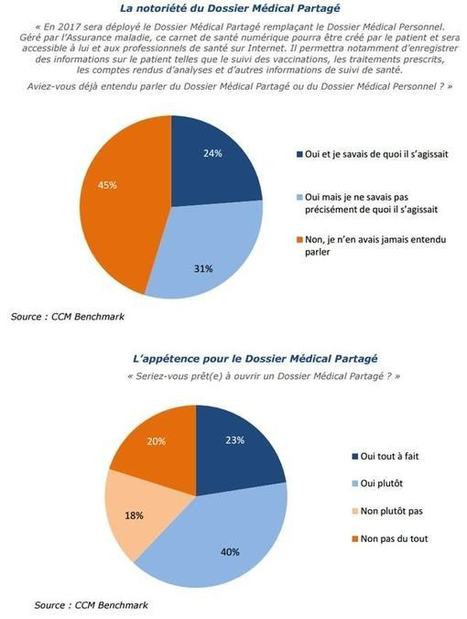
Les usages e-health restent peu développés dans l'Hexagone mais de plus en plus d'internautes sont prêts à transmettre leurs données médicales et communiquer avec leur médecin en ligne.
As new research from Mintel shows that 61% of young Britons turn to health websites and apps for information regarding healthy living, Asthma UK’s report on digital health shows that there is a gap in terms of quality in the asthma health app market.
Dr. Topol works on genomic and wireless digital innovative technologies to reshape the future of medicine, in this talk he shares his vision starting wit
Avec l'assurance santé comportementale, les assureurs veulent vous inciter à prendre soin de votre santé. En liant leurs tarifs et leurs couvertures aux comportements de leurs clients, les compagnies pourraient révolutionner l'assurance santé
Participez au Big Bang Santé de la rédaction du Figaro. Cette journée fera intervenir des personnalités, entrepreneurs, décideurs, intellectuels, responsables politiques en France…
Dans la société actuelle et avec les avancées des chercheurs, les individus sont amenés à gérer de plus en plus de données qui influent sur leur santé comme la qualité de leur sommeil, leur nutrition ou encore leurs activités physiques. Mais comment peut-on faire un traitement efficace de toutes ces données sans se perdre ? UmanLife
The companies will work together to develop and deploy new population health offerings by tapping each company's expertise and assets, like those added to the Watson Health portfolio from acquisitions such as Phytel and Explorys.
Via Philippe Marchal
As technology plays a greater and greater role in the medical realm, we have to maintain a much higher level of vigilance about the propensity for need and invention to get confused.
To get content containing either thought or leadership enter:
To get content containing both thought and leadership enter:
To get content containing the expression thought leadership enter:
You can enter several keywords and you can refine them whenever you want. Our suggestion engine uses more signals but entering a few keywords here will rapidly give you great content to curate.

 Your new post is loading...