Open Educational Resources
6.4K views |
+0 today
sharing, collaboration and repurposing content are the hallmarks of modern education
Curated by
Learning Futures
 Your new post is loading...
 Scoop.it! 
When the Content Is the Pedagogy We first experimented with OER in fall 2009, when we developed a three-credit course, IFS101: Research Skills in the Digital Age, that transfers to Arizona state universities and meets their critical literacy (L) general education requirement (IFS courses focus on information skills). We intentionally replaced costly course materials with digital content. As expert searchers, finding open content on the web was not a problem. Yet how, in good conscience, could two faculty librarians ignore the rich scholarship found only in the proprietary databases to which we subscribe, especially when access requires only a simple login to authenticate? The fact is, we didn't need to — we could blend. 
Scoop.it!

The Open Education movement has been a powerful way for teachers to take content into their own hands, compiling and repackaging lessons that suit their individual classrooms and learning goals.
Jacqui Kelly's insight:
A guide to some of the best OER sites
Scoop.it!

This infographic covers detailed information related to OCW’s programs, mission, goals and its impact on education.
Scoop.it!

Building peaceful, democratic and inclusive knowledge societies across the world is at the heart of UNESCO’s mandate. To make global knowledge societies possible, universal access to information is a fundamental condition.
Open Access means free access to scientific information and unrestricted use of electronic data for everyone. With Open Access, expensive prices and copyrights will no longer be obstacles to the dissemination of knowledge. Everyone is free to add information, modify contents, translate texts into other languages, and disseminate an entire electronic publication.
For UNESCO, adopting an Open Access Policy means to make thousands of its publications freely available to the public. Furthermore, Open Access is also a way to provide the public with an insight into the work of the Organization so that everyone is able to discover and share what UNESCO is doing.
Scoop.it!

An educator's guide to open educational resources (OER), including online repositories, curriculum-sharing websites, sources for lesson plans and activities, and open textbooks.
Scoop.it!

eSkeletons provides an interactive environment in which to examine and learn about skeletal anatomy. The purpose of this site is to enable you to view the bones of both human and non-human primates and to gather information about them from our osteology database.
Scoop.it!

Creative Commons licenses provide a flexible range of protections and freedoms for authors, artists, and educators.
Please note that search.creativecommons.org is not a search engine, but rather offers convenient access to search services provided by other independent organizations. CC has no control over the results that are returned. Do not assume that the results displayed in this search portal are under a CC license. You should always verify that the work is actually under a CC license by following the link. Since there is no registration to use a CC license, CC has no way to determine what has and hasn't been placed under the terms of a CC license. If you are in doubt you should contact the copyright holder directly, or try to contact the site where you found the content.
Scoop.it!
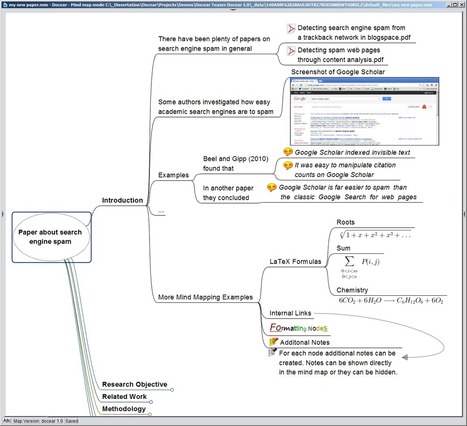
Docear is a unique solution to academic literature management, i.e. it helps you organizing, creating, and discovering academic literature.
Scoop.it!

Armando's curator insight,
November 17, 2013 6:49 AM
197 Educational YouTube Channels You Should Know About

Judy Brown's curator insight,
May 29, 2014 7:32 PM
Autistic kids need to be shown lots of love and need a teacher who will treat them right.
Scoop.it!

by Todd Finley
"I spent a couple days throwing keywords into OER (open education resources are digital materials freely available through open licenses) search engines to assess the quality of secondary and higher education writing curricula.
"About 10% of the lessons and/or courses met my criteria, which meant the writing courses and lessons had to: Be free, permanent and publicSupport the writing process and involve students in the application of multiple literacies: reading, writing, speaking listening and visualizingBe take-and-bake, with activities intuitive and/or simple enough to teach next periodEncourage student inquiry, autonomy and high expectationsPrompt me to wonder, "Why didn't I think of that?" Via Jim Lerman
Scoop.it!

Digital textbooks look to be the wave of the future. This ed-tech development can save students and teachers money. Discover how U.S. states are involved.
|
Scoop.it!

The OCW Consortium global conference is the annual opportunity for researchers, practitioners, policy makers and educators to deeply explore open education and its impact on global education. Conference participants will hear from global thought leaders in open education and have the opportunity to share ideas, practices and discuss issues important to the future of education worldwide. Sessions cover new developments in open education, research results, innovative technology, policy implementation, best practices and practical solutions to challenges facing education around the world.
During the annual conference, Awards for Excellence in Open Education will be presented. These awards recognize distinctive open education sites, technological innovations, notable open courses, and exemplary leaders in Open Education worldwide. For more information on the ACE awards, see http://www.ocwconsortium.org/en/community/ace.
Scoop.it!
An educator's guide to open educational resources (OER), including online repositories, curriculum-sharing websites, sources for lesson plans and activities, and open textbooks. Via Jenny Pesina
Scoop.it!

Flickr:FontFont Open education sites exemplify how technology is democratizing education. These sites allow both learners and teachers to create their ow
Scoop.it!

Creative Commons licenses provide a flexible range of protections and freedoms for authors, artists, and educators.
Jacqui Kelly's insight:
"UNESCO has announced a new Open Access Repositorymaking more than 300 digital reports, books and articles available to the world under the Creative Commons IGO licenses."
Scoop.it!

Open like the web. Learning by everyone. For everyone.Reclaim Open Learning brings together innovators who are building the future of higher ed.
The internet is an amazing place for learning. But recent high-profile forays into online learning for higher education seem to replicate a traditional lecture-based, course-based model of campus instruction, instead of embracing the peer-to-peer connected nature of the web. The networked and digital world offers an unprecedented wealth of resources for engaged, interest-driven, lifelong learning. Reclaim Open Learning intervenes in this debate by supporting and showcasing innovation that brings together the best of truly open, online and networked learning in the wilds of the Internet, with the expertise represented by institutions of higher education. Reclaim Open Learning is a collaboration between the Digital Media and Learning Research Hub at UC Irvine and the MIT Media Lab. The thematic initiative is supported by the MacArthur Foundation.
Scoop.it!


Kimberley Vico's curator insight,
December 8, 2013 2:41 AM
Incredible documentaries... something for everyone...!
Scoop.it!
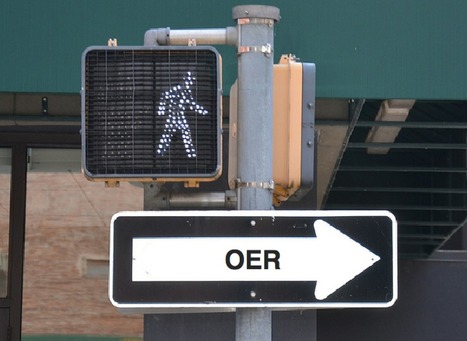
Reusing existing Open Educational Resources (OER) can save significant time and effort. The OPEN partners recommend TAACCCT grantees invest up-front time finding OER to reuse rather than starting development of new educational resources right away. A significant benefit of OER is that they provide source material to build your development efforts around. No need to invest development effort in creating something that already exists.
OER come in a wide variety of types. Many educators are simply looking for individual media elements to use within their courses, such as photos, graphics, videos, and audio, that are openly licensed in a way that freely permits education use.
Scoop.it!

"The search engine only indexes content with either a public domain and / or Creative Commons license, and as such everything within it is available for reuse without any major need for copyright clearance or checking.
Lots more to discuss and we've set up a community site as well to help handle this http://solvonauts.org/community/ Via Jim Lerman

Ava Chen's curator insight,
November 26, 2013 9:21 AM
A new open search engine tool. It also offers sevearl plugin options to users in different platform. Give it a try to see what are the results come out ;-) 
Becky Mowat's curator insight,
December 5, 2013 7:47 AM
What a timesaver for e-educators, content writers and curators!
Scoop.it!
An educator's guide to open educational resources (OER), including online repositories, curriculum-sharing websites, sources for lesson plans and activities, and open textbooks.
Scoop.it!
Jacqui Kelly's insight:
"The main goal of the Open Education Europa portal is to offer access to all existing European Open Educational Resources in different languages in order to be able to present them to learners, teachers and researchers."
|