Stephen's Web, the home page of Stephen Downes, with news and information on e-learning, new media, instructional technology, educational design, and related subjects
Do follow these best practices in creating open resources to use and share.
open-create-OERMost faculty educators have already started creating their own open educational resources (OER) in the form of assessments, coursework, and presentations. Bringing them online to share with other educators is just the natural next step.
But there are best practices when creating and sharing OERs: resources that are freely shared and able to be modified and redistributed.
Last week I enjoyed some quiet vacation time - sans wifi - on a lake in rural Tennessee with my family. This break gave me some time to think, worry, and write. I now have no doubt that the overwhe...
Une autre dimension ouverte par le développement de l'usage des technologies même si la réalité à tendance à nous démontrer que les potentiels sont encore fort peu explorés|exploités
The Extreme Networks survey on open educational resources (OER) shows that high-quality, openly licensed learning materials are improving the educational
Charlie Reisinger, IT director for the Penn Manor school district, helped bring an open educational model and a 1:1 laptop program to Penn Manor High School....
The University of New Hampshire has launched its first significant pilot initiative in Open Educational Resources! As the Pilot Consultant/resident blogger/enthusiastic Tweet-Maven, I thought I would write a bit to introduce the process, some of our participants, and what we focused on during our first training session.
Few things annoy me more than burning time on bureaucratic paperwork. Frankly, as an educator, my time and attention should be centered on students and learning — and that includes modifying and selecting readings and resources. Finding fresh critical pedagogical articles that connect pop culture and critical thinking, for example, is not only more interesting to me professionally than revising course outcomes to match accreditation evaluation rubrics, but such articles are more useful and engaging for my students. Plus, such articles can support critical thinking skills and connecting these skills with media in students’ lives. While some administrators might disagree, few educators would. Making this “idealistic” hope happen is a challenge. One possible path to this solution: reconceive how we as individuals approach Open Educational Resources (OERs) and our use of educational technologies. UNSECO defined OERs in 2002 as “technology-enabled, open provision of educational resources for consultation, use and adaptation by a community of users for non-commercial purposes.”
Open textbooks may be free, but they are not without cost. So what is the cost of developing an open textbook from scratch? Answer: a minimum of $80,000, more likely around $130,000. Here’s how I arrived at the figure, based on my own open textbook, Teaching in a Digital Age.
Creative Commons licenses provide a flexible range of protections and freedoms for authors, artists, and educators.
edX has added the ability for authors to apply a Creative Commons (CC) license to their courses and videos on its platform. More than 50 academic institutions, including MIT and Harvard, use edX to offer free courses that anyone in the world can join. Now, authors at these institutions and elsewhere may license their courses...
Open education advocates do not believe that commercial MOOCs provide a sustainable way to widening tertiary access. “There are significant points of difference between the commercial MOOC provider model and the OERu model,” Mackintosh said.
Do follow these best practices in creating open resources to use and share
oer-creationWhether you know it or not, most educators have already started creating their own open educational resources (OER) in the form of tests, handouts, and presentations. Bringing them on online to share with other educators is just the natural next step.
But there are best practices creating and sharing OERs, which are resources that are freely shared and able to be modified and redistributed.
The Open Textbook Network will hold a first Summer Institute at the University of Minnesota to encourage faculty to use open textbooks in their courses.
A new breed of academics is emerging in the digital age. They are the researchers and teachers who freely share their knowledge and studies online. They are circumventing traditional approaches and discovering new ways of sharing their work. They are the open scholars.
After a few decades behind the iron wall of anti-open source sentiments, it would appear Microsoft is finally open (all pun intended) to the benefits and extended possibilities open source implement
Addressing the gap between global open educational resource (OER) proliferation and the slow adoption of OER and open educational practices (OEP) in Australian higher education, this paper focuses on a capacity-building project targeting academics, academic support staff and educational developers. The conception, design, development, piloting and evaluation of an open, online professional development micro course are detailed, highlighting key aspects of the open design and considerations for sharing and reuse across higher education institutions. The open micro course introduces five key OEP concepts through five contemporary curriculum design topics, using knowledge co-creation activities which engage learners in iterative shaping of the course, and generate artefacts for demonstration and recognition of learning. Opportunities for short to longer term capacity-building which leverage the micro course are also discussed, in response to significant shifts underway in higher education funding and professional development priorities.
A collection of readings on open education with commentary. Created for IPT 515R Introduction to Open Education, a graduate course at Brigham Young University. An Open Education Reader is published under the Creative Commons Attribution 4.0 License.
Re-scooped from Leona Ungerer, this Slideshare presentation by Glenda Cox (2015, March 17) discusses OER resources and searchable repositories, enablers and barriers to using OER, as well as benefits and challenges. Cox presents global considerations to the use of OER.
To get content containing either thought or leadership enter:
To get content containing both thought and leadership enter:
To get content containing the expression thought leadership enter:
You can enter several keywords and you can refine them whenever you want. Our suggestion engine uses more signals but entering a few keywords here will rapidly give you great content to curate.


 Your new post is loading...
 Scoop.it!


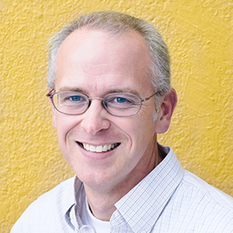













This article shares a presentation given by Stephen Downes back in April 2015 covering Open Education and Personal Learning.