

I really enjoyed writing this article for SCIS Data Connections journal. Careful and informed curation is a skill that is sometimes overlooked but of vital importance.


 Your new post is loading...
 Scoop.it! I really enjoyed writing this article for SCIS Data Connections journal. Careful and informed curation is a skill that is sometimes overlooked but of vital importance. 
No comment yet.
Sign up to comment
Scoop.it!
|

|
Scooped by
Gilbert C FAURE
July 2, 11:03 AM
|
Scoop.it!

Most experts compete by producing more. The ones who last build something readers come back to. Here is the model for moving from a voice people read to infrastructure people rely on to find their way
|
|
Scooped by
Gilbert C FAURE
February 13, 3:23 AM
|
Scoop.it!
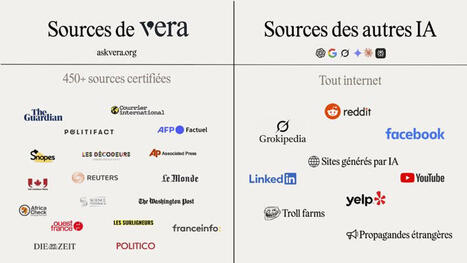
Pourquoi utiliser Vera plutôt que ChatGPT (&co) pour vérifier des faits ?
Parce que les IA généralistes ne sont pas conçues pour ça.
Le problème est structurel.
Selon une enquête de The Guardian, ChatGPT a cité Grokipedia 9 fois sur une douzaine de questions posées. Une source ouvertement biaisée, intégrée comme fiable dans un outil utilisé par des millions de personnes pour rechercher des informations.
Mais ce n'est qu'un symptôme.
Les LLM sont entraînés sur des données massives, sans curation fine. Résultat : près de 10 000 sites générés par IA (source : Next) se font passer pour des médias indépendants. Ils traduisent, paraphrasent, omettent leurs sources, ne précisent pas qu'ils sont générés par IA. Beaucoup ont été épinglés pour diffusion de fausses informations.
Ces « fermes à contenus » sont pourtant référencées sur Google Actualités. 7 des 50 principaux sites d'info français sur Google Discover sont produits par IA. Du contenu non fiable, indexé comme légitime, aspiré dans les données d'entraînement.
Le data poisoning amplifie tout ça.
Des réseaux de propagande inondent le web de contenus faux mais cohérents, suffisamment bien formatés pour contaminer les données d'entraînement. Un LLM ne distingue pas une source fiable d'un site de désinformation si les deux sont présents en quantité et bien référencés. Le doute s'installe, la vérité se relativise. C'est exactement l'objectif.
Vera fait un choix inverse.
450 sources imposées, qui respectent les standards internationaux de fiabilité (JTI, EFCSN, IFCN). Pas d'entraînement sur le web ouvert. Si Vera n'a pas de source fiable pour répondre, elle le dit explicitement. Elle ne devine pas. Elle ne comble pas les trous.
Les LLM sont des outils puissants pour plein de choses. Mais pas pour vérifier des faits. Pour ça, il faut une architecture pensée dès le départ pour résister à la contamination.
C'est ce que fait Vera. | 58 comments on LinkedIn
|
|
Scooped by
Gilbert C FAURE
January 5, 5:54 AM
|
Scoop.it!

One deep clean-up I did over the New Year: Clearing up my digital information environment.
I was getting tired of drowning in the endless flood of digital content—jumping between websites, swiping through algorithm-driven feeds, and saving articles I never returned to. It felt overwhelming, noisy, and… out of control.
So I did two things that made a difference.
📌 #𝟭. 𝗖𝘂𝗿𝗮𝘁𝗶𝗻𝗴 𝗺𝘆 𝗶𝗻𝗳𝗼𝗿𝗺𝗮𝘁𝗶𝗼𝗻 𝘀𝗽𝗮𝗰𝗲.
I moved away from passive consumption of information and toward active curation using an RSS aggregator. I chose Inoreader since it offers strong features, including unlimited folders/tags, better search, deep customization, and even automation. For example, you can set rules to surface articles from the feeds that truly match your interests.
By pulling my favorite YouTube channels, newsletters, blogs, and social feeds into one space, I’ve taken back the wheel. I no longer have to chase content across a dozen locations. More importantly, it requires me to be an info gatekeeper: if a source isn't worth following in my reader, it isn't worth my attention. It’s about consuming with discipline and taste, not an algorithm told me to.
📌 #𝟮. 𝗗𝗲𝗹𝗲𝘁𝗲𝗱 𝗺𝗼𝘀𝘁 𝗼𝗳 “𝗦𝗮𝘃𝗲 𝗜𝘁 𝗳𝗼𝗿 𝗟𝗮𝘁𝗲𝗿” 𝗚𝗿𝗮𝘃𝗲𝘆𝗮𝗿𝗱
I cleaned out all the saved content that I never read in the last year.
Like a digital hoarder, I’d been collecting links, screenshots, and PDFs, thinking I’d come back to them at some point. But I never reaccess most of them. So I did a strenuous deep clean, deleting the fluffy and migrating the truly high-value gems into Notion. Seeing my curated knowledge organized in one central location felt like a weight off my shoulders. It took effort, but the mental clarity was worth it.
👩💻 𝗪𝗲 𝗮𝗿𝗲 𝘄𝗵𝗮𝘁 𝘄𝗲 𝗿𝗲𝗮𝗱.
As with healthy eating, avoiding large/fast-food-style content driven by algorithmic feeds, and actively choosing and focusing on smaller amounts of high-quality content are crucial for ensuring a healthy mind.
Algorithm feeds access will continue to dominate the masses. At the same time, personal/intent-driven content agents (built on RSS infrastructure and leveraging AI agents) will grow, designed for people who value autonomy, focus, and quality in what they consume.
What’s your approach? And how might you choose to consume content differently to improve your mind in the new year?
---------------------------------------------------------
📚 Good books remain high-quality, dense sources of content. My Newsletter Shares Essential Reading for Designers in the AI Shift. ⬇️
https://lnkd.in/gkakx2iA

|
|
Scooped by
Gilbert C FAURE
July 19, 2025 10:27 AM
|
Scoop.it!

Parlons curation de contenu ! Retrouvez la définition, nos explications, nos conseils et notre sélection d'outils pour votre curation.
|
|
Scooped by
Gilbert C FAURE
January 19, 2025 6:32 AM
|
Scoop.it!

The use of social media to disseminate academic content is increasing, particularly in scientific journals. This study has the following two main objectives: first, exploring the use of social media by high-impact academic journals in two different SJR categories (Library and Information Sciences and Communication), and second, analyzing content curation carried out by the world’s most influential journals in both areas. The research methodology is descriptive with a quantitative approach regarding the items studied. The study finds that COM journals have a stronger social media presence than LIS journals, and X dominates in both categories and regions as the top social network, with significant influence as the only platform. On the other hand, content curation was found to a high degree in both areas, especially in the LIS area, with 93% vs. 80% in COM. The study highlights that both COM and LIS journals primarily focus on promoting recent articles, with COM diversifying content more than LIS. In terms of the content curation techniques used in both areas, the majority are abstracting and summarizing.
|
|
Scooped by
Gilbert C FAURE
December 15, 2024 1:21 PM
|
Scoop.it!

Publish-Review-Curate (PRC) est un modèle innovant de publication scientifique qui comprend trois étapes : 1. Publish. Les auteurs rendent public leur produit de recherche : un préprint sur un serveur de préprint ou une archive ouverte, un jeu de données sur un entrepôt, etc. La décision de publication des travaux est donc prise par les…
|
|
Scooped by
Gilbert C FAURE
October 7, 2024 4:14 AM
|
Scoop.it!
Découvrez comment Packpack facilite la veille et la curation d'informations dans un monde saturé de données.
|
|
Rescooped by
Gilbert C FAURE
from 21st Century Learning and Teaching
January 9, 2024 11:39 AM
|
Scoop.it!

What does content curation mean?
Content curation is the process of gathering, editing, and sharing valuable and relevant content from a variety of sources, tailored to a specific audience. It’s like being a museum curator but for online content!
Learn more / En savoir plus / Mehr erfahren:
https://gustmees.wordpress.com/?s=curation
https://gustmees.wordpress.com/?s=blogging
https://www.scoop.it/topic/21st-century-learning-and-teaching/?&tag=Blogging
https://www.scoop.it/topic/21st-century-learning-and-teaching/?&tag=content+marketing
https://www.scoop.it/topic/21st-century-learning-and-teaching/?&tag=SEO

What does content curation mean?
Content curation is the process of gathering, editing, and sharing valuable and relevant content from a variety of sources, tailored to a specific audience. It’s like being a museum curator but for online content!
Learn more / En savoir plus / Mehr erfahren:
https://gustmees.wordpress.com/?s=curation
https://gustmees.wordpress.com/?s=blogging
https://www.scoop.it/topic/21st-century-learning-and-teaching/?&tag=Blogging
https://www.scoop.it/topic/21st-century-learning-and-teaching/?&tag=content+marketing
https://www.scoop.it/topic/21st-century-learning-and-teaching/?&tag=SEO

I cannot express how relieved I am to have found a company like TrustGeeks Hack Expert. Losing my Bitcoin wallet was a sad experience, both financially and emotionally. I had tried various methods and consulted numerous experts, but none of them could provide a solution. One of my schoolmates who had recovered her bitcoins referred me to TrustGeeks Hack Expert a team of experts. From the moment I reached out to them, their team displayed a hand of support. They understood the urgency of my situation and immediately began working on my case. Their advanced technology and expertise in the field of cryptocurrency recovery were evident throughout the entire process. Their attention to detail approach gave me confidence that I was in capable hands. They kept me informed at every step of the way, providing regular updates and explaining the progress made. To my absolute delight. TrustGeeks Hack Expert was successful in recovering my Bitcoin wallet. I cannot thank TrustGeeks Hack Expert enough for their outstanding services. Their expertise, and commitment to their clients is top . I highly recommend reaching out TrustGeeks Hack Expert has a positive impact they have had into my life. I will advise anyone who falls victim to consult and communicate with the honest hacker through Email: trustgeekshackexpert(At)fastservice . com
Telegram User:@Trustgeekshackexpert $ WhatsApp +1(406)- 218- 6900

https://acquistaossicodone.com/prodotto/acquista-ossicodone-80mg-sa...
https://acquistaossicodone.com/prodotto/acquistare-il-nembutal-online/
https://acquistaossicodone.com/prodotto/acquista-seconal-in-linea/
https://acquistaossicodone.com/prodotto/cianuro-di-potassio/
https://acquistaossicodone.com/prodotto/kit-di-prova-nembutal/
https://acquistaossicodone.com/prodotto/acquista-polvere-nembutal-o...
https://acquistaossicodone.com/prodotto/acquista-cianuro-di-sodio/
https://acquistaossicodone.com/prodotto/acquista-pillole-nembutali/
https://acquistaossicodone.com/prodotto/abstral-fentanil-in-pillole/
https://acquistaossicodone.com/prodotto/acetil-fentanil-in-polvere/
https://acquistaossicodone.com/prodotto/actiq-citrato-di-fentanil/
https://acquistaossicodone.com/prodotto/cerotto-di-mylan-fentanil/
https://acquistaossicodone.com/prodotto/acquista-oramorph-oral-online/
https://acquistaossicodone.com/prodotto/polvere-di-fentanil/
https://acquistaossicodone.com/prodotto/iniezione-di-citrato-di-fen...
https://acquistaossicodone.com/prodotto/furanil-fentanil-in-polvere/
https://acquistaossicodone.com/prodotto/acquista-adderall-30mg-online/
https://acquistaossicodone.com/prodotto/acquista-ritalin-online/
https://acquistaossicodone.com/prodotto/acquista-vyvanse-online/
https://acquistaossicodone.com/prodotto/xanax-bars-2mg-alprazolam/
https://acquistaossicodone.com/prodotto/acquista-a-215-oxycodone-ac...
https://acquistaossicodone.com/prodotto/oxycodone-30mg-kvk-tech-acq...
https://acquistaossicodone.com/prodotto/opana-oxymorphone-hcl-40mg/
https://acquistaossicodone.com/prodotto/modafinil-200mg-modavigil/
https://acquistaossicodone.com/prodotto/acquista-valium-online/
https://acquistaossicodone.com/prodotto/acquista-subutex-online/
https://acquistaossicodone.com/prodotto/acquista-suboxone-8mg-2mg-o...
https://acquistaossicodone.com/prodotto/acquista-film-suboxone-8mg-...
https://acquistaossicodone.com/prodotto/acquista-suboxone-4mg-films...
https://acquistaossicodone.com/prodotto/acquista-suboxone-2mg-0-5mg...
https://acquistaossicodone.com/prodotto/acquista-film-suboxone-2mg-...
https://acquistaossicodone.com/prodotto/acquista-suboxone-16mg-4mg-...
https://acquistaossicodone.com/prodotto/acquista-suboxon…2mg-films-online/
https://acquistaossicodone.com/prodotto/acquista-roxicodone-online/
https://acquistaossicodone.com/prodotto/acquista-percocet-online/
https://acquistaossicodone.com/prodotto/acquista-oxycontin-online/
https://acquistaossicodone.com/prodotto/30-mg-di-ossicodone-acquista/
https://acquistaossicodone.com/prodotto/acquista-norco-online/
https://acquistaossicodone.com/prodotto/acquista-morfina-solfato-on...
https://acquistaossicodone.com/prodotto/acquista-u-47700-online/
https://acquistaossicodone.com/prodotto/acquista-eroina-online/
https://acquistaossicodone.com/prodotto/acquista-lortab-online/
https://acquistaossicodone.com/prodotto/acquista-levitra-20mg-online/
https://acquistaossicodone.com/prodotto/acquista-idrocodone-online/
https://acquistaossicodone.com/prodotto/acquista-focalin-online/
https://acquistaossicodone.com/prodotto/acquista-dilaudid-hp-iniezi...
https://acquistaossicodone.com/prodotto/acquista-dilaudid-online/
https://acquistaossicodone.com/prodotto/acquista-demerol-online/
https://acquistaossicodone.com/prodotto/acquista-codeine-online/
https://acquistaossicodone.com/prodotto/acquista-blu-xanax-online/
https://acquistaossicodone.com/prodotto/acquista-ativan-2mg-online/
https://acquistaossicodone.com/prodotto/acquista-ambien-online/
https://acquistaossicodone.com/negozio/
https://acquistaossicodone.com/prodotto/acquista-pillole-nembutali/
https://acquistaossicodone.com/prodotto/acquista-film-suboxone-2mg-...
https://acquistaossicodone.com/prodotto/acquista-lortab-online/
https://acquistaossicodone.com/prodotto/acquista-dilaudid-hp-iniezi...
https://acquistaossicodone.com/prodotto/acquista-ativan-2mg-online/
https://acquistaossicodone.com/prodotto/acquista-1p-eth-lad/
https://acquistaossicodone.com/prodotto/acquista-suboxone-16mg-4mg-...
https://acquistaossicodone.com/prodotto/acquista-suboxone-4mg-films...
https://acquistaossicodone.com/prodotto/sciroppo-di-codeina-linctus/
https://acquistaossicodone.com/prodotto/actiq-citrato-di-fentanil/
https://acquistaossicodone.com/prodotto/modafinil-200mg-modavigil/
https://acquistaossicodone.com/prodotto/opana-oxymorphone-hcl-40mg/
https://acquistaossicodone.com/prodotto/nausea-e-vomito-drammatici-...
https://acquistaossicodone.com/prodotto/acquista-kamagra-online/
https://acquistaossicodone.com/prodotto/acquista-viagra-online/
https://acquistaossicodone.com/prodotto/acquista-viagra-50mg-online/
https://acquistaossicodone.com/prodotto/polvere-di-fentanil/
https://acquistaossicodone.com/prodotto/benadryl-ultratabs-compress...
https://acquistaossicodone.com/prodotto/oxycodone-30mg-kvk-tech-acq...
https://acquistaossicodone.com/prodotto/cerotto-di-mylan-fentanil/
https://acquistaossicodone.com/prodotto/acquista-seconal-in-linea/
https://acquistaossicodone.com/prodotto/acquista-adderall-30mg-online/
https://acquistaossicodone.com/prodotto/acquista-polvere-nembutal-o...
https://acquistaossicodone.com/prodotto/ketamina-hcl/
https://acquistaossicodone.com/prodotto/acquista-ossicodone-10mg-sa...
https://acquistaossicodone.com/prodotto/acquista-ossicodone-30mg-sa...
https://acquistaossicodone.com/prodotto/acquista-ossicodone-15mg-sa...
https://acquistaossicodone.com/prodotto/acquista-desoxyn-online/
https://acquistaossicodone.com/prodotto/acquista-depalgo-online/
https://acquistaossicodone.com/prodotto/invidia-del-pene-albino/
https://acquistaossicodone.com/prodotto/acquista-liberty-caps/
https://acquistaossicodone.com/prodotto/acquista-ossicodone-40mg-sa...
https://acquistaossicodone.com/prodotto/acquista-lsd-online/
https://acquistaossicodone.com/prodotto/acquista-vicodin-online/
https://acquistaossicodone.com/prodotto/actavis-prometazina-codeina/
https://acquistaossicodone.com/prodotto/acquista-suboxone-12mg-film...
https://acquistaossicodone.com/prodotto/acquista-zolpidem-online/
https://acquistaossicodone.com/prodotto/acquista-stilnox-online/
https://acquistaossicodone.com/prodotto/acquista-viagra-100mg-online/
https://acquistaossicodone.com/prodotto/acquista-zopiclone-online/
https://acquistaossicodone.com/prodotto/acetil-fentanil-in-polvere/
https://acquistaossicodone.com/prodotto/wockhardt-mgp-sciroppo/
https://acquistaossicodone.com/prodotto/acquista-dmt-online/
https://acquistaossicodone.com/prodotto/acquista-norco-online/
https://acquistaossicodone.com/prodotto/acquista-percocet-online/
https://acquistaossicodone.com/prodotto/acquista-valium-online/
https://acquistaossicodone.com/prodotto/acquista-subutex-online/
https://acquistaossicodone.com/prodotto/acquista-ritalin-online/
https://acquistaossicodone.com/prodotto/acquista-oxycontin-online/
https://acquistaossicodone.com/prodotto/abstral-fentanil-in-pillole/
https://acquistaossicodone.com/prodotto/acquista-ossicodone-80mg-sa...
https://acquistaossicodone.com/prodotto/acquista-psilocybe-aztecorum/
https://ayopaoxycodone.com/%CF%80%CF%81%CE%BF%CF%8A%CF%8C%CE%BD/%ce...
https://ayopaoxycodone.com/%CF%80%CF%81%CE%BF%CF%8A%CF%8C%CE%BD/%ce...
https://ayopaoxycodone.com/%CE%BA%CE%B1%CF%84%CE%AC%CF%83%CF%84%CE%...
https://ayopaoxycodone.com/%CF%80%CF%81%CE%BF%CF%8A%CF%8C%CE%BD/%CE...
https://ayopaoxycodone.com/%CF%80%CF%81%CE%BF%CF%8A%CF%8C%CE%BD/%CE...
https://ayopaoxycodone.com/%CF%80%CF%81%CE%BF%CF%8A%CF%8C%CE%BD/%CE...
https://ayopaoxycodone.com/%CF%80%CF%81%CE%BF%CF%8A%CF%8C%CE%BD/%CE...
https://ayopaoxycodone.com/%CF%80%CF%81%CE%BF%CF%8A%CF%8C%CE%BD/%CE...
https://ayopaoxycodone.com/%CF%80%CF%81%CE%BF%CF%8A%CF%8C%CE%BD/%CE...
https://ayopaoxycodone.com/%CF%80%CF%81%CE%BF%CF%8A%CF%8C%CE%BD/%CE...
https://ayopaoxycodone.com/%CF%80%CF%81%CE%BF%CF%8A%CF%8C%CE%BD/%CE...
https://ayopaoxycodone.com/%CF%80%CF%81%CE%BF%CF%8A%CF%8C%CE%BD/%CE...
https://ayopaoxycodone.com/%CF%80%CF%81%CE%BF%CF%8A%CF%8C%CE%BD/%CE...
https://ayopaoxycodone.com/%CF%80%CF%81%CE%BF%CF%8A%CF%8C%CE%BD/%CE...
https://ayopaoxycodone.com/%CF%80%CF%81%CE%BF%CF%8A%CF%8C%CE%BD/%CE...
https://ayopaoxycodone.com/%CF%80%CF%81%CE%BF%CF%8A%CF%8C%CE%BD/%CE...
https://ayopaoxycodone.com/%CF%80%CF%81%CE%BF%CF%8A%CF%8C%CE%BD/oxy...
https://ayopaoxycodone.com/%CF%80%CF%81%CE%BF%CF%8A%CF%8C%CE%BD/%CF...
https://ayopaoxycodone.com/%CF%80%CF%81%CE%BF%CF%8A%CF%8C%CE%BD/%CE...
https://ayopaoxycodone.com/%CF%80%CF%81%CE%BF%CF%8A%CF%8C%CE%BD/%CE...
https://ayopaoxycodone.com/%CF%80%CF%81%CE%BF%CF%8A%CF%8C%CE%BD/%CE...
https://ayopaoxycodone.com/%CF%80%CF%81%CE%BF%CF%8A%CF%8C%CE%BD/%CE...
https://ayopaoxycodone.com/%CF%80%CF%81%CE%BF%CF%8A%CF%8C%CE%BD/%CE...
https://ayopaoxycodone.com/%CF%80%CF%81%CE%BF%CF%8A%CF%8C%CE%BD/%CE...
https://ayopaoxycodone.com/%CF%80%CF%81%CE%BF%CF%8A%CF%8C%CE%BD/%CE...
https://ayopaoxycodone.com/%CF%80%CF%81%CE%BF%CF%8A%CF%8C%CE%BD/%CE...
https://ayopaoxycodone.com/%CF%80%CF%81%CE%BF%CF%8A%CF%8C%CE%BD/%CE...
https://ayopaoxycodone.com/%CF%80%CF%81%CE%BF%CF%8A%CF%8C%CE%BD/%CE...
https://ayopaoxycodone.com/%CF%80%CF%81%CE%BF%CF%8A%CF%8C%CE%BD/%CE...
https://ayopaoxycodone.com/%CF%80%CF%81%CE%BF%CF%8A%CF%8C%CE%BD/%CF...
https://ayopaoxycodone.com/%CF%80%CF%81%CE%BF%CF%8A%CF%8C%CE%BD/%CE...
https://ayopaoxycodone.com/%CF%80%CF%81%CE%BF%CF%8A%CF%8C%CE%BD/%CE...
https://ayopaoxycodone.com/%CF%80%CF%81%CE%BF%CF%8A%CF%8C%CE%BD/%CE...
https://ayopaoxycodone.com/%CF%80%CF%81%CE%BF%CF%8A%CF%8C%CE%BD/%CE...
https://ayopaoxycodone.com/%CF%80%CF%81%CE%BF%CF%8A%CF%8C%CE%BD/sci...
https://ayopaoxycodone.com/%CF%80%CF%81%CE%BF%CF%8A%CF%8C%CE%BD/%CE...
https://ayopaoxycodone.com/%CF%80%CF%81%CE%BF%CF%8A%CF%8C%CE%BD/%CE...
https://ayopaoxycodone.com/%CF%80%CF%81%CE%BF%CF%8A%CF%8C%CE%BD/%CE...
https://ayopaoxycodone.com/%CF%80%CF%81%CE%BF%CF%8A%CF%8C%CE%BD/%CE...
https://ayopaoxycodone.com/%CF%80%CF%81%CE%BF%CF%8A%CF%8C%CE%BD/%CE...
https://ayopaoxycodone.com/%CF%80%CF%81%CE%BF%CF%8A%CF%8C%CE%BD/%CE...
https://ayopaoxycodone.com/%CF%80%CF%81%CE%BF%CF%8A%CF%8C%CE%BD/%CE...
https://ayopaoxycodone.com/%CF%80%CF%81%CE%BF%CF%8A%CF%8C%CE%BD/%CE...
https://ayopaoxycodone.com/%CF%80%CF%81%CE%BF%CF%8A%CF%8C%CE%BD/%CE...
https://ayopaoxycodone.com/%CF%80%CF%81%CE%BF%CF%8A%CF%8C%CE%BD/%CE...
https://ayopaoxycodone.com/%CF%80%CF%81%CE%BF%CF%8A%CF%8C%CE%BD/%CE...
https://ayopaoxycodone.com/%CF%80%CF%81%CE%BF%CF%8A%CF%8C%CE%BD/%CE...
https://ayopaoxycodone.com/%CF%80%CF%81%CE%BF%CF%8A%CF%8C%CE%BD/%CE...
https://ayopaoxycodone.com/%CF%80%CF%81%CE%BF%CF%8A%CF%8C%CE%BD/%CE...
https://ayopaoxycodone.com/%CF%80%CF%81%CE%BF%CF%8A%CF%8C%CE%BD/%CE...
https://ayopaoxycodone.com/%CF%80%CF%81%CE%BF%CF%8A%CF%8C%CE%BD/%CE...
https://ayopaoxycodone.com/%CF%80%CF%81%CE%BF%CF%8A%CF%8C%CE%BD/%CE...
https://ayopaoxycodone.com/%CF%80%CF%81%CE%BF%CF%8A%CF%8C%CE%BD/%CE...
https://ayopaoxycodone.com/%CF%80%CF%81%CE%BF%CF%8A%CF%8C%CE%BD/%CE...
https://ayopaoxycodone.com/%CF%80%CF%81%CE%BF%CF%8A%CF%8C%CE%BD/%CE...
https://ayopaoxycodone.com/%CF%80%CF%81%CE%BF%CF%8A%CF%8C%CE%BD/%CE...
https://ayopaoxycodone.com/%CF%80%CF%81%CE%BF%CF%8A%CF%8C%CE%BD/%CE...
https://ayopaoxycodone.com/%CF%80%CF%81%CE%BF%CF%8A%CF%8C%CE%BD/%CE...
https://ayopaoxycodone.com/%CF%80%CF%81%CE%BF%CF%8A%CF%8C%CE%BD/%CE...
https://ayopaoxycodone.com/%CF%80%CF%81%CE%BF%CF%8A%CF%8C%CE%BD/%CE...
https://ayopaoxycodone.com/%CF%80%CF%81%CE%BF%CF%8A%CF%8C%CE%BD/acq...
https://ayopaoxycodone.com/%CF%80%CF%81%CE%BF%CF%8A%CF%8C%CE%BD/%CE...
https://ayopaoxycodone.com/%CF%80%CF%81%CE%BF%CF%8A%CF%8C%CE%BD/%CE...
https://ayopaoxycodone.com/%CF%80%CF%81%CE%BF%CF%8A%CF%8C%CE%BD/buy...
https://ayopaoxycodone.com/%CF%80%CF%81%CE%BF%CF%8A%CF%8C%CE%BD/%CE...
https://ayopaoxycodone.com/%CF%80%CF%81%CE%BF%CF%8A%CF%8C%CE%BD/act...
https://ayopaoxycodone.com/%CF%80%CF%81%CE%BF%CF%8A%CF%8C%CE%BD/%CE...
https://ayopaoxycodone.com/%CF%80%CF%81%CE%BF%CF%8A%CF%8C%CE%BD/%CE...
https://ayopaoxycodone.com/%CF%80%CF%81%CE%BF%CF%8A%CF%8C%CE%BD/%CE...
https://ayopaoxycodone.com/%CF%80%CF%81%CE%BF%CF%8A%CF%8C%CE%BD/%CE...
https://ayopaoxycodone.com/%CF%80%CF%81%CE%BF%CF%8A%CF%8C%CE%BD/%CE...
https://ayopaoxycodone.com/%CF%80%CF%81%CE%BF%CF%8A%CF%8C%CE%BD/%CE...
https://ayopaoxycodone.com/%CF%80%CF%81%CE%BF%CF%8A%CF%8C%CE%BD/%CE...
https://ayopaoxycodone.com/%CF%80%CF%81%CE%BF%CF%8A%CF%8C%CE%BD/%CF...
https://ayopaoxycodone.com/%CF%80%CF%81%CE%BF%CF%8A%CF%8C%CE%BD/%CE...
https://ayopaoxycodone.com/%CF%80%CF%81%CE%BF%CF%8A%CF%8C%CE%BD/%CE...
https://ayopaoxycodone.com/%CF%80%CF%81%CE%BF%CF%8A%CF%8C%CE%BD/%CE...
https://ayopaoxycodone.com/%CF%80%CF%81%CE%BF%CF%8A%CF%8C%CE%BD/%CE...
https://ayopaoxycodone.com/%CF%80%CF%81%CE%BF%CF%8A%CF%8C%CE%BD/%CE...
https://ayopaoxycodone.com/%CF%80%CF%81%CE%BF%CF%8A%CF%8C%CE%BD/%CE...
https://ayopaoxycodone.com/%CF%80%CF%81%CE%BF%CF%8A%CF%8C%CE%BD/%CE...
https://ayopaoxycodone.com/%CF%80%CF%81%CE%BF%CF%8A%CF%8C%CE%BD/%CE...
https://ayopaoxycodone.com/%CF%80%CF%81%CE%BF%CF%8A%CF%8C%CE%BD/%CE...
https://ayopaoxycodone.com/%CE%BA%CE%B1%CF%84%CE%AC%CF%83%CF%84%CE%...
https://auctionchemstore.com/shop/
https://auctionchemstore.com/product/rohypnol-2mg/
https://auctionchemstore.com/product/buy-garcinia-cambogia-extract/
https://acquistaossicodone.com/negozio/
https://drogadiscreta.com/negozio/
https://drogadiscreta.com/prodotto/acquista-fentermina-in-linea/
https://drogadiscreta.com/prodotto/acquista-1p-eth-lad/
https://drogadiscreta.com/prodotto/acquista-dmt-online/
https://drogadiscreta.com/prodotto/acquista-lsd-online/
https://drogadiscreta.com/prodotto/acquista-suboxone-12mg-films-onl...
https://drogadiscreta.com/prodotto/acquista-morfina-solfato-inietta...
https://drogadiscreta.com/prodotto/acquista-efedrina-hcl-online/
https://drogadiscreta.com/prodotto/acquista-tramadolo-online/
https://drogadiscreta.com/prodotto/acquista-efedrina-hcl-in-polvere/
https://drogadiscreta.com/prodotto/modafinil-200mg-modavigil/
https://drogadiscreta.com/prodotto/iniezione-di-citrato-di-fentanil/
https://drogadiscreta.com/prodotto/acquistare-il-nembutal-online/
https://drogadiscreta.com/prodotto/acquista-valium-online/
https://drogadiscreta.com/prodotto/acquista-seconal-in-linea/
https://drogadiscreta.com/prodotto/acquista-polvere-nembutal-online/
https://drogadiscreta.com/prodotto/acquista-morfina-solfato-online/
https://drogadiscreta.com/prodotto/acquista-cianuro-di-sodio/
https://drogadiscreta.com/prodotto/acetil-fentanil-in-polvere/
https://drogadiscreta.com/prodotto/abstral-fentanil-in-pillole/
https://drogadiscreta.com/prodotto/acquista-vyvanse-online/
https://drogadiscreta.com/prodotto/acquista-pillole-nembutali/
https://drogadiscreta.com/prodotto/acquista-adderall-30mg-online/
https://drogadiscreta.com/prodotto/cerotto-di-mylan-fentanil/
https://drogadiscreta.com/prodotto/actiq-citrato-di-fentanil/
https://drogadiscreta.com/prodotto/furanil-fentanil-in-polvere/
https://drogadiscreta.com/prodotto/acquista-ambien-online/
https://drogadiscreta.com/prodotto/acquista-idrocodone-online/
https://drogadiscreta.com/prodotto/acquista-eroina-online/
https://drogadiscreta.com/prodotto/acquista-u-47700-online/
https://drogadiscreta.com/prodotto/acquista-roxicodone-online/
https://drogadiscreta.com/prodotto/acquista-suboxone-16mg-4mg-online/
https://drogadiscreta.com/prodotto/acquista-film-suboxone-2mg-online/
https://drogadiscreta.com/prodotto/acquista-suboxone-2mg-0-5mg-online/
https://drogadiscreta.com/prodotto/acquista-film-suboxone-8mg-online/
https://drogadiscreta.com/prodotto/acquista-suboxone-4mg-films-online/
https://drogadiscreta.com/prodotto/acquista-suboxone-8mg-2mg-online/
https://drogadiscreta.com/prodotto/cianuro-di-potassio/
https://drogadiscreta.com/prodotto/acquista-oramorph-oral-online/
https://drogadiscreta.com/prodotto/diazepam-10mg-2ml-iniezione/
https://drogadiscreta.com/prodotto/polvere-di-fentanil/
https://drogadiscreta.com/prodotto/acquista-codeina-online/
https://drogadiscreta.com/prodotto/acquista-ossicodone-80mg-sandoz/
https://drogadiscreta.com/prodotto/acquista-diazepam-online/
https://drogadiscreta.com/prodotto/xanax-bars-2mg-alprazolam/
https://drogadiscreta.com/prodotto/kit-di-prova-nembutal/
https://drogadiscreta.com/prodotto/acquista-crack-cocaina-online/
https://drogadiscreta.com/prodotto/acquista-cocaina-peruviana-online/
https://drogadiscreta.com/prodotto/acquista-cocaina-colombiana-online/
https://drogadiscreta.com/prodotto/cocaina/
https://drogadiscreta.com/prodotto/acquista-ecuador-cocaina-online/
https://drogadiscreta.com/prodotto/acquista-cocaina-online/
https://drogadiscreta.com/prodotto/acquista-alprazolam-in-polvere-o...
https://drogadiscreta.com/prodotto/acquista-cristalli-a-pvp-online/
https://drogadiscreta.com/prodotto/acquista-pillole-molly-online/
https://drogadiscreta.com/prodotto/acquista-ecstasy-mdma-100-mg/
https://drogadiscreta.com/prodotto/acquista-jwh-018-online/
https://drogadiscreta.com/prodotto/acquista-cristallo-mdma-online/
https://drogadiscreta.com/prodotto/acquista-jurnista-32mg-online/
https://drogadiscreta.com/prodotto/acquista-jurnista-16mg-online/
https://drogadiscreta.com/prodotto/acquista-jurnista-4mg-online/
https://drogadiscreta.com/prodotto/acquista-jurnista-64mg-online/
https://drogadiscreta.com/prodotto/acquista-jurnista-8mg-online/
https://drogadiscreta.com/prodotto/acquista-dormicum-7-5mg-online/
https://drogadiscreta.com/prodotto/acquista-zopiclone-online/
https://drogadiscreta.com/prodotto/acquista-desoxyn-online/
https://drogadiscreta.com/prodotto/acquista-dormicum-15mg-online/
https://drogadiscreta.com/prodotto/sciroppo-di-codeina-linctus/
https://drogadiscreta.com/prodotto/acquista-stilnox-online/
https://drogadiscreta.com/prodotto/sciroppo-di-prometazina-hi-tech/
https://drogadiscreta.com/prodotto/wockhardt-mgp-sciroppo/
https://drogadiscreta.com/prodotto/actavis-prometazina-codeina/
https://drogadiscreta.com/prodotto/oxycodone-30mg-kvk-tech-acquistare/
https://drogadiscreta.com/prodotto/30-mg-di-ossicodone-acquista/
https://drogadiscreta.com/prodotto/acquista-dilaudid-hp-iniezione-o...
https://drogadiscreta.com/prodotto/acquista-blu-xanax-online/
https://drogadiscreta.com/prodotto/acquista-focalin-online/
https://drogadiscreta.com/prodotto/acquista-demerol-online/
https://drogadiscreta.com/prodotto/acquista-a-215-ossicodone-actavis/
https://drogadiscreta.com/prodotto/acquista-subutex-online/
https://drogadiscreta.com/prodotto/acquista-norco-online/
https://drogadiscreta.com/prodotto/opana-oxymorphone-hcl-40mg/
https://drogadiscreta.com/prodotto/acquista-oxycontin-online/
https://drogadiscreta.com/prodotto/acquista-levitra-20mg-online/
https://drogadiscreta.com/prodotto/acquista-dilaudid-online/
https://drogadiscreta.com/prodotto/acquista-lortab-online/
https://drogadiscreta.com/prodotto/acquista-percocet-online/
https://drogadiscreta.com/prodotto/acquista-ativan-2mg-online/
https://acquistaossicodone.com/prodotto/acquista-ossicodone-80mg-sa...
https://acquistaossicodone.com/prodotto/acquistare-il-nembutal-online/
https://acquistaossicodone.com/prodotto/acquista-seconal-in-linea/
https://acquistaossicodone.com/prodotto/cianuro-di-potassio/
https://acquistaossicodone.com/prodotto/kit-di-prova-nembutal/
https://acquistaossicodone.com/prodotto/acquista-polvere-nembutal-o...
https://acquistaossicodone.com/prodotto/acquista-cianuro-di-sodio/
https://acquistaossicodone.com/prodotto/acquista-pillole-nembutali/
https://acquistaossicodone.com/prodotto/abstral-fentanil-in-pillole/
https://acquistaossicodone.com/prodotto/acetil-fentanil-in-polvere/
https://acquistaossicodone.com/prodotto/actiq-citrato-di-fentanil/
https://acquistaossicodone.com/prodotto/cerotto-di-mylan-fentanil/
https://acquistaossicodone.com/prodotto/acquista-oramorph-oral-online/
https://acquistaossicodone.com/prodotto/polvere-di-fentanil/
https://acquistaossicodone.com/prodotto/iniezione-di-citrato-di-fen...
https://acquistaossicodone.com/prodotto/furanil-fentanil-in-polvere/
https://acquistaossicodone.com/prodotto/acquista-adderall-30mg-online/
https://acquistaossicodone.com/prodotto/acquista-ritalin-online/
https://acquistaossicodone.com/prodotto/acquista-vyvanse-online/
https://acquistaossicodone.com/prodotto/xanax-bars-2mg-alprazolam/
https://acquistaossicodone.com/prodotto/acquista-a-215-oxycodone-ac...
https://acquistaossicodone.com/prodotto/oxycodone-30mg-kvk-tech-acq...
https://acquistaossicodone.com/prodotto/opana-oxymorphone-hcl-40mg/
https://acquistaossicodone.com/prodotto/modafinil-200mg-modavigil/
https://acquistaossicodone.com/prodotto/acquista-valium-online/
https://acquistaossicodone.com/prodotto/acquista-subutex-online/
https://acquistaossicodone.com/prodotto/acquista-suboxone-8mg-2mg-o...
https://acquistaossicodone.com/prodotto/acquista-film-suboxone-8mg-...
https://acquistaossicodone.com/prodotto/acquista-suboxone-4mg-films...
https://acquistaossicodone.com/prodotto/acquista-suboxone-2mg-0-5mg...
https://acquistaossicodone.com/prodotto/acquista-film-suboxone-2mg-...
https://acquistaossicodone.com/prodotto/acquista-suboxone-16mg-4mg-...
https://acquistaossicodone.com/prodotto/acquista-suboxon…2mg-films-online/
https://acquistaossicodone.com/prodotto/acquista-roxicodone-online/
https://acquistaossicodone.com/prodotto/acquista-percocet-online/
https://acquistaossicodone.com/prodotto/acquista-oxycontin-online/
https://acquistaossicodone.com/prodotto/30-mg-di-ossicodone-acquista/
https://acquistaossicodone.com/prodotto/acquista-norco-online/
https://acquistaossicodone.com/prodotto/acquista-morfina-solfato-on...
https://acquistaossicodone.com/prodotto/acquista-u-47700-online/
https://acquistaossicodone.com/prodotto/acquista-eroina-online/
https://acquistaossicodone.com/prodotto/acquista-lortab-online/
https://acquistaossicodone.com/prodotto/acquista-levitra-20mg-online/
https://acquistaossicodone.com/prodotto/acquista-idrocodone-online/
https://acquistaossicodone.com/prodotto/acquista-focalin-online/
https://acquistaossicodone.com/prodotto/acquista-dilaudid-hp-iniezi...
https://acquistaossicodone.com/prodotto/acquista-dilaudid-online/
https://acquistaossicodone.com/prodotto/acquista-demerol-online/
https://acquistaossicodone.com/prodotto/acquista-codeine-online/
https://acquistaossicodone.com/prodotto/acquista-blu-xanax-online/
https://acquistaossicodone.com/prodotto/acquista-ativan-2mg-online/
https://acquistaossicodone.com/prodotto/acquista-ambien-online/
https://drogasicura.com/negozio/
https://drogasicura.com/prodotto/acquista-fentermina-in-linea/
https://drogasicura.com/prodotto/acquista-1p-eth-lad/
https://drogasicura.com/prodotto/acquista-dmt-online/
https://drogasicura.com/prodotto/acquista-lsd-online/
https://drogasicura.com/prodotto/acquista-suboxone-12mg-films-online/
https://drogasicura.com/prodotto/acquista-morfina-solfato-iniettabile/
https://drogasicura.com/prodotto/acquista-efedrina-hcl-online/
https://drogasicura.com/prodotto/acquista-tramadolo-online/
https://drogasicura.com/prodotto/acquista-efedrina-hcl-in-polvere/
https://drogasicura.com/prodotto/modafinil-200mg-modavigil/
https://drogasicura.com/prodotto/iniezione-di-citrato-di-fentanil/
https://drogasicura.com/prodotto/acquistare-il-nembutal-online/
https://drogasicura.com/prodotto/acquista-valium-online/
https://drogasicura.com/prodotto/acquista-seconal-in-linea/
https://drogasicura.com/prodotto/acquista-polvere-nembutal-online/
https://drogasicura.com/prodotto/acquista-morfina-solfato-online/
https://drogasicura.com/prodotto/acquista-cianuro-di-sodio/
https://drogasicura.com/prodotto/acetil-fentanil-in-polvere/
https://drogasicura.com/prodotto/abstral-fentanil-in-pillole/
https://drogasicura.com/prodotto/acquista-vyvanse-online/
https://drogasicura.com/prodotto/acquista-pillole-nembutali/
https://drogasicura.com/prodotto/acquista-adderall-30mg-online/
https://drogasicura.com/prodotto/cerotto-di-mylan-fentanil/
https://drogasicura.com/prodotto/actiq-citrato-di-fentanil/
https://drogasicura.com/prodotto/furanil-fentanil-in-polvere/
https://drogasicura.com/prodotto/acquista-ambien-online/
https://drogasicura.com/prodotto/acquista-idrocodone-online/
https://drogasicura.com/prodotto/acquista-eroina-online/
https://drogasicura.com/prodotto/acquista-u-47700-online/
https://drogasicura.com/prodotto/acquista-roxicodone-online/
https://drogasicura.com/prodotto/acquista-suboxone-16mg-4mg-online/
https://drogasicura.com/prodotto/acquista-film-suboxone-2mg-online/
https://drogasicura.com/prodotto/acquista-suboxone-2mg-0-5mg-online/
https://drogasicura.com/prodotto/acquista-film-suboxone-8mg-online/
https://drogasicura.com/prodotto/acquista-suboxone-4mg-films-online/
https://drogasicura.com/prodotto/acquista-suboxone-8mg-2mg-online/
https://drogasicura.com/prodotto/cianuro-di-potassio/
https://drogasicura.com/prodotto/acquista-oramorph-oral-online/
https://drogasicura.com/prodotto/diazepam-10mg-2ml-iniezione/
https://drogasicura.com/prodotto/polvere-di-fentanil/
https://drogasicura.com/prodotto/acquista-codeina-online/
https://drogasicura.com/prodotto/acquista-ossicodone-80mg-sandoz/
https://drogasicura.com/prodotto/acquista-diazepam-online/
https://drogasicura.com/prodotto/xanax-bars-2mg-alprazolam/
https://drogasicura.com/prodotto/kit-di-prova-nembutal/
https://drogasicura.com/prodotto/acquista-crack-cocaina-online/
https://drogasicura.com/prodotto/acquista-cocaina-peruviana-online/
https://drogasicura.com/prodotto/acquista-cocaina-colombiana-online/
https://drogasicura.com/prodotto/cocaina/
https://drogasicura.com/prodotto/acquista-ecuador-cocaina-online/
https://drogasicura.com/prodotto/acquista-cocaina-online/
https://drogasicura.com/prodotto/acquista-alprazolam-in-polvere-onl...
https://drogasicura.com/prodotto/acquista-cristalli-a-pvp-online/
https://drogasicura.com/prodotto/acquista-pillole-molly-online/
https://drogasicura.com/prodotto/acquista-ecstasy-mdma-100-mg/
https://drogasicura.com/prodotto/acquista-jwh-018-online/
https://drogasicura.com/prodotto/acquista-cristallo-mdma-online/
https://drogasicura.com/prodotto/acquista-jurnista-32mg-online/
https://drogasicura.com/prodotto/acquista-jurnista-16mg-online/
https://drogasicura.com/prodotto/acquista-jurnista-4mg-online/
https://drogasicura.com/prodotto/acquista-jurnista-64mg-online/
https://drogasicura.com/prodotto/acquista-jurnista-8mg-online/
https://drogasicura.com/prodotto/acquista-dormicum-7-5mg-online/
https://drogasicura.com/prodotto/acquista-zopiclone-online/
https://drogasicura.com/prodotto/acquista-desoxyn-online/
https://drogasicura.com/prodotto/acquista-dormicum-15mg-online/
https://drogasicura.com/prodotto/sciroppo-di-codeina-linctus/
https://drogasicura.com/prodotto/acquista-stilnox-online/
https://drogasicura.com/prodotto/sciroppo-di-prometazina-hi-tech/
https://drogasicura.com/prodotto/wockhardt-mgp-sciroppo/
https://drogasicura.com/prodotto/actavis-prometazina-codeina/
https://drogasicura.com/prodotto/oxycodone-30mg-kvk-tech-acquistare/
https://drogasicura.com/prodotto/30-mg-di-ossicodone-acquista/
https://drogasicura.com/prodotto/acquista-dilaudid-hp-iniezione-onl...
https://drogasicura.com/prodotto/acquista-blu-xanax-online/
https://drogasicura.com/prodotto/acquista-focalin-online/
https://drogasicura.com/prodotto/acquista-demerol-online/
https://drogasicura.com/prodotto/acquista-a-215-ossicodone-actavis/
https://drogasicura.com/prodotto/acquista-subutex-online/
https://drogasicura.com/prodotto/acquista-norco-online/
https://drogasicura.com/prodotto/opana-oxymorphone-hcl-40mg/
https://drogasicura.com/prodotto/acquista-oxycontin-online/
https://drogasicura.com/prodotto/acquista-levitra-20mg-online/
https://drogasicura.com/prodotto/acquista-dilaudid-online/
https://drogasicura.com/prodotto/acquista-lortab-online/
https://drogasicura.com/prodotto/acquista-percocet-online/
https://drogasicura.com/prodotto/acquista-ativan-2mg-online/
|
|
Scooped by
Gilbert C FAURE
December 28, 2023 4:47 AM
|
Scoop.it!
A History Timeline About Content Curation. Content curation has been a vital aspect of information dissemination since ancient times. I
|
|
Scooped by
Gilbert C FAURE
December 13, 2023 2:42 AM
|
Scoop.it!
mackeyt
Dec 12
We welcome this guest essay by Dr. Melissa Atkinson, Director of Distance & Online Library Services at Abilene Christian University (ACU) Brown Library.
Metaliteracy, as introduced by Mackey and Jacobson in 2011, has been instrumental in developing metaliterate learners in a variety of contexts. The ACRL Framework for Information Literacy for Higher Education, published in 2016, transformed the previous Information Literacy Competency Standards for Higher Education (ACRL, 2000) into frames that build upon each other and were not prescriptive in how to assess students’ learning. Many librarians turn to the Framework as a guideline for developing information literacy courses, tutorials, guided studies, and assessments. Libraries and librarians create assessments of the Framework that are varied and individualized.
Using the Framework in conjunction with metaliteracy goals and learning objectives can enhance the student experience as well as give librarians a standard to follow that ensures development of skills needed in a participatory, connected environment (Mackey & Jacobson, 2011). Notes that reference metaliteracy and metacognition can be found in the Framework (2016). The Framework does have its strengths, but incorporating metaliteracy goals and learning objectives into the frames can aid in assessment and add to the knowledge and skills students should develop throughout their lifetime, not just when they are participating in higher education.
Using the original set of metaliteracy goals and learning objectives found on metaliteracy.org (Forte, et al, 2014), a metaliteracy course was developed in the Learning Management System (LMS) Canvas, specifically for fully online Ed.D. students, preparing them for research-related content encountered in their courses (Atkinson, 2019). The original course by Atkinson (2019) compared pretest, posttest, and metacognitive skills, using the Metacognitive Strategies for Library Research Skills Scale (MS-LRSS) developed by Catalano (2017).
The course was designed using backward design methods (Wiggins & McTighe, 2006) to introduce online doctoral students to common library terminology, metaliteracy, and metacognitive concepts. The metaliteracy course was not intended to take the place of library tutorials, individualized instruction, or research consultations–all of which are critical to meet the needs of doctoral students in an online environment.
The metaliteracy course consists of five modules, four of which are directly related to the metaliteracy goals and learning objectives from 2014 (Forte, et. al., 2014). The fifth module relates to specific skills students need to be successful, particularly in the Ed.D. program such as requesting materials through InterLibrary Loan, identifying research methods, and recognizing specific library databases. Each module consists of a pretest, an overview and videos (most of which are three minutes or less), and a posttest. Each module name, the video titles, and learning objectives are listed below.
Module 1: Evaluate Content Critically
Two Videos: Scholarly Resources; Peer Review
Objective: Metaliterate learners evaluate information critically by determining authority, relevancy, accuracy, and validity of each source regardless of the information's delivery method.
By the end of this module, learners will be able to:
1) Recognize the criteria for evaluating authority, relevancy, accuracy, and validity of information sources
2) Determine context of an information source by considering purpose and format
3) Distinguish between scholarly and non-scholarly sources
4) Understand the process of peer review and its purpose in scholarly research
Module 2: Information Ethics
Two Videos: Academic Integrity, Copyright, and Plagiarism; APA Style
Objective: Metaliterate learners understand and differentiate between their own intellectual property and others' intellectual property, and give credit to others' work using proper citation style methods.
By the end of this module, learners will be able to:
1) Understand the concepts of academic integrity, copyright, and plagiarism
2) Differentiate between various forms of attribution
3) Identify parts of a citation in APA style
4) Recognize elements of APA style in context
Module 3: Information Creation, Sharing, and Collaboration
Three videos: Social Media; Digital and Visual Literacy; Creating Original Content
Objective: Metaliterate learners are aware of their online environments, participate collaboratively, transfer information from one format to another, and produce and share original content.
By the end of this module, learners will be able to:
1) Understand the various ways of sharing original content
2) Consciously participate in social media environments
3) Describe digital and visual literacy and their importance to metaliterate learning
4) Identify digital and media formats and the uses and purposes of each
Module 4: Lifelong Learning Research Strategies
Two videos: Information Needs; Metacognition
Objective: Metaliterate learners connect learning with personal, professional, and lifelong goals using their experiences. Metaliterate learners recognize metacognitive principles of learning by acknowledging that learning is a process and can reflect on research difficulties to improve strategies.
By the end of this module, learners will be able to:
1) Know which search strategies are appropriate for the information needs
2) Determine tasks involved to develop research questions
3) Reflect on one's own knowledge and determine ways to increase metacognition skills
4) Recognize the process of critical thinking that leads to metaliterate learning
Module 5: Research Skills Proficiency
Three videos: Types of Sources; Requesting Materials and ILL; Research Methods
Objective: Metaliterate learners are proficient in distinguishing between types of sources, describing research methods, and understanding how to request materials to find relevant, scholarly, and authoritative information sources.
By the end of this module, learners will be able to:
1) Describe research methods, including quantitative, qualitative, and mixed methods
2) Distinguish between primary, secondary, and tertiary sources
3) Recognize ACU library's databases, authentication process, and InterLibrary Loan procedures
4) Understand how to request physical materials
The original course has been modified to reach other fully online student audiences such as undergraduate students and Doctor of Nursing Practice (DNP) students. The undergraduate metaliteracy course is embedded in a critical thinking course that is taken by all online undergraduates. The program directors for the Ed.D. and DNP programs encourage students to self-enroll in the Canvas metaliteracy course specifically designed for those students in each program. Currently, a LibGuide is being developed to bring the metaliteracy course to a wider audience than is currently reached in Canvas. The full metaliteracy course will be available at this link (forthcoming), https://guides.acu.edu/metaliteracy, and currently includes all of the learning objectives and videos for each module.
A mapping of the ACRL Framework to the metaliteracy course objectives can help expand the knowledge and skills students need to succeed in their courses and beyond. The concept of metaliteracy is important for either an introduction for undergraduate students to library and research terminology or for graduate and doctoral students who already have these concepts developed as well as students who have not been to school for a long time and need a refresher on these concepts. Future plans include updating the metaliteracy course to incorporate the updated metaliteracy goals and learning objectives from 2018 (Jacobson, et al, 2018) as well as an update to the mapping of the Framework.
References
Association of College and Research Libraries. (2000). Information literacy competency standards for higher education. Retrieved September 29, 2023, from https://alair.ala.org/handle/11213/7668
Association of College and Research Libraries. (2016). Framework for information literacy for higher education. Retrieved September 29, 2023, from https://www.ala.org/acrl/standards/ilframework
Atkinson, M. D. (2019). The relationship between metaliteracy pretest, posttest, and Metacognitive Strategies for Library Research Skills Scale: Creating a metaliteracy course for online Ed.D. students [Doctoral dissertation, Regent University]. https://digitalcommons.acu.edu/library_pub/32
Catalano, A. A. (2017). Development and validation of the Metacognitive Strategies for Library Research Skills Scale (MS-LRSS). Journal of Academic Librarianship, 43(3), 178–183. https://doi.org/10.1016/j.acalib.2017.02.017
Forte, M., Jacobson, T., Mackey, T., O’Keeffe, E., & Stone, K. (2014). 2014 Metaliteracy Goals and Learning Objectives. Retrieved September 29, 2023, from https://metaliteracy.org/learning-objectives/2014-metaliteracy-goals-and-learning-objectives/.
Fulkerson, D. M., Ariew, S. A., & Jacobson, T. E. (2017). Revisiting metacognition and metaliteracy in the ACRL Framework. Communications in Information Literacy, 11(1), 21-41. https://doi.org/10.15760/ comminfolit.2017.11.1.45
Jacobson, T., Mackey, T., O’Brien, K., Forte, M., & O’Keeffe, E. (2018). 2018 Metaliteracy Goals and Learning Objectives. Retrieved September 29, 2023, from https://metaliteracy.org/learning-objectives/2018-metaliteracy-goals-and-learning-objectives/.
Mackey, T. P., & Jacobson, T. E. (2011). Reframing information literacy as a metaliteracy. College & Research Libraries, 72(1), 62–78. https://doi.org/10.5860/crl76r1
Wiggins, G., & McTighe, J. (2006). Understanding by design (2nd ed.). Pearson.
Dr. Melissa Atkinson is the Director of Distance & Online Library Services at Abilene Christian University (ACU) Brown Library. In her 23-year career as a librarian at ACU, she has served as Online Learning Librarian, E-Collections & Web Services Librarian, Serials & Assessment Librarian, Electronic Services & Serials Librarian, and Reference Librarian. She is currently a dissertation chair for five dissertation students, one of whom recently successfully defended their prospectus. She earned a Ph.D. from Regent University in Education (Distance Education concentration) in May 2019. Her research interests include metaliteracy, information literacy, online pedagogy, andragogy, and instructional design methods for library instruction. Her dissertation titled, "The Relationship Between Metaliteracy Pretest, Posttest, and Metacognitive Strategies for Library Research Skills Scale: Creating a Metaliteracy Course for Online Ed.D. Students," is available in Proquest and ACU's institutional repository (Digital Commons). In 2020, an article based on her dissertation was published called, “To Frame or Not to Frame: Creating a Metaliteracy Course for Online Ed.D. Students” in Library Hi Tech News (https://digitalcommons.acu.edu/library_pub/41/).
|
|
Scooped by
Gilbert C FAURE
July 19, 2023 10:51 AM
|
Scoop.it!

Évitez de vous ruer sur les outils de curation : réfléchissez d'abord à votre stratégie. Et, ensuite, ciblez les bons contenus pour les bonnes personnes !

|
|
Scooped by
Gilbert C FAURE
August 22, 3:36 AM
|
Scoop.it!

Les algorithmes nous enferment dans le connu. Mais ils pourraient aussi bien créer de vraies percées. Vous croyez explorer, mais vous consommez vos propres certitudes en boucle. L'IA qui rétrécit la pensée pourrait agir autrement.
Un article MIT Sloan Management Review (lien en commentaire) pose la question : "et si les mêmes LLMs qui nous enferment dans le familier pouvaient aussi, configurés autrement, être vecteurs de gains inattendus ?
🟠 L'algorithme : un miroir, pas une fenêtre.
Il vous renvoie ce que vous avez déjà aimé, lu, pensé. Votre horizon se resserre. Ici, pas de bug, mais une feature conçue pour vous engager, pas pour booster l'innovation.
🟠 Le piège du confort cognitif déjà installé.
Plus une reco. est pertinente, plus elle renforce vos angles morts, sous les habits d’une curation intelligente. Stratèges, équipes R&D sont exposées. Exemple : combien de vos veilles ChatGPT vous mènent hors de votre champ habituel ?
🟠 Il existe pourtant un autre réglage possible.
Des chercheurs montrent qu'en introduisant volontairement une sérendipité structurée, les algorithmes peuvent générer des associations inattendues mais non aléatoires, à forte valeur. Une altérité calculée venant mailler les conversations.
🟠 Diversité des sources : nécessaire pour innover.
Les organisations qui maintiennent une veille à la périphérie de leur secteur (décalages, adjacences, cultures différentes) produisent plus de recombinaisons créatives. Les ruptures se produisent à la marge.
🟠 Un problème organisationnel, pas technologique.
Les algorithmes font ce qu'on leur demande de faire. Si on leur demande de maximiser la pertinence immédiate, ils le font, et stérilisent la pensée créative au passage. Qui dans votre organisation est en charge de calibrer l'ouverture de vos systèmes d'information ?
🟠 Des outils déjà prêts à intégrer cette dimension.
Des plateformes expérimentent des métriques d'exploration, de discovery scores, graphes de diversité sémantique, pour sortir les utilisateurs de leur zone de confort sans les noyer. C’est déjà effectif, et les premiers à l'intégrer dans leur culture d'innovation auront une longueur d'avance.
🟠 Mind mapping antidote à la clôture algorithmique.
Là où l'algorithme sélectionne et filtre, la carte mentale ouvre et connecte. Elle force les associations libres, rend visible ce qu'on n'avait pas prévu de relier. Un des rares outils qui contrecarre l'enfermement cognitif.
🟠 La vraie question, c'est celle du design intentionnel.
Voulez-vous des systèmes qui vous confortent ou des systèmes qui vous challengent ? Les deux sont possibles. Mais pas par défaut, il faut une juste intention.
Mind Mapping Décision forme au mind mapping et à la cartographie sémantique. Ces outils existent en effet, je les utilise chaque jour dans une forme d’hybridation très performante. Pour les contenus, la réflexion, les apprentissages. Jusqu’à la transformation de la culture d’entreprise.
|
|
Scooped by
Gilbert C FAURE
July 27, 4:06 AM
|
Scoop.it!


"As school library professionals, sensemaking, synthesis and curation sit at the core of professional practice. It’s time to promote this expertise, as making meaning and guiding others through information overload is an incredibly valuable contribution we can make in this area." ~ Dr Kay Oddone
https://lnkd.in/gB9-KPhM
|
|
Scooped by
Gilbert C FAURE
March 30, 3:42 AM
|
Scoop.it!
PARHAF, a human-authored corpus of clinical reports for fictitious patients in French Xavier Tannier Sorbonne Université, Université Sorbonne Paris Nord, Inserm, Limics, F-75006 Paris, France Salam Abbara Université Paris-Saclay, UVSQ, Assistance Publique-Hôpitaux de Paris, Raymond Poincaré University Hospital, Infectious Disease Department, Garches, France Yonsei University College of Medicine, Gangnam Severance Hospital, Department of Laboratory Medicine, Seoul, South Korea Rémi Flicoteaux Assistance Publique-Hôpitaux de Paris, Department of medical information, Paris, France Youness Khalil Health Data Hub, 75015, Paris, France Aurélie Névéol Université Paris-Saclay, CNRS, LISN, 91400, Orsay, France Pierre Zweigenbaum Université Paris-Saclay, CNRS, LISN, 91400, Orsay, France Emmanuel Bacry Health Data Hub, 75015, Paris, France Université Paris-Dauphine, PSL, CNRS, CEREMADE, 75016, Paris, France Abstract The development of clinical natural language processing (NLP) systems is severely hampered by the sensitive nature of medical records, which restricts data sharing under stringent privacy regulations, particularly in France and the broader European Union. To address this gap, we introduce PARHAF, a large open-source corpus of clinical documents in French. PARHAF comprises expert-authored clinical reports describing realistic yet entirely fictitious patient cases, making it anonymous and freely shareable by design. The corpus was developed using a structured protocol that combined clinician expertise with epidemiological guidance from the French National Health Data System (SNDS), ensuring broad clinical coverage. A total of 104 medical residents across 18 specialties authored and peer-reviewed the reports following predefined clinical scenarios and document templates. The corpus contains 7,394 clinical reports covering 5,009 patient cases across a wide range of medical and surgical specialties. It includes a general-purpose component designed to approximate real-world hospitalization distributions, and four specialized subsets that support information-extraction use cases in oncology, infectious diseases, and diagnostic coding. Documents are released under a CC-BY open license, with a portion temporarily embargoed to enable future benchmarking under controlled conditions. PARHAF provides a valuable resource for training and evaluating French clinical language models in a fully privacy-preserving setting, and establishes a replicable methodology for building shareable synthetic clinical corpora in other languages and health systems. Corresponding author: Xavier Tannier, xavier.tannier@sorbonne-universite.fr 1 Background & Summary 1.1 Context and Motivation Much of the information in electronic health records is conveyed by text such as clinical notes and discharge summaries (see, e.g., [17]). Natural language processing aims to unlock that information and make it available for downstream tasks. Publicly available clinical text corpora are a key asset to design, tune, and evaluate clinical natural language processing systems [9]. Sharing clinical text is, however, difficult: the tension between individual data privacy and corpus distributability has been widely acknowledged as the central obstacle to making clinical corpora publicly available [3]. Some resources have been made available for U.S. English clinical NLP over the past few decades [9], starting with the 2007 Computational Medicine Challenge [29] and the i2b2 series of clinical NLP shared tasks [34], many of which relied on the MIMIC database [30, 16]. However, access hurdles remain particularly salient in the French context. The European regulatory framework, among the most protective of health data, imposes severe restrictions on the circulation and secondary use of medical records. This creates a marked scarcity of open and usable corpora of French medical reports [27]. Beyond data access, models trained on clinical reports may themselves become sensitive, as they can memorize patient information during training, making the sharing of trained models legally and ethically challenging [2]. Together, these factors create a fragmented ecosystem in which institutions and research teams operate in isolation, unable to effectively pool data or models. This combination of restricted data access, model sensitivity, lack of open resources, and resulting fragmentation severely limits the development and robust evaluation of NLP systems applied to French clinical text. This creates the following challenge: Given this privacy bottleneck, how can a large, realistic, and fully privacy-preserving corpus of clinical reports be created to help clinical language processing research and development while being freely shareable? To address this challenge, NLP researchers have studied de-identification methods that remove personally identifying information from original clinical text [34, 26, 11, 5, 4] and used them to de-identify clinical datasets such as that in MIMIC [26]. However, the resulting text is pseudonymized (directly identifying information has been removed) but not anonymized (there is no guarantee that reidentification is impossible). This prevents it from being freely distributed. In the United States, the MIMIC database can be shared under a stringent data-use agreement, but it remains unclear whether this protocol is compatible with E.U. regulation. For this reason, clinical document collections in French (e.g., the MERLOT corpus [3] and other corpora extracted from French clinical data warehouses [15, 33]) were used in evaluation studies with explicit targeted ethical board approval but could not be shared due to privacy restrictions. Hahn [12] notes that, faced with the non-shareability of real patient records, NLP researchers have developed a variety of proxies for clinical text. One type of proxy is machine translation of English clinical datasets: Becker et al. [1] translated into German the ShARe/CLEF eHealth 2013 training dataset based on MIMIC-II data [30], Neves et al. [28] translated some clinical cases from English into French (with a focus on evaluating the performance of machine translation for measures and acronyms) and Frei et al. [7] translated into German the 2018 n2c2 shared task dataset that reused data from MIMIC-III [16]. However, translated text requires thorough human review, and cultural and health system differences make the resulting text sensibly different from native clinical text. Another proxy is synthetic clinical text. GraSCCo [24] manually edited 63 deidentified German discharge summaries and case reports at multiple linguistic levels to make reidentification virtually impossible. Recent efforts have also explored the use of autoregressive generative language models to produce synthetic clinical documents in English [14], French [13], German [8], Swedish and Spanish [35]. Nonetheless, the balance between privacy and utility of the resulting material needs further analysis [21, 6]. Published case reports are a more distant proxy for clinical text, but their open-source status and existence in multiple languages have made them particularly attractive for clinical NLP. Case reports have been collected, for instance, in the following corpora: CAS [10] (French), E3C [20] (Italian, English, French, Spanish, and Basque), CANTEMIST [22] and DISTEMIST [23] (Spanish), and FRASIMED [36] (French translations of CANTEMIST and DISTEMIST). The style of case reports, however, is quite different from that of electronic health records. The closest proxy for true clinical texts is those written by health care professionals about fictitious patients, for instance, in medical textbooks or course material. The JSynCC corpus [19] extracted 400 operative reports and 470 case reports from such textbooks. The initial copyright on the textbooks, though, prevents the free distribution of the corpus. The PARROT corpus [18] contains 2,658 radiology reports about fictitious patients, including 475 in French, written on a volunteer basis by healthcare professionals from 21 countries. This endeavor was made possible through human networking, including leveraging professional radiological societies, which may be difficult to scale up to a diversity of medical specialties. 1.2 Objectives and Contributions To overcome this limitation, the approach adopted in the present work was to ask healthcare professionals to write new clinical reports describing fictitious patients specifically for the creation of a shareable corpus, and to distribute these reports under an open license. Because the reports are created for this purpose and do not derive from real patient data, they are anonymous and shareable by design. However, this approach raises important methodological questions: how can such reports be generated in a way that ensures both medical realism and statistical representativeness while preserving privacy? To address this challenge, we designed a corpus creation protocol that leverages clinicians’ expertise while being guided by public health statistics, principles of corpus development [31, 37], and a set of predefined clinical scenarios. The protocol was implemented using a large pool of French-speaking clinicians through a partnership with associations and unions of medical residents across multiple medical and surgical specialties, which recruited 104 residents as report authors. Guidelines were developed for selecting clinical cases, using data from the French National Health Data System (SNDS [25]) as reference scenarios for report creation, and the residents authored synthetic medical reports following these guidelines. The resulting open-source French-language corpus can now be used to train and evaluate language models on targeted medical use cases. In this article, we introduce this open-source corpus of French clinical documents. PARHAF comprises 7,394 expert-authored clinical reports describing 5,009 realistic yet fictitious patient cases. Each case is accompanied by structured documentation of the underlying clinical scenario, including the primary diagnosis, main procedure, care pathway, and discharge information when applicable. We further provide three specialized subsets specifically designed to support information extraction tasks in oncology and infectious diseases. This corpus offers a valuable resource for the development and evaluation of clinical NLP models, directly tackling the root cause of all the challenges outlined above : the inherently sensitive nature of clinical data. We release 6,185 documents corresponding to 4,254 fictitious patients under an open-source CC-BY license. The remaining portion of the corpus will be temporarily embargoed to enable future evaluations under controlled conditions, thereby limiting the risk of large language model contamination through prior exposure to the data. 1.3 Intended uses of PARHAF This corpus is intended for research, development, and educational purposes in clinical natural language processing. It enables the sharing of clinical-style notes and annotations and supports community-wide pooling of efforts around a common, openly accessible resource. The corpus is suitable for benchmarking French medical language models, including large language models, and for conducting reproducible clinical NLP research under controlled and privacy-safe conditions. The corpus also supports uses for medical teaching, such as training medical students and residents in structured clinical report writing, diagnostic reasoning, and clinical information synthesis. It can also serve as a resource for clinical case preparation and supports training in clinical natural language processing using realistic yet fictitious reports without exposure to sensitive patient data. The corpus further enables privacy-preserving data augmentation, either as a standalone resource or as a complement to restricted-access clinical datasets, provided its fictitious nature is explicitly acknowledged. Finally, the representativeness of part of the corpus is geared towards three use cases of the PARTAGES project, allowing methodological comparisons across these specific use cases. 1.4 Limitations and non-intended uses Although efforts were made to create a diverse corpus that includes a variety of document types and clinical specialties, the corpus does not cover all specialties and variations of French clinical text. This corpus is intended for research purposes only, specifically for training and evaluating natural language processing models on French clinical text. It is not a substitute for clinically validated data and must not be used to support regulatory approval, clinical certification, or deployment decisions in real healthcare settings. It is not suitable for clinical use. It cannot be used for clinical decision-making, diagnosis, prognosis, treatment, or patient care. Models trained or evaluated on this data are not clinically validated, and results obtained on this corpus cannot be presented as evidence of clinical performance or safety. The corpus does not support generalization claims to real hospitals, regions, or clinical practices, nor does it allow epidemiological or population-level inference, as its distributions do not reflect real-world prevalence. It is also unsuitable for longitudinal studies or for assessing real-world clinical risk or safety, including rare adverse events or edge cases, and must not be used as a replacement for real clinical data in deployment settings. Finally, the corpus does not capture the operational constraints of real clinical environments (e.g., time pressure, workload, interruptions) and should not be used for stress-testing models under realistic clinical conditions. 2 Methods 2.1 Challenges Building the PARHAF corpus required addressing two main challenges. The first was ensuring that recruited physicians and collected texts adequately represent the relevant dimensions of clinical language, while remaining within concrete implementation constraints (a limited author pool, a fixed corpus size, and the specific use cases targeted by the project). The second was encouraging healthcare professionals to write reports that closely resemble real clinical documents, while minimizing the risk of privacy leaks. 2.2 Clinical Scenario Design For the above reason, we deemed essential to provide relatively precise guidelines to assist healthcare professionals in authoring clinical reports that closely resemble real-world documents while minimizing the risk of privacy breaches. These guidelines addressed both the content and the format of the documents. Given that the recruited physicians primarily worked in hospital settings, the resulting corpus of documents focused predominantly on hospital-based clinical situations. 2.2.1 Content Development The selection of clinical scenarios was guided by our goal of guaranteeing the representativeness of the clinical situations actually observed in French hospitals (see Section 2.3.1) and by the constraint of ensuring physicians were familiar with the clinical situation in relation to their specialty of practice or training. Both aspects were addressedusing hospitalization claims data available in the French National Health Data System (SNDS [25]). Scenarios were constructed by sampling observed distributions of Diagnosis-Related Groups (DRGs), principal diagnoses (ICD-10), age, sex, type of management (e.g., ambulatory surgery), admission and discharge modes (e.g., emergency department admission). DRGs were used (in a less formal format) to describe the type of hospitalization (e.g., surgery, medicine) and to map clinical cases to physicians’ qualifications (specialties). Secondary diagnoses were incorporated into the scenarios as a list of 10 randomly selected diagnoses from the pool of diagnoses frequently associated with the primary diagnosis-DRG pair. Patient name was randomly fixed. Based on these core elements, authors were encouraged to develop the clinical case details, enriching the content with relevant and realistic information, maintaining medical consistency with the baseline information, and ensuring depth and authenticity while adhering to principles of plausibility and ethics. 2.2.2 Document Format For document format, we aligned official recommendations with physicians’ actual practices to develop specialized templates for each type of hospitalization: • Medical hospitalization – Hospital discharge summary • Surgical hospitalization – Pre-operative consultation report (for scheduled admissions) – Operative report – Hospital discharge summary (for ambulatory surgery, a single document was requested combining both the operative report and the discharge summary) • Obstetrics (childbirth) – Pre-delivery hospitalization report (for high-risk pregnancies) or emergency department visit report (for low-risk pregnancies) – Delivery room report – Postpartum hospitalization report (maternity ward) • Oncology – Pathology report For discharge summaries, the template included: department name, reason for admission, medical history, surgical history, family history, allergies, lifestyle factors, treatment at admission, history of the present illness, clinical examination, complementary investigations, in-hospital course, discharge treatment, and conclusion. Similar minimal templates were developed for surgeries, obstetrics, and pathology reports. Authors were encouraged to follow these structures or to write in free text format, provided that all required information was included. Finally, a structured summary section was completed at the end of each report, in which the authors specified the primary diagnosis, length of stay, and associated diagnoses mentioned in the report. The use of generative artificial intelligence tools was discouraged because it could bias both the content and the stylistic features of the reports. 2.3 Document Type and Distribution Strategy This corpus is structured in two complementary components, targeting a total of 5,000 patients. The primary component (n = 3,900) includes patients across a wide range of medical specialties and is designed to maximize diversity and approximate representativeness, although the target size does not allow full coverage of the spectrum of possible clinical cases. The secondary component focuses on specific use cases (ICD-10 coding, oncology, and infectious diseases) and comprises patients selected outside the main distribution to support more targeted evaluation scenarios. 2.3.1 Core distribution To approximate real-world distributions of medical activity, we relied on diagnosis frequencies derived from SNDS [25], which provides exhaustive, nationwide hospital claims data and served as a proxy for the underlying epidemiological and care distribution across medical conditions. For the year 2024, the national claims database consisted of approximately 18 million hospitalizations drawn from the SNDS. From the data, we defined clinical cases as the association of a DRG, sex, age group, and length-of-stay group. With these associations, we created a sampling database of 100,000 different clinical cases. These cases covered around 4,000 distinct ICD-10 primary diagnoses. To ensure patient privacy and data confidentiality, the sampling strategy over this clinical cases distribution adheres to the principles of k-anonymity and l-diversity [32]. To preserve epidemiological realism while avoiding excessive over-representation of very frequent conditions, which would reduce clinical diversity in the corpus, we applied a square-root transformation to the empirical frequencies, yielding a preliminary sampling probability proportional to fi\sqrt{f_{i}}, where fif_{i} is the frequency of condition ii in the SNDS data. To further limit the dominance of the most common conditions, we capped this value at a maximum probability pmaxp_{\mathrm{max}} (corresponding to a 0.1% sampling chance) and renormalized, giving the final sampling probability for each condition: pi=min(pmax,fi)∑jmin(pmax,fj)p_{i}=\frac{\min(p_{\mathrm{max}},\,\sqrt{f_{i}})}{\sum_{j}\min(p_{\mathrm{max}},\,\sqrt{f_{j}})} In practice, this theoretical distribution required iterative adjustment to account for operational constraints. Because hired authors had uneven expertise across medical specialties, document production could not be distributed uniformly, and not all specialties could be covered. The final allocation therefore used the square-root-with-cap model as a guiding principle, with reallocation based on actual case availability and author capacity, while preserving broad clinical coverage. Figures S1 and S2 in the Supplementary Materials provide, respectively, a detailed breakdown of these adjustments by specialty and the number of cases written per author. 2.3.2 Specific Use Cases In addition to the documents from the initial distribution, four specific sets of reports were assembled. Each set was designed to address a specific clinical information extraction use case: Coding Surgery reports from digestive surgery, orthopedic surgery, traumatology, and urology were specifically collected for a use case on ICD-10 diagnostic coding. Identifying biomarkers in oncology Pathology reports containing descriptions of tumor biomarkers used to inform diagnosis, prognosis, and targeted therapy selection in oncology: tissue and genomic alterations such as mutations, amplifications, and protein expression. The use case for this dataset is the automatic identification of these biomarkers. Identifying the response to treatment in oncology Oncology consultation reports mentioning treatment response (complete response, partial response, stable disease, progressive disease, not applicable, or indeterminate). The associated use case aims at classifying RECIST-style information from these reports. Infectiology Reports describing infectious episodes (including bacteremia) along with the causative bacteria and the primary site of infection. Other use cases (pseudonymization and summarization) are planned for the PARTAGES project (described below). However, the documents dedicated to these tasks do not require a distribution that differs from that described in the previous section. 2.4 Implementation The PARTAGES project, funded by the French government under the France 2030 initiative (operated by Bpifrance), brings together a consortium of 32 partners, including research teams, public and private healthcare institutions, and AI-focused deeptech companies. Its aim is to develop open resources to support the emergence of generative AI solutions in healthcare. The creation of the PARHAF corpus of clinical reports is one of the consortium’s initiatives. The corpus development was initiated through a scoping phase involving NLP experts and physicians, aimed at balancing production volume with budgetary constraints. Writing time was estimated at 60 minutes per document: 45 minutes for the first author and 15 minutes for review, validation, and correction by a second expert. This estimation was based on the expertise of the physicians involved and consultation with twelve residents from different specialties, active within their respective residents’ associations. A maximum duration of 60 minutes per document was retained, with a gross hourly compensation of €40, corresponding to a maximum of €40 per completed and reviewed report. Recruitment was conducted through a temporary employment agency. A national outreach campaign targeted 21 residents’ associations across different specialties in France. Eleven associations disseminated the call for participation, representing the following specialties: internal medicine, infectious diseases, visceral surgery, obstetrics and gynecology, neurology, pulmonology, public health, urology, oncology, anesthesiology and intensive care, and anatomical pathology. The call for participation was further circulated via the project’s hospital partners and their associated medical networks, enabling the inclusion of residents from additional specialties: nephrology, hematology, orthopedics, pediatrics, gastroenterology and hepatology, and cardiology. More than 500 applications were received, reflecting strong engagement from the medical community. A final panel of 104 residents was selected, prioritizing residents in the later stages of training and ensuring broad geographic representation. This response confirmed residents’ commitment to developing digital commons and supporting generative AI projects in healthcare. To ensure consistency and quality of the outputs, a structured support framework was implemented, including regular webinars, methodological guidelines, a centralized communication platform, and dedicated support. Contributors were also involved in methodological refinements through specialty-specific meetings, enabling adaptation of instructions to clinical practice and ensuring the validity and representativeness of the corpus. From a financial perspective, operational costs primarily consisted of physician compensation, increased by the management fees of the temporary employment agency (multiplicative coefficient of 1.9 applied to the gross remuneration). The production of the 7,394 clinical reports, totaling 5,518 hours of effective work, resulted in a total operational cost of approximately €495,000. 3 Data Records PARHAF consists of a single JSON file containing structured metadata about fictitious patients and the clinical documents associated with them. Each entry in the data array corresponds to one patient record and includes patient-level metadata, contextual information about the care scenario, and a list of associated documents. The documents themselves are not embedded in the JSON file. Instead, each document is referenced via a relative file path pointing to an external text file. These text files are stored separately and organized by medical specialty, with one directory per specialty. Each document file contains raw, unannotated plain text in French, with no markup, labels, or structural tags applied. The JSON file, therefore, acts as the index and metadata layer of the corpus, while the directory structure contains the raw textual content. The linkage between metadata and text relies exclusively on the relative paths specified in the documents[].path fields. The high-level structure of the JSON format and the path-based schema description are described in Figure 1 and Table 1, respectively. In addition to this standalone dataset, we also distribute a Hugging Face dataset (Parquet/Arrow) that is a derived representation generated automatically from the JSON files. Both formats, therefore, contain identical information and differ only in storage layout. The PARHAF corpus is openly available under the Creative Commons Attribution 4.0 International (CC BY 4.0) license and the Etalab 2.0 license. It was released on March 25, 2026. The primary distribution is on Hugging Face (https://huggingface.co/datasets/HealthDataHub/PARHAF). 4 Data Overview A subset of the dataset is temporarily embargoed to enable future evaluations under controlled conditions, thereby limiting the risk of large language model contamination through prior exposure to the data. In total, we release 4,254 patients (6,185 documents) and keep 755 patients (1,209 documents) under embargo for future release. Figures 2, 3, and 4 provide details about, respectively, the patient count per medical specialty, the population pyramid chart, and the document and word counts by document type. 5 Technical Validation All contributors involved in report writing and validation completed standardized online training covering the study objectives, authoring guidelines, and validation procedures. The full clinical scenario framework was presented in detail to ensure a consistent understanding of context and expectations. Additional specialty-specific instructions were provided where relevant, including requirements regarding the number and types of documents per patient and scenario-dependent constraints. To preserve ecological validity and avoid burdening contributors with rigid formatting that would diverge from real-world clinical practice, reports were produced as guided but free-text documents within an online text-editing environment. Human validators were responsible for content quality control, assessing clinical coherence and adherence to the instructions. This step resulted in a rejection rate of 3.6% of submitted documents. Beyond human review, an automated “sanity check” pipeline was implemented to verify compliance with key structural and procedural requirements. These checks included validating document type and the expected number of documents per patient, confirming final hospitalization duration entries, and recording required clinical procedures or acts. This automated stage ensured the consistency of core structured elements across the corpus. Following automated validation, 120 documents required manual correction. These interventions addressed minor typographical errors within structured fields, format-style deviations that interfered with automated parsing, or unauthorized modifications to the original instruction template. No corrections altered the underlying clinical content; all changes were limited to restoring technical conformity with the dataset specifications. 6 Data Availability The PARHAF corpus is openly available under the Creative Commons Attribution 4.0 International (CC BY 4.0) license, and the Etalab 2.0 license. It was released on March 25, 2026. The primary distribution is on Hugging Face at https://huggingface.co/datasets/HealthDataHub/PARHAF. 7 Code Availability The code used for data processing and quality control is publicly available on GitHub at https://github.com/xtannier/PAHRAF_cleaning_and_publication. This includes scripts for converting source documents from .docx to plain text, generating JSON metadata, building the Hugging Face Parquet dataset, and running the automated sanity-check pipeline described above. References [1] M. Becker and B. Böckmann (2016) Extraction of UMLS concepts using Apache cTAKES for German language. In Health Inform. Meets eHealth, G. Schreier, E. Ammenwerth, A. Hörbst, and D. Hayn (Eds.), Studies in Health Technology and Informatics, Vol. 223, pp. 71–76. External Links: Link, Document Cited by: §1.1. [2] G. Berthelier, A. Boutet, and A. Richard (2023) Toward training NLP models to take into account privacy leakages. In 2023 IEEE Int. Conf. Big Data (BigData), pp. 4854–4862. Cited by: §1.1. [3] L. Campillos, L. Deléger, C. Grouin, T. Hamon, A. Ligozat, and A. Névéol (2018) A French clinical corpus with comprehensive semantic annotations: development of the Medical Entity and Relation LIMSI annOtated Text corpus (MERLOT). Lang. Resour. Eval. 52 (2), pp. 571–601. Cited by: §1.1. [4] R. Chevrier, V. Foufi, C. Gaudet-Blavignac, A. Robert, and C. Lovis (2019-May 31) Use and understanding of anonymization and de-identification in the biomedical literature: scoping review. J. Med. Internet Res. 21 (5), pp. e13484. Cited by: §1.1. [5] F. Dernoncourt, J. Y. Lee, O. Uzuner, and P. Szolovits (2016-Dec 30) De-identification of patient notes with recurrent neural networks. J. Am. Med. Inform. Assoc.. Cited by: §1.1. [6] F. Estignard, S. Ghannay, J. Girard-Satabin, N. Hiebel, and A. Névéol (2025) Evaluating the confidentiality of synthetic clinical texts generated by language models. In Int. Conf. Artif. Intell. Med. (AIME), pp. 130–139. Cited by: §1.1. [7] J. Frei, L. Frei-Stuber, and F. Kramer (2023) GERNERMED++: semantic annotation in German medical NLP through transfer-learning, translation and word alignment. J. Biomed. Inform. 147, pp. 104513. External Links: Link, Document Cited by: §1.1. [8] J. Frei and F. Kramer (2023) Annotated dataset creation through large language models for non-English medical NLP. J. Biomed. Inform. 145, pp. 104478. External Links: Link, Document Cited by: §1.1. [9] Y. Gao, D. Dligach, L. Christensen, S. Tesch, R. Laffin, D. Xu, T. Miller, O. Uzuner, M. M. Churpek, and M. Afshar (2022-Sep 12) A scoping review of publicly available language tasks in clinical natural language processing. J Am Med Inform Assoc 29 (10), pp. 1797–1806. Cited by: §1.1, §1.1. [10] N. Grabar, V. Claveau, and C. Dalloux (2018) CAS: French corpus with clinical cases. In Proc. 9th Int. Workshop Health Text Mining Inf. Anal., pp. 122–128. Cited by: §1.1. [11] C. Grouin, A. Rosier, O. Dameron, and P. Zweigenbaum (2009) Testing tactics to localize de-identification. In Proc. MIE 2009, K. Adlassnig, J. Mantas, and B. Blobel (Eds.), Studies in Health Technology and Informatics, Vol. 150, Amsterdam, pp. 735–739. Cited by: §1.1. [12] U. Hahn (2025-06) Clinical document corpora-real ones, translated and synthetic substitutes, and assorted domain proxies: a survey of diversity in corpus design, with focus on German text data. JAMIA Open 8 (3), pp. ooaf024. External Links: Document Cited by: §1.1. [13] N. Hiebel, O. Ferret, K. Fort, and A. Névéol (2023) Can synthetic text help clinical named entity recognition? a study of electronic health records in French. In Proc. 17th Conf. Eur. Chapter Assoc. Comput. Linguist. (EACL), pp. 2320–2338. Cited by: §1.1. [14] J. Ive, N. Viani, J. Kam, L. Yin, S. Verma, S. Puntis, R. N. Cardinal, A. Roberts, R. Stewart, and S. Velupillai (2020) Generation and evaluation of artificial mental health records for natural language processing. NPJ Digit. Med. 3 (1), pp. 69. Cited by: §1.1. [15] A. Jannot, E. Zapletal, P. Avillach, M. Mamzer, A. Burgun, and P. Degoulet (2017) The Georges Pompidou University hospital clinical data warehouse: a 8-years follow-up experience. Int. J. Med. Inform. 102, pp. 21–28. Cited by: §1.1. [16] A. E. W. Johnson, T. J. Pollard, L. Shen, L. H. Lehman, M. Feng, M. Ghassemi, B. Moody, P. Szolovits, L. A. Celi, and R. G. Mark (2016-May 24) MIMIC-III, a freely accessible critical care database. Sci. Data 3, pp. 160035. External Links: Document Cited by: §1.1, §1.1. [17] E. Laparra, A. Mascio, S. Velupillai, and T. Miller (2021-08) A review of recent work in transfer learning and domain adaptation for natural language processing of electronic health records. Yearb Med Inform 30 (1), pp. 239–244. Cited by: §1.1. [18] B. Le Guellec, K. Adambounou, L. C. Adams, T. Agripnidis, S. S. Ahn, R. Ait Chalal, T. Akinci D’Antonoli, P. Amouyel, H. Andersson, R. Bentegeac, C. Benzoni, A. A. Blandino, F. Busch, E. Can, R. Cau, A. U. Cavallo, C. Chavihot, E. Chiquete, R. Cuocolo, E. Divjak, B. Dziadkowiec-Macek, A. Elogne, S. C. Fanni, C. Ferrarotti, C. Fossataro, F. Fossataro, K. Fułek, M. Fułek, P. Gać, M. Gachowska, I. García-Juárez, M. Gatti, N. Gorelik, A. M. Goulianou, A. Hamroun, N. Herinirina, Q. Holay, G. Ivanac, F. Kitamura, M. E. Klontzas, A. Kompanowska, R. Kompanowski, K. Kraik, D. Krupka, A. Lefèvre, T. Lemke, M. Lindholz, P. Macek, M. Makowski, L. Mannacio, A. Meddeb, L. Müller, A. Natale, B. Nguema Edzang, A. Ojeda, Y. W. Park, F. Piccione, A. Ponsiglione, M. Poręba, R. Poręba, P. Prucker, J. Pruvo, R. alba Pugliesi, F. H. Rabemanorintsoa, V. Rafailidis, K. Resler, J. Rotkegel, L. Saba, E. Siebert, A. Stanzione, A. F. Tekin, L. Toapanta-Yanchapaxi, M. Triantafyllou, E. Tsaoulia, S. Urban, E. Vassalou, F. Vernuccio, W. Wang, J. Wassélius, A. Włodarczak, S. Włodarczak, A. Wysocki, L. Xu, T. Zatoński, S. Zhang, S. Ziegelmayer, G. Kuchcinski, and K. K. Bressem (2026) PARROT, an open multilingual radiology reports dataset. Eur. J. Radiol. Artif. Intell. 5, pp. 100066. External Links: ISSN 3050-5771, Document, Link Cited by: §1.1. [19] C. Lohr, S. Buechel, and U. Hahn (2018) Sharing copies of synthetic clinical corpora without physical distribution - A case study to get around IPRs and privacy constraints featuring the German JSYNCC corpus. In Proc. LREC 2018, N. Calzolari, K. Choukri, C. Cieri, T. Declerck, S. Goggi, K. Hasida, H. Isahara, B. Maegaard, J. Mariani, H. Mazo, A. Moreno, J. Odijk, S. Piperidis, and T. Tokunaga (Eds.), External Links: Link Cited by: §1.1. [20] B. Magnini, B. Altuna, A. Lavelli, M. Speranza, and R. Zanoli (2020) The E3C project: collection and annotation of a multilingual corpus of clinical cases. In Proc. of the Seventh Italian Conf. on Computational Linguistics, CLiC-it 2020, Bologna, Italy, March 1-3, 2021, J. Monti, F. Dell’Orletta, and F. Tamburini (Eds.), CEUR Workshop Proceedings, Vol. 2769. External Links: Link Cited by: §1.1. [21] O. Melamud and C. Shivade (2019) Towards automatic generation of shareable synthetic clinical notes using neural language models. In Proc. 2nd Clinical NLP Workshop, pp. 35–45. Cited by: §1.1. [22] A. Miranda-Escalada, E. Farré, and M. Krallinger (2020) Named entity recognition, concept normalization and clinical coding: overview of the Cantemist track for cancer text mining in Spanish, corpus, guidelines, methods and results. In Proc. IberLEF 2020, M. Á. G. Cumbreras, J. Gonzalo, E. M. Cámara, R. Martínez-Unanue, P. Rosso, S. M. Jiménez-Zafra, J. A. O. Zambrano, A. Miranda, J. Porta-Zamorano, Y. Gutiérrez, A. Rosá, M. Montes-y-Gómez, and M. G. Vega (Eds.), CEUR Workshop Proceedings, Vol. 2664, pp. 303–323. External Links: Link Cited by: §1.1. [23] A. Miranda-Escalada, L. Gascó, S. Lima-López, E. Farré-Maduell, D. Estrada, A. Nentidis, A. Krithara, G. Katsimpras, G. Paliouras, and M. Krallinger (2022) Overview of DisTEMIST at BioASQ: automatic detection and normalization of diseases from clinical texts: results, methods, evaluation and multilingual resources. In Proceedings of the Working Notes of CLEF 2022 - Conference and Labs of the Evaluation Forum, Bologna, Italy, September 5th - to - 8th, 2022, G. Faggioli, N. Ferro, A. Hanbury, and M. Potthast (Eds.), CEUR Workshop Proceedings, Vol. 3180, pp. 179–203. External Links: Link Cited by: §1.1. [24] L. Modersohn, S. Schulz, C. Lohr, and U. Hahn (2022) GRASCCO - the first publicly shareable, multiply-alienated German clinical text corpus. In Ger. Med. Data Sci. 2022, R. Röhrig, N. Grabe, V. S. Hoffmann, U. Hübner, J. König, U. Sax, B. Schreiweis, and M. Sedlmayr (Eds.), Studies in Health Technology and Informatics, Vol. 296, pp. 66–72. External Links: Link, Document Cited by: §1.1. [25] N. Moore, P. Blin, R. Lassalle, N. Thurin, P. Bosco-Levy, and C. Droz (2021) National health insurance claims database in France (SNIRAM), système national des données de santé (SNDS) and Health Data Hub (HDH). In Databases for pharmacoepidemiological research, pp. 131–140. Cited by: §1.2, §2.2.1, §2.3.1. [26] I. Neamatullah, M. M. Douglass, L. H. Lehman, A. Reisner, M. Villarroel, W. J. Long, P. Szolovits, G. B. Moody, R. G. Mark, and G. D. Clifford (2008-07) Automated de-identification of free-text medical records. BMC Med. Inform. Decis. Mak. 8. External Links: Document, ISSN 1472-6947, Link Cited by: §1.1. [27] A. Névéol, H. Dalianis, S. Velupillai, G. Savova, and P. Zweigenbaum (2018) Clinical natural language processing in languages other than English: opportunities and challenges. J. Biomed. Semant. 9 (1), pp. 12. Cited by: §1.1. [28] M. Neves, A. J. Yepes, A. Siu, R. Roller, P. Thomas, M. V. Navarro, L. Yeganova, D. Wiemann, G. M. Di Nunzio, F. Vezzani, et al. (2022) Findings of the WMT 2022 biomedical translation shared task: monolingual clinical case reports. In Proc. 7th Conf. Mach. Transl. (WMT), pp. 694–723. Cited by: §1.1. [29] J. P. Pestian, C. Brew, P. Matykiewicz, D. Hovermale, N. Johnson, K. B. Cohen, and W. Duch (2007-06) A shared task involving multi-label classification of clinical free text. In Biol. Transl. Clin. Lang. Process., K. B. Cohen, D. Demner-Fushman, C. Friedman, L. Hirschman, and J. Pestian (Eds.), Prague, Czech Republic, pp. 97–104. External Links: Link Cited by: §1.1. [30] M. Saeed, M. Villarroel, A. T. Reisner, G. Clifford, L. Lehman, G. Moody, T. Heldt, T. H. Kyaw, B. Moody, and R. G. Mark (2011-05) Multiparameter Intelligent Monitoring in Intensive Care II (MIMIC-II): a public-access intensive care unit database. Crit. Care Med. 39, pp. 952–960. Note: http://www.ncbi.nlm.nih.gov/pmc/articles/PMC3124312/ Cited by: §1.1, §1.1. [31] J. Sinclair (2004) Corpus and text: basic priniciples. In Developing Linguistic Corpora: a Guide to Good Practice, M. Wynne (Ed.), External Links: ISSN 1463 5194 Cited by: §1.2. [32] L. Sweeney (2002-10) K-anonymity: a model for protecting privacy. Int. J. Uncertain. Fuzziness Knowl.-Based Syst. 10 (5), pp. 557–570. External Links: ISSN 0218-4885, Link, Document Cited by: §2.3.1. [33] X. Tannier, P. Wajsbürt, A. Calliger, B. Dura, A. Mouchet, M. Hilka, and R. Bey (2024) Development and validation of a natural language processing algorithm to pseudonymize documents in the context of a clinical data warehouse. Methods Inf. Med. 63 (01/02), pp. 021–034. Cited by: §1.1. [34] Ö. Uzuner, Y. Luo, and P. Szolovits (2007) Evaluating the state-of-the-art in automatic de-identification. J. Am. Med. Inform. Assoc. 14, pp. 550–563. External Links: Document Cited by: §1.1, §1.1. [35] T. Vakili, A. Henriksson, and H. Dalianis (2025-07) Data-constrained synthesis of training data for de-identification. In Proc. 63rd Annu. Meet. Assoc. Comput. Linguist. (ACL), W. Che, J. Nabende, E. Shutova, and M. T. Pilehvar (Eds.), Vienna, Austria, pp. 27414–27427. External Links: Link, Document, ISBN 979-8-89176-251-0 Cited by: §1.1. [36] J. Zaghir, M. Bjelogrlic, J. Goldman, S. Aananou, C. Gaudet-Blavignac, and C. Lovis (2024-05) FRASIMED: a clinical French annotated resource produced through crosslingual BERT-based annotation projection. In Proc. LREC-COLING 2024, N. Calzolari, M. Kan, V. Hoste, A. Lenci, S. Sakti, and N. Xue (Eds.), Torino, Italia, pp. 7450–7460. External Links: Link Cited by: §1.1. [37] P. Zweigenbaum, P. Jacquemart, N. Grabar, and B. Habert (2001) Building a text corpus for representing the variety of medical language. Stud Health Technol Inform 84 (Pt 1), pp. 290–294. Cited by: §1.2. 8 Author Contributions Xavier Tannier: Conceptualization, Methodology, Software, Validation, Data Curation, Writing - Original Draft, Writing - Review & Editing, Visualization, Funding acquisition. Salam Abbara: Conceptualization, Methodology, Writing - Review & Editing, Funding acquisition. Rémi Flicoteaux: Conceptualization, Methodology, Validation, Writing - Review & Editing. Youness Khalil: Methodology, Writing - Review & Editing, Project administration. Aurélie Névéol: Conceptualization, Writing - Review & Editing, Funding acquisition. Pierre Zweigenbaum: Conceptualization, Writing - Review & Editing, Funding acquisition. Emmanuel Bacry: Conceptualization, Supervision, Project coordinator, Funding acquisition, Writing - Review & Editing. 9 Competing Interests The authors declare no competing interests related to this work. 10 Acknowledgements We thank the authors of the reports for their contribution and feedback on the protocol, as well as the PARTAGES consortium members for fruitful discussions towards corpus development. We also thank Florian Pons for helping with operational support and project coordination. 11 Funding This work was carried out as part of the PARTAGES project, awardee of the Bpifrance France 2030 call for proposals “Digital Commons for Generative Artificial Intelligence.” 12 Ethics statement* Through their affiliations with French public service agencies, the developers of the PARHAF corpus have benefited from access to SNDS data. The clinical scenarios used to write the clinical documents in the PARHAF corpus are based on aggregated public health statistics and do not pertain to identifiable real patients. No private information about individual subjects was used in this study; therefore, no IRB or ethics approval was required to create or distribute the PARHAF corpus. The clinical document authors involved in this study were apprised of the full document creation protocol. Participation was voluntary, and authors were compensated for their work in accordance with French labor laws. The PARHAF corpus is intended for use as educational material and as support for the development and evaluation of clinical NLP systems. It is not intended for clinical use. Supplementary Material Figure S1 shows the changes in distribution for each specialty, after the adjustment described in Section 2.3.1. Figure S2 illustrates the number of patients written by each author.
|
|
Scooped by
Gilbert C FAURE
December 18, 2025 4:11 AM
|
Scoop.it!

Will *library* centric *discovery* solutions fade away? Sage divests LeanLibrary. https://lnkd.in/e2VcPzMK? At best they were perhaps just a minor part of the discovery ecosystem anyway. Thinking about the AI context, should *library* solutions now focus more on *curation* (resource/reading lists/VLEs/textbook platforms) and supporting evaluation of *integrity* and *quality* of content? Guardian earlier this year: "Many argue that scientific publishing is broken, unsustainable and churning out too many papers that border on worthless" https://lnkd.in/e4aryDkh "Quality of scientific papers questioned as academics ‘overwhelmed’ by the millions published"
|
|
Scooped by
Gilbert C FAURE
July 18, 2025 3:32 AM
|
Scoop.it!

I am feeling cynical this morning about The Royal Society's Future of Scientific Publishing conference and I am certainly not alone. We had a lot of panel discussions yesterday about current problems, but there was little vision of the future and little involvement from the audience beyond a few questions. 🤔
This morning's panel, chaired by Roger Schonfeld, is about moving away from the research article, but Richard Sever pitched his preprint servers, which host research articles, Ijad Madisch pitched ResearchGate, which hosts research articles (and failed to implement post-publication peer review), and then Alex Freeman pitched Octopus, which hosts... wait! Not research articles! Bits of what look like research articles. But hardly anybody uses it. 🥱
Finally, Ludo Waltman gives a wider view. Openness was the problem of the last two decades, but now curation looms. How can high volumes be peer reviewed well and quickly - or are there alternatives? He says we should decouple dissemination and assessment. Publish first, then curate. eLife, Peer Community In, F1000 Research, and Ludo's MetaROR are all doing this.
Next step: meaningful dialogue. Not everything needs peer review? Complex research shouldn't be assessed by a few peers at one point in time. Instead, publishing should facilitate useful, ongoing discussions. Richard agrees that the article is part of a constellation of research objects.
#FutureOfScientificPublishing #JournalPublishing #TheRoyalSociety #ScholComm | 71 comments on LinkedIn

|
Suggested by
LIGHTING
December 22, 2024 5:35 AM
|
Scoop.it!

Authors Carlos Lopezosa Universitat de Barcelona image/svg+xml https://orcid.org/0000-0001-8619-2194 Javier Guallar Universitat de Barcelona image/svg+xml https://orcid.org/0000-0002-8601-3990 Pere Franch Universitat Ramon Llull image/svg+xml https://orcid.org/0000-0002-4180-1168 DOI:...
|
|
Scooped by
Gilbert C FAURE
December 1, 2024 1:14 PM
|
Scoop.it!

Conferencia sobre tendencias en curación de contenidos en la actualidad partiendo de su origen y evolución, presentando unarevisiòn de laas perincipakles temáticas y métodos de investogacionen ciracionbde contenidos en comunicaciçon.
|
|
Scooped by
Gilbert C FAURE
January 30, 2024 4:19 AM
|
Scoop.it!

L'ensemble des articles que je sauvegarde et lis dans Readwise. Tous ont un rapport avec l'IA mais beaucoup concernent le domaine de l'éducation également.
un outil de curation?
|
|
Scooped by
Gilbert C FAURE
January 3, 2024 10:39 AM
|
Scoop.it!
Content curation can be a valuable tool for teaching and learning, as it allows educators to gather and organize relevant resources that enhance the learning experience. By curating content, you can provide students with access to a wide range of materials that support their understanding of the topic at hand.
Here are some ways in which content curation can be used for teaching and learning:
1. Building a comprehensive resource library: As an educator, you can curate resources such as articles, videos, podcasts, and websites that cover various aspects of a subject. This library can serve as a go-to place for students to explore additional information and deepen their understanding.
2. Tailoring content to different learning styles: By curating content from diverse sources, you can cater to different learning styles and preferences. This allows students to engage with the material in a way that resonates with them, leading to a more effective learning experience.
3. Promoting critical thinking: Content curation enables you to select resources that challenge students' thinking and encourage critical analysis. By curating a mix of perspectives and viewpoints, you can foster lively discussions and help students develop their own informed opinions.
4. Keeping up with emerging trends: In fast-paced fields, like health professions, content curation can help you stay updated with the latest research, techniques, and developments. By regularly curating new content, you can ensure that your teaching remains current and relevant.
When curating content, it is important to evaluate the credibility and reliability of each resource. Ensure that the sources are reputable and trustworthy, as this will help students develop good research practices.
Remember, content curation should supplement your teaching and not replace it. As an educator, your role is to guide students through the curated materials and facilitate their understanding.
Why is not much in use
While content curation can be a valuable tool for teaching and learning in the health professions, it may not be as widely used as in other fields. There are a few reasons for this:
1. Limited awareness: Many health professionals may not be aware of the concept of content curation or its potential benefits for teaching and learning. Education in the health professions traditionally focuses on clinical skills and knowledge acquisition, with less emphasis on digital literacy and instructional strategies.
2. Time constraints: Health professionals, including educators, often have busy schedules and heavy workloads. Finding, evaluating, and organizing relevant content can be a time-consuming process. This may discourage some from engaging in content curation for teaching purposes.
3. Accessing credible resources: In healthcare, it is crucial to rely on accurate and evidence-based information. However, finding reliable resources can be challenging, especially with the abundance of information available online. Some health professionals may feel overwhelmed by the task of curating content that meets the highest standards of accuracy and relevance.
4. Confidence in traditional teaching methods: Many health professionals have been trained in traditional teaching methods and may be more comfortable with familiar approaches, such as lectures or textbook-based learning. This can make it harder for them to adopt new methods, such as content curation, without adequate support and training.
Despite these challenges, it is important to recognize the potential benefits that content curation can offer in the health professions. With increased awareness, training, and support, more health professionals can embrace content curation as a valuable teaching and learning tool, enhancing the educational experiences of both educators and students.
|
|
Scooped by
Gilbert C FAURE
December 18, 2023 12:52 PM
|
Scoop.it!

Find out what the research says about 'can we use content curation for teaching and learning?'
|
|
Scooped by
Gilbert C FAURE
November 8, 2023 10:23 AM
|
Scoop.it!

La médiation documentaire opérée par le support, le(s) système(s) de signes qu’il mobilise, ainsi que les usages associés aux outils et technologies pour l’enseignement anticipent des attentes en termes de littératie scolaire, soit un ensemble de compétences qu’exerce l’élève en autonomie afin de...
Supports et Resources Personnalisés.
Pratique de la curation de contenu pour les informations et la connaissance en Médecine
La curation de contenu,
pour/par l'enseignant
par/pour l'étudiant
production d'outils personnalisés
Pour des Supports didactiques individualisés
Pratique de la curation de contenu..
plan
contexte: infobésité, quantité et renouvellement rapide de l'information et des connaissances
Curation, le mot est utilisé dans l'AO
contenus : information et connaissance
Supports num"risés
Méthodes
La curation de contenus:
les outils les méthodes
Les secrets d'un post en microlearning
Domaines didactiques
géographie (Classes préparatoires
immunologie médicale (initiation à la recherche clinique
plus distance learning (langue française.. filières médicales francophones, Covid
de la pédagogie top down aux nouvelles formes de learning
plus appliqués à l'andragogie
self, active, micro
Résultats
L'Enseignant offre des resources sélectionnées, commentées, attractives, actualisées au quotidien
L'étudiant utilise ces ressources?
L'étudiant crée son topic d'intérêt, apprend à lire, à trouver à sélectionner, à analyser, commenter, écrire
utile en médecine et ailleurs (lecture d 'article), écriture de rapports, mémoires, thèses, de textes de demandes
Interactions possibles avec l'enseignant
Discussion
avantages: mémorisation, ludique
drawbacks: éphémère, mais livres , blogs... aussi
share?





