“The opening words of the United Nations Charter are: `We, the Peoples of the United Nations.’ This is the clearest possible statement that the United Nations does not belong to States alone. […] We live in an era in which international affairs are no longer dominated by States as the sole actors. The participants include non-governmental organizations, national parliaments, private companies, the mass media, universities, intellectuals, artists, and every woman and every man who considers him or herself to be part of the great human family.”
Secretary-General Kofi Annan
Messina, Italy, April 1997
What is an NGO?
A non-governmental organization (NGO) is any non-profit, voluntary citizens’ group which is organized on a local, national or international level. Task-oriented and driven by people with a common interest, NGOs perform a variety of services and humanitarian functions, bring citizens’ concerns to Governments, monitor policies and encourage political participation at the community level. They provide analysis and expertise, serve as early warning mechanisms and help monitor and implement international agreements. Some are organized around specific issues, such as human rights, the environment or health. Their relationship with offices and agencies of the United Nations System differs depending on their location and mandates.
Over 1,300 NGOs with strong information programmes on issues of concern to the United Nations are associated with the Department of Public Information (DPI), giving the United Nations valuable links to people around the world. DPI helps those NGOs gain access to and disseminate information about the range of issues in which the United Nations is involved, to enable the public to understand better the aims and objectives of the Organization.
How do NGOs and DPI cooperate?
The Department of Public Information and NGOs cooperate regularly. NGOs associated with DPI disseminate information about the UN to their membership, thereby building knowledge of and support for the Organization at the grassroots level. This dissemination includes, publicizing UN activities around the world on such issues as peace and security, economic and social development, human rights, humanitarian affairs and international law. Additionally, promote UN observances and international years established by the General Assembly to focus world attention on important issues facing humanity.
The NGO Relations Section within the Department of Public Information at the United Nations is the link with approximately 1,300 Non-governmental Organizations (NGOs) who are partners and members in association with the Department of Public Information and support the UN efforts to disseminate information on the priority issues on its agenda, including sustainable development, creating a safer and more secure world, the importance of prevention, helping countries in transition, empowering women and young people, and addressing poverty, among others.
Fabrizio Petri explores the relationship between homosexuality and nonviolence.
Studying the psychological and ethical relationship between homosexuality and nonviolence seems a very fruitful exercise in order to allow human diversity to increase its constructive and enriching overall value. It is an exercise in which individuals and the collectivity, the personal sphere and social dimension, interact and hybridize each other with far reaching potentialities.
From a psychological point of view, and following my general approach in analyzing Mahatma’s nonviolence using Swiss psychologist C.G. Jung's analytical psychology, the starting point is that to understand nonviolence, means understanding its link to an inner transformative path, as Gandhi’s teachings clearly indicate. Jung’s psychology seems particularly useful in helping one comprehend such a process, also considering the Swiss psychologist’s interest in oriental traditional thought.
Primarily, it is the focus on interaction between interiority and exteriority that links Gandhi’s nonviolence to the ethical core of Jungian’s psychology and to James Hillman’s archetypal psychology, with its famous concept of an Anima Mundi demanding an overall ethical responsibility for a psychological vision of the world. But they are also connected in the perspective of a global intercultural dialogue. Although it is always complex to use the categories “East” and “West”, it is a fact that, on the one hand, Gandhi was influenced by western thinkers – from Shelley to Thoreau – in his rediscovery of the values of his own nonviolent traditions. And, on the other, that Jung received much-needed theoretical support for his psychological thesis from Taoism, Buddhism and Hinduism.
Against this multiple backdrop, what emerges as central both for Gandhi and Jung is the utmost relevance of the ‘Other’. A fundamental point when analyzing psychological relations between homosexuality and nonviolence, since it is a perspective that concerns the inner realm of human beings as the place of the processing of an individual relationship with the social context. If this is one of Jung’s most important theoretical contributions to the relationship between human beings and society, it is a point that is still a source of misunderstanding. There is, in fact, persisting confusion between what is commonly perceived as a self-encapsulation – the inner path of self-analysis – and the value of such an experience for the person involved, since for him/her that is the way to establish a solid and constructive link with the world.
Observing homosexuality from this perspective and, more generally, LGTBI’s dimension (LGTBI is the international acronym for Lesbian, Gay, Transgender, Bisexual and Intersex), one realizes that this dimension provides a very fertile field in the direction of giving the right social value to the relationship with one’s own interiority. It is certain, in fact, that homosexuals are asked to establish a conscious relation with their own interiority in a way that is far more peremptory than what is usual for others.
The path to understanding and accepting their nature is a vital necessity for homosexuals, a necessity all the more complex since initially they see themselves as bearers of a “diversity” compared to what is socially considered the norm, a norm usually unconsciously interiorized. It is a condition that initially obliges homosexuals to ask themselves questions about themselves, questions that heterosexuals do not need to address. It is certain that recent noteworthy civic advancements in western societies – but also in others, such as Latin America – are very helpful to young homosexual generations, making it easier for them to process their natural inner development. Nevertheless, much still remains to be done - even in countries with the most advanced legislations - since homophobia, discrimination and oppression of all sorts are always there as a reminder. In any case, the inner paths of acceptance are never without quite significant levels of suffering, and their full positive outcome, although natural in principle, can never be taken for granted.
Within this framework there is the first noteworthy connection between homosexuality and nonviolence, a point that I call “internal subjective”. It means the reevaluation of the inner path of acceptance, which homosexuals deciding to fully experience their sexuality ought to develop. It is out of any question, in fact, that such a path fosters a special sensitivity regarding nonviolence, in the first place in its meaning of openness to the ‘Other’, since homosexuals must accept and integrate something that is initially perceived as a form of inner otherness.
Obviously, this does not mean that a homosexual is as such a nonviolent person, since nonviolence, unlike homosexuality, is not a natural state but an ethical choice. What I am arguing, instead, is that there is a potentiality to understand the reasons of the other as well as a sensitivity for what is implied in enduring suffering. A potentiality that also includes the capacity – that any human being who has experienced suffering possesses - to transform that same suffering into a positive and constructive ethical value.
This line of thought introduces the second point of psychological contact between homosexuality and nonviolence. It is a point that I define the “internal objective”. It is important here to recall the essence of nonviolence: the capacity to arise in the soul of the “enemy” – of the Other –, by suffering without reciprocating violence, to doubt in order to create the possibility of change in his or her attitude. To clear a new path, a path to be travelled – and created – jointly with the “enemy”. As may be clear, the overall system relies on the assumption that the human soul harbors the possibility to be moved, to be emotionally affected by the other’s nobility of the soul.
Here one can touch upon the real core of the “internal objective’s” dimension. I am referring to care – a sort of innate moral impulse – for our personal growth. Care that, as Gandhi always underlined, is indispensable for those who choose the path of nonviolence. A vision that it is also at the heart of Jungian psychology, which revolves around the “process of individuation”. In Jung’s opinon, it is paramount to attribute the right importance to the “inner man”, who is constantly recreating himself, but whose development, according to the Swiss psychologist, risks to be far too unconscious in our times than what is needed to face the challenges posed by new technologies and scientific developments. To give humanity the capacity to properly use such increased power with an analogously increased spiritual strength, is what in India is called “”Civilizational Gandhi”.
The “internal objective” dimension, speaking as it does of sensitivity, openness and ultimately tolerance, takes us to the heart of today’s challenges, and its social and even political importance should not be underestimated. Today we live in a world where people are constantly called upon to live “out of themselves”. A world where there is never time to establish true contact with our own interiority, something that, on the contrary, should instead be all the more necessary. It is a well-known fact that all that we do not know about ourselves is experienced by us by projecting it onto others. Unfortunately, all that we do not learn about ourselves are often the most difficult things to accept, inevitably projected onto others, creating a terrible vicious circle of fear, recrimination and retaliation, both at individual and collective levels. This is an outcome that both Freud and Jung, as well as many other psychoanalysts, have always warned about.
For all these psychological reasons, homosexuals’ inner richness may play a very important role in today’s world. It incarnates the archetypal paradigm of an arising of consciousness through a constructive relationship with one’s own interiority. The conscious effort to get to know and accept oneself made by homosexual people, guarantees the existence of a legacy of sensitivity for suffering within the society. If it is true that in the course of life everybody should make the effort to learn how to deal with his or her own interiority, homosexuals are nevertheless certainly asked to make such an effort. Their nature has placed them in a position that compels them to establish such a relationship. As I have already said, this fact does not automatically have the effect of a person becoming nonviolent, since nonviolence remains an ethical choice of life. Such a choice is, however, favored where life itself has given a person the opportunity to build an inner wealth of sensitivity to suffering. The point is the will to use such a legacy in a constructive manner.
Coming to the ethical element, I believe that LGTBI persons should not limit themselves to demands for sexual and affective legal freedom and equality, albeit sacrosanct and still completely lacking in so many parts of the world, but also strive to turn their sensitivity and tolerance, acquired in their inner path of acceptance, into a social and political value for the whole of society. For a homosexual, embracing nonviolence represents the most logical step towards adopting a social attitude of broader constructive responsibility. When seen in their socio-political light, both the subjective and the objective psychological dimensions bring us very close to Gandhi’s ethical vision of placing obligations before rights, advocated in the West also by Simone Weil.
Therefore, analyzing the links between homosexuality and nonviolence also means analyzing in greater depth the evolution of human rights. In fact, on the one hand, since the days in which Gandhi used nonviolence to help minorities – firstly the untouchables - nonviolence and human rights have begun to interact in a beneficial manner. On the other hand, observing the progress of democratic practices based on human rights, the social legacy of sensitivity of LGTBI persons acquires far greater importance. Seen from a human rights’ point of view, in fact, the LGTBI question represents both the new frontline on the path towards freedom and equality, the roots of which lie in Enlightenment - the illuminist project – as well as a new element in the evolution and advancement of the same illuminist project.
In other words, the relationship between homosexuality and nonviolence can also be viewed as part of the “Progress of Sentiment” advocated by the American pragmatist philosopher Rorty. A renovation of the illuminist project through the valorization of sentiments, affectivity and the human factor in general. It is an element that can help not only overcome the excesses the illuminist project has experienced especially during last century, but also to seize the most cogent aspects of our times. I am referring to the fact that we have entered a “culture of Human Rights” – a definition provided by the Argentinian philosopher Rabossi – which started its ascent after World War II with the Universal Declaration of Human Rights, and that today is becoming a global reality.
In this overall vision, the social legacy of the sensitivity of the homosexual dimension speaks of a greater humanization of the pathway of ideas and rights, of equality and freedom, started with the Enlightenment. Seen in the light of its connection to nonviolence, it becomes a legacy of political importance as well, since it may substantially help the growth of a new “culture of human rights”. Looking at what thinkers like the French Condorcet or the Italian Beccaria - whose famous work On Crimes and Punishments helped abolish torture and death penalty in so many countries - were able to envisage over two centuries ago as far as the dignity of human beings is concerned, reinforcing the nexus between human rights and nonviolence seems a fundamental choice for our times. It is a choice that LGTBI persons may greatly help understand and achieve.
Focusing today on the links between homosexuality and nonviolence involves deeply rooted meanings and potentialities. Above all, a renewal and reinforcement of the illuminist project, correcting, broadening and regenerating the scope and vision of the men and women of those times, by combining such scope and vision with the Mahatma’s message in a truly contemporary spirit of global intercultural dialogue and universally sustainable human rights.
Fabrizio Petri is an Italian diplomat and writer; after New Delhi and Paris he is currently posted in the Ministry of Foreign Affairs in Rome. In 2009, he contributed to the organization of the Italian Presidency of the G8, and he is presently working in the fields of Sustainability and Human Rights. In 2012, Petri published his first essay on nonviolence, Karma Aperto (Open Karma), followed by Dharma Aperto (Open Dharma).
Mark Zuckerberg has posted a manifesto on his view of social media's role in global events and what they can do about it.
To our community,
On our journey to connect the world, we often discuss products we’re building and updates on our business. Today I want to focus on the most important question of all: are we building the world we all want?
History is the story of how we’ve learned to come together in ever greater numbers — from tribes to cities to nations. At each step, we built social infrastructure like communities, media and governments to empower us to achieve things we couldn’t on our own.
Today we are close to taking our next step. Our greatest opportunities are now global — like spreading prosperity and freedom, promoting peace and understanding, lifting people out of poverty, and accelerating science. Our greatest challenges also need global responses — like ending terrorism, fighting climate change, and preventing pandemics. Progress now requires humanity coming together not just as cities or nations, but also as a global community.
This is especially important right now. Facebook stands for bringing us closer together and building a global community. When we began, this idea was not controversial. Every year, the world got more connected and this was seen as a positive trend. Yet now, across the world there are people left behind by globalization, and movements for withdrawing from global connection. There are questions about whether we can make a global community that works for everyone, and whether the path ahead is to connect more or reverse course.
This is a time when many of us around the world are reflecting on how we can have the most positive impact. I am reminded of my favorite saying about technology: “We always overestimate what we can do in two years, and we underestimate what we can do in ten years.” We may not have the power to create the world we want immediately, but we can all start working on the long term today. In times like these, the most important thing we at Facebook can do is develop the social infrastructure to give people the power to build a global community that works for all of us.
For the past decade, Facebook has focused on connecting friends and families. With that foundation, our next focus will be developing the social infrastructure for community — for supporting us, for keeping us safe, for informing us, for civic engagement, and for inclusion of all.
Bringing us all together as a global community is a project bigger than any one organization or company, but Facebook can help contribute to answering these five important questions:
How do we help people build supportive communities that strengthen traditional institutions in a world where membership in these institutions is declining? How do we help people build a safe community that prevents harm, helps during crises and rebuilds afterwards in a world where anyone across the world can affect us? How do we help people build an informed community that exposes us to new ideas and builds common understanding in a world where every person has a voice? How do we help people build a civically-engaged community in a world where participation in voting sometimes includes less than half our population? How do we help people build an inclusive community that reflects our collective values and common humanity from local to global levels, spanning cultures, nations and regions in a world with few examples of global communities? My hope is that more of us will commit our energy to building the long term social infrastructure to bring humanity together. The answers to these questions won’t all come from Facebook, but I believe we can play a role.
Our job at Facebook is to help people make the greatest positive impact while mitigating areas where technology and social media can contribute to divisiveness and isolation. Facebook is a work in progress, and we are dedicated to learning and improving. We take our responsibility seriously, and today I want to talk about how we plan to do our part to build this global community.
Supportive Communities
Building a global community that works for everyone starts with the millions of smaller communities and intimate social structures we turn to for our personal, emotional and spiritual needs.
Whether they’re churches, sports teams, unions or other local groups, they all share important roles as social infrastructure for our communities. They provide all of us with a sense of purpose and hope; moral validation that we are needed and part of something bigger than ourselves; comfort that we are not alone and a community is looking out for us; mentorship, guidance and personal development; a safety net; values, cultural norms and accountability; social gatherings, rituals and a way to meet new people; and a way to pass time.
In our society, we have personal relationships with friends and family, and then we have institutional relationships with the governments that set the rules. A healthy society also has many layers of communities between us and government that take care of our needs. When we refer to our “social fabric”, we usually mean the many mediating groups that bring us together and reinforce our values.
However, there has been a striking decline in the important social infrastructure of local communities over the past few decades. Since the 1970s, membership in some local groups has declined by as much as one-quarter, cutting across all segments of the population.
The decline raises deeper questions alongside surveys showing large percentages of our population lack a sense of hope for the future. It is possible many of our challenges are at least as much social as they are economic — related to a lack of community and connection to something greater than ourselves. As one pastor told me: “People feel unsettled. A lot of what was settling in the past doesn’t exist anymore.”
Online communities are a bright spot, and we can strengthen existing physical communities by helping people come together online as well as offline. In the same way connecting with friends online strengthens real relationships, developing this infrastructure will strengthen these communities, as well as enable completely new ones to form.
A woman named Christina was diagnosed with a rare disorder called Epidermolysis Bullosa — and now she’s a member of a group that connects 2,400 people around the world so none of them have to suffer alone. A man named Matt was raising his two sons by himself and he started the Black Fathers group to help men share advice and encouragement as they raise their families. In San Diego, more than 4,000 military family members are part of a group that helps them make friends with other spouses. These communities don’t just interact online. They hold get-togethers, organize dinners, and support each other in their daily lives.
We recently found that more than 100 million people on Facebook are members of what we call “very meaningful” groups. These are groups that upon joining, quickly become the most important part of our social network experience and an important part of our physical support structure. For example, many new parents tell us that joining a parenting group after having a child fits this purpose.
There is a real opportunity to connect more of us with groups that will be meaningful social infrastructure in our lives. More than one billion people are active members of Facebook groups, but most don’t seek out groups on their own — friends send invites or Facebook suggests them. If we can improve our suggestions and help connect one billion people with meaningful communities, that can strengthen our social fabric.
Going forward, we will measure Facebook’s progress with groups based on meaningful groups, not groups overall. This will require not only helping people connect with existing meaningful groups, but also enabling community leaders to create more meaningful groups for people to connect with.
The most successful physical communities have engaged leaders, and we’ve seen the same with online groups as well. In Berlin, a man named Monis Bukhari runs a group where he personally helps refugees find homes and jobs. Today, Facebook’s tools for group admins are relatively simple. We plan to build more tools to empower community leaders like Monis to run and grow their groups the way they’d like, similar to what we’ve done with Pages.
Most communities are made of many sub-communities, and this is another clear area for developing new tools. A school, for example, is not a single community, but many smaller groups among its classes, dorms and student groups. Just as the social fabric of society is made up of many communities, each community is made of many groups of personal connections. We plan to expand groups to support sub-communities.
We can look at many activities through the lens of building community. Watching video of our favorite sports team or TV show, reading our favorite newspaper, or playing our favorite game are not just entertainment or information but a shared experience and opportunity to bring together people who care about the same things. We can design these experiences not for passive consumption but for strengthening social connections.
Our goal is to strengthen existing communities by helping us come together online as well as offline, as well as enabling us to form completely new communities, transcending physical location. When we do this, beyond connecting online, we reinforce our physical communities by bringing us together in person to support each other.
A healthy society needs these communities to support our personal, emotional and spiritual needs. In a world where this physical social infrastructure has been declining, we have a real opportunity to help strengthen these communities and the social fabric of our society.
Safe Community
As we build a global community, this is a moment of truth. Our success isn’t just based on whether we can capture videos and share them with friends. It’s about whether we’re building a community that helps keep us safe — that prevents harm, helps during crises, and rebuilds afterwards.
Today’s threats are increasingly global, but the infrastructure to protect us is not. Problems like terrorism, natural disasters, disease, refugee crises, and climate change need coordinated responses from a worldwide vantage point. No nation can solve them alone. A virus in one nation can quickly spread to others. A conflict in one country can create a refugee crisis across continents. Pollution in one place can affect the environment around the world. Humanity’s current systems are insufficient to address these issues.
Many dedicated people join global non-profit organizations to help, but the market often fails to fund or incentivize building the necessary infrastructure. I have long expected more organizations and startups to build health and safety tools using technology, and I have been surprised by how little of what must be built has even been attempted. There is a real opportunity to build global safety infrastructure, and I have directed Facebook to invest more and more resources into serving this need.
For some of these problems, the Facebook community is in a unique position to help prevent harm, assist during a crisis, or come together to rebuild afterwards. This is because of the amount of communication across our network, our ability to quickly reach people worldwide in an emergency, and the vast scale of people’s intrinsic goodness aggregated across our community.
To prevent harm, we can build social infrastructure to help our community identify problems before they happen. When someone is thinking of committing suicide or hurting themselves, we’ve built infrastructure to give their friends and community tools that could save their life. When a child goes missing, we’ve built infrastructure to show Amber Alerts — and multiple children have been rescued without harm. And we’ve built infrastructure to work with public safety organizations around the world when we become aware of these issues. Going forward, there are even more cases where our community should be able to identify risks related to mental health, disease or crime.
To help during a crisis, we’ve built infrastructure like Safety Check so we can all let our friends know we’re safe and check on friends who might be affected by an attack or natural disaster. Safety Check has been activated almost 500 times in two years and has already notified people that their families and friends are safe more than a billion times. When there is a disaster, governments often call us to make sure Safety Check has been activated in their countries. But there is more to build. We recently added tools to find and offer shelter, food and other resources during emergencies. Over time, our community should be able to help during wars and ongoing issues that are not limited to a single event.
To rebuild after a crisis, we’ve built the world’s largest social infrastructure for collective action. A few years ago, after an earthquake in Nepal, the Facebook community raised $15 million to help people recover and rebuild — which was the largest crowdfunded relief effort in history. We saw a similar effort after the shooting at the Pulse nightclub in Orlando when people across the country organized blood donations to help victims they had never met. Similarly, we built tools so millions of people could commit to becoming organ donors to save others after accidents, and registries reported larger boosts in sign ups than ever before.
Looking ahead, one of our greatest opportunities to keep people safe is building artificial intelligence to understand more quickly and accurately what is happening across our community.
There are billions of posts, comments and messages across our services each day, and since it’s impossible to review all of them, we review content once it is reported to us. There have been terribly tragic events — like suicides, some live streamed — that perhaps could have been prevented if someone had realized what was happening and reported them sooner. There are cases of bullying and harassment every day, that our team must be alerted to before we can help out. These stories show we must find a way to do more.
Artificial intelligence can help provide a better approach. We are researching systems that can look at photos and videos to flag content our team should review. This is still very early in development, but we have started to have it look at some content, and it already generates about one-third of all reports to the team that reviews content for our community.
It will take many years to fully develop these systems. Right now, we’re starting to explore ways to use AI to tell the difference between news stories about terrorism and actual terrorist propaganda so we can quickly remove anyone trying to use our services to recruit for a terrorist organization. This is technically difficult as it requires building AI that can read and understand news, but we need to work on this to help fight terrorism worldwide.
As we discuss keeping our community safe, it is important to emphasize that part of keeping people safe is protecting individual security and liberty. We are strong advocates of encryption and have built it into the largest messaging platforms in the world — WhatsApp and Messenger. Keeping our community safe does not require compromising privacy. Since building end-to-end encryption into WhatsApp, we have reduced spam and malicious content by more than 75%.
The path forward is to recognize that a global community needs social infrastructure to keep us safe from threats around the world, and that our community is uniquely positioned to prevent disasters, help during crises, and rebuild afterwards. Keeping the global community safe is an important part of our mission — and an important part of how we’ll measure our progress going forward.
Informed Community
The purpose of any community is to bring people together to do things we couldn’t do on our own. To do this, we need ways to share new ideas and share enough common understanding to actually work together.
Giving everyone a voice has historically been a very positive force for public discourse because it increases the diversity of ideas shared. But the past year has also shown it may fragment our shared sense of reality. It is our responsibility to amplify the good effects and mitigate the bad — to continue increasing diversity while strengthening our common understanding so our community can create the greatest positive impact on the world.
The two most discussed concerns this past year were about diversity of viewpoints we see (filter bubbles) and accuracy of information (fake news). I worry about these and we have studied them extensively, but I also worry there are even more powerful effects we must mitigate around sensationalism and polarization leading to a loss of common understanding.
Social media already provides more diverse viewpoints than traditional media ever has. Even if most of our friends are like us, we all know people with different interests, beliefs and backgrounds who expose us to different perspectives. Compared with getting our news from the same two or three TV networks or reading the same newspapers with their consistent editorial views, our networks on Facebook show us more diverse content.
But our goal must be to help people see a more complete picture, not just alternate perspectives. We must be careful how we do this. Research shows that some of the most obvious ideas, like showing people an article from the opposite perspective, actually deepen polarization by framing other perspectives as foreign. A more effective approach is to show a range of perspectives, let people see where their views are on a spectrum and come to a conclusion on what they think is right. Over time, our community will identify which sources provide a complete range of perspectives so that content will naturally surface more.
Accuracy of information is very important. We know there is misinformation and even outright hoax content on Facebook, and we take this very seriously. We’ve made progress fighting hoaxes the way we fight spam, but we have more work to do. We are proceeding carefully because there is not always a clear line between hoaxes, satire and opinion. In a free society, it’s important that people have the power to share their opinion, even if others think they’re wrong. Our approach will focus less on banning misinformation, and more on surfacing additional perspectives and information, including that fact checkers dispute an item’s accuracy.
While we have more work to do on information diversity and misinformation, I am even more focused on the impact of sensationalism and polarization, and the idea of building common understanding.
Social media is a short-form medium where resonant messages get amplified many times. This rewards simplicity and discourages nuance. At its best, this focuses messages and exposes people to different ideas. At its worst, it oversimplifies important topics and pushes us towards extremes.
Polarization exists in all areas of discourse, not just social media. It occurs in all groups and communities, including companies, classrooms and juries, and it’s usually unrelated to politics. In the tech community, for example, discussion around AI has been oversimplified to existential fear-mongering. The harm is that sensationalism moves people away from balanced nuanced opinions towards polarized extremes.
If this continues and we lose common understanding, then even if we eliminated all misinformation, people would just emphasize different sets of facts to fit their polarized opinions. That’s why I’m so worried about sensationalism in media.
Fortunately, there are clear steps we can take to correct these effects. For example, we noticed some people share stories based on sensational headlines without ever reading the story. In general, if you become less likely to share a story after reading it, that’s a good sign the headline was sensational. If you’re more likely to share a story after reading it, that’s often a sign of good in-depth content. We recently started reducing sensationalism in News Feed by taking this into account for pieces of content, and going forward signals like this will identify sensational publishers as well. There are many steps like this we have taken and will keep taking to reduce sensationalism and help build a more informed community.
Research suggests the best solutions for improving discourse may come from getting to know each other as whole people instead of just opinions — something Facebook may be uniquely suited to do. If we connect with people about what we have in common — sports teams, TV shows, interests — it is easier to have dialogue about what we disagree on. When we do this well, we give billions of people the ability to share new perspectives while mitigating the unwanted effects that come with any new medium.
A strong news industry is also critical to building an informed community. Giving people a voice is not enough without having people dedicated to uncovering new information and analyzing it. There is more we must do to support the news industry to make sure this vital social function is sustainable — from growing local news, to developing formats best suited to mobile devices, to improving the range of business models news organizations rely on.
Connecting everyone to the internet is also necessary for building an informed community. For the majority of people around the world, the debate is not about the quality of public discourse but whether they have access to basic information they need at all, often related to health, education and jobs.
Finally, I want to emphasize that the vast majority of conversations on Facebook are social, not ideological. They’re friends sharing jokes and families staying in touch across cities. They’re people finding groups, whether they’re new parents raising kids or newly diagnosed patients suffering from a disease together. Sometimes it’s for joy, coming together around religion or sports. And sometimes it’s for survival, like refugees communicating to find shelter.
Whatever your situation when you enter our community, our commitment is to continue improving our tools to give you the power to share your experience. By increasing the diversity of our ideas and strengthening our common understanding, our community can have the greatest positive impact on the world.
Civically-Engaged Community
Our society will reflect our collective values only if we engage in the civic process and participate in self-governance. There are two distinct types of social infrastructure that must be built:
The first encourages engagement in existing political processes: voting, engaging with issues and representatives, speaking out, and sometimes organizing. Only through dramatically greater engagement can we ensure these political processes reflect our values.
The second is establishing a new process for citizens worldwide to participate in collective decision-making. Our world is more connected than ever, and we face global problems that span national boundaries. As the largest global community, Facebook can explore examples of how community governance might work at scale.
The starting point for civic engagement in the existing political process is to support voting across in the world. It is striking that only about half of Americans eligible to vote participate in elections. This is low compared to other countries, but democracy is receding in many countries and there is a large opportunity across the world to encourage civic participation.
In the United States election last year, we helped more than 2 million people register to vote and then go vote. This was among the largest voter turnout efforts in history, and larger than those of both major parties combined. In every election around the world, we keep improving our tools to help more people register and vote, and we hope to eventually enable hundreds of millions of more people to vote in elections than do today, in every democratic country around the world.
Local civic engagement is a big opportunity as well as national. Today, most of us do not even know who our local representatives are, but many policies impacting our lives are local, and this is where our participation has the greatest influence. Research suggests reading local news is directly correlated with local civic engagement. This shows how building an informed community, supportive local communities, and a civically-engaged community are all related.
Beyond voting, the greatest opportunity is helping people stay engaged with the issues that matter to them every day, not just every few years at the ballot box. We can help establish direct dialogue and accountability between people and our elected leaders. In India, Prime Minister Modi has asked his ministers to share their meetings and information on Facebook so they can hear direct feedback from citizens. In Kenya, whole villages are in WhatsApp groups together, including their representatives. In recent campaigns around the world — from India and Indonesia across Europe to the United States — we’ve seen the candidate with the largest and most engaged following on Facebook usually wins. Just as TV became the primary medium for civic communication in the 1960s, social media is becoming this in the 21st century.
This creates an opportunity for us to connect with our representatives at all levels. In the last few months, we have already helped our community double the number of connections between people and our representatives by making it easier to connect with all our representatives in one click. When we connect, we can engage directly in comments and messages. For example, in Iceland, it’s common to tag politicians in group discussions so they can take community issues to parliament.
Sometimes people must speak out and demonstrate for what they believe is right. From Tahrir Square to the Tea Party — our community organizes these demonstrations using our infrastructure for events and groups. On a daily basis, people use their voices to share their views in ways that can spread around the world and grow into movements. The Women’s March is an example of this, where a grandmother with an internet connection wrote a post that led her friends to start a Facebook event that eventually turned into millions of people marching in cities around the world.
Giving people a voice is a principle our community has been committed to since we began. As we look ahead to building the social infrastructure for a global community, we will work on building new tools that encourage thoughtful civic engagement. Empowering us to use our voices will only become more important.
Inclusive Community
Building an inclusive global community requires establishing a new process for citizens worldwide to participate in community governance. I hope that we can explore examples of how collective decision-making might work at scale.
Facebook is not just technology or media, but a community of people. That means we need Community Standards that reflect our collective values for what should and should not be allowed.
In the last year, the complexity of the issues we’ve seen has outstripped our existing processes for governing the community. We saw this in errors taking down newsworthy videos related to Black Lives Matter and police violence, and in removing the historical Terror of War photo from Vietnam. We’ve seen this in misclassifying hate speech in political debates in both directions — taking down accounts and content that should be left up and leaving up content that was hateful and should be taken down. Both the number of issues and their cultural importance has increased recently.
This has been painful for me because I often agree with those criticizing us that we’re making mistakes. These mistakes are almost never because we hold ideological positions at odds with the community, but instead are operational scaling issues. Our guiding philosophy for the Community Standards is to try to reflect the cultural norms of our community. When in doubt, we always favor giving people the power to share more.
There are a few reasons for the increase in issues we’ve seen: cultural norms are shifting, cultures are different around the world, and people are sensitive to different things.
First, our community is evolving from its origin connecting us with family and friends to now becoming a source of news and public discourse as well. With this cultural shift, our Community Standards must adapt to permit more newsworthy and historical content, even if some is objectionable. For example, an extremely violent video of someone dying would have been marked as disturbing and taken down. However, now that we use Live to capture the news and we post videos to protest violence, our standards must adapt. Similarly, a photo depicting any child nudity would have always been taken down — and for good reason — but we’ve now adapted our standards to allow historically important content like the Terror of War photo. These issues reflect a need to update our standards to meet evolving expectations from our community.
Second, our community spans many countries and cultures, and the norms are different in each region. It’s not surprising that Europeans more frequently find fault with taking down images depicting nudity, since some European cultures are more accepting of nudity than, for example, many communities in the Middle East or Asia. With a community of almost two billion people, it is less feasible to have a single set of standards to govern the entire community so we need to evolve towards a system of more local governance.
Third, even within a given culture, we have different opinions on what we want to see and what is objectionable. I may be okay with more politically charged speech but not want to see anything sexually suggestive, while you may be okay with nudity but not want to see offensive speech. Similarly, you may want to share a violent video in a protest without worrying that you’re going to bother friends who don’t want to see it. And just as it’s a bad experience to see objectionable content, it’s also a terrible experience to be told we can’t share something we feel is important. This suggests we need to evolve towards a system of personal control over our experience.
Fourth, we’re operating at such a large scale that even a small percent of errors causes a large number of bad experiences. We review over one hundred million pieces of content every month, and even if our reviewers get 99% of the calls right, that’s still millions of errors over time. Any system will always have some mistakes, but I believe we can do better than we are today.
I’ve spent a lot of time over the past year reflecting on how we can improve our community governance. Sitting here in California, we’re not best positioned to identify the cultural norms around the world. Instead, we need a system where we can all contribute to setting the standards. Although this system is not fully developed, I want to share an idea of how this might work.
The guiding principles are that the Community Standards should reflect the cultural norms of our community, that each person should see as little objectionable content as possible, and each person should be able to share what they want while being told they cannot share something as little as possible. The approach is to combine creating a large-scale democratic process to determine standards with AI to help enforce them.
The idea is to give everyone in the community options for how they would like to set the content policy for themselves. Where is your line on nudity? On violence? On graphic content? On profanity? What you decide will be your personal settings. We will periodically ask you these questions to increase participation and so you don’t need to dig around to find them. For those who don’t make a decision, the default will be whatever the majority of people in your region selected, like a referendum. Of course you will always be free to update your personal settings anytime.
With a broader range of controls, content will only be taken down if it is more objectionable than the most permissive options allow. Within that range, content should simply not be shown to anyone whose personal controls suggest they would not want to see it, or at least they should see a warning first. Although we will still block content based on standards and local laws, our hope is that this system of personal controls and democratic referenda should minimize restrictions on what we can share.
It’s worth noting that major advances in AI are required to understand text, photos and videos to judge whether they contain hate speech, graphic violence, sexually explicit content, and more. At our current pace of research, we hope to begin handling some of these cases in 2017, but others will not be possible for many years.
Overall, it is important that the governance of our community scales with the complexity and demands of its people. We are committed to always doing better, even if that involves building a worldwide voting system to give you more voice and control. Our hope is that this model provides examples of how collective decision-making may work in other aspects of the global community.
This is an important time in the development of our global community, and it’s a time when many of us around the world are reflecting on how we can have the most positive impact.
History has had many moments like today. As we’ve made our great leaps from tribes to cities to nations, we have always had to build social infrastructure like communities, media and governments for us to thrive and reach the next level. At each step we learned how to come together to solve our challenges and accomplish greater things than we could alone. We have done it before and we will do it again.
I am reminded of President Lincoln’s remarks during the American Civil War: “We can succeed only by concert. It is not ‘can any of us imagine better?’ but, ‘can we all do better?’ The dogmas of the quiet past, are inadequate to the stormy present. The occasion is piled high with difficulty, and we must rise with the occasion. As our case is new, so we must think anew, act anew.”
There are many of us who stand for bringing people together and connecting the world. I hope we have the focus to take the long view and build the new social infrastructure to create the world we want for generations to come.
It’s an honor to be on this journey with you. Thank you for being part of this community, and thanks for everything you do to make the world more open and connected.
This article explores the extent of public participation in the legislative, oversight and accountability mandates of Parliament. From the analysis of data on public participation in the work of Parliament the key conclusion is drawn that the current state of public participation is almost exclusively focussed on the legislative mandate and that public participation in relation to the accountability and oversight mandates of Parliament is extremely limited.
Defining a new legal order for South Africa based on the Constitution after 1994 required Parliament to finalise hundreds of pieces of legislation in a relatively short period of time. In completing this momentous task, the oversight mandate of Parliament was neglected and consequently public involvement in respect of Parliament’s oversight mandate. However, the lessons learnt and jurisprudence that has emerged from the 15-year focus on legislation has provided valuable guidelines in deepening participatory democracy in South Africa. The right to public participation in the work of Parliament has now been consolidated based on the Doctors for Life and King decisions, which are discussed in the article. The next challenge is for the public to utilise this right in order to support and strengthen the manner in which Parliament fulfils its oversight mandate.
The Committee on Non-Governmental Organizations is a standing committee of the Economic and Social Council (ECOSOC), established by the Council in 1946. It reports directly to ECOSOC, and the two reports of its annual regular session (usually at the end of January) and resumed session (in May) include draft resolutions or decisions on matters calling for action by the Council.
The Committee has 19 members who are elected on the basis of equitable geographical representation:
5 members from African States;
4 members from Asian States;
2 members from Eastern European States;
4 members from Latin American and Caribbean States; and
4 members from Western European and other States.
The term of office of its members is four years. The current terms of reference of the Committee are set out in ECOSOC resolution 1996/31. In its proceedings the Committee is guided by the rules of procedure of the Council.
For the period 2023-2026, members of the NGO Committee are the following: Algeria, Armenia, Bahrain, Cameroon, Chile, China, Costa Rica, Cuba, Eritrea, Georgia, India, Israel, Liberia, Nicaragua, Pakistan, Turkey, United Kingdom, United States of America, Zimbabwe.
The main tasks of the Committee are:
The consideration of applications for consultative status and requests for reclassification submitted by NGOs;
The consideration of quadrennial reports submitted by NGOs in General and Special categories;
The implementation of the provisions of Council resolution 1996/31 and the monitoring of the consultative relationship;
Any other issues which the ECOSOC may request the Committee to consider.
The Committee's decisions are considered recommendations, in the form of draft decisions calling for action by the Council. These recommendations are reflected in Part I of the Committee's reports. Once an application from an NGO has been reviewed and approved by the Committee it is only considered recommended for consultative status. At its next meeting, usually in July of the same year, the Economic and Social Council reviews these recommendations, takes note of the Committee's report and makes the decisions final. It is only after the recommendation becomes an ECOSOC decision that the NGO is granted the consultative status.
The work programme of the Committee on NGOs is supported and facilitated through a document and record management and retrieval system, called the Paperless Committee. The system allows secure access to member delegations to review information on the current and past sessions of the Committee.
By Kelli Rogers@kellierin12 May 2015 0 5 A magnitude 7.3 earthquake shook Bhaktapur, causing massive damages to structures in the area. Photo by: Laxmi Prasad Ngakhusi / UNDP Nepal / BY CC-NC-ND
Editor’s Note: This interview took place on May 11, before the second tremor, a 7.3-magnitude quake, struck Nepal.
Already the feeling of Nepal’s capital Kathmandu is changing — regaining its energy from the hushed atmosphere that greeted him just days after April’s destructive 7.8-magnitude quake, Scott Webb told Devex.
Webb, a technical adviser for emergency human resources for Catholic Relief Services, plans to hire about 40 local national staff in Nepal — and has 10 days to do it, he added calmly, the Skype conversation punctuated by the sharp barks of dogs heard from the Kathmandu building that now houses several CRS staff.
What might seem an overwhelming task is business as usual for the veteran aid worker, who paused during the interview to share the view from his perch on the roof of the building: a lightning storm brewing in the distance.
Webb is recruiting for the recovery efforts from scratch in the earthquake-struck country, where CRS ended it’s official presence more than five years ago.
Currently unregistered and operating in the country through Caritas Nepal, CRS’ staffing challenge is a few degrees above his recent time in Sierra Leone, for example, where an established presence in the country meant an experienced HR manager was able to advertise jobs in advance of his arrival, allowing him to shortlist and interview candidates.
“Here it’s a few steps behind, because we have to figure out our relationship with Caritas and make sure they have the capacity for us to hire people through them,” Webb explained of the partnership.
The international NGO currently has 27 international staff in country, and many local national staff from their offices in India, the Philippines and Indonesia are getting their first opportunities to work internationally, Webb noted.
With 20 trucks scheduled to arrive with supplies in the next week alone, the current focus is “very heavy on logistics,” said Webb, who has coordinated a surge of 15 people to arrive in the next three days.
“We’re going to have to be flexible and creative,” he noted of hiring in-country, adding that if he’s looking to hire a logistics professional, for example, it might not be someone who's worked for Care or Oxfam, rather someone who has worked for the private sector or an outdoor company based in the country.
One thing that “is tragically working in our favor,” Webb said, is that the tourism industry — a normally thriving sector — has gone idle. But those operators based in the city — a hub for historical sightseeing, trekking, hang gliding, biking, kayaking and more — also have unique knowledge of the country and, in some cases, the ability to reach remote villages and hillside settlements that are still in dire need of aid.
“We’re hoping we can get these trekking professionals and others to help coordinate air drops to places inaccessible by vehicle,” Webb said.
The challenge now is to phase out staff that have already been on the ground for three weeks; a new wave of regional staff will soon be on their way to cover the surge in distribution of non-food items, including tarpaulins and tools needed to construct temporary shelters as well as the distribution of sanitation and hygiene products.
But advertisements for local hires — to be placed in several local newspapers — will be going out today, Webb said.
CRS’ ongoing efforts will focus mainly on shelter, water, sanitation and hygiene, which means high-level hiring will fall mainly in construction and WASH expertise, with full teams to support them. Open positions include program coordinators, social mobilization teams, voucher and livelihoods managers, distribution managers, warehouse managers, logistics professionals, finance managers, drivers and general administrative support.
CRS is there “for the long haul,” Webb noted, committing $10 million to the Nepal earthquake response.
Whether you’re a seasoned expert or budding development professional — check out more news, analysis and advice online to guide your career and professional development, and subscribe to Doing Good to receive top international development career and recruitment news every week. About the author Mechosen Kelli Rogers Follow@kellierin
In her role as associate editor, Kelli Rogers helps to shape Devex content around leadership, professional growth and careers for professionals in international development, humanitarian aid and global health. As the manager of Doing Good, one of Devex's highest-circulation publications, she is constantly on the lookout for the latest staffing changes, hiring trends and tricks for recruiting skilled local and international staff for aid projects that make a difference. Kelli has studied or worked in Spain, Costa Rica and Kenya.
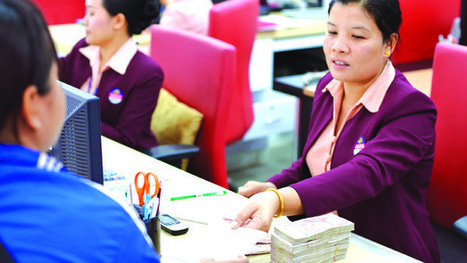
By Helen Castell@flippinowl25 May 2015 1 21 A bank teller conducts business in Vientiane, Laos. What should NGOs and charities consider when choosing who to bank with? Photo by: Stanislas Fradelizi / World Bank / CC BY-NC-ND
With many charities and nongovernmental organizations in the United Kingdom expressing concern that the Conservative Party’s May 7 general election win will see grants and state aid recede, there is arguably more pressure than ever for the sector to get proactive about its finances.
Choosing the right bank, negotiating with bank managers, and shopping around for the best rates and services are all important steps in this direction.
Regardless whether your charity or NGO is based in the U.K. or elsewhere, before you pick a bank to work with, ask yourself the following five questions: 1. How strong are their ethical credentials?
One key criterion for most NGOs is whether a bank’s values align with their own. For this reason, many opt for so-called ethical banks. About the author Helen castell profile Helen Castell Follow@flippinowl
Helen Castell is a London-based financial journalist with nearly 20 years’ experience covering trade, energy and risk for TXF, Shares Magazine, Global Trade Review, Newsbase, Trade Finance Magazine and other Euromoney publications. At Devex, she writes about development banking, private sector engagement and funding trends. She studied English Literature at Sheffield University and International Journalism at London’s City University, and speaks English, Spanish and Japanese.
Farmers in Aguaymanto, Peru. What are the ways to improve the partnership between iNGOs and private corporations to maximize impact? Devex readers chime in. Photo by: Ayuda en Acción / CC BY-SA
To maximize impact, a number of international nongovernmental organizations are rethinking the way they collaborate with corporations. In an exclusive commentary for Devex, Chad Bolick, director of partnerships at FSG’s Shared Value Initiative, outlined ways that iNGOs are doing this — by reviewing their business models and internal organizational structures, as well as investing in measuring shared value.
Operating at the intersection of social and business impact, FSG’s Shared Value Initiative has created a working group for iNGOs to help them explore avenues to build shared value partnerships.
“To engage in more transformational corporate partnerships, iNGOs are also exploring something quite novel: collaboration with their peers and erstwhile competitors,” wrote Bolick. “Identifying areas where interests overlap and different iNGOs can work together with other partners can help accelerate genuine innovation and perhaps prompt additional exploration of nonprofit mergers and acquisitions.”
Devex readers noted a series of hurdles that might make it challenging for nonprofits to change the way they operate.
Some of these hurdles are “systemic … that will likely make it very difficult to advance into this direction,” said Naser Al-Ardah, based on his experience working with iNGOs.
Reader IainH shared the view, noting that policy may be well-intentioned, but it’s always a question of how it is implemented in practice.
The same reader also mentioned the limited cooperation between in-country NGOs and “only identified competition” among them.
“Thus we find iNGOs operating in all sorts of programs outwith their core focus. This is unsurprising as iNGOs are essentially operating as subscription-subsidized development consultants,” IainH wrote, adding that managing change “is extremely hard at the best of times but in the case of iNGOs I would guess it will be even harder.”
In response, Bolick acknowledged the difficulty of shifting from transactional to strategic partnerships, but affirmed that for iNGO partners of FSG’s Shared Value Initiative, “the status quo is unsatisfying … and we're keen to explore and prototype new types of partnerships.”
Reader William Carter, meanwhile, criticized Bolick’s article for not providing an in-depth examination of the problems faced by iNGOs when collaborating with corporations. He highlighted the case of several major conservation iNGOs that partnered with companies in the 1980s and 1990s, which he said were “severely constrained in framing and implementing their advocacy strategies, so as not to be in conflict with corporate interests” such as on the issue of climate change.
Bolick countered by pointing out that his piece did not intend to explore all the challenges iNGOs face in partnering with companies, but was rather an attempt to highlight early efforts of FSG’s partner iNGOs “that have come together in a pre-competitive, open environment to candidly discuss both the internal and external barriers to more transformative, less transactional relationships.”
“Shared value is about encouraging companies and their partners to think differently about [a] business opportunity in solving social and environmental problems in a way that does not rely solely on philanthropy and bilateral donor support — hence a focus on new iNGO business models,” wrote Bolick. “The 15 organizations we are working with are hungry to progress the conversation and develop the skills needed to transform the ways in which they partner with companies.”
Devex, in partnership with the Shared Value Initiative, FSG and Global Impact, is examining how the world’s largest international nongovernmental organizations are transitioning their partnership strategies from traditional corporate partnerships to more scalable initiatives. We’ll look at how these initiatives accelerate both social impact and a business return on investment, while highlighting engagement in shared value during this special series “The Future of International NGOs.” Join the conversation using #FutureINGO. About the author Ejv 150x150 Ma. Eliza Villarino FollowDevexElizaJV
Eliza Villarino manages one of today’s leading publications on humanitarian aid, global health and international development, the weekly GDB. At Devex, she has helped grow a global newsroom, with talented journalists from major development hubs such as Washington, D.C, London and Brussels. She regularly writes about innovations in global development.
Devex Impact associate editor Adva Saldinger and Talya Bosch, Western Union’s vice president for social ventures and internal communication discuss how NGOs are adapting to the shared value ideology.
NGOs are coming of age in how they engage the private sector on shared value efforts.
While past interactions with corporations tended to be limited to their corporate responsibility departments, nongovernmental organizations are increasingly working directly with business divisions to achieve their goals.
Rethinking a broader array of corporate channels to engage has been a “huge evolution,” said Talya Bosch, Western Union’s vice president for social ventures and internal communication, whose company counts more than 700 NGOs as its clients.
Yet that maturation process is still a work in progress, she told Devex Impact in a recent video interview.
“What may not be happening fully yet is for that thinking to permeate all of an NGO,” she said. “I find that a lot of the connections that we have is through [working with an organization’s] headquarters … I would really welcome the day when someone from a local community comes to us with a true shared value play.”
Devex, in partnership with the Shared Value Initiative, FSG and Global Impact, is examining how the world’s largest international nongovernmental organizations are transitioning their partnership strategies from traditional corporate partnerships to more scalable initiatives. We’ll look at how these initiatives accelerate both social impact and a business return on investment, while highlighting engagement in shared value during this special series “The Future of International NGOs.” Join the conversation using #FutureINGO. About the author Naki Naki B. Mendoza
Naki is a reporter for Devex Impact based in Washington, D.C., where he covers the intersection of business and international development. Prior to Devex he was a Latin America reporter for Energy Intelligence covering corporate investments and political risks in the region’s energy sector. His previous assignments abroad have posted him throughout Europe, South America and Australia.
By Lisa Cornish@lisa_cornish20 February 2015 0 6 Health worker Bisnu Poudel checks the blood pressure of Sabina Rai at a health post in Nepal. Further cuts to Australia’s foreign assistance budget may impact programs for the most vulnerable people, including health, education and WASH. Photo by: Jim Holmes / AusAID / DfAT / CC BY
Australia’s international development agencies are preparing for hard times ahead, predicting the nation’s already reduced foreign assistance budget could be further hit as aid again becomes a scapegoat in this year’s May budget announcement.
“While it would be catastrophic to the program for even more savings to be found from the Australian aid program it is nevertheless possible,” Andrew Johnson, political engagement manager at World Vision Australia, told Devex. He stressed that unless Prime Minister Tony Abbott assured the public that the budget for the aid program will be protected, “the aid community will continue to be concerned that further savings will be found and we believe this will do untold harm.”
Johnson fears further cuts to be more far-reaching, and may impact programs supporting the most vulnerable people, including health, education and WASH. Whole regions could see a loss of Australian funding and the political engagement managers is even expecting global programs to take a hit. New initiatives will likely be off the table as well.
Only the legally binding multilateral commitments will be safe.
“The scale of the cuts already announced … will touch every part of the aid program in some way or another,” Johnson said. “The program has already cut the ‘fat,’ it is now about amputating entire limbs.”
Given last year’s slim federal budget, Australia’s foreign aid envelope was cut by 11 billion Australian dollars ($8.6 billion) since September 2013 — comprising more than 20 percent of the total reductions in the budget.
“The government has stated that the reason for such large cuts is primarily to solve what it has termed as Australia’s ‘budget emergency,’” Tim O’Connor, communications director for UNICEF Australia, told Devex. But current estimates show Australian foreign aid will account for only 0.22 percent of gross national income by 2017-18, which according to Johnson is “the least generous level in recorded history.” Aid cuts’ impact on development — and Australia’s leadership role
According to development agencies, this instability of aid funding is already leading to problems working with communities. Hard choices are being be made on where to invest and where to cut costs. Some cash-strapped nongovernmental organizations, for instance, are already mulling over whether they need to choose between investing in the health or education sector in a particular country.
See more stories on Australian aid:
● With cuts in the pipeline, Australian aid effectiveness in question ● Inside the takedowns of AusAID and CIDA ● Australia reveals additional cuts to foreign aid budget ● DFAT's James Gilling: 'We are trying to make ourselves more open' ● Doing business with DFAT: A procurement process guide
“These cuts directly undermine the predictability of our funding partnerships,” Paul O’Callaghan, CEO of Caritas Australia, shared with Devex. This unpredictability has been further shown to reduce aid effectiveness by as much as 20 percent. O’Callaghan, however, does not believe the situation will improve any time soon.
For development agencies, the benefits can be seen in the government’s own numbers: A report released by the country’s foreign affairs and trade department confirms the effectiveness of the Australian aid program. How effective the program will be given massive budget cuts remains to be seen.
Worryingly, reductions in the aid budget are also affecting Australia’s role as a leader in Asia and the Pacific and increasing instability in the region.
“The scale of these cuts,” the Caritas chief noted, “[has diminished] Australia's contribution to poverty reduction and improved security in our region.”
Australia’s development agencies, however, aren’t just calling on Abbott’s conservative coalition government to protect the aid budget. They are also urging the administration to reverse previously announced cuts and to act more “Australian.”
“Over 1 in 5 Australian households contribute to charities — we are a country of compassion and generosity,” O’Callaghan stressed. “The government’s actions to dramatically reverse 50 years of Australia’s global leadership work as a wealthy country should be realigned with Australian values.”
The message to the Australian government is clear: enough is enough.
Has your organization been affected by this instability of aid funding from the Australian government? What measures have you implemented to ensure the effectiveness of your aid programs? Let us know by leaving a comment below.
Read more international development news online, and subscribe to The Development Newswire to receive the latest from the world’s leading donors and decision-makers — emailed to you FREE every business day. About the author Cornish img Lisa Cornish Follow@lisa_cornish
Lisa Cornish is a freelance data journalist based in Canberra, Australia. Lisa formerly worked with News Corp Australia as a data journalist for the national network and was published throughout Australia in major metropolitan and regional newspapers, including the Daily Telegraph in Melbourne, Herald Sun in Melbourne, Courier-Mail in Brisbane and online through news.com.au. Lisa has recently been awarded the 2014 Journalist of the Year by the New South Wales Institute of Surveyors.
Kenyan President Uhuru Kenyatta. The government deregistered more than 500 NGOs in the country. Photo by: Benedikt von Loebell / World Economic Forum / CC BY-NC-SA
The Kenyan government announced Tuesday it has deregistered 15 nongovernmental organizations suspected of financing terrorist activities, a move that now appears to be leading to a wider assessment of aid groups — both local and international — working in the country.
The country’s NGO coordination board has frozen bank accounts and revoked the work permits of their foreign employees.
An additional 510 development organizations were suspended after failing to submit their financial reports, and 12 more have been granted a 21-day grace period to submit their paperwork if they wish to continue working in the country.
The board has yet to release the list of organizations affected, but Devex learned that several high-profile international aid groups such as Médecins Sans Frontières, the Adventist Development and Relief Agency, Water for Life and Concern Worldwide are among the 12 NGOs required to open their books to the authorities if they want to continue working in Kenya. All of these entities have an annual income exceeding 500 Kenyan shillings ($5.5 million).
Donors have also been notified of the new policy, with the board planning to require them to provide details of NGOs they have funded and for which activities.
Over the past few years, Kenya has suffered several major terrorist attacks on its soil, mainly by the Somali militant group al-Shabab. Last week, the government introduced in parliament a new bill that grants immense powers to the intelligence services, from tapping into private communications to requiring permits for journalists to report on terrorism or security issues.
The Kenyan government had been threatening to crack down on foreign-funded NGOs for quite some time now, and wants to regulate the sector with tough requirements like capping foreign funding to 15 percent.
A representative from an international organization currently working in the country told Devex the crackdown may also be connected with the International Criminal Court’s indictment of Kenyan President Uhuru Kenyatta for instigating violence in the 2007 elections, as well as a certain expectation from the government that it may receive more direct budget support from donors if foreign funding to NGOs is severely restricted.
Check back Monday for our in-depth analysis on the crackdown’s impact on donor funding to the East African country and development work on the ground — exclusive for Devex Executive Members.
Read more international development news online, and subscribe to The Development Newswire to receive the latest from the world’s leading donors and decision-makers — emailed to you FREE every business day. About the author Jenny lei ravelo 400x400 Jenny Lei Ravelo Follow@JennyLeiRavelo
Jenny Lei Ravelo is a staff writer for Devex. She covers breaking international development news in the Middle East, North Africa, Asia and the Pacific for the Development Newswire, often focusing on aid worker security. Jenny is also a regular contributor to the GDB and other Devex publications.
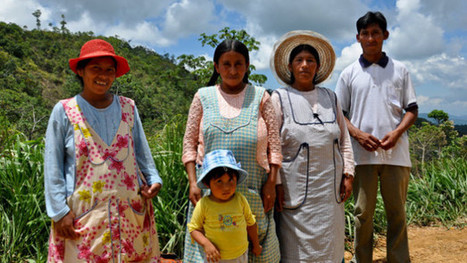
Members of a coffee-growing partner community in Bolivia. Photo by: Save the Children
A consensus is emerging within the global development community about the rapidly shifting landscape: It is no longer about government or institutional donors, international nongovernmental organizations and projects.
Complex global challenges, evolving science and technology, and new resources — including private investments, are challenging us to think in new ways and embrace previously unimaginable possibilities. Poverty, illiteracy and hunger are seen as some of the great economic and business challenges of our time, worthy of the best minds and plans from both the business and philanthropy sectors. We are at a time in history where we can actually imagine solving these thorny problems.
Just as the concentration of talent and investment in Silicon Valley has generated a tide of innovations that have transformed all our lives; bringing together the creative power of the private sector and the experience of the international development community can generate breakthrough solutions with huge impact for the world’s most disadvantaged.
At Save the Children, the evolution of our experience employing technical innovations that address the specific needs of children and their families in the low-resource settings where we work, positions us to make a unique contribution to the future of the development sector. Our Theory of Change requires that we develop or adapt proven solutions in new contexts, that we identify, test and introduce new approaches and technologies, ensure we can scale what works and that we work with others to create lasting impact.
Over the past decade, Save the Children has engaged in strategic partnerships to address persistent development challenges in unconventional ways. We work together with the institutional and donor communities to develop, test and scale up innovations, achieve policy change, and engage global and national stakeholders to secure the roll-out of evidence-based solutions.
Since 2000, the Bill & Melinda Gates Foundation and the U.S. Agency for International Development have been key partners in our Saving Newborn Lives programs, which have put newborn health on the global agenda and enabled us to deliver lifesaving interventions to millions of mothers and children in more than 40 countries. Together, we have collectively made tremendous progress on child mortality: Despite population growth, the number of deaths in children under 5 worldwide declined from 12.7 million in 1990 to 6.3 million in 2013, which translates into about 17,000 fewer children dying each day.
Our randomized control trial validated early childhood development work and our evidence-based Literacy Boost program, with proven results in helping disadvantaged children learn to read, has been adapted and implemented in 25 countries through partnerships. It is now globally unacceptable that millions of children are failing in school even though they can be found at their desks whenever school is in session. They deserve better.
With the private sector, shared value is the key to these incredibly sophisticated, long-term, and more scalable initiatives that accelerate both social impact and business return on investment.
Save the Children, along with the international NGO community will increasingly look for opportunities to develop shared value partnerships by leveraging the private sector expertise and the innovative products and services that can help address critical social challenges.
Save the Children has been leading the way with a number of key partnerships exploring various types of shared value including: playing an advisory role with research and development teams to create relevant products, conducting on-the-ground proof of concept testing for diagnostic tools, and working with commercial teams to structure market-driven systems to scale our innovations.
When we serve an advisory role that increasingly includes sitting on boards for a corporation and providing input into their decision-making. One example is our unique partnership with pharmaceutical company GlaxoSmithKline PLC, where we not only serve on their research and development board but also help with product development through on the ground proof-of-concept testing.
We also work with other partners, including Keurig Green Mountain, on strengthening their supply chains in ways that both address their needs but also address those of the communities where they source products. In particular we are looking at climate adaptation, which is an issue where we can align social needs with supply chain needs because it is important not only for growers but for companies as well.
Increasingly we are exploring other partnerships related to technology, data collection and mapping, which we believe have tremendous potential to impact our work on disaster preparedness and creating resilience in the communities where we work.
As we lay the groundwork for Save the Children’s 2030 vision of the world we wish for children, we know our experience, programs and policy work will take us far between now and then. However, we also recognize that our success in tackling complex global challenges and bringing about transformational change and impact for children will depend on our ability to continue forging innovative partnerships with the private sector and other influential stakeholders. We simply will not be successful alone.
Each day offers new opportunities for INGOs like Save the Children to transform corporations’ commitment to shared value into real-world, sustaining change that can affect entire generations. To be successful, we must create innovative products and programs that address the needs of the most vulnerable populations, and create collaborative partnerships that allow corporates to tap INGOs’ unique experiences, knowledge and ability to provide “proof of concept” in the most challenging contexts and places.
INGOs also serve the role of a convener and can pave the way for access to gatekeepers in government and within communities where piloting and product development take place.
The possibilities for INGO and private sector partnerships are vast, but as global challenges shift, INGOs must continue to shift their approach as well. Uniting with the private sector, we can create a leadership model for achieving lasting impact for millions of the world’s most vulnerable girls and boys and by transforming children’s lives now, we change the course of their future and ours.
Devex, in partnership with the Shared Value Initiative, FSG and Global Impact, is examining how the world’s largest international nongovernmental organizations are transitioning their partnership strategies from traditional corporate partnerships to more scalable initiatives. We’ll look at how these initiatives accelerate both social impact and a business return on investment, while highlighting engagement in shared value during this special series “The Future of International NGOs.” Join the conversation using #FutureINGO. About the author Carolyn miles profile Carolyn Miles
Carolyn Miles is president and CEO of Save the Children and co-chair of the Modernizing Foreign Assistance Network. After starting out as an entrepreneur and working in Hong Kong for American Express, Miles joined Save the Children in 1998 and was also COO from 2004-2011.
Winnie Byanyima, executive director of Oxfam International, speaks to attendees of the People’s Climate March alongside the U.N. Climate Change Conference held in Lima, Peru. How can Oxfam and other U.K. international NGOs keep relevant in a changing world? Photo by: Christian Clément / Oxfam / CC BY-NC-ND
In a fast-changing world, international nongovernmental organizations in the United Kingdom realize that their role has moved on from acting as the northern arm of global international development, sharing ideas and expertise with the “global south.”
That is according to Bond, the U.K. network that brings together more than 400 NGOs and which has embarked on a process called “Tomorrow’s World” to help U.K. INGOs rethink their future role.
Devex spoke to Bond and to a number of NGOs involved in the initiative to learn more about their initial conclusions. These, it is hoped, could provide some pointers for other “northern” INGOs.
The process aims to provide U.K. NGOs with “tools and insight to help them navigate an uncertain future,” Tom Guiney of Bond’s Futures Project said. “It is also part of our ongoing relationship with the U.K. Department for International Development, which is interested in where the sector might be going.”
It is no coincidence that the project got underway in 2015, a seminal year for international development, with the U.N. post-2015 agenda discussions drawing to a close in September and the Paris COP21 climate meeting in December.
“The post-2015 agenda is intended as a global agenda for change in a number of areas, and reflects changing trends that will have a bearing on the role of U.K. NGOs,” said Sarah Mistry, director of effectiveness and learning at Bond. 7 megatrends to shape the #globaldev landscape
Bond’s discussion paper identifies seven “megatrends” that are reshaping the international development landscape: geopolitical shifts — from West to East, and North to South, coupled with the rise of middle-income countries; climate change and planetary boundaries — putting the planet’s system under enormous pressure; technological innovation, with the world, particularly young people, becoming “hyperconnected”; demographic changes, including population shifts; urbanization; natural resource scarcity; and growing inequality within countries.
These trends are creating a different operating context for civil society organizations in both the global north and south. Indeed, Mistry believes the political and economic shifts are creating a “New World Order,” while for Guiney, climate change and exceeding our planetary boundaries mean that natural and man-made crises in developing countries will become more complicated with a “long tail” of effects, requiring longer-term support.
Both Mistry and Guiney, however, are optimistic about technological innovation, helping local voices to emerge more strongly. This has also fostered “disintermediation” — the process of eliminating northern NGOs as “middlemen” to whom southern organizations have to apply for funds.
One example comes from organizations like Global Giving, which offers individuals the possibility of donating relatively small amounts to good causes. Its website asks for $360 to buy four new sewing machines for a girls’ sewing workshop in Afghanistan, for example.
Technological global interconnectedness and social media mean that southern CSOs no longer have to rely exclusively on northern donors to advocate on their behalf. It also trumps the belief that the south has all the questions and the north all the answers.
Another interesting trend is the emergence of more diverse actors in the development scene. City leaders and local government in developing countries are now more prominent, as is business — whether traditional corporates or social enterprises, or one with both profit motive and social purpose.
And Mistry is optimistic about the emergence of enlightened businesses that understand how treating employees properly brings reputational benefits as well as productivity gains, pointing out how this trend has been embraced by multinationals such as Unilever and Coca-Cola.
Guiney also talks enthusiastically about the “fusion and blending” of different types of organizations, breaking the boundaries between governments, corporates, small businesses and civil society. Emerging economies: From aid recipients to donors
The changing political landscape and the growing strength of the emerging economies — particularly BRICS (Brazil, India, China and South Africa) and CIVETS (Colombia, Indonesia, Vietnam, Egypt, Turkey and South Africa) — has undoubtedly altered the development landscape.
This has two implications: First, development support will likely focus on fewer countries in future — whether on fragile states or the least developed countries, or on pockets of poverty in middle-income countries, such as Brazil or India. Secondly, emerging economies will transition from aid recipients to aid donors, altering the concept of development aid altogether.
The Overseas Development Institute suggests that by 2025 emerging countries will be as important as OECD countries in development cooperation, with “foreign trade and investment interests being powerful … determinants of development cooperation for most countries,” blending aid and development tools.
This changed perspective has also affected northern INGOs, Bond noted, citing the examples of some of the big players such as ActionAid moving out of the U.K. to South Africa, and organizations with roots in the global north “morphing” into organizations based in the global south, including EveryChild — a U.K.-based development charity that has created a new global alliance, called Family for Every Child, and that is in the process of transferring the organization’s assets and resources to the new alliance. UK INGOs need to ‘seize the nettle’
Tomorrow’s World outlines a number of practical roles for U.K. INGOs to play if they want to remain relevant. These fall into two categories: First, in developing countries, and secondly, in the U.K.
Under the first category, the four external roles are addressing humanitarian crises wherever they arise; providing technical expertise and capacity building, peace building and working in fragile states where local society is compromised, and championing the socially excluded — particularly women and minority groups.
Under the second category, the two internal roles are raising awareness in the U.K. and European Union, and being transnational advocates toward U.K. decision-makers.
In terms of addressing humanitarian crises, this must involve working with agencies in the global south. As an NGO working with young people, Restless Development CEO Nik Hartley feels his organization’s strength lies in becoming part of a hub of agencies “helping to unlock the potential of civil society and citizens beyond our own organizations, rather than focusing on how U.K. NGOs can retain a competitive advantage.”
Barnaby Peacocke, global development director at INGO Practical Action agrees.
“Everything is so mobile in terms of funding and developing strategies about merging with other actors in the development field,” he said.
Referring to INGOs’ abilities to provide technical know-how, Mistry highlights their “distilled expertise honed over many years,” including specialist skills, such as engineering or working with local people to deal with the long-term consequences of a disease.
This mirrors Restless Development’s view.
“The standout success of our young Ebola Community Mobilizers in Sierra Leone shows that unlocking community strengths — with funding from U.K. aid and the technical expertise of the Community-Led Ebola Action model — will be the 21st century way of doing both humanitarian and development work,” Hartley said.
Transferring technical expertise, particularly in the business field, is also a role that Practical Action sees itself playing in the future. According to Peacocke, “we increasingly see our role as facilitators, backing this up with technical expertise,” giving the example of a project in Sudan where the INGO supports the private sector to develop markets for liquid petroleum gas stoves to address indoor air pollution and deforestation.
In terms of championing the socially excluded, Mistry believes INGOs can offer support on their behalf — as Amnesty International has done for many years — as well as equipping people and institutions with skills and knowledge to know their rights. Linking this to the growth of ICTs means that local groups will be able to raise awareness internationally about their circumstances. UK INGOs a ‘bridge’ to the developing world
Bond believes that, given DfID’s position at the forefront of bilateral donors, U.K. INGOs are a bridge between the U.K. audience and donors, and those communities that need support.
And flexibility must be the key for continuing NGO work, working with the governments, private sector, social enterprises, people on the ground and the informal economy.
“The lifeblood for U.K. NGOs will come from local expertise backed up by a U.K. audience. Adding this to a developing technology puts local people at the heart of international development,” Guiney summed up.
How else could international NGOs remain relevant amid the rise of emerging donors and the impact of these seven megatrends? Let us know by leaving a comment below.
Read more international development news online, and subscribe to The Development Newswire to receive the latest from the world’s leading donors and decision-makers — emailed to you FREE every business day. About the author Daphne davies profile Daphne Davies
Daphne Davies is a London-based freelance journalist and consultant with more than 30 years' experience in international development. She has worked with the U.N., the European Union, national governments and global civil society organizations, including Amnesty, WWF and LDC Watch. Her expertise is in monitoring government policies in relation to international cooperation. Her interests are in sustainability, social and economic matters, women and least developed countries.
Local businesses, such as GOAL partner Agrinet, play a key role as a link between smallholder farmers and global companies in Uganda. Photo by: GOAL
Despite the huge potential of developing markets, there are relatively few success stories of corporates engaged in shared value projects. While corporates and local businesses both have a huge role to play in developing business ecosystems, neither of them can do it alone.
International nongovernmental organizations need to develop a new role in linking local and corporate business alliances with local communities and the wider market system, adding a local dimension to the shared value concept.
In a recent study about shared value in the Irish business sector, conducted by the INGO GOAL and the Michael Smurfit Graduate Business School, more than 80 percent of respondents said they were familiar with the concept of shared value. However, only 18 percent of the companies surveyed were actually engaging in shared value projects in developing countries.
A lack of knowledge of, and access to, networks in the local market are the primary barriers to the implementation of shared value projects in developing economies, the survey suggests. Doing business in Africa is hard, even for the world’s leading corporations.
Developing economies can pose a number of challenges for corporates as they seek to engage with supply chains, consumers or local service providers.
First, the population is often rural or remote and therefore hard to reach. This can make engagement with the base of the pyramid as consumers or suppliers a challenge.
Secondly, businesses within the local market system are often ill-equipped to engage with large corporate partners. They often lack the business strategy, systems and the access to finance required to scale and partner with a large firm.
Thirdly, the lack of tailor-made technology for local market systems, consumers and suppliers means that the ecosystem is often slow to respond to the needs of the private sector. This can prevent many shared value projects from realising their potential.
Furthermore all of the stakeholders involved have individual limitations that make it hard to engage with the wider system. Multinationals tend to struggle to reach out to people isolated from the business community. Likewise, individuals in remote areas often lack the knowledge about how to engage with large businesses. Local businesses and social entrepreneurs can struggle on both fronts, finding it difficult to engage with rural farmers individually, while also being unaware of, and unprepared to work with, large corporations.
INGOs are uniquely positioned to help address these issues. They have the capacity to engage with the entire market system: from smallholder farmers and microentrepreneurs to local businesses, governments and multinational corporations. INGOs can provide business and technical training, facilitate access to financial support — including impact investors and social finance — and support the establishment of market-facing groups.
By creating links to suppliers and customers, INGOs can help local businesses grow their market and engage more successfully. When communities receive this kind of support, corporate engagement becomes a much more viable option that can benefit the entire market system. Therefore, a focus on strengthening small and growing businesses, grounded in the needs of communities, is crucial to building pathways to successful corporate engagement.
For INGOs such as GOAL, this has involved a dramatic shift away from a more traditional direct implementation model and a reorientation toward a facilitative role. Bridging the worlds of business and development is not easy, and lessons are still being learned.
The same survey revealed that 47 percent of respondents felt that INGOs need to better understand business thinking and tailor their services to the business world, while only 18 percent considered INGOs suitable business partners. There is a long way to go before corporate and INGO engagement in shared value projects in developing economies becomes the norm.
And yet, GOAL has already experienced substantial success in building alliances between a range of stakeholders in a number of developing economies. A recent example of this involves a collaboration between GOAL and Microsoft 4Afrika as part of an effort to enhance the growth of private sector tech companies in Uganda and Zimbabwe. Microsoft is providing business and technological expertise to help create more viable and effective local technology companies that deliver services for the agricultural market system.
These technology businesses work in turn with finance providers, social enterprises, aggregators, and mobile phone companies to strengthen the local business ecosystem and create opportunities for some of the world’s most marginalized communities.
While this type of engagement is extremely time-intensive and requires strong dedication to building enduring relationships, early results indicate that the effort is paying off: In the project area in Uganda, 63 percent of targeted farmers showed an increase in yield from 2012 to 2014. In the same period productivity per acre jumped from under 900 kilograms in 2012 to 1,450 kilograms in 2014 and 182 percent more crops were sold.
Partnerships between INGOs, and local and global private sector actors cannot solve all development problems at a stroke, but the figures suggest that a concerted effort can make a significant impact on the lives of some of the poorest communities.
Going forward, GOAL, a founding member of the shared value initiative INGO working group, sees an increasingly important role for such initiatives in its development work around the globe. Deep engagement with communities, local businesses and corporates sustained by honest and open dialogue between all relevant stakeholders, including networking organizations such as the Aspen Network of Development Entrepreneurs, will be crucial to fulfilling the promise of shared value.
Devex, in partnership with the Shared Value Initiative, FSG and Global Impact, is examining how the world’s largest international nongovernmental organizations are transitioning their partnership strategies from traditional corporate partnerships to more scalable initiatives. We’ll look at how these initiatives accelerate both social impact and a business return on investment, while highlighting engagement in shared value during this special series “The Future of International NGOs.” Join the conversation using #FutureINGO.
Join Devex to network with peers, discover talent and forge new partnerships in international development — it’s free. Then sign up for the Devex Impact newsletter to receive cutting-edge news and analysis at the intersection of business and development.
Scott L. Montgomery explores why billionaires seem to have an obsession with space travel.
Not long ago, a trip into space required years of physical and mental training. One was required to undergo a hardening of the body and honing of the mind. Much education was demanded in engineering, medicine, computer science, robotics. Dietary restrictions were imposed, abstention from certain pleasures and pursuits, removal from ordinary life. In short, one underwent a change of being, a kind of alienation, in order to leave the planet. Something else was needed too—an unspoken readiness for the shock one would face.
It was sometimes whispered, in fact, during the era of Moon landings, not without envy that only military personnel would ever be chosen for space. This was not only for their endurance and obedience, but because a stoic reserve was needed to remain unweakened by the impossible moment when the Earth, bearing all of humanity, history, and every possible future, hangs before the eye in the infinite blackness of the void.
Take Off
Things are different today. All former rigor and sacrifice in preparing for space have been made to look naïve by ultra-wealthy civilians building their own spaceships and taking off. A half-century after the last lunar footprint, some on the mother world, it seems, have grown restless. “That’s too long,” said Elon Musk, after his SpaceX Falcon 9 rocket took four crewmembers into orbit in April 2021. “We need to get back there [to build] a permanent base on the moon…then build a city on Mars to become a spacefaring civilization.” Similar sentiments are held by Richard Branson and Jeff Bezos, the two others (so far) pursuing related ambitions. Only when global inequity reached such a point where individuals gained wealth on the same level as governments—at ~$202 billion, Jeff Bezos’ net worth roughly equals the GDP of New Zealand—did the idea of a personal space program seriously arrive. Governments, that is, are no longer necessary.
But why space? Why not some terrestrial challenge, like diving to the deepest point in the oceans, as film-maker James Cameron did in 2012? Aren’t there other such feats yet to be achieved? Isn’t the Earth enough for these men?
The answer, of course, is no. They own planes, estates, palaces, yachts, land, islands, as well as economic empires more global than that of imperial Britain. Should they find reason to do so, they could build their own private armies and navies. No need, however. They have conquered terrains of capital unimaginable only a few decades ago, recalling nothing so much as the aspirations of Spain and Portugal in signing the Treaty of Tordesillas (1494), dividing the world between them. Space, then, is the clear option. But be clear—these new ventures by the greatest of capitalists will not mean a democratization of the interplanetary realm; on the contrary.
The intent in all three cases is to commercialize space. If Branson plans for a new species of tourism, Musk suggests colonization, while Bezos talks in terms of industrialization. Most recently—to quell any doubts along these lines—SpaceX (Musk) is pursuing a program to sell billboard ads in satellite form. Between this idea and Branson’s for a new kind of cruise ship, one can easily see that the real “vision” is to terrestrialize the “final frontier,” or, in other terms, to recreate the world of consumerism with special effects.
Mr. Bezos’ concept is a bit different. Heavy industry, manufacturing, resource extraction, and other highly polluting facilities will be transferred off planet to space-based platforms, such as the Moon and selected asteroids. Such might seem a promise of considerable benefit for humanity. Yet one might suspect another side to the story. Who would prepare, pay for, and control this massive transfer of capital and labor? If the corporate sector, would this not put profit, branding, etc. above people, as here on Earth (in Mr. Bezos’ warehouses, for example)? Moreover, wouldn’t this grand plan qualify as an ultimate form of “outsourcing” for things like environmental damage? And if the time ever came when humans needed to abandon the Earth and go elsewhere for survival, would every living family be freely invited along, assigned a seat, given a place in the next phase of human settlement?
Landing
Mr. Bezos offers a clue to the answer in statements he made to the press after his July 2021 flight and return (wearing a cowboy hat):
“When you look out at the planet, there are no borders. There's nothing. It's one planet and we share it and it's fragile."
"We have to build a road to space so that our kids and their kids can build a future…We live on this beautiful planet. You can’t imagine how thin the atmosphere is when you see it from space."
“I also want to thank every Amazon employee and every Amazon customer because you guys paid for all of this.”
The last quote, which has magnetized no small current of criticism, is particularly honest.
Apparent innocence in the first two statements reveals an inability to articulate the experience of space beyond cliché. Meanwhile, Mr. Bezos, who wants to save the planet, can only do so on the backs of low-wage workers, enormous numbers of them (by mid-2021, Amazon had 1.3 million employees, most of whom are hourly). These workers, confined to massive warehouses, must perform at the pace of a fast-motion assembly line, as in Chaplin’s Depression-era classic, Modern Times (1936). In the name of humanity, Mr. Bezos calls for global unity, though on Earth he has created an anti-union culture. He wishes to save our planet for anonymous generations of the future, yet, in the present, his warehouses have an annual turnover of over 100%. The planet, he finds, is beautiful and fragile. He seems immune to the fact that wealth like his own—modeled on that of Andrew Carnegie or J.D. Rockefeller—is inseparable from an immense carbon footprint that no green offsets can delete.
Carnegie and Rockefeller succeeded by building their enterprises into well-lubricated, pitiless machines, cutting costs at every turn and increasing efficiency with relentless fervor. Amazon is no different; it has the advantage, however, of advanced technology. Workers are monitored digitally, their labor precisely measured and ranked, to a degree that captains of f 19th century industry would love. The ironies and disconnections that Bezos reveals between his plans for space and his practices on Earth are also fundamentally the same as those of his predecessors. Carnegie’s famous essay, “Gospel of Wealth,” opens with these words: “The problem of our age is the proper administration of wealth, so that the ties of brotherhood may still bind together the rich and poor in harmonious relationship.” Bezos’ final statement above is a simpler, slightly more honest version.
Judging from videos taken during the voyage, the journey was more of a carnival ride for him than an awakening or exploration. But this makes sense: the truer gamble and risk was the building of his company, Amazon. What this has meant, however, is an ironic loss. At the very moment when the billionaire self, rising over the planet, attains its apotheosis, it is erased by the lack of an equivalent response. Having built an empire and ventured beyond gravity, Jeff Bezos has nothing important to tell us. Such may be the most significant message of all.
Mission Log
What does it mean, after all, to physically “leave the world behind”? In fact, the discourse about “going into space” has not changed over the decades. The term “escape” still describes the act of going beyond a planet’s gravitational pull. Might it be mortality itself, then (the most Earth-bound of finalities), that the billionaire seeks to rise above, if only for a few moments? Or, in a different sense, does the civilian experience of rising like a god above the insect struggles of the common people offer the man with the wealth of a thousand generations a taste of eternity?
Yet, this leaves out the matter of a higher purpose invoked by all three gentlemen (but why no women?). This, too, recalls Carnegie’s text. His “gospel” demanded that “surplus wealth” be devoted during the lifetime of its owner to the common good, e.g. founding a university, hospital, libraries, museums, and so forth. Such would allow, in biblical terms, the rich man a reserved seat in the kingdom of heaven. For the 21st century, however, such ground-based philanthropy as a basis for the grand ascent is no longer sufficient. As a savior, one must pave a path to the celestial realm itself. Bezos, Branson, and Musk, all businessmen, do not view themselves as messiahs (Musk occasionally excepted) but as secular prophets. Their space ambitions are the embodiment of our era’s return to an obsession with wealth and technology as the key forces to build “a better world.” Their visions—tourism, colony-building, industrial development—are hardly the stuff of prophecy. They are more in the way of
This, finally, evokes the question of what real astronauts saw and felt in their own historical period. Neil Armstrong’s marmoreal phrases from the Moon’s surface are too iconic to be of service. Instead, considering Bezos’ own words, here are statements by Richard Truly, 1980s commander of the Space Shuttle:
One of the things that struck me on my first day in space is that there is no blue sky. It’s something that every human lives with on Earth, but when you’re in space, you don’t see it. It looks like there’s nothing between you and the surface of the Earth. But when you look at the Earth’s horizon, you see an incredibly beautiful but very thin line…That thin line is our atmosphere. And the real fragility of our atmosphere is that there is so little of it.
The South African Constitution requires that the National Assembly and provincial legislatures function in an open and transparent manner.2 It is indeed a requirement that the National Assembly and provincial legislatures “must facilitate public involvement in the legislative and other processes”. Not only is this invitation applicable to the full sittings of the National Assembly or the legislature, as the case may be, but the public is also invited to the engine room, namely the meetings of committees.
The Constitution is clear that neither the public nor the media may be excluded from a committee meeting unless it is reasonable and justifiable to do so in an open and democratic society. Access to the National Assembly and legislatures is only controlled to the extent that basic security requirements need to be met. With such a standing and constitutionally guaranteed invitation to South Africans, the question must be asked to what extent this has been utilised to embody participatory democracy.
This paper explores the extent of public participation in the legislative, oversight and accountability mandates of Parliament. The legislative mandate refers to the making, introducing and amending of laws. The Constitution requires that the executive must account to Parliament3 for its actions, policies, expenditure etc. Corder et al explain it as follows: “Accountability can be said to require a person to explain and justify - against criteria of some kind - their decisions or actions. It also requires that the person goes on to make amends for any fault or error and takes steps to prevent its recurrence in the future.”4 Oversight has a broader meaning than accountability and includes a wide range of activities and initiatives aimed at monitoring the executive.
While accountability and oversight may differ in respect of scope and focus, it is also clear that the two are closely linked and mutually reinforcing. The last concept requiring clarification is “the public” within the sense of public participation. As will be shown below, the concept was used in an expansive manner and few restrictions were placed on the inclusion of individuals or organisations in the review undertaken. Some may argue that, for example, national human rights institutions, such as the South African Human Rights Commission (SAHRC), are state institutions and would thus not be part of “the public”.
On the other hand it can be argued that the SAHRC has a particular mandate to prevent and protect the public against excesses of the state and that this places it more closely aligned to the interests of the public than the state. In this paper the latter view was followed.
The first part of the paper presents data on the state of public participation in the work of Parliament from which a number of conclusions are drawn. Based on a sample of Portfolio Committees of Parliament the paper provides an assessment of the extent to which the South African public has utilised the provisions of the Constitution to interact with Parliament.
A key conclusion is that the current state of public participation is almost exclusively focussed on the legislative mandate and that public participation in relation to the accountability and oversight mandates is extremely limited. The second part of the paper reviews the legal and regulatory framework of public participation in the work of Parliament. Particular attention is paid to recent case law that dealt with public participation in respect of the legislative mandate. Drawing on this, the third part of the paper explores the guidance provided by the courts in respect of public participation in the legislative mandate in relation to the oversight and accountability mandates.
The first avenue by which non-governmental organizations took a role in formal UN deliberations was through the Economic and Social Council (ECOSOC). 41 NGOs were granted consultative status by the council in 1946; by 1992 more that 700 NGOs had attained consultative status and the number has been steadily increasing ever since to 3,052 organizations today.
Article 71 of the UN Charter opened the door providing for suitable arrangements for consultation with non-governmental organizations. The consultative relationship with ECOSOC is governed today by ECOSOC resolution 1996/31, which outlines the eligibility requirements for consultative status, rights and obligations of NGOs in consultative status, procedures for the withdrawal or suspension of consultative status, the role and functions of the ECOSOC Committee on NGOs, and the responsibilities of the UN Secretariat in supporting the consultative relationship.
Consultative status is granted by ECOSOC upon recommendation of the ECOSOC Committee on NGOs, which is comprised of 19 Member States.
Who is Eligible? Consultative relationships may be established with international, regional, sub regional and national non-governmental, non-profit public or voluntary organizations. NGOs affiliated to an international organization already in status may be admitted provided that they can demonstrate that their programme of work is of direct relevance to the aims and purposes of the United Nations. In the case of national organizations consultation with the Member State concerned is required.
To be eligible for consultative status, an NGO must have been in existence (officially registered with the appropriate government authorities as an NGO/non-profit) for at least two years, must have an established headquarters, a democratically adopted constitution, authority to speak for its members, a representative structure, appropriate mechanisms of accountability and democratic and transparent decision-making processes. The basic resources of the organization must be derived in the main part from contributions of the national affiliates or other components or from individual members.
Organizations established by governments or intergovernmental agreements are not considered NGOs.
General, Special and Roster status: There are three categories of status: General consultative status, Special consultative status and Roster status.
General consultative status is reserved for large international NGOs whose area of work covers most of the issues on the agenda of ECOSOC and its subsidiary bodies. These tend to be fairly large, established international NGOs with a broad geographical reach.
Special consultative status is granted to NGOs which have a special competence in, and are concerned specifically with, only a few of the fields of activity covered by the ECOSOC. These NGOs tend to be smaller and more recently established.
Organizations that apply for consultative status but do not fit in any of the other categories are usually included in the Roster. These NGOs tend to have a rather narrow and/or technical focus. NGOs that have formal status with other UN bodies or specialized agencies (FAO, ILO, UNCTAD, UNESCO, UNIDO, WHO and others), can be included on the ECOSOC Roster. The roster lists NGOs that ECOSOC or the UN Secretary-General considers can make "occasional and useful contributions to the work of the Council or its subsidiary bodies."
Participation in International Conferences: Non-governmental organizations in general consultative status, special consultative status and on the Roster, that express their wish to attend the relevant international conferences convened by the United Nations and the meetings of the preparatory bodies of the said conferences shall as a rule be accredited for participation. Other non-governmental organizations wishing to be accredited may apply to the secretariat of the conference for this purpose.
By Liana Barcia11 May 2015 3 11 The U.K. government is working with Medair, ACTED and Shelterbox to distribute shelter kits to victims in earthquake-struck Nepal. Check out our list for other organizations working on the ground. Photo by: Russell Watkins / DFID / CC BY
Relief and humanitarian operations in central Nepal are far from over two weeks after a 7.8-magnitude earthquake struck the country, already one of the world’s poorest before the catastrophe. With currently more than 8,000 recorded fatalities, the recent quake is Nepal’s worst disaster in over 80 years.
To boost the efficiency of emergency response, local government agencies and humanitarian partners have already implemented the cluster approach. This needs-based coordination system ensures fewer aid gaps and less overlaps in NGO work by assigning different humanitarian organizations to focus on specific sectors, such as shelter or food.
See related stories on Nepal:
● How the UK was able to quickly mobilize aid to Nepal quake victims ● Nepal's top donors: China doubles aid in just 4 years ● To help Nepal, choose a sector and do your homework ● Nepal quake aid efforts underway — but more needed, warn experts
Below, we list some of the most active international humanitarian organizations currently seeking funding or aid workers to support their efforts on the ground in Nepal. This roundup is not exhaustive, and is based on the latest operational presence maps of the U.N. Office for the Coordination of Humanitarian Affairs, as well as on listings on the Devex website.
ActionAid
Cluster: Shelter, food, education and protection Nepal earthquake appeal
For over 30 years, ActionAid has been championing the rights of marginalized communities in Nepal, some of which are among the worst affected by the disaster. The organization has responded to the needs of survivors by providing food, clothes, drinking water and shelter. It also plans to offer psychosocial support to address trauma, and assist injured people in gaining access to appropriate medical care.
AmeriCares
Cluster: Health Nepal earthquake appeal
Connecticut-based AmeriCares has already provided nearly $1 million in emergency medical support to the victims of the Nepal earthquake. The foundation has airlifted 14 tons of antibiotics, pain relievers, sutures, bandages, crutches and intravenous fluids, and has deployed medical teams that treat an average of 120 patients a day.
CARE International
Cluster: Food, protection, shelter, and water, sanitation and hygiene Nepal earthquake appeal
CARE has been empowering women, securing livelihoods and fighting for social justice in Nepal since 1978. Staff on the ground were quick to respond to the recent earthquake and have since distributed food, water purifiers, soap and mats to families in some of the hardest hit areas.
Concern Worldwide
Cluster: WASH, shelter and early recovery Nepal earthquake appeal
Concern Worldwide worked for four years in Nepal, focusing on livelihood, nutrition, water and sanitation, before handing over its programs to local partners. In response to the recent disaster, it is cooperating with two national organizations — Rural Reconstruction Nepal and Nepal Water for Health — to distribute shelter and relief kits to 14,000 families in the Sindhulpalchowk, Dolakha and Sindhuli districts.
Concern Worldwide also plans to help rebuild damaged water and sanitation infrastructure and restore livelihoods by providing ready access to cash.
Counterpart International
Cluster: Unspecified Jobs in Nepal
Counterpart International has been cooperating with local partners, communities and government agencies for almost 50 years in order to advance economic development, effective governance and food security in more than 65 countries worldwide. The organization is currently seeking development professionals interested in doing meaningful work in Nepal.
International Organization for Migration
Cluster: Camp coordination and camp management, protection, and health Nepal earthquake appeal
With offices in over 100 countries, IOM has been working with governmental, intergovernmental and nongovernmental partners since 1951. It is the leading global organization in the area of migration management, and works to promote humane migration and international cooperation on migration issues.
A solid presence in Nepal since 2007, IOM has sprung into action in the aftermath of the recent disaster. It leads the camp coordination and camp management cluster, which involves overseeing field operations in order to effectively respond to the most urgent needs of the displaced. IOM aims to raise $31 million in support of its disaster response efforts for CCCM, shelter, health, protection and early recovery.
Lutheran World Relief
Cluster: Water, sanitation and hygiene / CCCM Nepal earthquake appeal
LWR has been in Nepal since 2009, where it has been promoting long-term development and disaster resiliency in rural poor communities. The organization’s projects include disaster prevention and mitigation training, improvement of farming techniques, and the provision of irrigation systems to over 1,000 families.
In the wake of the recent quake, LWR has been providing blankets, personal care kits and water filtration units to those affected. It has already raised more than $1 million in emergency relief funds, and continues to solicit more as the country enters the next phases of recovery.
Mercy Corps
Cluster: Education, shelter and health Nepal earthquake appeal | Jobs in Nepal
Since 2006, Mercy Corps Nepal has been helping girls stay in school, teaching women financial literacy, assisting the rural poor with loans and savings, training communities to prepare for disasters and empowering many of the country’s small farmers.
With an on-the-ground team of over 100, Mercy Corps intends to focus its disaster response on the delivery of emergency supplies to more remote areas, as well as on the creation of long-term recovery plans. The organization will most likely also tap its network of financial institutions to provide people with the cash they need to begin rebuilding their lives.
Oxfam International
Cluster: WASH and shelter Nepal earthquake appeal
Oxfam has been fighting poverty and injustice faced by minorities in Nepal since the 1980s. When the earthquake hit, the organization was among the first to respond, assessing needs and providing urgent humanitarian assistance.
Among Oxfam’s priorities is the prevention of secondary disasters such as disease outbreaks, which is why it has begun building sanitation facilities in temporary camps, as well as providing clean water and emergency shelter to the displaced.
Plan International
Cluster: Protection, shelter, WASH, education and logistics Nepal earthquake appeal | Jobs in Nepal
Plan International has been championing the rights of poor children in Nepal since 1978 by influencing policy and supporting early childhood care and education centers. The organization’s relief efforts in the aftermath of the recent quake prioritize the needs of children and their families, and involve the provision of shelter, emotional support and protection.
Plan International currently has over 100 humanitarian activities in Nepal, as well as several professional opportunities for aid workers and development specialists.
Relief International
Cluster: Early recovery and WASH Nepal earthquake appeal | Jobs in Nepal
Relief International has been working in Nepal since 1986, and is dedicated to closing the gap between emergency relief and long-term development. Aside from implementing its emergency response program, the organization has deployed a team to conduct long-term assessments of the areas hardest hit by the earthquake.
Samaritan’s Purse
Cluster: CCCM, health, shelter and food Nepal earthquake appeal
This Christian organization works in many of the world’s crisis areas, providing compassionate care to the most vulnerable populations. Samaritan’s Purse has deployed a 30-strong disaster response team to assess and address the needs of the Nepal earthquake’s victims. It is currently working to reach 30,000 affected households, providing them with emergency shelter, medical supplies, water filtration systems and hygiene kits.
Save the Children
Cluster: Education, protection, health, shelter and WASH Nepal earthquake appeal | Jobs in Nepal
Operating in Nepal since 1976, this child-focused organization has been present in 63 districts, where it works in the areas of child protection, child rights governance, education, health and nutrition, livelihoods, HIV and AIDS, and humanitarian response.
Since the earthquake hit, Save the Children has focused on addressing the urgent needs of children, the most vulnerable victims of any disaster. In addition to co-leading the U.N.’s education cluster, the organization is distributing emergency shelter kits, infant care kits, WASH supplies and kitchen sets to affected families in different areas.
SOS Children’s Villages International
Cluster: Food, health and WASH Nepal earthquake appeal
Having been in Nepal since the 1960s, SOS Children’s Villages International has a deep, contextual understanding of the issues and problems that plague the impoverished nation. The organization’s work throughout the years has focused largely on improving the quality of life of children and families through education, medical services, family strengthening programs, and family-based care for orphaned and abandoned children.
With most SOS Children’s Villages located within or nearby the areas hit hardest by the quake, the organization began providing humanitarian assistance almost immediately. Its teams are currently on the ground setting up emergency relief camps, reuniting children with their families and providing child-friendly spaces and social centers.
World Vision
Cluster: Protection, education, shelter, WASH and food Nepal earthquake appeal | Jobs in Nepal
While formal operations in Nepal began in 2001, World Vision has been supporting local development groups in the country since 1982 through the funding of hospitals and other health care initiatives. The international organization has endured the country’s other disasters, such as the 1988 earthquake and 1993 flooding, and is continuing to respond to the needs of the victims of Nepal’s most recent temblor.
Aside from providing basic necessities such as tarpaulins, blankets, sleeping mats and hygiene and emergency kits, World Vision is setting up child-friendly spaces where children can safely play and interact with one another. These venues for expression, paired with learning modules and activities, aim to help children overcome the distress caused by the quake.
Is your international organization actively contributing to relief efforts in Nepal? We’d love to hear more about it at news@devex.com.
Join the Devex community and access more in-depth analysis, breaking news and business advice — and a host of other services — on international development, humanitarian aid and global health. About the author Photo Liana Barcia
Liana is a development reporter covering the latest global development issues for Devex Manila. Prior to joining the company, she wrote feature stories for a local business newspaper and worked on several high-profile advertising campaigns.
By Steve Davis28 May 2015 2 35 Children around the world will benefit from a new INGO operating model that uses a platform-based approach to increase the efficiency and impact of work to develop, introduce, and scale up health innovations including vaccines. Photo by: Aaron Joel Santos / PATH
International nongovernmental organizations need a new business model.
For several decades, project-focused funding in global health and development has shaped an INGO operating model that often fails to achieve results in the most efficient and scalable manner. We need a new model that goes beyond siloed, short-term projects and fosters large-scale, sustainable innovation to deliver increased impact, smarter investment in INGO talent, and improved outcomes for donors.
Traditional donor funding strategies have emphasized accountability for reaching defined goals and enabled cost comparisons. But they have many shortcomings. For example:
● Tackling big issues — such as developing a vaccine where markets have failed or strengthening a health system weakened by epidemics — requires multiple project cycles of planning, proposal, startup and closure. These cycles incur huge transactional costs that detract from the ability to drive impact. ● As these cycles and the grants that support them get shorter and smaller, significant talent management issues arise as highly skilled staff with critical knowledge can be idled for months between projects. ● These cycles can detract from a clear line of sight to the end goal, as investments and metrics become fragmented and misaligned across multiple projects.
In 2013, PATH embarked on a journey toward a new operating model that uses a platform-based approach to accelerate innovation to reduce morbidity and mortality among women and children. One goal in implementing the new model is to improve the line of sight from development to impact. Another is to more quickly apply learning from projects, improving our ability to develop and deliver innovative, sustainable solutions at scale.
Our vaccine platform is one example. Rather than independently managing each of our 56 vaccine projects, we are building a robust cross-cutting vaccine competency that improves our ability to retain and leverage both talent and knowledge. This platform strategy has led us to rethink existing funding and seek new types of support to help us strengthen cross-programmatic practice areas, be more agile in responding to new opportunities and threats, and leverage partnerships and knowledge more effectively.
With this new strategy, we are exploring ways to ensure consistent investments and capabilities in clinical trial sites so that staff are fully engaged between projects. This approach will bridge key people from project to project to retain critical talent and knowledge. We’re also improving our knowledge of staff members’ skills so we can apply those skills across the organization and provide more career opportunities. In addition, more nimble financial systems will help us manage the complexity of tracking costs across multiple donors and donor types, and ensure accurate reporting.
Designing a new operating model didn’t require starting from scratch. Technology firms provide one example of how to shift from a project-by-project mentality to a strategy that deploys a common core of functional capabilities to sustain a range of products and services.
Consulting firms have developed more agile ways to manage people across projects and programs. Investment firms have used portfolio management to shape work streams and manage risk. The corporate world offers tools and ideas for incorporating broad institutional outcomes into strong matrix management. All of these tools and approaches have relevance for INGOs, which can integrate them with the unique aspects of our work.
But the shift to a platform approach is not easy. Requirements include:
● A shift in mindset from managing projects to managing a strategic portfolio. This shift includes saying no to projects that don’t fit the platform. ● Sufficient scale to optimize the cross-project functional expertise of the organization. ● Capabilities that do not come cheap — including good talent management, project management, and financial management tools. ● An overarching, coherent strategy to rationalize the approach and investments, and a serious commitment to ongoing strategic mapping across functions, disciplines, and geographies. ● Substantial flexible funding to ensure that all these pieces can fit together and be leveraged.
By adapting our business models as the landscape for global health and development continues to evolve, PATH and other INGOs will build agile, robust capabilities that drive value, attract a diverse donor base, deliver most efficiently on donor funding, retain talent and — most importantly — increase our impact for those we serve.
Devex, in partnership with the Shared Value Initiative, FSG and Global Impact, is examining how the world’s largest international nongovernmental organizations are transitioning their partnership strategies from traditional corporate partnerships to more scalable initiatives. We’ll look at how these initiatives accelerate both social impact and a business return on investment, while highlighting engagement in shared value during this special series “The Future of International NGOs.” Join the conversation using #FutureINGO. About the author Steve davis path devex Steve Davis
As president and CEO of PATH, Steve Davis combines his extensive experience as a technology business leader, global health advocate, and social innovator to accelerate great ideas and bring lifesaving solutions to scale. He oversees PATH’s work of driving transformative global health innovation to save and improve lives, reaching 219 million people in 2013.
By Chad Bolickchadbolick26 March 2015 9 178 Photo by: FSG
Bricolage, or tinkering in French, is an increasingly common term in social innovation circles, particularly in resource-constrained environments in which taking advantage of available ideas and frameworks is the de facto recipe for innovation. And what social innovator driven by a desire to create change doesn’t like to tinker?
For the nonprofit sector, bricolage might involve identifying the forces that prevent systems change and realigning the actors and resources involved in addressing a social issue to optimize collaboration and impact.
FSG’s Shared Value Initiative has been convening a group of leading international nongovernmental organizations to rethink, renovate and transform their approach to partnership with companies. In the spirit of bricolage, these INGOs are exploring practical, cost-effective ways to transform their relationships with corporate partners and, over the long-term, change the dynamics that hold outdated corporate-nonprofit relationship norms in place. As they do, they are asking bold questions, such as:
● How do we move from transactional relationships to strategic relationships with corporate and government partners?
● How do we invest in business model innovation in a climate that prioritizes low overhead above impact?
● Do our internal organizational structures and staffing promote and sustain effective partnerships?
● When will the rhetoric around “innovation” and “cross-sector collaboration” catch up with the reality? In other words, when will my job be easier?
Many of those INGOs share a set of common goals, including: enhancing revenue diversification and predictability, promoting resource efficiency, negotiating more strategic corporate partnerships, and leveraging shared value to drive social and business impact at scale. FSG’s Shared Value Initiative recently launched a working group for INGOs to engage on these issues in a pre-competitive, collaborative environment, with the goals of exploring the internal and external pathways to creating shared value and expanding opportunities for creating these partnerships.
A lot of those INGOs in the vanguard of partnership innovation are taking a similar set of steps to realize these goals and overcome high opportunity costs to pursue innovation.
First, INGOs are rethinking their business models. While some INGOs generate significant revenue from individual and foundation donors, most are still dependent on public sector support and have little incentive to think beyond those traditional sources. Yet prescient INGOs realize that building shared value partnerships with companies opens new doors — from revenue sharing to better valuation of advisory services to longer-term corporate partnerships. True business model innovation is less about tweaking the existing system and more about upending the traditional forces that hold INGOs in a position of relative weakness as a partner.
Second, leading INGOs are reconsidering and refreshing their internal organizational structures. How do those INGOs make the case for shared value partnerships to all employees from country and regional directors to the C-suite? Many of the INGOs are hiring staff with new skill sets, particularly those with deep private sector experience in fields from corporate social responsibility to research and development. They are also rethinking cross-functional teams, developing a shared value plan for strategic corporate relationships, and training field-level and headquarters staff alike on shared value partnerships.
Third, leading organizations are investing in shared value measurement. While INGOs have long measured the social and environmental impact of their work and companies are expert at measuring business return on investment, the intersection of both social and business metrics is underexplored. INGOs in the working group have prioritized a simplified set of shared value partnership metrics for further exploration in 2015. Heifer International — a member of a Shared Value Initiative working group — has organized a community of practice focused on shared value measurement that is testing early social and business impact metrics.
To engage in more transformational corporate partnerships, INGOs are also exploring something quite novel: collaboration with their peers and erstwhile competitors. Identifying areas where interests overlap and different INGOs can work together with other partners can help accelerate genuine innovation and perhaps prompt additional exploration of nonprofit mergers and acquisitions. In the meantime, consumer products, finance and agriculture emerged as the top three industries of interest, among the top INGOs participating in the working group, according to a recent survey. General economic development, food security, financial inclusion — with an overarching focus on women — are the top three issue areas identified in the survey.
The next step is identifying how those issues and industry priorities align with the objectives of potential corporate partners.
At the coming Shared Value Leadership Summit in May, the Shared Value Initiative team will test industry and issue area priorities with corporate partners and map them. The resulting “hot spots,” or areas of overlap, will allow potential partners to explore linkages and begin conversations around specific social and environmental challenges. Likewise, the Initiative is in the early stages of developing a Shared Value Accelerator that would provide funding — with a corporate match requirement — to de-risk early corporate-INGO partnerships to address specific challenges.
Devex, in partnership with the Shared Value Initiative, FSG and Global Impact, is examining how the world’s largest international nongovernmental organizations are transitioning their partnership strategies from traditional corporate partnerships to more scalable initiatives. We’ll look at how these initiatives accelerate both social impact and a business return on investment, while highlighting engagement in shared value during this special series “The Future of International NGOs.” Join the conversation using #FutureINGO. About the author 2224956 Chad Bolick Followchadbolick
Passionate about simultaneous social impact and business ROI, Chad is responsible for building and implementing partnerships that support FSG’s Shared Value Initiative and its membership of corporations, INGOs, foundations and development banks. As director of partnerships, he has 15 years of experience designing strategic philanthropic and CSR initiatives with a recent focus on shared value, INGOs and emergent strategy.
Western Union is known for partnering with NGOs to leverage their money transfer services for social good in emerging markets. During the Shared Value Leader...
The Australian government, in partnership with World Vision, supports sanitation programs in the village of Mactuff in Sri Lanka. World Vision Australia is just one of the 50 nongovernmental organizations that receive funding from the Department of Foreign Affairs and Trade. Photo by: DfAT / CC BY
On May 12, Australian nongovernmental organizations will be anxiously reviewing the federal government budget to determine what impact the changes will have on their programs.
Early information is that it will not be good — after losing more than 11 billion Australian dollars ($8.7 billion) under the leadership of Tony Abbott, the Australian Council for International Development estimates an additional AU$1 billion will be lost from the foreign aid envelope when the budget is released Tuesday.
Three critical funding programs for NGOs are under threat — the Australian NGO Cooperation Program, Australia-African Community Engagement Scheme and Solomon Islands Partnership Agreement, all administered by the Department of Foreign Affairs and Trade.
The ANCP alone is predicted to be cut by at least 20 percent, which could see the 49 NGOs receiving funding under the scheme struggle to maintain existing programs through a shared loss of almost AU$27 million.
Paul Garnett, director of technology policy at Microsoft and chairman of the board of the Dynamic Spectrum Alliance, talked to Pete Troilo, director of global advisory and analysis at Devex, on the alliance’s role in democratizing broadband access in developing countries.
The use of TV white spaces, which are unassigned frequencies that have a broader reach than that of conventional Wi-Fi, could democratize broadband access in developing countries, where billions remain unconnected. The global development potential of TV white spaces and ways to better implement and utilize these networks were among the main takeaways from the Dynamic Spectrum Alliance conference held in Manila, Philippines, this month.
A global group made up of different key players from the technology, media and public sectors, the Dynamic Spectrum Alliance describes itself as a technology-neutral organization that pushes for increased access to unused radio spectrum by focusing on policy and regulatory advocacy.
In a keynote speech, Richard Thanki, a University of Southampton’s Institute of Complex Systems Simulation doctorate student who discussed his modeling exercises on broadband deployment projects that include, but are not limited to, TV white spaces, said that unused TV airwaves “hold the promise of providing connectivity to people who have so far been excluded by current high-cost connection technologies.”
To date, around 3 billion people use the Internet. While bringing the next billion users online is an important issue for both the technology industry and development community, unaffordability remains the primary barrier to connectivity for a big segment — 2 billion to 2.6 billion, according to Thanki — of the off-the-grid population. Existing methods of delivering broadband — fixed, mobile and satellite — also remain costly.
TV white spaces hold special potential in disaster situations where data connections may be cut off completely. For example, the pilot testing of TV white spaces in Bohol, an island in central Philippines, eased communication among those coordinating relief efforts in the wake of both the 7.2-magnitude earthquake that struck the island and Typhoon Haiyan in 2013. Today, TV white space deployment in the Philippines is said to be the most extensive in Asia.
But industry experts stress difficulty achieving this milestone and that more needs to be done to facilitate connectivity for remote and marginalized communities, particularly in disaster situations.
“The problem we had at that point was that people did not understand that communications was a priority,” Bettina Quimson, deputy executive director of the Department of Science and Technology’s information and communications technology body, said. “In this instance, the telecommunications companies themselves were victims. We had a hard time; priorities then were medicine and food.”
African nations are beginning to experience some of the advantages of TV white spaces over traditional Wi-Fi networks. Mihayo Wilmore, managing partner of Tanzania’s UhuruOne, which has the largest Wi-Fi mesh network in eastern sub-Saharan Africa, said that for TV white spaces, “no matter how hard it rains, there will always be an Internet connection.”
“Imagine you’re sending an ultrasound to someone who needs critical help amid a sandstorm in Botswana,” he said.
For Geoffrey Seleka, executive director of the Botswana Innovation Hub, there was no need to imagine the scenario. Earlier this year, BIH, together with partners like Microsoft, the U.S. Agency for International Development and NetHope, launched Project Kgolagano, a telemedicine service over a TV white spaces network. It was, according to Seleka, a “low-cost, high-impact innovation” that delivered an indispensable service to those who might otherwise not be able to access it.
But TV white spaces are useful in both emergency and everyday situations. The next step for BIH, Seleka said, would be to focus on education, especially in Botswana’s rural areas.
“Teachers don’t want to be deployed in those areas because they’re left out through the digital divide,” he said.
Basheerhamad Shadrach, Asia regional coordinator for the Alliance for Affordable Internet, echoed the sentiment.
“Today [the issue of broadband access] is innovation-centered and industry-centered, but it needs to be more people-centered,” he said. Frank McCosker, Microsoft 4Afrika initiative’s general manager of affordable access and smart financing, talked to Pete Troilo on the different segments of affordable access. A space for different stakeholders to fill
Microsoft, one of the founding members of the Dynamic Spectrum Alliance, is perhaps the most prominent player in the TV white spaces arena, having partially developed the technology through Microsoft Research. But development partners also have a role to play in the adoption of the technology in poorer countries.
Sibesh Bhattacharya, ICT specialist from the Asian Development Bank, noted that the multilateral financial institution’s emphasis on ICT has been quite recent.
“Last year we recognized ICT as a key sector in our portfolio,” he said. “Before that it was part of transport and was not given much importance.”
In spurring investments for ICT infrastructure, ADB mostly turns to the private sector for co-financing. But in the Pacific islands, where private sector activity is limited and investors do not have too many incentives to enter markets, “that is not happening,” according to Bhattacharya. The digital divide in countries like Palau, Solomon Islands and Samoa is consequently large — a problem that ADB is addressing together with the World Bank.
“Most of the time we find that it’s not financially viable [for the private sector], but doing it would have [a] major economic impact on those countries,” Bhattacharya said. Frank McCosker on development partners’ role in expanding affordable access. Beyond financial assistance
Financing is not the only crucial component of expanding TV white space usage. Uncertainty about the regulatory environment also complicates the goal of greater broadband access, according to Rob Henley, partner at Prescient, which raises capital for emerging markets, especially those in sub-Saharan Africa.
“We find it quite hard to do very, very early-stage investments,” Henley said, adding that Africa, for some investors, is still considered a risky proposition. “Clarity is so important. You’ve got to be flexible, but there needs to be as little uncertainty as possible. For investment purposes, the more clarity, the better it is.” Paul Garnett on engaging with governments and the private sector in increasing Internet access.
Antonio Garcia Zaballos, lead specialist from the Inter-American Development Bank, noted that IDB thinks of broadband “as a whole ecosystem,” adding that infrastructure is only one facet of what he calls a “holistic plan” for broadband access that should take into account cost-effectiveness and net neutrality, among other factors. Financing and technical assistance are the primary tools that IDB uses to support broadband projects in Latin America.
Meanwhile, the Overseas Private Investment Corp., which provides debt financing in developing countries where it may not be readily available, is generally geared toward projects that have both a development impact and a viable business plan.
“What I found over the years is that financing is definitely necessary, but it’s not sufficient to get the project going and ensure that it becomes a success,” OPIC Managing Director Tracey Webb said. “An ecosystem and a dedicated entrepreneur are needed.”
Bhattacharya also pointed out that the completion of a project does not necessarily translate to success. Since regular maintenance is needed to keep networks in good shape, local capacity, which is sometimes lacking, is important.
Wilmore, meanwhile, focused on the education needed to complement increased access — a gap that is often overlooked.
“When we say connecting the unconnected, it’s not just providing broadband, but also providing the skill set for them to be able to compete,” Wilmore said, adding that the problem is not unique to Tanzania. “You might have someone who is a CPA [certified public accountant] … but who will struggle for four hours trying to attach a file because the last time they did it was six months ago.”
Join Devex to network with peers, discover talent and forge new partnerships in international development — it’s free. Then sign up for the Devex Impact newsletter to receive cutting-edge news and analysis at the intersection of business and development. About the author Bldg 3 Anna Patricia Valerio
Anna Patricia Valerio is a Manila-based development analyst focusing on writing innovative, in-the-know content for senior executives in the international development community. Before joining Devex, Patricia wrote and edited business, technology and health stories for BusinessWorld, a Manila-based business newspaper.
Two women in Rajasthan, India, hold up oral rehydration salts, which PSI distributes in India and around the world to reduce child deaths from diarrhea. International NGOs are now using a more robust set of criteria, due diligence and processes in choosing which private sector companies to partner with. Photo by: Gurmeet Sapal / PSI
The days of development organizations decrying collaboration with the private sector appear to be in the rearview mirror.
For some international nongovernmental organizations, private sector partnerships are a relatively new practice developed in the past five or 10 years, while others have engaged for decades. For those with a history of working with corporations, the nature of their relationships has been evolving: traditional corporate social responsibility or financial engagements are giving way to more sophisticated, longer-term partnerships.
And as partnerships become more robust, so too do the criteria, due diligence and processes iNGOs use to evaluate potential partners and manage those relationships.
“We’re looking for companies that will push the envelope and pilot new business models,” said Erinch Sahan, a private sector policy adviser at Oxfam. “[We’re] looking for companies that can do something transformative beyond that partnership.”
Read more news on international NGOs:
● INGOs of the future: Redefining the vanguard of corporate-nonprofit partnership ● Thinking of starting an NGO? Advice from NGO executives ● Best places to set up your new NGO
It’s no longer about encouraging one company to make a single change in its supply chain, but about how that company can influence others to create broader, more transformational change, he said.
Big picture thinking is part of the new landscape, but the vast possibilities mean iNGOs must be strict in choosing which corporations can help make that change and have the greatest impact. The approach
Mission alignment is a critical piece of the puzzle as iNGOs consider their potential collaborators.
“Obviously we look at programmatic and geographic fit, but beyond that we really approach talking to and approaching partnerships with corporations as relational,” said Blakey Emmett, director of corporate engagement at Pact.
Once a partnership seems like a good fit with the potential to complement both sides, it becomes about exploring the desire to work together and the ability to build trust.
“We look at these partnerships as transformational, not transactional,” she said, adding that it is about strategic investment, total stakeholder engagement and exploring synergies.
Mercy Corps approaches and chooses partners based on their ability to help tackle a specific problem the organization seeks to address, according to Graham Craft, the iNGO’s director of corporate and foundation partnerships.
In many cases, the right mix of partners will include a corporate partner. Given Mercy Corps’ work in fragile states, that partner is often an extractives company with business interests, a long-term stake in the success of the community and resources to help address critical challenges, Craft said.
“Basically, we want to leave the door open to opportunities to solve problems,” he said. “There may be companies we work with in one place but not in another. We take it on a case-by-case, problem-by-problem basis.”
The basic litmus test is whether the community where the partnership would take place will be better off as a result, even if Mercy Corps doesn’t like the company or agree with some of its practices globally or elsewhere, Craft said.
“It’s changing the mindset from ‘why should I?’ to ‘why wouldn’t I?’ work with a company,” he said.
At PATH, the approach to partnerships has evolved since the organization began working with the private sector about 40 years ago — when it realized that it was critical to addressing the need for more effective contraceptives in China.
“It’s really evolving from a sort of organic approach into something that’s much more strategic,” said Elaine Gibbons, PATH’s executive director of global corporate engagement. “We do look at actively reaching out to companies.”
When partnerships were fairly technical and transactional in the past, now they are deeper and more strategic. PATH, which has worked with GlaxoSmithKline on a malaria vaccine for years, is now also engaging outside product development on health systems strengthening, Gibbons said.
At PATH, and many other organizations, partnerships are crafted both through high-level, headquarters-based relationships and at the local level through country directors who can best assess the players on the ground who could have the most impact.
The more strategic development and research comes from headquarters, but PATH has also made a deliberate decision to enable the field to build partnerships, Gibbons said.
Other organizations, like Pathfinder International, are at an earlier stage in their evolution. While it has engaged in corporate partnerships over the past five years, it hasn’t had a lot of systems in place. In the past, partners were largely selected based on field-level interest and alignment on the ground. That engagement has led the organization to recognize the need to be more strategic and less focused on short-term partnerships that may be more about bringing in additional financing.
Now, the organization is working with Accenture Development Partnerships on a strategy process that includes formalizing how the organization will select partners and conduct due diligence, Alden Nouga, Pathfinder’s director of foundation and corporate partnerships, told Devex. Due diligence
It may be conducted by one researcher, an in-house team or a hired consultant, but most iNGOs have a due diligence process to evaluate potential partners and identify commonalities and risks — reputational and otherwise — that might result.
Often, the first step is to eliminate companies identified as off-limits for partnerships. It might not be in the form of a blacklist, but most iNGOs have identified a set of industries they won’t partner with.
The three most cited as being automatically dismissed in partnership consideration are the arms, tobacco and pornography industries, which many organizations see as harmful to their beneficiaries and counter to their missions.
Procedures vary once past that first step.
While Mercy Corps doesn’t have a list of industries or companies it won’t work with, the organization doesn’t accept all partnership opportunities either, Craft said. In cases where a relationship might not address a problem in a particular context, it doesn’t rule out future collaboration on a different issue.
A researcher on Craft’s team is tasked with evaluating the risks and downsides of each opportunity, including those that might be reputational.
Pact’s corporate engagement director doesn’t manage the due diligence process, which is instead reviewed by a different department to remove any potential conflicts of interest. The process looks at three different facets of a potential partner — relational, financial and contextual — and tries to identify any past or future issues that could hurt Pact or its beneficiaries.
Oxfam, meanwhile, has an ethical checking committee, which evaluates any potential major public relationship to see if what the partner is doing in any way “substantially or willfully undermines our mission,” Sahan said.
The committee looks into a company’s operations, evaluates media reports, reads company policies, identifies value matches and screens out any company that may harm the issues the organization is working to address.
“We’re quite careful in doing our homework,” Sahan said. The organization has said no to a lot of companies, in part because its strategy isn’t to acquire as many partners as possible but to develop transformative partnerships.
PATH has an internal due diligence process through which it researches individual companies, vets them against a set of criteria, including international frameworks and commonly accepted standards, and evaluates the partnership on mission alignment, Gibbons said.
That process can take anywhere from three to 12 months because it takes considerable effort to ensure a partnership is mutually beneficial and ensures greater impact on a challenge PATH is working to address, Gibbons said.
The timelines also vary at World Vision, from mere days to more than six months. The process varies too, depending on the scope of a specific partnership, said Chris Derksen Hiebert, World Vision’s director of external relations.
Global partnerships at the multinational level undergo a rigorous process with smaller ones facing less intense examination. Often, World Vision will use information from organizations that do ethical assessments of corporations or contract consultants to help with due diligence.
The evaluation process at World Vision doesn’t stop with the initial due diligence. It is critical to have clear objectives around what the partners plan to do together and to assess the relationship and evaluate how the partnership is meeting its goals regularly. If something serious were to occur, World Vision drafts formal agreements to include a clause that allows either partner to withdraw.
“That due diligence process has to continue right through,” Hiebert said. “It’s not just transactional at the decision point.” New roles — inside and out
Part of the evolving partnership landscape is that iNGOs are now engaging with corporations in different ways and playing new roles, which also means a greater need for specialized staff.
Oxfam often acts as a “critical friend” to partners, leveraging its own experience to help shape corporate actions and push corporations to do more, Sahan said.
This dual approach — where Oxfam may be criticizing a company and be in deep conversations with it working on solutions — has been a hallmark of its partnership strategy. It’s “Behind the Brands” campaign, which assesses the agricultural sourcing policies of the world’s 10 largest food and beverage companies, is an example of drawing attention to shortcomings while helping a company address them and improve supply chains to benefit smallholder farmers and the poor.
World Vision has also found that as it explores a greater relationship with corporate partners, it often takes on an advocacy role and works to influence the corporation and help them change the way they do business, Hiebert said.
Increasingly, iNGOs engaged in deep partnerships will hold a seat on the board of a corporation, as is the case for Oxfam and Save the Children U.K. That gives iNGOs a platform to influence decision-making on sustainability or product development and also provide input to headquarter policies.
To better help build trust and understanding and improve communication in partnerships, iNGOs are building teams, creating new roles or hiring more specialized staff.
Mercy Corps has started hiring more employees with MBAs and business backgrounds. It is also doing more training around how to talk to businesses and providing more internal and external opportunities for staff to learn about partnership and private sector engagement, Craft said.
Some iNGOs are building new teams, but at World Vision there is no single department or individual responsible for private sector partnership. Instead, a cross-functional team from the advocacy, program, strategy and fundraising divisions work together on due diligence and relationship management. If combined the hours spent would amount to several full-time positions, Hiebert said.
Pact chose to create a new position, and Emmett has been there a year as the organization’s first director of corporate engagement. While Pact has a long history of partnership, the creation of her role, to focus solely on corporate partnerships, demonstrates a shift in the organization and its desire to diversify.
But better partnerships with the private sector is about more than one, or three or 10 dedicated staff people, it is something that has to be embraced by the whole organization, she said.
That is where training across geographies and divisions comes in. More robust training, improved communication channels and shareable guidelines were all recommendations iNGOs had to help promote buy-in across an organization and ensure field staff understands how to approach partners. Essentials for a successful partnership strategy
In many cases, a successful partnership strategy starts with a need for cultural change.
“There is no small amount of change management that needs to happen internally at an organization, and securing top-down support and engagement is important,” Gibbons said.
Developing a due diligence strategy and implementing private sector engagement as a practice area is important. One way to engage staff is to do a “roadshow” to involve field staff in partnerships and help give them additional information, she said.
Organizations should be clear on their priority areas before exploring partnerships and be sure that an opportunity aligns with its goals and capitalizes on its core strengths before saying yes, Sahan said.
Having some sort of ethical checking or evaluation system to ensure value alignment is vital as well. If an NGO does policy and advocacy work, it is also important to ensure that any partnership agreement won’t preclude that work.
“A partnership can’t define your communications on issues,” Sahan said, adding that it is important that NGOs not put their credibility with the public in jeopardy.
Senior leadership, better education, greater understanding of the differences in corporate relationships and a willingness to fail and adapt are all critical to improving partnerships, Emmett said.
Adapting any set of guidelines to the structure and strategy of an individual organization is a must, because while organizations continue to improve their methodology and guidelines around partnership, it is clearly not a one-size-fits-all approach. There are those who choose to keep a door wide open, while others may be more cautious in their approach, but that is just part of the evolution.
Do you think iNGO partnering practices are robust enough? Should there be additional considerations?
Devex, in partnership with the Shared Value Initiative, FSG and Global Impact, is examining how the world’s largest international nongovernmental organizations are transitioning their partnership strategies from traditional corporate partnerships to more scalable initiatives. We’ll look at how these initiatives accelerate both social impact and a business return on investment, while highlighting engagement in shared value during this special series “The Future of International NGOs.” Join the conversation using #FutureINGO. About the author Adva saldinger devex Adva Saldinger Follow@deveximpact
As a Devex Impact reporter, Adva covers the intersection of business and international development. Previously, she has worked as a reporter at newspapers in both the US and South Africa. Most recently, she has been ghostwriting a memoir for James Kofi Annan, a former child slave and NGO founder in Ghana.
Michael Porter, the Bishop William Lawrence university professor at Harvard Business School. Photo by: Nestlé / CC BY-NC-SA
The concept of shared value was around 150 years ago but it somehow got lost along the way as the idea of a corporation evolved. But now, the shared value movement is looking at how to bring those concepts back into the way of doing business and, in doing so, help achieve key development goals.
It’s not an easy path and barriers remain, particularly around measurement and getting the necessary buy-in from all actors, but there has been significant progress in recent years.
Michael Porter, the Bishop William Lawrence university professor at Harvard Business School who helped bring the term to life with his 2006 paper, is also now working on another project, one that may help tackle the metrics challenge.
Porter has been working on the Social Progress Index, which is a framework for measuring the multiple dimensions of social progress, rather than relying solely on economic measures such as gross domestic product.
“Aid cutoffs don’t necessarily map to the kind of progress that we really hope societies will make,” he said. “We argue that you can’t use economic measures as a proxy for societal progress. We actually have to measure societal progress directly and understand its dimensionality.”
Devex Impact recently sat down with Michael Porter to talk to him about the importance of measuring social progress, what’s needed and what’s next for shared value. Here is an excerpt from that conversation.
Tell me a little bit about your work with the Social Progress Index, what your goals are with that project and how it can tie in with your work on shared value?
What we would hope is when we think about aid, when we think about development, we’ll think about it in this granular way of topic by topic, issue by issue, dimension by dimension, rather than this kind of simplistic thing that once you reach this GDP per capita, you don’t get aid anymore or you don’t get help or you’re viewed as succeeding.
I think we’re starting to get this glimmer that if you don’t look at social progress carefully you actually will not succeed in economic development. There is a deep interplay between moving [economic institutions, actors and policies] in the right direction and building this sort of societal and community foundation if you will, and we don’t have enough data to actually be able to study that rigorously yet because many of the social indicators that we are using and tracking really have only been available for a few years. We don’t have time series yet, but we’re getting lots of glimpses that are telling us that if the social agenda does not advance rapidly enough the economic agenda will stall. This is just a whole new order.
Twenty years from now the study of economic development will be deeply embedded in these kinds of ideas. We’ve come to this kind of notion that really inclusive development is economic development plus social progress and if we add those two together then we have … a robust idea of what inclusive development really means.
I think what the shared value movement is starting to do is give the private sector a much clearer rationale for why they should be playing [a fundamental role in moving a lot of these agendas along].
The social responsibility rationale was well meaning and I think people could talk about it but ultimately it was distinct from the business … the shared value idea is opening up business thinking to participating in development but not out of sort of being good citizens but out of the fact that there is truly shared value for them.
What do you see as some of the critical barriers to wider adoption of the shared value concept? What’s needed?
What we’ve found so far in this work is ... you actually have to make it real. You need examples that are close enough to a company’s own space or what it does that people start to see this isn’t some theory. It’s very exciting when you can start to do a little bit of thinking about a particular field and then all of a sudden the opportunities proliferate.
I think you talk to business people and they’ll listen to this, they’ll nod their head, [say] I get it, I agree with it. They love talking about this as opposed to philanthropy and [corporate social responsibility]. This makes sense to them, they can connect it to what they’re supposed to do in the business but it’s still a leap to understand how to apply it, so we’re putting a lot of energy on that now.
Ultimately one of the big problems we’re having in shared value is measurement. You can measure the economic side pretty easily but what is harder to measure is the social impact that you’re having.
One of the biggest issues we have with companies and shared value and measurement is there’s almost a sense in which companies don’t want to talk about the economic benefits of social impact. There’s this idea that’s sort of grown up in I think less informed circles that actually making a profit is somehow bad and if we’re doing something and making a profit it must not be worthy and therefore companies don’t connect the dots.
We have to legitimize in the private sector the idea that you should not only be willing to but also be proactive in measuring the actual social impact you’re having in a particular area, rather than just talking about how much money you gave or how many volunteers you had.
What do you see as the role of the development community in creating more shared value partnerships or strategies?
I don’t know if there is a big meeting in the world of the traditional development community, but if there is I’d like to go. ... We have to get the development community to be willing to take a fresh look at not only development itself but also at the best mechanisms and models to achieve it. One of the … key ideas in shared value is that if you are operating on a … traditional philanthropy, giving or aid model, it’s not that you can’t do a lot of good and move societies along. But at least for many of the problems development has to achieve, that is just an extraordinarily expensive and not scalable solution.
If [there’s] anything that businesses are good at, it’s scalability and delivering services on a large scale, and we need to get the traditional development community to look at business in a different way. I didn’t use the word trust business, I just said look at business in a different way and see a different kind of potential. It’s literally just a mindset thing.
We’ve seen some leaders in the NGO community just achieve awesome progress when they can say: If we really care about water, let’s talk to Nestle; if we really care about agriculture in Africa, let’s talk to Unilever.
The perspective in the business community is probably moving now pretty rapidly because first, business is tired of being criticized [and] hassled, tired of being blamed, and I think we’re ready to move beyond the CSR model. I think in the traditional NGO and development community there is still a far more mixed view of whether business is good or bad or evil or OK or might be a partner or might not.
There’s lots of businesses who have done awful or rotten things throughout history but that doesn’t mean that that’s where we’re going.
You talk about the goal of shared value being embedded into the way corporations act. Do you think that will mean that the term will at some point become obsolete because it will just be the way of doing business?
Hopefully you won’t need to talk about shared value. We didn’t have shared value 150 years ago when most companies sort of instinctively did this.
My mind is drawn to Japan. Japan had a devastating war, just like a lot of other countries did, and who rebuilt Japan? It was companies — they created the food supply. They created the housing. They created the electric power. At its best, capitalism is this marvelous engine for meeting human needs, but I think over time the conception of the company narrowed in a way.
Maybe we won’t need to use the phrase [in future], but right now it’s still very helpful because with businesses, so many of them don’t think about the question of is this project actually good for the consumer? Is this way of doing something actually benefiting the community? So I think we’re still going to need that question for some years to come.
The other thing I would say, because I still fight it a lot, and this comes more from the economics community and people that do theory, that shared value is rare and mostly there are trade-offs. So there’s this big intellectual debate about just how big are the trade-offs and how big is the shared value.
I wrote this little paper about 20 years ago that said that improving environmental performance actually wasn’t inconsistent with improving efficiency and profitability, and I had a thousand arrows in my back. Now a lot of people believe that we can improve the environment, [that it’s] a good thing for us and we’ll be more efficient, we’ll use less resources, we’ll need less packaging, we won’t have as many truck hours. So I think the environment area has been sort of beaten down and the notion now is that there is a lot of shared value opportunity in the environment.
It does seem that there is an easier case for shared value in the environment or energy sectors, but aren’t there some issues, particularly certain social issues, where there just isn’t shared value or a role for business?
Collectively, the development community and business and those of us who work sort of on the intersection [need] to kind of confront those things one after another. I am stunned mostly by the opposite. I am stunned that you’re in Cambodia and you have all these unskilled farmers and they all need help in terms of irrigation, equipment and seeds, and out pops a business model for how somebody can actually meet those needs and do it profitably.
I’m also intrigued by social impact bonds and things like that, which are sort of capitalization structures that really enable you to create a business model not in the short run by selling something today, but by actually getting some of the savings you create. If you take the last five to 10 years, there’s been massive innovation in thinking about how we might attack these development problems in a different way.
We’re at the very frontier of where this whole thing is going and I think we’ve got the parties at the table and they’re dancing. Some stuff is really working and other stuff we’re still learning, and clearly there are areas right now that we can’t see how to deal with except … essentially with subsidy and with income transfers.
I’ve wanted to see the aid community and the philanthropy community start to reward development people ... for outcomes, and again I think that’s kind of an intermediate step. I think it’s kind of a way station. If all of a sudden we could start to measure the outcomes … and then start to learn what were good ways … of doing it, then it’s not too big a jump usually to come up with a different kind of business model.
What do you still want to know about shared value and measuring social impact? What would you ask Michael Porter?
Join Devex to network with peers, discover talent and forge new partnerships in international development — it’s free. Then sign up for the Devex Impact newsletter to receive cutting-edge news and analysis at the intersection of business and development. About the author Adva saldinger devex Adva Saldinger Follow@deveximpact
As a Devex Impact reporter, Adva covers the intersection of business and international development. Previously, she has worked as a reporter at newspapers in both the US and South Africa. Most recently, she has been ghostwriting a memoir for James Kofi Annan, a former child slave and NGO founder in Ghana.
To get content containing either thought or leadership enter:
To get content containing both thought and leadership enter:
To get content containing the expression thought leadership enter:
You can enter several keywords and you can refine them whenever you want. Our suggestion engine uses more signals but entering a few keywords here will rapidly give you great content to curate.


 Your new post is loading...