Your new post is loading...
Delegates Weigh Legal Merits of Responsibility to Protect Concept as General Assembly Concludes Debate 28 July 2009 General AssemblyGA/10850 Department of Public Information • News and Media Division • New York Sixty-third General Assembly Plenary 100th & 101st Meetings (AM & PM)
delegates weigh legal merits of responsibility to protect concept
as General Assembly concludes debate
Speakers Question its Effectiveness in Face of Security Council Veto Power
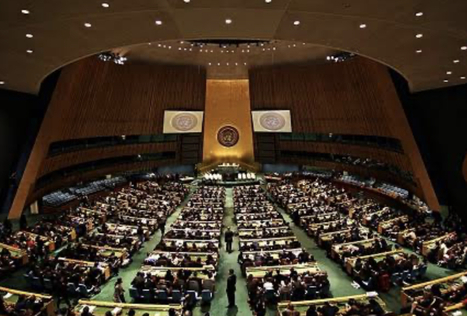
Concluding the General Assembly’s debate on States’ responsibility to protect their people from mass-atrocity crimes, delegates today weighed whether that multifaceted and controversial concept provided sufficient legal grounds for collective intervention in national affairs.
Nicaragua’s representative pointed out that, since there was no legally binding commitment to protect people from genocide, war crimes, ethnic cleansing and crimes against humanity, it was up to the General Assembly to craft a legal basis to do so. He called for the development of the “novel” responsibility to protect (R2P) concept because the 2005 World Summit had only endorsed it on the premise that it would be discussed further. At the present stage, it was easy to manipulate and could become a right to intervene.
Taking a similar view, Iceland’s delegate stressed that R2P must be seen as a means of reinforcing legality in international affairs and shoring up respect for the international system, embodied in the United Nations. He supported giving the General Assembly a lead role in fashioning an effective response to atrocities relevant to R2P. However, the concept should not become a license for illegitimate or arbitrary interference and aggression. It was essentially about saving lives.
For the former Yugoslav Republic of Macedonia, it was time to put R2P into operation and achieve the goals of the United Nations Charter, that country’s delegate said. In cases where conflict prevention failed, the global community should ensure an early and flexible response through collective action by the Security Council.
Sounding a note of caution on that point, Sudan’s delegate said that giving the Council the privilege of executing R2P would be tantamount to giving a wolf the responsibility to adopt a lamb. Even if R2P were to become an instrument of international law, its effective use would not be far removed from political influence by some Council members. Moreover, Sudan’s understanding of paragraphs 138 and 139 of the 2005 World Summit Outcome was that the first merely affirmed and restated the legal duties of a sovereign State to protect its citizens from serious crimes, while the second concerned the commitment of Member States to chapters VI and VIII of the United Nations Charter and the use of force.
Likewise, Iran’s representative emphasized that the key to preventing and suppressing grave crimes was faithful implementation of the United Nations Charter, avoiding selectivity and double-standards, and accelerating United Nations reform. Iran supported limiting R2P to the four serious crimes identified in paragraphs 138 and 139 of the 2005 World Summit Outcome, subject to the terms and qualifications outlined. It should not be misused, or indeed abused, to erode the principle of sovereignty, undermine the territorial integrity and political independence of States, or intervene in their internal affairs.
Rounding out the discussion, General Assembly President Miguel d’Escoto Brockmann (Nicaragua) said in his closing remarks that the debate might have been the most intense and extensive R2P discussion to date. After days of debate in which 94 speakers had voiced a range of opinions and concerns, it was clear that discussion on R2P needed to continue. While many had dwelled on the lessons of history, others had focused on addressing development issues, which were often at the heart of R2P situations. Still others had expressed doubts about the global community’s ability to respond to massive Government failure to protect people without falling back on double standards.
While reservations lingered about how to ensure true collective security, he said, the Assembly appeared to be on firmer ground, with a majority of States favouring an approach that focused on preventing such crises and on dealing with their root causes. Pointing to one area of agreement, he said: “We are unified in our conviction that the international community can no longer remain silent in the face of genocide, ethnic cleansing, war crimes and crimes against humanity.”
In other business today, the General Assembly, acting on the recommendation of the General Committee, decided to include an agenda item entitled, “The scope and application of the principle of universal jurisdiction” on the agenda of its current session under the heading “Promotion of justice and international law”. It also decided to consider that item in a plenary meeting.
Sweden’s representative, speaking on behalf of the European Union, welcomed the inclusion of the new agenda item.
Also speaking on the responsibility to protect were the representatives of Sri Lanka, Sierra Leone, Jamaica (on behalf of the Caribbean Community, or CARICOM), Myanmar, Slovakia, Russian Federation, Armenia, Timor-Leste, Panama, Democratic People’s Republic of Korea, Botswana, Kazakhstan, Swaziland, Bangladesh, Papua New Guinea, Benin, United Republic of Tanzania, Peru, Kenya, Malaysia, Lesotho, Azerbaijan, Georgia, Argentina, Gambia, Serbia and Cameroon.
Representatives of the Permanent Observer Missions of the Holy See and Palestine also delivered statements.
Speaking in exercise of the right of reply were the representatives of the Russian Federation and Georgia.
The General Assembly will reconvene at a time and date to be announced.
Background
Continuing its debate on the responsibility to protect (R2P), the General Assembly had before it the Secretary-General’s report, Implementing the Responsibility to Protect (document A/63/677). (For further information, please see Press Releases GA/10845 of 21 July, GA/10848 of 23 July and GA/10849 of 24 July.)
Statements
RKS SURESH CHANDRA (Sri Lanka) said that all the General Assembly could do on the complex question at hand was to consider the issues further. While there had been significant “locomotion” in seeking to implement the R2P concept, there had been insufficient progress in implementing other aspects of the 2005 World Summit Outcome, such as combating transnational crime, tackling climate change and attaining the Millennium Development Goals. The Assembly should clarify all the issues, with a view to finding common ground so as to discourage the loose application of R2P.
It was important to define clearly the triggers for R2P, he said, noting that many States were sensitive to how the concept would be operationalized, often because of their experience with colonial rule. The worst human tragedies were not confined to any particular part of the world, and there was a need for a balanced approach. It was necessary to proceed with caution, bearing in mind respect for sovereignty, non-selectivity and non-interference in internal affairs. Who would determine when a situation was a candidate for preventive or reactive intervention? How would the scope be defined? Who would gather early-warning intelligence? What were the means for ensuring that prejudice did not creep into analysis? Recognizing that paragraphs 138 and 139 of the 2005 World Summit Outcome were based on pre-existing norms, regional groups had put mechanisms in place to address similar issues, he said, adding that more regional-level involvement was needed.
The key to operationalizing R2P was devising an acceptable approach to addressing the four crimes in focus, and defining the parameters within those categories, he said. Any attempt to broaden the agenda would only fan existing concerns, whether real or misplaced. The State was the cornerstone of the responsibility to protect, and to succeed, R2P should be approached as a concept aiming to promote cooperation for peace and prosperity. The exercise of R2P was a fundamental obligation of governance, and misapplying it risked an erosion of its credibility. “Responsible sovereignty” must also apply to issues such as the prohibition of the use of nuclear weapons and other weapons of mass destruction, nuclear disarmament and counter-terrorism.
RUPERT DAVIES (Sierra Leone) said the Secretary-General’s report was an important part of the current discussion and emphasized that his remarks were grounded in national experience. Sierra Leone had endured a terrible war for many years, and could not have survived without the support of the international community. The development of R2P had originated in part from visits to Sierra Leone’s amputee camps in April 2000. Officials had been visibly shaken by the sight of many people, including a mother of eight children, whose limbs had been amputated.
Stressing the necessity of fighting impunity whenever mass-atrocity crimes were committed, he voiced support for the Assembly’s decision to include the item on responsibility to protect on its agenda and to discuss it for the first time since its adoption in 2005. The Secretary-General’s report outlined R2P, the need for capacity-building as well as timely and decisive responses. At its core was a commitment to protect citizens and the need for the international community to assist in a collective, timely response. It was usually non-State actors who committed atrocities, and it was the obligation of the international community to act, he said, adding that the R2P doctrine must be made user-friendly.
RAYMOND WOLFE (Jamaica), speaking on behalf of the Caribbean Community (CARICOM) and associating himself with the Non-Aligned Movement, said the 2005 World Summit Outcome included a reflection on the Organization’s inability to save human lives and resolved to seek to prevent atrocities in the future. The thematic debate now underway was important, given the implications of R2P for the United Nations Charter, especially as it related to State sovereignty and non-interference in internal affairs, an issue now undergoing careful consideration in many capitals.
He said CARICOM supported the view, expressed by numerous other States, that the scope of R2P should be confined to four crimes agreed by world leaders in 2005: genocide, war crimes, ethnic cleansing, and crimes against humanity. The regional body agreed with the Secretary-General that prevention was a key element of a successful R2P strategy, while the use of military force should be an absolute last resort.
All peaceful means at the disposal of the Secretary-General and the United Nations should be fully used, he said. There must be a uniform application of whatever principles were developed for the Security Council to take action under Chapter VII of the Charter, in order to avoid unfair treatment of any particular Member State. CARICOM believed that a reformed Council was an important precondition for any use of force. It would help build confidence among all Member States that the Council would act as an impartial body.
U KYAW ZWAR MINN (Myanmar) said the R2P concept originated from tragedies that had occurred after the Second World War, when national Governments had failed to fulfil their obligation to protect their citizens. As such, leaders at the 2005 World Summit had agreed that when a State manifestly failed to protect its citizens, the international community must act to halt or prevent such atrocities. Indeed, R2P was a collective obligation to act on four specific crimes and violations, he said, noting that it did not apply to calamities such as HIV/AIDS, climate change or natural disasters. R2P had a clearly delimited scope, and could not be the norm in addressing all social ills. The General Assembly should focus on ways to develop R2P. Myanmar agreed fully with the Secretary-General that it was important for the Assembly to consider proposals and determine how the United Nations could fulfil the commitments made in 2005.
SLOBODAN TAŠOVSKI (The former Yugoslav Republic of Macedonia), aligning himself with the European Union, said the unanimous endorsement of R2P had been hailed as one of the most important achievements of the 2005 World Summit. While various actions had been taken in the last three years to support the concept, much remained to be done. The former Yugoslav Republic of Macedonia supported the Secretary-General’s balanced and pragmatic approach to implementing R2P, and stood ready to contribute to the efforts ahead, notably building national capacities and policies critical to that pursuit.
At the same time, he said, his Government recognized that R2P derived from the positive notion of “sovereignty as responsibility” -– enhancing sovereignty by acknowledging that Governments had existing humanitarian, human rights and other obligations under international law to protect populations from serious crimes. Prevention was critical to R2P and capacity-building should be of key importance.
In cases where prevention failed, the global community should ensure an early and flexible response without graduated measures, but rather collective action by the Security Council, he said. The General Assembly should continue to make important contributions in the pursuit of international peace and security. Indeed, the international machinery must be enhanced, as must national will to ensure that failures to protect were not repeated. It was time to put R2P into operation and achieve the first preambular goals of the United Nations Charter.
MICHAL MLYNÁR (Slovakia), associating himself with the European Union, said that R2P, one of the most important achievements of the 2005 World Summit, sought to ensure that the international community would never again fail to protect human rights and protect human beings from the worst crimes. Slovakia welcomed the report of the Secretary-General as an excellent basis for further work in that area. It provided a clear focus and achievable goals.
However, not enough had been done to promote and enhance the concept and the international community must redouble its efforts to achieve results, he said. Slovakia was fully committed to all three pillars of R2P and supported the use of all legal instruments and agencies of the United Nations to play a role in its implementation. It also supported prevention as an important concept, similar to those of preventive diplomacy, mediation and the good offices of the Secretary-General. There was also a need for greater coordination of efforts between regional groups and the United Nations.
ESHAGH AL HABIB (Iran), endorsing the statement of the Non-Aligned Movement, said his country shared fully the sentiment that the international community must be vigilant in preventing past horrors of mass killings and genocide from being repeated in the future. While other States may step in to help upon request, on a case-by-case basis and through the United Nations, that did not imply permission to use force under any pretext, such as humanitarian intervention.
He emphasized that R2P should not be misused, or indeed abused, to erode the principle of sovereignty, undermine the territorial integrity and political independence of States, or intervene in their internal affairs. The key to preventing and suppressing grave crimes was faithful implementation of the United Nations Charter, avoiding selectivity and double-standards, and accelerating the reform process. Iran supported the notion of limiting R2P to the four serious crimes identified in paragraphs 138 and 139 of the 2005 World Summit Outcome, subject to the terms and qualifications outlined. It was also important to address the wide range of economic and political causes underlying or contributing to mass atrocities.
MIKHAIL MARGELOV (Russian Federation) said further work on R2P should be guided by the 2005 World Summit Outcome, whose language was in line with the Charter. Initial responsibility to protect people from genocide, war crimes, ethnic cleansing and crimes against humanity rested with States, and it was important that they exercise “self-control” in that regard. The international community should focus first on helping States foster their own capacities. Timely reaction by the United Nations could help avoid mass loss of life. When States were not in a position to protect their people, international action should be undertaken on an exceptional basis and in full compliance with international law.
R2P contained enormous potential for change, he said, noting that it could have an impact on trends that would, in turn, affect the entire system of international relations. As such, there was a need for caution in implementing the R2P aspects of the 2005 World Summit Outcome. It was important to avoid rash, hasty steps or broadening the interpretation of the concept, which would endanger efforts to promote international peace and security. The conditions for turning ideas into practical institutions had not yet been fulfilled, and work in relation to paragraphs 138, 139 and 140 of the 2005 World Summit Outcome was far from complete. The outlines had been formed and the United Nations should remain the key forum for discussing the issue.
JAIME HERMIDA CASTILLO (Nicaragua) said leaders at the 2005 World Summit had emphasized the General Assembly’s duty to consider R2P in order to protect people from genocide, war crimes, ethnic cleansing and crimes against humanity. Indeed, the Assembly was in charge of crafting a legal basis for R2P as there was no legally binding commitment. R2P was a “novel” topic in need of further development since it had only been accepted on the premise that it would be discussed further. It could easily turn into a right to intervene -- something Nicaragua had endured -- and was easy to manipulate. It contemplated the use of force, which might be a contravention of the principle of non-intervention in internal affairs. Genuine economic cooperation in an auspicious environment could do more to prevent genocide, war crimes, ethnic cleansing and crimes against humanity, he said, calling for urgent reform of the Bretton Woods institutions. Nicaragua was concerned about the potential for selectivity in implementation of R2P, and preferred the strengthening of the Human Rights Council and the Peacebuilding Commission.
GUNNAR PÁLSSON (Iceland) said that four years on from the 2005 World Summit, the time had come to start making good on the commitments undertaken. The task was not to renegotiate the Summit’s conclusions but rather to seek ways to implement its decisions in a truthful, consistent manner. The Secretary-General’s “tripod” approach provided the right framework, with the first two pillars underscoring the importance of prevention going hand-in-hand with early warning and assessment.
Peaceful means should always be the preferred course of action, with coercive measures as an option of last resort, he said. R2P was essentially about saving lives –- it should not become a license for illegitimate or arbitrary interference and aggression. It must be seen as a means of reinforcing legality in international affairs and a way to shore up respect for the international system, embodied in the United Nations. For that reason, Iceland lent its support to giving the General Assembly a lead role in fashioning an effective international response to atrocities relevant to R2P.
LILIT TOUTKHALIAN (Armenia) said Human Rights Council resolution 7/25 aimed to consolidate the functions of existing United Nations human rights protection mechanisms of prevention, bridging the mandate of the Special Rapporteur on the Prevention of Genocide with the Organization’s human rights system as a whole. It was very important to find the right balance and synergies among those functions so as to allow the system to respond promptly and efficiently to alarming situations.
Underlining the importance and necessity of training, learning and education programmes, she said they could contribute significantly to strengthening a State’s protection capacity. The international community must be vigilant in monitoring the development of situations and events which could lead to the actual legitimization and institutionalization of genocide and crimes against humanity.
She said an early and strong international reaction to systematic and egregious violations of human rights, especially collective rights, could become a deterrent, inhibiting the evolution of potentially dangerous trends towards genocide, war crimes, and crimes against humanity. R2P was a cornerstone of the overall human security system, and the time had come to take decisive steps towards eliminating the very possibility of crimes against humanity.
NELSON SANTOS (Timor-Leste) voiced strong support for the Secretary-General’s three-pillar approach, describing it as a step in the right direction, and recalling that in 2006, his country had been confronted with the challenge of putting it into practice, as widespread ethnic and gang violence had led to killings, the Prime Minister’s resignation and the displacement of more than 100,000 people. Seeking help in such times was an exercise in responsible State sovereignty, he said, adding, “We believed and believe in it.” The request had been made jointly by the President, Prime Minister and President of Parliament, which underscored Timor-Leste’s belief in the legal and moral obligation to protect its people.
Underscoring the importance of pillar two of the Secretary-General’s approach, he expressed gratitude for its emphasis on the need to assist States, rather than just waiting for them to fail. In Timor-Leste, a greater proportion of international funding went towards capacity- and institution-building, technical assistance in judicial and security-sector reform and the rule of law, among other things -– key areas in strengthening the Government’s ability to restore order and confidence. Timor-Leste had come a long way since the 2006 crisis. Trust had been regained and the rule of law strengthened.
Such success took time, patience and political will, he said. Investment in capacity-building, early warning systems and assistance -- though infinitely cheaper than paying later for stronger measures -- were areas in which States were better at talking than actually doing anything. Timor-Leste unequivocally supported the Secretary-General’s appeal to permanent members of the Security Council to refrain from employing, or threatening to employ, the veto in situations of clear failure to meet R2P obligations.
GIANCARLO SOLER TORRIJOS (Panama) said the Secretary-General’s report was an important step forward in implementing the responsibility to protect, noting that it was only when a State could not protect its own citizens that R2P should come into play. According to the report, it was important to take any actions that would lessen the danger of genocide occurring. The Human Rights Council could help States learn how to comply with their responsibility to protect their own citizens.
While recognizing that some Member States felt R2P was a pretext to intervene in their internal affairs, he said that was why the present debate was necessary. The implementation of R2P should be carried out in all activities to prevent conflict and promote and defend human rights. The absence of Security Council reform should not be an excuse to stop moving ahead in implementation of the responsibility to protect, and efforts should be made to prevent cases requiring R2P intervention from arriving before the Council.
PAK TOK HUN (Democratic People’s Republic of Korea) said military attacks had been launched against sovereign States in the past under the pretext of “humanitarian intervention”. More recently, aggression and intervention had been increasingly visible and even justified under the mantra of “war on terror”, which had resulted in infringements on national sovereignty and the murder of large numbers of innocent people. Member States must seriously review the responsibility to protect and the role of the United Nations in maintaining international peace and security, with a view to taking appropriate practical steps to address that reality.
Many countries were now expressing concern about the responsibility to protect, he said, stressing that if it was truly intended to protect civilians, it should be applied without exception, including to the mass killing of innocent people in Afghanistan and Gaza. Regretfully, those cases could not even be tabled in the Security Council owing to the involvement of the “superpowers”. It was therefore all the more urgent to take steps to fundamentally resolve war and conflict within the current framework rather than creating a new protection arrangement.
He said just international relations should be established without further delay on the basis of respect for sovereignty, equality and non-interference in the internal affairs of States. The Democratic People’s Republic of Korea encouraged peaceful solutions to present conflicts through dialogue and negotiations and without foreign intervention and actions that instigated confrontation and conflict. It would fulfil its responsibility to firmly safeguard its sovereignty and dignity against ever-increasing military threats by foreign forces, thus contributing actively to peace and stability in the Korean peninsula and beyond.
CHARLES T. NTWAAGAE (Botswana) said his country recognized R2P as a central tenet of the international community’s shared humanity. States had the obligation to demonstrate the political will and commitment to ensure that populations at risk had access, at all times, to maximum protection, and that perpetrators of abuse were held accountable for their actions. The Secretary-General’s report advocated a three-pillar approach to putting the R2P concept into practice, but it was important that the international community not undermine the sovereignty of the countries concerned under the pretext of providing support and assistance.
The use of early warning capability was essential to putting R2P into effect, he said, citing Rwanda as an example of the need to work hard to operationalize the R2P concept and prevent grave crimes against humanity. The use of concrete steps and the willingness to pragmatically use all means would help the international community save populations from grave crimes against humanity. That conviction informed Botswana’s ratification of the Rome Statue of the International Criminal Court, which provided a viable judicial mechanism for addressing issues of impunity and gross human rights violations.
BYRGANYM AITIMOVA (Kazakhstan) said that protecting populations from genocide, war crimes, ethnic cleansing and crimes against humanity was a moral imperative, while stressing also her country’s strong support for the concept of “non-indifference” when a State failed to fulfil its primary duty to protect its own people. Any loss of civilian life due to openly egregious acts against citizens could not be shielded by State sovereignty and the absolute primacy of the non-interference principle. Far too often the world had failed to provide adequate and timely assistance, or paused in silent condemnation and inaction, thus increasing the impunity of perpetrator States.
Under the motto “Never Again”, concerning mass atrocities, Member States could start examining security issues in respect of individuals and groups of individuals, she said. However, very cautious case-by-case consideration of the responsibility to protect was crucial in order to avoid military intervention for inappropriate purposes under the R2P banner. Kazakhstan supported implementation of the three-pillar strategy, and stressed the importance of universal agreement on accurate criteria, humanitarian norms, standards and protection. The value of preventing atrocities by diplomatic, economic and other measures could not be overstated.
Force should only be used as a last resort, she emphasized, expressing her country’s recognition of efforts by the African Union and the Economic Community of West African States (ECOWAS) to pioneer progressive regional legal instruments, policy tools and mandates to implement the responsibility to protect. They had set precedents for stronger collective action by other States. Kazakhstan had done its part in that regard by joining the Conference on Interaction and Confidence-building Measures in Asia, the Shanghai Cooperation Organization, the Commonwealth of Independent States (CIS) and the Collective Security Treaty Organization.
JOEL NHLEKO (Swaziland), associating himself with the Non-Aligned Movement, said the Constitutive Act of the African Union made reference to the responsibility to protect while amplifying the value of non-indifference. The depth of R2P relied upon the virtues of good governance, sound institution-building and the protection of human rights, including those of women and minorities. Good governance in peace time deepened pillar one, while States’ failure to protect their people triggered a series of events that degenerated into violent interventions by “wayward” elements within the national borders. Indeed, R2P should not start when disagreements degenerated into violence; instead, it should embrace preventive measures during peacetime.
Recounting his country’s experience of protecting foreigners and citizens, he said Swaziland wished to see a more detailed prescription for holding occupying Powers responsible for the populations whose countries they invaded, adding that the systematic substitution of some populations might amount to a form of ethnic cleansing. The Secretary-General should look more closely at ethnic cleansing and find the means to broaden, or deepen, it to include such considerations.
That also applied to “P5” nations that might find themselves entangled in cases whereby they held special interests in a specific country, he said. Much scepticism had been expressed about pillar three, and there was also a grey area regarding courses of action, should the need for it arise. There was also a question as to whether Security Council approval of military intervention was an effective avenue -– what if the Council suffered from operational incapacity? Swaziland urged the Secretary-General to devise a strategy that would make it impossible for the Council to be inert.
ISMAT JAHAN (Bangladesh) agreed fully that R2P rested first with the individual State and should emanate from the international community’s responsibility to ensure the right to development for all nations. Bangladesh favoured the exhaustive application of all existing mechanisms for the peaceful settlement of disputes, under Charter provisions. The R2P concept should not provide an avenue to intervene in the domestic affairs of Member States under the guise of humanitarian assistance.
R2P should also look into the root causes leading to situations whereby a State was said to be “failing” to protect its own citizens, rather than going for enforcement action after the global community had allowed that State to slide into chaos. The primary R2P tool should be persuasion and support, not military or other coercion. Only when prevention failed might R2P draw on economic, political, diplomatic, legal, security or, as a last resort, military action. If a stage was reached where the Council must take necessary action, it was expected to fulfil it responsibly, as entrusted to it by all Member States.
ROBERT GUBA AISI (Papua New Guinea) supported the Secretary-General’s efforts to flesh out the details of the R2P concept, but agreed that discussions should be confined to genocide, ethnic cleansing, war crimes and crimes against humanity. There were understandable reservations about R2P, and the General Assembly, as the most representative organ of the United Nations, must seriously consider all such reservations in order to gain a broader consensus.
Noting that it had been four years since the completion of the United Nations Observer Mission in Bougainville (UNOMB), he said, “nothing can prepare you for the aftermath of a conflict or war”. The truth -– or lack of it -– was normally framed in a range of questions about why the conflict had not been prevented, and how various factors had been allowed to simmer. In the search for answers, the R2P debate was of extreme interest.
While accepting that the responsibility to protect was the primary obligation of the State, he said that should not preclude assistance in situations requiring it. Papua New Guinea supported the creation of an early-warning system with a better monitoring mechanism, but one challenge was to recognize -– and respect -– the value of local knowledge. While “Never Again” in its broader reality had been something of a failure, the international community had emerging tools to address such situations. In its proper context, R2P could be among those tools.
JEAN-FRANCIS RÉGIS ZINSOU (Benin), endorsing the statement of the Non-Aligned Movement, said it was very important to protect people against heinous crimes, as human dignity was not a commodity. International action in that area must transcend all political thinking. Benin supported the Secretary-General’s report and supported the three pillars, which were in line with the original spirit of the Charter. R2P would not be credible without the third pillar, which needed the dedication of the international community to collective action. It was a positive persuasive tool.
Emphasizing the importance of addressing social problems that led to unrest and conflict, he said peacebuilding activities also were very important in preventing conflict. In 1990, Benin had made a peaceful transition to democracy with its Constitution providing national consensus. The National Assembly had recently adopted a law to strengthen the office of Ombudsman. Benin had received assistance from development partners over the years to improve living conditions, promote economic growth and ensure democracy.
The Council should enforce R2P and the third pillar, he said, pointing out that the Charter provided the necessary legal basis. It was up to the Council to determine whether, and through whom, that principle had been violated and take measures to stop serious crimes. While genocide was a threat to international peace and security, the real problem was not the legal basis for the enforcement of R2P, but the inconsistent practice of the principle. It was the absence of the desire to act. Benin was not referring only to permanent Council members; there was a double standard in place.
JOYCE KAFANABO (United Republic of Tanzania), calling the Secretary-General’s report a good basis for deliberations on the responsibility to protect, agreed that the task was not to renegotiate the conclusions of the 2005 World Summit but rather to discuss ways to implement the commitments outlined in paragraphs 139 and 140. Those pledges were a response to historic, collective failures to save lives.
Pointing out that her country had played a key role in negotiating peace in Africa, particularly in the Great Lakes and Southern Africa, she said its participation in the maintenance of peace and security stemmed from the belief that there could be no peace when there was instability in neighbouring States. Governments bore the primary responsibility to protect their people, but when they failed to offer that protection, there was a collective duty. “We need to respect sovereignty”, she said, cautioning at the same time that, “we cannot remain indifferent to gross human rights violations”.
She said States must be held accountable to practise responsible sovereignty, urging that they emulate the African Union position, which had moved from non-interference in State internal affairs to “non-indifference”. R2P was not a substitute for –- but rather a complement to -- instruments already in place, and it was to be hoped that its focus would remain on genocide, war crimes, ethnic cleansing and crimes against humanity. The challenge was to develop a common understanding of and agreed rules for its implementation. The General Assembly debate was the start of a process to find consensus on the issue, and it was expected to continue during the sixty-fourth session.
GONZALO GUTIÉRREZ REINEL (Peru) said the Secretary-General’s report was a first step toward compliance with the responsibility to protect. The implementation process should not seek to redefine the concept of the responsibility to protect, but to make implementation more effective. It was necessary to define clearly the four serious crimes cited in the 2005 World Summit Outcome in order not merely to denounce them in a generic fashion, but also to analyse them in terms of international law, so that the three pillars could be effectively applied.
The three pillars, which aimed to prevent conflicts from escalating into the types of tragedies that had occurred in recent years, must be applied sequentially, he said. There was a need to set up an early-warning mechanism to protect people from the most serious crimes, and to help States build capacity. While the responsibility to protect meant preventing the most serious crimes, it did not mean penalizing or persecuting sectors that did not share a Government’s political ideology.
General Assembly resolution 2312 established that asylum was a peaceful and humanitarian act that could not be perceived as hostile by any State, he said. Article 32.1 of the United Nations Convention on Refugees stated that a non-signatory State should not expel refugees residing legally in its territory, while article 33.1 obliged States not to expel asylum seekers when their lives or liberty were in danger due to their political views. Regarding the statement delivered by the representative of Bolivia on Friday, he said Peru had received no official extradition request for people facing trial in that country, adding that such a request would be analysed by the Supreme Court. Judicial authorities would then act in accordance with their international obligations and the relevant regional accords.
GRACE W. CERERE ( Kenya) said R2P was a call to implement existing commitments, under international humanitarian and criminal law, to protect civilians from the abuse of human rights at all levels. While not new, and well documented in paragraphs 138 and 139 of the 2005 World Summit Outcome, its implementation had been problematic, a state of affairs that should not be allowed to continue. There should be no recourse to reinterpretation or renegotiation of the R2P concept, but rather ways should be found to implement it.
The Kenyan people appreciated the Secretary-General’s personal initiative to lend crucial support in the search for a negotiated solution following the disputed elections of December 2007, she said. The Panel of Eminent Persons had provided invaluable support. Should the use of force be necessary, it must be consistent with the principles of the Charter and international law, she stressed, adding that Kenya’s experience demonstrated that timely diplomatic intervention through negotiations could result in the peaceful settlement of any dispute. Since the signing of the National Dialogue and Reconciliation Accord in February 2008, the Grand Coalition Government had put various mechanisms in place to ensure that the post-election violence would never be repeated.
ZAINOL RAHIM ZAINUDDIN (Malaysia), associating himself with the Non-Aligned Movement, said that when trying to put “meat” on an inherently good idea, the devil would be in the details. “We must ensure that we do not thwart the good intentions behind the original formulation of the concept.” At the same time, it was important not to load it with too many aspects so that it became a conflict in itself. The best concepts were clear, straightforward and easily distinguishable from others. While State sovereignty was the bedrock of the United Nations, States not only had the responsibility to protect their citizens, they could be held liable for not preventing incitement of the four specific crimes.
While that seemed logical on the surface, under both international and criminal law, a crime would need to be committed in order to be a crime, he said. R2P seemed to be formulated to prevent the occurrence of the crime, but in reality, it was only possible to hold an entity liable for that “extrapolated sense of negligence” in hindsight. Without a crystal ball, it would be difficult to hold a State responsible for not acting on a crime that had yet to be committed. Because of those seemingly illogical steps, the United Nations must iron out the details of R2P. It was questionable whether everyone understood that principle to mean the same thing.
As for the United Nations early-warning capacity, he said he hoped consultations on that matter would be held in an inclusive, transparent manner. Also, agreement had not been reached on the parameters of R2P, including the kind of situation that would trigger it. Since the Secretary-General’s report alluded to the premise that Chapter VII of the Charter should be invoked only as a last resort, then, providing that all agreed that R2P should be invoked, it did not make sense that a Security Council veto could thwart that decision. In that regard, its five permanent members should be restrained from using the veto. Malaysia was concerned that the report’s urging that donors ensure that a State carried out its responsibility to protect might be misconstrued. Donor assistance should be rendered on the basis of the recipient State’s need, rather than by pre-determined criteria that would result in assistance being used as a tool in the service of political ambitions.
MOTLATSI RAMAFOLE (Lesotho) said R2P reaffirmed one of the main purposes of the United Nations: the maintenance of international peace and security and the use of collective measures for the prevention and removal of threats to peace. Some delegations were apprehensive that R2P would be used as an excuse to interfere in their internal affairs, in contravention of the well-established principle of sovereignty. Yet sovereignty went with a State’s responsibility to protect its s citizens. States must diligently discharge that responsibility, and once that was done, there would be no need to invoke pillar three, which in any event would not necessarily translate into the use of coercive force because it encompassed many non-coercive and non-violent measures.
History had shown that the Security Council had failed to take action to prevent mass atrocities, he said. In answering the question of what should be done if it failed to act, R2P, on its own, exerted more pressure for Council action. It sought to bolster the Charter provision imposing a duty on the Council to maintain international peace and security. The General Assembly also had an important role to play in that regard, but that role needed to be strengthened. While the responsibility to protect was a relatively new concept based on the idea of collective action, with many questions about its implementation, the international community must forge ahead with attempts to agree on its implementation.
TOFIG MUSAYEV (Azerbaijan) said that despite important steps to address properly the most serious international crimes, populations were still suffering in many places around the world due to the manifest failure of individual States to fulfil their most basic and compelling responsibilities, and the collective inadequacies of international institutions. Regrettably, 60 years after the adoption of the Universal Declaration of Human Rights and the Convention on the Prevention and Punishment of the Crime of Genocide, the conspicuous “silence” in certain instances, particularly situations of military aggression and foreign occupation, illustrated the gap between the theoretical values of law and harsh reality.
He said that bitter truth challenged peace, stability and prosperity, and required a redoubling of efforts to end the most serious international crimes. It was important to develop an overall strategy for implementing R2P, including ways in which the United Nation could best ensure fulfilment of the 2005 World Summit commitments. Measures to end impunity must be sharpened, which required State commitments to prosecute those responsible for the most serious crimes. Fighting impunity was essential for bringing perpetrators to justice, and for peace, truth, reconciliation and victims’ rights.
There must be no justification for attempts to make participation in political processes aimed at ending conflicts conditional on demands for immunity, he said. To justify such attempts would be tantamount to legitimizing the results of mass atrocities, which amounted to rejecting the responsibility to protect. More research and analysis was needed to determine why one society resorted to mass violence, advocating “ethnic incompatibility” and the creation of a monotheistic environment, while its immediate neighbours remained relatively stable in terms of preserving cultural diversity and fostering respect among various groups.
ALEXANDER LOMAIA (Georgia), aligning himself with the European Union, noted that the international community had accepted the R2P principle, with many States having followed the Secretary-General’s advice not to turn the common effort into a struggle over ideology, geography or economics. Perhaps the most important priority to have emerged during the debate was an urgent need to pay closer attention to proper implementation of R2P. Georgia joined others who had highlighted the perils associated with the ingenious -– even cynical -– misapplication of the R2P principle.
Sharing his thoughts about when R2P was likely to be abused, he said ominous signs included when a State turned on its propaganda machine to instigate ethnic hatred, and when it began to invoke quasi-legalistic justifications for unilateral military action. Red flags should also be raised when, in the wake of “ethnic cleansing”, aggressor countries were able to banish international monitors to keep them from observing what was taking place on the ground. The roots of such tragedies could be traced back to the collapse of the Soviet Union.
More recent early-warning signs that could have predicted last year’s invasion of Georgia and subsequent “ethnic cleansing” had been ignored, he said, recalling that the leader of the country responsible for those actions had coined the term “ethnically contaminated places” in reference to marketplaces serving traders from Central Asian and South Caucasian countries. The Russian Federation had used its veto power in the Security Council to terminate the Organization for Security and Co-operation in Europe (OSCE) mission in Georgia and the United Nations Observer Mission in Georgia (UNOMIG). Georgia supported Hungary’s idea to establish, in Budapest, an international centre for the prevention of genocide and mass atrocities.
DIEGO DESMOURES (Argentina) said his country had a prominent role in defending international humanitarian causes, including in preventing and stopping situations of systematic mass violations of human rights. The responsibility to protect was quite simply a synthesis of other international obligations. Respect for human rights, refugee rights and international humanitarian law were essential.
Supporting cooperation in terms of policies and practices for capacity-building and technical assistance, he said prevention based on the first two pillars was a fundamental element for the success of the three-pillar strategy. The General Assembly should continue to examine the question of responsibility to protect, including the terms of paragraph 139 of the 2005 World Summit Outcome, with a view to implementing that responsibility.
AMANUEL YOANES AJAWIN (Sudan) said his understanding of paragraphs 138 and 139 of the 2005 World Summit Outcome was that the first merely affirmed and restated the legal duties of a sovereign State to protect its citizens from genocide, war crimes, ethnic cleansing and crimes against humanity, while the second concerned the reaffirmation and commitment of Member States to chapters VI and VIII of the Charter and the use of force. There was a tendency to misinterpret the R2P concept to mean the right to intervene in the affairs of a sovereign State. Some said discussion of the concept had already been finalized in the 2005 World Summit Outcome, and that there was no room for renegotiation or interpretation. While there was indeed a worldwide consensus on the role of the State in protecting its citizens, there was still no consensus on the applicability of R2P to political realities.
It was precisely that misinterpretation that caused most countries to be apprehensive and cautious about the responsibility to protect, he said, expressing his strong support for the principle of non-interference, and describing it as the glue that kept countries together and motivated them to work collectively for international security. Strong advocates of R2P wished to use the 1994 Rwanda genocide as supporting evidence to excuse future interference. The failure of the United Nations to save lives in 1994 had not been caused by the lack of language in the Charter, but partly by the lack of decisive action by top decision-makers and the political motives of some Security Council members. Even if R2P became an instrument of international law, its effective use would not be far removed from political influence by some Council members. Giving the Council the privilege of executing R2P was like giving a wolf the responsibility to adopt a lamb.
LAMIN FAATI (Gambia), fully associating himself with the Non-Aligned Movement and the African Group, said his delegation had no problems with the responsibility to protect, as outlined in paragraphs 138, 139 and 140 of the 2005 World Summit Outcome, an historic milestone in collective efforts to protect civilians from four massive crimes. Gambia would continue to study the next steps in the implementation phase, and would move “cautiously and constructively” until consensus was reached on all outstanding issues. A building block for the creation of a depoliticized R2P architecture was needed to bridge the existing trust deficit over the way forward. Any rush to conclusions not anchored in reality and informed by history would only lead to the establishment of a “utopian paradise”.
R2P implementation should be founded on rule–of-law-based approaches that would prevent abuse, he said. Africa had led the way in fashioning the R2P principle, due in part to the international community’s paralysis, as well as deep mistrust of the United Nations system owing to a proven history of inaction where African R2P situations were concerned. Gambia believed in the African Union Constitutive Act, regional and subregional arrangements across the continent, and their effectiveness in dealing with certain R2P situations. Gambia called for the creation of a committee on the responsibility to protect, mandated to make non-binding recommendations to the General Assembly, the Security Council and regional organizations. It would indicate its views on the use or non-use of the veto in particular situations.
BORIS HOLOVKA (Serbia) said the R2P concept was a necessity that no one could question. Yet that necessity did not in any way imply legality at the present stage. In order to become a part of international law, let alone customary international law, it must be developed fully by the General Assembly and given a proper test of time as a way to dispel any reason to fear that it would be abused and that double standards would pervert its noble goals.
He warned the international community against forgetting the recent past, when the now discredited, hastily composed concept of humanitarian intervention had been highly prized and championed by political leaders wielding great influence in world affairs. Could one feel anything but scepticism while recalling the officially declared motives for the bombing campaign led by the North Atlantic Treaty Organization (NATO) against the Federal Republic of Yugoslavia in 1999? He stressed the need to remain committed to the principles of the Charter as a basic reference point for any debate on reforming the international system.
Serbia believed in the mutual interdependence of the three pillars, and the need to invest efforts in developing the third pillar, he said. As stated in the concept note prepared by the office of the General Assembly President, however, the Secretary-General’s report contained several problematic elements, including that of a “timely and decisive response”. One had to question what constituted a timely response and who determined the level of decisiveness. Serbia reaffirmed its commitment to the concept of responsibility to protect, as defined in the 2005 World Summit Outcome, but it could not forsake the necessity to discuss the concept in a comprehensive and all-inclusive manner and without imposed constraints.
MICHEL TOMMO MONTHE (Cameroon), citing the Secretary-General’s report, said human tragedies had not been confined to any particular part of the world, and urged as much pragmatism as possible in approaching the R2P concept. Cameroon had followed the negotiations on and drafting of paragraphs 138, 139 and 140 of the 2005 World Summit Outcome and had noted the emergence of two currents of opinion. One viewed the “responsibility to protect” as implying a concept with fluid outlines and a broad scope, while the other believed that the main topics had already been well defined and left no room for legal quibbling. In 2005, Heads of State and Government had opted for the second view, and, hence, the unambiguous mandate given to the General Assembly not to seek a new standard. Rather, it was important to continue considering R2P. Cameroon called for compliance within the strict scope of the four specific crimes.
Discussing pillar one, he said that in his own country, which represented an “Africa in miniature”, the President assumed office with justice and equity, in reaffirmation of the rule of law, democracy and human rights. Cameroon had undergone the African Peer Review Mechanism and that of the Human Rights Council. Its national Human Rights Commission was managing social tensions and issued an annual human rights report. Regarding pillar two, Cameroon endorsed proposals aimed at supporting States in terms of capacity-building. As for pillar three -– which concerned a timely and decisive response by the international community –- Cameroon favoured moving prudently on a case-by-case basis and focusing on prevention. He emphasized that the United Nations must be strengthened and democratized, including through Security Council reform, pointing out that, “We are in the twenty-first century.”
KURIAKOSE BHARANIKULANGARA, Observer for the Holy See, said that national and local authorities that failed to protect their citizens or actually helped to perpetrate crimes had failed in their basic functions. They should face legal responsibility for their actions as well as inaction. A human-centred approach to developing policies to protect populations from grave human rights violations and to developing humanitarian law and other internationally agreed legal standards was vital to fulfilling national responsibility.
National policies that fostered greater inclusion and protection of religious, racial and ethnic minorities were a key to fostering greater dialogue and understanding between and among populations, he continued. For the third pillar of R2P to gain momentum and efficacy, greater efforts were needed to ensure that action taken pursuant to Security Council decisions was carried out in an open, inclusive manner, with the needs of affected population rather than the whims of geopolitical power struggles at the forefront. In doing that, the world could respond to its moral responsibility to intervene when human rights and the right to exist were in jeopardy.
He went on to underline that countries in a position to exercise their authority within the Council must do so in a way that reflected the selflessness needed for an effective, timely and human-centred approach to saving people from grave atrocities. He said that religious and community leaders also had an important role in promoting the responsibility to protect, noting that, all too often, ethnic, racial and religious intolerance had given rise to violence and murder. The exploitation of faith to further violence was a corruption of faith, and religious leaders must challenge such thinking. Faith should be seen as a reason to come together rather than a source of division, for it was through faith that communities and individuals were able to find the power to forgive so that true peace could emerge.
FEDA ABDELHADY-NASSER, Chargé d’af
Delegates Seek to End Global Paralysis in Face of Atrocities as General Assembly Holds Interactive Dialogue on Responsibility to Protect 23 July 2009 General AssemblyGA/10847 Department of Public Information • News and Media Division • New York Sixty-third General Assembly Interactive Dialogue on Responsibility to Protect (AM)
delegates seek to end global paralysis in face of atrocities as General Assembly
holds interactive dialogue on responsibility to protect
Concept Should Remain ‘Important Aspiration’, President Says, Calling on States to Fix ‘Broken’ Collective Security System
Vowing to break the world’s paralysis in the face of mass atrocities typified by the Holocaust, the Khmer Rouge killing fields and the Rwanda genocide, delegates in the General Assembly grappled today with how -– and whether -– to implement the responsibility to protect (R2P) doctrine, during a half-day informal interactive dialogue.
In opening remarks, Assembly President Miguel d’Escoto Brockmann ( Nicaragua) said the R2P doctrine called for solidarity in the pursuit of justice and sought to limit what States might do to their own citizens. They must attempt to prevent such crises -– notably by dealing with their root causes –- and the United Nations should explore the true potential of preventive action.
While the R2P principle should remain an important aspiration, he said, States should begin by fixing “our broken system of collective security” and -– by restoring the global economic system -- prove that “we are indeed prepared to build a better world”. The United Nations had the institutional instruments needed to deal with such challenges, but political constraints had prevented their full use.
Building on that sentiment, Edward C. Luck, Special Adviser to the Secretary-General stressed that today’s single objective was to consider the Secretary-General’s report, Implementing the Responsibility to Protect. “The mandate could not be clearer,” he said, outlining the commitment made by Heads of State and Government at the 2005 World Summit to prevent genocide, war crimes, ethnic cleansing and crimes against humanity. The Assembly had unanimously adopted the Summit Outcome Document, while Security Council resolution 1674 (2006) reaffirmed the provisions of the responsibility to protect. Implementation was now beginning.
Emphasizing that it was not the United Nations way to stand by in the face of unfolding mass atrocities, he said the search for a better way had led to the broader, more multilateral, more nuanced and more positive notion of the responsibility to protect, in which prevention and State responsibility would be of key importance. Today’s speakers had the chance to dispel various myths about the concept, notably the old caricature that it was another form of military intervention, when it actually sought to discourage unilateralism, military adventurism and an over-dependence on military responses to humanitarian need.
The dialogue also featured a panel discussion, moderated by Raymond Wolfe (Jamaica), which featured four professors: Jean Bricmont from Belgium, Noam Chomsky from the United States, Gareth Evans from Australia and Ngugi wa Thiong’o from Kenya.
In that discussion, Mr. Bricmont challenged the intellectual assumptions underlying the responsibility to protect, saying that the main obstacle to the concept was precisely the policies and attitudes of those who were most enthusiastic about it –- the Western countries, particularly the United States. In the past decade the world had looked on helplessly as innocent civilians were murdered by American bombs in Iraq, Afghanistan and Pakistan. If the twenty-first century needed a new United Nations, it did not need one that legitimized such interventions by novel arguments. It needed arguments that at least gave moral support to those striving to construct a world less dominated by the United States and its allies.
Reinforcing that point, Mr. Ngugi described two major fault lines in the world, saying that the first was between a minority of wealthy nations that relied on a majority of poor nations for 90 per cent of their resources. The second division lay between a minority of “social haves” and a majority of “social have-nots”. He said that, in the search for solutions, a view of development that focused on the middle class and above was questionable. Only by closing major divisions could States begin to address the structural basis of crimes against humanity.
Representatives of the following Member States participated in the interactive discussion following the panel’s presentations: Germany, Egypt, Sweden, Japan, Chile, Ghana, Djibouti, Sudan, United Republic of Tanzania, Morocco, Bosnia and Herzegovina, Saudi Arabia, Timor-Leste and Kenya.
Also taking part were representatives of the Global Centre for the Responsibility to Protect and the People’s Coalition for Responsibility to Protect.
The General Assembly will reconvene in plenary at 3 p.m. today, 24 July.
Background
The General Assembly met this morning for a half-day informal interactive dialogue on the responsibility to protect. (For further information, please see press release GA/10845 of 21 July.)
Opening Statements
MIGUEL D’ESCOTO BROCKMANN ( Nicaragua), President of the General Assembly, launched the informal interactive dialogue by noting that “all too many times” the world had stood still in the face of gross violations of the most basic sentiments of humanity. That paralysis had led to shameful situations like the Holocaust, the Khmer Rouge killing fields and the genocide in Rwanda and the massacres in the former Yugoslavia, among others. The question was how best to respond in a predictable manner and without preconditions and double standards that would unravel the credibility of the United Nations.
The doctrine of responsibility to protect (R2P) called for solidarity in the pursuit of justice and sought to limit what States might do to their own citizens, he said. “It forces us to declare not only who we would become but also to look honestly at who we are today.” States must attempt to prevent such crises -- through crisis management and by dealing with their root causes -- and the United Nations should pay due attention to exploring the true potential of preventive action. In that pursuit, four questions should determine whether and when the collective security system was ready to implement the concept of responsibility to protect.
He said the first test would be whether the rules applied in principle and if they were likely to be applied equally to all States in practice. Under today’s system, a few States applied rules entailing sanctions to which they were themselves not subject. No system could be legitimate if it allowed justice principles to be applied differentially. It was also important to ask whether the adoption of R2P in the practice of collective security enhanced or undermined respect for international law. To the extent that the concept was applied selectively in areas where public opinion in “P5” [permanent Security Council members] States supported intervention –- as in Darfur -- and where it opposed intervention –- as in like Gaza -- it would undermine international law.
Thirdly, it was important to know whether the R2P doctrine was necessary and, conversely, whether it guaranteed that States would intervene to prevent “another Rwanda”, he continued. The unfortunate reality was that the absence of the doctrine had not prevented the global community from acting in Rwanda. “We chose not to act,” he pointed out. Iraq raised a fourth test of the collective security system’s adequacy: was there a capacity to enforce accountability upon those who might abuse the right that R2P would give States to use force against other States? The capacity to hold accountable those who violated international law was fundamental to any functioning legal system, and it would be appropriate to insist that nations meet their obligations under existing law before giving them the chance to ignore new legal pledges.
“I wonder whether we are ready for R2P,” he said. While it should remain an important aspirational goal, there were many ways to express concern for fellow human beings. “Let us begin by fixing our broken system of collective security” and, by showing generosity in fixing the global economic system, prove “we are indeed prepared to build a better world”. The United Nations had the institutional instruments needed to deal with such challenges, but political constraints had prevented their full use. Hopefully today’s dialogue would contribute to a common understanding of the steps required to deal with those challenges.
EDWARD C. LUCK, Special Adviser to the Secretary-General, said that today’s single objective was to consider the Secretary-General’s report, Implementing the Responsibility to Protect. “The mandate could not be clearer or come from a higher authority,” he said, outlining the commitment made by Heads of State and Government at the 2005 World Summit to prevent genocide, war crimes, ethnic cleansing and crimes against humanity, as well as their incitement.
He said the General Assembly had unanimously adopted the Summit Outcome Document and Security Council resolution 1674 (2006) reaffirmed the provisions of the responsibility to protect. With the Secretary-General’s report, implementation was beginning, and today’s meeting was a welcome opportunity for Member States to begin discussing how best to make those provisions operational. Efforts to turn back the clock, divide the membership or divert attention from that central task should be avoided, he said, adding: “The world is changing. Our thinking needs to evolve with it.”
Pointing out that it was no longer 1999, when the Assembly had addressed the concept of humanitarian intervention and found it wanting, he said unilateral armed intervention under the guise of humanitarian principles had been seen then ‑‑ and now -- as morally, politically and constitutionally unacceptable. It was not the United Nations way, but neither was standing by in the face of unfolding mass atrocities. The search for a better way had led to the broader, more multilateral, more nuanced and more positive notion of the responsibility to protect, in which prevention and State responsibility would be key.
But neither was it 2005, he continued, recalling that hard bargaining as well as astute and forward-looking diplomacy had presented an “integral package” of provisions in paragraphs 138 and 139 of the Outcome Document. The Secretary-General’s mandate was to implement them all through the three pillars of his strategy. Today’s purpose was to move forward by maintaining that balance and preserving unity of purpose. The prominent theoreticians and academics gathered today had an opportunity to shed light where rhetoric had too often replaced reason and the spectacle of debate threatened the quiet search for common ground.
Today’s speakers also had the chance to dispel some of the myths that had clung to the concept of responsibility to protect, he stressed. Among them were: the old caricature that R2P was another form of military intervention, when it actually sought to discourage unilateralism, military adventurism and an over-dependence on military responses to humanitarian need; and the tired canard that it offered new legal norms, or would alter the Charter basis for Security Council decisions, when it was a political, not a legal, concept based on well-established international law and the provisions of the Charter.
He said other myths included the twisted notion that sovereignty and responsibility were somehow incompatible, when they were actually mutually reinforcing principles; and the recurring distortion that R2P favoured big States over smaller ones, when large countries had actually been the last to come aboard in 2005, and had their own sovereignty concerns, whereas efforts to bolster the rule of law and international institutions served the interests of all. Indeed, the Secretary-General’s plan would strengthen State capacity rather than weaken it, he emphasized.
Welcoming the wide academic interest, he said rigorous scholarship would be an important ally in the quest for better means to prevent mass atrocities. Much remained unknown and there was a need for more knowledge as well as keener analysis of the preventive measures that worked best and the kinds of assistance or capacity-building that would be most helpful to States seeking to forestall violence. If the right questions were not asked, the right answers would never be found. Over the years, the Assembly had arguably done more than any other body to advance international norms and standards, and had truly unique contributions to make. The Secretary-General looked forward to the afternoon’s debate with a strong sense of optimism, pragmatism and conviction.
Interactive Panel Discussion
RAYMOND WOLFE (Jamaica) was the Moderator of the interactive panel discussion, which featured presentations by four professors: Jean Bricmont from Belgium, Noam Chomsky from the United States, Gareth Evans from Australia and Ngugi wa Thiong’o from Kenya.
Mr. EVANS took the floor first, saying that the R2P principle sought to address the specific problem of how to address the mass-atrocity crimes of genocide, ethnic cleansing and other crimes against humanity, and war crimes. It was not about conflict, human rights violations or human security more generally. Nor was it about solving all the world’s problems. It sought to solve a small subset of problems. Many situations around the world of actual or potential conflict within or between States justified global concern, while no more than 10 to 15 country situations would justify concern on the same grounds at any given time. They were nations where mass-atrocity crimes were being committed, appeared imminent, or carried a risk of being committed in the foreseeable future.
Until recently, there had been no consensus on how to respond, he said, adding that the prevailing notion had been that it was nobody else’s business if States murdered or forcibly displaced large numbers of their own citizens. With the break-up of various cold war State structures, however, “conscience-shocking” situations had arisen repeatedly, above all in the former Yugoslavia and Africa. Old habits of non-intervention died very hard and things had come to a head in 1999 with the new round of ethnic cleansing in Kosovo.
He recalled that a fierce argument had raged throughout the 1990s, with the global North rallying to the cry of “humanitarian intervention” and arguing in favour of the right to intervene, while those in the global South had been more inclined to take an absolute view of State sovereignty. That divide cried out for a new consensual approach. The issue was not the right of big States to throw around their military weight, but rather the responsibility of all States to protect their people from atrocities, and to help others do so by all appropriate means. The individual sovereign State bore the core responsibility and only if it was unable or unwilling to protect its citizens did the question of other States’ responsibility arise. The core theme was not intervention but protection, he stressed.
The “four crimes and three pillars” of the 2005 World Summit Outcome Document’s paragraphs 138 and 139 were described with great clarity in the Secretary-General’s report, he said, noting that the report provided an excellent description of the type of action that would be relevant under each of the pillars. It also recognized that, while many States might wish to focus on the first two pillars -– prevention rather than reaction -– it was crucial that they be equally ready to act under the third pillar if circumstances cried out for that.
If the Security Council behaved in a disappointing way, he said, the task was not to find alternatives to the Council or to go around it, but rather to improve it. The suggestion that atrocities committed within State boundaries could not threaten “international peace and security” was completely at odds with a long chain of General Assembly resolutions from the 1960s to the 1980s. Today’s debate would be an opportunity to clarify conceptual misunderstandings about the scope of the responsibility to protect and explore policy options. “Whatever else we mess up in the conduct of our affairs, let us ensure that we never again mess up -– as we have so terribly often in the past -– when it comes to protecting people from mass atrocity crimes”, he concluded.
Mr. CHOMSKY said discussions about the responsibility to protect and its “cousin”, humanitarian intervention, were regularly disturbed by the rattling of a skeleton in the closet: history, to the present moment. Throughout history, a few principles of international affairs applied quite generally. Among them was Thucydides’ maxim that the strong do as they wish while the weak suffer as they must, and Adam Smith’s contention that policymaking in England amounted to merchants and manufacturers attending to their own interests no matter the effect on others.
He went on to say that when responsibility to protect or humanitarian intervention was described as an “emerging norm” in international affairs, it was worth recalling the historical record since that norm had been considered as far back as one went, from the founding of the United States to the Corfu Channel case, the first considered by the International Court of Justice 60 years ago. In the latter, the Court had determined that it “can only regard the alleged right of intervention as a manifestation of a policy of force [which] would be reserved for the most powerful States and might easily lead to perverting the administration of justice itself”.
Citing other examples, he said the same conclusion had been reached repeatedly, including at the 2005 World Summit, which asserted the willingness “to take collective action […] through the Security Council, in accordance with the Charter […] should peaceful means be inadequate and national authorities are manifestly failing to protect their populations” from serious crimes. That kept the skeleton in the closet if -- and it was a large if -- the Council was a neutral arbiter. But a view of other doctrines underpinning other regional bodies, such as the African Union, the Organization of American States (OAS) and the North Atlantic Treaty Organization (NATO), suggested departures from the Corfu Channel principle and the 2005 World Summit Outcome Document. When that principle was violated, it opened the door to the potential use of R2P as a weapon for imperial intervention at will.
He said the Corfu Channel principle in fact provided considerable insight into the selectivity and timing of applying R2P and humanitarian intervention. There had been no thought of applying the principle to the Iraq sanctions administered by the Security Council, which had been condemned as “genocidal” by two directors of the oil-for-food programme who had subsequently resigned in protest. The detailed study by one of them of the horrendous impact of the sanctions had been virtually banned in the United States and the United Kingdom. Further, there was no thought today of protecting the people of Gaza. That selectivity conformed to the maxim of Thucydides and the expectations of the International Court of Justice.
Describing the 1999 NATO bombing of Serbia as the “most striking illustration of the radical selectivity”, he argued that the facts, which happened to be richly documented from impeccable official Western sources, revealed unequivocally that the bombing, far from ending the atrocities, had precipitated the worst of them. The case of East Timor was also instructive. Ending the atrocities there would not have required bombing or sanctions but only the act of withdrawal. When the invaders had finally withdrawn, the United Nations peacekeeping force had been able to enter without facing an army. That story had soon been interpreted as a vindication of R2P –- a reaction so shameful that words failed.
Returning again to the 2005 World Summit’s consensus and its adherence to the Corfu Channel principle, he said the Security Council was plainly not a neutral arbiter. It was controlled by its five permanent members, who were far from equal in operative authority, as could be seen in the use of vetoes. The United States was far in the lead in the use of veto power, with the United Kingdom second and no other country even close. One way to mitigate that defect was to eliminate the veto, which was, incidentally, in line with the majority of opinion in the United States.
That picture of public opinion brought up a further consideration, he said: that the maxims governing international practice were not graven in stone. Indeed, they had become considerably less harsh over the years as a result of the civilizing effect of popular movements. That softening suggested that R2P could be a valuable tool, much like the Universal Declaration of Human Rights. Although it did not enjoy universal adherence, the Declaration served as an ideal that activists could appeal to in educational and organizing efforts. The major contribution of the debate on the responsibility to protect may be similar.
Questions and Comments
Germany’s representative said Mr. Chomsky had discussed the “cousin” and the “skeleton”, but not the responsibility to protect, and suggested that he concentrate on that issue.
Egypt’s representative, focusing on the relationship between the General Assembly and the Security Council vis-à-vis paragraphs 138 and 139 of the 2005 Outcome Document, said crimes against humanity fell under the purview of the Council, but the fact that the General Assembly was to take up such issues was a sign of dissatisfaction with the Council’s handling of them. It was important to draw clear lines between what the Assembly and the Council would do to implement the Outcome Document. Paragraph 139 made it clear that the Assembly would take the lead, for example, in looking into early warning systems, he said, asking whether the Security Council would be subject to vetoes. How would that impact the relationship between the two organs in terms of fulfilling commitments?
Sweden’s delegate said Mr. Chomsky was looking back into history, but the idea today was to work on the basis of the international consensus achieved in 2005, and to operationalize the R2P concept. Would Mr. Evans share his thinking on early warning and on obtaining reliable information? There was agreement that States should avoid becoming bystanders to events like the Holocaust.
Japan’s representative echoed remarks about the need to focus on future work.
Chile’s representative said the principle of non-intervention was enshrined in the OAS Charter, article 16 of which stated that the principle was without prejudice to respect for human rights and human dignity. Indeed, it could not be understood without a defence of human rights and human dignity. Washington had introduced changes to the Charter so as to allow suspension of OAS members when violations of democracy had occurred, as in the case of Honduras. On the concept of sovereignty, he asked what to do when it was violated internally and accompanied by crimes against humanity.
Ghana’s delegate said there was a tendency to abuse the right of intervention, but what Mr. Chomsky had failed to address was abuse of the principle of non-interference. R2P attempted to strike a balance between non-interference, and what the African Union called “non-indifference”. How could the abuse of the non-interference principle be addressed?
Djibouti’s representative, wondering how States could respond to mass atrocities, said that to answer that question accurately, there was a need to define the Security Council’s role. It was a political body and States did not act uniformly in cases of mass atrocities, which complicated the R2P norm. Djibouti had no problem with R2P as long as it was applied uniformly.
Mr. EVANS, responding, said that the annex to the Secretary-General’s report on early warning systems provided useful information on how to build and improve such mechanisms. What was needed was accurate information flow and effective analysis in order to choose what mattered and what did not. Currently there was a real weakness in that regard within the United Nations system, and the aversion of Member States to building up that capacity must be overcome. Indeed, it would be very helpful if the Organization would build some institutional capability, including by improving information flow. Information from outside organizations, such as the International Crisis Group, should also be used.
He went on to say that the General Assembly’s significant and continuing role in the practical implementation of R2P was recognized in the 2005 World Summit Outcome Document. The Assembly had historically played an important role in norm-setting rather than in managing the details of a crisis. It could also put pressure on other United Nations bodies, such as the Security Council, and its continuing participation was therefore crucial. However, no role was provided for it to act at the expense of the Security Council. Under the present rules there was no alternative to the latter’s management of certain crises.
It was particularly important not to overemphasize the extent to which the Council was a critical actor in applying the responsibility to protect, he said. Many policy options could be implemented outside the Council within the R2P framework, including the mediation role of Kofi Annan or the ability of the International Criminal Court to threaten prosecution. Such diplomatic and legal pressure did not require the Council’s participation.
Noting that there had been less than absolute clarity in the way Mr. Chomsky had treated the responsibility to protect and humanitarian intervention, he pointed out that the 1990s had not seen an emergence of a new norm, but had been instead a period of immense confusion, ending in catastrophic division. The achievement since then had been ensuring that humanitarian intervention remained dead and buried. To raise doubts about the responsibility to protect by describing how the right to intervene had been misused in the past was not helpful in the current debate.
Mr. CHOMSKY, reiterating that setting history aside was convenient for the powerful, stressed that it was not helpful for the powerless. While he had presented a number of examples, one he had not mentioned was Hitler’s invasion of Czechoslovakia, which had been filled with R2P rhetoric. The new consensus about the responsibility to protect merely repeated the old consensus. The question was whether regional alliances -- which in the nature of things meant NATO, not OAS -- took unilateral action within their own jurisdictions? There was nothing controversial about the responsibility to protect, and the 2005 Outcome Document was fine, but the striking omissions in a historical review reflected selectivity in the application of the responsibility to protect.
There were clear cases in which R2P could be applied currently, among them cases of protected populations under the aegis of the United Nations, he said, noting that they were not being considered. Also, the World Food Programme (WFP) had just announced that it had to cut back its activities by 25 per cent due to the inability of donor countries to meet their contributions. That information about ongoing genocide should be considered in the current debate. Moreover, there were very serious problems in leaving the right of forceful intervention to the Security Council, which was not a neutral arbiter. One way around that was to eliminate the veto, he reiterated.
Mr. BRICMONT said he wanted to challenge some of the intellectual assumptions underlying responsibility to protect. In a nutshell, his thesis was that the main obstacle to the concept was precisely the policies and attitudes of the countries which were most enthusiastic about it -– the Western countries, particularly the United States. In the past decade, the world had looked on helplessly as innocent civilians were murdered by American bombs in Iraq, Afghanistan and Pakistan. The world had also been a helpless bystander of the murderous Israeli onslaught on Lebanon and Gaza. The humanitarian response was a desire to protect all victims, but how would the weak ever be protected from the strong? The answer must be sought, not just in humanitarian or legal terms, but in political ones, since the protection of the weak always depended on political limitations on the power of the strong.
He said it was not the diplomatic aspects of responsibility to protect that were at issue, but the military part of the so-called “timely and decisive response” and the direct challenge that that represented for national sovereignty. Furthermore, responsibility to protect was an ambiguous doctrine. On the one hand, it was being sold as something essentially different from the right of humanitarian intervention, which had relied on the human tragedies of the newly-decolonized countries to lend moral justification to the Western Powers’ failed intervention and control policies and which had been universally rejected by the South. On the other hand, responsibility to protect was being sold to the Western public as a new norm in international relations, which authorized military intervention on humanitarian grounds. But if the “new norm” was introduced within the context of the current relationship of political and military forces, it would not save anyone anywhere unless the United States saw fit to intervene.
He went on to say that if it was also true that the twenty-first century needed a new United Nations, it did not need one that legitimized such interventions by novel arguments, but one that at least gave moral support to those who tried to construct a world less dominated by the United States and its allies. Recent history suggested that Western Governments, media and non-governmental organizations, calling themselves the “international community”, would judge the responsibility for a human tragedy quite differently depending on whether it occurred in a country where the West was hostile to the Government or friendly towards it.
Arguing that the West should learn from its past history, he said it would start with, among other things, guaranteeing strict respect for international law on the part of Western Powers, implementing the United Nations resolutions concerning Israel, dismantling the worldwide United States “empire of bases”, and ceasing all threats of unilateral force, among other things. Next, overblown military budgets could be used to implement a form of global Keynesianism and investments in education, health care and development in the developing world. At the same time, any system of international justice or police, whether the International Criminal Court or in the context of the responsibility to protect, needed a relationship of equality and a climate of trust. That relationship did not presently exist, and if some version of responsibility to protect were to work in the future, it would have to be built. As such, responsibility to protect was not the beginning of a new era, but the end of an old one.
Addressing the representatives of the global South, he said the viewpoints expressed today were shared by millions of Westerners, who rejected war as a means of settling international disputes and strongly opposed blind support for Israeli apartheid. They adhered to the goals of the Non-Aligned Movement of international cooperation within strict respect for national sovereignty and equality of all peoples, and they were the ones who, by opening their minds to the aspiration of the rest of mankind, carried on what was genuinely the value of Western humanist tradition.
Mr. NGUGI said the phrase “responsibility to protect” brought back painful memories of those who had died in Kenya’s “ethnic cleansing” earlier this year following disputed presidential elections. The gruesome nature of those events had been captured in the story of a child fleeing a torched church, where he and his parents had sought refuge, only to be captured and thrown back into the flames. Far away in California, responding to a call by the BBC, he had thought of the United Nations, the only body that could intervene, investigate and hopefully hold the perpetrators accountable. As it turned out, it was former United Nations Secretary-General Kofi Annan who had eventually helped ensure an uneasy peace.
Similar events had already unfolded in Rwanda, Bosnia and Herzegovina, and Iraq, he said, wondering how many times they would occur. The Secretary-General’s report would provide an excellent basis for responding to that question, he said, adding: “We have to free humanity from the scourges of genocide, war crimes, ethnic cleansing and crimes against its very human essence.” However, the devil was in the context of implementation: definition, history and the global situation. Terms like “international community” sounded as if the West determined who was to be allowed into that group. While emphasis on the United Nations was right, Security Council “blessings” had been used at times to overthrow regimes deemed intolerable by the West. Patrick Lumumba of [the Democratic Republic of the] Congo had been killed while the United Nations forces he had invited looked the other way.
Emphasizing the need for humility on the part of all nations, big and small, he said “holier than thou” attitudes would not do, pointing out that the worst instances of genocide and wanton massacres had come from Europe. Every colonizing nation had been involved in crimes against humanity. In Kenya, the British war against the Mau Mau resistance movement had seen thousands placed in concentration camps. “The past has lessons for us all,” he said.
Describing two major fault lines in the world today, he said they lay between a minority of wealthy nations and a majority of poor ones. It was ironic that wealthy nations consumed 90 per cent of the poor world’s resources, a pattern that was often reproduced within nations. The other division lay between a minority of “social haves” and a majority of “social have-nots”. Again, the minority depended on the majority. In the search for solutions, a view of development that focused on the middle class and above was questionable because the middle class did not constitute a nation. What President Barack Obama called “development from the bottom up” should be the goal of all nations. Indeed, only by closing major divisions could States begin to address the structural basis of crimes against humanity.
Interactive Discussion
Sudan’s delegate, noting that Mr. Evans had said responsibility to protect was not humanitarian intervention, which was in fact dead, wondered how humanitarian intervention was defined. Indeed, if it walked like a duck and quacked like a duck -– wasn’t it a duck?
The representative of the United Republic of Tanzania said the toppling of Idi Amin was not limited to self-defence alone, but to the concept of the liberation of Africa. That country had been participating in that effort and was welcomed by Ugandans as liberators.
Morocco’s representative asked for more clarification as to who would make the determination that other means of intervention had failed and force was needed, and by what criteria? Further, how could something be considered an international norm if only a minority of States adhered to it?
Similarly, the representative Bosnia and Herzegovina asked how criteria could be devised for using military force and if the Security Council would determine that. She suggested that the history of interventions in her region should be considered as part of that discussion.
Saudi Arabia’s representative said strong support was needed to build the backbone of an international tribunal. Those who committed genocide and heinous crimes against humanity must know that they would be dealt with by the international community. Efforts should be made to build strong consequences for the violators and should not be limited to creating an early warning system. There should be less selectivity as to whom to move against, but as long as the Security Council had veto power, selectivity would persist.
Addressing Mr. Chomsky and thanking him for his comments on his country’s recent history, Timor-Leste’s delegate said he was 10 years old when he had run from American and British forces, wondering when Australia would come to the rescue. Ironically, those same countries had come 10 years later. Still, his delegation supported responsibility to protect precisely because it did not want what had happened in Timor-Leste to happen to others. It was better to move forward, looking at how to implement the Secretary-General’s recommendations.
The representative of Kenya said her delegation wanted to make a small correction to Mr. Ngugi’s remarks. Ethnic cleansing had a special definition in legal terms and at no time were the events last year in Kenya referred to as such.
A representative of the Global Centre for the Responsibility to Protect said the world’s leaders had responded to a groundswell of public feeling when they had adopted the 2005 World Summit document. The terrible experience of victimization lay at the heart of the norm and reminded the world of its responsibility to act. It was too late to bring back the millions who had died, but unacceptable not to give meaning to the vow, “never again”. While there were real reservations about the responsibility to protect, was it possible to say that the world would not respond to victims who cried out for help?
A representative of the People’s Coalition for Responsibility to Protect said African States had been thinking about the concept of the responsibility to protect for years before the 2005 World Summit. The discussion had permeated the continent, and several regional organizations had recently adopted the concept, which was, thus, demonstrably not a Western norm. The suspicion by those who criticized it that it could be misused was valid, however, but the risk of misuse was not a reason to discard the norm. Rather, appropriate criteria should be set to prevent misuse.
Mr. NGUGI, responding to the Kenyan delegate’s comments, said he had been talking about the reality on the ground, rather than the legal definition of ethnic cleansing. While he was impressed with the Secretary-General’s report and the need to intervene, structural inequalities within and between countries should also be examined.
Mr. BRICMONT stressed that the essential question concerned who would intervene militarily if the responsibility to protect was adopted. While he sympathized with the representative of Timor-Leste, he pointed out that, on the one hand, the delegate had fled bombs made by the United States and the United Kingdom but wanted to introduce a new norm that would give the United States and the United Kingdom more power.
Following up on that comment, Mr. CHOMSKY said there was controversy over how the right of forceful intervention was interpreted, or generally, how it would be implemented. Would implementation take account of protected populations subjected to gross violations of basic human rights? Would it be applied to protect children, particularly those in southern Africa who were dying at the rate of those in Rwanda? The selectivity was always at issue. The principles, however, were fine, and everyone should accept them.
Mr. EVANS said he was happy to hear that Mr. Chomsky endorsed the principles of the responsibility to protect. Responding to the query from the United Republic of Tanzania’s delegate, he said a good moral argument for the overthrow of Idi Amin could have been made in terms of liberation and mass atrocity crimes. His point was that, in the environment of the 1970s, those arguments had gained no traction. Such was the absolute primacy of sovereignty and non-intervention.
In response to Sudan’s query, he said humanitarian intervention was only about coercive, military action. There were no other policy options in that doctrine. Intervention was not sensitive to the need to occur in accordance with the United Nations Charter. However, military intervention in the context of the responsibility to protect was nuanced and multidimensional. All were insistent that the rules of international order apply. To say that they were the same concept was to compare “association” with Gaelic football.
As for Bosnia and Herzegovina’s question, he said application of military force must be in line with objective criteria. He urged acknowledgment that, in some cases, as distasteful as it might be, military force was the option. In Rwanda, it was obvious that without it, millions would have died -– which is what had happened.
To Morocco’s query about who would judge whether prevention had failed, he said the truth was that trying to chase down a single authority was impossible; there were multiple players capable of applying multiple policies across multiple Governments. What was needed was an institutional gatekeeper in the Security Council. States must create a mindset about the absolute need to be intolerant of mass atrocity crimes. When they occurred they were everybody’s business.
As to whether the responsibility to protect was legitimate, he said that in the case of Rwanda, no one had wanted to know the real situation. When the first news trickled out about mass killings in Kenya, the global reaction was strong.
A think tank, or public policy institute, is a research institute that performs research and advocacy concerning topics such as social policy, political strategy, economics, military, technology, and culture. Most think tanks are non-governmental organizations, but some are semi-autonomous agencies within a government, and some are associated with particular political parties, businesses, or the military.[1] Think tanks are often funded by individual donations, with many also accepting government grants.[2] Think tanks publish articles and studies, and sometimes draft legislation on particular matters of policy or society. This information is then used by governments, businesses, media organizations, social movements or other interest groups.[3][4] Think tanks range from those associated with highly academic or scholarly activities to those that are overtly ideological and pushing for particular policies, with a wide range among them in terms of the quality of their research. Later generations of think tanks have tended to be more ideologically oriented.[3] Modern think tanks began as a phenomenon in the United Kingdom in the 19th and early 20th centuries, with most of the rest being established in other English-speaking countries.[3][5] Prior to 1945, they tended to focus on the economic issues associated with industrialization and urbanization. During the Cold War, many more American and other Western think tanks were established, which often guided government Cold War policy.[3][6][4] Since 1991, more think tanks have been established in non-Western parts of the world. More than half of all think tanks that exist today were established after 1980.[5] As of 2023, there are more than 11,000 think tanks around the world.[7] History According to historian Jacob Soll, while the term "think tank" is modern, with its origin traced to the humanist academies and scholarly networks of the 16th and 17th centuries, evidence shows that, in Europe, the origins of think tanks go back to the 800s when emperors and kings began arguing with the Catholic Church about taxes. A tradition of hiring teams of independent lawyers to advise monarchs about their financial and political prerogatives against the church spans from Charlemagne all the way to the 17th century, when the kings of France were still arguing about whether they had the right to appoint bishops and receive a cut of their income. Soll cites as an early example the Académie des frères Dupuy, created in Parisaround 1620 by the brothers Pierre and Jacques Dupuy and also known after 1635 as the cabinet des frères Dupuy.[8] The Club de l'Entresol, active in Paris between 1723 and 1731, was another prominent example of an early independent think tank focusing on public policy and current affairs, especially economics and foreign affairs.[9] 19th century Several major current think tanks were founded in the 19th century. The Royal United Services Institute was founded in 1831 in London, and the Fabian Society in 1884. 20th century The oldest United States–based think tank, the Carnegie Endowment for International Peace, was founded in Washington, D.C., in 1910 by philanthropist Andrew Carnegie. Carnegie charged trustees to use the fund to hasten the abolition of international war, the foulest blot upon our civilization.[10] The Brookings Institution was founded shortly thereafter in 1916 by Robert S. Brookings and was conceived as a bipartisan research center modeled on academic institutions and focused on addressing the questions of the federal government.[11] In the early 1920s, fascist and other far-right think tanks appeared in the Netherlands.[12] After 1945, the number of policy institutes increased, with many small new ones forming to express various issues and policy agendas. Until the 1940s, most think tanks were known only by the name of the institution. During the Second World War, think tanks were often referred to as "brain boxes".[13] Before the 1950s, the phrase "think tank" did not refer to organizations. From its first appearances in the 1890s up to the 1950s, the phrase was most commonly used in American English to colloquially refer to the braincase or especially in a pejorative context to the human brain itself when commenting on an individual's failings (in the sense that something was wrong with that person's "think tank").[14]: 25 Around 1958, the first organization to be regularly described in published writings as "the Think Tank" (note the title case and the use of the definite article) was the Center for Advanced Study in the Behavioral Sciences.[14]: 26 However, the Center does not count itself as and is not perceived to be a think tank in the contemporary sense.[14]: 26 During the 1960s, the phrase "think tank" was attached more broadly to meetings of experts, electronic computers,[14]: 27 and independent military planning organizations.[14]: 26 The prototype and most prominent example of the third category was the RAND Corporation, which was founded in 1946 as an offshoot of Douglas Aircraft and became an independent corporation in 1948.[14]: 70 [15] In the 1970s, the phrase became more specifically defined in terms of RAND and others.[14]: 28 During the 1980s and 1990s, the phrase evolved again to arrive at its broader contemporary meaning of an independent public policy research institute.[14]: 28 For most of the 20th century, such institutes were found primarily in the United States, along with much smaller numbers in Canada, the United Kingdom, and Western Europe. Although think tanks had also existed in Japan for some time, they generally lacked independence, having close associations with government ministries or corporations. There has been a veritable proliferation of "think tanks" around the world that began during the 1980s as a result of globalization, the end of the Cold War, and the emergence of transnational problems. Two-thirds of all the think tanks that exist today were established after 1970 and more than half were established since 1980.[5] The effect of globalisation on the proliferation of think tanks is most evident in regions such as Africa, Eastern Europe, Central Asia, and parts of Southeast Asia, where there was a concerted effort by other countries to assist in the creation of independent public policy research organizations. A survey performed by the Foreign Policy Research Institute's Think Tanks and Civil Societies Program underscores the significance of this effort and documents the fact that most of the think tanks in these regions have been established since 1992. 21st century As of 2014, there were more than 11,000 of these institutions worldwide.[16][17] Many of the more established think tanks, created during the Cold War, are focused on international affairs, security studies, and foreign policy.[5] Types Think tanks vary by ideological perspectives, sources of funding, topical emphasis and prospective consumers.[18]Funding may also represent who or what the institution wants to influence; in the United States, for example, Some donors want to influence votes in Congress or shape public opinion, others want to position themselves or the experts they fund for future government jobs, while others want to push specific areas of research or education.[18] McGann distinguishes think tanks based on independence, source of funding and affiliation, grouping think tanks into autonomous and independent, quasi-independent, government affiliated, quasi-governmental, university affiliated, political-party affiliated or corporate.[19] A new trend, resulting from globalization, is collaboration between policy institutes in different countries. For instance, the Carnegie Endowment for International Peace operates offices in Washington, D.C., Beijing, Beirut, Brussels and formerly in Moscow, where it was closed in April 2022.[18] The Think Tanks and Civil Societies Program (TTCSP) at the University of Pennsylvania, led by James McGann, annually rates policy institutes worldwide in a number of categories and presents its findings in the Global Go-To Think Tanks rating index.[20] However, this method of the study and assessment of policy institutes has been criticized by researchers such as Enrique Mendizabal and Goran Buldioski, Director of the Think Tank Fund, assisted by the Open Society Institute.[21][22] Activities Think tanks may attempt to broadly inform the public by holding conferences to discuss issues which they may broadcast; encouraging scholars to give public lectures, testifying before committees of governmental bodies; publishing and widely distributing books, magazines, newsletters or journals; creating mailing lists to distribute new publications; and engaging in social media.[23]: 90 Think tanks may privately influence policy by having their members accept bureaucratic positions, having members serve on political advisory boards, inviting policy-makers to events, allowing individuals to work at the think tank; employing former policy-makers; or preparing studies for policy makers.[23]: 95 Governmental theory The role of think tanks has been conceptualized through the lens of social theory. Plehwe argues that think tanks function as knowledge actors within a network of relationships with other knowledge actors. Such relationships including citing academics in publications or employing them on advisory boards, as well as relationships with media, political groups and corporate funders. They argue that these links allow for the construction of a discourse coalitionwith a common aim, citing the example of deregulation of trucking, airlines, and telecommunications in the 1970s.[24]: 369 Plejwe argues that this deregulation represented a discourse coalition between the Ford Motor Company, FedEx, neo-liberal economists, the Brookings Institution and the American Enterprise Institute.[24]: 372 Elite theory considers how an "elite" influence the actions of think tanks and potentially bypass the political process, analysing the social background and values of those who work in think tanks. Pautz criticizes this viewpoint because there is in practice a variety of viewpoints in think tanks and argues it dismisses the influence that ideas can have.[25]: 424 Advocacy In some cases, corporate interests,[26] military interests[1] and political groups have found it useful to create policy institutes, advocacy organizations, and think tanks. For example, The Advancement of Sound Science Coalition was formed in the mid-1990s to dispute research finding an association between second-hand smoke and cancer.[27]Military contractors may spend a portion of their tender on funding pro-war think tanks.[1] According to an internal memorandum from Philip Morris Companies referring to the United States Environmental Protection Agency (EPA), The credibility of the EPA is defeatable, but not on the basis of ETS [environmental tobacco smoke] alone,... It must be part of a larger mosaic that concentrates all the EPA's enemies against it at one time.[28] According to the progressive media watchdog Fairness & Accuracy in Reporting, both left-wing and right-wing policy institutes are often quoted and rarely identified as such. The result is that think tank "experts" are sometimes depicted as neutral sources without any ideological predispositions when, in fact, they represent a particular perspective.[29][30]In the United States, think tank publications on education are subjected to expert review by the National Education Policy Center's "Think Twice" think tank review project.[31] A 2014 New York Times report asserted that foreign governments buy influence at many United States think tanks. According to the article: More than a dozen prominent Washington research groups have received tens of millions of dollars from foreign governments in recent years while pushing United States government officials to adopt policies that often reflect the donors' priorities.[32] Global think tanks South Africa South Korea In South Korea, think tanks are prolific and influential and are a government go-to. Think tanks are prolific in the Korean landscape. Many policy research organisations in Korea focus on economoy and most research is done in public think tanks. There is a strong emphasis on the knowledge-based economy and, according to one respondent, think tank research is generally considered high quality.[48] Switzerland Think tanks based within Switzerland include: New Zealand Think tanks based in New Zealand include: Canada Canada has many notable think tanks (listed in alphabetical order). Each has specific areas of interest with some overlaps. United States As the classification is most often used today, the oldest American think tank is the Carnegie Endowment for International Peace, founded in 1910.[91] The Institute for Government Research, which later merged with two organizations to form the Brookings Institution, was formed in 1916. Other early twentieth century organizations now classified as think tanks include the Hoover Institution (1919), The Twentieth Century Fund (1919, and now known as the Century Foundation), the National Bureau of Economic Research (1920), the Council on Foreign Relations (1921), and the Social Science Research Council (1923). The Great Depression and its aftermath spawned several economic policy organizations, such as the National Planning Association (1934), the Tax Foundation (1937),[92] and the Committee for Economic Development (1943).[91] In collaboration with the Douglas Aircraft Company, the Air Force set up the RAND Corporation in 1946 to develop weapons technology and strategic defense analysis. The Hudson Institute is a conservative American think tank founded in 1961 by futurist, military strategist, and systems theorist Herman Kahn and his colleagues at the RAND Corporation. Recent members include Mike Pompeo, the former secretary of state under Donald Trump who joined in 2021.[93] More recently, progressive and liberal think tanks have been established, most notably the Center for American Progress and the Center for Research on Educational Access and Leadership (CREAL). The organization has close ties to former United States President Barack Obama and other prominent Democrats.[94] Think tanks have been important allies for United States presidents since the Reagan administration, writing and suggesting policies to implement, and providing staff for the administration. For recent conservative presidents, think tanks such as the Heritage Foundation, the Hoover Institution, and the American Enterprise Institute (AEI) were closely associated with the Reagan administration. The H.W. Bush administration worked closely with AEI, and the W. Bush administration worked closely with AEI and the Hoover Institution. The Trump administration works closely with the Heritage Foundation. For recent liberal presidents, the Progressive Policy Institute and its parent the Democratic Leadership Council were closely associated with Clinton, and the Center for American Progress was closely associated with the Obama and Biden administrations.[95] Think tanks help shape both foreign and domestic policy. They receive funding from private donors, and members of private organizations. By 2013, the largest 21 think tanks in the US spent more than US$1 billion per year.[96] Think tanks may feel more free to propose and debate controversial ideas than people within government. The progressive media watchdog Fairness and Accuracy in Reporting (FAIR) has identified the top 25 think tanks by media citations, noting that from 2006 to 2007 the number of citations declined 17%.[97] The FAIR report reveals the ideological breakdown of the citations: 37% conservative, 47% centrist, and 16% liberal. Their data show that the most-cited think tank was the Brookings Institution, followed by the Council on Foreign Relations, the American Enterprise Institute, The Heritage Foundation, and the Center for Strategic and International Studies. This article needs to be updated. Please help update this article to reflect recent events or newly available information. (May 2023) In 2016, in response to scrutiny about think tanks appearing to have a "conflict of interest" or lack transparency, executive vice president, Martin S. Indyk of Brookings Institution – the "most prestigious think tank in the world"[98]admitted that they had "decided to prohibit corporations or corporate-backed foundations from making anonymous contributions." In August 2016, The New York Times published a series on think tanks that blur the line. One of the cases the journalists cited was Brookings, where scholars paid by a seemingly independent think tank "push donors' agendas amplifying a culture of corporate influence in Washington." For example, in exchange for hundreds of thousands of dollars the Brookings Institution provided Lennar – one of the United States' largest home builders – with a significant advantage in pursuing a US$8 billion revitalization project in Hunters Point, San Francisco. In 2014, Lennar's then-regional vice president in charge of the San Francisco revitalization, Kofi Bonner was named as a Brookings senior fellow – a position as 'trusted adviser' that carries some distinction. Bruce Katz, a Brookings vice president, also offered to help Lennar "engage with national media to develop stories that highlight Lennar's innovative approach."[98] U.S. government think tanks Government think tanks are also important in the United States, particularly in the security and defense field. These include the Center for Technology and National Security Policy at the National Defense University, the Center for Naval Warfare Studies at the Naval War College, and the Strategic Studies Institute at the U.S. Army War College. The government funds, wholly or in part, activities at approximately 30 Federally Funded Research and Development Centers (FFRDCs). FFRDCs, are unique independent nonprofit entities sponsored and funded by the United States government to meet specific long-term technical needs that cannot be met by any other single organization. FFRDCs typically assist government agencies with scientific research and analysis, systems development, and systems acquisition. They bring together the expertise and outlook of government, industry, and academia to solve complex technical problems. These FFRDCs include the RAND Corporation, the MITRE Corporation, the Institute for Defense Analyses, the Aerospace Corporation, the MIT Lincoln Laboratory, and other organizations supporting various departments within the United States Government. Similar to the above quasi-governmental organizations are Federal Advisory Committees. These groups, sometimes referred to as commissions, are a form of think tank dedicated to advising the US Presidents or the Executive branch of government. They typically focus on a specific issue and as such, might be considered similar to special interest groups. However, unlike special interest groups these committees have come under some oversight regulation and are required to make formal records available to the public. As of 2002, about 1,000 of these advisory committees were described in the FACA searchable database.[99] - t staff of policy-makers. In Peru after the end of the Fujimori regime, and in Chile after the fall of Pinochet, think tank staff left to form part of the new governments. In the United States, the role of major think tanks is precisely that: host scholars for a few months or years and then lose them to government employ.
How a policy institute addresses these largely depends on how they work, their ideology vs. evidence credentials, and the context in which they operate including funding opportunities, the degree and type of competition they have and their staff. This functional method addresses the inherit challenge of defining a think tank. As Simon James said in 1998, "Discussion of think tanks...has a tendency to get bogged down in the vexed question of defining what we mean by 'think tank'—an exercise that often degenerates into futile semantics."[102] It is better (as in the Network Functions Approach) to describe what the organisation should do. Then the shape of the organisation should follow to allow this to happen. The following framework (based on Stephen Yeo's description of think tanks' mode of work) is described in Enrique Mendizabal's blog "onthinktanks": First, policy institutes may work in or base their funding on one or more of:[103] - Independent research: this would be work done with core or flexible funding that allows the researchers the liberty to choose their research questions and method. It may be long term and could emphasize 'big ideas' without direct policy relevance. However, it could emphasize a major policy problem that requires a thorough research and action investment.
- Consultancy: this would be work done by commission with specific clients and addressing one or two major questions. Consultancies often respond to an existing agenda.
- Influencing/advocacy: this would be work done by communications, capacity development, networking, campaigns, lobbying, etc. It is likely to be based on research based evidence emerging from independent research or consultancies.
Second, policy institutes may base their work or arguments on: - Ideology, values or interests
- Applied, empirical or synthesis research
- Theoretical or academic research
According to the National Institute for Research Advancement, a Japanese policy institute, think tanks are "one of the main policy actors in democratic societies ..., assuring a pluralistic, open and accountable process of policy analysis, research, decision-making and evaluation".[104] A study in early 2009 found a total of 5,465 think tanks worldwide. Of that number, 1,777 were based in the United States and approximately 350 in Washington, DC, alone.[105] See also
PUBLISHED ON JANUARY 13, 2025 Stephen Heintz, President and CEO of the RBF and Brain Finlay, President and CEO of the Stimson Center. Photo courtesy of the Stimson Center. We are living in an age of exceptional complexity and turbulence. But the institutions that have guided international relations and global problem solving since the mid-20th century are no longer capable of addressing the challenges of the new millennium, says Stephen Heintz, President and CEO of the Rockefeller Brothers Fund, in his report, A Logic for the Future. As a new year unfolds before us, the Stimson Center hosted a thought-provoking conversation with Stephen Heintz on January 9, 2025, to unpack the challenge at hand and presents credible pathways for U.S. global leadership in an interdependent world. In an era of growing great power competition, conflict, and crisis, Heintz outlines the renovations and retrofits required for the existing international system to confront the challenges ahead.
PUBLISHED ON DECEMBER 18, 2024 Funders, climate experts, and structural democracy reformers gathered to identify resources to guide funding for tools organizers, policy makers, and communities need to anticipate and cope with climate-related shocks. Photo by Keecha Harris for the Rockefeller Brothers Fund. Because U.S. democratic institutions tie voting systems and political power to fixed districts, managing highly mobile populations with rapidly shifting needs is challenging. So, when climate disasters strike, affected communities bear both the brunt of physical destruction and the long-term destabilization of their political agency. Regions devastated by climate disasters often see disruptions in voting patterns, organizing efforts, and resource distribution. And, as a result of historical segregation and redlining, both formal and informal, climate impacts disproportionately affect people of color and low-income people concentrated in high-climate-risk communities, exacerbating existing inequities. Read more in Candid Insights.
370 likes, 8 comments - officialbenkalu on November 26, 2024: "Yesterday, I engaged in a roundtable discussion with representatives of International Non-Governmental Organizations (INGOs) to explore collaborative strategies for addressing the humanitarian, ecological, and systemic crisis affecting the Southeast region.
The Southeast has been grappling with severe crisis characterized by displacement, violence, and ecological challenges including natural disasters. Recent reports indicate that over 260 individuals have been displaced from their homes due to these multifaceted crisis.
During the discussion, we identified critical areas of intervention, analyzing sustainable solutions to address these pressing issues in partnership with my office and the Peace In South East Project. I am deeply committed to championing legislative interventions aimed at that address these issues comprehensively.
I appreciate the INGOs for their partnership and contributions as we work together to proffer sustainable solutions, restore stability, and bring hope to the people.".
JUST VISION'S GLOBAL LEADERSHIP PUBLISHED ON APRIL 9, 2014
FORMER PROGRAM DIRECTOR BILL MOODY REFLECTS ON 40 YEARS AT THE FUND PUBLISHED ON MARCH 5, 2015 In his new book, Staying the Course: Reflections on 40 Years of Grantmaking at the Rockefeller Brothers Fund, William S. Moody, a former program director, charts the opportunities of working with individuals and communities around the world to make lasting and positive change. Another former RBF staff member, Priscilla Lewis, served as editor. Over the course of his career, Moody’s geographic areas of focus included Africa, Latin America, the Caribbean, Central and Eastern Europe, and the Western Balkans. The grantmaking programs he primarily focused on included cultivating sustainable development, and ensuring the healthy democracy of an engaged citizenry and an active nonprofit sector. Other concerns that weave through the book include the protection of human rights and the pursuit of peace and security. Beyond the monetary support that a foundation can provide, Moody’s retelling also emphasizes the importance of time and energy spent with grantees. RELATED LINKS Read more about the book on Alliance Magazine’s website Order the book from Amazon within the United States or internationally via Alliance [PDF]
MAXIMIZING IMPACT WITH NEW MODELS OF PHILANTHROPY PUBLISHED ON JULY 21, 2015 During a plenary session at the Center for Effective Philanthropy's (CEP) National Conference in San Francisco in May 2015, Stephen Heintz, president of the Rockefeller Brothers Fund, participated in a panel discussion about different models of philanthropy and how each can maximize foundation impact. Heintz said foundations can demonstrate leadership by using intellectual, endowment, reputational, and relational capital, in addition to their grantmaking dollars. The Fund's decision to divest from fossil fuels stemmed from that broader context, he said. The panel discussion also included: Jacquelline Fuller of Google.org, Larry Kramer of the William and Flora Hewlett Foundation, Carol Larson of the David and Lucile Packard Foundation, Clara Miller, of the F.B. Heron Foundation, Cari Tuna of Good Ventures, Jane Wales, of the Global Philanthropy Forum and The Aspen Institute, and Sylvia Yee, of the Evelyn and Walter Haas, Jr. Fund. It was moderated by Phil Buchanan, president of the Center for Effective Philanthropy. RELATED LINKS Learn more about the conference on the CEP's website Recent grants
FOUNDATIONS CALL FOR TRANSPARENCY IN CORPORATE POLITICAL SPENDING PUBLISHED ON MAY 26, 2015 Rockefeller Brothers Fund President Stephen Heintz is among nearly 70 foundation leaders asking the Securities and Exchange Commission to require corporations to disclose their political spending. “Shareholders have a right to know what public companies are spending to influence the political process,” Heintz said on NPR. Although companies are not required by law to disclose political spending, the Center for Political Accountability, an RBF grantee, has been working with corporations to voluntarily embrace transparency as part of their governance standards. Bruce Freed, president of the center, said 140 companies have committed to disclose their political spending, including a majority of the Standard and Poor's 100. The landscape of political fundraising changed after Citizens United, a 2010 Supreme Court decision to loosen restrictions on political spending by corporations and other groups. This allowed an influx of spending beyond the existing committees of political parties. According to data from RBF grantee The Center for Responsive Politics, total non-party outside spending on the 2012 presidential election was triple that of the 2008 election. RELATED LINKS:
MA JUN IS HONORED WITH A 2015 SKOLL AWARD FOR SOCIAL ENTREPRENEURSHIP PUBLISHED ON APRIL 15, 2015 Ma Jun in the field, documenting waste discharge from a textile factory.
Photos: Skoll Foundation/Gabriel Diamond. Ma Jun, director of the Institute of Public and Environmental Affairs (IPE), is among four recipients of a 2015 Skoll Award for Social Entrepreneurship. Ma was recognized for his leadership of IPE and its ongoing work on projects that strengthen public participation in environmental governance. Most recently, IPE released a pollution mapping application for smartphones, which allows users to report and track dangerous levels of industrial air and water pollution in their communities. The organization is also part of a coalition of Chinese NGOs, collectively known as the Green Choice Alliance, which investigates corporate compliance with environmental regulations across different industries to create a database of violators. The database is used as a resource for the general public, as well as for large brands in order to screen the manufacturers in their supply chain. As an investigative journalist, Ma shed light on the relationship between existing government environmental regulations and corporate polluters. His book China’s Water Crisis was the first major Chinese-language publication about the country’s environment. The RBF has been a supporter of IPE since 2007. RELATED LINKS RBF Close Up on Institute of Public and Environmental Affairs IPE.org.cn (English)
PLURIBUS BRINGS TOGETHER 14 PROJECTS RECONNECTING POLITICAL CAMPAIGNS WITH THE PUBLIC PUBLISHED ON APRIL 20, 2016 18 Million Rising has combined new tech with expertise in mobilizing volunteers to break down the language barrier so that the 20% of Americans who speak a language other than English at home and the almost 7% who speak no English can still participate in civic and political life. The former Republican campaign strategist who took down the House Majority Leader while being outspent 20:1 joins forces with the mastermind from several left-wing campaigns to develop an open source guide for running a $250,000 competitive congressional campaign. Young people want to engage in political dialogue. Together with Mic and Public Radio International, the 92nd Street Y is hosting the UnConvention, a multi-media, multi-platform conversation of, by, and for millennials about what matters to them this election season. On April 5, The Pluribus Project announced a portfolio of Political Game Changers to tackle some of the biggest problems facing our democracy. A nonpartisan special initiative with the Aspen Institute, Pluribus works to develop new ways to move political campaigns beyond big money and extreme ideologies to win campaigns and become more responsive to broad public interests. More than 120 teams submitted proposals in response to an open call; 14 teams were selected to present their pitches during a summit in New York City on March 21. The presenters come from across the political spectrum, including entrepreneurs, student activists, labor organizers, researchers, and veteran campaigners. The projects, which aim to lay the groundwork for changing the way that the next political campaigns are waged and won, fall under three categories: leveraging people power, winning the (future) media war, and engaging interested bystanders. All 14 projects will receive initial funding from Pluribus, which is also mobilizing additional support for the projects, including involving the public through a month-long crowdfunded campaign on Indiegogo. RELATED LINKS Pluribus' Indiegogo Campaign Huffington Post: On Political Campaigns: Hate the Game, Not the Players (April 6, 2016) Recent grants to the Pluribus Project
MONTENEGRIN PRIME MINISTER PLEDGES SUPPORT FOR CIVIL SOCIETY HOUSE PUBLISHED ON SEPTEMBER 25, 2015 Program Director Ajsa Hadzibegovic of Civic Alliance, RBF President Stephen Heintz, Montenegrin Prime Minister Milo Dukanovic, and Slavoljub Stijepovic, mayor of Podgorica. In Podgorica, Montenegro, RBF President Stephen Heintz signed a memorandum of understanding with Prime Minister Milo Dukanovic, Mayor Slavoljub Stijepovic and Ajsa Hadzibegovic, program director of Civic Alliance, in support of a Civil Society House in the capital city. Under the Fund's Western Balkans program, it has worked with Montenegro's Fund for Active Citizenship, a domestic grantmaking foundation, which provides support to Civic Alliance, along with over 70 other small NGOs and informal groups working to cultivate active participation of citizens in community life. Establishing a Civil Society House in Podgorica will ensure the long‐term sustainability and independence of civil society in Montenegro. Over half of the country's civil society organizations are based in the capital and providing a shared space for them will strengthen their organizational capacity, as well as increase their public visibility, credibility, and inclusiveness. RELATED LINKS Civil Society House to Be Built in Montenegro (September 18, 2015) Recent grants to the Fund for Active Citizenship Recent grants to Civic Alliance More information on the Western Balkans program
|
More Than 40 Delegates Express Strong Scepticism, Full Support as General Assembly Continues Debate on Responsibility to Protect 24 July 2009 General AssemblyGA/10849 Department of Public Information • News and Media Division • New York Sixty-third General Assembly Plenary 98th & 99th Meetings (AM & PM)
more than 40 delegates express strong scepticism, full support as General Assembly
continues debate on responsibility to protect
The General Assembly debate on protecting civilians from the most serious atrocities continued today as delegates wrestled with the extent to which States should step in to stop -– and ultimately prevent -- genocide, war crimes, crimes against humanity and ethnic cleansing.
More than 40 speakers took the floor to discuss the responsibility to protect (R2P), a concept endorsed at the 2005 World Summit and aimed at providing a legal and moral basis for assisting civilians in the event of State failure to do so in the specific context of those four crimes. Views on the R2P concept ranged from strong scepticism to full support.
For Pakistan’s representative, decisions were needed on how to address the “trust deficit” left in the wake of historical injustice, including foreign occupation. Consistency of language and expression could further the R2P concept, which should also examine the threshold for triggering R2P action. Overall, he said, civilian protection rested first with the State, and R2P should not become a basis for contravening the principles of non-interference and non-intervention. The intentional community’s responsibility within R2P was to “provide appropriate, diplomatic humanitarian and other peaceful means, in accordance with Chapters VI and VIII of the Charter”.
Cuba’s delegate said her country was concerned about ambiguous terms that could, under an indiscriminate humanitarian blanket, violate international law and the United Nations Charter. She recalled in particular the “right of humanitarian intervention”, stressing that State sovereignty could not be disregarded even on a humanitarian basis. Claiming that the principle of sovereignty had prevented the United Nations from coming to the aid of those who were suffering was to distort the truth. Instead, double standards, a lack of development aid and various dysfunctions in bodies like the Security Council were to blame.
Japan’s representative stressed that R2P was evolving, pointing out the clear distinction between human security and R2P. The purpose of human security, as agreed in paragraph 143 of the 2005 World Summit Outcome, was to enable people to develop their human potential, and the use of force was therefore not envisaged. On the other hand, R2P, as agreed in paragraphs 138 to 140, was to protect populations from the four most serious human rights violations. The concept had to be better understood, strongly supported and properly implemented, he said, adding that nations should proceed prudently, respecting the fact that the United Nations consisted of sovereign States.
Similarly, the representative of Switzerland said R2P was an ally of sovereignty, and must therefore be considered in the strict framework of paragraphs 138 and 139 and on the basis of the “narrow but deep” approach proposed by the Secretary-General, which was distinct from so-called “humanitarian” interventions. However, States had obligations under international law, regardless of the emergence of a situation in which R2P might come into play, he stressed, adding that a clear distinction must be made between R2P and civilian protection. To do that, it was essential to define the specific features of each concept and the area in which it could be applied.
Ireland’s delegate said the R2P debate could not be reduced to a myopic argument about military force, and attention should instead focus on the many “pillars” addressing atrocities, including early-warning systems, incorporating international treaties into national legislation and building up conflict prevention and resolution capacities. In practice, that could be achieved, perhaps most appropriately, by building up regional organizations, he said, welcoming the focus of the Secretary-General’s report on responsible sovereignty, which eschewed false dichotomies between the interest of the State and that of its population, and between the State and the international community.
In line with that notion, Nigeria’s delegate said emphasis should be placed on prevention rather than intervention. She welcomed the Secretary-General’s focus on the need for international assistance in capacity-building, calling on the United Nations to support implementation of the African Union Framework for Post-Conflict Reconstruction and Development, which aimed to prevent post-conflict countries from relapsing, in complement to the work of the Peacebuilding Commission.
Also speaking today were the representatives of Austria, Algeria, Singapore, Ecuador, Chile, Morocco, Colombia, Israel, South Africa, Uruguay, Ghana, Czech Republic, China, Mali, Canada, Viet Nam, Guinea-Bissau, Venezuela, Norway, Germany, Bolivia, Romania, Slovenia, Monaco, Qatar, Solomon Islands, Croatia, Jordan, Luxembourg, Mexico, Rwanda, Turkey, Cuba, Hungary, India, Andorra and San Marino.
The General Assembly will reconvene at 10 a.m. on Tuesday, 28 July, to continue its debate on the responsibility to protect.
Background
Meeting this morning to continue its debate on the responsibility to protect (R2P), the General Assembly had before it the Secretary-General’s report, Implementing the Responsibility to Protect (document A/63/677). (For further information, please see Press Releases GA/10845 of 21 July and GA/10848 of 23 July.)
Statements
THOMAS MAYR-HARTING (Austria), fully aligning himself with the European Union, said his country had been a strong advocate of including R2P in the 2005 World Summit Outcome, a decision that sent an important message on the need to protect civilians from atrocities. Indeed, the primary responsibility of R2P rested with each individual State. The need for appropriate collective measures arose only in cases of manifest failure by States to protect people from the core crimes. The Secretary-General’s report provided a clear framework and was an excellent basis for further discussion. It made clear that the three main pillars of the R2P concept were based on existing international law, particularly the United Nations Charter, and were equally important.
He said that to turn the concept into practice, particular attention should be paid to preventing situations from escalating and building capacity. The rule of law also played an important role in stabilizing post-conflict societies and building sustainable peace. Austria, which was the coordinator of the Group of Friends of the Rule of Law, had organized, with the International Peace Institute, a seminar on the Security Council’s role in the responsibility to protect. The Government of Austria endorsed the European Union’s proposal to keep the General Assembly informed about the implementation of R2P.
ABDULLAH HUSSAIN HAROON (Pakistan) said the protection of civilians rested first with the State, and sovereignty should remain the overarching principle for contemporary international relations. R2P should not become a basis for contravening the principles of non-interference and non-intervention. The international community’s responsibility within R2P was to “provide appropriate, diplomatic, humanitarian and other peaceful means, in accordance with Chapters VI and VIII of the Charter”. R2P should be implemented on a case-by-case basis, not as a norm but an exception.
Given that situations leading to action based on R2P were often the result of underdevelopment and poverty, the commitment to help States build capacity remained the best prevention, he said. A comprehensive approach was needed to prevent the four core crimes, starting with conflict prevention and using all existing mechanisms in the United Nations system. Instruments like the genocide and Geneva Conventions, as well as organs such as the Security Council and the Economic and Social Council, should also be leveraged. The Secretary-General’s report stimulated conversation on R2P, but the Assembly’s debate was a work in progress.
Consistency of language and expression would help in furthering the R2P concept, he said. Strengthening early-warning capacity would also be critical in moving the discussion forward. It was also important to evaluate the accountability factor and the cost of false alarms. Decisions were needed on how to address the trust deficit given historical injustice, including foreign occupation. There was also a need to address the threshold that would trigger R2P action. Simple discretion would be the ultimate factor in deciding whether to apply the responsibility to protect at the present stage. The existence of a historical lack of trust was being overlooked. While everyone agreed with the first two pillars, the third one resembled the “right of intervention”, which the house had already decided against.
PETER MAURER (Switzerland) said the R2P concept was an ally of sovereignty, and must therefore be considered in the strict framework of paragraphs 138 and 139 of the 2005 Outcome, as well as on the basis of the “narrow but deep” approach proposed by the Secretary-General, which was distinct from so-called “humanitarian” interventions. Switzerland was committed to ensuring that the distinction was clearly maintained. The report was a “major instrument of political mobilization”.
Outlining various aspects that would help in the current discussion, he said it was important to stress that States had obligations vis-à-vis international law, regardless of the emergence of a situation in which R2P might come into play. “These obligations cannot and must not be diluted,” he said, adding that a clear distinction must be made between R2P and civilian protection. To do that, it was essential to define proactively the specific features of each concept and their area of application. The protection of civilians dealt with the entire set of civilian rights, not only the international crimes covered by R2P. Progress in the area of civilian protection derived from humanitarian principles.
The absence of political will was at the heart of past failures, and to remedy that, the permanent Security Council members could refrain from using the veto in cases of genocide, crimes against humanity, ethnic cleansing and war crimes. Finally, the most effective way to implement the third pillar of the R2P concept must be considered, as various questions were pending: what was the threshold of intervention for “timely and decisive” response? Who would decide whether a situation constituted one of the four core crimes? The R2P concept concerned the entire international community.
MOURAD BENMEHIDI (Algeria), aligning himself with the Non-Aligned Movement, said the circumstances in which the four core crimes usually unfolded were characterized by extreme poverty, the weakening of democracy and good governance by foreign manipulation, and other social and cultural realities. The responsibility of protecting populations against the four grave crimes was at the centre of the African culture of peace, and the African Union had adopted it as a central tenet. Those decisions demonstrated the commitment of African States to preventing the core crimes.
He said his country was pleased with United Nations efforts to strengthen the capacity of the African Union Peace and Security Council, the standby force and the early-warning system. Algeria supported the Secretary-General’s proposals to bolster United Nations prevention capacities, and would participate fully as the Assembly continued to discuss the R2P concept. In that it would be guided by paragraphs 138 and 139 of the 2005 World Summit Outcome and articles 4h and j of the African Union’s Constitutive Act. It would also apply the principle of non-indifference.
VANU GOPALA MENON (Singapore) said it was critical that the discussion not be reduced to the simplistic dichotomy of States, with one side insisting on absolute sovereignty and the other demanding the surrender of absolute sovereignty. It was also important that R2P be applied without political biases or hidden agendas. In order for the concept to become an international norm for deterring impunity and thus preventing genocide and other crime it was intended to address, R2P could not be tarnished by suspicions of domestic agendas or, worse still, political grandstanding.
More importantly, the judgement of whether a Government had failed in its responsibility to protect should be taken by the international community “without fear or favour”, he said, adding that all countries must be open to being judged, and all situations acted upon, according to the same standards. The real challenge for the United Nations was translating the principles of R2P into action on the ground. In that regard, the relationship between the General Assembly and the Security Council must be considered. Of all United Nations organs the Council would be the one to respond to R2P situations. At the same time, the Assembly, with its broader perspective and legitimacy derived from its universal membership, should also play a role.
MARÍA FERNANDA ESPINOSA (Ecuador), aligning herself with the statement of the Non-Aligned Movement, said she attached great importance to the United Nations for the promotion and respect for human rights. Ecuador’s Constitution outlined the need to respect human rights and had a chapter of guarantees, including for protection. Having studied the Secretary-General’s report, Ecuador believed that there was no other body to consider today’s important topic. A sustained discussion was needed on the conceptual and operational aspects of the issue, notably because it appeared there was no political or practical agreement. Nations must ensure that the three pillars were dealt with in balanced way. The first pillar, which concerned sovereignty and types of intervention, could not be interpreted differently from international law. She was pleased that the report did not intend to broaden the mandate stemming from the outcome document.
On the second pillar, she asked for a more detailed explanation of military assistance. Paragraphs 45 to 47 mentioned the theme of assistance for development and a possible conditionality with respect to the responsibility to protect. It was important to take into account that any embargo or sanction that ran counter to civilian well-being could not be an acceptable measure. On the creation of an early-warning system, she urged taking account of existing mechanisms. As for the third pillar, the most complex, history had confirmed the Security Council’s role in cases like Cambodia and Rwanda. Unfortunately, the Council had not been an impartial actor and its methods did not have neutrality. It was important to ask whether the current decision-making mechanisms should be responsible for military intervention. It was important to move forward with constructive dialogue and she hoped to deepen the dialogue in the future.
HERALDO MUÑOZ (Chile) said above everything else, the responsibility to protect was a call to States to deal with serious human rights issues from within -– a concept that apparently had not been fully understood. As the first pillar of that responsibility, the concept referred essentially to the State, which had the duty to protect its populations, whether national or not. The State itself had the power to set in motion most of the components of the R2P. It had to be alert to the first signs of bigotry, intolerance and human rights violations that could lead to genocide or any of the other three major crimes involved in R2P. Only if the State was unable to cope with a humanitarian crisis, should the second pillar be made effective, namely the international community’s assistance to help States fulfil their responsibility to protect. The third pillar of R2P was the timely and decisive response by the international community.
Mr. Muñoz suggested that a strategy for preventing the occurrence of R2P crimes could contemplate democracy promotion. Despite their imperfections, democracies generally did not go to war against each other and usually did not commit atrocities. Consequently, mechanisms like the United Nations Democracy Fund (UNDEF), the Rule of Law Coordination and Resource Group, and the United Nations Development Programme’s democratic governance programme, should be strengthened to lend democratic governance support to those countries that requested it.
Citing the example of his own region, he said for nearly 200 years, Latin American countries suffered “Pax Americana”, with preventive military operations and regime changes. Thus, the principle of non-intervention became crucial for Latin Americans and other developing countries; but in ways that would respect the principles of others and of the Charter of the United Nations and regional organizations’ charters, including the respect for human rights and universal morality. While he cautioned against selective application of R2P, he observed that no principle had yet withstood the test of perfect application and, in any event, principles lost credibility precisely when they were applied in a partisan way. He also pointed out that any permanent member of the Security Council could veto a resolution proposing coercive action aimed at safeguarding local populations. It would be morally and politically wrong to conclude that because the international community could not act everywhere that it therefore should act nowhere.
MOHAMMED LOULICHKI (Morocco) said the Secretary-General’s presentation and animated debate yesterday showed that R2P sparked evident interest. However, it also revealed the persistence of legitimate questions about the concept’s scope and mandate, the criteria for its implementation and what bodies were responsible for its implementation. The responsibilities of States, the Assembly and the Security Council in implementing R2P constituted a broad field of exploration. Its application in the review of States’ human rights records, particularly the periodic review mechanism of the Human Rights Council, did not seem appropriate and could even be dangerous. Injecting the concept into such a new mechanism, which remained very fragile, could damage its credibility and viability. That same concern applied to peacekeeping, where the line between maintaining and imposing peace could be blurred. That could also affect the principles of engagement.
He said that to accelerate consensus on R2P, discussions should not be confined to basing the responsibility on the United Nations Charter. Indeed, international legal norms were not created instantaneously. That said, Morocco was committed to making every effort to move towards consensus, which might strengthen the concept’s implementation. It was important that the responsibility be built on a number of elements of convergence around the first pillar and the need for the international community to build capacities as called for in the second pillar. That should occur even as debate on the third pillar remained ongoing.
CLAUDIA BLUM (Colombia) said the definitions contained in the 2005 World outcome document constituted an essential framework to examine R2P and should not be renegotiated. Genocide, war crimes, ethnic cleansing and crimes against humanity were extremely serious matters and Colombia reaffirmed its commitment to the definitions and criteria outlined in General Assembly resolution 60/1 (2005). Although the Secretary-General considered all three pillars equally solid, it was undeniable that, depending on the circumstance, they could have different degrees of importance. To achieve civilian protection, consolidation of national capacity took on special importance and was needed in areas including the reinforcement of the rule of law; development of norms to consolidate rights enjoyment; and preservation of democratic institutions.
She said that international cooperation offered a positive contribution as well, notably in fulfilling obligations to confront transnational crime. Illegal arms trafficking and the fight against the global drug problem were just some of the issues requiring cooperation among States. Colombia agreed that R2P must be an ally, and not a foe, of sovereignty. On the third pillar -– timely international response -– the World Summit outlined relevant actions and legal frameworks. In situations where international action would have its basis in the Security Council, the United Nations Charter established the mandates and procedures related to the preservation of international peace and security. Early-warning systems should be developed on the basis of an objective process. Colombia would continue to contribute to the discussion of the issue.
GABRIELA SHALEV ( Israel) said it was essential to carefully explore the various means by which R2P could best be implemented. As a people who had experienced perhaps the most serious genocide in history, Israel knew how important it was not to remain silent in the face of such crimes. Too often, a blind eye had been turned to genocide, ethnic cleansing, war crimes and crimes against humanity. Yet those violations did not happen in a vacuum; they were often calculated. It was thus important to address the issue of incitement by remembering the weight of words in carrying out those crimes. After all, they began in the minds of men and resulted in the incitement of blind hatred. Teaching peace and eliminating incitement were critical. Greater investment in education would probably diminish the likelihood of such crimes.
She stressed the importance, as the Secretary-General’s report suggested, of recognizing the early signs of such crimes. Capacities should be bolstered, but the key challenge was to be able to capitalize on that recognition. Moving forward, existing tools should be used, rather than created anew. Strong civil society sectors were central in prevention efforts. Today’s debate reflected a growing consensus that the gravest crimes, wherever committed, were an international concern. But it also revealed the need to address shortcomings in implementing the R2P principle. In order for it to offer true protection, R2P must not become a political tool for exploitation and abuse.
BASO SANGQU ( South Africa) said R2P could be developed only under the auspices of the United Nations and in full compliance with its Charter. Citing General Romeo Dallaire’s account of the Rwandan genocide, he said the global community had failed to move beyond self-interests. Such events still loomed large in 2000, when the drafters of the African Union Constitutive Act wrote article 4(h), declaring the Union’s right to intervene in a Member State pursuant to a decision by the Summit. As a founding member of the African Union, South Africa agreed that the United Nations should never again exhibit indifference in the face of genocide. Calling the Secretary-General’s report a good starting point for the debate, he said R2P should not be applied to areas other than the four identified crimes –- it was not applicable to HIV/AIDS, climate change and natural disaster.
On pillar one, which noted that States should develop internal conflict resolution mechanisms, he said South Africa supported that concept as a member of the African Peer Review Mechanism. Pillar two included elements of great importance to developing countries, like development assistance and capacity-building vis-à-vis conflict prevention and management. Development could not be achieved without sustained security and political stability, which could be achieved in partnership.
Failure to implement the first two pillars might give rise to systemic conflicting social situations that might, in turn, create conditions in States in which those crimes could be perpetrated. “We should seek development and security as a matter of course in pursuit of the promotion of human dignity for all people”, he said. As for pillar three, he recalled there were myriad instruments to use in instances of the four crimes -– negotiation, enquiry, mediation, conciliation and arbitration among them. The need for R2P resulted from the Security Council’s failure to prevent genocide, war crimes, ethnic cleansing and crimes against humanity. History was strewn with examples of its abuse of power, and he agreed that the General Assembly had to develop guidelines for response, including the curtailment of the veto when considering issues related to the four core crimes, identified in the Secretary-General’s report.
GUSTAVO ÁLVAREZ (Uruguay) said the Secretary-General’s report should be a point of departure for Member States to move towards consensus on how to implement R2P. That concept was clearly limited to four mass atrocities. Any attempt to extend it to other crimes was outside the agreement reached on R2P at the 2005 World Summit. Further, the concept rested on national sovereignty, as the Outcome of that meeting had elaborated. The Summit’s message was a clear step towards solidifying human awareness. “We said no to indifference and no to the tragic events of the past, the details of which continued to move us.”
He said the broadest possible base of support for R2P was important not only for its legitimacy but to generate the best possible means of the concept’s implementation. There was a major space for the United Nations to work together with regional organizations to fulfil the second pillar. Existing capacities such as the Peacebuilding Commission should be better used. The third pillar remained the most sensitive since, in the most extreme cases, it implied the use of force.
While the Security Council had the main responsibility to act when peace and security were breached, the General Assembly should not be sidelined in discussing this principle, he continued. It was important to ask what should be done within the more formal framework of the United Nations in developing steps for implementing the R2P principles. But differences in this regard should not prevent action. Given the importance of the issue and in light of the commitment made, reports from the Secretariat should not be merely anticipated. The issue had to be actively addressed, and the Assembly should have its own mechanism to seek agreement on doing so.
LESLIE KOJO CHRISTIAN (Ghana) said the focus of the discussion should be on garnering the needed political and collective will to act and take concrete measures at the national, regional and international levels towards preventing the four crimes. Ghana could not but promote a comprehensive and common understanding of raison d’être of R2P which informed its own support for the concept. The brutal legacy of the twentieth century spoke bitterly and graphically of the profound failure of individual States to live up to their most basic and compelling responsibilities, as well as to the collective inadequacies of the international institutions.
That had led world leaders to ask whether the United Nations and other international bodies should be exclusively focused on States’ security without regard to the safety of the people within them. Could sovereignty, in fact, be used as a shield behind which mass violence could be inflicted on populations with impunity? Perhaps sovereignty was actually an instrument -- not a privilege -- that carried a heavy responsibility, and only when it was exercised with due respect for fundamental human rights, dignity and worth of the human person would it be recognized as credible and legitimate.
To ensure the effective implementation of R2P, the United Nations should more actively support regional and subregional organizations, such as the African Union and the Economic Community of West African States (ECOWAS), in implementing the legally binding regional instruments they had adopted to combat the four crimes. Prevention must also be given top priority, he said. In that, the early-warning systems and the Peer Review Mechanism of the New Partnership for Africa’s Development (NEPAD) should be supported.
He said support should also be given to the elaboration and implementation of the African Union Framework for Post-Conflict Reconstruction and Development to promote regional ownership of peacebuilding processes in Africa. Civil society would also continue to play a role in fighting impunity and advancing R2P. While the tendency was to discuss R2P only in terms of the hindsight gained from lessons learned from past mistakes, Ghana believed that the concept was a reaffirmation of faith in human dignity and a tool for realizing and fulfilling the promise of the United Nations Charter.
YUKIO TAKASU (Japan) said the R2P concept needed to be better understood, strongly supported and properly implemented. He urged that the 2005 World Summit Outcome not be reopened, saying that States must implement and consolidate that agreement, and focus on issues that directly linked to the four most serious crimes of genocide, war crimes, ethnic cleansing and crimes against humanity. The international community should make every effort thorough diplomatic, humanitarian and peaceful means to implement R2P, and when the use of force was inevitable, as a last resort, it must be exercised in line with the Charter. Indeed, R2P was evolving, and nations should be strictly guided by agreements contained in the outcome document, and proceed prudently, respecting that the United Nations consisted of sovereign States.
He said there was a clear distinction between human security and the R2P. The purpose of human security, as agreed in paragraph 143 of the World Summit Outcome, was to enable all people to develop their human potential. As such, the use of force was not envisaged in that concept. The focus of human security was to prevent and empower -– and such an approach would help prevent threats to human development. R2P, on the other hand, as agreed in paragraphs 138 to 140, was to protect populations from the four most serious human rights violations. On pillar one, the most important of the three, he said each State had to establish good governance, the rule of law and a functioning justice system.
To that end, States should become parties to international human rights and humanitarian law instruments, particularly the Rome Statute, he said. While he agreed on the importance of detecting early signs of problems, measures listed under pillar two appeared “overstretched”. Focus should be on international assistance and capacity-building. As for pillar three, he said if consent was not forthcoming and the most serious violations continued, collective action must be taken through the Security Council, under the United Nations Charter. He also recognized the role of the General Assembly and the Human Rights Council.
MARTIN PALOUŠ (Czech Republic) said the R2P doctrine, as expressed in the 2005 World Summit Outcome, had acknowledged the collective responsibility to protect populations worldwide. Accordingly, each individual State had the responsibility to protect its populations from genocide, war crimes, ethnic cleansing and crimes against humanity. The R2P concept rested on the three pillars outlined in the Secretary-General’s report. It also relied on the equal importance, strength and viability of those pillars. The report was explicit and strict regarding the scope of R2P. It affirmed that the purpose of the doctrine was “to build sovereignty, not undermine it”.
The Czech Republic welcomed such a balanced approach, which emphasized that responsible sovereignty entailed the construction of stable institutions, good governance and compliance with international law. However, while its scope should be kept narrow, the range of possible responses should be deep. In that, the engagement and role of civil society and non-governmental organizations were particularly important.
He stressed that R2P was consistent with the core United Nations principles: promoting and encouraging respect for human rights and fundamental freedoms of all without distinction. It was now widely understood that the international community must do its best to prevent future occurrence of the hideous crimes against human beings. The credibility of the United Nations depended on its ability to act effectively to prevent and halt such atrocities, and developing firm strategies and practices for R2P was an important step towards that goal. By doing so, any misuse of the principle could be avoided.
LIU ZHENMIN (China), calling the responsibility to protect a new concept that emerged at the start of the century, said the 2005 World Summit Outcome had provided a prudent description of that concept. It strictly limited its scope of application to the crimes of genocide, war crimes, ethnic cleansing and crimes against humanity. However, there was still controversy over the meaning of the concept. As to its implementation, he said States had the primary responsibility to protect their citizens, while the international community could provide assistance. That was in keeping with the principle of sovereignty. It was important that R2P not contravene principles of sovereignty and non-interference in internal affairs. There must be no wavering on any of those principles. Also, R2P only applied to the four crimes outlined -– no State should make arbitrary interpretations. There was a need to avoid abuse of the concept.
He said that when a crisis emerged in one of the four crime areas, relevant actions must abide by Charter provisions and by the State concerned. It was necessary to prevent any State from unilaterally implementing the R2P concept. When the United Nations was called to respond, the Security Council must make judgements in light of specific circumstances and act prudently. The Council must consider the responsibility to protect in the context of maintaining peace and security.
As for early warning, the General Assembly and the Security Council must study whether there was a need for such a mechanism. If there was a need, the neutrality of the information gathered must be ensured, and that there were no double standards or politicization of the situation at hand. Also, States must steer clear of using R2P as a diplomatic tool to exert pressure on others. Whether it could be implemented effectively needed further exploration. He noted that States still had divergent views on R2P and the Assembly must continue to carry out discussions on the topic. “We are open-minded toward the discussions,” he said.
OUMAR DAOU ( Mali) said the responsibility to protect was incumbent on each individual State. In that context, respect for the promotion of human rights, democracy and good governance was particularly important. Regarding the second pillar outlined in the Secretary-General’s report, Mali recognized the need to strengthen State capacity, particularly through assistance from the international community to regional, subregional and other organizations. Doing so would help prevent and contain the impact of any crises. Institutions and mechanisms for reconciliation and peaceful resolution of disputes should also be strengthened.
Turning to the third pillar, he noted the emphasis on the international community’s role, particularly within the United Nations system, to prevent or halt mass crimes. Yet the use of force raised a lot of questions regarding the modalities for those measures and what bodies had the responsibility for implementing such actions. Above all, the best way to protect was to prevent. Mali associated itself with the statement made on behalf of the Non-Aligned Movement.
JOHN MCNEE (Canada), welcoming the Secretary-General’s report, said it was appropriate that today’s debate coincided with the fifteenth anniversary of the Rwandan genocide and the thirtieth anniversary of the Khmer Rouge “killing fields.” Today, the Assembly must consider how to ensure that past mistakes were not repeated. Indeed, the last 100 years had witnessed the killing of people on a scale as never before -- nearly 1 million lives had been claimed in Rwanda alone. Non-interference was a fundamental pillar of inter-State relations, but questions had emerged about the nature of States’ responsibilities towards their peoples. When was passive observation no longer acceptable? The 2005 World Summit Outcome stated that when States manifestly failed to protect civilians from four core crimes, the global community had a subsidiary responsibility to protect them. People did not lose their rights just because a State could not -- or would not -- ensure them.
Acknowledging the report’s dual focus on intervention and prevention alike, he said a substantial impact could be made in operationalizing prevention. He reminded the Assembly that if prevention failed, the response should be collective. It was essential to deepen consensus on that collective responsibility and to monitor situations that posed a serious risk of armed attack. Among other things, States could raise diplomatic pressure and communicate firm and consistent messages, which would reinforce existing mechanisms, including the Special Office of the Security Council on the Responsibility to Protect. He also urged creating a rapid response mechanism, saying that such preventive measures could include immediate observation, notably vis-à-vis genocide cases. Taking into account existing development trends, each nation had a role to play in efforts to ensure that human rights violations were prevented. “The road will be long”, he said, and there was much to do in translating norms into actions.
IFEYINWA ANGELA NWORGU ( Nigeria) said the Secretary-General’s report was a step in the right direction towards implementing the vision set out by world leaders at the 2005 World Summit. Its three-pillared approach was drawn from the three-pronged agreement contained in the World Summit’s outcome document. It constituted the authority within which Member States, regional and subregional arrangements and the United Nations system and its partners could give doctrinal, policy and institutional life to R2P. Indeed, the essence of R2P was not new and was captured under article 4 (h) of the African Union Constitutive Act. Other instruments and actions taken by countries under the auspices of the Economic Community of West African States (ECOWAS) were also precursors to the R2P concept. Nigeria had played a leading role in the peaceful resolution of conflicts in West Africa. It had taken steps at the domestic level to strengthen democracy and the rule of law and had been actively engaged in peacekeeping operations worldwide.
She said that, in consonance with the notion of “sovereignty as responsibility”, emphasis should be placed on prevention rather than intervention. Nigeria thus welcomed the Secretary-General’s emphasis on the need for the international community to assist States with capacity-building. Towards that goal, she called on the United Nations and the international community to support the implementation of the African Union Framework for Post-Conflict Reconstruction and Development, which aimed to prevent post-conflict countries from relapsing into conflict. She also called on the Secretary-General to elaborate further on some of the report’s proposals. Regional organizations like the African Union needed assistance in implementing R2P, which was enshrined in that body’s Constitutive Act. ECOWAS’ Prevention and Early Warning Mechanism should also be strengthened and the African Union’s Peer Review Mechanism should be supported.
BUI THE GIANG (Viet Nam), aligning himself with the statement of the Non-Aligned Movement, said that, with the adoption of the 2005 outcome document, the global community had accepted for the first time a key instrument on the responsibility to protect. With its adoption, States did not need to discuss whether R2P was necessary or struggle to define its scope. The Secretary-General’s report provided an excellent ground for how to make the outcome document operational. He also agreed that R2P was, first and foremost, a matter of State responsibility and was grateful for the assertion, in paragraph 138, that the global community should encourage States to exercise that responsibility. The United Nations had a critical role in helping nations concerned, notably through political mediation, peacekeeping operations and provision of assistance.
He said that such assistance could be most effective when based on cooperation with related States. It was necessary to equally emphasize the five qualifiers -– the voluntary engagement of States; application of “timely and decisive” collective action; the “case by case” basis; conformity with the United Nations Charter, including Chapter VII; and cooperation with relevant regional organizations. The qualifier for “timely and decisive collective action”, described in pillar three, required a rational definition to avoid its possible confinement to coercive military force as the only alternative. The best way to protect populations was to prevent wars and address the root causes of conflicts, which were found in poverty and economic underdevelopment. Cultural tensions must also be addressed. In that connection, education and public awareness must be regularly and intensively conducted, particularly in remote areas. The United Nations could contribute to that process.
ALFREDO LOPES CABRAL (Guinea-Bissau) said the adoption of the 2005 World Summit Outcome Document could be seen as a wake-up call for the international community. At that meeting, the world had looked into a mirror and, examining its conscience, had realized how it had failed in its duty towards other humans beings. Still, R2P was not born then, but, in fact, had its origins in the United Nations Charter. Having made a commitment in 2005, the world was today asking itself how to mobilize its energies to ensure that genocide, war crimes, crimes against humanity and ethnic cleansing were never again perpetrated. While legitimate, concerns about the doctrine should not be allowed to put brakes on meeting the world’s collective responsibility to end those evils.
He noted that the Secretary-General’s balanced and inclusive report defined the three pillars on which the R2P concept rested, and clearly established their equivalency. Responsibility fell to the State first, and any State that considered itself sovereign should play its part in ensuring that these crimes did not recur. The international community should also ensure that State capacities were improved by leveraging the United Nations system. The gap between what was said in 2005 and the ability to act now must be closed. Courage would be needed if action was to be prompt. It was true that the Security Council did not fully represent the Member Sates of the United Nations in its working methods or its composition. But the General Assembly should work in conjunction with the Council to formulate how to implement the R2P doctrine.
JOHN PAUL KAVANAGH ( Ireland), aligning his statement with the remarks of the European Union, said that condemning past failures was insufficient in fashioning a solution for today’s problems. The General Assembly should never tolerate a situation in which the peoples of the world were not protected from the four crimes in question. The unanimous adoption of the R2P doctrine in 2005 had been a major step in preventing and halting those mass atrocities, but it was now time to move into the critical stage of implementing it. Ireland welcomed the Secretary-General’s balanced and well-judged report, particularly its focus on responsible sovereignty, which eschewed the false dichotomies between the interest of the State and of its population and the interest of the State and the international community.
He stressed that R2P could not be reduced to a myopic argument about military force. Attention should instead focus on the many pillars that existed to address those atrocities, including early-warning systems, incorporating international treaties into national legislation and building up conflict prevention and resolution capacities. That could be achieved, perhaps most appropriately, by building up regional organizations. However, the development agenda should not be confused with the prevention of those crimes, which were certainly not limited to developing countries. Moreover, current development mechanisms could not be relied on.
The third pillar of the R2P doctrine should be approached with imagination and openness, he said, adding that attempts to equate that pillar with military intervention should be rejected. The third pillar encompassed a number of options, including travel sanctions and dispute mediation. By focusing on only peace enforcement, the world community would end up neglecting its duty to implement the other options. However, given the number of concerns about the third pillar, it was necessary to guard against any incorrect application of R2P through a broadening of scope, selective application or wilful misapplication. R2P should in no way lower the threshold for military intervention.
JORGE VALERO (Venezuela) said today’s topic was deeply controversial, in part because of the imperial powers that determined the trend of international relations. Paragraphs 138 and 139 of the 2005 outcome document were the only points of consideration for the General Assembly. Venezuela condemned acts of genocide, war crimes, ethnic cleansing and crimes against humanity, regardless of who committed them. Two main questions centred on who would protect and how would that protection be given. Many delegations had been excluded from discussions on those issues. Sovereignty and territorial integrity were universal principles that allowed States to protect their populations. To meet that responsibility, developing countries’ right to development must be recognized. International law said that countries had a right to a new, fair and equitable economic order.
He said that paragraph 138 highlighted that the State had the duty to protect its population from four crimes. The global community could encourage States to undertake that responsibility and create a framework for early warning –- a system that should respond to peoples’ demands for societies based on equality and solidarity. On paragraph 139, if the aspiration was for R2P to be a multilateral mechanism of joint action, it should be under the General Assembly’s jurisdiction. Many argued that the Security Council would be the appropriate body to implement armed action when R2P had to be enforced. Venezuela completely disagreed; discussion in the General Assembly was needed.
Turning to the Secretary-General’s report, he said it did not refer to the causes of grave crimes against populations. The massacre of Palestinians had not been mentioned, nor had the massacre of women and children in Afghanistan. The Iraqi war had left almost 1 million dead and had been undertaken in the deafening silence of those who defended the responsibility to protect. He urged the Security Council to call for punishment of the perpetrators of “genocide” and to allow the former United States President George W. Bush to be tried before the International Criminal Court. The third pillar was a challenge to the principles of international law, including territorial integrity and non-interference in domestic affairs.
MORTEN WETLAND (Norway) said historic wrongs could never be undone, but new ones could be prevented. Towards that end, Norway warmly welcomed the Secretary-General’s first report on implementing R2P, which provided a steady platform for the work ahead. The report clearly stated the responsibility of each individual State to protect its population from genocide, war crimes, ethnic cleansing and crimes against humanity. It underlined how the international community could and should encourage States to meet that responsibility, and presented a broad canvas of legitimate measures to do so. It also provided a bulwark against abuses of the principles of non-interference.
He said that, thus far, the R2P debate had underlined the need to refine the means of early warning and the roles of the various United Nations organs in implementation. That exercise would make some of the situations pointed out by the sceptics of R2P less likely. The norms and principles developed in the General Assembly and practiced in accordance with the Charter would strengthen the rule of law while deterring arbitrariness and selectivity. Various tools were already in place, such as the International Criminal Court and other international tribunals, the Universal Periodic Review under the Human Rights Council and the Special Procedures of the Office of the United Nations High Commissioner for Human Rights.
In most situations, the focus should be on assisting the cessation of violence through mediation and other means, and the protection of people through the dispatch of humanitarian, human rights and police missions, he said. But in instances where sovereign Governments were unwilling to fulfil their responsibility to protect their citizens, that responsibility should be taken up by the world community. Norway endorsed the emerging norm of the collective responsibility to protect, exercisable by the Security Council, in the case of the four crimes. That responsibility should weigh heavily on Council members, especially those with veto powers, he added.
THOMAS MATUSSEK (Germany), fully aligning himself with the statement of the European Union, warmly welcomed the Secretary-General’s report and three-pillar strategy. Although all three pillars were integral to fulfilling R2P, pillar two, the most innovative, involved cooperation and prevention -- the basic principles of R2P. It recognized State sovereignty and aimed to enhance it, by stressing the international community’s responsibility to cooperate with individual States in meeting their obligations. The strong focus on cooperation and prevention was the main reason that many nations saw the emergence of the R2P concept as an opportunity -- they understood that acceptance of responsibility gave them leverage to say “we do our part, now you do yours”. Individual States and the global community had a common duty to prevent crimes from emerging in the first place.
He said that Germany stood ready to further develop many innovative proposals, adding those for an early-warning system, crisis management, crisis prevention and conflict management. The third pillar would only arise when an individual State and the global community had failed to prevent genocide, war crimes, ethnic cleansing or crimes against humanity. That the General Assembly was discussing ways to implement the R2P concept four years after the summit outcome was a success in itself. A world free of mass atrocities would only happen if States agreed to find common ground, and it was essential that debate continue.
PABLO SOLÓN-ROMERO (Bolivia) said the prevention of and protection against genocide, war crimes, crimes against humanity and ethnic cleansing was intricately linked with their prosecution. In Bolivia, a crime against humanity took place in October 2003, when 67 persons died and more than 400 were wounded at the hands former President Gonzalo Sanchez de Lozada’s Government. Unfortunately, the trial against the former President and others had been impeded: he and other accused were living in and being protected by the United States. Recently, Peru had also given refuge to three others being tried. Bolivia’s requests for the extradition of those facing trial had gone unanswered. Bolivia thus asked what measures the Secretary-General proposed to take against those protecting people of crimes against humanity. Today, it repeated its request that the United States and Peru hand over the accused.
He noted that mass crimes did not occur overnight, but resulted from worsening economic and political factors. For example, families displaced by the ascendancy of the first indigenous Government had conducted a campaign against that Government. After the presence of certain mercenaries was discovered in Bolivia, and a possible mass crime was prevented, it was important for countries where these mercenaries had previously acted to provide information on their links and financing.
The power to intervene by force, which could fall to the Security Council, was key in today’s debate, he said. But armed intervention to stop mass crimes should not be in the Council’s hands. History demonstrated that the geopolitical interests of different Council Powers affected that body’s decisions. To prevent such biased outcomes, the veto power should be eliminated. Given the large number of States that had voiced concerns about the misuse of the R2P doctrine, that doctrine should continue to be discussed in the General Assembly.
SIMONA MIRELA MICULESCU (Romania), fully aligning herself with the European Union’s statement, said the Secretary-General’s report was “everything we have hoped for and even more”, having brought much desired conceptual clarification to existing legal obligations. Indeed, the R2P concept represented a significant development in the field of human rights protection and humanitarian law, and held great potential to prevent the most serious crimes. It had all the elements to create preconditions for international cooperation in designing ways to prevent crimes or to act if needed. It had theoretical and practical value, as it incorporated existing conventional and customary State obligations under international humanitarian law, international human rights law and criminal law.
Moreover, she said, the R2P concept also included an understanding of sovereignty -- the essential building block of the State, the United Nations and international law -- as “responsible sovereignty”. R2P underscored the primary responsibility of States towards their people and recognized the corollary obligation to cooperate at the international level when basic responsibilities towards citizens could not be met. While making R2P operational, all actions should refer exclusively to the four types of crimes included in the concept.
The task ahead was not to renegotiate the conclusions of the World Summit but rather, to find ways to fully and consistently implement the Summit decisions, she said. While each pillar had equal importance in making R2P operational, prevention should stand out as the core priority. Long-term assistance to States needing capacity building was part-and-parcel of the prevention process. Proposals for future actions should be further explored and agreed. Within that context, she urged avoiding duplication. “Let us be the change we want to see.”
Aligning her statement with that of the European Union, SANJA ŠTIGLIC (Slovenia) said the significance of today’s debate could not be overstated. Lessons should have been learned in Rwanda and Srebrenica. But new humanitarian crises in the last decade served as reminders that the right tools to respond in a timely and effective manner to the world’s worst crimes had not yet been found. Nevertheless, the Secretary-General’s report was a crucial starting point for discussions on R2P. It narrowed the scope of R2P to four crimes and three pillars of action. It underlined the R2P’s main purpose: building responsible sovereignty rather than undermining it. It demonstrated that the concept of R2P was not synonymous with military intervention. Indeed, prevention was a key element in implementing the doctrine. Early warning capabilities, therefore, were essential and the role of the Special Adviser on Genocide was particularly important.
She emphasized that Member States held the primary responsibility to protect their citizens. Where States failed, collective action should be taken in a timely and decisive manner, in accordance with the United Nations Charter, to ensure an early and flexible response. A broad range of tools existed to do that. Slovenia called on all Security Council members holding the veto power to refrain from its use in cases of R2P. Addressing R2P and potential R2P situations ultimately remained a matter of political will. Indifference was not an option.
ISABELLE F. PICCO (Monaco) said today’s debate had one objective: to save human lives. Four years after the 2005 World Summit, Monaco welcomed the balanced report of the Secretary-General on implementing the responsibility to protect. Monaco also welcomed how the R2P concept had developed in recent years and supported the Secretary-General’s three-pillar strategy. As the State Minister of Monaco had previously stated, it was time to start constructive work to ensure that the responsibility to protect became a right as soon as possible.
Turning to the principle of non-indifference, she said it would be wise to be inspired by the Constitutive Act of the African Union. Grave situations were not limited to any specific part of the world.
Never Forget Victims of Atrocities, Urges Secretary-General as He Opens Special General Assembly Session on Implementing Responsibility to Protect 21 July 2009 General AssemblyGA/10845 Department of Public Information • News and Media Division • New York Sixty-third General Assembly Plenary 96th Meeting (AM)
never forget victims of atrocities, urges Secretary-General as he opens special General Assembly session on implementing responsibility to protect
Presenting Report, He Cautions against ‘Politics as Usual’ Approach to Debate
Secretary-General Ban Ki-moon this morning urged Member States to help save humanity from genocide and other massive human rights abuses as he opened a General Assembly special session on the subject of the responsibility to protect, which will continue with a thematic interactive dialogue and general debate on Thursday, 23 July.
“Never forget the victims of atrocities and crimes in so many places,” Mr. Ban said as he introduced his report, Implementing the Responsibility to Protect (document A/63/677). “They number in the millions. Those losses have permanently stained the history of the twentieth century. Together, in this century, we can chart a different course.”
In the report, the Secretary-General recalls that Heads of State and Government at the 2005 World Summit unanimously affirmed that “each individual State has the responsibility to protect its populations from genocide, war crimes, ethnic cleansing and crimes against humanity”, and agreed that the international community should assist States in exercising that responsibility.
According to the report, when a State was “manifestly failing” to protect its population from specific human rights violations, the Summit confirmed that the international community was prepared to take collective action in a “timely and decisive manner” through the Security Council and in accordance with the United Nations Charter. The best way to discourage individual States or groups of States from abusing the protection concept would be to develop fully United Nations strategies, standards, processes, tools and practices in that area.
This morning, the Secretary-General stressed the report’s assertion that prevention should be “job number one”, requiring a balanced and nuanced approach and a strengthening of regional arrangements. He said that when prevention failed, the United Nations needed to pursue an early and flexible response tailored to the circumstances in each case, underlining, however, that: “Military action is a measure of last, not first, resort and should only be undertaken in accordance with provisions of the Charter.”
Essential to the concept of the responsibility to protect, he said, was demonstrating that sovereignty and responsibility were mutually reinforcing principles, as was holding armed groups and non-State actors to the same standards as States in territory under their control. The Secretary-General urged Member States to put aside arguments over ideology and geography in the upcoming special session, and to embark on a search for common ground and a multilateral strategy that could work to protect humanity. There were already signs of an emerging consensus on State responsibility and international assistance.
Noting that differences persisted in the area of response, he affirmed that the issue was a contentious one that could not be expected to be completely resolved this week. However, it was crucial to keep the dialogue going, “building on what has been achieved and setting markers for the future”. Above all, it was important to erase the “complacency and cynicism” that often prevented the United Nations from acting as early or effectively as it should. Recalling the Rwandan genocide, he said: “Our publics judged us then, and found us wanting. They will be watching again this week, and they will –- rightfully –- judge us harshly if we treat these deliberations as politics as usual.”
The General Assembly will meet again to discuss the implementation of the responsibility to protect at 10 a.m. on Thursday, 23 July.
PUBLISHED ON JANUARY 15, 2025 Diversity, Equity, and Inclusion (DEI) efforts in our nation are at a crossroads, with major implications for the workplace. At their core, workplace DEI efforts reflect an aspiration to create an environment where all individuals are seen, their differences are recognized and respected, and they are treated fairly. DEI can engender a sense of belonging, a necessary ingredient for people to most fully and positively contribute to the workplace. If workplaces can uphold the principles of inclusion and equity despite the prevailing rhetoric of division and derision, then our society has a higher chance of realizing our collective potential. At the RBF, our DEI efforts have instilled a deeper sense of belonging among staff, which has unlocked improved performance outcomes—and we have evidence from periodic independent assessments of grantmaking impact, relationships with our grantees, endowment performance, and staff and trustees’ sense of belonging and job satisfaction. Sadly, this evidence-based narrative at the RBF and other workplaces has thus far been insufficient to counter mis- and disinformation campaigns that aim to delegitimize DEI efforts. Historical efforts to dismantle racism, sexism, and other forms of bigotry in America have always been marked by intervals of progress followed by sharp periods of regress. Every move toward greater diversity, equity, and inclusion—and therefore justice—has sparked reactions that can manifest as exclusion, hatred, and even violence. Following the Civil War, the Reconstruction period (1865 to 1877) ushered in the 13th, 14th, and 15th Amendments, which abolished slavery, granted citizenship, and erected voting rights for African Americans. But the end of Reconstruction marked the beginning of the Jim Crow era that included, among other devastating events, the 1921 Tulsa Race Massacre, which the U.S. Department of Justice recently acknowledged was a coordinated military-style attack. The Montgomery Bus Boycott, the March on Washington, and the Selma to Montgomery marches catalyzed the Civil Rights Act of 1964, the Voting Rights Act of 1965, and the Fair Housing Act of 1968. Soon after, renewed “law-and-order” rhetoric cemented President Nixon’s Southern Strategy, which targeted affirmative action and desegregation policies and weakened federal protections. The election of the first Black president in 2008, symbolizing racial progress, paved the way for deeper exploration systemic racism and approaches to dismantle it. It was followed by the 2016 elections, accompanied by a rise in white nationalism and policies targeting voting rights, immigration, and affirmative action. The years since the murder of George Floyd and the racial justice uprising that followed have also elicited a sharp and deep reaction: intensifying efforts to dismantle DEI initiatives, including legislation to ban critical race theory in schools, vilification of LGBTQIA+ people, and challenges progress made in the feminist era not limited to the current assault on reproductive rights. At the RBF, we have recently examined our history with regard to race and gender so that it can inform our next steps. We are leaning into long-held values and learning from past gains, as well as missed opportunities, to advance strategically and future-proof our progress, even as the nation faces attacks on DEI and the pursuit of justice that have caused some workplaces to reverse or slow their commitments. We are gleaning important lessons from the past, including how communities came together in diverse coalitions to counter malevolent forces that threatened to undo progress toward diversity, equity, inclusion, and justice. The RBF and others must take steps to further demonstrate the value of DEI work not only to social justice but to organizational outcomes. For example, the Fund will continue to document measurable impacts from our DEI efforts that are core to our mission. We will also forge external partnerships, including with allies across lines of difference, to broaden community support, sharpen best practices, and advance collective advocacy. The work of dismantling racism and other forms of bigotry in America has been an interplay of progress and regress. Periods of advancement have often been met with resistance and backlash, necessitating renewed efforts and strategies to combat interpersonal, institutional, and systemic inequalities and injustices. Workplace strategies are important for the broader social context and solutions that can contribute to a thriving multiracial and multicultural society. The current environment may make it harder to fight exclusion, discrimination, and hate, but this is also a critical time for those who want to preserve the progress we have made to stand up for hard-won achievements. The RBF is reinforcing mechanisms that will help us to resist backsliding. We will heed past lessons as we devise contemporary strategies so that we can continue building a workplace where everyone belongs and a world where equal opportunity and fair outcomes are a foundation of society. The values of inclusion, equity, and justice are part of the RBF legacy and critical to our work advancing social change for a more just, sustainable, and peaceful world.
PUBLISHED ON DECEMBER 20, 2024 Rusting hull of Soviet tank in Balkh province, Afghanistan. Photo by mtcurado via iStock. The Rockefeller Brothers Fund (RBF) established its Peacebuilding program in 2011 with a goal to advance “just and durable peace”—not simply the absence of armed conflict but the presence of structures, resources, and culture that sustain peace. A distinctive feature of the RBF Peacebuilding program has been its joint focus on conflict prevention at a global level and conflict transformation in specific local contexts. In both realms, the Peacebuilding program supports policy analysis, dialogue across lines of division, and constituencies for peace. Since its inception, the Peacebuilding program has focused on Afghanistan, Iran, and Israel-Palestine because of the outsized role that the United States has played in these conflicts and their potential ripple effects on global peace and security. As conflicts around the world become more complex—and more deadly—the RBF is directing increased funding to efforts that consider the broader trajectory of U.S. foreign policy and possibilities for international cooperation. These considerations have long shaped our approach to peacebuilding. The Peacebuilding program’s ongoing support for conflict transformation in Afghanistan and Israel-Palestine exemplifies a hallmark of RBF grantmaking: strategic, long-term commitments to prepare and empower civil society to seize opportunities for both gradual progress and catalytic shifts, even against daunting odds. The coming years appear likely to be pivotal for Afghanistan and Israel-Palestine, with significant implications for international law and global stability. Some grantmaking priorities will evolve amid shifts in domestic and global contexts. Afghanistan is no longer in a state of active conflict since the Taliban retook power in 2021, but it remains exceptionally unstable. In the coming years, the Peacebuilding program will support efforts in Afghanistan and the diaspora to build a foundation for an eventual comprehensive and durable peace, seek international accountability, and reshape U.S. foreign policy in the region to uplift rights and justice. Over the past decade, the Peacebuilding program has made grants to organizations working on the ground in Israel-Palestine to advance peace, rights, justice, security, and dignity for Israelis and Palestinians alike. That grantmaking will continue in the years ahead. The program has also supported organizations in the United States that have prompted new discourse challenging perceptions of the Israel-Palestine conflict’s intractability. The next phase of this grantmaking will emphasize efforts to translate support for diplomatic solutions to the conflict into U.S. foreign policy. The United States spends more on national defense than the next ten countries combined, and the trillion-dollar defense industry forms a powerful political and economic constituency for militarist approaches to foreign policy. Since 2020, the Peacebuilding program has supported the development of new foreign policy postures based on interdependence and coexistence rather than primacy and coercion. The program will increase its support for these efforts in the coming years. In an increasingly complex, multipolar world order, however, U.S. action will not be sufficient to address pressing global challenges like climate change and nuclear proliferation without new modes of engagement with and among its peers. Fifteen years of RBF support for Track II dialogues between the United States and Iran helped lay the groundwork for the historic 2015 Iran nuclear agreement, demonstrating that there are opportunities for philanthropy to advance international cooperation, which the program will continue to pursue. The program will also phase out refugee-related grantmaking by 2026. RBF grantmaking helped establish a model for funding refugee-led organizations, recognizing that refugees and displaced people are their own strongest advocates. However, the complex legal, political, and operational systems that impact how refugees access rights and protections are distinct from those of the peacebuilding field, and the work did not substantively contribute to our goal of advancing just and durable peace. The core principles of the Peacebuilding program remain unchanged. Revised program guidelines approved by the RBF board of trustees in October 2024 reflect a logical progression of the Peacebuilding program and reaffirm our commitment to nonviolence, justice, and engaging those most affected by conflict in developing solutions. These guidelines also consolidate our grantmaking strategies from four to three to ensure that “defending civil society and human rights to foster sustainable peace” is integrated into all our grantmaking rather than functioning as an independent area of work. Read the updated program guidelines here.
PUBLISHED ON DECEMBER 13, 2024 Volunteers help clean waste in a park. Photo courtesy of RgStudio. “Creating the kind of vibrant, multicultural democracy we need in this century requires investing in building trust among citizens, in building civic culture, in bringing people together and helping them work together in their communities to solve local problems. We really need to focus on the culture of democracy as well as the machinery of democracy.” Rockefeller Brothers Fund President and CEO Stephen Heintz joins Phil Buchanan and Grace Nicolette of the Giving Done Right podcast to discuss the values and challenges of charitable giving in this moment, and the process of rebuilding trust among the American electorate through repairing civic culture and understanding. Listen to the full interview on Giving Done Right, a podcast by the Center for Effective Philanthropy.
RESOURCE ON IMMIGRANT INTEGRATION TO HELP CITY GOVERNMENTS ACROSS THE COUNTRY PUBLISHED ON MARCH 11, 2014
CIVIL SOCIETY LEADS COURT REFORMS IN KOSOVO PUBLISHED ON MARCH 31, 2015 A recent report by Princeton University’s Innovations for Successful Societieshighlights the collaboration among civil society leaders to make necessary changes to Kosovo’s judicial processes during its nascent independence. The report, An Eye on Justice: Monitoring Kosovo’s Courts, 2008–2014, tells the story of Jeta Xharra of RBF grantee the Balkan Investigative Reporting Network (BIRN), Haki Abazi, program director of the Fund’s Western Balkans program, and Faik Ispahiu of Internews Kosova, and their work to establish a judicial monitoring program in an effort to rebuild public trust in Kosovo’s court system. More than a year into the project, monitors confirmed a host of procedural violations and lack of professionalism. One notable finding was that during the project’s first year, only 26 percent of the 513 total court sessions monitored took place in a courtroom; the majority were held in the judges’ own offices. By 2014, the shift toward transparency in Kosovo’s courts was noticeable and monitors were more often reporting improvements in the proceedings of Kosovo’s courts. RELATED LINKS Read the report, An Eye on Justice: Monitoring Kosovo’s Courts, 2008–2014 Learn more about the RBF’s Western Balkans program
THE FUND REVISES ITS NEW YORK CITY PROGRAM GUIDELINES PUBLISHED ON JANUARY 5, 2015 Recognizing the many accomplishments of our grantees and the Fund's interest in concentrating limited resources on other areas in which we are currently working to achieve greater impact, the RBF will conclude its grantmaking of civic and political participation of immigrant communities in New York City. From 2010 to 2014, the Fund made 44 grants totaling $3.4 million in the New York City democratic practice portfolio. Over the last five years, the Fund has supported immigration forums, new partnerships and collaborations, academic research, new tools for dissemination of best practices, innovative citizenship outreach models, and new leadership that have helped establish a positive perspective on the many contributions New York's immigrant communities make to its economy and civic dynamism. At this time, the local needs are focused on basic social and legal services, which are not traditional areas of funding for the RBF. Staff will be exploring a variety of options for the future of the New York arts and culture grantmaking during 2015, including opportunities to contribute to immigrant integration through cultural expression. RELATED LINKS View the revised guidelines View related grants
THE FUND REVISES ITS CHINA PROGRAM GUIDELINES PUBLISHED ON JULY 2, 2015 The Fund has revised the guidelines for its China grantmaking program to express the increasingly integrated nature of the RBF's work on pollution mitigation, public health, and climate change, as well as the development of China’s philanthropic sector. In identifying four strategies for advancing heathy and low carbon development, the revised guidelines reflect the evolution of the larger context in China and RBF staff experience, as well as insights from an impact assessment commissioned by the Fund and conducted by independent evaluators from fall 2014 to spring 2015. While not a significant shift in the Fund’s Pivotal Place: China program, the revised guidelines aim to improve communication with grant seekers about the Fund’s priorities in China. RELATED LINKS View the revised Program Guidelines
See recent China Program grants
FUND REVISES ITS DEMOCRATIC PRACTICE PROGRAM GUIDELINES PUBLISHED ON APRIL 21, 2015 In considering the specific challenges and opportunities facing today’s democracy and democratic engagement in the United States, the Rockefeller Brothers Fund has revised the program guidelines for its Democratic Practice–United States portfolio. The revised guidelines recognize that the goal of advancing a vital and inclusive U.S. democracy is both to improve democratic systems and to enable U.S. citizens and residents to leverage these systems to advance social, racial, and economic justice. The Fund will continue to support grantmaking toward structural reforms intended to eliminate the outsized influence over public policy by large political donors, reform election systems, and protect voting rights. Additionally, the Fund will explore supporting innovations in American democratic practices that promote more effective organizing efforts and improve the ability of underrepresented populations to meaningfully influence public policy. RELATED LINKS READ THE MEMO, WHICH SERVED AS THE FOUNDATION FOR THE PORTFOLIO’S NEW FRAMEWORK AND FUNDING GUIDELINES, AND WAS BASIS OF DISCUSSION AT THE MARCH 2015 BOARD MEETING VIEW THE REVISED PROGRAM GUIDELINES
LOCAL PHILANTHROPY SERVES AS A LIFELINE FOR CIVIL SOCIETY AND COMMUNITY ORGANIZATIONS PUBLISHED ON MAY 12, 2016 The Serbian foundation Trag, with the support of the Belgrade City Council, the International Rescue Committee, and others, established information and communications centers in the parks of three Serbian cities to provide incoming refugees with the support they need to make a safer journey through Europe. Courtesy of tragfondacija.org. As civil society operates in an increasingly hostile space, the role of local, grassroots grantmakers has never been more important, according to Jenny Hodgson, executive director of the Global Fund for Community Foundations (GFCF). Local funding is crucial for building healthy, inclusive communities, Hodgson wrote in a recent blog post for Open Democracy. Philanthropic sectors are emerging in countries including Serbia, previously thought of as an “aid recipient,” and China, where donors have established indigenous foundations that match or surpass their international peers in asset size. Hodgson noted that for many organizations being a familiar, local presence allows them to engage on sensitive topics like refugee support or peacebuilding. RELATED LINKS OpenDemocracy.net: Local funding is not just an option anymore—it’s an imperative(May 10, 2016) Recent Grants to the Global Fund for Community Foundations
Visit our interactive timeline to learn more about the Fund's institutional milestones and program highlights over the years.
|