Interfamily transfer of plant pattern recognition receptors (PRRs) represents a promising biotechnological approach to engineer broad-spectrum, and potentially durable, disease resistance in crops. It is however unclear whether new recognition specificities to given pathogen-associated molecular patterns (PAMPs) affect the interaction of the recipient plant with beneficial microbes. To test this in a direct reductionist approach, we transferred the Brassicaceae-specific PRR ELONGATION FACTOR-THERMO UNSTABLE RECEPTOR (EFR) from Arabidopsis thaliana to the legume Medicago truncatula, conferring recognition of the bacterial EF-Tu protein. Constitutive EFR expression led to EFR accumulation and activation of immune responses upon treatment with the EF-Tu-derived elf18 peptide in leaves and roots. The interaction of M. truncatula with the bacterial symbiont Sinorhizobium meliloti is characterized by the formation of root nodules that fix atmospheric nitrogen. Although nodule numbers were slightly reduced at an early stage of the infection in EFR-Medicago when compared to control lines, nodulation was similar in all lines at later stages. Furthermore, nodule colonization by rhizobia, and nitrogen fixation were not compromised by EFR expression. Importantly, the M. truncatula lines expressing EFR were substantially more resistant to the root bacterial pathogen Ralstonia solanacearum. Our data suggest that the transfer of EFR to M. truncatula does not impede root nodule symbiosis, but has a positive impact on disease resistance against a bacterial pathogen. In addition, our results indicate that Rhizobium can either avoid PAMP recognition during the infection process, or is able to actively suppress immune signaling.
Delivered into plant cells by type III secretion from pathogenic Xanthomonas species, TAL (transcription activator-like) effectors are nuclear-localized, DNA-binding proteins that directly activate specific host genes. Targets include genes important for disease, genes that confer resistance, and genes inconsequential to the host-pathogen interaction. TAL effector specificity is encoded by polymorphic repeats of 33–35 amino acids that interact one-to-one with nucleotides in the recognition site. Activity depends also on N-terminal sequences important for DNA binding and C-terminal nuclear localization signals (NLS) and an acidic activation domain (AD). Coding sequences missing much of the N- and C-terminal regions due to conserved, in-frame deletions are present and annotated as pseudogenes in sequenced strains of Xanthomonas oryzae pv. oryzicola (Xoc) and pv. oryzae (Xoo), which cause bacterial leaf streak and bacterial blight of rice, respectively. Here we provide evidence that these sequences encode proteins we call “truncTALEs,” for “truncated TAL effectors.” We show that truncTALE Tal2h of Xoc strain BLS256, and by correlation truncTALEs in other strains, specifically suppress resistance mediated by the Xo1 locus recently described in the heirloom rice variety Carolina Gold. Xo1-mediated resistance is triggered by different TAL effectors from diverse X. oryzae strains, irrespective of their DNA binding specificity, and does not require the AD. This implies a direct protein-protein rather than protein-DNA interaction. Similarly, truncTALEs exhibit diverse predicted DNA recognition specificities. And, in vitro, Tal2h did not bind any of several potential recognition sites. Further, a single candidate NLS sequence in Tal2h was dispensable for resistance suppression. Many truncTALEs have one 28 aa repeat, a length not observed previously. Tested in an engineered TAL effector, this repeat required a single base pair deletion in the DNA, suggesting that it or a neighbor disengages. The presence of the 28 aa repeat, however, was not required for resistance suppression. TruncTALEs expand the paradigm for TAL effector-mediated effects on plants. We propose that Tal2h and other truncTALEs act as dominant negative ligands for an immune receptor encoded by the Xo1 locus, likely a nucleotide binding, leucine-rich repeat protein. Understanding truncTALE function and distribution will inform strategies for disease control.
Rhizobium nitrogen-fixing nodules are a well-known trait of legumes, but nodules also occur in other plant lineages either with rhizobium or the actinomycete Frankia as microsymbiont. The widely accepted hypothesis is that nodulation evolved independently multiple times, with only a few losses. However, insight in the evolutionary trajectory of nodulation is lacking. We conducted comparative studies using Parasponia (Cannabaceae), the only non-legume able to establish nitrogen fixing nodules with rhizobium. This revealed that Parasponia and legumes utilize a large set of orthologous symbiosis genes. Comparing genomes of Parasponia and its non-nodulating relative Trema did not reveal specific gene duplications that could explain a recent gain of nodulation in Parasponia. Rather, Trema and other non-nodulating species in the order Rosales show evidence of pseudogenization or loss of key symbiosis genes. This demonstrates that these species have lost the potential to nodulate. This finding challenges a long-standing hypothesis on evolution of nitrogen-fixing symbioses, and has profound implications for translational approaches aimed at engineering nitrogen-fixing nodules in crop plants.
Plants have evolved a limited repertoire of NB-LRR disease resistance (R) genes to protect themselves against a myriad of pathogens. This limitation is thought to be counterbalanced by the rapid evolution of NB-LRR proteins, as only few sequence changes have been shown to be sufficient to alter resistance specificities towards novel strains of a pathogen. However, little is known about the flexibility of NB-LRR genes to switch resistance specificities between phylogenetically unrelated pathogens. To investigate this, we created domain swaps between the close homologs Gpa2 and Rx1, which confer resistance in potato to the cyst nematode Globodera pallida and Potato virus X (PVX), respectively. The genetic fusion of the CC-NB-ARC of Gpa2 with the LRR of Rx1 (Gpa2CN/Rx1L) resulted in autoactivity, but lowering the protein levels restored its specific activation response including extreme resistance to PVX in potato shoots. The reciprocal construct (Rx1CN/Gpa2L) showed a loss-of-function phenotype, but exchange of the first 3 LRR repeats of Rx1 was sufficient to regain a wild type resistance response to G. pallida in the roots. These data demonstrate that exchanging the recognition moiety in the LRR is sufficient to convert extreme virus resistance in the leaves into mild nematode resistance in the roots, and vice versa. In addition, we show that the CC-NB-ARC can operate independently of the recognition specificities defined by the LRR domain, either above or belowground. These data show the versatility of NB-LRR genes to generate resistances to unrelated pathogens with completely different lifestyles and routes of invasion.
Fungal pathogens are virtually ignored by the press, the public and funding bodies, despite posing a significant threat to public health, food biosecurity and biodiversity.
Fungal infections will probably not have made major news today, perhaps not even this week or month. Indeed, in comparison to the threat from drug-resistant bacterial infections or viral outbreaks, diseases caused by fungi, fungal drug resistance and the development of new antifungal therapeutics gets little coverage. Yet in this case, no news is certainly not good news, and the disparity relative to other infectious disease agents unjustified. The word fungus usually evokes images of athlete's foot, unseemly looking nails, or scrumptious cheese and mouth-watering mushrooms. However, few realize that over 300 million people suffer from serious fungal-related diseases, or that fungi collectively kill over 1.6 million people annually1, which is more than malaria and similar to the tuberculosis death toll. Fungi and oomycetes destroy a third of all food crops each year, which would be sufficient to feed 600 million people. Furthermore, fungal infestation of amphibians has led to the largest disease-caused loss of biodiversity ever recorded, while fungi also cause mass mortality of bats, bees and other animals, and decimate fruit orchards, pine, elm and chestnut forests2. Headline-grabbing statistics, one would imagine.
There are an estimated 1.5 million fungal species3, of which over 8,000 are known to cause disease in plants and 300 to be pathogenic to humans. Candida, Aspergillus, Pneumocystis and Cryptococcus spp. are the most common cause of serious disease in humans, and five fungal diseases — wheat stem rust, rice blast, corn smut, soybean fungi and potato late blight — are the most devastating for crop production. Infections primarily occur in immunocompromised patients, such as those undergoing chemotherapy or infected with HIV, and many are acquired in hospitals. However, infections of otherwise healthy people are on the rise. Global warming is inducing rapid poleward movement of crop fungal pathogens, and may also increase the prevalence of fungal disease in humans as fungi adapt to survival in warmer temperatures4. In this scenario, increasing resistance to the limited arsenal of antifungal drugs is a serious concern5, especially for Candida and Aspergillus infections, for which the therapeutic options have become limited. The emergence of multi-drug resistant Candida glabrata and Candida auris is a global health threat6, and azole-resistant Aspergillushas up to 30% prevalence in some European hospitals, which report higher than 90% mortality rates7.
Experts agree that fungal pathogens are a serious threat to human health, food biosecurity and ecosystem resilience, yet lack of funding translates into inadequate surveillance systems to monitor fungal disease incidence and antifungal drug resistance, which often rely on not-for-profit initiatives, such as the Global Action Fund for Fungal Infections (GAFFI; http://www.gaffi.org/). As highlighted in the World Health Organization (WHO) Global Report on Antimicrobial Resistance Surveillance8, which devotes fewer than 10% of its pages to fungi, resources allocated for monitoring and reducing antifungal drug resistance are limited. Indeed, the WHO has no funded programmes specifically targeting fungal diseases, fewer than 10 countries have national surveillance programs for fungal infections, and fewer than 20 have fungal reference diagnostic laboratories. Many of the diagnostic tests that do exist are not available in developing countries, and well-established antifungal drugs — such as amphotericin B, flucytosine and cotrim — that would cure disease do not reach people that need them, a large fraction of which are in sub-Saharan Africa9. In an attempt to tackle this silent humanitarian crisis, organizations such as GAFFI, the US Centres for Disease Control, Médecins Sans Frontières and Clinton Health Access lobbied to include amphotericin B and flucytosine on the WHO Essential Medicines List9. Beyond this, GAFFI has put forth a roadmap to achieve diagnosis and access to antifungals for 95% of infected people by 2025, which aims to improve the availability/affordability of diagnostics, train clinicians in fungal disease diagnosis and treatment, and ensure that antifungals are available globally10. Funding is also urgently needed to advance our understanding of fungal pathogenesis and drug resistance, develop new diagnostics and antifungal strategies, and improve monitoring of infection and antifungal resistance, as this will ultimately inform new strategies to tackle fungal infections.
Why then do fungi remain stubbornly off the mainstream radar? A possible reason is that most people think of fungi as causing infections that are uncomfortable but relatively easy to address, as invasive, life-threatening disease impacts few people in developed countries. In addition, our human-centric view of the world limits the amount of attention devoted to plant health, even if this directly impacts food availability. Bacteria and viruses have historically received more attention, in part because of the simple (yet not always correct) narrative to portray them as harmful, whereas fungi and their products can be edible, or useful drugs, and they are used as model organisms for understanding higher eukaryotes. Nevertheless, bringing emerging fungal threats into better focus for the broader research community, funders, media organizations and the general public should be a priority and will catalyse support and progress for this important and neglected group of pathogens.
Something that should make headlines this month, but may not, is the opening in South Africa of the AFGrica Unit in Medical Mycology, the first international research centre for tackling fungal infections (http://go.nature.com/2sN8x0z). This centre is an initiative of the University of Aberdeen Fungal Group (now the MRC Centre for Medical Mycology), in conjunction with the University of Cape Town. It will benefit from a Wellcome Trust Strategic Award that funds PhD students from developing nations to train in Aberdeen and other medical mycology centres and return home to help address fungal research and training needs. International collaborative efforts such as this one will be essential to give fungal diseases the prominence they require, and as such they should be encouraged. It is time to stop the neglect and put fungal diseases firmly in the spotlight.
A major scientific conference on European research into Xylella fastidiosa is to be held in Palma de Mallorca, Spain, from 13-15 November 2017. The conference is being organised jointly by EFSA, the University of the Balearic Islands, the Euphresconetwork for phytosanitary research coordination and funding, the EU Horizon 2020 projects POnTE and XF-ACTORS, and the European Commission’s Directorate-Generalfor Research and Innovation (DG RTD).
The event will provide a platform for in-depth discussion on the results of research into X. fastidiosa and its vectors, in support of on-going efforts to control the European outbreaks. As well as speakers and participants from Europe, the conference will be attended by scientific experts from other parts of the world – such as Brazil and the United States – where X. fastidiosa has been present for many years.
Wheat blast first emerged in Brazil in the mid-1980s and has recently caused heavy crop losses in Asia. Here we show how this devastating pathogen evolved in Brazil. Genetic analysis of host species determinants in the blast fungus resulted in the cloning of avirulence genes PWT3 and PWT4, whose gene products elicit defense in wheat cultivars containing the corresponding resistance genes Rwt3 and Rwt4. Studies on avirulence and resistance gene distributions, together with historical data on wheat cultivation in Brazil, suggest that wheat blast emerged due to widespread deployment of rwt3 wheat (susceptible to Lolium isolates), followed by the loss of function of PWT3. This implies that the rwt3 wheat served as a springboard for the host jump to common wheat.
The less you care, the better you will do. This has long been the promise of conservative politics on both sides of the Atlantic. People who couldn’t give a tinker’s cuss about the consequences of their actions are elevated to the highest levels of government. Their role is to trash what lesser mortals value.
This describes the position of almost everyone in Donald Trump’s cabinet. In the UK, I feel it applies, among others, to Jeremy Hunt at the Department of Health, Boris Johnson at the Foreign Office, Priti Patel at international development and now Michael Gove at the environment department: the worst possible candidates are given the most sensitive portfolios.
Let me give you an example of how dangerous this appointment – and the government’s wider agenda – could be. A plant disease called Xylella fastidiosa, which originated in South America, is leaping across the European continent. It has now reached Italy, the Balearic Islands, Germany and France. As well as crops, it threatens many forest trees, including oak, elm, ash, cherry, sycamore and plane. Urban trees seem to be especially susceptible, perhaps because of the stresses they suffer: in American cities, some streets have had to be clear-felled. There is no known cure.
Xylella has ripped through olive groves in Italy and vineyards and fruit farms in the Americas. It is impossible to say how many species it might affect, how much damage it might do, and whether it would thrive in our climate. But we should hope we never find out.
It is unlikely to stay within the current European infection sites. Once the disease arrives, in imported plants, it is spread by sap-sucking insects, which can quickly be blown beyond the exclusion zones the EU has established. One of the few places that could remain unaffected is the UK, whose islands, Shakespeare remarked, are a “fortress built by Nature for herself against infection”. This blessed plot could become a reserve for species hammered by invasive diseases elsewhere.
But the government won’t contemplate it. Ignoring the pleas of foresters, scientists and some tree nurseries, the only measure it will apply is a “plant passport”. This will certify that potential hosts of the disease are free from infection before they are imported. There are 55 plants on its list. But already, according to the European Food Safety Authority, 359 plant species are known to carry the disease, in many cases without showing symptoms. They range across wildly different plant families, from magnolias to meadow grass, hydrangeas to holly, asparagus to aubergines, broad beans to buttercups, nettles to nightshade and lilac to lemon trees. New hosts are being discovered all the time. The only safe assumption is that almost any species could be a potential carrier.
In other words, the entire live plant trade presents a threat. The freedom with which it can move plants and the soil in which they are rooted across borders is a classic example of regulatory failure that has over the years spread hundreds of invasive species around the world. Unless there is a radical change of policy, the UK appears likely to repeat its grim experience with Dutch elm disease and ash dieback, but in this case potentially affecting far more species.
The Pti1 kinase was identified from a reverse genetic screen as contributing to pattern-triggered immunity (PTI) against Pseudomonas syringae pv. tomato (Pst). This was unexpected because Pti1 was originally identified as an interactor of the Pto kinase and was implicated in effector-triggered immunity. The tomato genome has two Pti1 genes, referred to as Pti1a and Pti1b. A hairpin-Pti1 (hpPti1) construct was developed and used to generate two independent stable transgenic tomato lines, which had reduced transcript abundance of both genes. In response to Pst inoculation, these hpPti1 plants developed more severe disease symptoms, supported higher bacterial populations, and had reduced transcript accumulation of PTI-associated genes compared to wild-type plants. In response to two flagellin-derived peptides the hpPti1 plants produced less reactive oxygen species (ROS), but showed no difference in mitogen-activated protein kinase (MAPK). Synthetic Pti1a and Pti1bgenes designed to avoid silencing were transiently expressed in the hpPti1 plants and restored the ability of the plants to produce wild-type levels of ROS. Our results identify a new component of PTI in tomato which, because it affects ROS production but not MAPK signaling, appears to act early in the immune response.
Eszterházy Károly University (Eger, Hungary), in collaboration with Plant Protection Institute, Centre for Agricultural Research, Hungarian Academy of Sciences (Budapest, Hungary) and Centre for Crop Health, University of Southern Queensland (Toowoomba, Australia), invites MSc and PhD students and postdoc researchers interested in the study of powdery mildew fungi (Erysiphales) to an exciting autumn school covering all the major aspects of powdery mildew research. The official language of the course is English. This is the fourth Powdery Mildew School; the previous ones were organized in 2014, 2015 and 2016. Participants of the earlier workshops are welcome again in Eger.
The programme includes:
lectures on the morphology, phylogeny, genomics, host range, invasive patterns, host-pathogen interactions, and control of powdery mildews;
practical training in the classical and molecular identification of powdery mildews, quantification of infection levels, ascospore viability tests, and so on; the training activities will consist of hands-on experiments using light microscopy, including fluorescence techniques, DNA extractions from fresh and herbarium samples, PCR and qPCR methods, etc.;
discussion seminars on a number of recent and important papers; these will be presented by those participants who volunteer in advance to present a paper from the list of papers to be discussed in Eger.
A transient rise in cytosolic calcium ion concentration is one of the main signals used by plants in perception of their environment. The role of calcium in the detection of abiotic stress is well documented; however, its role during biotic interactions remains unclear. Here, we use a fluorescent calcium biosensor (GCaMP3) in combination with the green peach aphid (Myzus persicae) as a tool to study Arabidopsis thaliana calcium dynamics in vivo and in real time during a live biotic interaction. We demonstrate rapid and highly-localised plant calcium elevations around the feeding sites of M. persicae, and by monitoring aphid feeding behaviour electrophysiologically we demonstrate that these elevations correlate with aphid probing of epidermal and mesophyll cells. Furthermore, we dissect the molecular mechanisms involved, showing that interplay between the plant defence co-receptor BRASSINOSTEROID INSENSITIVE-ASSOCIATED KINASE 1 (BAK1), the plasma membrane ion channels GLUTAMATE RECEPTOR-LIKE 3.3 and 3.6 (GLR3.3 and GLR3.6) and the vacuolar ion channel TWO-PORE CHANNEL 1 (TPC1) mediate these calcium elevations. Consequently, we identify a link between plant perception of biotic threats by BAK1, cellular calcium entry mediated by GLRs, and intracellular calcium release by TPC1 during a biologically relevant interaction.
Ecological theory predicts that disease incidence increases with increasing density of host networks, yet evolutionary theory suggests that host resistance increases accordingly. To test the combined effects of ecological and evolutionary forces on host-pathogen systems, we analyzed the spatiotemporal dynamics of a plant (Plantago lanceolata)–fungal pathogen (Podosphaera plantaginis)relationship for 12 years in over 4000 host populations. Disease prevalence at the metapopulation level was low, with high annual pathogen extinction rates balanced by frequent (re-)colonizations. Highly connected host populations experienced less pathogen colonization and higher pathogen extinction rates than expected; a laboratory assay confirmed that this phenomenon was caused by higher levels of disease resistance in highly connected host populations.
A diversity of plant-associated organisms secrete effectors: proteins and metabolites that modulate plant physiology to favor host infection and colonization. However, effectors can also activate plant immune receptors, notably nucleotide-binding domain and leucine-rich repeat-containing (NLR) proteins, enabling plants to fight off invading organisms. This interplay between effectors, their host targets, and the matching immune receptors is shaped by intricate molecular mechanisms and exceptionally dynamic coevolution. In this article, we focus on three effectors, AVR-Pik, AVR-Pia, and AVR-Pii, from the rice blast fungus Magnaporthe oryzae (syn. Pyricularia oryzae), and their corresponding rice NLR immune receptors, Pik, Pia, and Pii, to highlight general concepts of plant-microbe interactions. We draw 12 lessons in effector and NLR biology that have emerged from studying these three little effectors and are broadly applicable to other plant-microbe systems.
Transcription activator-like effectors (TALEs) are important Xanthomonas virulence factors that bind DNA via a unique tandem 34-amino-acid repeat domain to induce expression of plant genes. So far, TALE repeats are described to bind as a consecutive array to a consecutive DNA sequence, in which each repeat independently recognizes a single DNA base. This modular protein architecture enables the design of any desired DNA-binding specificity for biotechnology applications. Here we report that natural TALE repeats of unusual amino-acid sequence length break the strict one repeat-to-one base pair binding mode and introduce a local flexibility to TALE–DNA binding. This flexibility allows TALEs and TALE nucleases to recognize target sequence variants with single nucleotide deletions. The flexibility also allows TALEs to activate transcription at allelic promoters that otherwise confer resistance to the host plant.
Bananas are more than delicious fruits, bananas are the fourth most important food crop in the world. Currently, the biggest threat to worldwide banana production is Fusarium Wilt. I am a scientist working to engineer resistance in banana against this devastating disease. If you want to know more about bananas, check out my blog, write me a mail, follow me on Twitter or stay tuned to this channel.
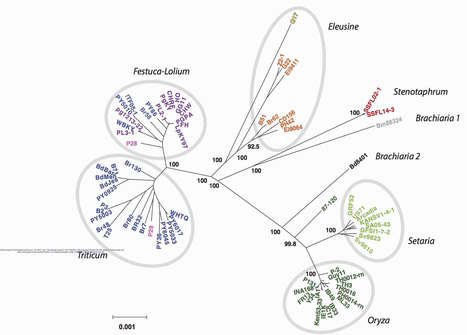
Delineating species and epidemic lineages in fungal plant pathogens is critical to our understanding of disease emergence and the structure of fungal biodiversity, and also informs international regulatory decisions. Pyricularia oryzae (syn. Magnaporthe oryzae) is a multi-host pathogen that infects multiple grasses and cereals, is responsible for the most damaging rice disease (rice blast), and of growing concern due to the recent introduction of wheat blast to Bangladesh from South America. However, the genetic structure and evolutionary history of M. oryzae, including the possible existence of cryptic phylogenetic species, remain poorly defined. Here, we use whole-genome sequence information for 76 M. oryzae isolates sampled from 12 grass and cereal genera to infer the population structure of M. oryzae, and to reassess the species status of wheat-infecting populations of the fungus. Species recognition based on genealogical concordance, using published data or extracting previously-used loci from genome assemblies, failed to confirm a prior assignment of wheat blast isolates to a new species (Pyricularia graminis tritici). Inference of population subdivisions revealed multiple divergent lineages within M. oryzae, each preferentially associated with one host genus, suggesting incipient speciation following host shift or host range expansion. Analyses of gene flow, taking into account the possibility of incomplete lineage sorting, revealed that genetic exchanges have contributed to the makeup of multiple lineages within M. oryzae. These findings provide greater understanding of the eco-evolutionary factors that underlie the diversification of M. oryzae and highlight the practicality of genomic data for epidemiological surveillance in this important multi-host pathogen.
For four decades, an influential hypothesis has posited that competition for food resources between microbes and vertebrates selects for microbes to alter these resources in ways that make them unpalatable to vertebrates. We chose an understudied cross kingdom interaction to experimentally evaluate the effect of fruit infection by fungi on both vertebrate (mammals and birds) fruit preferences and on ecologically relevant fruit traits (volatile compounds, toughness, etc). Our well-replicated field experiments revealed that, in contrast to previous studies, frugivorous mammals and birds consistently preferred infested over intact fruits. This was concordant with the higher level of attractive volatiles (esters, ethanol) in infested fruits. This investigation suggests that vertebrate frugivores, fleshy-fruited plants, and microbes form a tripartite interaction in which each part could interact positively with the other two (e.g. both orange seeds and fungal spores are likely dispersed by mammals). Such a mutualistic view of these complex interactions is opposed to the generalized idea of competition between frugivorous vertebrates and microorganisms. Thus, this research provides a new perspective on the widely accepted plant evolutionary dilemma to make fruits attractive to mutualistic frugivores while unattractive to presumed antagonistic microbes that constrain seed dispersal.
Both plants and animals rely on nucleotide-binding domain and leucine-rich repeat-containing (NLR) proteins to respond to invading pathogens and activate immune responses. An emerging concept of NLR function is that “sensor” NLR proteins are paired with “helper” NLRs to mediate immune signaling. However, our fundamental knowledge of sensor/helper NLRs in plants remains limited. In this study, we discovered a complex NLR immune network in which helper NLRs in the NRC (NLR required for cell death) family are functionally redundant but display distinct specificities toward different sensor NLRs that confer immunity to oomycetes, bacteria, viruses, nematodes, and insects. The helper NLR NRC4 is required for the function of several sensor NLRs, including Rpi-blb2, Mi-1.2, and R1, whereas NRC2 and NRC3 are required for the function of the sensor NLR Prf. Interestingly, NRC2, NRC3, and NRC4 redundantly contribute to the immunity mediated by other sensor NLRs, including Rx, Bs2, R8, and Sw5. NRC family and NRC-dependent NLRs are phylogenetically related and cluster into a well-supported superclade. Using extensive phylogenetic analysis, we discovered that the NRC superclade probably emerged over 100 Mya from an NLR pair that diversified to constitute up to one-half of the NLRs of asterids. These findings reveal a complex genetic network of NLRs and point to a link between evolutionary history and the mechanism of immune signaling. We propose that this NLR network increases the robustness of immune signaling to counteract rapidly evolving plant pathogens.
Plants respond to microbial attack with a lethal burst of reactive oxygen species. How then, do pathogens successfully invade plants? Unexpectedly, a link between primary metabolism and suppression of plant immunity allows the rice blast fungus Magnaporthe oryzae to grow in such a hostile environment.
Plant-infecting fungi and oomycetes are an ever present threat to global food security — each year they destroy sufficient food to feed half a billion people1. Understanding how these pathogens infect and colonize host plants is therefore crucial if we are to develop new strategies to fight fungal diseases and improve plant health. The rice blast fungus Magnaporthe oryzae is responsible for the most devastating disease of cultivated rice, the primary staple for more than half of the world's population2. Strains of the same fungus also cause blast disease of wheat, a new disease that is currently causing a severe outbreak in Bangladesh and India3. Because of its economic significance and genetic tractability, rice blast disease has also emerged as a major model for studying the molecular and cellular basis of fungal infection2,4. Similar to many pathogenic fungi, M. oryzae has evolved highly sophisticated ways to invade plant cells and disable their defence systems.
One of the earliest responses of plants to microbial attack is the induction of a rapid, transient burst of reactive oxygen species5 (ROS). This oxidative burst is a potent defence reaction that will kill any unsuspecting microorganism. How can pathogens still successfully invade plant cells and contend with such high concentrations of ROS? In this issue of Nature Microbiology, Marroquin-Guzman and colleagues report that a link between primary fungal metabolism and the suppression of plant immunity enables M. oryzae to protect itself from nitrooxidative stress and maintain redox balance within living rice cells6, thereby facilitating its growth within such a hostile environment.
To initiate rice infection, a fungal spore adheres tightly to the rice leaf surface, germinates, and rapidly elaborates a specialized infection structure called an appressorium that is used to breach the tough outer leaf cuticle4. Once inside a host cell, the fungus develops bulbous, branched hyphae that maintain intimate contact with the plasma membrane of the living plant cell, forming a specialized biotrophic interfacial complex7. The pathogen and host then engage in an intense molecular dialogue; plant metabolism is reprogrammed to the pathogen's benefit and the host immune response is suppressed4,7. Much recent research has focused on fungal effector proteins, a highly diverse group of secreted molecules that target immune responses in the host to facilitate pathogen infection and spread8. However, fungi have clearly evolved additional ways to keep plant defences at bay. Marroquin-Guzman and colleagues identified and characterized nitronate monooxygenase (NMO) from M. oryzae, an enzyme normally used by fungal cells to protect themselves from nitrooxidative stress6. They show, however, that NMO is also required for utilization of nitrate and nitrite as nitrogen sources and for maintaining redox balance within living rice cells during pathogen colonization. The latter role of NMO is essential for pathogenicity, because it provides a novel mechanism by which the fungus can prevent elicitation of the plant oxidative burst (Fig. 1).
Time-lapse of a healthy tomato plant (left) and a tomato plant that was inoculated with the fungus Verticillium dahliae (right).The effect on the root and stem development is visible.
Eukaryotic pathogens are responsible for devastating plant diseases that threaten food supplies globally – think potato blight caused by the oomycete Phytophora infestans, rice blast caused by the fungus Magnaporthe oryzae, and wheat stem rust caused by the fungus Puccinia graminis f. sp. tritici. These pathogens secrete effector proteins that condition the host cells for successful infection, some by acting in the apoplast and others after entering into the host cells. Many oomycete effectors have an RxLR sequence motif in their N-terminal region that seems to function in host cell targeting, although the mechanisms are a matter of debate (reviewed in Wawra et al., 2012 and Petre and Kamoun, 2014). It is notoriously difficult to study the secretion and targeting of effectors, as these processes occur only at the interface of the pathogen with the host and only during infection. In fact, there are mounting indications that some alternative approaches often used to assess pathogen effector secretion and entry in the host plant could be flawed (see, for example, Petre et al., http://dx.doi.org/10.1101/038232). In a new Breakthrough Report, Wawra & Trusch et al. (2017) provide evidence that the RxLR motif is important for effector secretion from the pathogen, rather than for direct interaction with the host cells.
Plasmodium parasites, which cause malaria, are distantly related to oomycete plant pathogens and similarly have RxLR-like N-terminal sequences that are responsible for targeting to host cells. For many Plasmodium effectors, this so-called PEXEL motif is cleaved in the ER, after which the newly exposed N-terminus is acetylated and the effector is secreted. Another motif, called the TEXEL motif, is important for effector processing in Toxoplasma gondii. The similarity of the RxLR motif to the PEXEL and TEXEL motifs prompted Wawra and coworkers to explore whether RxLR cleavage is involved in effector secretion from P. infestans.
Wawra & Trusch et al. isolated the native (untagged) form of the AVR3a effector secreted into the culture medium by P. infestans. LC-MS/MS analysis did not reveal a peptide representing any sequence more N-terminal than the RxLR motif, but did find a peptide that started immediately downstream of the motif. In addition, the MS data showed likely acetylation. To further characterize the secreted form of the effector, the authors performed reverse-phase chromatography followed by MALDI-TOF analysis. After deglycosylation, the mass of the main product indicated that the AVR3a protein from the medium lacked the first 47 amino acids (i.e., the region up to and including the RxLR motif) with an additional mass for a possible acetylation.
Wawra and coworkers followed up on the possibility of N-terminal acetylation using Edman degradation, which can cleave an N-terminal peptide bond when it is accessible. They observed no cleavage of the AVR3a peptide from the medium, indicating that the N-terminus was not accessible, consistent with it being acetylated. The likely N-acetylation of AVR3a is particularly intriguing as the acetyltransferases that carry out such N-acetylation are found only inside the cell.
Overall, these results are consistent with cleavage of the RxLR motif of AVR3a, followed by acetylation of the new N-terminal amino acid before secretion from P. infestans. It is not clear what protease might be responsible for the cleavage, because none of the 11 P. infestans aspartic proteases homologous to the protease that cleaves the PEXEL motif in Plasmodium could cleave AVR3a in assays using recombinant bacterially expressed proteins. Nevertheless, the potential similarity of this process to the processing and secretion of effectors from other species containing the PEXEL and TEXEL motifs points to its biological relevance and a possible conserved mechanism for effector secretion.
Arbuscular mycorrhiza (AM) symbioses contribute to global carbon cycles as plant hosts divert up to 20% of photosynthate to the obligate biotrophic fungi. Previous studies suggested carbohydrates as the only form of carbon transferred to the fungi. However, de novo fatty acid (FA) synthesis has not been observed in AM fungi in absence of the plant. In a forward genetic approach, we identified two Lotus japonicus mutants defective in AM-specific paralogs of lipid biosynthesis genes (KASI and GPAT6). These mutants perturb fungal development and accumulation of emblematic fungal 16:1ω5 FAs. Using isotopolog profiling we demonstrate that 13C patterns of fungal FAs recapitulate those of wild-type hosts, indicating cross-kingdom lipid transfer from plants to fungi. This transfer of labelled FAs was not observed for the AM-specific lipid biosynthesis mutants. Thus, growth and development of beneficial AM fungi is not only fueled by sugars but depends on lipid transfer from plant hosts.
The fungus Ampelomyces quisqualis is a naturally occurring hyperparasite of powdery mildews. It infects and forms pycnidia (fruiting bodies) within powdery mildew hyphae, conidiophores (specialized spore-producing hyphae), and cleistothecia (the closed fruiting bodies of powdery mildews). This parasitism reduces growth and may eventually kill the mildew colony. A. quisqualis has been the subject of numerous investigations on biological control of powdery mildews for over 50 years.
To get content containing either thought or leadership enter:
To get content containing both thought and leadership enter:
To get content containing the expression thought leadership enter:
You can enter several keywords and you can refine them whenever you want. Our suggestion engine uses more signals but entering a few keywords here will rapidly give you great content to curate.


 Your new post is loading...