


Plants and Microbes
401.5K views |
+23 today
Everything related to the science of plant-microbe interactions
Curated by
Kamoun Lab @ TSL
 Your new post is loading...
 Scoop.it! 

Abigail Rumsey's comment,
November 13, 2013 10:46 AM
Very cool. This would be good to explain how plant diseases work even to people that don't know anything about plant pathology (if you took out all of the highly scientific words!).
Scoop.it!

Interactions of plants with pathogenic microorganisms are influenced by multiple biotic and abiotic factors. The host immune system can detect pathogens and restrict their growth and development, but also non-immunity related host factors and processes can contribute to pathogenesis by attracting pathogens, stimulating their development and providing nutrition. We use the model plant species Arabidopsis thaliana and its biotrophic pathogen Hyaloperonospora arabidopsidis (Hpa), causing downy mildew, to study the role of immunity and non-immunity related host processes in plant disease susceptibility. The work described in this thesis was aimed at identifying Arabidopsis genes that alter susceptibility to the downy mildew pathogen. In Chapters 2, 3 and 4, results of studies on susceptibility of natural Arabidopsis accessions to Hpa are presented. The Arabidopsis line C24 is resistant to all downy mildew isolates tested so far, however, genetic mechanisms of this broad-spectrum resistance (BSR) were unknown. Using segregation analysis and quantitative trait loci mapping, we found that BSR is multigenic and mediated by different combinations of isolate-specific resistance loci, some of which confer only partial resistance. In Chapter 3, quantitative resistance of C24 to the Hpa isolate Waco9 was studied in more details. Backcross mapping facilitated by whole-genome sequencing revealed two major loci, which interact to confer strong quantitative resistance to Hpa. To identify Arabidopsis genes which contribute to susceptibility to downy mildew in a non-isolate specific manner, we performed association mapping in the core Arabidopsis HapMap population of susceptibility to a mixture of four Hpa isolates (Chapter 4). Natural variation at three loci, CYTOKININ RESPONSE FACTOR 1 (CRF1), STOMATAL CARPENTER 1 (SCAP1), and the unknown gene At5g53750, was associated with susceptibility to Hpa. Analysis of mutants and silencing lines indicated that SCAP1 and CRF2, the close homolog of CRF1, could play a role in the Arabidopsis-downy mildew interaction. However, functions of these genes in Arabidopsis susceptibility remain unknown. The downy mildew pathogen forms specialized infectious structures called haustoria, which penetrate plant cell wall but remain separated from host plasma membrane. To gain insight the molecular events occurring specifically in the Hpa-infected cells of Arabidopsis, we used an N-glycotagging approach coupled to label-free quantitative proteomics (described in Chapter 5). We found 18 candidate complex N-glycoproteins of Arabidopsis associated with downy mildew infection. Analysis of mutants in the corresponding genes suggested that Arabidopsis PLASMODESMATA GERMIN-LIKE PROTEIN 1 (PDGLP1) and the subtilase ATSBT3.5 are involved in regulating the host susceptibility to Hpa. Functions of the identified novel putative players in the interaction between Arabidopsis and downy mildew are largely unknown, but their further characterization might point to new processes contributing to plant susceptibility to (hemi-)biotrophic pathogens.
Dimitry Lapin, University of Utrecht https://twitter.com/laplap10
Scoop.it!

Plant and animal pathogenic bacteria can suppress host immunity by injecting type III secreted effector (T3SE) proteins into host cells. However, T3SEs can also elicit host immunity if the host has evolved a means to recognize the presence or activity of specific T3SEs. The diverse YopJ/HopZ/AvrRxv T3SE superfamily, which is found in both animal and plant pathogens, provides examples of T3SEs playing this dual role. The T3SE HopZ1a is an acetyltransferase carried by the phytopathogen Pseudomonas syringaethat elicits effector-triggered immunity (ETI) when recognized in Arabidopsis thaliana by the nucleotide-binding leucine-rich repeat (NB-LRR) protein ZAR1. However, recognition of HopZ1a does not require any known ETI-related genes. Using a forward genetics approach, we identify a unique ETI-associated gene that is essential for ZAR1-mediated immunity. The hopZ-ETI-deficient1 (zed1) mutant is specifically impaired in the recognition of HopZ1a, but not the recognition of other unrelated T3SEs or in pattern recognition receptor (PRR)-triggered immunity. ZED1 directly interacts with both HopZ1a and ZAR1 and is acetylated on threonines 125 and 177 by HopZ1a. ZED1 is a nonfunctional kinase that forms part of small genomic cluster of kinases in Arabidopsis. We hypothesize that ZED1 acts as a decoy to lure HopZ1a to the ZAR1–resistance complex, resulting in ETI activation.
Scoop.it!

Gram-negative bacterial pathogens deliver a variety of virulence proteins through the type III secretion system (T3SS) directly into the host cytoplasm. These type III secreted effectors (T3SEs) play an essential role in bacterial infection, mainly by targeting host immunity. However, the molecular basis of their functionalities remains largely enigmatic. Here, we show that the Pseudomonas syringae T3SE HopZ1a, a member of the widely distributed YopJ effector family, directly interacts with jasmonate ZIM-domain (JAZ) proteins through the conserved Jas domain in plant hosts. JAZs are transcription repressors of jasmonate (JA)-responsive genes and major components of the jasmonate receptor complex. Upon interaction, JAZs can be acetylated by HopZ1a through a putative acetyltransferase activity. Importantly,P. syringae producing the wild-type, but not a catalytic mutant of HopZ1a, promotes the degradation of HopZ1-interacting JAZs and activates JA signaling during bacterial infection. Furthermore, HopZ1a could partially rescue the virulence defect of a P. syringae mutant that lacks the production of coronatine, a JA-mimicking phytotoxin produced by a few P. syringaestrains. These results highlight a novel example by which a bacterial effector directly manipulates the core regulators of phytohormone signaling to facilitate infection. The targeting of JAZ repressors by both coronatine toxin and HopZ1 effector suggests that the JA receptor complex is potentially a major hub of host targets for bacterial pathogens.
Scoop.it!

Stripe rust, caused by Puccinia striiformis f. sp. tritici (Pst), is one of the most destructive diseases of wheat. Here we report a 110-Mb draft sequence of Pst isolate CY32, obtained using a ‘fosmid-to-fosmid’ strategy, to better understand its race evolution and pathogenesis. The Pst genome is highly heterozygous and contains 25,288 protein-coding genes. Compared with non-obligate fungal pathogens, Pst has a more diverse gene composition and more genes encoding secreted proteins. Re-sequencing analysis indicates significant genetic variation among six isolates collected from different continents. Approximately 35% of SNPs are in the coding sequence regions, and half of them are non-synonymous. High genetic diversity in Pst suggests that sexual reproduction has an important role in the origin of different regional races. Our results show the effectiveness of the ‘fosmid-to-fosmid’ strategy for sequencing dikaryotic genomes and the feasibility of genome analysis to understand race evolution in Pst and other obligate pathogens.
Scoop.it!

The bacterial endophytic microbiome promotes plant growth and health and beneficial effects are in many cases mediated and characterized by metabolic interactions. Recent advances have been made in regard to metabolite production by plant microsymbionts showing that they may produce a range of different types of metabolites. These substances play a role in defense and competition, but may also be needed for specific interaction and communication with the plant host. Furthermore, few examples of bilateral metabolite production are known and endophytes may modulate plant metabolite synthesis as well. We have just started to understand such metabolic interactions between plants and endophytes, however, further research is needed to more efficiently make use of beneficial plant-microbe interactions and to reduce pathogen infestation as well as to reveal novel bioactive substances of commercial interest. Via Jean-Michel Ané
Scoop.it!

Microbial ecology: A bacterial decoy skews plant defences Christina Tobin Kåhrström
Symbiosis: Non-legumes answer the rhizobial call Rachel David
RNA silencing suppression by plant pathogens: defence, counter-defence and counter-counter-defence Nathan Pumplin & Olivier Voinnet
On the front line: structural insights into plant–pathogen interactions Lennart Wirthmueller, Abbas Maqbool & Mark J. Banfield
Geminiviruses: masters at redirecting and reprogramming plant processes Linda Hanley-Bowdoin, Eduardo R. Bejarano, Dominique Robertson & Shahid Mansoor
Going back to the roots: the microbial ecology of the rhizosphere Laurent Philippot, Jos M. Raaijmakers, Philippe Lemanceau & Wim H. van der Putten
Filamentous plant pathogen effectors in action Martha C. Giraldo & Barbara Valent Via Nicolas Denancé
Scoop.it!

http://www.nature.com/nature/journal/v494/n7436/full/494151c.html
Species interactions such as competition and predation spur on diversification — as can symbiotic relationships, a study of plant-invading insects has found.
Many species of a family of insects known as gall midges (Cecidomyiidae) rely on fungi to help them break down plant tissues; in return, the female gall midges deposit the fungal spores along with their eggs when they move from plant to plant. In a survey of the literature, Jeffrey Joy at Simon Fraser University in Burnaby, British Columbia, Canada, found that gall midges that are associated with fungi tend to use a wider variety of host plants (pictured) compared with those with no association. Moreover, his analysis of gall-midge lineages revealed that symbiotic insect species are more than 17 times as diverse as non-symbiotic ones.
Forming a relationship with plant-digesting fungi could allow for greater evolutionary diversity in other insect species by providing them with a greater number of potential hosts, Joy suggests.
Proc. R. Soc. B http://dx.doi.org/10.1098/rspb.2012.2820
Scoop.it!

Flagellin perception in Arabidopsis is through recognition of its highly conserved N-terminal epitope (flg22) by flagellin-sensitive 2 (FLS2). Flg22 binding induces FLS2 heteromerization with BRI1-associated kinase 1 (BAK1) and their reciprocal activation followed by plant immunity. Here, we report the crystal structure of FLS2 and BAK1 ectodomains complexed with flg22 at 3.06 angstroms. A conserved and a nonconserved site from the inner surface of the FLS2 solenoid recognize the C- and N-terminal segment of flg22, respectively, without oligomerization or conformational changes in the FLS2 ectodomain. Besides directly interacting with FLS2, BAK1 acts as a coreceptor by recognizing the C terminus of the FLS2-bound flg22. Our data reveal the molecular mechanisms underlying FLS2-BAK1 complex recognition of flg22 and provide insight into the immune receptor complex activation.
Scoop.it!

Bacterial plant-pathogenic Xanthomonas strains translocate transcription activator-like (TAL) effectors into plant cells to function as specific transcription factors. Only a few plant target genes of TAL effectors have been identified, so far. Three plant SWEET genes encoding putative sugar transporters are known to be induced by TAL effectors from rice-pathogenic Xanthomonas oryzae pv. oryzae (Xoo).
We predict and validate that expression of OsSWEET14 is induced by a novel TAL effector, Tal5, from an African Xoo strain. Artificial TAL effectors (ArtTALs) were constructed to individually target 20 SWEET orthologs in rice. They were used as designer virulence factors to study which rice SWEET genes can support Xoo virulence.
The Tal5 target box differs from those of the already known TAL effectors TalC, AvrXa7 and PthXo3, which also induce expression of OsSWEET14, suggesting evolutionary convergence on key targets. ArtTALs efficiently complemented an Xoo talC mutant, demonstrating that specific induction of OsSWEET14 is the key target of TalC. ArtTALs that specifically target individual members of the rice SWEET family revealed three known and two novel SWEET genes to support bacterial virulence.
Our results demonstrate that five phylogenetically close SWEET proteins, which presumably act as sucrose transporters, can support Xoo virulence.
Scoop.it!

Fungal and oomycete pathogens cause devastating diseases in crop plants and facilitate infection by delivering effector molecules into the plant cell. The secreted effector protein AvrM from flax rust, a fungal pathogen that infects flax plants, internalizes into host cells in the absence of the pathogen, binds to phosphoinositides, and is recognized directly by the resistance protein M in flax to initiate effector-triggered immunity. We describe the crystal structure of AvrM and identify functionally important surface regions in the protein, which advances our understanding of the molecular mechanisms underlying how effectors enter host cells and how they are detected by the plant immune system.

Steve Marek's curator insight,
October 10, 2013 12:41 PM
How rust effector is breaking and entering into plant cell
Scoop.it!

RNA-binding proteins (RBPs) play an important role in plant host-microbe interactions. In this study, we show that the plant RBP known as FPA, which regulates 3′-end mRNA polyadenylation, negatively regulates basal resistance to bacterial pathogen Pseudomonas syringae in Arabidopsis. A custom microarray analysis reveals that flg22, a peptide derived from bacterial flagellins, induces expression of alternatively polyadenylated isoforms of mRNA encoding the defence-related transcriptional repressor ETHYLENE RESPONSE FACTOR 4 (ERF4), which is regulated by FPA. Flg22 induces expression of a novel isoform of ERF4 that lacks the ERF-associated amphiphilic repression (EAR) motif, while FPA inhibits this induction. The EAR-lacking isoform of ERF4 acts as a transcriptional activatorin vivo and suppresses the flg22-dependent reactive oxygen species burst. We propose that FPA controls use of proximal polyadenylation sites of ERF4, which quantitatively limit the defence response output.
|
Scoop.it!

The potato (Solanum tuberosum) disease resistance (R) protein Rx has a modular arrangement that contains coiled-coil (CC) , nucleotide binding (NB) and leucine-rich repeat (LRR) domains, and mediates resistance to Potato virus X (PVX). The Rx N-terminal CC domain undergoes an intramolecular interaction with the Rx NB-LRR region and an intermolecular interaction with the Rx co-factor, Ran GTPase-activating protein 2 (RanGAP2). Here, we report the crystal structure of the Rx CC domain in complex with the tryptophan-proline-proline (WPP) domain of RanGAP2. The structure reveals that the Rx CC domain forms a heterodimmer with RanGAP2, in striking contrast to the homodimeric structure of the CC domain of the barley disease resistance protein MLA10. Structure-based mutagenesis identified residues from both the Rx CC domain and the RanGAP2 WPP domain that are crucial for their interaction and function in vitro and in vivo. Our results reveal the molecular mechanism underlying the interaction of Rx with RanGAP2 and identify the distinct surfaces of the Rx CC domain that are involved in intramolecular and intermolecular interactions.
Scoop.it!

Large numbers of candidate effectors from fungal pathogens are being identified through whole genome sequencing and in planta expression studies. AlthoughAgrobacterium-mediated transient expression has enabled high-throughput functional analysis of effectors in dicot plants, this assay is not effective in cereal leaves. Here we show that a non-pathogenic Pseudomonas fluorescens(Pf) engineered to express the T3SS of Pseudomonas syringae and the wheat pathogen Xanthomonas translucens (Xt) deliver fusion proteins containing T3SS signals from P. syringae (AvrRpm1) and X. campestris (AvrBs2) Avr proteins, respectively, into wheat leaf cells. A calmodulin-dependent adenylate cyclase (Cya) reporter protein was delivered effectively into wheat and barley by both bacteria. Absence of any disease symptoms with Pf, makes it more suitable than Xt) for detecting hypersensitive cell death (HR) induced by effector protein with avirulence activity. We further modified the delivery system by removal of the myristoylation site from the AvrRpm1 fusion to prevent its localisation to the PM which could inhibit recognition of an Avr protein. Delivery of the flax rust AvrM protein by the modified delivery system into transgenic tobacco leaves expressing the corresponding M resistance protein induced a strong HR indicating that the system is capable of delivering a functional rust Avr protein. In a preliminary screen of effectors from the stem rust fungus Puccinia graminisf. sp. tritici, we identified one effector that induced a host genotype-specific HR in wheat. Thus the modified AvrRpm1:effector/Pf system is an effective tool for large scale screening of pathogen effectors for recognition in wheat.

245732's curator insight,
November 19, 2013 11:53 AM
Another cool article I think. I find all walks of life interesting, even microbial plant diseases. I believe that studying these and how they work is always cool.
Scoop.it!

From the Telegraph, on Scotland rugby stadium (Murrayfield)'s problems, "The Springboks and Wallabies are heading to Murrayfield later this month, but the Edinburgh ground is already playing host to another species of wildlife – and one that is proving to be just as tough an adversary as the South Africans and Australians are likely to be when they turn up there. Granted, nematode worms are on the microscopic side of tiny, so they don’t quite square up size-wise with southern hemisphere forwards, but the arrival of hordes of the minuscule subsoil parasites has given the Murrayfield management an almighty headache."
Via Mary Williams
Scoop.it!

In this work, five parallel investigations are combined aiming to elucidate mechanisms of pathogenicity and resistance induction on the beech-Phytophthora interaction. It was demonstrated that blocking elicitins caused loss of pathogen virulence. Phosphite protected beech seedlings against infection by P. plurivora. Two innovative devices were developed to quantify zoospores attraction to root-exudates and to manipulate temperature of infected roots.
Ronaldo J. D. Dalio http://twitter.com/thePhytophthora
Scoop.it!
This clip shows aphids (Myzus persicae on Chinese cabbage) responding to alarm pheromone. A colony is on a leaf, a syringe delivers some alarm pheromone (you can just about see it at the start of the clip). After perceiving the alarm pheromone, the aphids become agitated and move away. Video by Christine Woodcock.
Scoop.it!
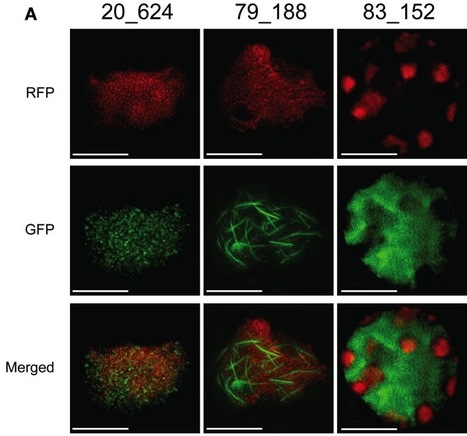
Plant-Microbe interactions are complex associations that feature recognition of Pathogen Associated Molecular Patterns by the plant immune system and dampening of subsequent responses by pathogen encoded secreted effectors. With large effector repertoires now identified in a range of sequenced microbial genomes, much attention centers on understanding their roles in immunity or disease. These studies not only allow identification of pathogen virulence factors and strategies, they also provide an important molecular toolset suited for studying immunity in plants. The Phytophthora intracellular effector repertoire encodes a large class of proteins that translocate into host cells and exclusively target the host nucleus. Recent functional studies have implicated the CRN protein family as an important class of diverse effectors that target distinct subnuclear compartments and modify host cell signaling. Here, we characterized three necrosis inducing CRNs and show that there are differences in the levels of cell death. We show that only expression of CRN20_624 has an additive effect on PAMP induced cell death but not AVR3a induced ETI. Given their distinctive phenotypes, we assessed localization of each CRN with a set of nuclear markers and found clear differences in CRN subnuclear distribution patterns. These assays also revealed that expression of CRN83_152 leads to a distinct change in nuclear chromatin organization, suggesting a distinct series of events that leads to cell death upon over-expression. Taken together, our results suggest diverse functions carried by CRN C-termini, which can be exploited to identify novel processes that take place in the host nucleus and are required for immunity or susceptibility.
Scoop.it!

Live-cell imaging assisted by fluorescent markers has been fundamental to understanding the focused secretory 'warfare' that occurs between plants and biotrophic pathogens that feed on living plant cells. Pathogens succeed through the spatiotemporal deployment of a remarkably diverse range of effector proteins to control plant defences and cellular processes. Some effectors can be secreted by appressoria even before host penetration, many enter living plant cells where they target diverse subcellular compartments and others move into neighbouring cells to prepare them before invasion. This Review summarizes the latest advances in our understanding of the cell biology of biotrophic interactions between plants and their eukaryotic filamentous pathogens based on in planta analyses of effectors.
Scoop.it!

Receptor kinases sense extracellular signals and trigger intracellular signalling and physiological responses. However, how does signal binding to the extracellular domain activate the cytoplasmic kinase domain? Activation of the plant immunoreceptor FLS2 (Flagellin sensing 2) by its bacterial ligand flagellin or the peptide-epitope flg22, coincides with rapid complex formation with a second receptor kinase termed BAK1 (BRI1 associated kinase 1). Here we show that the receptor pair of FLS2 and BAK1 is also functional when the roles of the complex partners are reversed by swapping their cytosolic domains. This reciprocal constellation prevents interference by redundant partners that can partially substitute for BAK1 and demonstrates that formation of the heteromeric complex is the molecular switch for transmembrane signalling. A similar approach with swaps between the EF-Tu receptor EFR and BAK1 also resulted in a functional receptor/co-receptor pair, suggesting that a “two-hybrid-receptor-assay” is of more general use for studying heteromeric receptor complexes. Via Mary Williams
Scoop.it!

The potato late blight pathogen Phytophthora infestans secretes an array of effector proteins thought to act in its hosts by disarming defences and promoting pathogen colonisation. However, little is known about the host targets of these effectors and how they are manipulated by the pathogen. This work describes the identification of two putative membrane-associated NAC transcription factors (TF) as the host targets of the RxLR effector PITG_03192 (Pi03192). The effector interacts with NAC Targeted by Phytophthora (NTP) 1 and NTP2 at the endoplasmic reticulum (ER) membrane, where these proteins are localised. Transcripts of NTP1 and NTP2 rapidly accumulate following treatment with culture filtrate (CF) from in vitro grown P. infestans, which acts as a mixture of Phytophthora PAMPs and elicitors, but significantly decrease during P. infestans infection, indicating that pathogen activity may prevent their up-regulation. Silencing of NTP1 or NTP2 in the model host plant Nicotiana benthamiana increases susceptibility to P. infestans, whereas silencing of Pi03192 in P. infestans reduces pathogenicity. Transient expression of Pi03192 in planta restores pathogenicity of the Pi03192-silenced line. Moreover, colonisation by the Pi03192-silenced line is significantly enhanced on N. benthamiana plants in which either NTP1 or NTP2 have been silenced. StNTP1 and StNTP2 proteins are released from the ER membrane following treatment with P. infestans CF and accumulate in the nucleus, after which they are rapidly turned over by the 26S proteasome. In contrast, treatment with the defined PAMP flg22 fails to up-regulate NTP1 and NTP2, or promote re-localisation of their protein products to the nucleus, indicating that these events follow perception of a component of CF that appears to be independent of the FLS2/flg22 pathway. Importantly, Pi03192 prevents CF-triggered re-localisation of StNTP1 and StNTP2 from the ER into the nucleus, revealing a novel effector mode-of-action to promote disease progression.
Scoop.it!

Two samples of bacteria that were mislabeled several years ago have led to the retraction of two papers, including a highly-cited one published in Science.
In 2009, a team of scientists from the University of California, Davis, led by plant geneticist Pamela Ronald, identified a bacterial molecule that is recognized by the immune system of rice plants. It was the culmination of the lab’s longstanding quest to understand how this vital crop thwarts infections, and the paper has since been cited 131 times.
But when new lab members could not repeat the earlier results, the team discovered that one of the previous experiments had been done with mislabeled bacterial strains, while another had used an unreliable test. Ronald announced the problems to others in the field at conferences, and has now retracted the paper.
“There was never any question, even from the people who did the original work, that we do anything different than retract the paper if it was wrong,” said Ronald. “We didn’t want to mislead anyone else.”

Kamoun Lab @ TSL's comment,
October 18, 2013 11:45 AM
One study on X oryzicola Ax21 did not involve Ax21 assays on Xa21 rice says Corresponding Author (comment by Golden) http://t.co/XKgWRyp0K8
Kamoun Lab @ TSL's comment,
October 18, 2013 11:46 AM
On the other hand paper on Xanthomonas oryzae pv. oryzicola Ax21 removed from Phytopathology site but still in pubmed http://t.co/ZYfSUxfYXH
Scoop.it!
Venue: Birnam Arts & Conference Centre, Station Road, Birnam, Dunkeld, Scotland
Website: http://www.hutton.ac.uk/events/cost-fa1208-meeting-2013
Program: http://www.hutton.ac.uk/sites/default/files/files/events/COSTFA1208-programme.pdf
Scoop.it!

Over the past decade, considerable advances have been made in understanding the molecular mechanisms that underpin the arms race between plant pathogens and their hosts. Alongside genomic, bioinformatic, proteomic, biochemical and cell biological analyses of plant–pathogen interactions, three-dimensional structural studies of virulence proteins deployed by pathogens to promote infection, in some cases complexed with their plant cell targets, have uncovered key insights into the functions of these molecules. Structural information on plant immune receptors, which regulate the response to pathogen attack, is also starting to emerge. Structural studies of bacterial plant pathogen–host systems have been leading the way, but studies of filamentous plant pathogens are gathering pace. In this Review, we summarize the key developments in the structural biology of plant pathogen–host interactions.
|






