Economic and social benefits through a new inclusive type of money
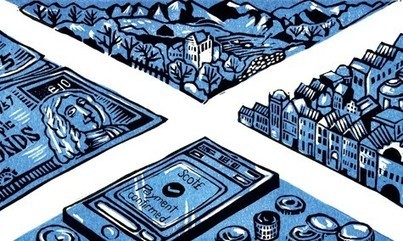
Scotland, as a clearly defined economic and physical area, with a strong national identity, and a devolved parliament, is perfectly placed to create a new digital currency and public payment system.
Such a scheme could stimulate local economies, create a level playing field for small businesses, and support social justice for all its citizens.
In our proposal, the new national digital currency, ScotPound, would be created alongside a free-at-point-of-use payment system, ScotPay...
Sepp Hasslberger's insight:
Currencies with a social objective ... to provide liquidity for local productive activity and exchange where national currencies are too busy being used for speculation.
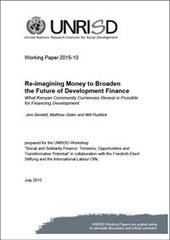
This paper argues that it is important to understand the nature of money and its impacts to be able to engage better with currency innovations for sustainable development. The paper focuses on the case of Bangla-Pesa, an alternative currency used in poor urban areas in Kenya, to demonstrate how currency innovation can work for poor people.
The Kenyan non-governmental organization, Grassroots Economics, in a context of a community of micro-entrepreneurs, uses a Collaborative Credit System (CCS) in which members issue interest free credit to each other. This is similar to how most national currencies are created, yet it is done peer-to-peer, without the involvement of banks.
The authors feel this is particularly important in a time of declining official development assistance. Creative insight into the nature of money could enable a new era in development cooperation through promotion of collaborative credit systems.
Sepp Hasslberger's insight:
A paper describing an alternative view on money for a UN initiative...
China’s rise to economic superpower is largely due to the fact that it prints money without creating debt as explained by Vienna Economics University Professor Franz Hörmann in an interview in Der Standard newspaper called “Banks create money out of air.”
The Chinese government creates money without having to pay interest, and it also give loans to entrepreneurs without charging interest. As a result of using this money system, China has experienced phenomenal economic growth, rising standards of living and huge modernization programmes. Inflation can be easily controlled, as Hörmann explains, so that money creation need not mean a devaluation through inflation.
Sepp Hasslberger's insight:
An interesting view on how money should be created - although 5 years have passed since the article was written it is remarkably timely.
The crushing Greek debt could be canceled the way it was made – by sleight of hand. But saving the Greek people and their economy is evidently not in the game plan of the Eurocrats.
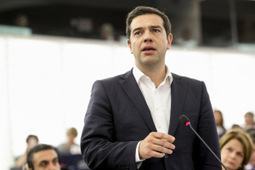
Greece’s creditors have finally brought the country to its knees, forcing President Alexis Tsipras to agree to austerity and privatization measures more severe than those overwhelmingly rejected by popular vote a week earlier. No write-down of Greece’s debt was included in the deal, although the IMF has warned that the current debt is unsustainable.
Former Greek finance minister Yanis Varoufakis calls the deal “a new Versailles Treaty” and “the politics of humiliation.” Greek defense minister Panos Kammenos calls it a “coup d’état” done by “blackmailing the Greek prime minister with collapse of the banks and a complete haircut on deposits.”
Sepp Hasslberger's insight:
Some interesting solutions to the financial crisis, which Greece could apply ... by "Web of Debt" author Ellen Brown.
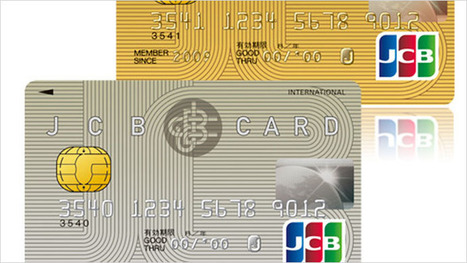
Russian Natioanl Payment Card System (NPCS) and Japan’s largest payment system Japan Credit Bureau (JCB) have agreed to cooperate and issue co-badged cards, says a statement from the Russian company. The new card will be called Mir-JCB.
“The partnership with the Japanese payment system will provide Mir-JCB bank cards access to the infrastructure of JCB worldwide, including Asia, where JCB has traditionally been strong and had wide network of card acceptance. Co-badging the Mir-JCB card will work in the infrastructure of the Mir payment system as a Mir bank card; in the JCB infrastructure, outside of Russia, as a JCB card”, said the statement published Tuesday.
JCB is one of the largest payment systems in the world. JCB cards are issued in 19 countries with 190 countries accepting the cards. JCB has more than 89 million clients, 20 million of whom live outside of Japan.
Sepp Hasslberger's insight:
Financial pressure (the sanctions imposed by Western nations) seems to be backfiring...
In some parts of Europe, negative interest rates are creating absurd situations.
In France, some corporate bonds pay interest to the issuer because they were linked to a benchmark rate that has dropped below zero. In Sweden, Denmark and Switzerland, banks are turning depositors away with threats of negative interest rates.
If this goes on much longer, we'll be living in the world of "free money" imagined by the economic dreamer and adventurer Silvio Gesell in the 19th century.
Sepp Hasslberger's insight:
Silvio Gesell was a century ahead of the times... and now we are finding he wasn't wrong after all.
Utrecht wants to see how basic income works in a real world setting.
The reason for the experiment is that people on benefits are often faced with multiple arrangements: assistance, special assistance, housing benefit, child benefit and so on. Each of these situations have their own control factors, allowing for little to no social mobility.
For the experiment, the city has partnered with the University of Utrecht to set up an experiment to place people on welfare get different regimes. For example, a group being made of compensation and consideration for an allowance, a group with a basic income without all kinds of rules, and of course a control group that has the current rules.
Sepp Hasslberger's insight:
Basic income ... more and more experimentation on the way. We need a basic income as jobs run out.
Mikhail Shlyapnikov, a farmer in the isolated Russian village of Kolionovo, thought he had found a way to make economic transactions in the cash-strapped settlement easier: He began printing kolions, exchange notes to be used by villagers instead of cash.
One kolion equaled 10 kilograms of potatoes. In a village where residents would only get hard cash several times a year — during harvest and sowing — kolions would make the exchange of goods easier. Workers could plow a piece of land for a few kolions and then exchange them for vegetables, fruit or fish.
But in his attempt to establish a self-sustaining community with its own system of cashless transactions, Shlyapnikov attracted the attention of the government.
On Wednesday, Shlyapnikov will appear in court facing prosecution for creating his own currency. The prosecutor claims that by printing his own money, Shlyapnikov aimed to subvert the economic security of the Russian state.
Sepp Hasslberger's insight:
It's the same all over it seems. People try to organise their lives and the government thinks it has to step in.
This is actually even what the richest should want, because although they would pay more in taxes for universal basic income, leaving them a slightly thinner although still very thick slice of the overall pie, the slice of the pie itself would grow, leaving even them better off as well.
Sepp Hasslberger's insight:
Basic income ... the discussion continues. Here is how it could be funded, with the US as the example.
If we want to live in a world that is free from poverty and where the poor are able to become wealth creators, then by definition, everyone needs to have at least some money.
From the thirsty plains of the Namib to the seemingly impervious jungles of the Amazon and the cramped slums of Seemapuri, a revolution is quietly brewing. A small idea that appears almost self-evident has taken root in some of the world's forgotten corners.
In contrast to the convoluted development theories of structural adjustment, economic convergence, and trickle-down - all of which ultimately aim to ensure that everyone has enough money - this idea offers but a single proposal to help address the destitution of so many millions: If we want to live in a world that is free from poverty and where the poor are able to become wealth creators, then by definition, everyone needs to have at least some money.
This once utopian vision is gaining ground, fast. A global network of academics, activists, non-governmental organisations (NGOs) and private groups are working towards the implementation of Basic Income Guarantees (BIGs) in some of the world's most impoverished regions. It is a small idea, both in terms of its simplicity and in terms of the sums of money involved. But it is having a big impact...
Sepp Hasslberger's insight:
There's a world wide movement starting, to cover everyone's basic expenses. Imagine what this will do to free us up to actually participate in the political process, and to learn and teach ... or to do that big project we always had to delay because we just couldn't find the time for it...
There's a world wide movement starting, to cover everyone's basic expenses. Imagine what this will do to free us up to actually participate in the political process, and to learn and teach ... or to do that big project we always had to delay because we just couldn't find the time for it...
The report, commissioned by the Prime Minister, considers the extent to which Iceland’s history of economic instability has been driven by the ability of banks to ‘create money’ in the process of lending.
The report describes how commercial banks in Iceland created far more money than was needed for economic growth. The Central Bank failed to bring the money supply under control using conventional means.
The prime minister of Iceland Sigmundur David Sigmundsson, said: “I am very pleased to receive this new report on monetary reform. The findings will be an important contribution to the upcoming discussion, here and elsewhere, on money creation and monetary policy.”
"It was as if, in constructing the Eurozone, we removed all shock absorbers while ensuring that the shock, when it came, would be massive.
And when that massive shock came, in the form of the Great Eurozone Crisis in 2010, following the global Crash of 2008, with my country, Greece, proving the canary in the mine, Europe decided to remain in denial of the nature of the crisis, insisting on dealing with the insolvencies caused by the bursting of bubbles (first in the banking sector and then in the realm of public debt) as if they were mere liquidity problems, lending to the deeply indebted nations through SPVs (special purpose vehicles) that resembled stacked CDOs (collateralized debt obligations).
The end result was a transfer of potential losses from the banks’ books onto Europe’s taxpayers in a manner that placed most of the burden of adjustment on the crisis countries that could least bear it."
Sepp Hasslberger's insight:
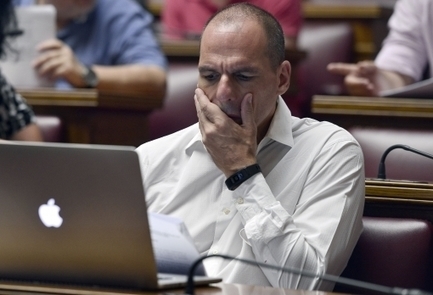
Yanis Varoufakis, the Greek finance minister, on the Euro crisis...
Do flaws in our monetary system consistently cause financial crises?
So far, critical questions concerning our monetary system and the financial crisis have not received sufficient exposure.
This new video ‘A Flaw in the Monetary System?’ clearly depicts in 7 ½ minutes the consequences of interest and compound interest in the financial world, using descriptive graphics.
It illustrates the systematic redistribution of money from the majority to the wealthy.
Sepp Hasslberger's insight:
Thomas H Greco says: "This is an excellent video---clear, concise and accurate. If you want to understand why we have recurrent financial crises, dire want amidst plenty, and why debts keep growing faster than ability to pay them, this is a great place to start."
With the Citizen’s Income, also known as the Basic or Universal Income, everybody in the country gets given enough money to meet their basic needs every week, regardless of whether they are rich or poor, employed or unemployed. It replaces the complicated bureaucracy of much of the welfare state and would be funded through progressive taxation, or possibly a Land Value Tax.
Hearing the idea for the first time can cause many to splutter, especially those for whom the idea of something for nothing sends them into a blind rage.
Thanks to the tabloid obsession with ‘scroungers’ and the idea that taxing the rich will trigger Armageddon, there are many who will splutter quite profoundly at the Citizen’s Income.
Its arrival in the mainstream would have a similar impact to the first appearance of the Sex Pistols on British television in the 1970s...
I write a lot about the benefits of fighting poverty by giving poor people cash. It's supported by good evidence, it's relatively easy, it respects the decisions of poor people as to how to spend it, and it avoids the central planning challenges of some other anti-poverty policies.
The most common response is something along the lines of "give a man a fish and you feed him for a day; teach a man to fish and you feed him for a lifetime."
I've always hated that saying, not least because a healthy diet requires eating more than just fish, but it's actually sort of helpful in this context. The main reason I prefer just giving someone a fish is that we really don't know, especially in international development, how to teach people to fish.
We haven't figured out how to make poor countries grow...
Sepp Hasslberger's insight:
It's so obvious, but evidently we have a collective block on looking at this and recognising the solution... something about everyone having to work.
How do we release the fish from the coffers of the off-shore accounts that the elites have hidden??? Instead they would prefer that we all share the money of the commoners and level the living standard lower.
3 minutes | Poem by Agnes Török on the news of a new Conservative budget. Based on experiences of living in Britain under austerity as a young, queer, unemployed, female immigrant student - and not taking it any more.
The full transcript of the former Greek Finance Minister's first interview since resigning.
"... there was point blank refusal to engage in economic arguments. Point blank. … You put forward an argument that you’ve really worked on – to make sure it’s logically coherent – and you’re just faced with blank stares. It is as if you haven’t spoken. What you say is independent of what they say. You might as well have sung the Swedish national anthem – you’d have got the same reply. And that’s startling, for somebody who’s used to academic debate. … The other side always engages. Well there was no engagement at all. It was not even annoyance, it was as if one had not spoken."
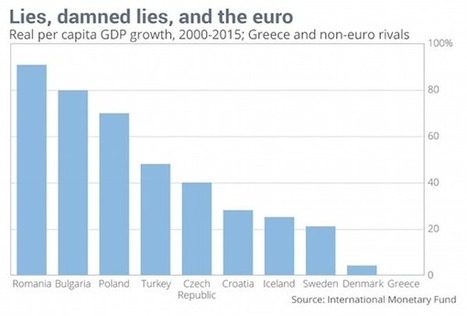
It’s simple, the euro is finished. It won’t survive the unmitigated scandal that Greece has become. Greece is not the victim of its own profligacy, it’s the victim of a structure that makes it possible to unload the losses of the big countries’ failing financial systems onto the shoulders of the smaller. There’s no way Greece could win.
The damned lies and liars and statistics that come with all this are merely the cherry on the euro cake. It’s done. Stick a fork in it.
The smaller, poorer, countries in the eurozone need to get out while they can, and as fast as they can, or they will find themselves saddled with ever more losses of the richer nations as the euro falls apart. The structure guarantees it.
Sepp Hasslberger's insight:
Provocative piece on the Euro financial powers and the smaller countries that can't survive under the Euro straitjacket ... Greece is only the first one to fall.
Why are so many economists so worried about a little country like Greece?
It's all due to a great lie: a dishonest narrative being perpetuated by the establishment that if Greece falls, defaults or leaves the EU, this could trigger a domino effect of other nations hitting a debt wall and following suit. The lie embedded in this narrative is the claim that Greece will cause a “contagion” through the act of default. Let's be clear - there is no contagion.
Multiple countries within the EU have developed their own debt problems in spite of Greece over the past couple of decades, not because of Greece. Each of these countries, from Italy, to Spain, to Portugal, etc. has its OWN sovereign debt disasters to deal with caused by its own fiscal irresponsibility.
The only legitimate reason for a so-called contagion is the fact that these countries have been forced into socialist interdependency through the EU structure.
Never forget this: The EU is in trouble not because of Greece, but because of forced supranational interdependency. The EU by all rights should not exist, nor should any centralized supranational single currency system.
Sepp Hasslberger's insight:
The problem is not Greece, the problem is in how the EU set up its finance and banking system. And yes, unless we get a serious reform going, the EU is likely to see economic collapse.
All the evidence we present in this report shows that Greece not only does not have the ability to pay this debt, but also should not pay this debt first and foremost because the debt emerging from the Troika’s arrangements is a direct infringement on the fundamental human rights of the residents of Greece. Hence, we came to the conclusion that Greece should not pay this debt because it is illegal, illegitimate, and odious.
It has also come to the understanding of the Committee that the unsustainability of the Greek public debt was evident from the outset to the international creditors, the Greek authorities, and the corporate media. Yet, the Greek authorities, together with some other governments in the EU, conspired against the restructuring of public debt in 2010 in order to protect financial institutions.
Bailout funds provided in both programmes of 2010 and 2012 have been externally managed through complicated schemes, preventing any fiscal autonomy. The use of the bailout money is strictly dictated by the creditors, and so, it is revealing that less than 10% of these funds have been destined to the government’s current expenditure.
Sepp Hasslberger's insight:
The bankers want their pound of flesh, but the Greek people, even their parliamentarians, resist...
In March 2014, the Bank of England let the cat out of the bag: money is just an IOU, and the banks are rolling in it. So wrote David Graeber in The Guardian the same month, referring to a BOE paper called “Money Creation in the Modern Economy.”
The paper stated outright that most common assumptions of how banking works are simply wrong. The result, said Graeber, was to throw the entire theoretical basis for austerity out of the window.
The revelation may have done more than that. The entire basis for maintaining our private extractive banking monopoly may have been thrown out the window.
And that could help explain the desperate rush to “fast track” not only the Trans-Pacific Partnership (TPP) and the Trans-Atlantic Trade and Investment Partnership (TTIP), but the Trade in Services Agreement (TiSA). TiSA would nip attempts to implement public banking and other monetary reforms in the bud.
Read more at http://www.maxkeiser.com/2015/06/fast-tracking-tisa-stealth-block-to-monetary-reform-2/#vlIomklfMcvdTjPU.99
Sepp Hasslberger's insight:
Good questions: "If money is just an IOU, why are we delivering the exclusive power to create it to an unelected, unaccountable, non-transparent private banking monopoly?
Why are we buying into the notion that the government is broke – that it must sell off public assets and slash public services in order to pay off its debts?"
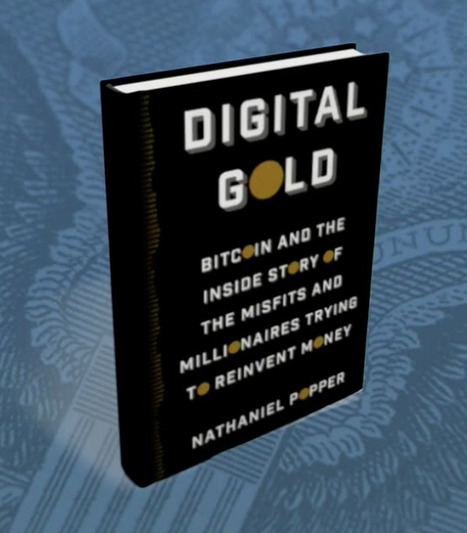
Most people think of bitcoin as digital gold in the form of an online token, but the idea of a scarce online good is only part of the story, says Nathaniel Popper, author of ‘Digital Gold.'
'The network in which bitcoin lives is also a hugely important part of bitcoin’s appeal,' says Popper. 'The network is an e-mail system for money where you can send somebody funds in Kuala Lumpur without having to go through a central service like a bank. You can simply send money anywhere.' ...
Sepp Hasslberger's insight:
A good description of Bitcoin in terms people can understand...
In my view, Bitcoin is an immensely successful prototype, but not the final form this kind of currency will eventually take.
For the first time in Europe a committee for an audit of the debt (with citizens’ participation) was set up under the auspices of a parliament.
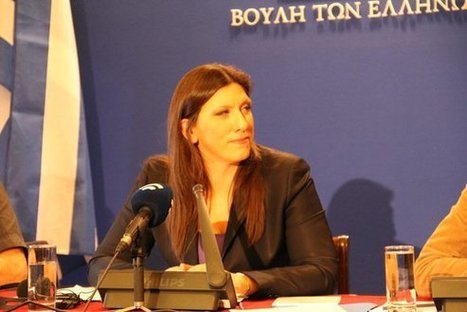
On Saturday 4 April the president of the Hellenic parliament Zoe Konstantopoulou opened the first official session creating a debt audit committee , also called committee for the truth about the debt.
The Committee will audit the Greek debt in the coming months, aimed at finding out whether part of the Greek public debt is illegitimate, illegal, odious or unsustainable...
Sepp Hasslberger's insight:
The Greeks want to know how their debt increased from 113% of GDP in 2009, when the banks came in to "help them out", to 175% of GDP in 2014. That should prove interesting...
Proving to the world that even bankers aren't above the law
Iceland has jailed four bankers for market manipulation in a landmark case which sets a precedent for the rest of the world. The verdict relates to corruption at the Kaupthing bank, which collapsed after the financial crisis in 2008 due to fraud at the highest levels.
To get content containing either thought or leadership enter:
To get content containing both thought and leadership enter:
To get content containing the expression thought leadership enter:
You can enter several keywords and you can refine them whenever you want. Our suggestion engine uses more signals but entering a few keywords here will rapidly give you great content to curate.


 Your new post is loading...





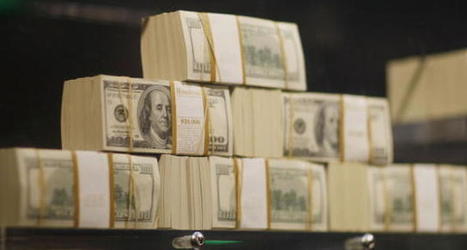


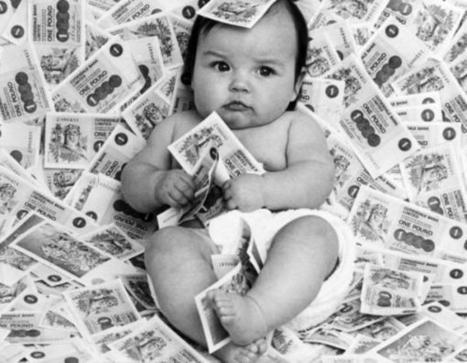










Currencies with a social objective ... to provide liquidity for local productive activity and exchange where national currencies are too busy being used for speculation.