


Max Keiser and David Hales discuss Ripple, Bitcoin and the general move towards open source currencies as the trust in our current monetary authorities fades...

Money News
10.6K views |
+0 today
Economy and currency: Money as a tool for the people, not the bankers' property
Curated by
Sepp Hasslberger
 Your new post is loading...
 Your new post is loading...
Your new post is loading...
 Scoop.it!

The American Dream and the Federal Reserve SCAM
A fun way to learn everything about the banks...
I re-scooped this from weebose.resistance ... yes, there's a video at that link...
http://weboose.wordpress.com/2011/01/06/banksters-pour-les-nuls-en/ 
Scoop.it!
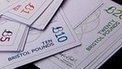
A new currency is launched in Bristol, which will be used in independent businesses and aims to be the largest local trading system in Europe.
By definition, Bristol pounds must stay in the city. Spend a tenner in a Bristol bakery, and they must use it to pay their suppliers or staff. In turn, those companies will have to use the money within the local economy.
"We'll be driving more business to independent traders, and ensuring the diversity of our city, which is one of the things people love about Bristol," Mr Mundy said.
Already more than 100 firms are signed up. A family bakery, the Tobacco Factory Theatre, the Ferry company, dozens of small cafes - even Thatcher's Cider will accept Bristol pounds.
how will it work?
Scoop.it!
Five local currency communities you should know about.
Local currencies are alternative forms of money recognized within location-specific communities, the idea behind their value being that money stay within a community in order to support local businesses. With the continuing economic decline, recent years have seen a return to local values and local currencies represent one way to invest money close to home.
Scoop.it!
Let's fix America's economy from the ground up...starting with food. Go to http://www.slowmoney.org/ Steps you can take: 1. Share the video with your friends...
Scoop.it!
Free learning from The Open University http://www.open.ac.uk/openlearn/society/international-development --- How the poor of Argentina are trading goods and ...
Scoop.it!
What if your money, instead of sitting shackled in a fee-laden bank account, could be out making the world a better place? If your meager savings could make a difference, would you share them?
Alternative economy activist Mira Luna recommends investing in tangible things to benefit yourself and the people you love.
"Money...is a representation for energy and where it flows or is stored. A sustainable and healthy community is the best investment...You will have a more joyful, healthy and abundant place to live. Rather than bottling up energy and hoarding it in bank accounts, community currencies facilitate the flow of energy and wealth."
There are many alternative ways to put your money to work improving your sphere. Here are a few options worth looking into...
Scoop.it!
by: Edward B. Miller As anyone familiar with classical political economy knows, true property rights are rooted in self-ownership.
Scoop.it!

The money and banking system that has brought the world’s economy to its knees should be allowed to collapse in favour of an alternative that serves people and planet - Dr. Mae-Wan Ho
The action plan comes in a simple 6 part agenda for the US that is directly transferable to Europe and elsewhere.
1. Reverse banking consolidation and build a national system of community-based, community-accountable institutions. Break up the megabanks and implement tax and regulatory policies that favour community-based financial institutions, in particular, cooperatives or ownership by non-profit organisations devoted to building community wealth
2. Create a State Partnership Bank in each of the 50 states to serve as a depository for state financial assets and partners with community development financial institutions on loans to local homes, industry, and commerce.
3. Restructure the US Federal Reserve to limit its responsibility to managing the money supply, subject to federal oversight and public accountability and require all newly created money to be applied to funding public infrastructure.
4. Create a Federal Recovery and Reconstruction Bank to finance critical green infrastructure projects designated by Congress. It would be funded with the money that the Federal Reserve creates when it determines a need to expand the money supply; instead of introducing it through Wall Street Banks, as currently done.
5. Rewrite international trade and investment rules to secure national ownership, self-reliance and self-determination (in a reversal of economic globalisation). Bring international rules into alignment with the foundational assumptions of trade theory that the ownership of productive assets belongs to citizens of the country in which they are located and that trade between nations is balanced. Hold corporations operating in multiple countries accountable for compliance with the laws of each country of operation.
6. Implement appropriate regulatory and fiscal measures to secure the integrity of financial markets and the money/banking system. Such measures properly favour productive investment and render financial speculation and other unproductive financial games illegal and unprofitable. (This would include the Tobin tax on financial transactions for example, that is part of the EU treaty agreed to deal with Eurozone crisis on 9 December 2011, but vetoed by UK [16].)
Scoop.it!

It may not be Bitcoin that comes out as the ultimate cryptocurrency standard, but that doesn’t matter, just like it doesn’t matter if we use BitTorrent, OneSwarm or something more resilient for distributed file sharing. It’s the file sharing on the conceptual level that is interesting, not BitTorrent. The same thing goes for distributed cryptocurrency.
The carticle concludes:
"Cryptocurrency is coming. It could be Bitcoin, it could be something else, it could be a new trading framework that incorporates many cryptocurrencies. The important thing is that in a decade’s time, governments will have lost the ability to look into their citizens’ wealth and income."
Scoop.it!
Become a 'fan' on Facebook! Click here https://www.facebook.com/pages/Government-Gone-Wild/120609657974774 Our country is on the verge of financial Armageddo...
Interesting take on how much interest is being paid by, in this case the US, government...
Scoop.it!

The outrageous Greece bailout plan, written by bankers, floods banks with free taxpayer money and doesn't help Greek people.
"Absolutely, we need to bailout Greece to save Greece, and save Europe. But the current bailout makes us the taxpayers pay back banks for 90% of their foolish investments. Greek people don't get a cent, and we give a ton of money to rich bankers. And even worse -- about 30% of our money will go to speculators who will make a massive profit from gambling on a bailout!"
Scoop.it!
Bill Still takes on all the Republican candidates in a debate on the economy.
My comment:
"We lose out twice on the creation of money as debt instead of credit, but we also lose out on the ownership of money, which the banks arrogate unto themselves as part of the "creation myth".
Banks give us money, upon the guarantee of *our* assets. They say it is theirs, thus for the whole time that the money exists, we must pay tribute to the banks. This is called "interest".
Since the banks are the source of some 95 percent of our money, we pay interest on 95% of all the money in circulation ... in perpetuity. No wonder the banks are rich and we are poor."
|
Scoop.it!
We must find a way to put the yin back into money and the economy...
"In the hands of the bankers and over a period of time, money was transformed. What started out as a soft, rather commonly available means of exchange, became – without anyone paying much notice – a more and more scarce “resource”. Money itself became a commodity. It hardened. It transformed, in almost imperceptible steps, from yin to yang. Today, money is highly controlled, it is scarce, and it is firmly in the hands of the bankers. Its control passed from the hands of the ruler, into the hands of the banks. We didn’t really notice, because the central banks, which control the issue of money today, are a clever fig leaf. Politicians were fooled into a belief that the central banks are actually emanations of the governments."
Scoop.it!
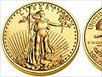
Worried that the Federal Reserve and the U.S. dollar are on the brink of collapse, more than a dozen states have proposed using their own alternative currencies of silver and gold.
Unlike individual communities, which are allowed to create their own currency -- as long as it is easily distinguishable from U.S. dollars -- the Constitution bans states from printing their own paper money or issuing their own currency. But it allows the states to make "gold and silver Coin a Tender in Payment of Debts."
Scoop.it!

The features of the Occcu are explicitly inspired by those of the Terra, a project of a Trade Reference Currency (TRC) and the GraDiDo system and allow to promote concrete monetary fairness:
Scoop.it!

Wherever I go and ask people what is missing from their lives, the most common answer (if they are not impoverished or seriously ill) is "community." What happened to community, and why don't we have...
To forge community then, we must do more than simply get people together. While that is a start, soon we get tired of just talking, and we want to do something, to create something. It is a very tepid community indeed, when the only need being met is the need to air opinions and feel that we are right, that we get it, and isn't it too bad that other people don't ... hey, I know! Let's collect each others' email addresses and start a listserv!
Community is woven from gifts. Unlike today's market system, whose built-in scarcity compels competition in which more for me is less for you, in a gift economy the opposite holds. Because people in gift culture pass on their surplus rather than accumulating it, your good fortune is my good fortune: more for you is more for me. Wealth circulates, gravitating toward the greatest need. In a gift community, people know that their gifts will eventually come back to them, albeit often in a new form. Such a community might be called a "circle of the gift."
Scoop.it!
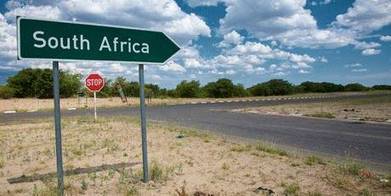
(Dec 2011) Our economic system requires constant growth to survive, an impossible goal considering resource scarcity.
Political leaders around the world are trying desperately to prevent a financial crisis that seems inevitable. Our economic system requires constant growth to survive, an impossible goal considering resource scarcity. In response to this quandary, a group of money activists in South Africa have been experimenting with an internet-based exchange system that ignores physical money and interest. While it focuses on the local, it still permits international trade. Currently over 340 separate groups in 34 countries are using it, and as the world economy slows down, more and more are coming on board.
Scoop.it!
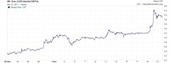
As a store of value or an asset Bitcoin's shady. Here's why: since the supply of bitcoin is limited and knowledge/use of it is growing (potentially virally) it's the perfect breeding ground for a speculative bubble.
Bitcoin appears to have intrinsic value as a P2P transaction system.
A P2P (person to person) transaction system can be used to for many different things, least of all as a currency for retail transactions. One of the more interesting of these uses is it growing use as a wire transfer system like Western Union for the $10 Trillion and rapidly growing System D, the world's shadow/black economy. Why is a P2P transaction system perfect for this?
Scoop.it!
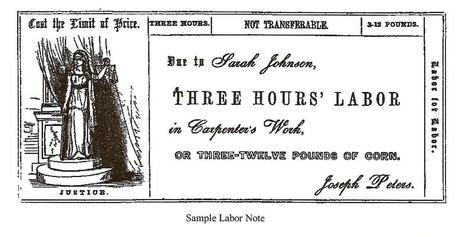
Notes would typically be denominated in a unit of account: in this example, three hours’ labour “in Carpenter’s Work” from Joseph Peters. This particular note is non-transferable, however most notes would be. Usually, the community of people who are willing to trust the issuer to make good on their promise defines the boundaries of circulation. A typical medieval market would involve trading with notes issued by bakers, butchers and farmers. Promises issued from one source could circulate through many pairs of hands before returning to their issuer for redemption, providing a supply of money even for people who didn’t intend to redeem them. As confidence begets confidence, self-issued credit becomes money.
Scoop.it!
Bernard Lietaer argues that the monoculture of money is what creates economic instability, leading to liquidity crises. He calls for a greater diversity of a...
Scoop.it!
Using gold as money, instead of government issued non-convertible currency, will bring prosperity and stability and prevent us from being defrauded by bakers and bureaucrats!
The concept rests on the basic premise that since gold is relatively fixed in supply, the government can’t increase the money supply, thus money is sound. What’s more, investors and savers, financial planners and contract holders have certainty, knowing the money in their plans and bargains will keep a stable value.
Of course, there is one small problem with this: It’s hopelessly wrong.
Scoop.it!
Paolo Cirio’s new project was born with the goal of exploring the possibility of generating wealth for ordinary people through a more equitable system of wealth distribution.
Currently, banks are the only (legitimate) entities playing the role of custodians of credit. But as demonstrated in the last recession, credit does not always have a corresponding value in reality (in terms of a material value).
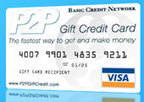
A new, independent non-profit financial organization called “Basic Credit Network” was created to help facilitate the right to circulate money, creating “free” credit and distributing it through a program called Global Basic Credit. The P2P Gift Credit Cards are the tolls for the implementation of this program.
Scoop.it!
More and more people are wondering about how the Occupy movement will shift from protest and demonstration to strategies and actions that will result in personal and community empowerment, actions toward restructuring our institutions and shifting the balance of power from Washington and Wall Street to Main Streets, neighborhoods, and civic organizations.
One rather obvious strategy is to change the way we spend and invest our money. Click here to see a list of financing alternatives that I started preparing as a resource list for my presentation to the Financial Planning Association in May, 2011. I have since added a few items to it, Via Elle D'Coda
Scoop.it!

The so-called Robin Hood tax — a tiny levy on trades in the financial markets that would take money from the banks and give it to the world’s poor — has attracted an array of influential champions.
|




