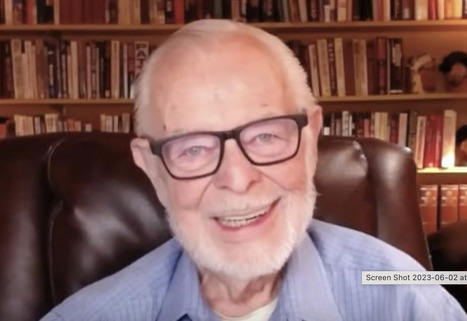
Here is Darren Moore Jr interviewing Catherine Austin Fitts. Darren is into cryptocurrencies and the talk is about how crypto can and likely will be used to restrict our freedom. Catherine is asking the question: "how can this trend be turned around?" She suggests we need to go local, and we need to make sure that cash continues to be used.
Catherine warns that once digital identity is imposed and everything is on crypto, there won't be a way to escape the control that electronic currencies afford governments, where basically "they" have all the power and people can only watch what they do with it...
Darren Moore, who is into crypto currencies, interviews Catherine Austin Fitts. Catherine warns that once digital identity is imposed and everything is on crypto, the world's natural resources are likely to be bought up. She adds that there won't be a way to escape the control that electronic currencies afford governments, where basically "they" have all the power and people can only watch what they do with it...
There’s a moment that feels almost disorienting, like seeing yourself for the first time in a mirror you didn’t know existed. You’ve lived your whole life inside something, navigating it instinctively, never questioning its shape because it was everywhere. As a child, you know every neighbor’s house you’ve visited, every path you walk, every shortcut. Then one day you climb a tree or a hill, and suddenly you see it: all those houses are part of a single landscape. Roads connect them. Boundaries repeat. Some places flood, others sit higher. What felt like separate stories snap into one terrain.
That’s what real economic awareness feels like. Not learning new facts, but recognizing a pattern you were already inside. You realize money, markets, aid, debt, labor, platforms, welfare, extraction … these aren’t separate systems. They’re features of the same landscape, shaped by shared rails you’ve never been shown from above. You haven’t changed. The world hasn’t changed. But your position in consciousness has. And once you see the shape, you can’t unsee it.
Trump just threatened military action against Nigeria for accepting non-dollar payments for oil exports—and it's backfiring spectacularly. This isn't diplomacy, it's the desperate death rattle of dollar hegemony as Africa's largest nation says "no" to American financial dominance.
Professor John Mearsheimer reveals how Nigeria's currency decision triggered Trump's most unhinged threat yet. With 220 million people and Africa's biggest economy, Nigeria has alternatives America can't compete with—Chinese infrastructure, Russian energy cooperation, and BRICS partnerships that respect sovereignty without lectures.
The mask has slipped completely off. We're now explicitly threatening war to enforce economic compliance, proving American "leadership" depends on coercion, not cooperation. Nigeria's response? Coordinating with African Union, strengthening BRICS ties, and showing the world that resistance to dollar tyranny is possible.
This is the death of the Monroe Doctrine for the digital age. European allies won't endorse threatening war over currency choices. Latin America quietly supports African sovereignty. Asia watches as dedollarization accelerates globally—Brazil, Saudi Arabia, India all reducing dollar dependence.
Key revelations: How Nigerian oil revenues fund African development without Western conditions, why post-colonial nations reject selective moral standards, and what happens when empire threatens violence over economics. The unipolar moment dies where it began—with small nations refusing submission.
Nigeria's message reverberates globally: sovereignty is non-negotiable, alternatives exist, and the future belongs to nations brave enough to claim independence. Trump's threats were meant to preserve dominance—instead, they've accelerated American decline.
The dollar's African death spiral has begun, and the whole world is watching.
🔔 Subscribe for more analysis on dedollarization, African resistance, and the end of American financial empire.
Disclaimer: This dramatized story is inspired by real events and public figures. All dialogue and incidents are fictionalized for commentary and educational purposes. This is not intended to defame but to explore themes of intelligence oversight, institutional accountability, and government transparency.
When investing, choose to support the real economy, not a gamble with money for its own sake.
Investment
I would like to bring something in finance back to basics. Money is a tool, not something to strive for in and of itself. If you see yourself as an investor, someone with money that can be put to good use and to grow, this one is for you.
Investment isn’t gambling with money. It isn’t putting money into stocks or currencies to “make more money”. Investment is putting your money to work to help make actual useful products that help people live better, more healthy, more fulfilled lives. In other words, invest in the real economy, in production and distribution of real, useful products, in services that make people more healthy, that help them lead a happy and fulfilled life.
What passes as investment today is actually gambling with money. The stock exchange should be re-named as the stock gambling facility. Speculating is not investing. It is gambling with money, hoping that the stocks of some company or the relative value of a currency will go up, “appreciate” or go down, “crash” so you can cash in on the differences. That kind of activity does nothing for society. It is only re-distributing pieces of the pie from one “investor” to another, from one pool of money to another. That is not economy, it’s gambling just like in a casino.
If you have money available to invest, be sure to recognise the difference between gambling and actual investment in the real economy.
Choose to support human efforts and civilisation by putting your resources – both the money and your mind – in an activity where they can support life. Useful products, delivered to the people who need and appreciate them. This could be food, tools, conveniences, but it could also be art. If you choose to invest in art, find an artist who’s still alive to support. Give them a hand to be able to produce more of whatever art they are producing. If you want to do something for the environment, do something that respects the earth and what it so freely provides for us but above all, think for yourself. Learn the ins and outs of human society, respect the other life forms that share the planet with us, and abstain from things that do harm.
Let your money support life, not some dead idea, not a gamble.
I guess that’s enough of a rant and I am sure you got the idea. Perhaps let it sink in for a while before you decide what to invest in. Don’t fall for what today poses as “investment advice”. Do what brings you pleasure and what supports our beautiful home, planet earth and the creatures that share it with us.
On July 18, 2025, President Trump signed the so-called GENIUS (Guiding and Establishing National Innovation for U.S. Stablecoins) Act into law.1 This act creates a legal framework for so-called stablecoins.
The GENIUS Act primarily codifies and regulates stablecoins. It does not create them, but it defines them and thereby provides both legal certainty and legitimacy. This is likely to substantially increase the popularity and adoption of stablecoins. As a result, there is likely going to be an increased demand for U.S. Treasuries, which will help the federal government finance the national debt but may also reduce the amount of capital available for economic growth (e.g., through stocks and loans).
Ultimately even more impactful, however, will be the effect of mass adoption of stablecoins on individual liberty and human freedom, especially if stablecoins increasingly replace cash.
Programmable money is the key requirement for total control of human behavior. An all-digital payment system will allow for global tyranny and leave no way for a human being to try to escape into freedom. Whether this payment system is run by a central bank, a government, or private entities makes little difference. By design, stablecoins, like CBDCs, not only allow for the complete and permanent documentation of every single transaction, however insignificant, but make it possible to allow or deny individual transactions remotely and automatically, down to the smallest detail. Hence, for example, you might be able to use a stablecoin to purchase a snack but not a train ticket, if some decision-maker or algorithm so decides.
This is exactly how the Chinese system works. Although the GENIUS Act does not implement a social credit score system, stablecoins (which the Act codifies) allow for the easy activation of one...
Here is Darren Moore Jr interviewing Catherine Austin Fitts. Darren is into cryptocurrencies and the talk is about how crypto can and likely will be used to restrict our freedom. Catherine is asking the question: "how can this trend be turned around?" She suggests we need to go local, and we need to make sure that cash continues to be used.
Catherine warns that once digital identity is imposed and everything is on crypto, there won't be a way to escape the control that electronic currencies afford governments, where basically "they" have all the power and people can only watch what they do with it...
Darren Moore, who is into crypto currencies, interviews Catherine Austin Fitts. Catherine warns that once digital identity is imposed and everything is on crypto, the world's natural resources are likely to be bought up. She adds that there won't be a way to escape the control that electronic currencies afford governments, where basically "they" have all the power and people can only watch what they do with it...
"Bitcoin is the solution to broken money, global inflation, and government overreach.
With $450 trillion in global wealth just waiting for preservation, Bitcoin’s role as an incorruptible, and moral form of money becomes clear. Hurley explores why Trump’s potential Day-One Bitcoin executive order could reshape the world economy and how Bitcoin preserves your time, energy, and labor for generations."
Sepp Hasslberger's insight:
This is so interesting. Any kind of official "adoption" of Bitcoin could change everything for international finance. It could even lead, in time, to an end run around the current extractive finance and banking system...
This is an excellent video interview by Catherine Austin Fitts, publisher of the Solari Report (you find them at solari.com).
The discussion is about what we can expect when CBDCs are widely introduced. But of course there's much more than that, as Catherine describes the wider context of this move towards the "Great Reset".
Catherine Austin Fitts says we do need a re-set but it has to be something that helps the ordinary people ...
Catherine Austin Fitts talks about what we can expect when CBDCs are widely introduced. But of course there's much more in this video, as Catherine describes the wider context of this move towards the "Great Reset".
After a one-year pilot program the Denver Basic Income Project is seeing initial signs of success and has already landed an additional $2 million in funds from the city.
Sepp Hasslberger's insight:
A basic income is a financial safety net. With something like that active, poverty and homelessness could be tremendously reduced.
No less than eighty UBI trials are underway globally, and many more have already started and ended. UBI is an original construct of Technocracy from the 1930s, where everyone in society would receive the same allocation of energy script that would expire at the end of the allocation period.
Today, UBI solves the problem of "unemployables" picking up too many pitchforks and torches to attack the Technocrat earth destroyers.
That UBI is being tested globally proves beyond a shadow of doubt that it is an initiative of the global oligarchy that promotes Technocracy, that is, the Great Reset. That UBI was first clearly defined in the 1930s by the formal Technocracy movement proves its origins.
Universal Basic Income as a potential control mechanism, many trials underway and others already completed. Will it move us towards the global dystopia of technocratic rule?
Heads up! A massive campaign involving over 1,000 fraudulent websites has scammed thousands of people worldwide with false promises of huge rewards.
"This massive campaign has likely resulted in thousands of people being scammed worldwide," Trend Micro researchers said in a report published last week, linking it to a Russian-speaking threat actor named "Impulse Team."
"The scam works via an advanced fee fraud that involves tricking victims into believing that they've won a certain amount of cryptocurrency. However, to get their rewards, the victims would need to pay a small amount to open an account on their website."
There is no doubt that Central Bank Digital Currencies are in our future, but much of the initial alarmist reporting missed many important details and events associated with global development of CBDCs. This research paper lays out the current status and roadmap in clear, unambiguous terms. Recommended reading!
Catherine Austin Fitts is an American investment banker and former public official who served as managing director of Dillon, Read & Co. and, during the Presidency of George H.W. Bush, as United States Assistant Secretary of Housing and Urban Development for Housing.
Here she explains the financial background behind the "great re-set", how this could affect us all.
Paul Van Slambrouck explores the diversity of gift economy projects around the globe.
A smile is integral to the design of a gift economy. This is an emergent, irreverent, rule-breaking search for a new way to relate to the world, and each other. It is a playful subversion of the so-called “laws” of economics, no more evident than in the term itself, which puts “gift” first, thereby casting a new hue to the so-called gray science.
There are many permutations of the gift economy. But what binds them, I think, is a core motivation to be generous and the striving to put generosity first.
OPEC Secretary General Haitham Al-Ghais said, “There is no single solution or path to achieve a sustainable energy future.” But is there?
Sepp Hasslberger's insight:
This one isn't about money. It is about the economy though, because energy is what lets economies fluorish... and there are big changes in the wings for how we produce energy. As we get off the old hydrocarbons and bypass the limited capabilities of what they call "renewable" energy today, things may change quite dramatically.
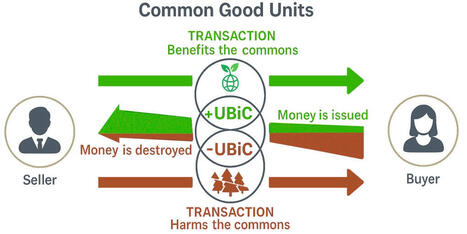
A guest editorial by Michel Foata-Prestavoine. The Problem is the Transactional Symmetry, and the proposed solution is the Common Good Unit, a commons-based monetary system.
Sepp Hasslberger's insight:
An important idea to bring money into alignment with our current civilization ...
China’s cash is vanishing overnight. Banks are limiting withdrawals, ATMs are shutting down, and millions of citizens are frozen in panic. Right now, across the country, people are lining up, only to be told: “You can’t access your money.” What’s happening isn’t just a glitch, it feels like the entire financial system is locking down in real time.One thing is certain: China’s economy has never felt more fragile.
What triggered this sudden banking freeze across China? Why are ordinary people being blocked from their own life savings? And could this be the beginning of a full-blown economic collapse?
To understand how this crisis exploded so quickly, we have to start with the moment it all began just 48 hours ago.
This is a major development, bound to deeply affect not only the Chinese but businesses and people the world over.
A very worrying detail: It seems like the USA is getting ready to go very much in the same direction with Trump's "big beautiful" digital money bill being pushed through the legislature.
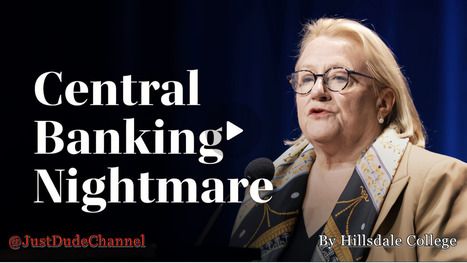
Catherine Austin Fitts talks at Hillsdale College about the Danger of Central Bank Digital Currencies. The discussion of CBDCs starts at around 18 minutes into the talk.
After explaining how CBDCs will bring in a level of control over our lives that is nothing short of tyrannical, she says
“… remember, we don’t have a financial problem. What I would tell you is that if we were free to re-engineer the federal flows and come back into compliance with the law, particularly with the blessings of new technology, the wealth on this planet could be so many multiples of what it is now that words cannot express to you how expensive tyranny is.
It is a miracle that we have done this well despite the drain of the tyranny. It’s quite remarkable and if you look at all the simulations I’ve done of the federal finances over the last 20 and 30 years, you know, the price of tyranny is beyond what any of us can imagine. So if we can turn this around, the opportunity is there. There is no financial problem at the root of this. It’s a political problem, it’s a governance problem.”
A digital control grid is being set up as we move towards CBDCs and Crypto. Do we want a tyranny of the Central Bankers? How bad would it be? Listen to Catherine Fitts here...
Money is a relative system of power, not an absolute system of stuff
"When we see money as a thing with value, we often mistakenly imagine it in absolute terms, as if value resided within it like a substance. In this view, a person with a billion dollars is like Pooh Bear with a giant pot of honey.
It would follow that if everyone was a billionaire, we’d all be like Pooh Bears with giant pots of honey."
A thought provoking article from Brett Scott. See the whole thing here ...
Ultimately, crypto players’ elite composition, affiliations and publicly-expressed intentions to set digital financial industry standards showcase their intense interest in obtaining power over the financial system. As such, their participation in CBDC development only suggests an effort to ensure their infrastructure is cemented in the tech facilitating the worlds’ financial transactions. This must be understood as a power grab in its own right.
What’s more, CBDC pilots, where private players’ technologies are being utilized for critical CBDC infrastructure, demonstrates that CBDCs are fundamentally public-private concoctions, where sketchy, elite-gilded groups facilitate the tech underpinning the digital currency partially or fully imposed on the wider population in the event of global CBDC rollouts: a full fledged, perhaps permanent union of the state and the corporate world.
Crypto players are hustling to be 'the ones', their platform underpinning a global payment system and ultimately to hand central banks the golden key for their CBDCs, paradoxically helping to enable close financial surveillance and control over everyone's lives.
Author of 'The Creature From Jekyll Island' G. Edward Griffin warns that rapidly expanding government debt and the coming collapse of the financial system will lead to unimaginable losses that threaten to wipe out millions, if the people don't stand up and do something about it.
00:00 Introduction 01:05 What Inspired 'The Creature From Jekyll Island'? 10:17 Global Concentration of Wealth 16:05 Bank Bailouts Are Built Into the System 20:57 Danger of Central Bank Digital Currency 22:58 How to Protect Our Wealth and Freedom 33:59 Importance of Gold and Silver 39:28 Could We Return to a Gold Standard?
#federalreserve #thefed #bankingcrisis
Sepp Hasslberger's insight:
G. Edward Griffin, author of "The Creature from Jekyll island" emphasises that it is important to get involved at the grassroots political level, if we are to have a chance of preventing the worst.
Ovidiu Craciun recently messaged me with a proposal to overcome Bitcoin's limitations on broad acceptance and application of Bitcoin as a currency, rather than a speculative asset, saying:
"I saw you were one of the first to interact with Satoshi and recognize back then in the early days the amazing potential bitcoin has. that is why I would like to bring to your attention this proposal which enhances bitcoin by responding to its non-elasticity problem:
I would love to hear your thoughts/critique on it."
My reply was:
"Hi Ovidiu, thank you for your message. I have read the proposal of building a commercial superstructure on top of the Bitcoin ecosystem. It does sound interesting if you're into saving Bitcoin from oblivion, although i'm somewhat skeptical about adoption of this. Seems a bit complicated as does seem the whole idea of Bitcoin. In my view, the flaw sits in the original.
Satoshi was, at the time of publication of his white paper, clearly unable to recognize the importance of a currency to follow the size of the market it serves, or to work out a solution to that problem, and so Bitcoin turned into an investment/speculation vehicle, rather than a currency. That basic limitation is still part of Bitcoin, and I am not so sure that a real currency can be built on top of that speculative system.
There are other drawbacks, such as the excessive energy use necessary to keep it going at all, and the time limitations on block approvals which won't go away.
I see Bitcoin as a proof of concept technology that has gone further than originally intended. To build on top of that may alleviate some of the symptoms but I'm somewhat skeptical of its ability to "heal" the flaws in the original.
Kind regards
Sepp"
Sepp Hasslberger's insight:
I have followed Bitcoin (from a distance) since its inception in 2009. After a brief interaction with Satoshi at the time, I decided Bitcoin did not have the essential ingredients of a currency of universal application. I am still of that opinion.
G. Edward Griffin, probably best known as the Author of "The Creature from Jekyll Island", has come out against Central Bank Digital Currency and the cashless society that is a consequence of CBDCs,
Cash gives people autonomy. It allows them to be independent of others. Griffin warned against a cashless society and said, “We will not survive the system by figuring out how to hide from it,” and added, “Our lives and our freedom are at stake here."
Two videos - you will find them at the following link:
G. Edward Griffin, probably best known as the Author of "The Creature from Jekyll Island", has come out against Central Bank Digital Currency and the cashless society that is a consequence of CBDCs
The BRICS countries (Brazil, Russia, India, China, and South Africa) are in the process of developing their own currency that will be presented at the organization’s upcoming summit in South Africa.
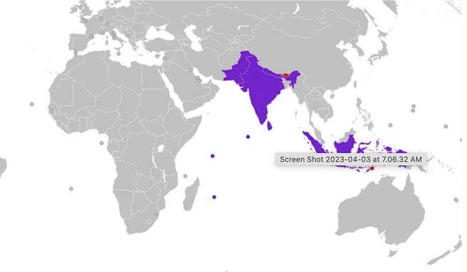
Following the US Federal Reserve’s sharpest tightening in monetary policy in decades, India has offered its currency as an alternative for trade to nations that are experiencing a shortage of dollars. The eighteen countries that have agreed to use India’s rupee as an alternate reserve currency include Botswana, Fiji, Germany, Guyana, Israel, Kenya, Malaysia, Mauritius, Myanmar, New Zealand, Oman, Russia, Seychelles, Singapore, Sri Lanka, Tanzania, Uganda, and the United Kingdom. Meanwhile, the BRICS countries (Brazil, Russia, India, China, and South Africa) are in the process of developing their own currency that will be presented at the organization’s upcoming summit in South Africa.
New Zealand tech CEO, Kim Dotcom did the math on the United States’ sovereign debt and he tweeted a thread about it, saying it may the most important thread that he may ever make.
Kim explains that US spending and debt have spiraled out of control and the Government can only raise the money it needs by printing more of it, which means that hyperinflation is guaranteed.
He says this has been going on for decades and there’s no way to fix it and that the US got away with this for so long, because US dollar is the world’s reserve currency.
When the US Government prints trillions, it is thereby robbing Americans and the entire world in what he calls the biggest theft in history.
He says the total US debt is at $90 trillion, which together with $169 trillion in US unfunded liabilities totals $259 trillion, which is $778,000 per US citizen or $2,067,000 per US Taxpayer.
Now, the value of all US assets combined: every piece of land, real estate, all savings, all companies, everything that all citizens, businesses, entities and the state own is worth $193 trillion.
Is it possible that US politicians and finance administrators "didn't know" they were horribly overspending, or is it a matter of having to destroy the present before being able to call in the new deal, the great re-set.
To get content containing either thought or leadership enter:
To get content containing both thought and leadership enter:
To get content containing the expression thought leadership enter:
You can enter several keywords and you can refine them whenever you want. Our suggestion engine uses more signals but entering a few keywords here will rapidly give you great content to curate.


 Your new post is loading...


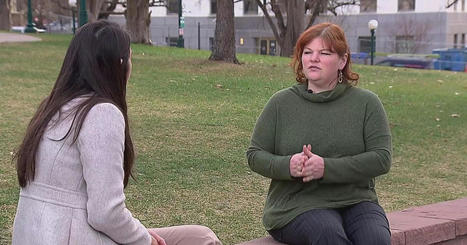














Darren Moore, who is into crypto currencies, interviews Catherine Austin Fitts. Catherine warns that once digital identity is imposed and everything is on crypto, the world's natural resources are likely to be bought up. She adds that there won't be a way to escape the control that electronic currencies afford governments, where basically "they" have all the power and people can only watch what they do with it...