

Firms raising prices at fastest rate in three years, driven by soaring energy and wage bills but also extra materials costs


|
Scooped by
Graham Watson
onto Microeconomics: IB Economics May 6, 9:47 AM
|
 Scoop.it!
Firms raising prices at fastest rate in three years, driven by soaring energy and wage bills but also extra materials costs
 Your new post is loading...
 Your new post is loading...
Your new post is loading...
Scoop.it!

From
www

Through surging profits or soaring share prices, the war has been a boon for some firms.
Graham Watson's insight:
A nice little primer on which sectors of industry are benefitting from the Iran war - you should be able to guess all of them. However, it's interesting in all sorts of ways: does it justify a windfall tax? And what about executive pay? some of these CEOs are going to be well remunerated on the basis of factors entirely beyond their control.
Scoop.it!
Firms raising prices at fastest rate in three years, driven by soaring energy and wage bills but also extra materials costs
Graham Watson's insight:
And the companies themselves are using fuel surcharges to meet rising fuel costs, given that they are profit maximizers. I'm slightly surprised by this; it strikes me that the airlines seem to be able to pass on a good proportion of the risk in the sector onto their customers. Surely that's an essential part of running a business?
I'm not aware of them ever discounting seats if fuel prices have fallen; it will be interesting to see what happens to their profits this year.
Scoop.it!

From
www
Humanoid robots are being added to the automation of waste sorting.
Graham Watson's insight:
A snapshot of the effects of automation in a sector where you would have thought labour costs would already be low. However, it seems that humanoid robots and AI are combining to make waste sorting increasingly automated.
Scoop.it!
From
www
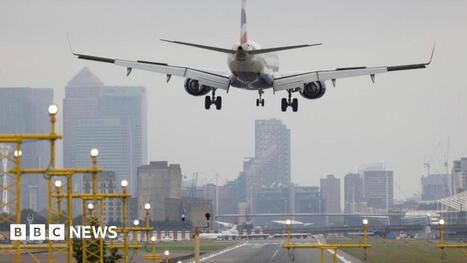
Ministers hope move would help avoid last-minute flight cancellations for passengers this summer over Middle East fuel supplies.
Graham Watson's insight:
The government has brought in a temporary suspension of aviation regulations governing flight cancellations. It is to allow airlines to cancel flights in advance to consolidate passenger traffic on business routes so as to prioritise leisure travel over the summer. It hints at the very real possibility of aviation fuel shortages in the months ahead, something that's only going to increase the cost of flights.
Scoop.it!

Loaded with extras and produced at a cut price, the crossover SUV has overtaken rival cars from US, Japanese and Korean firms
Graham Watson's insight:
This article highlights why the Jaecoo 7 has become the best-selling car in its class in the UK, unseating established rivals and selling at a very competitive price as a result of being able to generate significant economies of scale.
It gives a flavour of the changing nature of the car market, and the reasons why Chinese manufacturers are developing a competitive advantage.
Scoop.it!

Editorial: The world must accelerate the shift to renewables, regardless of the economic effects of Abu Dhabi’s decision
Graham Watson's insight:
This Guardian editorial argues that the decision of the UAE to leave OPEC might well see lower oil prices, but irrespective of this, it should be taken not as an incentive to consume more fossil fuels, but to consume less because of the social costs, and negative externalities, associated with their consumption.
They argue that the adverse impact, in accelerating climate change far outweighs the benefits of any growth generated by fossil fuel consumption.
Scoop.it!

From
www
The price of crude oil has swung sharply as uncertainty over the war in the Middle East continues.
Graham Watson's insight:
Same old, same old.
Scoop.it!

From
www
President Trump said on Saturday that the US had cancelled plans to send a team to Pakistan for negotiations.
Graham Watson's insight:
D&S and oil prices, once again. Geopolitics and the oil market.
Scoop.it!
From
www
Organic food often costs more than conventional food because it is more expensive to produce. Farmers have higher labor costs, costly infrastructure, and strict certification requirements under the widely trusted USDA organic label. While large farms can absorb these costs, smaller farmers often cannot. Some continue to use organic methods but drop certification due to its expense, losing the ability to market their products as "organic." Although consumers trust the USDA organic label and organic foods may reduce pesticide exposure, the nutritional benefits are less clear, raising questions about whether the higher price is worth it.
Graham Watson's insight:
Another Business Insider clip, looking at the impact of the USDA organic label on the price of groceries. It's interesting because not only does it outline the extra expense, but it digs down to understand what certification means for producers and consumers. It's also a nice history of the organic movement, referencing Rachel Carson's landmark "The Silent Spring".
Clearly organic foods are luxury goods - but the clip looks at whether or not buying organic is worth it.
Scoop.it!

From
www
The approval came as Donald Trump is to attend a dinner with billionaire Paramount backers the Ellisons.
Graham Watson's insight:
The Warner Bros - Paramount takeover has been approved by the shareholders of the former and looks likely to go ahead. The deal still needs regulatory approval in both the US and the EU, but given that Paramount is backed by billionaire, Larry Ellison, whose son leads the business and he's hosting a dinner with Trump tomorrow. And we know that the President is man swayed more by flattery than reason.
Scoop.it!

Trade body warns that changes are likely to drive up costs and push pupils to find somewhere to buy junk food
Graham Watson's insight:
The providers of school meals are warning that proposals to compel them to produce healthier meals are going to drive up costs and in doing so, incentivize pupils to go off-site to get unhealthy junk food options instead.
Remember though, turkeys don't vote for Christmas, and I'm less than convinced about the protestation that high-quality vegetarian options may cost more than some meat-based options. And yes, I'm aware that caterers already have relatively low profit margins; you'd expect them too. It's hardly a high risk sector and you'd hope that there was sufficient competition, in part because price is going to be an important determinant of competitiveness.
Scoop.it!

Chemists in England are also charging customers 20-30% more for common hay fever treatment compared with February
Graham Watson's insight:
Another unforeseen consequence of the Iran was has been an increase in the cost of paracetamol, according to pharmacists, with chemists having increased their prices by 20-30%. Higher fuel costs have increased transport costs, both by road and air, so this is manifest in a higher price for the consumer.
Scoop.it!

From
www
The airline is the latest to cut flights as the US-Israel war with Iran sends jet fuel prices soaring.
Graham Watson's insight:
One of the effects of rising oil and aviation fuel prices is that airlines are looking to ration scarce fuel by reducing the number of flights. In this instance, Lufthansa have announced plans to cut 20,000 summer flights in response to the Iran conflict, with short haul flights being the first to go. |
Scoop.it!

From
www
The unmanned aircraft can drop off 100 parcels a day within a 12km radius of Amazon's hub.
Graham Watson's insight:
Innovation in Darlington of all places. Amazon are trialling the use of drones in the North East. Is this the future?
Scoop.it!

From
www
Airlines have removed nearly two million seats from flights over the month, data from Cirium shows.
Graham Watson's insight:
Evidence of the global aviation market reacting to the possibility of shortages of aviation fuel with airlines removing nearly 2 million seats from sale in May. However large that may sound, it only represents around 1% of the total capacity in the market and hasn't as yet seen many UK-based flights cut. The majority seats have been shed at Istanbul and Munich and reflect the fact that these airports are increasingly known as 'hubs' for other routes.
Scoop.it!

Unintended consequence of US president’s actions will be boon for China, the leading renewables manufacturer
Graham Watson's insight:
The law of unintended consequences in full effect here - has the war in Iran inadvertently shifted energy demand away from fossil fuels in favour of renewables. It would be ironic.
Scoop.it!

From
www
Local politicians say the move is in line with the Dutch capital's environmental targets.
Graham Watson's insight:
I know what Christopher Snowden will make of this - the public health lobby gone mad, an infringement of people's rights and freedom to choose and just another example of 'bad economics' because the impact of the measures will be negligible, and is could well be an instance of government failure.
However, given the resource intensity of producing meat, does it make sense to frame meat consumption as a climate change issue as much as a dietary issue? And what about the fact that the ban doesn't apply to the digital world? So, is it largely an exercise in virtue signalling?
Scoop.it!

From
www
Profit margins were "broadly unchanged" between February and March, the UK's competition watchdog says.
Graham Watson's insight:
The Competition and Markets Authority (CMA) have reported that there's no evidence of petrol retailers having engaged in price gouging since the start of the Iran war, although they are going to look more closely at a couple of instances where profit margins increased above the norm.
However, motoring groups aren't overly impressed by this: they argue that whilst there might not be price gouging, 'rocket and feather' pricing is still occurring and this acts against consumer interests.
Scoop.it!

Government request follows contingency planning to stop planes being grounded if Iran war supply shocks continue
Graham Watson's insight:
The government are clearly worries about the implications of an extended closure of the Strait of Hormuz for aviation fuel and have asked the UK's remaining four refineries to maximise the supply of jet fuel.
Aviation fuel shipments are currently half their normal level at the moment, and even though the UK has strategic reserves, there's a sense that the government needs to get ahead of the possibility of an aviation fuel shortage.
Scoop.it!

Downing Street says focus will remain on cutting bills, backing renters and lowering energy prices
Graham Watson's insight:
The government have denied that they are going to be imposing a rent ceiling on private rents as part of the strategy to tackle the cost of living crisis. However, just because they're not going to do it, it doesn't mean that you shouldn't be reviewing how you'd go about modelling a rent ceiling on a D&S diagram, or evaluating its impact.
Scoop.it!
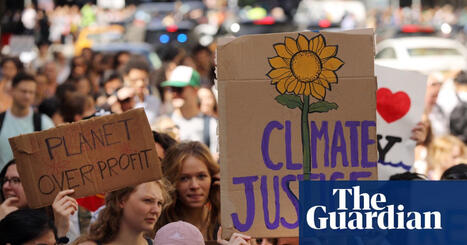
Scientists and economists will help countries develop plans to reduce dependence on oil, gas and coal
Graham Watson's insight:
A number of countries are meeting in Colombia to discuss the green transition, and there's been agreement on the need to form a panel of experts to guide the green transition.
A worthwhile development or more hot air? Can you see what I've done there...
Scoop.it!
From
www
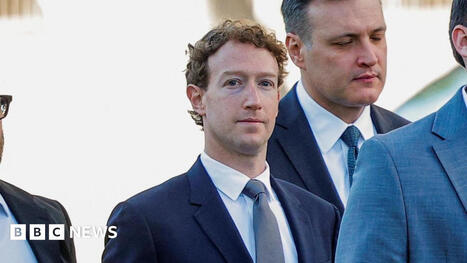
The cuts, which employees had been expecting for weeks, will be Meta's largest layoff since 2023.
Graham Watson's insight:
An amusing example, but entirely predictable case of where AI is replacing labour, in the tech sector, with Meta planning to lay off 8.000 workers and increase spending on AI. In this instance, labour and capital are substitutes.
Scoop.it!

Industry groups dismayed at hints policy will not be in king’s speech, as touts make huge sums from BBC Radio 1 event
Graham Watson's insight:
A classic stretch-and-challenge question is to ask whether ticket touts increase or decrease economic efficiency. However, what's certainly true is that they drive up the price of tickets and limit their availability to the wealthiest members of society.
The UK government has pledged to tackle the issue. However, the prevailing mood music would suggest that the government doesn't see this as a priority.
Scoop.it!

Simon Roberts says support for bills on back of Iran war should include ‘food growing, manufacturing and retailing’
Graham Watson's insight:
The boss of Sainsbury's has urged government intervention to lower the energy costs of food producers to keep food prices lower than they would otherwise be. Superficially, this seems to be in the public interest but be careful: firms often us inflation to make price increases that simply don't disappear when costs fall back to a more normal level. Think about what has happened to petrol prices post-Ukraine, for example.
Even the article notes that Sainsbury's annual profits were up 1.1% on the previous year - so despite a warning of lower profits this year, the company itself is doing OK.
Scoop.it!
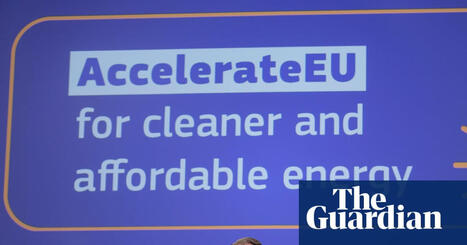
Brussels will relax state aid rules to allow member countries to offer ‘targeted and temporary’ support
Graham Watson's insight:
It looks like the EU is going to permit member states to temporarily cut electricity taxes to reduce the extent to which energy bills increase across the Eurozone. It's also allowing for targeted interventions to help mitigate the cost of living crisis.
Simultaneously, it's also looking to co-ordinate action across the Eurozone and ensure that there are sufficient strategic reserves of gas, in particular, whilst looking to encourage the green transition to boost energy security. |







And the companies themselves are using fuel surcharges to meet rising fuel costs, given that they are profit maximizers. I'm slightly surprised by this; it strikes me that the airlines seem to be able to pass on a good proportion of the risk in the sector onto their customers. Surely that's an essential part of running a business?
I'm not aware of them ever discounting seats if fuel prices have fallen; it will be interesting to see what happens to their profits this year.