

Electronic health records play a bigger role in physician burnout than many might think.
Get Started for FREE
Sign up with Facebook Sign up with X
I don't have a Facebook or a X account


 Your new post is loading... Your new post is loading...
 Scoop.it!
Electronic health records play a bigger role in physician burnout than many might think.

No comment yet.
Sign up to comment
Scoop.it!

New technologies are set to change patient care in huge, potentially life-changing ways.
Scoop.it!

From
elpais

“ A punto de cumplir 90 años, acaba de abandonar el MIT (Instituto Tecnológico de Massachusetts). Allí revolucionó la lingüística moderna y se convirtió en la conciencia crítica de Estados Unidos. Babelia visita al gran intelectual en su nuevo destino, Arizona”
Via Francesc Riba

Francesc Riba's curator insight,
March 11, 2018 12:44 PM
“La gente se percibe menos representada y lleva una vida precaria. El resultado es una mezcla de enfado y miedo”
¿Ha triunfado entonces el neoliberalismo? R. El neoliberalismo existe, pero solo para los pobres. El mercado libre es para ellos, no para nosotros. Esa es la historia del capitalismo. Las grandes corporaciones han emprendido la lucha de clases, son auténticos marxistas, pero con los valores invertidos. Los principios del libre mercado son estupendos para aplicárselos a los pobres, pero a los muy ricos se los protege. Las grandes industrias energéticas reciben subvenciones de cientos de millones de dólares, la economía high-tech se beneficia de las investigaciones públicas de décadas anteriores, las entidades financieras logran ayudas masivas tras hundirse… Todos ellos viven con un seguro: se les considera demasiado grandes para caer y se los rescata si tienen problemas. Al final, los impuestos sirven para subvencionar a estas entidades y con ellas a los ricos y poderosos. Pero además se le dice a la población que el Estado es el problema y se reduce su campo de acción. ¿Y qué ocurre? Su espacio es ocupado por el poder privado y la tiranía de las grandes entidades resulta cada vez mayor. P. ¿Teme al nacionalismo? R. Depende, si significa estar interesado en tu cultura local, es bueno. Pero si es un arma contra otros, sabemos a donde puede conducir, lo hemos visto y experimentado. P. ¿Tiene aún esperanzas? R. Claro que hay esperanza. Aún hay movimientos populares, gente dispuesta a luchar… Las oportunidades están ahí, la cuestión es si somos capaces de tomarlas. Chomsky termina con una sonrisa. Deja vibrando en el aire su voz grave y se despide con extrema cortesía. Luego sale del despacho y baja las escaleras de la facultad. Afuera, le esperan Tucson y la luz seca del desierto de Sonora. EL PODER DE LAS PALABRAS, LAS PALABRAS DEL PODER
Scoop.it!

With dissatisfaction among junior doctors reaching unprecedented levels, Bilal Sahib suggests five ways of improving morale that can be implemented locally. .- Mejor planificación de calendarios de guardia .- Introducción a las rotaciones .- Áreas de descanso adecuadas .- Mejora sistema llamada .- Sesión de casos clínicos post-guardia
Scoop.it!

Perspective from The New England Journal of Medicine — Toward Competency-Based Medical Education
Scoop.it!

In the July 2016 issue of this journal, Dr. Mary Tinetti proposed that geriatric medicine abandon attempts to increase the numbers of board‐certified geriatricians and change focus to the developmen
Scoop.it!

“ Redesigning journal club in residency Morhaf Al Achkar Department of Family Medicine, Indiana University, Indianapolis, IN, USA Abstract: The gap between production and implementation of knowledge is the main reason for the suboptimal quality of health care. To eliminate this gap and improve the quality of patient care, journal club (JC) in graduate medical education provides an opportunity for learning the skills of evidence-based medicine. JC, however, continues to face many challenges mainly due to poorly defined goals, inadequate preparation, and lack of interest. This article presents an innovative model to prepare and present JC based on three pillars: dialogical learning through group discussion, mentored residents as peer teachers, and including JC as part of a structured curriculum to learn evidence-based medicine. This engaging model has the potential to transform JC from a moribund session that is daunting for residents into a lively discussion to redefine clinical practice using the most current evidence. Keywords: journal club, residents, peer teaching, evidence-based medicine, dialogical learning”
Scoop.it!

“ (2017). Using a Guided Journal Club as a Teaching Strategy to Enhance Learning Skills for Evidence-Based Practice. Occupational Therapy In Health Care. Ahead of Print. doi: 10.1080/07380577.2016.1278296”
Scoop.it!
“ Twitter is a public microblogging platform that overcomes physical limitations and allows unrestricted participation beyond academic silos, enabling interactive discussions. Twitter‐based journa”
Scoop.it!

From
www
“ Journal clubs have typically been held within the walls of academic institutions and in medicine have served the dual purpose of fostering critical appraisal of literature and disseminating new findings. In the last decade and especially the last few years, online and virtual journal clubs have been started and are flourishing, especially those harnessing the advantages of social media tools and customs. This article reviews the history and recent innovations of journal clubs. In addition, the authors describe their experience developing and implementing NephJC, an online nephrology journal club conducted on Twitter.”
Scoop.it!

Medical Education Online (MEO) is a peer-reviewed international Open Access journal for disseminating information on the education and training of physicians and other health care professionals.
Submissions to Medical Education Online (MEO) are rapidly growing and they are recruiting reviewers to add to the peer review database. If you are interested in joining the reviewer pool, please register using this link. http://med-ed-online.net/index.php/meo/user/register
Via CatRoberts
Scoop.it!
Perspective from The New England Journal of Medicine — Medical Education in the Era of Alternative Facts
|
Scoop.it!

Systematic reviews and meta-analyses are common in the medical literature, routinely appearing in specialist and general medical journals, and forming the cornerstone of Cochrane. The majority of systematic reviews focus on summarising the benefit of one or more therapeutic interventions for a particular condition. However, they are also important for summarising other evidence, such as the accuracy of screening and diagnostic tests,1 the causal association of risk factors for disease onset, and the prognostic ability of bespoke factors and biomarkers. Prognostic evidence arises from prognosis studies, which aim to examine and predict future outcomes (such as death, disease progression, side effects or medical complications like pre-eclampsia) in people with a particular health condition or start point (such as those developing a certain disease, undergoing surgery, or women who are pregnant).
Scoop.it!
Christopher is sharing his idea behind one of his innovative education project: Escape Room feat. Medical Examination! What were the myths people usually con...
Scoop.it!
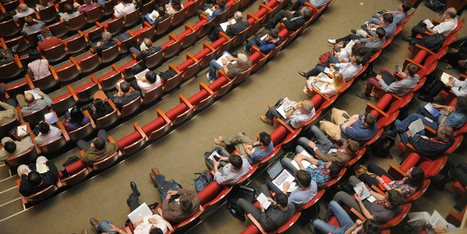
Going to an academic conference is an exciting opportunity to connect with like-minded individuals and exchange stimulating ideas. However, to make the most of a conference requires a lot of hard w…
Scoop.it!

Joseph Kim's curator insight,
August 18, 2014 8:59 AM
what do we need to consider for clinical research?
Scoop.it!
The American board of internal medicine (ABIM) establishes standards for physicians. The American geriatrics society (AGS) is a not‐for‐profit membership organization of nearly 6,000 healt
Scoop.it!

Changes in health care that are already in progress, including value‐ and population‐based care, use of new technologies for care, big data and machine learning, and the patient as consumer an
Scoop.it!

“ Article Citation: Michelle Lin and Jonathan Sherbino (2015) Creating a Virtual Journal Club: A Community of Practice Using Multiple Social Media Strategies. Journal of Graduate Medical Education: September 2015, Vol. 7, No. 3, pp. 481-482. doi: http://dx.doi.org/10.4300/JGME-D-15-00070.1”
Scoop.it!
“ A gap between best practice and actual clinical care exists and this can be overcome by evidence-based practice (EBP), which is essential to improve the clinical decision making. A strategy to reduce deficits in care provision is to train the postgraduat”
Scoop.it!
“ Journal clubs provide a way to communicate advances in recent literature. In outpatient surgical subspecialties, such as dermatologic surgery, physicians may face challenges in finding or attending meetings pertinent to their practice. To assess the utility of a live web-based journal club i”
Scoop.it!

From
pmj
“ Reading and appreciating medical literature is an important aspect of continuing medical education.1 Residents need to learn this important aspect during their training period.2–4 Evidence-based medicine involves updating, critiquing and using the evidence for patient care. It is the explicit use of the best available evidence combined with intuition of the clinician and the intentions of patients in a given clinical situation.5 To practice evidence-based medicine, it is important to analyse the literature critically. Journal club is an effective way to teach critical appraisal skills to residents.6 Use of journal clubs to impart training in evidence-based medicine has been demonstrated by various studies and also been shown to improve clinical care.7 ,8 Enormous data are published every day in medical literature. Critical appraisal of literature helps save lot of money and resources by delineating the facts.9 Reading and comprehending a journal article is an art in itself.10 The other aspect lies in how effectively the article can be presented to an audience.11 ,12 In the broad area of communication skills, this could be one of the important components that every postgraduate medical student must learn.13–15 There are large number of studies which discuss how to critically appraise an article, how to read and understand them.2 …”
Scoop.it!
“ Online Twitter journal clubs are a recent and popular innovation with the potential to increase research awareness and inform practice. The medical radiation sciences' MedRadJournalClub (MJRC) is a Twitter-based event that attracts a global group of participants at the monthly chats. An analysis of a recent MedRadJournalClub discussion evaluated the perceived benefits and limitations of medical radiation practitioners participating in an online journal club.”
Scoop.it!
“ This quick guide shows how you can save your PowerPoint slides as high resolution images.”
Via Baiba Svenca, Deirdre Bonnycastle

Bob Connelly's curator insight,
April 9, 2015 11:33 AM
While Keynote makes it easy to export slides as high resolution images, it is a great tip for Powerpoint users. |






