


Exploring the Digital Nation: Embracing the Mobile Internet,” which is based on a U.S. Census Bureau survey in October 2012 of more than 53,000 households,

 Your new post is loading...
 Scoop.it! Exploring the Digital Nation: Embracing the Mobile Internet,” which is based on a U.S. Census Bureau survey in October 2012 of more than 53,000 households, 
No comment yet.
Sign up to comment
Scoop.it!
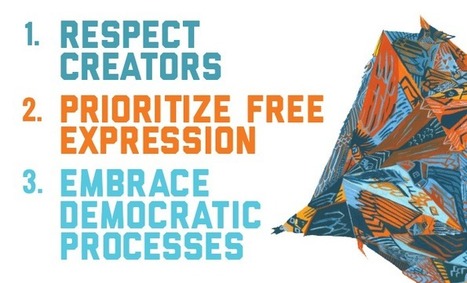
results of international survey what do users and creators want in terms of online access, open access.
Scoop.it!

The Bad News About the News:Robert Kaiser, the former managing editor of the Washington Post, presents an examination of the changing state of the news industry and the impending threat to American democracy.
heather dawson's insight:
Brookings Institute essay
Scoop.it!

View presentations from our inaugural Digital Families conference.
heather dawson's insight:
From Parentzone. Dr. Andrew Przybylski of the Oxford Internet Institute, our keynote speaker, presented groundbreaking research on children’s online resilience. We also heard first findings from Professor Sonia Livingstone and Dr. Veronica Donoso of EU Kids Online about technology and children under eight, John Carr OBE’s presentation on inequality of access to the digital world, Dave Coplin on outsmarting the digital deluge and the launch of Parent Info, a collaboration between The Parent Zone and CEOP. All of these presentations can be accessed here.
Scoop.it!
heather dawson's insight:
American Academy of Pediatrics Policy Statement
Scoop.it!

Global analysis of countries introduces the Internet barriers Index.
Scoop.it!
This report examines children's media literacy. It provides detailed evidence on media use, attitudes and understanding among children and young people aged 5-15, as well as detailed information about the media access and use of young children aged 3-4. The report also includes findings relating to parents' views about their children's media use, and the ways that parents seek - or decide not - to monitor or limit use of different types of media.
Scoop.it!

A new research report from the Young and Well Cooperative Research Centre Australia. The report presents the findings from research conducted in July and August 2014 that involved 148 children from 16 countries and speaking eight different languages, who participated in workshops to share their views on their rights in the digital age
Scoop.it!

This paper from the Proceedings of the 2nd International Conference on ICTs for Sustainability (ICT4S 2014) reviews findings from detailed consultation with 50 global experts in Agriculture and Information Communication Technologies (ICTs).
Scoop.it!
heather dawson's insight:
This volume is divided into four main sections: 1) Gender-based violence, media and information; 2) Women’s access to media; 3) Gender and media policy and strategies; 4) Gender, education, and media and information literacy.
Scoop.it!

This study aims to develop new survey measures of people’s digital skills, digital engagement and outcomes of Internet use.
heather dawson's insight:
Scoop.it!

first-ever global study on women characters in the international film industry, launched today by the Geena Davis Institute on Gender in Media, UN Women and the Rockefeller Foundation - See more at: shows clear gender imbalance. Covers film characters and the way in which they are portrayed and film industry personnel and makers 31% of speaking roles female. 21% film makers are female,
Scoop.it!

Latest Gallup poll Americans' trust in mass media slid this year,
|
Scoop.it!

reading books on mobile phones user researcfh from Publishing Technology.com USA)
Scoop.it!
An independent research paper commissioned and supported by Virgin Media and The Parent Zone 2014
heather dawson's insight:
Dr Andrew Przybylski, Oxford Internet Institute
Scoop.it!

RAND report The authors challenge the traditional emphasis on screen time as a measure of "developmentally appropriate" technology use by young children and discuss how to move toward a more comprehensive definition.
Scoop.it!

Report from Pew Research center. focuses on USA.
Scoop.it!

American Press Institute research into African Americans and Hispanic Americans
Scoop.it!
heather dawson's insight:
Microsoft research paper discussing methodology.
Scoop.it!

The updated guidelines for Industry on Child Online Protection provide advice on how the ICT industry can help promote safety for children using the Internet or any technologies or devices that can connect to it. An online platform of COP case studies from the broader ICT Industry further complements the content of these Guidelines
Scoop.it!
heather dawson's insight:
Index on Censorship and Osservatorio Balcani e Caucaso are joining forces to map the state of media freedom in Europe. using ushahidi.com
Scoop.it!
20 August 2014 Abstract: This paper reviews the current literature regarding Muslim young people’s practices with the aim of examining whether these practices open up new spaces of civic engagement and political participation. The paper focuses on the experiences of young Muslims living in western societies
Scoop.it!

Nieman Reports why we need more female newsroom leaders. covers usa journalism.
|






