This report explores the gap between academic research and industry needs in the news media. It shares insights from a roundtable where media stakeholders identified key challenges and research priorities to strengthen collaboration and better align research with newsroom realities and long-term sustainability.
Newsrooms have rapidly adapted to digital distribution, platform disruption and the rise of artificial intelligence (AI). Yet academic research, while deeply engaged with these issues, can lag behind industry developments and may not always align with newsroom priorities. These gaps highlight the need for a stronger, sustained feedback loop between media and academia. Ongoing collaboration enables researchers to anticipate emerging challenges and deliver insights that directly support the sector’s evolving needs.
Ofcom has published new guidance setting out actions for technology companies to take to improve women and girls’ online safety. The guidance focuses on harms disproportionately affecting women and girls and highlights how these can inhibit their safety and participation in online spaces and normalise misogynistic attitudes and behaviours. The nine areas of action centre around taking responsibility, designing services to prevent harm and providing support to users. Actions include: ensure governance and accountability processes address online gender-based harms; conduct abusability evaluations and product testing; and enable users who experience online gender-based harms to make reports.
This summary statement focus on the centrality of human rights to achieve the WSIS vision of building a people-centric, inclusive, and development-oriented Information Society.
The alternative and community newspapers of the 1970s in the UK are amazing historical resources -- documenting the groups, places and events of the time usually in unique visual and political ways -- yet they are often overlooked or rarely known about today. Many have limited or almost no internet presence making them hard to access or learn about.
In this online workshop we heard about the ongoing efforts to preserve and make accessible these materials as important historical, archival, activist and teaching resources. We got a virtual walk through of various forms of DIY archiving and methods of archival activation as well as a deeper dive into some key examples from Leeds, Liverpool and Birmingham. While geared towards those interested in urban and activist histories, archival preservation and engaged methods of archival or historical research, it should be widely accessible.
You can learn more about these projects at the links below:
This event was organized as part of a current research project, the "People's Papers," exploring the Working Class Movement Library's collection of Greater Manchester grassroots newspapers from the 1970s (made possible through a University of Manchester's PGR Placement scheme). You can learn more about and get updates on the project via the People's Papers Instagram account.
This event was also co-sponsored by the Manchester Urban Institute's Cities, Politics, and Economies research group, the University of Manchester's Library & Archive Studies Programme and the Institute for Cultural Practices as well as the Birmingham Centre for Media and Cultural Research and MeCCSA Local and Community Media Section.
Recorded live at the University of Leeds during the What’s Class Got to Do with It? Symposium in October 2025, this special episode explores how social class shapes the television industry - from who makes TV drama to what stories reach our screens and how audiences interpret them. Hosted by Professor Beth Johnson, Principal Investigator on the three-year AHRC-funded project What’s On? Rethinking Class in the TV Industry, the discussion brings together leading academics, industry professionals, and creatives including Professor Dave O’Brien, Dr Laura Minor, Professor Helen Wood, screenwriter Philip Ralph, and BBC Head of Audience Engagement and Impact Nicola Crowder. Together, they unpack urgent questions about inequality, representation, and precarity in the TV sector - asking how class intersects with gender, race, and disability, and how the industry can better reflect the diversity of everyday life. Delegates and guests from across academia and broadcasting share their insights into how class still matters in the making and meaning of television. This episode captures the energy and conversation of a day-long symposium that forms part of the What’s On? project’s mission to rethink how class operates in TV production, programming, and reception - and why now, more than ever, those conversations are needed. Host Beth Johnson, Principal Investigator of What’s On? Rethinking class in the TV Industry; Professor of Television and Media Studies, University of Leeds Guests Nicola Crowther, Head of Audience Engagement and Impact, BBC Philip Ralph, Award-winning writer for television, film, stage and radio Laura Minor, Co-investigator, What’s On? University of Salford Dave O’Brien, Co-investigator, What’s On? University of Manchester Helen Wood, Professor of Media and Cultural Studies, Aston University
Credits Podcast recording and editing: Carl Hartley, University of Leeds The What’s On? team are: Beth Johnson (PI), Laura Minor (Co-I), Dave O’Brien (Co-I) and Anna Viola Sborgi (PDRF) The What’s On? Rethinking Class in the TV Industry Research Project is funded by the AHRC. Vox contributorsVicky Ball (De Monfort University), Mark Taylor (University of Sheffield), Fran Riando (Brunel University, London).
Drawing on his recent book, The Space of the World, Nick Couldry will reflect on the global space of social communications and interaction that has been constructed over the past three decades through a commercialized internet and digital platforms whose business model depends on extracting data from users and shaping their behaviour to optimize advertising value.
What if those conditions – valid perhaps in narrowly commercial terms – have guaranteed a space of human interaction that is larger, more polarized, more intense, and more toxic than is compatible with human solidarity? A space associated increasingly with toxic forms of political power and risks to the most vulnerable members of society? If so, we need to build a different space of the world, less likely to be toxic and more likely to generate the solidarity and effective cooperation that humanity absolutely needs if it is to have any chance of addressing its huge, shared challenges.
New research from More in Common with parents of under 18s finds very high levels of concern spanning Britain’s political divides and clear demands from action for both parents and tech companies to do more to keep children safe online
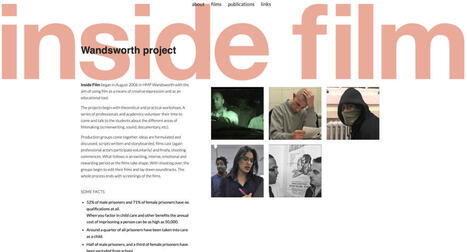
Deirdre O'Neill The Inside Film Project runs both inside prisons and on ‘the out’ working with serving and former prisoners. It recognises the majority of serving prisoners in the UK come from the most marginalized and impoverished sections of the working class. The project begins from an acknowledgment that working-class knowledge has long been denigrated or ignored…
Groundbreaking research launched today by Childnet, a partner in the UK Safer Internet Centre, together with Nominet, looks at young people’s use of VPNs.
Prior to the implementation of Australia’s Social Media Minimum Age Act 2024, this report documents young people’s views. Social media is described as integral to their wellbeing, education and relationships, despite recognised risks. Respondents express doubts about the under‑16 restriction, cite inadequate consultation and identify limited assistance for the transition beyond December 10, 2025.
This repository was developed as part of the Green Computing pillar of the Green Digital Action initiative. GDA is a partner-led multi-stakeholder initiative, headed by the International Telecommunication Union (ITU),
It aims to provide links to case studies, guidelines, initiatives and resources promoting sustainability in computing. This incudes AI, hardware and software development
A searchable database of every student newspaper in the USA. Each entry has basic details including links to the home website. Maintained by University of Vermont Center for Community News, the College Media Association, the Society of Professional Journalists, the Associated Collegiate Press, the Student Press Law Center and the Foundation for Individual Rights and Expression.
Nearly three years after ChatGPT’s launch, the generative artificial intelligence landscape remains in rapid flux. Using high-frequency website traffic data from Semrush, this paper tracks global adoption patterns for the 60 most-visited consumer-facing generative artificial intelligence tools through mid-2025. Five key findings emerge. First, fierce competition drives continuous innovation: two of 2025’s top five tools—DeepSeek and Grok—are new entrants, and development is rapidly diversifying into multi-modal capabilities, reasoning, and specialized applications. Second, ChatGPT maintains dominance despite competition, accounting for 77 percent of traffic to the top 60 tools in April 2025. Third, usage of generative artificial intelligence has exploded since mid-2024: ChatGPT traffic grew 113 percent year-over-year, driven by 42 percent user growth and 50 percent increased visits per user, with session duration doubling. Fourth, high-income countries are pulling decisively ahead, creating stark global divides. While 24 percent of internet users in high-income countries use ChatGPT, penetration drops to 5.8 percent in upper-middle-income countries, 4.7 percent in lower-middle-income countries, and just 0.7 percent in low-income countries. Regression analysis confirms that gross domestic product per capita strongly predicts adoption growth. Fifth, localization shapes competitive advantage: non-U.S. tools concentrate heavily in home markets, with Le Chat drawing 69 percent of traffic from Europe and several Chinese tools exceeding 90 percent domestic usage. These patterns reveal an artificial intelligence landscape characterized by intense innovation, persistent market leadership, accelerating growth, and deepening global inequality, underscoring the need for inclusive policies as generative artificial intelligence becomes central to economic participation.
This study looks at the role of news media and media representation in fostering social participation and a sense of belonging among multilingual communities in Australia. It found that representation, both in news and in media more broadly, is linked to building a sense of belonging among multilingual audiences.
The research also investigated the drivers to belonging, including age and residency status, in addition to English language confidence and length of stay in Australia. It found that age and residency status in Australia are significant drivers that foster a sense of belonging. Multilingual communities with Australian citizenship feel more at home in Australia and are more likely to experience a sense of membership within their community than permanent or temporary residents.
Those who have lower confidence in English tend to consume in-language news content more than those who have higher confidence. This implies that for organisations and governments that the targeting of recent migrants with lower levels of English proficiency with in-language information is essential to maximise reach and foster a greater sense of belonging.
The Nuffield Foundation has published research on the experiences of young people aged 14- to 24-years-old growing up online. Drawing on large-scale surveys, existing research, and insights from young people, the research explores levels of access to digital technologies and how young people spend their time online. It also discusses how digital technologies relate to experiences of ‘growing up’, including relationships with others; individual identity formation; mental health and wellbeing; and exposure to online harms. Findings include: there is no unified experience of growing up online, with young people experiencing both benefits and harms from digital technologies; being part of communities that are often marginalised or minoritised appears to impact an individual’s experiences with digital technology; and while many young people have encountered potentially harmful content online, some young people report taking active measures to protect themselves such as setting time limits on specific applications and proactively taking breaks from digital devices.
To get content containing either thought or leadership enter:
To get content containing both thought and leadership enter:
To get content containing the expression thought leadership enter:
You can enter several keywords and you can refine them whenever you want. Our suggestion engine uses more signals but entering a few keywords here will rapidly give you great content to curate.


 Your new post is loading...