Your new post is loading...

|
Scooped by
heather dawson
Today, 9:45 AM
|
The Value of Journalism: Global evidence on why media matters to economics, national security and crises
https://unesdoc.unesco.org/ark:/48223/pf0000398492
A new global evidence review commissioned by UNESCO in partnership with IFPIM and DW Akademie, demonstrates that free and independent media has a profound and positive impact on societies globally.
|
|
Scooped by
heather dawson
Today, 9:37 AM
|
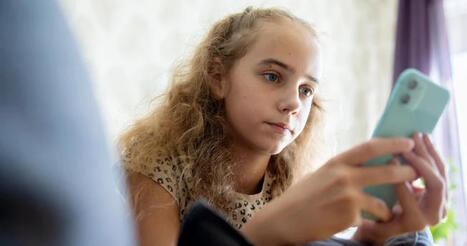
Despite the rapid uptake of AI systems by children, there remain significant evidence gaps: How many children use AI in each country and for what? What are different children concerned about when it comes to AI? And what factors influence the answers to these questions?
This brief helps address these gaps by sharing new AI-related evidence from children and their parents or caregivers in a diverse range of countries.
This brief draws on data from the second phase of the Disrupting Harm project, a research project led by UNICEF’s Office of Strategy and Evidence – Innocenti, ECPAT International and INTERPOL, with funding from Safe Online. The countries included in this brief are Armenia, Brazil, Colombia, Dominican Republic, Jordan, Mexico, Montenegro, North Macedonia, Pakistan and Serbia.
|
|
Scooped by
heather dawson
July 3, 3:49 AM
|
This report suggests actions to protect the health and wellbeing of children and young people as they navigate the online world. The report is drawn from a formal response to the Department for Science, Innovation and Technology national consultation Growing Up in the Online World. It considers the growing evidence that online platform design and content is negatively impacting the health of children and young people and becoming an increasingly severe public health issue. It highlights that many online platforms including social media networks are driven by commercial interests, and argues that conflicts between profits and safeguarding are often leading to insufficient safeguarding for children and young people.
|
|
Scooped by
heather dawson
July 1, 3:06 AM
|
The research was conducted between December 2024 and February 2025 – one year prior to the implementation of the social media age restrictions. Children today are digital natives, having grown up in a world where access to the internet and online services is commonplace. Digital platforms (including social media), offer children a space for connection, creativity and learning. At the same time, these digital platforms can expose children to a variety of risks. This report is part of a series that draws on data from eSafety’s ‘Keeping Kids Safe Online’ survey, a nationally representative survey of 3,454 children aged 10 to 17 years living in Australia. As Australia implements and evaluates the age restrictions, this cross‑sectional, point-in-time study provides a timely and valuable contribution to the national evidence base.
|
|
Scooped by
heather dawson
June 29, 4:01 AM
|
SCREEN ENCOUNTERS WITH BRITAIN IN THE AGE OF TRANSNATIONAL STREAMING
Routledge Focus (2026)
Authored by Alessandro D’Arma, Andrea Esser and Jeanette Steemers This book is now available open access for free here:
https://doi.org/10.4324/9781003687757
---
Screen Encounters with Britain explores how global streaming platforms are reshaping viewing patterns and audience encounters, using the circulation, consumption and reception of British films and TV shows in European markets as a case study. Focusing on young audiences in Denmark, Germany, Italy and the Netherlands, the book provides original audience insights drawing on a wide range of methods, including a survey, digital diaries and interviews and offers a critical perspective on the evolving nature of young audiences’ engagement with long-form screen content. The evidence presented points towards re-asserted Anglo-American dominance, driven by the power of large US-owned platforms and English as the language of advantage. Building on these findings, the book challenges established theory around the ‘home advantage’ of domestic media and rethinks linguistic and cultural proximity.
|
|
Scooped by
heather dawson
June 22, 6:54 AM
|
Social media platforms to be blocked from offering services to under-16s, marking a line in the sand and setting a new normal for future generations.
|
|
Scooped by
heather dawson
June 18, 12:29 PM
|
|
|
Scooped by
heather dawson
June 10, 2:22 AM
|
Leading researchers in digital governance and AI ethics from ADM+S and the Centre of Artificial Intelligence and Digital Ethics at the University of Melbourne have released a new policy brief in response to the Australian Government's Issues Paper on a proposed Digital Duty of Care for online services.
|
|
Scooped by
heather dawson
June 8, 6:37 AM
|
Research shows that 4 in 5 children with additional needs suffer harm online despite recent regulation as highlighted in this release.
|
|
Scooped by
heather dawson
June 1, 5:28 AM
|
Nearly 50% of paediatricians surveyed say they often or very often discuss online activity and social media use with children and young people during consultations.
|
|
Scooped by
heather dawson
May 31, 4:33 PM
|
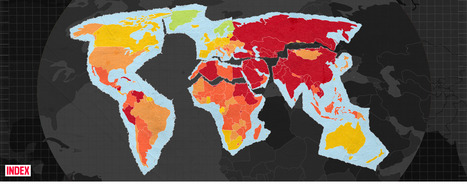
Reporters Without Borders (RSF) has released its 25th World Press Freedom Index at a time when political pressure on the press is intensifying, authoritarian tendencies are growing and the media market is heavily weakened. This year, the Index’s analysis highlights an alarming deterioration in the conditions for journalism in many parts of the world, despite some isolated improvements, as 100 out of 180 countries and territories have seen their press freedom score decline. Here is a look at the 2026 analysis, region by region.
|
|
Scooped by
heather dawson
May 27, 2:25 AM
|
Young people are forming attitudes about gender, sex and relationships earlier than ever while navigating growing risks in online environments.
|
|
Scooped by
heather dawson
May 21, 7:57 AM
|
|
|
|
Scooped by
heather dawson
Today, 9:40 AM
|
Corporate author: UNESCO [12484], OSCE Representative on Freedom of the Media [1] Series title and vol / issues: UNESCO series on journalism education [42] DOI: https://doi.org/10.58338/IIJN9259
|
|
Scooped by
heather dawson
July 10, 6:45 AM
|
New Bite Back research reveals how major food brands use TikTok and Instagram to promote unhealthy food to young people through social media, trends and memes.
|
|
Scooped by
heather dawson
July 1, 3:09 AM
|
Near-universal connectivity masks gender gaps: women trail men in smartphone ownership, online activity, and digital financial participation.
|
|
Scooped by
heather dawson
June 30, 2:28 AM
|
Jun 25, 2026 » A new report from the Centre for Young Lives thinktank published today (Thursday June 25th) warns that the fast-growing online trend known as “looksmaxxing” is driving some boys and young men towards dangerous body image pressures, extreme behaviours, and misogynistic worldviews.
|
|
Scooped by
heather dawson
June 22, 6:55 AM
|
Britain will become the first country in the world where it is impossible for children to take, share or view naked pictures on their devices.
|
|
Scooped by
heather dawson
June 22, 6:31 AM
|
Plus: How TikTok users gauge credibility, and good news about the viability of a shift away from commercial journalism.
|
|
Scooped by
heather dawson
June 18, 12:25 PM
|
|
|
Scooped by
heather dawson
June 8, 6:38 AM
|
|
|
Scooped by
heather dawson
June 3, 2:29 AM
|
|
|
Scooped by
heather dawson
June 1, 5:26 AM
|
We commissioned Censuswide to poll 4,000 young people aged 13-20, across all four nations of the UK. The findings were stark and paint a picture of a distressing online environment for young people.
|
|
Scooped by
heather dawson
May 28, 10:13 AM
|
INA's public platform, data.ina.fr , is using AI to analyse nearly 2 million hours of French radio and television archives. It provides structured indicators for journalists and audiences on topics like gender balance, geographic coverage, vocabulary trends, and media attention.
|
|
Scooped by
heather dawson
May 21, 7:58 AM
|
|