 Your new post is loading...

|
Scooped by
heather dawson
November 17, 3:54 AM
|
|
|
Scooped by
heather dawson
November 12, 5:00 AM
|
Earnings vary widely across music, film and live performance, while time spent on essential activities such as rehearsals, travel, preparation and post-production is not always consistently recorded or remunerated, according to this new report by the International Labour Organization (ILO). The study also examines how employment arrangements, production economics and technological change interact.
|
|
Scooped by
heather dawson
November 11, 2:28 AM
|
|
|
Scooped by
heather dawson
November 2, 8:04 AM
|
Our Good Childhood Report finds that too many young people are unhappy with their lives. The Government must act now and set a path to a good childhood for all.
|
|
Scooped by
heather dawson
October 28, 3:34 AM
|
Parliamentary Library (Australia) | 23 Oct 2026 The Online Safety Amendment (Digital Duty of Care) Bill 2026 will introduce a digital duty of care for persons responsible for online services as well as strengthening the capacity to regulate online services, content and conduct. This bills digest sets out the bill’s purpose and structure, policy positions, stakeholder views, and key issues and provisions.
|
|
Scooped by
heather dawson
October 19, 8:55 AM
|
|
|
Scooped by
heather dawson
October 16, 6:53 AM
|
Provides a single web portal for finding brings together evidence-based research on children and digital technologies, with a focus on supporting informed policy. Based in Australia primary focus is on research from that area of the world including university and government reports. Extensive coverage of AI and social media
|
|
Scooped by
heather dawson
October 14, 2:34 AM
|
This report explores the views of South Australian young people on Australia's social media ban for under-16s. It examines how young people themselves have experienced the changes, including impacts on their wellbeing, relationships, sense of connection and daily lives. The report finds a nuanced picture rather than a clear story of the ban being positive or negative.
|
|
Scooped by
heather dawson
October 7, 8:24 AM
|
Nigeria’s biggest filmmakers are ditching cinemas and streamers for YouTube. But what looks like a new era is really a return to an old one.
|
|
Scooped by
heather dawson
October 7, 2:57 AM
|
This report explores how children and young people aged 5 to 25 in Australia use digital technology and how it may affect their mental health and wellbeing. The overarching implication is the need to move beyond simplistic, isolated or single-factor approaches to understanding and intervening in digital technology and mental health. The report provides 19 recommendations.
|
|
Scooped by
heather dawson
September 30, 3:10 AM
|
21 Sep 2026 Karen Tindall, Bowen Fung, Hannah Bellier, Emily Evans, Alex Gyani Publisher BIT
|
|
Scooped by
heather dawson
September 23, 2:38 AM
|
Mobile phones have become omnipresent in the lives of children and adolescents across Europe, sparking debate around two distinct yet overlapping concerns: the challenge of digital distractions emerging as a major threat to academic performance, and broader public health concerns regarding the excessive use of mobile phones and its potential links to adverse psychosocial outcomes. In response, diverse national strategies have emerged across the EU. These range from total bans during school hours to more nuanced restriction policies involving conditional or supervised use. By the end of 2024, approximately 40 % of education systems worldwide had implemented some form of restrictions on smartphones in schools. This analytical report maps mobile phone policies across EU Member States and examines their implementation through in-depth case studies in four countries: France, Hungary, Italy and Sweden. It explores the rationale behind these policies, the practical realities of their implementation, stakeholder perceptions, the challenges encountered, and perceived outcomes. Importantly, the report goes beyond an analysis of policy to examine how mobile phone bans and restrictions work in practice. This analysis draws on field research, document analysis and stakeholder interviews across diverse educational contexts.
|
|
Scooped by
heather dawson
September 15, 3:57 AM
|
Taskforce publishes final report on improving access to social media data for research into online harms
|
|
|
Scooped by
heather dawson
November 12, 12:40 PM
|
The Digital Futures for Children Centre (DFC), a joint research centre between 5Rights and LSE, has conducted research on children's experiences growing up in the digital classroom to analyse the impact on children's learning and rights.
|
|
Scooped by
heather dawson
November 11, 2:31 AM
|
Australian Human rights commission
|
|
Scooped by
heather dawson
November 2, 8:06 AM
|
Artificial intelligence (AI) is changing how children seek help with their mental health and wellbeing. The policy question is no longer whether children will use AI for support, but how we ensure that the technology they are already using is safe, effective, and does not become a substitute for the human relationships and the services that children want and need.
|
|
Scooped by
heather dawson
November 2, 8:04 AM
|
|
|
Scooped by
heather dawson
October 27, 4:26 AM
|
|
|
Scooped by
heather dawson
October 19, 8:54 AM
|
This report explores young children's engagement with digital technology and the support parents tell us they need.
|
|
Scooped by
heather dawson
October 16, 6:48 AM
|
Stuart Hall Digital archive
Amazing digital archive prepared by the University of Birmingham . The digital archive contains his previously unpublished papers, notebooks, recordings and videos covering cultural studies, sociology and race. Subsections include: Notebooks documenting Hall’s research from the 1970s to 2000. The notebooks are arranged by subject and contain notes, rough ideas, and writings that would later feed into some of Hall’s most influential works. Index cards used in Hall’s research, dating back as far as his doctoral research in the 1950s and including reference cards, notes, diagrams, and lecture outlines on a range of topics including literature, race, media, and youth culture. Other innovative digital features of the site include: Walking with Hall, a mobile app which guides users to literally follow in Hall’s footsteps, mapping key locations in Birmingham.. A working bibliography of global cultural studies resources. Encoding/Decoding Cybernetics, a research project exploring Hall’s impact on the history of communication theory and the architecture of large language models. The Cultural Studies Database - an interactive compilation of all the items, people, and organisations mentioned in the Stuart Hall and Centre for Contemporary Cultural Studies archives.
|
|
Scooped by
heather dawson
October 12, 5:44 AM
|
Do social media platforms make people happy?Many people use social media simply because everyone else does. While these platforms help us stay connected, some argue that society would be better off if social media use were significantly reduced or even eliminated.
|
|
Scooped by
heather dawson
October 7, 2:58 AM
|
|
|
Scooped by
heather dawson
October 5, 6:26 AM
|
Age UK unveils ground-breaking analysis of where our older population is on the digital inclusion spectrum and calls on the Government to get ‘Digital Done Right’.
|
|
Scooped by
heather dawson
September 28, 6:26 AM
|
Refuge x EVAW Report Reveals Shocking Scale of Online Misogyny and Abuse - Refuge
|
|
Scooped by
heather dawson
September 17, 5:28 AM
|
UNESCO has released this new research report shedding light on the growing influence, practices and challenges of digital content creators within South Africa’s evolving information ecosystem.
Conducted by the Centre for Analytics and Behavioural Change (CABC) with the support of UNESCO’s Social Media 4 Peace” (SM4P) project, funded by the European Union, the study examines the motivations, Media and Information Literacy (MIL) competencies, ethical practices and challenges of digital content creators in South Africa. The research draws on a nationwide survey of 48 content creators and in-depth interviews with 11 creators.
The findings show that while mainstream news media remains an important source of information for South African content creators, creators are increasingly conducting their own research, drawing on personal experiences and consulting knowledgeable experts. This reflects the expanding role creators play in how information is produced, interpreted and shared with online audiences.
|

 Scoop.it!









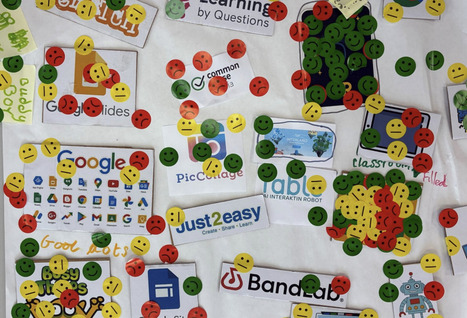







free online book on preparing and visualising data from
Infoactive and the Donald W. Reynolds Journalism Institute covers definitions of data, data collection, data cleaning and visualising.