Your new post is loading...

|
Scooped by
MaterialsReview
October 27, 2015 8:59 AM
|
Dell has partnered with Sabic to recycle excess carbon fibre and scrap raw materials into new Dell products starting in late 2015. The company has initially selected its Latitude and Alienware lines to contain the recycled carbon fibre and plans to expand the programme across these two product lines in 2016.
Dell estimates that by partnering with Sabic, it will prevent 820,000 pounds of carbon fibre from ending up in landfills. The recycled carbon fibre materials have an approximately 11% smaller carbon footprint than simply using virgin carbon fibre.
Since Dell began its closed-loop recycled plastics supply chain in January 2014, the company has recycled 4.2 million pounds of closed-loop plastics into enclosures for new Dell products. These plastics were used in more than 30 flat panel monitor models and three Dell OptiPlex desktops available globally, with plans to scale across servers and other products in 2016. Dell’s process was certified by UL Environment as the first closed-loop supply chain, and continues to be the only one in the industry. Dell was also able to reduce its product carbon footprint via the closed-loop products by 11% and realised a cost savings over previous sources.
|
|
Scooped by
MaterialsReview
October 27, 2015 4:54 AM
|
Students from the Stevens Institute of Technology recently won the 2015 Department of Energy (DOE) Solar Decathlon with its SURE HOUSE – a solar-powered home made with composites repurposed from boatbuilding materials designed to withstand hurricane-force winds and flooding.
In addition to fiber-composite materials, the SURE HOUSE design includes bi-folding storm shutters, which were made with a composite foam core and wrapped with fiberglass. Each layer was placed in a different direction to maximize the strength of the house and protect it against debris and water during heavy storms.
The entire bottom level of the house is completely waterproof and energy efficient. According to Gizmag, the designers claim the house expends 90 percent less energy than a regular home. They add the SURE HOUSE’s rooftop solar panels can produce around 10,000 watts of power while still being connected to the grid. The team has also built a public USB charging station outside the house that can be used during emergencies.
A new requirement of this year’s Solar Decathlon was that all homes be able to power a hybrid, non-electric vehicle. Circle BMW in New Jersey provided the Stevens Institute of Technology team with a BMW i3, a trendsetting vehicle with composite construction, than can go 90 miles after being powered by SURE HOUSE.
“This project was about creating a real, livable residence for families in coastal communities who will be hardest hit by the effects of climate change,” said A.J. Elliott, a graduate student in the Stevens Product Architecture and Engineering program and member of the SURE HOUSE team. “Our design provides a blueprint for the construction of homes that can endure extreme weather and epitomizes the principals of sustainable living.”
|
|
Scooped by
MaterialsReview
October 26, 2015 8:54 AM
|
You wouldn't expect a race car to be built in a clean room.
The Mercedes AMG Petronas F1 team's new video series takes viewers through the process of building an F1 car. First stop? The composites department.
Without revealing any classified information, the series, called "Access All Areas," starts with technicians turning sheets of carbon fiber fabric into parts. The process shows just how high-tech modern F1 cars are.
In a process that seems more fitting for a NASA space probe, sheets of "pre-preg" carbon fiber material are arranged in specially constructed molds (also made of carbon fiber) in a clean room. It would probably be bad if some dust got trapped between the layers.
The sheets are bonded together under vacuum and then put in an autoclave for curing. When they go in, the parts are soft and pliable. When they come out, they're completely hardened.
It's all very impressive, and about as far removed as possible from anything civilians would normally identify as automotive.
Mercedes AMG Petronas will be posting more videos, showing different parts of the construction process, in the coming weeks.
Santa Ana, California – Coast Composites LLC, an Ascent Aerospace company, has been contracted to produce a sixth set of wing skin molds for the Airbus A350 XWB. Following Coast Composites' delivery of the first set for the A350-1000 in May, Airbus announced the completion of the first production wings in August.
Ascent Tooling Group, comprised of Coast Composites and sister companies Odyssey Industries and Global Tooling Systems, also produced tooling for segments of the fuselage and nacelles – in total, more than 70% of the A350 XWB's outer surface – as well as the center wingbox and 100% of the stringers and frame.
Wing skin tool segments for the A350 XWB are manufactured of Invar, a specialty steel alloy selected to match the thermal expansion properties of the composite material used for the wing skin, and shipped to Airbus facilities in Spain and Germany, then assembled onsite. Ascent's traveling laser-welding robot minimizes the heat-affected zone and does not introduce high thermal loads into the structure. This eliminates distortion, shrinkage and, most importantly, the requirement for post-heat treating. The 32m (105ft) finished tool can be joined in a vacuum tight weld in a matter of hours.
Coast Composites also was awarded a contract by The Boeing Company to manufacture the largest-ever wing skin molds. Ascent will produce a set of lay-up tooling, consisting of four individual molds, to be used at Boeing’s new facility in Everett, Washington, to manufacture the 777X’s composite wing skins.
Coast Composites will manufacture the molds with its modular tool building system, based on the company’s patented laser welding technology and proven on previous wing skin mold builds. Tooling segments manufactured of Invar, small enough to transport on conventional roads, will be shipped to Everett then assembled onsite. After welding in Everett, the final wing skin tools will measure more than 110ft long and up to 21ft wide and weigh approximately 80,000 lb each.
According to Klaus Koester, vice president and general manager of Coast Composites, "Ascent's modular tool building system makes it possible to efficiently deliver the largest, highest quality tools in the industry to anywhere in the world." Coast Composites has developed a unique system for building extra-large Invar tools, based on the company's patented "deep penetration" laser welding technology.
According to Paul Walsh, president and COO of Ascent Tooling Group. “As aircraft evolve, our capabilities, designs and processes have advanced to meet new challenges. We developed our innovative modular tool building system to accommodate the ever-increasing size of aircraft tooling.”
Coast Composites has previously built 26 wing skin molds. The company’s core competencies center on metallic and composite lay-up molds and cure tools to produce airframe structures.
Ascent Aerospace is an AIP Aerospace company.
Via Alan Charky
|
|
Scooped by
MaterialsReview
October 23, 2015 3:37 AM
|
Cytec Industrial Materials (Heanor, Derbyshire, UK) is sending a strong signal to the automotive and composites industries on Dec. 3 with the opening of a new Application Centre in Heanor, designed to help the company develop material and process technologies for high-volume autocomposites fabrication.
Alex Aucken, global automotive director at Cytec Industrial Materials, says the company has “deliberately set out a strategy to address the needs that automotive industry has for high-volume production.” This requires, he says, developing a suite of capabilities that will allows Cytec to meet automakers on a variety of material and process levels, including fast-cure thermosets, thermoplastics, press-forming, high-pressure resin transfer molding (HP-RTM), automation and recycling.
Part of the challenge, says Aucken, and one of the reasons for the Application Centre, is determining where and how composites will eventually fit into the automotive supply chain. “One of our focuses is on the supply chain,” he says, “to make sure we have relationships with the Tier 1s, OEMs and suppliers.” Cytec, he adds, does not want to make automotive parts, but as it supports its customers, it needs to understand the process. “We want to help OEMs address their concerns about composites manufacturing and supply.”
One thing that is clear, says Aucken, is that automotive OEMs are not wedded to one material when it comes to addressing lightweighting and mechanical strength requirements. “The multi-material solution is best,” says Aucken. “No one material will be the ‘winner.’” Therefore, he adds, companies like Cytec must be willing to cooperate with aluminum and steel suppliers to develop joining and bonding systems that allow composites to be integrated with non-composites. So, add bonding and joining to the Application Centre’s to-do list.
Speaking more broadly, Aucken notes that Cytec is trying to position itself to take advantage of the automotive industry’s new cost paradigm, which represents a shift away from the age-old emphasis on unit cost. “There is a huge amount of focus by OEMs on the total cost of integrating composites, looking at CO2, tooling, weight savings,” he says. “This helps us make our case.”
Cytec’s capabilities, and what the Application Centre will develop, were on display in September at Composites Europe (Stuttgart, Germany), where the company featured, for automotive, filament winding, HP-RTM, preforming and compression molding:
- A carbon fiber-reinforced door inner structure manufactured from a filament wound flat blank using hot compression molding technology. The material offers high conformability required for complex shapes, combined with mechanical properties comparable to conventional prepregs.
- A carbon fiber-reinforced tailgate made from Cytec’s new rapid-cure epoxy prepreg MTM 710 and with sub-3-minute cure capability by hot compression molding.
- A complex part manufactured from UD carbon fiber using an automated preforming process that requires virtually no direct labor and is capable of producing parts such as structural automotive components for body-in-white structures with a sub-5-minute takt time.
- An HP-RTM demonstrator part made using Cytec’s XMTR750 two-component epoxy resin, with sub-3-minutes cure capability, a mold temperature of 130°C and with a resin injection time of less than 12 seconds.
Not at Composites Europe but also on Cytec’s radar, says Aucken, is overmolding, which combines composites with a well-known high-volume process and could be a valuable tool for automotive suppliers.
In any case, Aucken says the changes reshaping the automotive industry are creating unprecedented opportunity for the composites industry, and Cytec hopes to be among the first in line to take advantage. “The automotive industry is amazingly dynamic,” he notes. “The OEMs are constantly learning and adapting. It’s a very interesting time.”
|
|
Scooped by
MaterialsReview
October 21, 2015 2:17 AM
|
The leading global PAEK*-based solutions provider, Victrex, is launching composites for the aerospace industry in the form of unidirectional (UD) tape and laminate panels. Introduced under the brand VICTREX® AE250 composites, the new product group enables the production of continuously-reinforced components that can perform under load.
Such components include brackets, clips, clamps, and housings used throughout the aircraft in primary and secondary structures. The development and launch builds on the hybrid molding technology released in 2014 and also serves as proof that Victrex is moving forward in the supply chain to provide enhanced solutions.
One compelling advantage of implementing a PAEK-based composite solution is faster manufacturing as a result of smarter designs, contributing to cost savings, and improved installation times.
VICTREX AE250 composites have also shown a weight savings of up to 60% under certain circumstances when compared to metals such as aluminum, stainless steel, and titanium. That weight reduction translates directly into significant gains in fuel-efficiency and reduced CO2 emissions. The composites have also shown an up to 5x higher specific strength compared to those of metals.
With VICTREX AE250 composites being used as inserts in existing injection molding equipment, the hybrid molding process enables the overmolding of a continuously-reinforced thermoplastic composite with VICTREX PEEK injection molding polymers. The hybrid molding technology offers major advantages, including improved cycle times, lower energy requirements, and the elimination of scrap and secondary operations.
These factors help to reduce total system cost, a high priority in the industry's effort to move planes off the assembly line faster and more cost-effectively. Analysts believe that more than 35,000 new aircraft will be needed over the next 20 years in order to replace ageing fleets and to meet civilian flight demands.
“One key to achieving this is the replacement of metals and thermosets with next-generation thermoplastic solutions. When Victrex collaborates with our customers from concept to final part, they are able to achieve an unmatched combination of cost reductions, weight savings, design freedom, strength, and production speed for next-generation thermoplastic components.
All of these are becoming increasingly valuable to both the air-framers and tier suppliers alike," explains Tim Herr.
Compared to thermoset solutions, PAEK composites can be processed faster, using out-of-autoclave methods, and are 100% recyclable. They have better damage tolerance than thermosets and offer greater chemical resistance, fatigue performance, and FST (flame/smoke/toxicity) properties, while matching the strength and stiffness of thermosets. In comparison to metals, corrosion resistance, processing speed, and thermal insulation are improved, while impact resistance and damage tolerance will be similar.
The key features of the VICTREX AE250 composites also include outstanding high-temperature performance and thermal stability, a wide-ranging chemical resistance to aerospace fluids and gases, and excellent resistance to hydrolysis and corrosion. Victrex has solely focused on the development of PAEK-based solutions for more than three decades and consequently been able to partner in the automotive, aerospace, energy, electronics, and medical industry with leading companies around the world.
|
|
Scooped by
MaterialsReview
October 21, 2015 2:04 AM
|
Arevo Labs has launched an Additive Manufacturing (AM) Service to make 3D printed composite parts for demanding end use applications in both PEEK (polyetheretherketone) and PAEK (polyaryletherketone) polymer based composite formulations that are optimised for additive manufacturing and set a new bar for performance.
Arevo Labs explains that its composite formulations use high performance polymer matrix with carbon nanotubes, carbon fibre and glass fibre. These composite materials elevate performance thresholds for strength, stiffness, durability, wear resistance, chemical resistance, thermal stability and electrostatic discharge (ESD) properties. For engineers and product developers, it claims the result is an additive manufacturing with state-of-the-art materials to produce the most advanced thermoplastic composite parts available today, though materials are only part of the equation. The 3D printed parts are optimised for mechanical properties using Arevo's advanced software algorithms that encompass Additive Finite Element Analysis and true 3D Printing for lighter stronger parts with unmatched properties at a lower cost.
"We are excited to announce commercial availability of 3D printed PEEK and PAEK composite parts for the first time," said Hemant Bheda, CEO and founder of Arevo Labs. "We have successfully developed end use applications in Aerospace, Single Use Medical Devices, Oil & Gas and Factory Automation and are working closely with OEMs to scale up production."
The following AM optimised materials are immediately available for direct digital additive manufacturing services. "Fabricating high performance composite parts with 3D printing opens up new design opportunities for us. The two main advantages are improved complex geometries and new material possibilities," said Kent Holder, Product Line Manager at Superior Energy. Superior Energy serves the drilling, completion and production-related needs of oil and gas companies worldwide.
"I can confirm that the drone arm printed with AREVO's Katevo-CF material with no internal structure is much stronger than a carbon fibre filled SLS arm with inner ribs," says Ido Baruchin, Head of Design at Matternet. Matternet has developed the first smart drone for transportation, revolutionising the last mile logistics.
|
|
Scooped by
MaterialsReview
October 16, 2015 3:27 AM
|
Quickly sweeping across the industry this week was the news that SABIC Innovative Plastics, Pittsfield, Mass., will no longer be in existence next year as the company sets up its new regional headquarters for all of its Americas-based business in the Greater Houston, Texas area.
This is part of a global restructuring, expected to be in place by January 1, 2016, that is aimed at creating a more agile, cost-efficient, and customer-focused organization whose needs are more effectively met, according to the company. SABIC’s Innovative Plastics Strategic Business Unit (SBU) will be split--with commodity products to be part of the Chemicals and Polymers SBUs, and the remaining Innovative Plastics products to be part of the newly created Specialties SBU.
Officials have not made it entirely clear what constitutes the commodity products, but I would venture it would include polyolefins and possibly Cycolac ABS and associated LNP-brand compounds, as well as Lexan PC, with the Specialties SBU containing the Ultem PEI and Noryl PPE. “This reorganization will focus resources more intensively on the needs of each line, enhancing customer intimacy with more focused solutions provision and helping move SABIC to the next level of portfolio product management,” said Yousef Abdullah Al-Benyan, Acting Vice Chairman and CEO of SABIC.
In one of two press releases, the company noted that a key driver of this change is the differing technology priorities of commodity and specialty businesses. The future of the commodity line will depend heavily on innovations around advancing feedstock technology. Specialty products face separate technology challenges, including the need to seek out technology acquisitions and partnerships or joint ventures that can enrich SABIC’s existing portfolio.
Based on that latter statement and the fact that SABIC officials within the near past have said there is an interest in exploring investment opportunities that would capitalize on new natural gas supplies, it would not be entirely surprising to hear that the company would start production of polyolefins and their feedstocks, whether through a joint venture or otherwise. My two cents at this early stage is that they might opt first for PP production—where supply is tight, and we have yet to hear firm new capacity announcements from any of the key domestic PP suppliers. Oh, and let us not forget—demand growth for PP of nearly 6% through third quarter of this year.
SABIC has said that in building this new regional headquarters, several American functional teams will be led from the Houston area, including a “number of roles”, out of the 300 employees, that are currently based in Pittsfield. The company has also not made a decision on the future of the Pittsfield Polymer Processing Development Center which has been known for over 25 years for the latest in plastics processing technology with SABIC’s engineering resins.
|
|
Scooped by
MaterialsReview
October 15, 2015 7:10 AM
|
Despite losing out on a NASA contract to transport U.S. astronauts to and from the International Space Station (ISS), Sierra Nevada Corp. (SNC) Space Systems (Louisville, CO, US) has continued on with the development of its Dream Chaser spacecraft. In fact, Sierra Nevada recently announced that in anticipation of a second phase of flight testing, the company has made significant updates to the two Dream Chaser spacecraft currently in development. The spacecraft are the atmospheric engineering test article (ETA) and the advanced composite orbital vehicle, which when tested will undergo a suborbital and orbital flight regimen, respectively. SNC’s Mark Sirangelo recently provided a program update at the International Symposium for Commercial and Personal Spaceflight (ISPCS) in New Mexico.
“The SNC team is readying the ETA in order to begin the second phase of atmospheric flight testing early next year and our strategic partner, Lockheed Martin, is leveraging best practices in tooling and composites to manufacture the first orbital Dream Chaser spacecraft,” said Mark Sirangelo, corporate vice president of SNC’s Space Systems. “Both efforts have been ongoing simultaneously and we are very pleased with the progress to date.”
Since flight test phase one, in which SNC’s Dream Chaser ETA successfully returned trajectory data of the flight profile, SNC has made significant structural and systems improvements to the ETA including the composite wings and aeroshells. SNC also invested heavily in maturing the spacecraft orbital avionics, guidance navigation and control, the flight software, and employed a number of new processes, all of which will be used on the orbital vehicle as well. Finally, the advanced orbital Thermal Protection System (TPS), announced in June, was installed on the ETA skid in order to do advanced testing of the actual orbital TPS in this important area.
“The Dream Chaser ETA is currently scheduled to arrive at Armstrong Flight Research Center in early 2016 in order to begin the second phase of atmospheric flight test," he said.
In parallel to the ETA upgrade, SNC has made significant progress on the build of the first Dream Chaser orbital vehicle manufactured by Lockheed Martin. Lockheed Martin is said to be leveraging best-practices in composite manufacturing from the Skunk Works, its advanced development programs division, as well as its extensive experience in manufacturing and assembly from the F-35 Lightning II.
Lockheed Martin recently completed the Dream Chaser orbital cabin assembly, marking a significant milestone in the construction of this vehicle. This assembly is the largest high-temperature unitized structure ever fabricated at U.S. Air Force Plant 4. The assembly utilized three-dimensional woven joints, to integrate internal frames with external carbon skins in a single co-bond operation, meaning nearly all fasteners on this critical cabin assembly are eliminated.
“Upon completion, the Dream Chaser orbital vehicle will be the most advanced composite structure ever built. We look forward to Dream Chaser becoming the world leader in this area and to its first orbital flight,” Sirangelo said.
|
|
Scooped by
MaterialsReview
October 14, 2015 5:17 AM
|
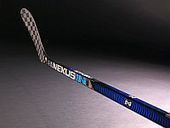
Bauer Hockey has introduced their latest stick, the NEXUS 1N, which is reinforced by TeXtreme.
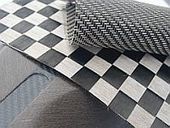
According to Oxeon, manufacturers of TeXtreme, its carbon fibre fabrics help reduce the weight while, at the same time, increase the durability and strength of the stick.
Bauer Hockey uses the TeXtreme Technology in all of the three product families, NEXUS, VAPOR and SUPREME, to reduce weight, improve the mechanical performance and for the superior surface smoothness, which Oxeon explains reduces the need for finishing drastically compared to other carbon fibre materials.
"Through our partnership with TeXtreme we are able to incorporate a high performance material into our elite products in a way that helps us deliver to our consumers the premium products they expect from BAUER," said Tyson Teplitsky, Global Brand Manager for Bauer Hockey. "TeXtreme helps us maximise playability and integrate innovative designs and features we develop." The 1N is the most advanced NEXUS stick and is designed with a unique sweet spot which helps the player to shot with precision. In addition to TeXtreme, another feature of the stick is eLASTech Technology which reinforces the TeXtreme carbon fibres with micro nanotubes, helping to prevent cracks from slashes growing as well as extending the pop life of the stick.
Photo provided by Oxeon.
|
|
Scooped by
MaterialsReview
October 9, 2015 5:23 AM
|
Located on the corner where Brenton meets Brenton Place, just minutes away from the Trillium development on South Park Street, the new tower plans to feature 15, 340 square feet of ground-floor commercial space, as well as two levels of underground parking and 170 bedroom units.
Drawings of the building show the exterior clad in a glass curtain of windows along the street front, switching to aluminum composite panels on upper levels.
“It’s where the city and we see densification for the area,” Cesar Selah, professional engineer with WM Fares Group, said of the site Wednesday.
He said it is underdetermined yet whether the development will offer apartments, condominiums or a mix of both.
A rooftop penthouse and terrance are also in the works.
“The design and the proposal responds to the site context of an urban core,” Saleh explained, citing the building follows a majority of existing guidelines and land-use bylaws set out for the city’s downtown.
In fact, he said the variances being requested are “very, very minor in nature.”
According to design documents, the developer is asking for five amendments, including street wall height and rear and side setbacks, which Seleh said are to counteract a natural slope on the site.
Saleh said Thursday’s presentation to the city’s Design Review Committee will give members the opportunity to offer feedback before the project enters a formal application process.
That application is expected to happen within the next six weeks, he said.
Saleh expects that a public engagement session will take place in the coming months, with the aim to gain approval from HRM in December or January.
|
|
Scooped by
MaterialsReview
October 8, 2015 8:01 AM
|
Dimar Tooling is entering the UK composites market by launching an exciting range of products specifically designed for composite materials.
Dimar says the experience it has gained, especially in dealing with composite wood materials, has enabled them to develop proprietary grades of carbide, along with unique geometry in tooling solutions, to combat similar challenges in the composite market. Composite materials, being very abrasive, are difficult to machine and material delamination is one of the difficult areas to overcome; cutting material efficiently and effectively with little stress is therefore very important.
According to Dimar, its entry into the composites market came about after composite engineers asked it to help overcome these delamination problems along with short life-time on existing tools. Using their skills and experience in working with wood composites, which creates similar problems when cutting, engineers at Dimar set about developing proprietary grades of tungsten carbide which, combined with the unique geometry, resulted in a new range of tools which can avoid delamination and can give up to eight times the life against other carbide tools.
David Kerr, Dimar Tooling's Group VP, said, "I am delighted that Dimar has entered the UK composites market. We've been a global leader in tooling solutions for the industrial woodworking industry for over 50 years and our vast experience in the challenges of cutting wood composite materials, has allowed us to gain a real competitive advantage. I'm confident that the quality of our products mean it won't be too long before we're leading the way in composite tools as well. Let's face it, who wouldn't want a product that can improve performance, production line efficiency and costs!" Dimar has already launched its new composite cutting tools in the US and is now working closely with aerospace partners, including contractors for a leading aerospace company, where their burr tools have given measurable improved performance, along with substantial cost savings.
|
|
Scooped by
MaterialsReview
October 8, 2015 2:50 AM
|
This article was written by Ryan Wilkinson and Celine Boehm from Durham University in the UK, and was originally published by The Conversation.
Canada’s Arthur B McDonald and Japan’s Takaaki Kajita have won this year’s Nobel Prize in Physics for their surprising discovery that tiny, subatomic particles called neutrinos have mass. Their experimental results forced scientists to rethink the Standard Model of particle physics that had successfully explained all observations of the subatomic world for decades.
What are neutrinos?
Neutrinos are produced when radioactive isotopes decay and have been shrouded in mystery ever since Wolfgang Pauli first proposed them in 1930. In the Standard Model, they were assumed to have no mass (like particles of light, photons) and be neutral (lacking electric charge). This would also explain why neutrinos usually pass straight through matter without interacting, making them extremely difficult to detect. Enormous instruments are required to observe them in sufficient numbers to study their properties.
Neutrinos were first directly observed by the Cowan-Reines experiment in 1956, using neutrinos from a nuclear reactor and two large tanks of water. If a neutrino interacted with a nucleus in the detector, this would result in a flash of light that could be picked up by photomultiplier tubes that were sandwiched between the tanks. Frederick Reines was awarded the Nobel Prize in 1995 for this work.
However, when detectors became sensitive enough to observe neutrinos created in nuclear reactions in the Sun, scientists faced a big problem. They had calculated the amount of neutrinos from the Sun that should be hitting Earth, but observed only a third of this number in their experiments. A further Nobel Prize was presented to Ray Davis in 2002 for this discovery. The mystery of these missing neutrinos was coined the "solar neutrino problem" and remained a puzzle for 40 years, until the collaborations led by Kajita and McDonald made their exciting discovery.
Underground discovery
There are three different types, or 'flavour', of neutrino - electron, muon and tau - which have slightly different mass and can interact with other particles in different ways.
In 1998, Kajita, who now works at the University of Tokyo, announced that the Super-Kamiokande experiment in Japan had found that neutrinos 'oscillate' between these flavours, which is possible thanks to the strange rules of quantum mechanics.
Super-Kamiokande detected muon-neutrinos coming straight from the atmosphere above, as well as those hitting the detector from below after having travelled through Earth. Since neutrinos barely interact, there should be equal numbers of neutrinos coming from the two directions. However, the muon-neutrinos that came straight down to Super-Kamiokande were more numerous than those that had passed through the planet. This indicated that muon-neutrinos that travelled longer had more time to oscillate into tau-neutrinos that could evade the detectors.
These results were confirmed in 2001 by Arthur B McDonald, based at Queen’s University in Canada, and the Sudbury National Observatory collaboration, this time by detecting oscillations of neutrinos from the Sun. By carefully observing the interactions of neutrinos with 'heavy water', they were able to determine the total number of neutrinos, as well as the fraction of electron-neutrinos. They crucially showed that there were no missing neutrinos, once all the flavours had been taken into account.
The discovery of Kajita and McDonald solved the solar neutrino problem as it could explain where the missing neutrinos had gone; they simply changed flavour on their way from the Sun to the detector, meaning that they couldn’t be recorded. It also showed that the Standard Model was incomplete, as such oscillations are impossible in the absence of neutrino masses.
From their pioneering work, the neutrino field has boomed across the world, with experiments in every continent. Now that we know neutrinos have mass, we need new theories to explain how they acquire it. If new fundamental particles are responsible for neutrino masses, one of them could account for dark matter, a mysterious substance that makes up the vast majority of the matter in the Universe. Work is ongoing in this area and exciting discoveries may be just around the corner.The Conversation
Ryan Wilkinson, PhD Candidate in the Institute for Particle Physics Phenomenology, Durham University and Celine Boehm, Senior Lecturer in the Department of Physics, Durham University
This article was originally published on The Conversation. Read the original article.
|
|
|
Scooped by
MaterialsReview
October 27, 2015 8:56 AM
|
Albany International Corp. (NYSE:AIN) is scheduled to announce its Q315 earnings results on Tuesday, October 27th. Analysts expect the company to announce earnings of $0.36 per share and revenue of $180.41 million for the quarter. Parties interested in participating in the company’s conference call can do so using this link.
Albany International Corp. (NYSE:AIN) last issued its quarterly earnings data on Tuesday, August 4th. The company reported $0.35 earnings per share for the quarter, missing the Zacks’ consensus estimate of $0.47 by $0.12. The firm earned $172.30 million during the quarter, compared to analysts’ expectations of $194 million. During the same quarter in the prior year, the company posted $0.35 EPS. On average, analysts expect Albany International Corp. to post $1.48 EPS for the current fiscal year and $1.94 EPS for the next fiscal year.
Shares of Albany International Corp. (NYSE:AIN) opened at 31.71 on Monday. The stock has a 50 day moving average price of $30.28 and a 200-day moving average price of $36.20. The company has a market capitalization of $1.01 billion and a price-to-earnings ratio of 34.10. Albany International Corp. has a 12 month low of $27.64 and a 12 month high of $41.58.
The business also recently disclosed a quarterly dividend, which was paid on Wednesday, October 7th. Shareholders of record on Monday, September 14th were given a dividend of $0.17 per share. This represents a $0.68 dividend on an annualized basis and a yield of 2.14%.
A number of equities research analysts have issued reports on AIN shares. Zacks downgraded Albany International Corp. from a “buy” rating to a “hold” rating in a report on Tuesday, July 7th. TheStreet downgraded Albany International Corp. from a “buy” rating to a “hold” rating in a report on Wednesday, August 26th.
Albany International Corp. is an advanced cloths and materials processing firm. The Firm operates through two business segments: The Machine Garments section and the Albany Engineered Composites (NYSE:AIN) section. The Machine Clothing segment furnishes permeable and impermeable belts used in the production of paper, paperboard, non-wovens, fiber cement and other industrial applications that are several. The Machine Clothing segment also provides consumable cloths employed in the making process in the pulp, corrugator, non-wovens, fiber cement, building products, and tannery and textile industries. The Company’s Albany Engineered Composites section designs, develops and produces complex composite parts for aerospace and other uses, employing a variety including its 3 D woven reinforced composites technology. The AEC section mainly serves customers in military and commercial aircraft engine and airframe marketplaces.
|
|
Scooped by
MaterialsReview
October 26, 2015 11:56 AM
|
When a severe hailstorm hit the Dallas area in 2013, American Airlines took a major hit. In less than
1 hr., 103 of its aircraft, including McDonnell Douglas MD-80s and Boeing 737s, 757s and 767s, sustained damage at the carrier’s huge Dallas/Fort Worth International Airport hub. The storm not only affected metal fuselages and wings but also composite panels and flight controls.
“We took about 40 mechanics and a team of about 10 composite repair specialists to Dallas to inspect the damage,” says Kevin Ferrin, technical supervisor for aircraft maintenance at American’s Tulsa, Oklahoma, MRO complex. “We did temporary repairs to the composite panels where we could, and replaced some flight controls where the damage was too extensive. In some cases, we removed the composite flight controls and composite panels, which were then sent to our composite shop in Tulsa for repair and return to the aircraft.”
Ferrin says some of the temporary repairs were approved by American’s engineering staff, and some by Boeing, for continued use of the airplanes in service until their next C-check. About 75% of the affected aircraft were back in revenue service within 24 hr., although five were grounded for about 10 days due to the extent of the damage or the need to wait for repaired parts.
Composite structure field repairs “present all options including on-site work on the damaged area, change-outs, and in some cases, ferry flights to a maintenance facility,” Ferrin emphasizes. In cases of change-outs, American maintains inventories of spare composite structures, primarily at its “Class One” (largest) hub stations at Dallas/Fort Worth, Miami, and Chicago-O’Hare, he says.
“American is very fortunate to have a well-trained composite maintenance group, but with deliveries of our new 787s, there will [at some point] be repairs that even we haven’t done,” he says. “This will require us to learn new repair concepts.”
However, because the carrier’s engineering group started preparations for the 787 a year before it went into service at American in 2015, the airline is “well-prepared” to handle in-house much of the potential damage that could occur. “Any extensive damage to the fuselage may still require bringing in Boeing to accomplish the repairs,” Ferrin says.
American has 42 787s on order, including 20 787-8s and 22 787-9s.
When it comes to composite repairs in the field, airlines “could be presented with a huge logistical problem,” says Jim Epperson, senior manager, global customer support services for Spirit AeroSystems. The Wichita-based company is a supplier of complete composite nacelles, nacelle panels and composite thrust reversers used on Boeing airliners and more recently the nacelles for the new Gulfstream G650 business jet.
As Epperson explains, getting the materials and repair equipment to the aircraft is one of the biggest challenges maintenance technicians face. This is complicated further by the fact that the materials have a limited shelf life—up to about one year for prepreg materials that in many cases require cold storage at temperatures ranging from 0F to -20F.
“When the material needs to be used, you have to take it out of the freezer, thaw it, cut the quantity you need, rebag that and transport it to the aircraft—keeping in mind that the material will have a limited life at room temperature,” he says. “If the material has to be shipped to an international destination, it could be delayed at customs, which could lead to spoilage prior to customs clearance.”
Epperson also points out that there are more mechanics trained to repair metal structures than those qualified to do the hot bonding required for composites. “And when you also add in the need to do nondestructive testing as part of the repair process, that takes another skill set,” he says.
Spirit AeroSystems addresses these issues by positioning nacelles and nacelle components at strategic global locations, and by dispatching aircraft-on-ground teams. But as Epperson notes, there are times when an interim repair may still be required in order to ferry the airplane to where more permanent, complex repairs can be done.
“A good example of an interim repair is a bolted-on sheet metal patch. Although we normally don’t like to do this, because when you bolt metal onto a composite structure, it does additional damage,” he explains. “However, another repair method we could use in preparation for a ferry flight is a wet layup, which uses an epoxy material mix and a dry fiberglass or graphite patch that is layered on. That is allowed to cure for a couple of hours, at room temperature—up to temperatures [as high as] 150F. It’s a quick way to do a patch for a ferry flight that doesn’t involve hot bonding, which takes about 5 hr. with temperatures of 250F.”
Fortunately, the trend is toward repairs in place. Henrik Schmutzler, an innovation engineer at Lufthansa Technik in Germany, reports the company is offering “an increasing number of mobile repair solutions” for composite structures. “Most complex repairs are being developed in a manner [so they can]be conducted onsite in the future,” he says. “For example, infusion as substitution for wet layups offers significant advantages for in-field repairs. Furthermore, we are introducing a mobile scarfing system that will enter service in 2016.”
Ed Montalvo, an aircraft maintenance supervisor at Southwest Airlines in Dallas, says the carrier has a number of options available for field-level composite repairs, as specified in the Boeing Structural Repair Manual (SRM), for its all-737 fleet.
“We have been able to perform [most of] the repairs without taking the aircraft out of service or delaying it for a significant period of time,” he says. “If we find that the problem has not been addressed in the SRM, Southwest’s Structures Engineering Group, which is well-versed in composite repair issues, will design a repair that will be sent to Boeing for approval.”
However, as Montalvo points out, most composite repairs resulting from damage in the field are “carryovers,” which means the damage is so minor repairs can be carried over to the next scheduled maintenance event. But if the damage is more severe and cannot wait for a scheduled check, the repair has to be done in the field. This, he says, mandates a clean working environment.
“In the field, even when a hangar is not available, you have to make the extra effort to create a clean working environment, according to what the OEM’s SRM dictates,” says Montalvo. “In some cases, it means you have to improvise some kind of shelter, which our technicians have had to do at times. One way this has been done is to create a tarp using plastic sheeting, which can be positioned over the damaged area, once it has been cleaned.”
However, even with a tarp in place, ambient temperatures could preclude an outdoor repair. According to Montalvo, if outside temperatures are less than 50F, a heated area is mandated. “Under cold-air conditions, you have to have a hangar because it becomes difficult for a hot bonding machine to generate the temperatures—200-350F—to carry out the repair.”
Montalvo cites continuing developments at Boeing in the direction of new composite repair schemes that will enable operators to get aircraft back into service faster. “We would like to see more composite repair that can be accomplished during an overnight check—within 8 hr. or less,” he says.
In fact, Epperson predicts composites incorporating even greater damage tolerance will make their way into large airframe structures, such as wings and fuselages. However, he cautions that repair-process requirements will likely become much more stringent, given the more complex material formulations that will be involved.
“There will be increased requirements associated with analyzing the damage location and the criticality of the condition of the support substructure at that location on the aircraft,” he says. “The problem is, most airlines today do not have the composite material design allowables data—often proprietary—to be able to proceed with an analysis of their own. That will drive the airlines back to the OEM for approval of the repair size and repair approach methodology.”
|
|
Scooped by
MaterialsReview
October 26, 2015 7:22 AM
|
The London taxi cab is about to get its biggest makeover in decades, and it will lose its signature smell of diesel exhaust.
The Chinese automaker Geely, Volvo's parent company, now owns the imaginatively named London Taxi Cab company which manufactures the tall, roomy black cabs with suicide doors that have filled the British capital's wrongly-directioned streets for years. It's about to field an update on the classic design that it says will be zero emissions-capable.
"The TX5 design concept captures the spirit of past generations of LTC models such as the Fairway series and draws on more than sixty years of style that has made the Black Cab an iconic sight on the streets of London," the company said in a statement after the new taxi prototype was revealed in the presence in the Duke and Duchess of Cambridge, as well as Chinese President Xi Jinping on an official state visit. "While maintaining recognisable key features, the new zero emission capable TX5 has been updated to reflect the needs of today's passengers and the move towards a low-carbon economy.
The new cab was penned in Geely's design studio in Barcelona with Volvo's former design director Peter Horbury, responsible for Volvo's design "ReVolvoLution" 15 years ago, playing a key role. Geely promises a new lightweight aluminum body with some composite panels. Details on the powertrain are still sketchy, but it will likely use a four-cylinder gas/electric plug-in hybrid arrangement with an ability to run on its battery for extended distances.
The TX5 will still be able to seat six passengers, with enough room for one forward-facing wheelchair. Geely says passengers will also be able to enjoy many new design and convenience features, including charging ports for mobile devices and a panoramic glass roof. "We will have invested many years of development and more than £300 million in bringing the TX5 to market," said Li Shufu, founder and chairman of Zhejiang Geely Holding Group. "This is testament to Geely's commitment to the UK and The London Taxi Company, and demonstrates our leading position on new energy technologies, our loyal and talented workforce and our competitive edge when it comes to delivering pioneering design and technology." The cabs are scheduled to start taking over London's streets in 2017.
|
|
Scooped by
MaterialsReview
October 23, 2015 5:38 AM
|
NASA has declared Mars the next tangible frontier for expanding human presence and the space agency has released a report detailing how it will reach the red planet in the 2030s. Since it will take plenty of ingenuity and originality to allow astronauts to live on Mars, NASA and the National Additive Manufacturing Innovation Institute, known as America Makes, held a $2.25 million competition to design and build a 3D-printed habitat for deep space exploration. The design competition challenged participants to develop architectural concepts that take advantage of the unique capabilities 3D printing offers to imagine what habitats on Mars might look like using this technology and in-situ resources.
NASA recently announced the winners of the design competition. Teams were judged on many factors, including architectural concept, design approach, habitability, innovation, functionality, Mars site selection and 3D print constructability. I read up on the finalists and found composites was involved in several of the designs.
The runner-up was the team Hybrid Composites, which is a multidisciplinary group of experts who are conducting research in architecture, digital fabrication, computation, material science, additive manufacturing, robotics, mechanical engineering and aerospace engineering. The team’s approach was to pursue the use of composite materials and robotic fabrication techniques to challenge and go beyond the current cement based 3D printing approaches. The group’s proposal is a combination of a 3D-printed composite lattice that is extruded through robotic arms, serving as structure, and inner layers of robotically formed composite shells as high performance enclosures.
Here’s their explanation:
"Rather than using extrusion of powder based cement based materials, our team proposes a hybrid approach that integrates multiple robotically controlled fabrication techniques that employ the use of high performance composite fibers and fast curing polymers that react to heat or UV light. Primary structural systems and shell enclosures can be 3D-printed by extruding composite fibers woven into various profiles such as strands, sleeves and fabrics through robotically controlled mandrel systems. Primary material for strand production can ideally and abundantly be made by using the local basalt, which can be sourced and produced at sites that have a history of volcanic activity in any terrestrial or extraterrestrial context. If special technological requirements need to be met, conductive metal fibers, fiber optics and other fibers that transmit electricity, data and light can be woven into the composites at designed locations."
The Mars Terrain Intelligence Collaborative put together a design called Marsapia. The group said that the most ubiquitous and accessible material on Mars is the high (6-14%) iron content silica sand, which covers the vast majority of the planet’s surface. Once the iron and silica have been separated from the soil matrix, using thermal and magnetic processes, these materials will be moved to hoppers and become the media for induction extrusion/plasma arc sintering heads, positioned by multi-axis CNC hydraulic/servo-driven arms. The robot controlled print-heads could produce the first permanent structures on Mars.
According to the group: "The monolithic composite shell will be composed of a sintered ferrous latticework on the internal and external surfaces of the structure and a vitrified then devitrified silica core, effectively granite. The lattice and core will provide tensile and comprehensive properties approximating yet surpassing the structural efficiency of ferro-cement or reinforced concrete due to an algorithmiclly regulated deposition of material possible only by through 3D printing. This variable rate of deposition will allow the section modulus of the sintered medium to respond to the specific structural requirements of the form. The resulting steel and silica forms will serve as bunkers, protecting the Martian inhabitants against solar radiation, small bolide impact, strong prevailing winds, and related sand storms. They will also provide structural reinforcement, insulation, and protection for a nested system of prefabricated graphite/resin inflatable containment units which will provide beta radiation protection, and contain the inhabitable atmosphere."
The Red House team, a collaboration among a group of graduate and undergraduate students studying industrial design, graphic design, architecture and physics, undertook an iterative design process to arrive at its approach to Martian habitation. With a focus on near future feasibility, the group’s design adapts an existing industrial process, basalt composite rod manufacturing, to 3D print a structural frame which serves as the core of their proposed habitat.
"First, the required basalt will be collected directly from the Martian surface. Next, the structural frame will be printed in place as a series of spiraling and interlacing ribs from one continuous rod, requiring no assembly. Once the frame is in place, the crew lander will be integrated as the habitat’s airlock. The resulting assembly will be covered with spent parachutes used during landing. This nylon fabric, pulled tight over the ribs of the frame, will support the raw regolith which will be piled on top of the habitat. The parachutes will also act as backing for a series of other layers used for environmental protection. In this way, only the frame must be made from highly processed in situ material and very little material is required from Earth. This system is optimized for quick, lightweight and practical construction," the group stated.
|
|
Scooped by
MaterialsReview
October 21, 2015 9:04 AM
|
The CARBIO project has developed a carbon/flax hybrid automotive roof using Composite Evolution's Biotex Flax material.
The project, which involves Jaguar Land Rover, is developing novel carbon/flax hybrid composites to produce automotive structures with reduced weight, cost, environmental impact and improved noise, vibration and harshness (NVH).
The adoption of carbon fibre-epoxy composites to reduce vehicle weight is presenting significant challenges to the volume automotive industry. Compared to carbon, flax fibres are renewable, lower in cost, CO2 neutral and have excellent vibration damping properties. In addition, bio-epoxy resins based on cashew nut shell liquid (CNSL) can offer enhanced toughness, damping and sustainability over synthetic epoxies.
By creating a hybrid structure using flax-bioepoxy to replace some of the carbon, enhanced properties such as lower weight, cost, NVH and environmental impact can be gained.
A 50/50 carbon/flax hybrid biocomposite, made from Biotex Flax supplied by Composites Evolution and prepregged by SHD Composite Materials, has significantly contributed to achieving the objectives of the project. With equal bending stiffness to carbon fibre, the hybrid biocomposite has:
15% lower cost
7% lower weight
58% higher vibration damping
The prototype roof, designed by Delta Motorsport and manufactured by KS Composites, will be on display at the Advanced Engineering show, 4-5 November 2015, Hall 5, NEC, Birmingham, UK, in the product display area. Both Composites Evolution (stand E125) and SHD (stand C194) will be exhibiting at show.
The CARBIO project is part-funded by Innovate UK. The partners are Composites Evolution, SHD Composite Materials, KS Composites, Delta Motorsport, Jaguar Land Rover and Cranfield University.
Photo provided by Composites Evolution.
|
|
Scooped by
MaterialsReview
October 21, 2015 2:12 AM
|
At HOST 2015 (pav. 22, stand Q42), Sonoco is demonstrating a 100% gastight coffee container for home use with long shelf life – tests have proven that for up to 18 months. The Sonoco CoffeeCan serves for roasted and ground coffee as well as for whole beans. This innovative system offers a viable alternative to conventional metal cans and opens up great opportunities for the coffee sector. In terms of product hygiene and safety, the new composite can with (valved) UltraSeal guarantees the same properties as metal containers – with many more advantages.
The rigid paper container is made from a combination of materials, including recycled cardboard with an aluminium lining that serves as a barrier. This is coupled with a freshness seal, a metal base and a plastic cap to reclose the can after the first opening. The UltraSeal system is similar to that seen on most commercially available cans. The opening is available with a flat tab to lift and pull. Gastight and safe, the container keeps the contents fresh. It is also easy to use for consumers, as they are already familiar with the opening systems. Moreover, coffee roasters de-gas the coffee directly in the can immediately after roasting (and grinding if the coffee is not in beans) because the one way valve permits CO2 to exit but not oxygen to enter. This results in both space and handling savings.
Composite cans – light, competitive, and sustainable
Many of today's products, including foods, pet foods, powdered milk, tobacco and coffee, are highly perishable. These products require gastight packaging that protects against oxygen, humidity, light and other external factors. At the same time, the packaging needs to prevent the deterioration of aroma, flavour and nutritional properties. Packaging that meets these requirements provides maximum protection throughout the product life cycle, maximises shelf life and retains product quality.
Rigid paper containers with UltraSeal are designed to preserve product freshness. An ideal packaging solution for powdered products in many different market sectors, they are also used in the coffee industry as an alternative to metal cans. Composite cans offer clear advantages when it comes to product sustainability, protection, safety and convenience.
Scientific study proves gas-tightness
From 2013-15, a study in cooperation with Demus Lab s.r.l. measured residual oxygen, peroxides and acidity levels in Sonoco’s 99mm coffee cans at regular intervals to establish can hermeticity. To compare performance across packaging options, metal cans and flexible packaging were also filled and tested. Demus Lab used two different types of coffee (whole bean and ground) – 100% Arabica as well as a blend of 50% Arabica and 50% Robusta. The can’s performance was evaluated over a period of 18 months. In addition, sensory tests were conducted to establish long-term quality and freshness of the coffee inside the can. The tests validated that there was no detectable oxygen present in Sonoco’s coffee cans and only very low levels of acidity and peroxides. This ensures a consistently fresh-tasting product and high quality for fresh roasted coffee beans and ground coffee.
Composite cans with UltraSeal
Since the mid-1940s, composite materials have gradually become a viable alternative to tinplate or metal containers. Composite cans have gained market share because they are practical, lightweight and recyclable. They are made from recycled cardboard or other barrier materials, a rigid inter-mediary layer of recycled cardboard and a laser-cut label on the outside. On the top of the can is a seal made from aluminium or cardboard. The tops can be opened by hand to make them easy for consumers to use. Depending on the contents of the can and its specific requirements, the bottom end can be manufactured from cardboard, plastic, metal or aluminium. Sonoco composite cans with UltraSeal are ideal for powdered milk, nuts and other perishable products.
|
|
Scooped by
MaterialsReview
October 16, 2015 5:28 AM
|
Nylon, the breakthrough material invented by DuPont researcher Wallace Carothers in 1935 is credited for making many consumer goods—stockings, toothbrushes, hand-held devices—more affordable, attractive and accessible to everyone globally. The 80-year-old lightweight material is frequently used to replace metal, lowering weight and cost and inviting design freedom and parts integration.
Nylon is known to have revolutionized the textile/fashion industry. But the material’s versatility and strength, backed by science to coax out added performance and a global development network to support customers, proved to be the formula that earned nylon its reputation and its place as one of DuPont’s most successful products. “If the performance launched the polymer, then design freedom helped it grow and adaptability keeps it young. As long as designers can dream it, we can help them manufacture it,” says DuPont Performance Polymers president Patrick Lindner. Here are some key nylon milestones:
1935—Dr. Wallace Carothers discovered nylon, the world’s first true synthetic fiber, and one of DuPont’s most successful products. Carothers was lured from Harvard to DuPont in 1927 with the promise that he could pursue basic research, specifically looking at polymers—molecules with long, repeating chain structures. During his nine years with DuPont, Carothers filed for more than 50 patents.
1939—Nylon was commercialized remarkably quick. After determining that low-cost production was possible and settling on a target market (women’s hosiery), DuPont built a full-scale nylon plant in Seaford, Del., and began commercial production in 1939. From the time it went on sale to the general public in May 1940, nylon hosiery was a huge success: women lined up at stores across the country to obtain the precious goods.
1941—Era of metals replacement began with the development of nylon into an engineering polymer. During World War II, the U.S. government advised replacing metals with plastics whenever possible and DuPont began large-scale production of its new nylon resin for use in gears, cams, valves and ball bearings.
1954—DuPont trademarked the resin Zytel nylon and marketed it as a lightweight, heavy-duty industrial and engineering plastic resistant to hear and corrosive chemicals. DuPont’s research into high-performance polymers extended beyond nylons to include acetals and polyesters.
1968—DuPont introduced glass-reinforced nylon, improving its already impressive list of properties. The coming decades would see growing adoptions of nylon to replace metal in radiator end tanks, engine cooling fans, wire harnesses, emission-control devices and power-steering reservoirs.
1973—DuPont researcher Bennet Epstein blended nylon with small amounts of other resins to make “Super Tough” DuPont Zytel ST. Its introduction during the 1973-74 oil shortage proved timely as automobile manufacturers used it in gas tanks, interior panels and engine components to reduce vehicle weight and increase gas mileage. The success of Zytel ST in automobiles soon led to new applications in appliances, wire insulation, sporting gear and home furnishings.
1992—After years of development and testing, General Motors adopted Zytel nylon for one of its most popular and reliable engines—the 3800. This marked the first high-volume commercial adoption of nylon in an air-intake manifold and paved the way for a wholesale global shift from metal to plastic in manifolds over the next decade. By the time the venerable GM3800 engine retired in 2008, the 65% reduction in mass vs. aluminum eliminated the need for more than 2.6-million barrels of oil.
1994—DuPont introduced Zytel HTN to cost-effectively bridge the performance gap between conventional engineering resins and high-end specialty polymers. Zytel HTN PPA grades retain stiffness, strength and mechanical properties despite exposure to high temperatures, chemicals and moisture, making them ideal for automotive underhood components and systems, connectors and bushings. Structural grades of Zytel HTN help provide larger display areas when used in backbones for cell phones, PDAs and other hand-held devices.
2009—A four-year collaboration between DENSO and DuPont Performance Polymers resulted in a plant-derived DuPont Zytel RS 610 nylon resin that debuted on a Toyota Camry radiator end tank. The development earned the development team a “Most Innovative Use of Plastics” award from the Society of Plastics Engineers (SPE) Automotive Division. The renewable sourced polyamide family, which also includes Zytel RS nylon 1010, is made of 20% to 100% by weight of renewable content derived from sebacic acid, a non-food crop.
2010—DuPont Performance Polymers launched Zytel PLUS nylon, which delivers excellent performance levels and importantly maintains those excellent performance levels much longer than traditional nylons despite exposure to hot oil, hot air, calcium chloride and other aggressive automotive chemicals.
2015 and Beyond:
Automotive—DuPont continues to expand the portfolio of Zytel, Zytel HTN, Zytel PLUS and specialty resins to help automakers reduce weight and improve efficiency to cost-effectively lower emissions and improve fuel economy.
Consumer Electronics—New Zytel HTN grades provide hand-held device designers with greater freedom so they can continue to refresh the look, feel and upgrade performance, while delivering a better environmental footprint with renewably sourced grades.
Design Freedom—DuPont’s science continues to adapt the material’s functionality combined with the material’s ease of processing and DuPont global design expertise can help design engineers shape their ideas for components and products used in most every industrial and consumer product.
|
|
Scooped by
MaterialsReview
October 16, 2015 2:51 AM
|
The new 2016 BMW M4 GTS an exclusive high-performance special edition M4 available for the first time in the US.
- First production road car with a Water Injection System
- World-exclusive OLED light technology
- Specially designed full three-way adjustable M coilover suspension
- Intelligent lightweight body design
- Most agile, radical and powerful M4 ever
Woodcliff Lake, N.J.: BMW today announced the new 2016 BMW M4 GTS giving BMW M GmbH a new and exclusive technological masterpiece which elevates the potential of the BMW M4 Coupe to an impressive new level. With its powerful, motorsport-inspired looks and high-performance technology, the BMW M4 GTS has its sights set squarely on the race track. Thanks to an innovative water injection system helping boost power to 493 bHP and track ready chassis, this Special Edition M vehicle recorded a lap time of 7 minutes 28 seconds around the legendary Nürburgring-Nordschleife, the world's most challenging race circuit, making a clear statement about this model's exceptional dynamic abilities. At the same time, the sharpest BMW M4 of all can also hold its own on public roads. BMW M GmbH is launching the BMW M4 GTS in a special edition limited to 700 units worldwide, with 300 units of this high-performance Special Edition M4 available for the first time in the US market. In so doing, it is highlighting the innovative flair of the BMW M engineers in developing trailblazing M technologies on the powertrain, chassis and lightweight construction fronts.
"Special Edition models sharpen the character of the BMW M brand and embody an emotionally rich and exclusive driving experience. We've taken a radical route with the set-up of the BMW M4 GTS to create a sports machine for the race track that delivers top-end dynamics and inspirational performance. It allows us to demonstrate what is possible today with a road-legal car. Owners can drive their BMW M4 GTS to circuits such as Spa- Francorchamps, the Nürburgring or Laguna Seca – for clubsport events, for example – and then set lap times there that raise the bar to extremely high levels for road-legal cars." says Frank van Meel, CEO of BMW M GmbH.
Performance boost courtesy of innovative water injection.
At the heart of each and every BMW M model is its engine. The BMW M4 GTS uses the multi-award-winning M TwinPower Turbo 6-cylinder in-line engine from the BMW M4, capable of 7,600 rpm but adds innovative water injection technology to give the 3.0-liter unit a substantial power boost. Unusually high-revving for a turbocharged engine, it offers linear power delivery over a wide engine speed range. An innovative water injection system, used for the first time in a road car, takes this 6-cylinder in-line turbocharged unit to new performance heights by relaxing the thermal constraints on power and torque. The system has already proved itself on race tracks around the world on board the BMW M4 MotoGP Safety Car, this year's lead safety car in the world's top motorcycle racing series.
The engine develops its maximum power of 493 bHP – an increase of 16 percent over the BMW M4 – at 6,250 rpm. Peak torque has been increased by 10 percent to 442 lb-ft, and is maintained over a very wide rev band (4,000 rpm to 5,500 rpm). It accelerates from a standstill to 60 mph in a mere 3.7 seconds, on the way to a governed top speed of 189.5 mph. Despite the significant extra power, the engine also excels on fuel efficiency, providing similar levels to those found in the BMW M4 Coupe.
Innovative water injection system.
The BMW M4 GTS is the first production road car to be fitted with a trailblazing water injection system. With this arrangement, the BMW M engineers have utilized the principle that water absorbs heat from the surrounding air when it changes phases. Water is injected as a fine spray into the intake manifold plenum chamber where it evaporates (phase change), significantly lowering the temperature of the intake air. This action reduces the final compression temperature in the combustion chamber, minimizes the risk of knock and allows the turbocharged engine to operate with higher boost pressure and advanced spark timing. The result is increased power and torque, and a substantial improvement in efficiency. Despite the extra power output, thermal stress on all performance-related components is reduced. All of these features ultimately help to diminish wear and prolong engine life.
Increased power, reduced full-throttle fuel consumption.
The benefits of water injection can be utilized in various ways, depending on engine and vehicle type. In particular the engineers have considerable latitude when deciding how to balance their priorities between increased power and fuel efficiency. If water injection is taken into account in the design of a high-performance engine right from the start, it is possible to use turbochargers with a higher boost ratio and compression ratio. At the same time, power losses due to an increase in ambient temperature (> 68° F) can be compensated by increasing the amount of water injected.
The engineering behind intake temperature.
The output of an internal combustion engine is physically limited by the operating temperature in the combustion chamber. If a given operating temperature is exceeded, this will result in uncontrolled combustion (knock), leading to power losses and, in the worst case, to severe engine damage. This is particularly relevant in the case of turbocharged engines, where the intake air is heated in the turbocharger compressor to as much as 320° F. Although intercooling can be used to cool the pressurized air, the capacity of intercooling systems is physically limited. Depending on the design and size of the system, and the aerodynamics of the vehicle, it is only possible to use an intercooler to reduce the intake air temperature by as much as 160° F before it enters the plenum chamber. This means that simply rising engine power by increasing boost pressure is not an option as it would mean exceeding the knock threshold.
This is where the BMW M division's solution comes in: if water is injected in a fine spray mist into the intake plenum chamber, it is possible to reduce the temperature of the intake air by an additional 80° F. This further cooling of the pressurized air makes it possible to advance the spark timing closer to the optimal value. This results in a more efficient combustion process, while at the same time reducing the final combustion temperature. An additional advantage is the fact that cool air is more dense which increases the amount of oxygen in the combustion mixture and results in a higher mean combustion pressure, leading to optimized power and torque development. This efficient in-cylinder cooling system also reduces the thermal stress on a broad range of components including not only the pistons, exhaust valves and catalytic converter but also, due to the lower exhaust gas temperatures, the turbocharger.
Water injection raises the knock threshold.
Using water injection to raise the knock threshold also goes a long way towards resolving a fundamental conflict in the design of high-performance engines, caused by the fact that power output and fuel consumption are closely dependent on compression ratio. This is particularly true in the case of highly turbocharged engines like the M TwinPower Turbo 6- cylinder in-line engine. Here, a high compression ratio provides high efficiency and low fuel consumption at low and medium throttle. In the full-throttle range, however, the compression ratio is limited by the knock threshold. Water injection provides a particularly effective way of raising the knock threshold, allowing for a higher compression ratio. The end result is optimized power output over a wide operating range.
Clever practical implementation of the water injection system.
The BMW M division's engineers opted for an arrangement of three water injectors in the intake plenum chamber where each supply water to two of the straight-6 engine's cylinders. This solution makes for uniform water distribution and a compact system design.
An underfloor compartment in the trunk houses a 1.3 gallon water tank, the water pump, sensors and valves. The pump and all the sensors and actuators are controlled by an expanded engine management system. The pump supplies water to the injectors at a pressure of approximately 145 psi. The injection quantity can be varied depending on load, engine speed and temperature, which helps to keep water consumption to a minimum. Under hard driving on the track, the water tank might have to be topped up every time the vehicle is refueled. However under normal everyday operating conditions, the intervals are much longer. Even in highway driving, the water tank only needs topping up at every fifth refueling interval. Otherwise the system is maintenance-free, for maximum everyday practicality.
The BMW M water injection system is equipped with a sophisticated self-diagnosis system. If the water tank runs dry, or in the event of a system malfunction, appropriate measures are taken to protect the engine. Boost pressure and spark timing are adjusted, allowing the engine to continue to operate safely. Even when things are working normally, a variety of precautions are taken to keep the system fully functional. Every time the engine is switched off, all the water in the hose system is drained into the tank to prevent system components from icing up in sub-zero temperatures. The water tank is frost-proof.
Additional engine highlights.
The BMW M4 GTS turbocharged engine features a very rigid closed-deck crankcase design that makes it possible to develop higher pressure in the cylinder for improved power output. Instead of liners, the cylinder bores feature a twin-wire arc-sprayed coating, which results in a significant reduction in engine weight.
A further technical highlight is the forged and highly torsionally rigid crankshaft which, as well as providing increased torque-carrying capacity, is also lighter. The substantial reduction in rotating masses results in improved throttle response and acceleration.
On the track, the high performance capability of the BMW M4 GTS places extra demands on the engine oil supply system. In designing this system, the BMW M division has once again taken full advantage of its extensive motorsport experience. The aluminum oil sump is designed to limit the movement of the oil under the influence of strong lateral forces, while an oil suction pump and a sophisticated oil return system to the turbocharger help to maintain stable oil circulation under extreme acceleration and deceleration. Oil is supplied continuously to all engine components in all driving situations, whether in everyday driving or during a hard weekend drive at the track.
The typical BMW M exhaust system design features four tailpipes, in this case each with an 80-millimeter diameter and laser-engraved M emblem. The expected performance car engine exhaust note is provided by a carefully designed lightweight titanium rear silencer. This set-up provides a striking, emotionally charged and unmistakable BMW M sound over the entire engine speed range, minimizing exhaust back-pressure while giving precise feedback on engine load. Additionally the driver can adjust the exhaust note profile depending on which of the various preconfigured drive modes is selected.
M TwinPower Turbo technology.
The BMW M4 GTS engine's M TwinPower Turbo package comprises two fast-responding mono-scroll turbochargers, High Precision Injection, VALVETRONIC variable valve lift control and Double-VANOS continuously variable camshaft timing. The result is smooth and efficient power delivery with extremely sharp response.
7-speed M double-clutch transmission with Drivelogic.
The BMW M Division's 7-speed M double-clutch transmission with Drivelogic (M DCT) sets standards in terms of smooth power delivery, lightning quick up-shift gear changes, perfect rev-matching downshifts and track-ready design. In addition to automatic shifting, this highly advanced transmission also enables shifting without torque interruption, using the steering wheel shift paddles or center console mounted gear lever. Manual mode also offers a specially configured Launch Control system that provides ultra-fast acceleration off the line, with optimal gear changes for the subsequent upshifts.
Drivelogic offers a choice of three shift programs.
The Drivelogic program for the 7-speed M double-clutch transmission offers three selectable shift programs, which can be engaged using the Drivelogic button on the center console. These programs differ in terms of engagement speed and the rpm points at which the gearshifts take place. The spectrum ranges from extremely sporty to a more relaxed, yet dynamic shifting. A further M function, Stability Clutch Control, provides assistance in sporty driving situations. It automatically disengages the clutch when necessary to prevent oversteer.
Unbeatable precision and clear feedback chassis. The perfect ally for BMW M Power.
The BMW M division specializes in developing cars that combine precise steering, outstanding agility with a refined driving experience and superb traction and stability. All BMW M models – including the new BMW M4 GTS – unite excellent track capability that has been tested on the Nürburgring Nordschleife (North Loop), the most challenging racing circuit in the world, with high standards of everyday driveability. At the same time, the BMW M4 GTS's enhanced performance and track capabilities are backed up by additional refinements on the chassis front.
Aluminum and Carbon-Fiber construction support the "Ultimate Driving Machine".
First and foremost, an ultra-dynamic driving experience depends on a suspension system that combines low weight with high stiffness. Just like the BMW M4, the BMW M4 GTS is equipped with lightweight aluminum control arms, wheel carriers and axle subframes. On the double-joint spring-strut front axle alone, this cuts weight by more than 10 pounds compared with conventional steel components. Play-free ball joints and specially developed elastomer bearings provide optimal, direct transmission of longitudinal and transverse forces. The aluminum stiffening plate, CFRP front strut tower brace and additional bolted connections between the axle subframe and body structure all make for a stiffer front end.
At the rear, all control arms and wheel carriers on the five-link axle are of forged aluminum, which reduces the unsprung masses by more than 6 pounds compared with a conventional design. The racing-derived rigid connection between the rear axle subframe and the body, dispensing with rubber bushings, improves wheel location and tracking stability.
Specially designed full three-way M coilover suspension
The BMW M4 GTS features a three-way adjustable coilover suspension with mechanically adjustable compression and rebound settings, with precise independent adjustment of low- speed and high-speed compression. This allows the suspension to be customized to the characteristics of different tracks. Moreover, the anti-roll bars and support mounts are closely matched to the significantly increased engine power and are specifically designed for the "Ultimate Driving Machine".
Precise engineering also extend to the steering system.
The steering system has also been adapted to the BMW M4 GTS's track capabilities. The steering torque curve, always critical for a smooth steering feel, has been further optimized by modifications to the front suspension kinematics and the incorporation of features such as asymmetric steering support mounts and a motorsport-derived, custom-designed, milled swivel bearing. This design allows optimized axle geometry for lateral dynamics and steering torque, which again translates to enhanced driving dynamics.
The swivel bearing also allows the use of 9.5 inch wide front wheels. The higher damper clamp in conjunction with the ball joint in the front axle support mount results in substantially increased camber stiffness. It also provides faster response to lateral forces, which is already enhanced by the wider wheels. For further improved lateral grip, the BMW M engineers have retained the 19-inch front tires, while the rear axle makes use of 10.5 inch wide wheels running on 20 inch diameter tires. The front camber setting has been adapted to a minus two degree setting for increased cornering lateral forces.
Further enhanced rear-wheel drive with Active M Differential.
Other features helping to add an extra edge to the driving dynamics include the rear differential's hollow lightweight output shafts and the Active M Differential. To optimize traction and stability, the latter uses an electronically controlled multi-plate limited-slip differential, which is adapted to the significantly enhanced performance capability of the BMW M4 GTS. The multi-plate limited-slip differential is proactively controlled with extremely high precision and speed. Its control unit is linked to the Dynamic Stability Control (DSC) system and takes into account accelerator pedal position, wheel speeds and vehicle yaw. All driving situations can therefore be precisely analyzed and an imminent loss of traction at one side of the vehicle is identified at a very early stage. When necessary, the system reacts with split-second speed to vary the locking action, which can be anywhere between zero and 100 percent. This prevents wheel spin on low-traction surfaces, on split- traction surfaces with a big difference in friction coefficient between the left and right rear wheels, on tight hairpin bends or during fast steering maneuvers. The optimized traction also provides superb stability in challenging conditions and allows to optimally transfer the power to the ground while accelerating out of corners.
Electronic assistance systems adjustable to personal driving style.
M Dynamic Mode (MDM), a special DSC mode, can be activated whenever drivers want an extra-sporty driving experience. Whereas DSC focuses on correcting understeer or oversteer, M Dynamic Mode allows more wheel slip for controlled drifting. This mode caters to sporty-minded drivers, although – unlike DSC OFF mode – the system still intervenes if the vehicle reaches a critical stability threshold. The DSC system and the Anti-lock Braking System (ABS) have been configured to take into account the BMW M4 GTS's increased performance and its newly developed three-way coilover suspension.
Tire development was integrated into the suspension set-up right from the start. For high- performance sports cars like the BMW M4 GTS, steering feel and precision are a particularly important priority when developing the front tires, alongside lateral stability and the transmission of braking forces, while for the rear tires the focus is on traction, lateral stability and directional stability. To meet the very highest dynamic standards, the BMW M4 GTS is equipped with low-weight, high-stiffness forged wheels running on mixed-size Michelin Pilot Sport Cup 2 tires (front: 265/35 R19; rear: 285/30 R20). The 19-inch front wheels (9.5 J x 19) improve steering precision, while the 20-inch (10.5 J x 20) rear wheels provide outstanding traction and an optimal transfer of drive power to the road. The Cup tires complement the fine-tuned suspension set-up by ensuring optimal traction and precise feedback for exceptionally agile handling.
The electromechanical steering system was also developed in-house by the BMW M division. Strong points of this specially configured steering system, which forms the key control interface between driver and vehicle, include its direct steering feel and precise feedback. To further improve driver feedback, BMW M engineers opted for no elastic section in the BMW M4 GTS steering column. The integrated Servotronic function electronically adjusts the level of power assist according to road speed, providing optimal steering characteristics at all speeds. The Servotronic button on the center console offers three different settings, each with its own specific profile: COMFORT, SPORT and SPORT+. These settings can be programmed into the M1 and M2 buttons in the M Drive menu. They can then be activated while driving by pressing the appropriate steering wheel button. In each case the level of steering assistance is adapted to the current requirements and the driver's personal preferences.
Choice of drive settings – from moderately sporty to extremely sporty.
The characteristics of the electronic accelerator pedal can be customized using the M Driving Dynamic Control system. On the road, the settings can be configured for a more temperate sporty performance. For track use, on the other hand, priority can be given to instantaneous and explosive power delivery. It is also possible, using the M Drive menu or the DSC OFF button, to choose one of three different settings for the Dynamic Stability Control (DSC) system (DSC, MDM or DSC OFF), while different shift characteristics for the seven-speed M double-clutch transmission can be selected using the Drivelogic button on the center console. In this way, drivers can choose their own personal combination of drive settings, putting the accent either on the extreme sporty performance of which the BMW M4 GTS is capable or on somewhat more tempered dynamism. Via the M Drive menu, two sets of preferred personal configurations can be programmed into the M1 or M2 steering wheel buttons for instant access. The personalized settings for all the relevant systems can then be activated while driving at a single touch of the appropriate button.
Nürburgring Tested - Ultra-high performance M Carbon Ceramic Brakes.
In keeping with its outstanding performance potential, the BMW M4 GTS is equipped with lightweight, optimized, ultra-high-performance M carbon ceramic brakes, which are designed for a further enhanced track capability and longer life. The brakes are made of carbon-fiber-reinforced silicon carbide (C/SiC).
The brake discs are made up of two elements: the support body with the cooling ducts is made out of a high carbon fiber content, while the inner and outer friction layers have a high ceramic content. The brake disc hub is of compound design and made of aluminum. It is connected to the brake disc ring by radial friction bearings. This design, with the special friction layer, gives the carbon ceramic brake discs an operating life of several times that of conventional brake discs. The modified rear brake system of the BMW M4 GTS features modified specifications for an improved friction coefficient. At the same time, the front brake guards have been adapted to improve ventilation.
Visually, the M carbon ceramic brakes can be distinguished by their gold-painted 6-piston (front) or four-piston (rear) brake calipers with colored M logo. Particularly during high- performance driving on the track, they boast excellent modulation, outstanding deceleration capabilities and stable, fade-resistant performance. Being much lighter than a conventional brake system, they also contribute to the all-round reduction in unsprung masses and therefore also enhance driving dynamics.
Intelligent lightweight design
Intelligent lightweight engineering, already a vital consideration for the BMW M4, has been taken to new and even more uncompromising levels on the BMW M4 GTS. The goal was to minimize curb weight in order to give the new model outstanding driving dynamics, top- class agility and highest efficiency. Rigorous weight reduction measures include even the smallest details of the BMW M4 GTS, delivering a DIN curb weight of 3,329 pounds (ECE curb weight: 3,494 lbs). Its outstanding weight to power ratio of roughly 6.5 lbs/hp provides the perfect platform for a highly dynamic driving experience.
The low weight of the BMW M4 GTS improves not only performance but also dynamics and handling. Drivers perceive the benefits in the form of even more responsive steering, more precise cornering, shorter stopping distances and new levels of control when pushing the vehicle to its limits.
High-tech carbon construction reduces weight.
Like the BMW M4 Coupe, the BMW M4 GTS has a carbon-fiber-reinforced plastic (CFRP) roof that is more than 13 pounds lighter than a corresponding metal roof. Lightweight, robust CFRP is also used for the hood, which is approximately 25 percent lighter than its aluminum counterpart on the BMW M4. Both of these lightweight components play an important role in lowering the center of gravity (CG) and improving axle load distribution. In the BMW M4 GTS, BMW reaps the benefits of its many years' experience in high-tech carbon construction. The use of CFRP continues under the skin as well, for example in components such as the instrument panel support.
The contoured roof line with the typical center channel carries over into the trunk lid, emphasizing the very sporty personality of the BMW M4 GTS. The geometry of the trunk lid, which is made of CFRP and plastic, is precisely designed to optimize the rear aerodynamics and to help direct air to the lightweight CFRP rear spoiler. The spoiler is attached to the trunk lid by two CNC-milled aluminum supports, each consisting of an intricate strut arrangement that optimally combines high stiffness with very low weight.
Lightweight exposed carbon fiber is also on display in the adjustable splitter underneath the BMW M4 GTS's front apron and in the rear apron diffuser. Exterior lightweight design measures continue with the exclusive forged, machine-polished, low-weight BMW M star- spoke wheels in Acid Orange and the M carbon ceramic brakes, both of which not only cut down on overall weight but also significantly reduce unsprung masses. The M engineers have also extended their uncompromising focus on lightweight engineering to the sports exhaust system, which features a titanium rear silencer. The BMW M4 GTS's sports exhaust system produces an authentic racing engine note while providing a 20 percent weight reduction when compared to a stainless steel component.
Extensive weight reduction continues under the skin.
Needless to say, lightweight engineering is not just confined to the visible areas of the body. For example, the BMW M4 GTS's single-piece driveshaft is made of carbon-fiber-reinforced plastic (CFRP), which is even lighter than the corresponding component in the BMW M4. The low mass and high stiffness of the CFRP means that the driveshaft can be produced as a single-piece component, without a center bearing. This achieves weight savings of 40 percent over a conventional component, with a simultaneous reduction in rotating masses. This in turn results in improved powertrain dynamics and better response.
All weight-saving measures are designed with an eye to improved driving dynamics. A good example is the CFRP strut brace in the engine compartment. Weighing a little over 3 pounds, it offers superior stiffness to a comparable aluminum component. At the same time it plays a key part in ensuring eager turn-in and excellent steering precision.
Authentic racing feel in the interior.
The many lightweight features in the interior of the BMW M4 GTS don't just save weight, they also exude an authentic racing feel. This Special Edition vehicle is fitted with different bucket-style M sports seats in Alcantara (including lightweight backrests with cut-outs). In between the seats, the BMW M4 GTS boasts a new, asymmetrically styled lightweight center console that shaves around 30 percent off the weight of the corresponding component in the BMW M4 Coupe.
A further weight-saving measure is the deletion of the rear seats. This area is now trimmed in glass-fiber-reinforced plastic (GFRP), with a carbon sandwich bulkhead to the rear. Both of these elements are designed for reduced weight, a lower center of gravity and maximum stiffness. The across-the-board lightweight engineering approach also extends to the door panel trim and rear side panel trim with modified design geometry and special lightweight construction based on renewable natural materials. Conventional door handles are replaced by door release pull loops, while Alcantara trim makes an appearance only on the armrests. The weight of the door panel trim has been reduced in half compared with standard components.
Three-dimensional front-end design.
Viewed from the front, the visual features that stand out the most are its muscular contours and the prominent three-dimensionality of its lines, which lend it a particularly expressive face. Characteristic design elements, such as a cutting-edge design take on the familiar twin circular headlamps with LED technology, the eye-catching front grille with M double bars in black and the powerfully sculpted front apron with its trio of large air intakes, dedicated to cooling the high-performance engine and brakes, immediately set it apart as the work of BMW M and spotlight its even more sportier pretensions. Needless to say, the BMW M4 GTS also features the striking M exterior mirrors in twin-stalk style and hallmark powerdome on the hood. The carbon-fiber-reinforced plastic (CFRP) hood is painted in body color and features a large air outlet. Thanks to the use of CFRP, the hood weighs 25 percent less than an aluminum equivalent, which helps both to lower the car's center of gravity and further improve the balance of weight between the front and rear axle. The air outlet on the hood optimizes the airflow and reduces lift at the front axle. The front end's weight-minimized splitter is made from lightweight exposed carbon fiber, has a contrasting stripe in bright Acid Orange running along its leading edge and can be set in two positions for road or track. The splitter divides the surging air, channeling part of it deliberately under the car to optimize aerodynamics. Here, the airflow is accelerated on its way to the carbon-fiber diffuser at the rear.
Low-slung silhouette, dynamic lines.
The flanks of the BMW M4 GTS pick up the dynamic verve of its front end and extend it rearwards. Hallmark BMW proportions – long hood, long wheelbase, set-back greenhouse, short overhangs – are emphasized by M design elements. Muscular wheel arches and dramatic surfacing translate the dynamic potential of the BMW M4 GTS into tangible form.
This potential is accentuated by the M gills – in high-gloss black like the kidney grille surround – which fulfills both a stylistic and functional role. The gills house Air Breathers, which team up with Air Curtains in the front apron to optimize airflow through the wheel arches and enhance aerodynamics in the process.
The combination of a dark-colored, clear-coated CFRP roof and contoured roofline gives the BMW M4 GTS a hunkered-down look, with the cant rails painted in body color perceived as the car's highest point. The flowing roofline lends an extra touch of elegance to the ultra-sporty appearance of the BMW M4 GTS. The large, forged M light-alloy wheels, featuring distinctive star-spoke design in Acid Orange and polished surfacing, appear to fill the wheel arches even more completely and give the BMW M4 GTS a compact, powerful appearance. The car's lines pick up speed again as they stream rearwards, accentuate the body's aerodynamic flow and, at the same time, add muscle to the rear end.
Rear wing and diffuser made from lightweight CFRP.
The back end of the BMW M4 GTS can be distinguished clearly from that of the BMW M4 Coupe. On the trunk lid, for example, an adjustable carbon-fiber rear wing resting on intricate, CNC-machined aluminum struts provides a head-turning design feature. The rear wing can be adjusted through three positions – one for road driving and two others that can be selected according to individual preference on the track. Identifying features of the BMW M4 include the flared rear wheel arches which, together with the car's wide track, underline its confident appearance. The double-chamber exhaust system, with its two pairs of tailpipes, is another signature BMW M feature. Here, the titanium tailpipes – with their 80- millimeter diameter and laser-engraved M logo – are another reference to the standalone character of the BMW M4 GTS. They are framed by a clearly structured rear apron and flank the exposed carbon-fiber diffuser. The diffuser forms a single aerodynamic unit with the rear wing and front splitter, which is likewise made from carbon fiber. They work together to optimize airflow and, in so doing, improve downforce and roadholding.
The trunk lid of the BMW M4 GTS also performs an integral aerodynamic role. Its specifically contoured lines channel the air at the rear of the car and improve airflow to the rear wing. In this way, the pair of lines spawned by the powerdome on the hood and extending over the CFRP roof in clearly defined contours reach their journey's end at the trunk lid.
World premiere for OLED rear lights.
The rear lights of the BMW M4 GTS are the first of any series-produced vehicle to feature BMW Organic Light with OLED technology. OLEDs (organic light-emitting diodes) generate their light using wafer-thin layers of semi-conducting organic materials. Unlike LEDs, which emit their light in the form of points, OLEDs light up over their full surface with a homogeneous effect. Their flat design (they measure just 1.4 millimeters in height) and the ability to trigger individual light modules separately open up fresh possibilities for a characteristic and distinctive BMW lighting design – both at night and daylight.
Pure-bred, exclusive interior offers flawless ergonomics.
The M sports steering wheel, likewise covered in exclusive, anthracite-colored Alcantara, represents a clear nod to motor racing and is exceptionally grippy. A perforated stripe in contrasting Acid Orange at the "12 o'clock" position on the wheel marks the steering's central positon, which comes in handy when the driver is pushing hard on the track. The Alcantara-covered interior trim strip has a perforated GTS badge with Acid Orange highlighting. The new center console of the BMW M4 GTS is asymmetric in design and lightweight in construction. Like the handbrake lever gaiter, it is covered in anthracite- colored Alcantara with edging adorned with dark grey contrast stitching.
The interior door panels and rear side panels also include lightweight design elements produced specially for the BMW M4 GTS. These display a new, purist geometry and are made from renewable raw materials. For example, the handles normally found on the inside of the doors are replaced here by pull loops which, like the seat belts, also come in black and feature longitudinal stripes in the signature M colors. Together with the Alcantara covering used for the armrests only, the door trim deepens the stripped-back and purpose- driven character of the interior. The omission of a rear seat bench takes this approach to another new level. The rear seat surfaces are replaced by an innovative glass-fiber- reinforced plastic (GFRP) shelf, combined with a rear panel made in a carbon-fiber sandwich construction. Lowering the car's weight and center of gravity, while also ensuring unbeatable rigidity, once again took priority here.
A central feature of the interior is the roll bar, which is made from high-strength steels and mounted behind the front seats. Its Acid Orange paint finish provides another color accent, and its influence is not confined to the interior; visible from the outside, it also helps shape the overall perception of the BMW M4 GTS and signals the car's sense of purpose and racing intent. A fire extinguisher containing two kilograms of extinguishing agent is another safety feature of the interior. It is fitted centrally behind the front seats within easy reach of both driver and passenger.
Wide range of carefully selected standard equipment.
The BMW M4 GTS underlines its impressive dynamic caliber with a range of specifically selected and exclusive equipment fitted at the factory. As well as the high-quality Alcantara/Merino leather interior trim, this includes the BMW Navigation system, air conditioning, Adaptive LED Headlights, Park Distance Control (PDC) front and rear, automatically dimming rear-view and exterior mirrors and BMW Individual high-gloss Shadow Line trim. A selection of signature BMW M equipment features such as M door sill finishers, an M footrest, an M gearshift lever, M-specific circular instruments with white graphics, an M sports steering wheel with Alcantara covering and a central position marker in Acid Orange, plus electroplated-look gearshift paddles, round off the overall package. Four color shades are available for the exterior paintwork. Customers can also choose from Sapphire Black metallic, Mineral Grey metallic, Alpine White and Frozen Dark Grey Metallic paint finish.
|
|
Scooped by
MaterialsReview
October 14, 2015 7:51 AM
|
Persistence Market Research Pvt. Ltd is released new forthcoming report on title "Aerospace Composites Market: Global Industry Analysis and Forecast to 2015 to 2021".
This press release was orginally distributed by SBWire
New York, NY -- (SBWIRE) -- 10/12/2015 -- A wide range of composites are used in aerospace industry. Commercial aircrafts, defense aircrafts, helicopters, launchers and engines are made-up of composites. Aerospace composites help to lighten the weight of the components and increase the efficiency of the engines. Aerospace composites help in weight reduction subsequently decreasing the fuel consumption. Low weight and durability of components are of huge importance in aerospace and aircraft industry. The market for aerospace composites is classified as: carbon fiber reinforced composites, glass fiber reinforced composites, metal matrix composites, foam core materials and ceramic matrix composites among others. Aerospace composites are used in interiors as well as exterior of the aircrafts. In addition, to this ceramic matrix composites are used in manufacturing of engines, which sustains at higher temperatures. Moreover, aerospace composites provides various characteristics to the components such as fire resistance, durability, flexibility and lighter weight among others.
Request Full TOC: http://www.persistencemarketresearch.com/toc/4071
The market for aerospace composites was mainly driven by commercial aircrafts coupled with military and defense activities. Aerospace composites are used in various applications such as passenger and cargo floor panels, ceiling panels, galleys, air ducts, cabin linings, plenums, overhead compartments, ceiling panels, lavatories, bars, partitions, wardrobes, seats, winglets and fins, trailing edges, brackets and landing gear doors among others. The aerospace composites have to deal with regulatory bodies regarding smoke, toxicity and fire levels of the components. In military and defense applications, aerospace composites are used in manufacturing of components required for helicopters, launchers and aircrafts among others. Aerospace composites help the components to deal with wear and tear, fire and harsh weather conditions. In addition, aerospace composites help the components to enhance the performance of the aircrafts. Maintenance, repair and overhaul are one of the major segments in aerospace industry and will be a major opportunity for the aerospace composites over the forecast period. However, higher prices and recyclability issues regarding the aerospace composites is anticipated to hinder the growth of the market in near future.
In terms of demand, North America was the leading region in aerospace composites market in 2013. The market for aerospace composites in North America was led by the U.S. Increasing demand for aerospace composites from commercial aircrafts coupled with defense activities has been driving the market in past few years. North America was followed by Asia Pacific. Asia Pacific is considered to be fastest growing market for aerospace composites. Increasing demand from aircrafts and helicopters is driving the demand for aerospace composites in this region. China had the highest demand for aerospace composites in this region. Other countries such as Japan, Singapore and India are likely to show potential growth for the aerospace composites in near future. In terms of demand, Europe had the third largest share for aerospace composites in 2013. Western Europe had the largest demand for aerospace composites in this region owing to the huge demand from military and defense activities. However, central Europe and Russia will have higher market share for aerospace composites in foreseeable future. In 2013, Rest of the World had the least demand for aerospace composites; however the region is predicted to illustrate upbeat for the aerospace composites market in near future.
New product development in order to meet the growing expectations of the industry is one of the key strategies in the market. Some of the key manufacturers in the aerospace composites market are Hexcel Corporation, Gurit Holding Co., Cytec Industries, Royal Tencate, Toray Industries Inc. and GKN Plc among others.
Request Full Brochure of this report: http://www.persistencemarketresearch.com/samples/4071
Key points covered in the report
1) Report segments the market on the basis of types, application, products, technology, etc (as applicable)
2) The report covers geographic segmentation
North America
Europe
Asia
RoW
3) The report provides the market size and forecast for the different segments and geographies for the period of 2010 to 2020
4) The report provides company profiles of some of the leading companies operating in the market
5) The report also provides porters five forces analysis of the market.-
About Persistence Market Research (PMR)
Persistence Market Research (PMR) is a full-service market intelligence firm specializing in syndicated research, custom research, and consulting services. PMR boasts market research expertise across the Healthcare, Chemicals and Materials, Technology and Media, Energy and Mining, Food and Beverages, Semiconductor and Electronics, Consumer Goods, and Shipping and Transportation industries. The company draws from its multi-disciplinary capabilities and high-pedigree team of analysts to share data that precisely corresponds to clients' business needs.
PMR stands committed to bringing more accuracy and speed to clients' business decisions. From ready-to-purchase market research reports to customized research solutions, PMR's engagement models are highly flexible without compromising on its deep-seated research values.
For more information on this press release visit: http://www.sbwire.com/press-releases/aerospace-composites-market-asia-is-expected-to-experience-high-growth-rates-by-2021-632422.htm
|
|
Scooped by
MaterialsReview
October 14, 2015 4:16 AM
|
Composites Evolution is planning to show three new approaches to reduce the cost and weight of carbon fibre components, using their Biotex flax/carbon hybrid materials.
As well as reducing part cost and weight, Biotex flax/carbon hybrids also improve vibration damping performance and create unique, attractive aesthetics. The materials are proving to be of particular interest to the automotive and sporting goods sectors.
At the upcoming Composites Engineering show, Composites Evolution will be showcasing 3 ways of harnessing the benefits of flax within carbon fibre composites - multilayer hybrids, co-woven fabrics and hybrid spread tow fabrics.
In layered hybrids, one or more layers of carbon fibre are replaced with Biotex Flax to create multi-layer, micro-sandwich structures with equal bending stiffness to all-carbon laminates, but with reduced cost, reduced weight, increased shock absorption and improved environmental impact.
Hybrid woven fabrics, composed of both carbon and flax yarns, offer an alternative approach. The carbon and flax work synergistically to provide tunable performance, vibration damping and unique aesthetics at a lower cost than pure carbon fabrics. One example in the Biotex range is a 180g/m2 2x2 twill hybrid fabric which is aimed at the automotive and sports industries and is designed for complex structural and decorative parts.
The third variant is hybrid flax/carbon spread tow fabrics. These wide-band hybrid materials offer superior properties due to the high degree of fibre alignment and low crimp, alongside highly attractive aesthetics. The specialist fabrics are designed for the sporting goods market, where high performance is critical, and are in the design stages of a number of new skis, snowboards and hockey sticks.
Brendon Weager, Technical Director at Composites Evolution, explains "We have developed these hybrid materials working alongside automotive OEMs and sporting goods manufacturers, to meet their increasing demands for cost reduction, performance, customer experience and sustainability. We fully expect to see Biotex flax/carbon hybrid structures playing their part in the next generation of vehicles and sports products."
Composites Evolution will be exhibiting the range of Biotex flax/carbon hybrid solutions at the Composites Engineering show, 4th-5th November at the Birmingham NEC, UK (stand F125).
|
|
Scooped by
MaterialsReview
October 9, 2015 4:10 AM
|
The Fokker name enjoys a long and storied history in aviation. It harkens back to the earliest days of manned flight, when Dutchman Anthony Fokker first flew his Spider aircraft over the city of Haarlem, in 1911. After founding a Dutch aviation company, Fokker set up Fokker Aviatik GmbH in Germany in 1912 to supply the German army. Throughout the 1920s and 1930s, Fokker was, arguably, the best-known and most successful aircraft manufacturer in the world. In full flight in the aerospace industry by the 1950s, his company launched, in 1958, the F-27, a two-engine, single-aisle passenger plane that became the company’s signature aircraft. But by 1996, market forces had overcome Fokker Aviatik. The aircraft builder declared bankruptcy and ultimately ceased operations.
But the Fokker name did not die. It lives on in business units spun off before bankruptcy. Three — Landing Gear, Electrical Systems, Services — make parts and perform maintenance and repair work, and carry on under the name Fokker Technologies. The fourth and most notable is Fokker Aerostructures. Headquartered in Papendrecht, The Netherlands, this developer and fabricator of thermoplastic composite structures for aerospace applications — the subject of this CW Plant Tour — is adding a significant chapter to the history of its storied name.
Turning the page: Thermoplastics
Fokker Aerostructures started its thermoplastics activity 25 years ago by creating a small R&D team that cooperated closely with material supplier TenCate (Nijverdal, the Netherlands) and with prospective customers. Initial customers were the owner, Fokker Aircraft company, Dornier (Friedrichshafen, Germany) and Airbus (Toulouse, France). Thus, an ever-growing range of products was developed and taken into production. This ranged from initial applications, such as brackets, ribs, wing panels and floor panels, to fully assembled structures, including wing leading edges, rudders and elevators. A key player on the team proved to be gifted R&D engineer John Teunissen, who created and developed several new manufacturing technologies and product concepts. In 1995, a breakthrough was the development of Gulfstream 5 floor boards, which included primary structure pressure bulkheads. This led to a move towards fabrication of thermoplastic composite primary structure, with corresponding engineering and manufacturing knowledge.
Our hosts during our plant tour are Richard Cobben, VP technology, and Arnt Offringa, director, R&D. Well-known in the composites community for his thermoplastic composite expertise, Offringa guides us on the tour of Fokker’s large facility in Hoogeveen. Before the tour, Cobben presents the different Fokker companies. Then, in advance of leading us to the production floor, Offringa reviews some of the parts and structures that Fokker manufactures at the plant, most notably the rudder/elevator for the Gulfstream G650 business jet (read more in “Reinforced thermoplastics: Primary structure?” under "Editor's Picks" at top right), elevators and floorboards for the Gulfstream 5 business jet, rudder and elevators for the Dassault Falcon 5X, the wing leading edge for the Airbus A380 superjumbo passenger plane, and all of the access doors for all of the variants of the F-35 Lightning II fighter jet. With the exception of the F-35, each of these applications relies on thermoplastics and it’s thermoplastic composites on which the Fokker name now stands.
A strong proponent of thermoplastics, Offringa believes they will see only increased use and application in the aerospace market. The material, he notes, offers a toughness — as opposed to brittleness — that thermosets can’t match, making them suitable for use in structural and semi-structural applications.
“New designs can, therefore, be lighter in weight because the amount of composite plies can be reduced,” he contends. “Welded thermoplastic rudders and elevators are 10% lighter than their thermoset composite predecessors because of the so-called ‘post-buckled’ design” (discussed below). That said, thermoplastic composites fabrication at Fokker is not, as some thermoplastics proponents claim, an out-of-autoclave process. Indeed, the company still relies heavily on the autoclave to ensure that its products meet porosity goals (see Fig. 1, at left). “I know we like to think of thermoplastics as not needing autoclave cure, but for large parts, we see it as the best way to achieve the compaction and consolidation pressure required, to drive out any volatiles,” Offringa notes. “And for an aerospace structure, that is critical.”
Good buckling, R&D
One of the first parts we see on entering the Hoogeveen facility are the just-molded spars for the Gulfstream G650 rudder/elevator (Fig. 2). They’re fabricated in lengths of 4m and 6m at thicknesses of just less than 1 mm to several millimeters. They’re consolidated in an autoclave and feature integrated ribs with regional thicknesses (from weldments). The material is TenCate Cetex carbon fiber/PPS.
These parts, says Offringa, are exemplary of the tough/not brittle attributes that make thermoplastics so appealing to aerospace fabricators and OEMs. They are designed, says Offringa, to buckle slightly during service, without breaking or cracking. “A thermoplastic rudder consists of thin skins welded onto a stiff internal skeleton of ribs and spars. When the rudder is used, it is loaded in torsion and the skins are allowed to buckle at 70% of limit load (the load that occurs once in the lifetime of an aircraft). This allows for thinner skins than otherwise, resulting in a weight reduction as compared to conventional composites.” Fokker’s thermoplastic composite parts are tested and certified at 1.5 times limit load.
Much of what Fokker has learned about thermoplastic composites fabrication, assembly and performance is fueled by the company’s significant research and development (R&D) work, which is guided by Offringa. Fokker’s R&D lab employs 10 people and has equipment for environmental simulation, 3-D printing (provided by Leap Frog, Alphen aan den Rijn, The Netherlands), autoclave curing (from Italmatic, Cassina de Pecchi, Italy) and automated fiber placement (AFP, see Fig. 3). The latter features a Fanuc (Minamitsuru-gun, Japan) robot, a Fokker-developed end-effector that features 35,000-Hz ultrasonic heating capability, and CGTech (Irvine, CA, US) control software.
It’s here in the R&D lab that Fokker has worked with Airbus and other partners on the Europe-based Thermoplastic Affordable Primary Aircraft Structure (TAPAS I and TAPAS II) projects (see “TAPAS 2: Next steps in thermoplastic aerostructures” under "Editor's Picks" at top right) to evaluate the performance of thermoplastic composites in aerostructures. Fokker also is involved with the European Clean Sky Joint Technology Initiative, part of which is comparing autoclave energy use between thermoset and thermoplastic materials. At the time of CW’s visit, a large fuselage panel demonstrator was being readied for display at a composites trade show.
Big assembly for the A380
Fabrication, however, is only half of the Fokker Aerostructures story, for the company invests just as heavily in assembly, which, when it came to thermoplastics, opened the door to welding methods. And it’s in development of thermoplastic welding technologies that Fokker has truly excelled. Fokker’s contract to manufacture the wing leading edges on the massive Airbus A380 from thermoplastic composites was one of the composites industry’s biggest news stories in the first decade of the 21st Century. That program also consumes the biggest space at the Hoogeveen plant. The work is done in the plant’s Tool Jig Room, so named because it is dominated by eight two-sided jigs — one side for the left wing, the other side for the right wing — in which Fokker welds the thermoplastic leading edge skin and spar with a series of reinforcing ribs. Each jig accommodates a 3.5m length of leading-edge skin. Each wing leading edge comprises eight 3.5m sections, for a total leading-edge length of 26m, spanning from each wing’s inboard engine to its wingtip.
The welding of the thermoplastic skins and thermoplastic ribs is important because this assembly technology creates what is, in effect, a unified thermoplastic composite structure. The benefit is significant because it relieves the manufacturer of what would otherwise be a costly additional step necessary for aircraft certification: Adhesively bonded skins and ribs would require the redundant use of mechanical fasteners. But welded skins and ribs do not. However, this makes the consistency and repeatability of the welding process critical.
The leading edge skin (Fig. 4) and spar are fabricated via hand layup, using a glass fiber/PPS semipreg provided by TenCate Advanced Composites under the Cetex brand. The skin and spar are layed up using single plies of the semipreg, which are cut on Gerber Technology (Tolland, CT, US) flatbed cutting tables. Ply positioning guidance is provided by Virtek Vision International’s (Waterloo, ON, Canada) laser projection systems. The parts are bagged and then consolidated in an autoclave at 320°C, with a total cycle time of 3 hours — 6-9 hours is typical for thermoset composites. Ribs and stiffeners (Fig. 5) are compression molded on a Pinette Emidecau (Chalon Sur Saone, France) press using the same Cetex material, but supplied by TenCate as preconsolidated sheets. The Cetex sheets are first softened in an infrared heater and then quickly transferred to the press, which offers a 0.5-second closed cycle, says Offringa. Stiffeners for the wing leading edge, fabricated from glass/PPS, are robotically machined and drilled near the Pinette press by a Panasonic VR-016 robotic system.
All of the wing leading edge parts — skin, spar, ribs, reinforcements — eventually come together in the Tool Jig Room for assembly and welding. Fokker has experimented over the years with a variety of welding technologies, but for A380 wing leading edge assembly, it settled on resistance welding. For that method, a metal mesh strip coated with PPS is attached to the contact edge of each rib (Fig. 6). The rib is then inserted into the jig, secured by a rib holder rail. The welder then moves from rib to rib, and a current is applied to each for 1 minute at one end of the metal mesh. This is followed by a 1-minute hold and a 1-minute cool-down. The current melts the PPS around the mesh and creates a bond with the skin. The mesh remains in place and becomes a permanent part of the weldment. After all ribs are bonded, the spar is attached and held in place with stiffeners, which also are welded (Fig. 7).
Much of this assembly, says Offringa, is automated, but some manual labor is required to attach holding fixtures. The welding itself, however, relies on automation for both speed and consistency. “An electronic ruler on each jig tells the machine which rib it’s on,” says Offringa (Fig. 8).
Advancements in induction welding
Although the resistance welding regimen employed on the A380 wing leading edge assembly is an effective and now relatively mature Fokker technology, the assembly of parts for the Gulfstream 6 and Dassault Falcon 5X via induction welding represents the very latest developmental step that is already delivering on its very great promise. This work is done at the next stop on CW’s tour, the Marconi Street Building, a short drive from Fokker’s main facility in Hoogeveen. Here, we see a jig design and automated process that has evolved beyond that used for the A380 wing leading edge configuration.
The advantage of induction over resistance welding, says Offringa, is that it does not require use of a metal strip or other conductor, thus there is no weight penalty for the weldment. Fokker’s induction method was developed and provided by KVE Composites Group (The Hague, The Netherlands). Dubbed Induct, it generates eddy currents in the electrically conductive carbon fiber reinforcement within the thermoplastic laminate. The currents are generated by moving an induction coil over the weld line; the eddy currents it generates then heat the laminate from the inside. The parts that are being welded must be positioned, says KVE, in a proprietary tooling material (steel, with a “special” ingredient) that is transparent to the electromagnetic field and has good thermal conductivity. The coil motion at Fokker is actuated robotically.
Offringa first shows CW the assembly jig for the Gulfstream 6 rudder, which consists of two spars with supporting ribs. All are fabricated from carbon fiber/PPS via compression molding. As with the A380 wing leading edge assembly, the Gulfstream 6 rudder jigs (there are six, total) are oriented horizontally and elevated about waist high. A jig is 4 to 6m long and features horizontal slots to hold the spars and vertical slots to position the ribs against the spars. With all parts in place, a robot equipped with a KVE induction coil moves into various slots along the jig, welding each rib to the spars.
For the Dassault Falcon 5X elevator, Fokker has three jigs, similar to the Gulfstream jig system but improved in the sense that the six jigs are now replaced by only three, using the same induction technology (see Fig. 9). On these jigs, day shift labor is used to load composite parts into the jig, and then a robot works overnight to induction weld the resulting assembly, a process that takes about six hours.
A new chapter
Offringa sums up his company’s wholehearted focus on thermoplastics, and the philosophy Fokker refers to as “aircrafting”: “When we began our work with thermoplastics, the supposed advantages had yet to prove themselves. After a certain time they become clear, and then new, unpredictable advantages revealed themselves, such as the benefits of post-buckling design, fewer production steps and greater design freedom, compared to thermosets.” The material and design innovations represent aircrafting, which reflects the Fokker commitment to and appreciation for all the details that go into designing, assembling and then maintaining a modern aircraft.
Now, yet another chapter in the company’s century of experience is beginning. Fokker Technologies announced on July 28 that it will be acquired by GKN plc (Isle of Wight, UK). Hans Büthker, Fokker Technologies’ CEO, has said that Fokker can benefit greatly from the scale, innovation and financial power of GKN, and the combined entity will lead to new opportunities for Fokker employees who will be participating in some of the world’s largest and most challenging aerospace projects.
“A strong focus on a limited number of unique technologies,” Offringa says, in conclusion, “has proven a successful way to create new business opportunities.”
Read about Fokker’s work developing carbon fiber/PEKK floor beams online “Reinforced thermoplastics in aircraft primary structure” under "Editor's Picks."
Read about Fokker’s development of a thermoplastic tailplane for the AgustaWestland AW169 online “Thermoplastic composites save weight in rotorcraft aerostructure” under "Editor's Picks."
|
|
Scooped by
MaterialsReview
October 8, 2015 4:51 AM
|
Some driving enthusiasts fear that as cars become increasingly more advanced that driving purity will be sacrificed. The BMW M4 GTS dashes those fears to bits.
Although the car might look like a racier version of the German brand's M4 coupe, little could be further from the truth. Because the car boasts two production car world-firsts: a water-injected engine in the front and organic light emitting diode (OLED) tail lights in the rear. Let's start up front. BMW engineers have taken their potent 3.0-liter twin-turbocharged inline six-cylinder and, for the first time in a production car, fitted it with water injection. Though the technology has been utilized and proven on the racetrack for many years, this is the first production car to include it. It has many technical benefits. Essentially, injecting water in the cylinder along with a tiny mist of gasoline allows the engine to run at higher rpm than without the water. And, as we learned during dieselgate, higher compression engines not only run more efficiently, they also generate more power.
The result of adding water injection to the M4 motor is a 16% bump in horsepower and a 10% increase in torque, totaling 493 hp and 442 pound-feet. These performance figures will rocket the M4 GTS from 0 to 60 mph in 3.7 seconds on the way to its top speed of 189.5 mph. All that power is routed to the rear wheels through the 7-speed M double-clutch transmission and the active M rear differential. Amazingly, the car is capable of generating all this extra oomph while returning similar fuel efficiency numbers as the 'standard' M4 coupe. As for the rear-end tech, while not as mighty as the engine, the OLED lights are nonetheless impressive. Compared to LED lights common in high-end cars, OLED are incredibly thin and emit light across the entire surface, rather than from a single point. Not only does this mean the lights are 1.4 mm tall but they can light up modules individually, creating "fresh possibilities ... and distinctive BMW lighting design -– both at night and daylight," according to BMW.
The front and rear aren't the only spots with cool features on the M4 GTS, the middle has some distinguishing characteristics, too. BMW was keen to cut weight on the GTS, so its carved several components from carbon-fiber-reinforced plastic (CFRP), including the roof, hood, instrument panel, and that massive rear wing. It's also deleted the rear seats and installed a new suspension that is not only lighter weight but also three-way adjustable. The total weight savings result is a curb weight of just 3,494 pounds — 36 pounds lighter than the standard M4. Designers finished the whole thing off with a dark matte paint scheme and added a touch of flare with the BMW M star-spoke wheels with Acid Orange highlights. If you're hoping to get your hands on a GTS, I have some good news. Though BMW will only be producing 700 examples worldwide, it will be rolling out 300 for the U.S. market first. So you don't have to be wildly lucky to get your hands on one, just well connected. If I were you, I'd start making friends with your BMW dealer now-ish.
|