Your new post is loading...
Parents of former students, a former teacher, and one current student, say the district doesn’t provide sufficient services for English Language Learners or students with disabilities.

|
Scooped by
Dual Language Education of New Mexico
January 19, 2021 11:14 AM
|
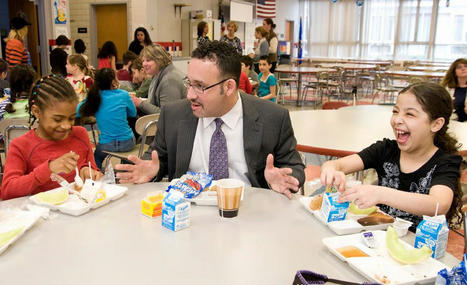
Like a growing number of U.S. students today, Miguel Cardona learned English in school, not at home.
|
|
Scooped by
Dual Language Education of New Mexico
January 14, 2021 12:42 PM
|
|
|
Scooped by
Dual Language Education of New Mexico
January 12, 2021 12:27 PM
|
The University of Connecticut has been awarded a $179,000 grant from the U.S. Department of Education's Office of Postsecondary Education for
|
|
Scooped by
Dual Language Education of New Mexico
December 25, 2020 10:21 PM
|
Nowadays, anyone having anything to do with second language (SL) acquisition would likely agree that games support SL education. Plenty of research has proven that a relaxing atmosphere and released tension improve the effectiveness of teaching. Creating a friendly and often funny atmosphere, games enable students to memorize words and grammatical structures. Fun, moving, and visual materials stimulate the brain, boost motivation and engagement, and open students’ minds. Engagement triggers positive attitudes and feelings, which help both teaching and learning. Even though the above-mentioned arguments are undeniable, other factors affect whether or not language games bring about the expected educational
|
|
Scooped by
Dual Language Education of New Mexico
December 8, 2020 11:14 AM
|
Only one in five social studies teachers in U.S. public schools report feeling very well prepared to support students' civic learning, saying they need additional aid with instructional materials, professional development and training, according to a RAND Corporation survey.
|
|
Scooped by
Dual Language Education of New Mexico
November 20, 2020 11:42 AM
|
The University of New Mexico Press has published a new book tracing the complex history of bilingual education in the 'Land of Enchantment.' The Shoulders We Stand On, edited by Rebecca Blum-Martinezand Mary Jean Habermann López, traces the complex history of bilingual education in New Mexico, covering Spanish, Diné, and Pueblo languages. The book focuses on the formal establishment of bilingual education infrastructure and looks at the range of contemporary challenges facing the educational environment today. The book's contributors highlight particular actions, initiatives, and people that have made significant impacts on bilingual education in New Mexico, and they place New
|
|
Scooped by
Dual Language Education of New Mexico
November 16, 2020 3:44 PM
|
Children of color often struggle to see themselves in their history lessons.
|
|
Scooped by
Dual Language Education of New Mexico
November 12, 2020 11:12 AM
|
|
|
Scooped by
Dual Language Education of New Mexico
October 20, 2020 12:55 PM
|
Due to the pandemic, the shift to online learning has been a necessity for many students, but as a result, many learners could be left behind.
This study examines the effects of English Learner (EL) status on subsequent Special Education (SPED) placement. Through a research-practice partnership, we link student demographic data and initial English proficiency assessment data across seven cohorts of test takers and observe EL and SPED programmatic participation for these students over seven years. Our regression
|
|
Scooped by
Dual Language Education of New Mexico
September 30, 2020 1:29 PM
|
|
|
|
Scooped by
Dual Language Education of New Mexico
January 21, 2021 11:26 AM
|
Miguel Cardona -- President-elect Joe Biden's pick to become the next U.S. education secretary -- grew up and spent 21 years of his 23-year career as an educator in Meriden, CT. His experiences there -- his battles and the district's successes -- will likely be front-of-mind as he coordinates policy for all the public schools in the country.
|
|
Scooped by
Dual Language Education of New Mexico
January 14, 2021 12:44 PM
|
|
|
Scooped by
Dual Language Education of New Mexico
January 13, 2021 11:23 AM
|
English language learners’ development of second language literacy skills is often quite unique, says Assistant Professor Jackie Relyea, Ph.D., because it often takes longer to develop than their day-to-day oral communication skills. She explains how educators can support these students as they become proficient English readers.
CAMDEN, NJ — Tracy Foedisch, one of the founders of Hope Community Charter School, was always aware of the large undocumented population in Camden. But she says the pandemic helped put the topi
|
|
Scooped by
Dual Language Education of New Mexico
December 19, 2020 12:36 PM
|
State Superintendent Thurmond announced on Thursday the release of the Integrated and Designated English Language Development Video Series.
More than 20% of children in the U.S. are bilingual, a number that continues to rise year over year (Kids Count Data Center, 2018). According to the American Speech-Language-Hearing Association (ASHA), there is a common misconception that being bilingual contributes to speech or language delays in children. However, it is important to note this is a difference, not a delay or disorder. Bilingual children may present with common speech patterns and phenomena that make it appear they are delayed or confused. Rather, these are common processes that occur when children are learning multiple languages. Common Speech Patterns in Bilingual Children
|
|
Scooped by
Dual Language Education of New Mexico
November 18, 2020 12:30 PM
|
Learning a language later in life changes how the two halves of the brain contribute. As skills improve, language comprehension changes hemisphere specialization, but production does not, according to new research.
|
|
Scooped by
Dual Language Education of New Mexico
November 13, 2020 1:09 PM
|
How a children's book about the endangered Golden-cheeked Warbler became part of a movement to embrace Indigenous languages in Mexico.
Author(s): Brouillette, Liane | Abstract: This study looks at the impact of a cost-effective professional devel- opment model in which teaching artists helped early elementary teachers master arts-based strategies for boosting the oral language development of English- language learners (ELLs). Teaching artists visited K–2 classrooms for 50 minutes weekly for 28 weeks. Student scores on the listening and speaking sections of the California English Language Development Test were used to determine the impact on language development. The experimental group consisted of 267 students; the comparison group consisted of 2,981 students. The analysis of the listening and speaking scores, fall 2010 to fall 2011, showed significantly more improvement for students in the experimental group. This research has implications for school leaders who, in times of tight budgets, seek professional development opportunities that can assist teachers in addressing the language development needs of English-language learners.
Coalition for English Learner Equity issues a call to help address the education disparities faced by English Learners across the U.S.
|




 Scoop.it!