Inside the right earpiece — that is, the horizontal support that goes over your ear — Google has packed memory, a processor, a camera, speaker and microphone, Bluetooth and Wi-Fi antennas, accelerometer, gyroscope, compass and a battery. All inside the earpiece.
The biggest triumph — and to me, the biggest surprise — is that the tiny screen is completely invisible when you’re talking or driving or reading. You just forget about it completely. There’s nothing at all between your eyes and whatever, or whomever, you’re looking at.
You can control the software by swiping a finger on that right earpiece in different directions; it’s a touchpad. Your swipes could guide you through simple menus. In various presentations, Google has proposed icons for things like taking a picture, recording video, making a phone call, navigating on Google Maps, checking your calendar and so on. A tap selects the option you want.
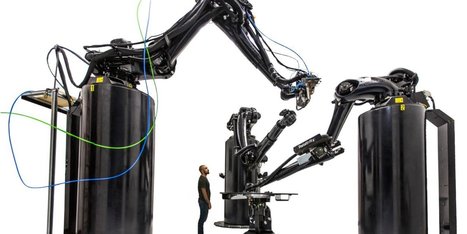
While SpaceX works on giant reusable rockets to reach Mars, other companies are working on technologies to keep colonists alive on the red planet. Relativity Space has made the world's largest metal 3D printer, called Stargate, to print rockets, tools, and other useful objects off-Earth.
When humans take the drug MDMA, versions of which are known as molly or ecstasy, they commonly feel very happy, extraverted, and particularly interested in physical touch. A group of scientists recently wondered whether this drug might have a similar effect on other species—specifically, octopuses, which are seemingly as different from humans as an animal can be. The results of their experiment, in which seven octopuses took MDMA, were “unbelievable.”
To get content containing either thought or leadership enter:
To get content containing both thought and leadership enter:
To get content containing the expression thought leadership enter:
You can enter several keywords and you can refine them whenever you want. Our suggestion engine uses more signals but entering a few keywords here will rapidly give you great content to curate.





 Your new post is loading...