Your new post is loading...

|
Scooped by
Steven Bonacorsi
July 27, 2022 8:35 PM
|
What is a Kanban? Kanban is a visual system for managing work as it moves through a process. Kanban visualizes both the process (the workflow) and the actual work passing through that process.
|
|
Scooped by
Steven Bonacorsi
July 27, 2022 8:34 PM
|
|
|
Scooped by
Steven Bonacorsi
July 27, 2022 8:25 PM
|
Why an organization shall go for Lean Management?
#leansixsigma #leanmanufacturing #leanmanagement #leanthinking #leanleadership #leantransformation ...
|
|
Scooped by
Steven Bonacorsi
July 27, 2022 8:25 PM
|
|
|
Scooped by
Steven Bonacorsi
July 27, 2022 8:25 PM
|
|
|
Scooped by
Steven Bonacorsi
July 27, 2022 8:24 PM
|
|
|
Scooped by
Steven Bonacorsi
July 27, 2022 8:24 PM
|
|
|
Rescooped by
Steven Bonacorsi
from Lean Six Sigma Group
July 6, 2021 11:42 AM
|
Are you from the U.S? Are you a Michigan College Student?? Do you want a Free Project Template??? Then takes this QUICK survey for your FREE project templates Do you want to learn more about Lean Six Sigma and how it can help you develop as a business professional? Then contact Dmaine Harris to gain
|
|
Scooped by
Steven Bonacorsi
April 16, 2021 12:38 PM
|
Position Summary The Plant Superintendent reports to the Plant Manager and is responsible for all operating related activities on all assigned shifts within the business unit(s). The incumbent is expected to make a significant contribution to two of the company’s strategic goals: 1.) Be the Employer of Choice, and 2.) Be the Supplier of Choice. This position exists for the purpose of: Providing leadership, direction, training, and multi-skill development opportunities for the Team Members in the business unit(s) in a manner that supports the company goal of achieving a world-class operating model characterized by continuous improvement and a team-oriented work environment;. Identifying and facilitating the resolution of issues and problems that impede individual Team Member or group performances. Maximizing business unit throughput by effectively managing the assigned human and physical assets assigned to the business unit. Essential Qualifications: A demonstrated ability to lead others in a collaborative manner; 7 years or more of related leadership experience. Demonstrated planning and problem solving skills. Formal education or, a combination of relevant education and experience, in one or more the of company’s core competencies: fabricating, welding, machining, or finishing. Working knowledge of applicable regulatory requirements (OSHA, DNR, EPA, and labor and employment law). Demonstrated ability to procure the support or cooperation of others outside the business unit to resolve issues within the business unit effectively. Sufficient technical capabilities to resolve the kinds of issues or problems experienced or anticipated in the business unit; demonstrated ability to read and interpret blueprints. Working knowledge of process improvement tools such as: 5S, lean manufacturing, process mapping/analysis, theory of constraint, Kaizen, and team-based problem solving. Acceptable level PC skills; familiar with and effective using various operating and data base systems Desired Qualifications: BS/BA in a relevant technical discipline. Extensive familiarity with a broad range of company manufactured products. Results Areas: * Safety. Minimize or eliminate recordable injuries within the business unit; ensure compliance with all applicable OSHA, EPA, DNR and internal safety policies and procedures across the business unit. Throughput. Continually improve the throughput rate of the business unit. On-time delivery. Achieve the targeted on-time delivery rate for all products manufactured in the business unit. Customer acceptance rate. Achieve the targeted customer acceptance rate for all products manufactured within the business unit. Scrap & re-work. Minimize or eliminate scrap & re-work within the business unit; achieve the targeted scrap & re-work rate for the business unit. Team Member satisfaction. In collaboration with the assigned Team Leaders, create a work environment within the business unit that results in 1.) Continuous improvement in the targeted benchmark “score” associated with the Team Member satisfaction survey; and 2.) control of voluntary turnover to less than the targeted rate. Primary Activities and Duties : Develop and secure approval for process improvement plans. Optimum staffing levels. Optimum equipment. Optimum cell layout(s) Develop management skills in Team Leaders. Review production plans and schedules. Identify and implement plans to expand Team Member skill capabilities within the Service Center functions/cells. Develop individual Team Member development plans. Maintain a high level of communications throughout the Service Center on all shifts; conduct weekly Team Member meetings. Conduct performance reviews. Respond in a timely and effective manner to Team Member HR related questions, requests, or inquiries. Identify and eliminate the causes of scrap and re-work. Meet with other support functions to identify and resolve problems or issues. Participate in company policy making decisions. Develop and ensure adherence to preventative maintenance plans. Participate in injury or near-miss assessments. Understand, apply, and support the company’s general initiatives, such as 5S, lean manufacturing, Kaizen, and continuous improvement. Drug Testing Notice OEM is committed to a drug-free workplace. When you apply you agree to abide by our pre-employment drug policy, which you can review by clicking here. We accept applications/résumés for all positions. Your earnings at OEM are directly commensurate with your particular skill set(s) and proven performance. If you are an internal candidate, please fill out a Consideration Request form and turn it into Nicole Laufenberg. OEM Fabricators, Inc. is an Equal Opportunity Employer Job Type: Full-time Benefits: 401(k) Dental insurance Health insurance Life insurance Paid time off Retirement plan Schedule: Monday to Friday Work Location: One location Company's website: www.oemfab.com Benefit Conditions: Waiting period may apply Work Remotely: No
|
|
Rescooped by
Steven Bonacorsi
from Lean Six Sigma Group
April 16, 2021 12:37 PM
|
The Lean Six Sigma Group was started in 2007 on LinkedIn with the vision of creating a single home for all practitioners to come and network for free. A place we could come and post a job, to let others know we were available for work, to share your videos, case studies, podcasts, blogs, books, arti
|
|
Rescooped by
Steven Bonacorsi
from Lean Six Sigma Group
February 25, 2021 2:49 PM
|
|
|
Scooped by
Steven Bonacorsi
July 24, 2020 3:10 AM
|
|
|
|
Scooped by
Steven Bonacorsi
July 27, 2022 8:34 PM
|
|
|
Scooped by
Steven Bonacorsi
July 27, 2022 8:26 PM
|
|
|
Scooped by
Steven Bonacorsi
July 27, 2022 8:25 PM
|
|
|
Scooped by
Steven Bonacorsi
July 27, 2022 8:25 PM
|
|
|
Scooped by
Steven Bonacorsi
July 27, 2022 8:24 PM
|
|
|
Scooped by
Steven Bonacorsi
July 27, 2022 8:24 PM
|
My guest for Episode #451 of the Lean Blog Interviews Podcast is Dr. Alan G.Robinson -- author of "Practical Innovation in Government."...
|
|
Scooped by
Steven Bonacorsi
September 3, 2021 9:40 AM
|
|
|
Scooped by
Steven Bonacorsi
April 16, 2021 12:39 PM
|
The PDCA Cycle has been the basis of other methodologies and project management strategies. Learn how it can drive continuous improvement.
|
|
Scooped by
Steven Bonacorsi
April 16, 2021 12:38 PM
|
|
|
Scooped by
Steven Bonacorsi
March 31, 2021 10:08 PM
|
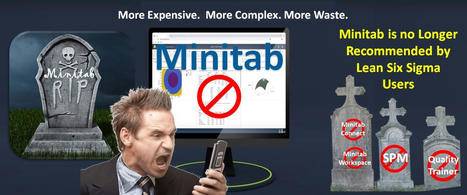
"I was never much of a Minitab user. Minitab lost my confidence when it gave me a standard deviation estimate for a data set with a single point.
|
|
Rescooped by
Steven Bonacorsi
from Lean Six Sigma Group
October 19, 2020 5:23 PM
|
|
|
Rescooped by
Steven Bonacorsi
from Lean Six Sigma Group
July 24, 2020 3:09 AM
|
Enter Drawing to Win GD&T Fundamentals 4th Ed. By Dan Medford & Exercise Book. https://qctraininginc.com/monthly-drawing/ In this technically advanced manufacturing world, “GD&T Fundamentals Training” is vital to a successfully designed and manufactured product! You can make a difference by having a foundational knowledge of GD&T. This course covers terms, definitions, and rules, followed by an in-depth discussion of each of the 14 GD&T symbols. GD&T, when applied and interpreted correctly, will enable your organization to benefit from the intended FORM, FIT, and FUNCTION of the part.
|