Your new post is loading...

|
Scooped by
Jim Lerman
December 28, 2011 1:17 PM
|
This is the kind of mindset we should be promoting among our kids, I think. Observing situations, identifying problems, developing a plan, gathering data, and taking action. -JL Two fourth-graders at Jaime Escalante Elementary School in Cudahy, Calif., spearheaded a program that allows students who do not eat all of their lunch to put leftovers on a "common table" so they can be donated to families in need. The girls counted and charted how much food was being wasted and wrote a letter to the school district's food-services director asking for permission to donate unopened leftovers.
|
|
Rescooped by
Jim Lerman
from Online Video Publishing
December 27, 2011 10:24 PM
|
This site is for teachers and educators of all grade levels and subject areas. It hosts short tutorial videos on many of the best digital tools to use with students. Its also a growing community of ideas submitted by teachers for classroom use.
Via tom jackson
Watch this video to learn how to embed a YouTube video directly into a Microsoft Word document.
Via tom jackson
|
|
Scooped by
Jim Lerman
December 27, 2011 9:33 PM
|
Created by tech startup Educreations, the app is available for the iPad and can also be accessed from any computer through the web. Making your own video tutorial takes only a few simple steps. Once you create an account, you can upload images, draw pictures, animate and resize them, and write with the app's "whiteboard marker." You can also record audio explanations of the content through the microphone on their computer or iPad. If you flub your explanation, no worries—you can erase and start over without messing up the visuals you've created for your tutorial. What sets the Educreations whiteboard app apart from the Khan Academy and other virtual learning platforms is that anyone can create a lesson on a topic of their expertise. Teachers can tag their videos by subject area, then mark it as open to the public through the Educreations site or private to people who have the link.
|
|
Scooped by
Jim Lerman
December 27, 2011 8:10 PM
|
Educators who teach in an online setting should foster strong relationships with their students' parents and should offer plenty of positive feedback, says the nation's first-ever K-12 Online Teacher of the Year.
|
|
Scooped by
Jim Lerman
December 27, 2011 8:02 PM
|
The research profiled in this Boston Globe article would seem to be the counter-thrust to continuous partial attention (CPA), as well as the multi-tasking lifestyle. Apparently we are happier if we focus on something for a period of time. This is called mindfulness, and it is hard work.
|
|
Scooped by
Jim Lerman
December 27, 2011 7:32 PM
|
The people at Facebook recognize the need for educators to understand how to use Facebook safely and effectively, not only for themselves but for their students as well. With this in mind, Facebook commissioned me and a team I chose to write the official Facebook for Educators guide. You can find our guide at http://facebookforeducators.org/
|
|
Scooped by
Jim Lerman
December 27, 2011 3:06 PM
|
Seventh-grade science teacher Ella Bowling uses Twitter with her students at Mason County Middle School in Kentucky. Bowling first used the tool to distribute sample questions for students to prepare them for an upcoming test, and now is using the tool to teach students new vocabulary words and distribute useful educational videos to students over the holiday break
|
|
Scooped by
Jim Lerman
December 27, 2011 2:27 PM
|
Great idea for teaching powerpoint to others or as a rubric for peer evaluation of presentations. -JL
|
|
Scooped by
Jim Lerman
December 27, 2011 2:20 PM
|
Last summer my interest in concept mapping was renewed when I read How Learning Works by Susan Ambrose et al.. At several points in the book they encourage higher educators to use concept maps. It has taken me a while to follow up but, with a little help from the POD List, here we go.
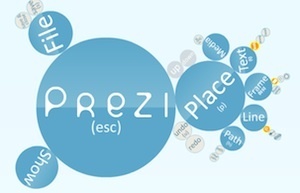
Many faculty members are experimenting with Prezi as a presentation tool. Others have added it to their regular list of technology tools and some use it exclusively. Unfortunately, as with any tool, there are ways to use it badly. One of Prezi’s pitfalls is getting carried away with zooming around the canvas and rotating the screen. This article provides recommendations for using Prezi well in a college classroom.
Via tom jackson
|
|
Rescooped by
Jim Lerman
from Digital Presentations in Education
December 27, 2011 2:02 PM
|
When you need a bit more functionality than Print Screen and Paint offer, one of these screen capture tools will come in handy.
Via Baiba Svenca
|
|
|
Scooped by
Jim Lerman
December 27, 2011 11:42 PM
|
A growing collection of terrific tools for storytelling. Pictured here is Jux, a very attractive means for conveying narrative. Many of the 2 dozen or so services here (as of 12/2011) are new to me, but they seem to offer wonderful opportunities and will be great fun to investigate. -JL
|
|
Rescooped by
Jim Lerman
from Online Video Publishing
December 27, 2011 10:16 PM
|
TubeChop is a free web service which allows you to select a specific portion of any YouTube video, and publish it as such. How does it work? You simply input the URL of the video you want to "cut" or a keyword to search for any video matching your query.
Once you have loaded your chosen video you can manually select exactly the part of the video that you want to "chop out" and once you click the button "Update", you are immediately provided with a link and an embed code to share your excerpted video selection with anyone. Very useful. 8/10. Try it out now: http://www.tubechop.com/ (Reviewed by Robin Good)
Via Robin Good
This page provides a breakdown of videos within the Technology Integration Matrix grouped by the digital tools used in each lesson. When a video involves more than one digital tool, it appears in each applicable section.
Via tom jackson
|
|
Scooped by
Jim Lerman
December 27, 2011 9:36 PM
|
"It's still the case that the only opportunity for an 18-year-old to do global service in this country is through the military," says Abby Falik, who was turned away by the Peace Corps when she tried to serve after high school. "You need a college degree typically to join." Falik went on to design her own custom year abroad, working with community groups in Brazil and Nicaragua. The experience was so rewarding that ever since, she's been "totally fixated" on creating a program to provide similar opportunities to other young Americans. In 2009, Falik launched Global Citizen Year, a post-high-school program for college-bound students in search of leadership skills and life experience in emerging economies.
|
|
Scooped by
Jim Lerman
December 27, 2011 8:14 PM
|
As K-12 virtual learning expands across the nation, two of the nation’s largest ed-tech providers have jumped into the virtual learning market with significant acquisitions they hope will boost their offerings and help them appeal to a wider set of students and teachers. But the moves also come as a new report from the National Education Policy Center at the University of Colorado argues that K-12 virtual learning needs stronger government oversight.
|
|
Scooped by
Jim Lerman
December 27, 2011 8:10 PM
|
The term “blended learning” encompasses a number of different instructional models in use across the country, but who has the time to compare and contrast these programs for an analysis of what blended learning means today? A new report does just that, and it also collects instructors’ opinions of this type of learning. The report describes the blended-learning programs of 40 organizations that have combined face-to-face and online instruction, to help education leaders better understand the many possibilities that blending learning offers.
|
|
Scooped by
Jim Lerman
December 27, 2011 7:46 PM
|
Increase your chances of acceptance to the school of your dreams.Read on …...
There is no curation without original content. However, curators can expand the readership and help their niche find meaning and insight in the material as it relates to them. There is too much information. The author explains that the real power of content marketing lies in the orginal content creation. Mixing curated content with your original content builds authority. There is a video "Is Your Content Good Enough To Be Curated"? That's where it is for all of us that write. Why would anyone curate my post? Commentary first written by Jan Gordon "Covering Content Curation, Social Media and Beyond" and I adapted her commentary. Read full article here: [http://bit.ly/w104L6]
Via janlgordon, Barbara Bray
|
|
Scooped by
Jim Lerman
December 27, 2011 3:04 PM
|
Clintondale High School in Michigan has adopted a flipped instructional model with teachers giving online-video lectures as homework and conducting hands-on activities during the school day. The school adopted the blended-learning model with a few of classes during 2009-10, but brought the whole school on board after seeing an increase in student achievement and a decrease in the failure rate.
|
|
Scooped by
Jim Lerman
December 27, 2011 2:24 PM
|
This discussion focuses on college teacher, but there is a lot of overlap with K-12. -JL I have thought a lot about which tablet apps would likely be the most useful to college faculty in their teaching role. A complete answer depends on your subject area — there are apps for music, maps, the periodic table, star charts, frog dissection, and much more. And a number of other factors figure into my app choices, including organizational work, personal interests and outright whims. I’ve tried to be generic here, describing categories of apps that will be useful to many people. I name specific titles you may want to explore as good examples, but they are not presented as “best of breed.” You should read descriptions, scan reviews, and try out a variety of programs. Many of the titles on the list are free or inexpensive. Where you see dollar signs ($$) the app costs more than $5.
|
|
Scooped by
Jim Lerman
December 27, 2011 2:19 PM
|
year or so ago, when Prezi first arrived, there was a lot of debate about whether it was better or worse than PowerPoint. That’s like arguing over whether a barbecue grill is better than a toaster oven; they both have strengths and limitations. The answer to which is better is situational; it depends on what you are trying to accomplish.
Great collection of links for ready-made rubrics in a wide range of instructional areas from Univ. of Wisconsin-Stout, which publishes a great newsletter every month. Topic areas for rubrics include: Cooperative Learning Research Process/Report
PowerPoint/Podcast Oral Presentation
Web Page and ePortfolio Math, Art, Science
Video and Multimedia Project Creating Rubrics
Writing Rubrics for Primary Grades
Game and Simulations Web 2.0
Via tom jackson
|