Your new post is loading...

|
Scooped by
Jim Lerman
August 13, 2012 6:35 PM
|
From the website "Social media outlets like Facebook and Twitter are continuing their rise in popularity and there are no signs of this growth stopping soon, as is evidenced by the 42% of high school students who currently use Twitter. Smart educators who opt to use Twitter in the classroom are sure to see improved student grades as well as creative and positive results in other areas. If you have not entered this realm of social media, it’s easy to pick up on the basics of Twitter and enjoy its benefits for you and your students. "Here are seven innovative and motivating ways to bring the world of Twitter into your classroom:"
|
|
Scooped by
Jim Lerman
August 13, 2012 6:12 PM
|
By Mary Beth Hertz Summary by Accomplished Teacher "It can be easy for connected educators to feel like they are different from their colleagues, according to K-8 technology-teacher Mary Beth Hertz. In this blog post, Hertz writes that the "new species of educator" has developed a community, where the members speak the same language. "However, we need to stop looking at ourselves as different or separate from our peers," she writes. "We are all on the same continuum, just moving at varying rates."
|
|
Scooped by
Jim Lerman
August 13, 2012 5:59 PM
|
95-minute video panel discussion among experts in using digital media with young children. Presented by Arizona State University, The New America Foundation, and Slate. From the website "Kids love video games. And iPads. And even Twitter. But what can they learn from high-tech tools—and, perhaps more importantly, can the ways they use technology give us insight as to howthey learn? "Those were the guiding questions at this Future Tense event on technology in early education. During the introduction, New America Foundation fellow Lisa Guernsey, author of Screen Time: How Electronic Media—From Baby Videos to Educational Software—Affects Your Child, noted that we frequently think of educational technology as the realm of middle or high school. But research currently suggests that children between the ages of 6 months and 6 years spend an average of 120 minutes a day with screens. Meanwhile, teachers—and companies producing educational software and games—are increasingly bringing technology into the classroom to appeal to kids who enter kindergarten already familiar with iPads, smartphones, and Microsoft Kinect. "Guernsey was joined by the Joel Levin, a private school teacher from New York City who is creating educational versions of the blockbuster game Minecraft; Alice Wilder, co-creator and head of research and education for Super Why! on PBS; and Annie Murphy Paul, another New America fellow and author of Origins and the forthcoming Brilliant. Scott Traylor, founder of 360Kid, joined us via a prerecorded Skype interview."
|
|
Scooped by
Jim Lerman
August 13, 2012 5:36 PM
|
By Melissa Parner and Patrick Healy "Los Angeles Unified Superintendent John Deasy wants to give a tablet computer to every student -- and every educator -- in the nation's second-largest school district by the next school year. In a traditional annual address to administrators before classes start up in the new academic year, Deasy said Thursday that he wanted LAUSD to prepare the district's 650,000-plus students for the future. "I am committed to working with this amazing Board of Education for finding a way to place a tablet in the hands of every student and school staff member ... in the next 15 months," Deasy said." via SmartBrief on EdTech
|
|
Rescooped by
Jim Lerman
from TL21
August 12, 2012 10:43 PM
|
|
|
Scooped by
Jim Lerman
August 12, 2012 6:00 PM
|
By Caitlin Tucker "For many teachers the lack of technology in their physical classrooms is the biggest hurdle to engaging students in active learning online. I, like so many public school teachers, do not have any technology in my classroom beyond my ancient Dell desktop and a roll around transparency machine. If I want to get students researching, problem solving and collaborating using technology, I have to leverage the mobile devices they bring into the classroom. "The use of mobile devices, especially smart phone, is a new and emerging frontier in education. Students are increasingly connected to information and each other via their mobile phones. This connectivity can be used in the classroom to improve learning and engage students in more active learning both inside and outside of the classroom."
|
|
Scooped by
Jim Lerman
August 12, 2012 1:41 AM
|
Description by edSurge "Schoolzilla's Assessment Explorer, a student performance analysis tool developed internally at Aspire Public Schools is now available free-of-charge to all K-12 institutions in the U.S. The tool has been available to all schools in the state of California since 2011 and is currently used by the Alameda Unified School District, Leadership Public Schools, Green Dot Public Schools and Summit Public Schools, among others. The national deployment was made possible by an i3 grant from the US Dept of Ed. Check out the website or email contact@schoolzilla.org for more details."
|
|
Scooped by
Jim Lerman
August 12, 2012 1:26 AM
|
From the website "While the implementation of the Common Core State Standards means a lot of work and transition ahead, the good thing about shared benchmarks across 45 states is that you can now share resources, ideas and lessons with a colleague across the hall—or across the country. With that in mind, we asked our Facebook fans for their favorite online tools that are making the transition a little easier." Via edSurge
|
|
Scooped by
Jim Lerman
August 12, 2012 12:41 AM
|
Posted by Ron Toledo "We’re big fans of IdeaPaint, a special kind of paint that can turn anything into a dry-erase writing surface (you can read more about it here). When you combine IdeaPaint’s ability turn any wall or surface into a canvas and Evernote’s ability to capture, archive and make that surface searchable, the possibilities for turning any room into an interactive environment are endless. These two products come together in a particularly exciting way in a classroom environment, which can become a more creative and engaging place to learn. "When geography teacher Mike Curta reached out to us about his plans to transform his Eisenhower High School classroom using IdeaPaint and Evernote, we knew we wanted to learn more. Throughout the school year, Mike kept us updated with his progress by sending photos and email updates about the learning environment he created and the positive results he was observing. By the end of the year, we knew we had to see it for ourselves, so we headed to Blue Island, Illinois to chat with Mike in person and get a better sense of how students were thriving in this new type of classroom."
|
|
Scooped by
Jim Lerman
August 11, 2012 10:53 PM
|
Posted by Jeff Dunn, via Accredited Online Colleges "Bringing multimedia into the classroom is a great way to engage students in learning. Supplementing lessons, opening up new interests, and offering inspiration, online videos make for an incredible teaching tool. In 2010, we covered our favorite 100 video sites for educators, and we’ve now updated our list for 2012 with more than 100 resources and more than 25 brand new entries. Read on, and you’ll be able to check out the very best sources for educational videos on the web."
|
|
Rescooped by
Jim Lerman
from :: The 4th Era ::
August 11, 2012 10:42 PM
|
By Mary Beth Hertz "My colleagues Hadley Ferguson, Mike Ritzius and I presented the conversation “A New Species of Educator” at the #140edu conference in New York City. Over the course of 20 minutes, we talked about how being a connected educator can make us feel kind of like aliens. When we talk about our friends whom we’ve never met but have talked to for years online, and explain how much we learn from them, or when we talk about things like “flipping the classroom” or letting students lead their own learning, people sometimes look at us like we’re from another planet. "It’s easy for those of us who are connected to feel different from our colleagues, like we have a leg up or an advantage or that we are in some way “better” than our peers because of the connections we make and the amount of information we have access to. This cannot be further from the truth, however. For those readers who may be familiar with Rogers’ Innovation Adoption Curve, it is fairly apparent that connected educators are at the beginning of that curve when it comes to using technology to further our learning and grow professionally. However, that does not make us aliens."
|
|
Scooped by
Jim Lerman
August 11, 2012 2:09 AM
|
THIS ONLINE CONFERENCE IS FREE OF CHARGE From the website "The Learning 2.0 Conference is a unique chance to participate in a global conversation on rethinking teaching and learning in the age of the Internet. Subject strands include changes in the classroom (social media, 1:1 computing, "flipped classrooms," digital literacy, maker spaces, gaming, open educational resources, digital textbooks), in student learning (individualized learning, student-directed learning, "hacking" education, personal success plans, ePortfolios, and building a digital presence), in teacher personal and professional growth (lead learning, personal learning networks, peer / open / self-directed PD), in schools (virtual and online schooling, mobile learning, blended learning, MOOCs, immersive environments, learning spaces, entrepreneurship, school leadership, big data, assessment models), and in pedagogy (from teaching to learning, social learning, social / educational networking, passion-based learning, learning how to learn, brain-based learning). "Keynote Sessions: Julie Evans, Gina Bianchini, Heidi Hayes Jacobs, Lee Rainie, Angela Meiers, Sugata Mitra, Sheryl Nussbaum-Beach, Michelle Pacansky-Brock, Marc Prensky, Audrey Watters, Yong Zhao." "Keynote Panel on Technology and Librarians: Gwyneth Jones, David Loertscher, Michelle Luhtala, Shannon Miller, and Joyce Valenza." "Pre- and Post-Conference Special Interviews: David Deubelbeiss, Lee Rainie, Alfie Kohn, Gary Stager, Stephen Downes, Howard Gardner, Rudy Crew, Roger Schank, Paulo Blikstein, Rob Fried, Gordon Dryden, Tony Wagner, and Michael Strong." Lead organizer of this conference is Steve Hargadon. -JL
|
|
Scooped by
Jim Lerman
August 10, 2012 9:19 PM
|
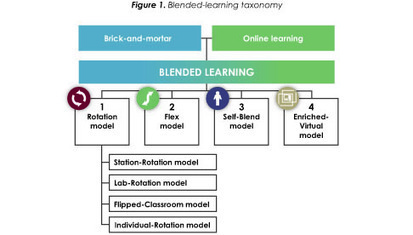
By Heather Staker and Michael B.Horn Summary from the Innosight Institute website "Innosight Institute’s report, “Classifying K-12 blended learning,” introduces a refined definition of blended learning and distinguishes blended learning from other education practices. It highlights four blended-learning models and sub-models that are appearing across the K-12 field and provides examples of schools and districts that have implemented them. As educators begin to converge on a shared language about the emerging phenomenon of blended learning, they will be better able to advance the pace and quality of the innovation." Innosight Insitute is the homebase of a number of the floks behind 2009's very influential book, "Disrupting Class." This white paper is their latest publication. -JL
|
|
|
Scooped by
Jim Lerman
August 13, 2012 6:29 PM
|
By Jonathan Martin "This post could be almost infinite: there is most certainly an extraordinary array of options for videos which expand educators’ understandings and inspire advances in 21st century learning. But curation is about choice and selection, and while I know I will leave out many, I thought I’d offer up a set of 15 of my favorites for your consideration for video screening at at back-to-school or beginning-of-the-year faculty meetings (and/or parent and board meetings). "I’ve starred those that might also serve as useful and engaging videos to share with students at back to school or other assemblies. "I am sure every reader will have their own opinions about the videos I’ve left off this list, and please: add them below using the comment box, or, post yourself your own set and share the link from this post to your own." A wonderful list. You are sure to find something valuable here. -JL
|
|
Scooped by
Jim Lerman
August 13, 2012 6:05 PM
|
By Amy Erin Borovoy Summary by Accomplished Teacher "Amy Erin Borovoy, Edutopia's digital media curator, in this blog post shares resources for using the social network Pinterest in the classroom. Borovoy writes that Edutopia is starting its own Pinterest account, and provides links to several video resources on what Pinterest is and how teachers are using it. Included is a guide for online educators and tips from teacher Kim Fernandes on using Pinterest to involve parents."
|
|
Scooped by
Jim Lerman
August 13, 2012 5:48 PM
|
By Lisa Guernsey Quite an informative article about Minecraft and how it has taken over the out-of-school life of the author's two elementary-aged daughters. While acknowledging the game's outstanding appeal and capacity for intellectual engagement, as well as its emerging potential as a classroom learning environment, Guernsey explains her motherly challenges as she tries to insure her daughters lead balanced lives. -JL via SmartBrief on EdTech
|
|
Scooped by
Jim Lerman
August 13, 2012 5:32 PM
|
By Nick Phillips Summary by SmartBrief on EdTech "Educator Mark Phillip describes a unit he taught on visual literacy and shares a step-by-step look at several of the unit's lessons. Students watch news reports, advertisements and political commercials to examine the facts, the images and music. "If kids are to make informed, free choices, we have to teach them to be critically conscious of all efforts to manipulate their thinking," Phillips writes."
|
|
Rescooped by
Jim Lerman
from New Web 2.0 tools for education
August 12, 2012 8:28 PM
|
By Med Kharbach "Just a few weeks are left till the start of the new school year. As a part of the digital kit you might be recommending to your students, personal planners should take some priority. Using these tools students will be able to organize their study materials online, make it easily accessible, collaborate and share links and resources with one another and above all improve their scholarly achievement."
Via Kathleen Cercone
|
|
Scooped by
Jim Lerman
August 12, 2012 1:53 AM
|
3-page essay, $10,000 prize From the website "Through a partnership with Stanford University, Goldman Sachs hosted a Global Education Conference in each of the last two years to bring together leaders from across the education ecosystem to debate issues, raise questions, discuss best practices and create a richer dialogue on a diverse array of topics on education. "This year, as part of our second Global Education Conference, we announced an essay contest as a means to engage the broader education community and foster greater innovation. We are inviting anyone to submit concept papers on the following topic: What should we do to create a strong US education system that works for all, that improves student outcomes and enables our country to regain its leadership position in the field of education? "Criteria for selection will include originality, insightfulness, feasibility and potential impact. Writers should target three pages or less. The papers will be reviewed by a panel of education experts working together with the Stanford Education Club; the best submissions will be distributed to the broader education community. After the judging panel has determined the best papers based on highest composite score, the winning essay will be determined by a vote from the broader education community. The winning writer will be awarded a US$10,000 prize. The deadline for submission is 5:00 pm on Friday, November 16, 2012. Essays and any questions should be directed to EduInnovationEssay@gs.com."
|
|
Scooped by
Jim Lerman
August 12, 2012 1:33 AM
|
From the website "While being a teacher is never easy, working with students in special education comes with some unique challenges. From writing lengthy IEPs to working closely with parents and other teachers, it takes a calm, collected, organized, confident, and very special person to work with students who often need a great deal more support and assistance than their peers to succeed. "Yet even the best special education teachers can use a little guidance, inspiration, and information to help them to be even better at what they do. That’s just what the 50 blogs we’ve collected here can do. "Read through this updated list (a revision of this list to reflect new blogs and to remove old, no-longer-updated sites) to find resources that will help you teach, learn, and grow right alongside your students." Via edSurge
|
|
Scooped by
Jim Lerman
August 12, 2012 1:20 AM
|
By Aditi Rao "On Monday I will begin my new job. As I’ve mentioned before, I will be working as a Technology Resource Specialist as well as teaching a couple of classes. As always, I am nervous and excited for the first day of school, and eager to meet a new group of students. As an educator, I often find myself repeating the same icebreakers each year, trying to quickly get to know my students through “Two Truths and a Lie” or a “Getting To Know You” fact sheet. "In an effort to bring my own classroom to the present, I’ve put together a list of 10 icebreakers that use technology and fit with 21st century students:" Via edSurge
|
|
Scooped by
Jim Lerman
August 12, 2012 12:29 AM
|
By Lisa Michlle Dobbs "While the idea of being or becoming a connected educator is important, as a new teacher, this may seem completely overwhelming. There are resources in abundance for this month of learning, such as the CEM Starter Kit and the Connected Educator Month Calendar. These sites are packed with wonderful information, truly enough to get the head of a new teacher spinning! "Having said that, I'd like to chunk this Connected Educator Learning Month opportunity into five educator "Be-Attitudes" that might be easier for a new or pre-service teacher to embrace."
|
|
Scooped by
Jim Lerman
August 11, 2012 10:49 PM
|
By Vicki Davis A rich collection of links to Pinterest sites and blog posts about effective uses of Pinterest from around the web. Davis is well known for consistently assembling and sharing practical, high quality information. -JL
|
|
Scooped by
Jim Lerman
August 11, 2012 2:48 AM
|
Description from Internet Scout Project "Spotflux uses the power of the cloud "to conduct millions of real-time checks for invasive tracking, advertisements, malware, and other bugs that pose a threat to your identity or your data." The application helps scan and protect users' connections from malware and other viruses, along with concealing the identity and location of users' devices. This version is compatible with all operating systems." After last week's epically disastrous hack of Mat Honan, a senior staffer at Wired (see about 7 panels below), I became a lot more security conscious. It seemed like a wise step to install Spotflux, and I consider the Internet Scout Project quite a reliable source, so I installed it today. -JL
|
|
Scooped by
Jim Lerman
August 11, 2012 12:02 AM
|
By Torie Bosch "It’s easy to think of educational technology as just another route to the status quo: drilling facts into kids. However, the experts at “Getting Schooled by a Third Grader” said that when it’s done right, educational technology is a different beast altogether. By the end of elementary school, according to Guernsey, many kids are “deadened” by education and have lost their intrinsic love of learning. Engaging technology may help inoculate kids against this troubling outcome. None of our speakers believe that computers alone can—let alone should—impart knowledge. Teachers must be there as guides. But they are all excited by its potential."
|