


Using a simple method it was possible to hijack any Skype account with just the email address of the account holder, causing serious security concerns. The Skype team are currently on the case.

 Your new post is loading...
 Scoop.it! Using a simple method it was possible to hijack any Skype account with just the email address of the account holder, causing serious security concerns. The Skype team are currently on the case. 
No comment yet.
Sign up to comment
Scoop.it!

By Audrey Watters
"Now in its seventh year, the Maker Faire is hardly new, but there is an ever-increasing interest (or perhaps more accurately a renewed interest) in the types of making, building, creating, and hacking that Maker Faire — as well as the larger Maker Movement — showcases and supports.
"That interest is spurred in part by a proliteration of open source and entry level hardware projects: 3D printers like Makerbot (which unveiled its Replicator 2 in September), Arduino microcontrollers, the Raspberry Pi (one of my favorite education startups of 2011, which finally shipped its $35 computer board this year), e-textiles, robotics, laser-cutters, as well as a programming tools galore. (More on the importance of coding literacies in 2012 in a subsequent post in this series).
"The Maker Movement also reflects the technological, political, and economic zeitgeist: the need for a technologically skilled work force, hope for a revival of American manufacturing, concern about STEM education all the while cutting many of the programs in schools that foster these skills — arts, wood shop, metal shop, computer science — to make more room for more standardized testing."
Scoop.it!

A free, 8-part online workshoop series from Annenberg Learner. Topics include: Creating a Community of WRiter Making Writing Meaningful Teaching Poetry Teaching Persuasive Writing Teaching Multigenre Writing Responding to Writing: Teacher to Student Responding to Writing: Peer to peer Teaching the Power of Revision
Via Lynette Van Dyke
Scoop.it!

By Susan Oxnevad
"The toolkit is designed to provide teachers and students with all the resources needed to use ThingLink as an efficient and effective tool for teaching and learning. Several samples of Common Core aligned projects by grade level. A collection of quick video tutorials to demonstrate how to use ThingLink. The tutorials can be used with students to provide tech support right when needed. Resources for creating original artwork to be used with a ThingLink image. A help button for support from a real teacher. (That's me!) An opportunity for sharing.A brand new blog for sending updates. Sign up!"
Via Lynette Van Dyke
Scoop.it!

BeSeen is a fun mobile game to teach kids ages 8-12 about using social media responsibly. Simply download the FREE game from the Apple App Store or for your Android phone from Google Play (formerly the Android Marketplace) and get started! The game focuses on:
- Securing personal information
Via Gust MEES, Lynnette Van Dyke
Scoop.it!

Schreib-Lounge's curator insight,
February 14, 2013 1:55 AM
Gut gemachhte Ideen- und App-Sammlung für den Unterricht
Scoop.it!

Google's Niantic Labs released a new game this week called Ingress that turns your neighborhood into the game board. Via nubot, Jenny Smith, @LearningWheel, Jamie Forshey, Lynnette Van Dyke
Scoop.it!
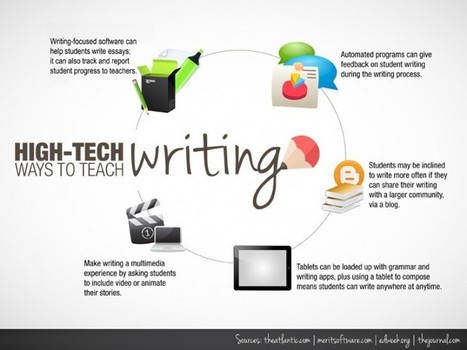
Both high-tech innovations for learning and the inability of many American schoolchildren to write well have been major talking points in educational circles for quite some time, but oddly enough, one may offer a solution to helping remedy the other.
There are a variety of tech tools and methods out there for teaching writing that can make the process easier and more fun for both teachers and students. While not every high-tech way of teaching writing will work for every class or every student, there’s enough variety that there’s bound to be something for everyone.
Here, we offer just a few tech-focused ways to help students learn grammar, essay-writing, and, most importantly, why good writing is so important to their futures. Via adpcenter, Jenny Smith, @LearningWheel, Jamie Forshey, Lynnette Van Dyke
Scoop.it!

From simple charts to complex maps and infographics, Brian Suda's round-up of the best – and mostly free – tools has everything you need to bring your data to life...
20 different tools for creating visualisations: from simple charts to complex graphs, maps and infographics. Almost everything here is available for free, and some you have probably installed already. Via Miloš Bajčetić, Rui Guimarães Lima
Scoop.it!

By Miguel Guhlin
"A colleague recently sent me the following series of questions, and while I have prepared my response below, I'd love to see what the rest of you have to say:
"I want to be able to organize my posts in Evernote so they can be easily tagged and shared.
"How should my scoopit or twylah account fit into all of this??
Scoop.it!

By Whitson Gordon
"It's the time of year where we all give thanks, and among many other things, we here at Lifehacker are thankful for all the free apps out there that improve our lives (and the developers that make them!). Here are 50 of our favorites.
"We asked you which free apps you're most thankful for, you offered hundreds of suggestions both classic and new. Here, we've taken your votes (and added a few of our own) and ranked our 50 apps using those votes as a guide. So without further ado, here are 50 free apps for your downloading feast."
Scoop.it!

Summary by EdSurge
"Curriculum site BetterLesson is seeking master teachers who want to dive deeply into Common Core math lessons for students grades 6 through 12. The company is looking to hire 28 teachers (four for each grade level) on a part-time basis. (You will definitely stay in the classroom.) BetterLesson expects to pay its master teachers $30K over two years for their work. The teachers will get time with "Common Core-knowledgeable coaches," and then capture and share lessons. All the details on how to apply and what be will involved are here. The program is supported with a $3.5 million grant from the Bill & Melinda Gates Foundation. More background is on the BetterLesson blog site here."
Scoop.it!

By Roger Riddell
"Flipped classrooms require educators to reconstruct traditional classrooms by sending lectures home and providing more face-to-face time at school, but elementary- through university-level instructors are finding good reasons to try them out.
"Frequently traced back to Colorado teachers Aaron Sams and Jonathan Bergmann, who were quick to experiment with posting videos online in 2008, the flipped classroom concept is small, simple and has shown positive results. The general idea is that students work at their own pace, receiving lectures at home via online video or podcasts and then devoting class time to more in-depth discussion and traditional “homework.”
|
Scoop.it!

From the website
"The best thing about building tools is seeing what people do with them. Since Google+ launched, it’s been fascinating to discover people using it in ways we never could have dreamed up—like the photographer who figured out how to turn a camera, a phone and Hangouts into Virtual Photo Walks.
"Ghetto Film School had a different idea. They’ve been running filmmaking programs for young people in their South Bronx neighborhood since 2000, and when they heard about Google+, they thought it would be a great way to bring what they do to teenagers beyond the Bronx. And from that simple idea, Ghetto Film School’s MasterClass series—discussions between great directors and young filmmakers from around the world—was born."
Scoop.it!

By Greg Whitby
"Don Tapscott’s latest book is not actually a book but an iPad app New Solutions for a Connected Planet. It was created in partnership with Thinkers50 and sponsored by the Rotman School of Managementat the University of Toronto.
"What makes this app innovative is that it is an evolving ‘book’ full of real-time, rich media content that allows readers (users) to navigate and interact in a way that a hardcopy or even eReader book couldn’t accommodate.
"This is the start of a new breed of reference books that shows what you can do to take digital content to the next level. Think of the potential for learning and teaching… a 21st century textbook that allows the learner to navigate, press, wipe, slide, watch, listen and share all in the one place. It’s served up in a highly interactive and engaging way for a digital savvy generation."
Scoop.it!

A free, 8-part online workshop from Annenberg Learner. Topics include: First Steps A Shared Path Different Audiences Different Purposes Usage and Mechanics Providing Feedback on Student Writing Learning from Professional Writers Writing in the 21st Century
Via Lynette Van Dyke
Scoop.it!
By Susan Oxvevad
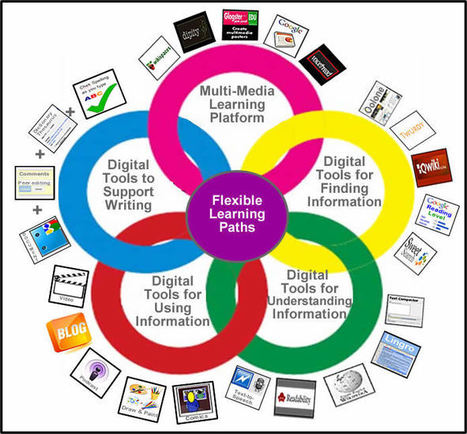
"What is ThingLink? ThingLink is a free and user friendly digital tool that provides users with the ability to turn any image into an interactive graphic. Create multiple “hot spots” on specific parts of an image and turn that image into a multimedia launcher. Include video, record audio or provide a link to any website with the click of a button. Easily embed an interactive ThingLink graphic into any blog or website. ThingLink is a truly amazing tool that allows users to pack a lot of content into a small space.
"My Journey with ThingLink As someone who is actively engaged in the never-ending search for free and user friendly digital tools, I was thrilled to discover ThingLink. I immediately fell in love with the tool because of its versatility and ease of use. Since discovering ThingLink, it has become one of my most frequently used tools with teachers and students throughout the school day, as well as for and professional development. I just can’t get enough of this tool!"
Scoop.it!

Despite widespread agreement among parents, educators, employers and policymakers worldwide that students need skills like critical thinking, problem solving, teamwork and creativity, these skills are stubbornly difficult to teach and learn, write.. Via Lynnette Van Dyke

kkennedy's curator insight,
October 22, 2013 11:49 AM
Quick, easy to read insights about 21st Century Skills.
Scoop.it!

Stephen Toulmin identified six elements of an argument: the claim, grounds, warrant, backing, qualifier and rebuttal. Via Lynnette Van Dyke
Scoop.it!

By Matt Petronzio
"Dropbox is a simple service, but you may not realize there are several ways to amp up the user experience. You can “favorite” files for offline reading, upload documents via URL, download torrents remotely so they’re ready by the time you get home and more. Check out the gallery above for some useful ways you can get more out of Dropbox."
Scoop.it!

Why have your students work collaboratively? "Collaborative learning teams are said to attain higher levels of thinking and preserve information for longer times that students working individually." This post provides 20 suggestions to help collaborative groups work more effectively. A few are: * Establish group goals. * Keep groups mid-sized. * Build trust and promote open communication. * Consider the learning process asa part of the assessment. The post includes links to a variety of resources and each point has an explantion with additional information. Via Beth Dichter

Channylt's curator insight,
April 7, 2014 10:56 AM
Great tips on how to facilitate collaborative learning. Learners that work collaborativley are engaged in their learning and have better learning outcomes. 
Marina Cousins's curator insight,
April 10, 2014 8:06 PM
I liked this article, as it highlighted to me the importance of collaborative learning is much better than individual learning. As I have mentioned several times, the learning and assessment that takes place within my workplace has a strong behaviourist foundation of learning and repeating key words and actions to pass an assessment (it is a very individual approach to learning).
Many of my colleagues view this experience of learning & assessment in a negative way. What are some of the ways to overcome this negative view of learning?
After reading this article, I will seriously consider using a collaborative learning style within my workplace (if I get the opportunity). The advantage of using real world problems or clinical incidents is that it offers the learner the opportunitity to improve their critical thinking skills and problem-solving ability.
Therefore, by using collaborative learning you can apply the following learning theories of cognitivism, constructivism, objectivism. 
Hazel Kuveya's curator insight,
April 10, 2014 9:22 PM
Keeping the groups at moderate levels will ensure an effective exchange of ideas and participation in all involved, I can echo the same statement that two heads are better than one. It is also interesting to learn that collaborative teams attain higher level thinking and preserve information for longer periods as compared to their individual counterparts., yes the use of technology makes collaborative learning manageable.
Scoop.it!

Lucy Georges's comment,
November 27, 2012 10:04 PM
Great content, but really could benefit from a better graphic design.
Lucy Georges's comment,
November 27, 2012 10:04 PM
Great content, but really could benefit from a better graphic design.
Scoop.it!

Posted by Dawn Casey-Rowe
"Students care. When they care and mobilize, the world changes around them.
"Students at the William M. Davies Career & Technical High School in Lincoln, Rhode Island discovered that Hurricane Sandy had severely affected family members of one teacher, whose sister in law was from Brick, New Jersey.
"They jumped right in, using social media to mobilize and create awareness of the extent of the damage and to lend a helping hand. Many of these students had not been directly affected by this storm but remembered the effects of the East Coast flood two years earlier."
Scoop.it!

By David Talbot Summary by EdSurge
"Some preliminary results reported by One Laptop Per Child around a bold experiment happening in rural Ethiopia. Several months after dropping off solar-powered Motorola Xoom tablets, 20 first grade-age children have managed their way from finding the on/off switch to hacking the preventative software installed by OLPC. No instructions. No guidelines. No teachers. Just a single technician to retrieve data from the devices each week. "Within four minutes, one kid not only opened the box, found the on-off switch...powered it up. Within five days, they were using 47 apps per child, per day. Within two weeks, they were singing ABC songs in the village, and within five months, they had hacked Android," reported OLPC's founder, Nicholas Negroponte at the recent EmTech Conference."
Scoop.it!

From the website
"How can students support the smart adoption of tech tools in the classroom? And how can they help teachers be more comfortable with--and rethink--the role of technology in teaching?
"Angela Estrella is working on a solution. As the media teacher at Lynbrook High School in San Jose, her job is to ensure that students and teachers are on the same page when it comes to classroom technologies. She finds herself at the crossroads between two groups that can be literally decades apart when it comes to tech savviness. “Technology has changed what it means to be a librarian,” Estrella says. “It’s not just dealing with books and inventory. Now the librarian is expected to be on top of media and technology, and help others be comfortable with it.”
"So at the beginning of the 2012 school year, Estrella raised a mini army of those who are most likely and willing to help: a group she dubbed “the Virtual Vikings.” Technically, it’s an elective class for upperclassmen with a free period; the Vikings work as Estrella’s TAs. The subject, however, is a serious matter. Their mission, according to the recruitment flyer: to “research, advance and aid in the development and use of technology at Lynbrook.” Or, as this promo video shows, to save the day when technology is literally falling apart in the classroom."
|






