Your new post is loading...

|
Scooped by
Jim Lerman
December 13, 2012 5:28 PM
|
By Amanda Christy Brown and Katherine Schulten
"Does the emphasis on reading “informational text” in the new Common Core State Standards set up a “fiction versus nonfiction smackdown” in English classes? If so, is that good or bad?
"In this lesson, students will reflect on their reading experiences in and out of school and discuss the roles that both nonfiction and fiction have played. Then, they will become familiar with what the Common Core standards say about reading, and what critics and supporters have written in reaction, in order to discuss and write about the question “What Should Children Read?”
|
|
Rescooped by
Jim Lerman
from :: The 4th Era ::
December 11, 2012 2:36 PM
|
By Scott Smith "With an estimated 40 million players worldwide, Minecraft has been available for a little over three years, the first of which it spent in rudimentary alpha form with frequent releases from its Swedish creator Markus “Notch” Persson, spreading mainly by word of mouth. "Minecraft got its full release on major gaming platforms this time last year. As of mid-November, Mojang, Persson’s game studio, reported it had sold over 8 million copies of the game for the PC alone, with another three million downloads on iOS, Android, and purchases for XBox 360. In short, this scrappy little game in which players dig, build and fly their way through chunky, late 1980s block graphic scenery, dodging bad guys knowns as Creepers and stepping over digital sheep, has pushed its way into the big time without a major licensed character, a blaze of bullets, or the voice of John Madden. "The game’s open, often cooperative play, peer-built environments and simplicity has drawn an army of dedicated players who often spend days tunneling, hammering and building, just for the pleasure of making."
Via Scott Merrick, Cynthia Garrety, Jim Lerman
|
|
Scooped by
Jim Lerman
December 11, 2012 9:22 AM
|
By Jackson Chung
"I own several Apple products that I use on a daily basis: several iPads, an iPhone, a MacBook and an iMac. What pushed me to purchase an iPad mini over a cheaper Android tablet of the same class was the fact that it runs iOS and therefore, would technically integrate seamlessly with the rest of my gear. And to be clear, I had my doubts about the iPad mini. I feared that it would under-perform and infuriatingly disappoint. And after using it for about 4 weeks, I’m happy to announce that even though it isn’t fitted with a Retina Display, the iPad mini managed to edge out an iPad 3 from my daily workflow. Surprised?"
|
|
Scooped by
Jim Lerman
December 11, 2012 12:24 AM
|
By Eric Savitz, summarizing Anderson "One of the hallmarks of the Strategic News Service, the always fascinating tech newsletter published by Mark Anderson, are the predictions. Right at the top of every issue the publication says it is “the most accurate predictive letter in computing and telecommunications, read by industry leaders worldwide.”
|
|
Scooped by
Jim Lerman
December 11, 2012 12:19 AM
|
By Vanessa Vega "Studies have proven that when implemented well, project-based learning (PBL) can increase retention of content and improve students' attitudes towards learning, among other benefits. Edutopia's PBL research review explores the vast body of research on the topic and helps make sense of the results. In this series of five articles, learn how researchers define project-based learning, review some of the possible learning outcomes, get our recommendations of evidence-based components for successful PBL, learn about best practices across disciplines, find tips for avoiding pitfalls when implementing PBL programs, and dig in to a comprehensive annotated bibliography with links to all the studies and reports cited in these pages."
|
|
Scooped by
Jim Lerman
December 11, 2012 12:12 AM
|
From the Meograph website: "Meograph helps easily create, watch, and share interactive stories. Our first product combines maps, timeline, links, and multimedia to tell stories in context of where and when. Authoring is structured into a few simple prompts on an intuitive interface. Viewers get a new form of media that they can watch in two minutes or explore for an hour. Sharing is easy: the two most viral types of media are videos and infographics ... Meograph is both." Via Ruth Vilmi
|
|
Scooped by
Jim Lerman
December 11, 2012 12:05 AM
|
For more than 15 years, Kathy Schrock has maintained a leading guide to web resources for educators and learners of all ages. Her guide has undergone numerous iterations, but in whatever form, has served consistently as one of the very best places for educators to go for reliable guidance. This latest verson of her work maintains Schrock's reputation as one of the web's savviest and helpful educational leaders. -JL
|
|
Rescooped by
Jim Lerman
from Rapid eLearning
December 10, 2012 1:37 PM
|
|
|
Scooped by
Jim Lerman
December 10, 2012 12:38 AM
|
By Richard Byrne "I was recently contacted by a reader who wanted to know what I had in my archives for art lessons and digital art galleries that students can access. While this isn't every visual art resource in my archive, these are seven of my personal favorites."
So, you think you’ve got the hang of Gmail, but you’re sure it can do far more for you? Are you certain there are better ways of managing your email than your current methods?
Via Pilar Pamblanco, Rui Guimarães Lima
|
|
Rescooped by
Jim Lerman
from Technology Advances
December 9, 2012 11:47 PM
|
Learnist on the iPad makes it easy to browse, and learn from experts and other Learnist members.
Via Lynnette Van Dyke
|
|
Rescooped by
Jim Lerman
from :: The 4th Era ::
December 9, 2012 8:13 PM
|
|
|
Rescooped by
Jim Lerman
from :: The 4th Era ::
December 8, 2012 1:57 PM
|
By Jeff Cobb "I originally wrote this post right before the 5th annual Games for Change Festival. It seemed like a good time to poke around and see what sorts of games might be out there that are geared towards teaching people something that will make a difference in the world. Since that time, it has consistently been one of the most visited pages on the Mission to Learn site.Fair warning, you could easily eat up a big chunk of your day following the links in this post. Buy hey, you’ll be helping out the world a bit in the process. Here’s what I found :"
|
|
|
Scooped by
Jim Lerman
December 13, 2012 3:52 PM
|
By Eric Patnoudes
Summary by SmartBrief on EdTech
"The Arizona K12 Center at Northern Arizona University has developed a Technology Integration Matrix designed to help teachers understand whether they are "doing it right" when it comes to integrating technology in the classroom. The matrix aligns five levels of technology integration -- entry, adoption, adaptation, infusion and transformation -- with five characteristics of meaningful learning -- active, collaborative, constructive, authentic and goal-directed."
|
|
Rescooped by
Jim Lerman
from :: The 4th Era ::
December 11, 2012 1:50 PM
|
From Lisa Schmucki, CEO edWeb
"T.H.E. Journal, launched in 1972, is the oldest ed tech magazine in the country, dedicated to disseminating best practices of using technology to improve teaching, learning, and school administration.
Starting in 2013, T.H.E. Journal will select one outstanding technology-using educator to be profiled as part of a new monthly Innovators series that will appear in the digital edition of the magazine and on their web site, thejournal.com.
edWeb has so many innovative educators, we want you to be able to tell your story to the editors of T.H.E Journal. If you're selected as one of the innovative educators, we'll also feature you in a webinar on edWeb so you can tell your story to other edWeb members.
Are you using educational technology in innovative ways to improve teaching, learning, or administration?
Tell your story! Fill out the T.H.E. Journal Innovators Questionnaire."
|
|
Scooped by
Jim Lerman
December 11, 2012 12:36 AM
|
Reprinted from the Village Charter School (Trenton, NJ) newsletter, Jan. 27, 2012 "Technology teacher Deanne McBeath gives us a glimpse into how the ongoing iEARN project, Finding Solutions to Hunger, at VCS exceeds the requirement of the NJ Core Curriculum Content Standards for English language arts and literacy in social studies, science, and technical subjects. "The goal of the iEARN project is to open the students' eyes to hunger in the world. Students are learning what constitutes a 'global issue,' how to communicate and collaborate with other cultures, and develop excellent research and problem-solving skills in this online, collaborative learning environment." "The students learned how to make animations to illustrate the information they found when investigating the causes of hunger, and developed essential research and critical thinking skills. In addition, our students learned to analyze the material on the issue of hunger, as it exists in both their community and in the world, by reading and analyzing stories by different authors. "We sent teddy bears to a school in Kenya, and in the process learned what can happen when food is sent to other countries. Our teddy bear gifts were held at the post office for an exorbitant 'fee' that the school in Kenya could not afford to pay. We held a fundraiser to help that school pay the fee, and we learned what it was like when rebels held up UN aid to countries suffering from a food crisis. Our fifth-grade class created a book based on a story about the bears sent to us from the Igwamati Primary School in Kenya."
|
|
Scooped by
Jim Lerman
December 11, 2012 12:21 AM
|
|
|
Scooped by
Jim Lerman
December 11, 2012 12:15 AM
|
By Sarah Burtymowicz "Billions of dollars are spent annually for on-the-job teacher training. Often, schools hire outside contractors to run workshops on teaching strategies, new policies like the Common Core State Standards, and—increasingly—how to use technology in the classroom. But one Buffalo technology teacher has found a much cheaper way to train his colleagues in all things digital. Rob Zdrojewski, a teacher at Amherst Middle School, has transformed his students into teachers. They create video mini-lessons, which help train the school’s teachers on how to use computers and other devices and software in the classroom. The Hechinger Report talked with Zdrojewski to find out more about how he’s capitalizing on the knowledge of “digital natives” to transform professional development."
|
|
Scooped by
Jim Lerman
December 11, 2012 12:08 AM
|
|
|
Rescooped by
Jim Lerman
from Flat Classroom
December 10, 2012 5:13 PM
|
|
|
Rescooped by
Jim Lerman
from :: The 4th Era ::
December 10, 2012 9:49 AM
|
By Jim Taylor, Ph. D. "There is...a growing body of research that technology can be both beneficial and harmful to different ways in which children think. Moreover, this influence isn’t just affecting children on the surface of their thinking. Rather, because their brains are still developing and malleable, frequent exposure by so-called digital natives to technology is actually wiring the brain in ways very different than in previous generations. What is clear is that, as with advances throughout history, the technology that is available determines how our brains develops. For example, as the technology writer Nicholas Carr has observed, the emergence of reading encouraged our brains to be focused and imaginative. In contrast, the rise of the Internet is strengthening our ability to scan information rapidly and efficiently. "The effects of technology on children are complicated, with both benefits and costs. Whether technology helps or hurts in the development of your children’s thinking depends on what specific technology is used and how and what frequency it is used. At least early in their lives, the power to dictate your children’s relationship with technology and, as a result, its influence on them, from synaptic activity to conscious thought. "Over the next several weeks, I’m going to focus on the areas in which the latest thinking and research has shown technology to have the greatest influence on how children think: attention, information overload, decision making, and memory/learning. Importantly, all of these areas are ones in which you can have a counteracting influence on how technology affects your children."
Via Deborah McNelis, M.Ed, Terry Doherty, Meryl Jaffe, PhD, Jim Lerman
|
|
Scooped by
Jim Lerman
December 10, 2012 12:36 AM
|
Just for fun. Pic made me smile. -JL
|
|
Rescooped by
Jim Lerman
from Technology Advances
December 9, 2012 11:53 PM
|
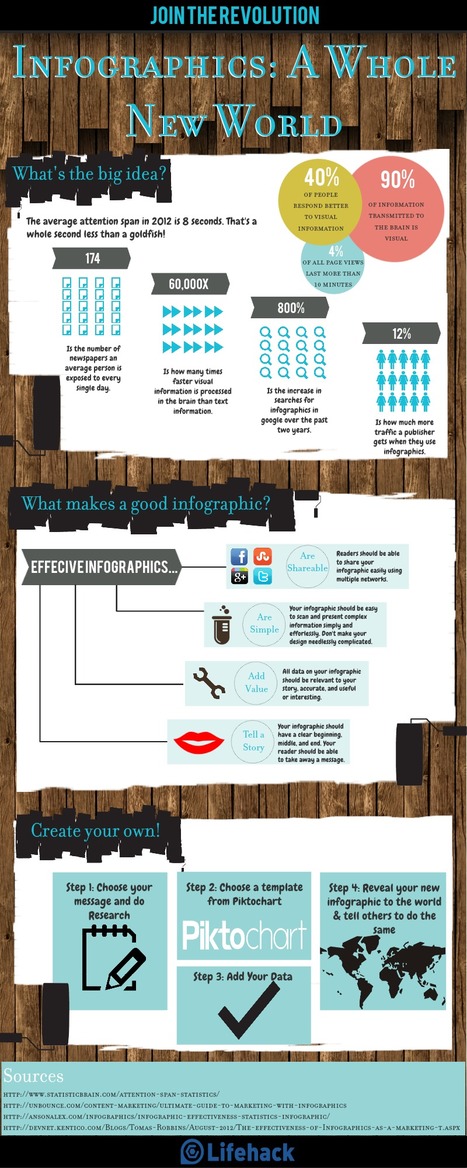
Learn how to create stunning infographics - without spending hundreds of dollars on a graphic designer or losing your mind - in just 30 minutes or less.
From word clouds to network data visualizations, infographics have become a primary format for content in a relatively short period of time. Although the ‘infographic’ is nothing new, its proliferation and evolution has been nothing short of exponential in the past few years.
Whether you love them or hate them, the rising popularity of infographics can’t be denied. The Piktochart site (free): http://piktochart.com/
Via Baiba Svenca, Alfredo Corell, NikolaosKourakos, Lynnette Van Dyke
|
|
Rescooped by
Jim Lerman
from Know2Day
December 9, 2012 8:33 PM
|
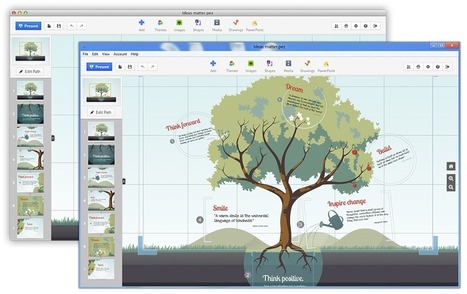
Dropmark® allows you to drop files right from your computer, or the web, to create organized collections—bringing together information like never before. ...Say goodbye to Powerpoint. Every Dropmark collection can be viewed as a fullscreen presentation. Mix images, videos, websites, and more.
Via Baiba Svenca, ke hones
|
|
Rescooped by
Jim Lerman
from :: The 4th Era ::
December 8, 2012 2:01 PM
|
By Med Kharbach "I want to share with you some of the articles I have curated and read about creativity, a topic of much relevance to us in education. I have collected these articles probably over a period of 6 or 7 months but they are some of the best reads you can find online and I enjoyed reading every single line of them. You can bookmark them too and read them when you have time. Enjoy."
Via Gust MEES, João Greno Brogueira, Jim Lerman
|