


A new network is connecting educational institutions in WA like never before. But the real winners will be their students.


 Your new post is loading...
 Scoop.it! A new network is connecting educational institutions in WA like never before. But the real winners will be their students.
Kim Flintoff's insight:
Taking down maths notes from a blackboard is so 19th century. Instead, what if students could learn on-the-go by using their skills in maths to build and run a giant game of Battleship? Sound crazy? A network of WA high schools and other educational institutions led by Curtin staff don’t seem to think so.

No comment yet.
Sign up to comment
Scoop.it!

Creativity is often defined as the ability to come up with new and useful ideas. Like intelligence, it can be considered a trait that everyone – not just creative “geniuses” like Picasso and Steve Jobs – possesses in some capacity. It’s not just your ability to draw a picture or design a product. We all need to think creatively in our daily lives, whether it’s figuring out how to make dinner using leftovers or fashioning a Halloween costume out of clothes in your closet. Creative tasks range from what researchers call “little-c” creativity – making a website, crafting a birthday present or coming up with a funny joke – to “Big-C” creativity: writing a speech, composing a poem or designing a scientific experiment.
Kim Flintoff's insight:
Creativity is often defined as the ability to come up with new and useful ideas. Like intelligence, it can be considered a trait that everyone – not just creative “geniuses” like Picasso and Steve Jobs – possesses in some capacity. It’s not just your ability to draw a picture or design a product. We all need to think creatively in our daily lives, whether it’s figuring out how to make dinner using leftovers or fashioning a Halloween costume out of clothes in your closet. Creative tasks range from what researchers call “little-c” creativity – making a website, crafting a birthday present or coming up with a funny joke – to “Big-C” creativity: writing a speech, composing a poem or designing a scientific experiment.
Scoop.it!

Synopsis
Kim Flintoff's insight:
Synopsis
Teaching creatively, no matter the age group, grade level, or subject matter, not only improves the students’ creativity skills but also enhances their executive function networks.
Scoop.it!

Schools need to change but the gaps that we need to close are ones of relevance, not just achievement scores. Schools all around the world are focused on deeper learning, greater student agency, authentic work, and rich technology infusion. From project- and inquiry-based learning to 1:1 computing initiatives to redesigned learning spaces to competency-based education, we have new building blocks that are being used to redesign learning, teaching, and schooling.
Kim Flintoff's insight:
Let's discuss: How is your school shifting, or resisting the shift, from an industrial model to a global, innovation model? How are teachers and schools making that shift? What's working? What can we all, as parents, teachers, administrators, voters, or policy makers, do to help?
Scoop.it!

Finally, it will be appropriate to recall the observation by Swami Vivekanada: “Education is not the amount of information that is put into your brain and runs riot there, undigested all your life. We must have life-building, man-making, character-making assimilation of ideas.” Education is a moral business – it is to make human. Our mission would be to plant the seeds of tomorrow through education and empowerment. This can be done through creating an environment where learning will be enjoyable and purposeful to enrich life on earth. It will be like providing nutrition and physical well-being for a rich life of tomorrow’s possibilities, our children. Let us take care of them for a resurgent world.
Kim Flintoff's insight:
Education is a moral business – it is to make human. Our mission would be to plant the seeds of tomorrow through education and empowerment. This can be done through creating an environment where learning will be enjoyable and purposeful to enrich life on earth. It will be like providing nutrition and physical well-being for a rich life of tomorrow’s possibilities, our children. Let us take care of them for a resurgent world.
Scoop.it!

A recent list of 13 innovative schools is interesting because it is so diverse.
Kim Flintoff's insight:
Clearly innovation and creativity is not one dimensional. Some of the schools on the list are considered innovative because of the way they use their learning spaces, whilst others are vaunted because of their progressive pedagogical approaches. There is a common issue with many lists however, and it is that the inclusions are there because of the opinions of an individual or small group.
Scoop.it!
Sarah Robinson explains the principles for a Pedagogy for Entrepreneurship. She is working at Center for Teaching Development and Digital Media, Aarhus University, Denmark. How to manage change in an upredictable world?
Kim Flintoff's insight:
Sarah Robinson explains the principles for a Pedagogy for Entrepreneurship. She is working at Center for Teaching Development and Digital Media, Aarhus University, Denmark. How to manage change in an upredictable world?
Scoop.it!

Bringing Excellence & Equity into Education.
Kim Flintoff's insight:
Bringing Excellence & Equity into Education. Excellence in education is not just academic skills, but creativity, collaboration, computational and critical thinking, life-long learning, and entrepreneurship are crucial 21st century skills. Education must prepare children for the future and support the growth of informed global citizens. Education and especially teachers should be invested on to provide best learning opportunities for children. They should learn 21st century skills, STEAM and Creativity, thus becoming well informed, successful global citizens. Learn from child-centered Finnish education by joining the ALO Finland online course. Read and experiment with innovative teaching and learning in Finnish schools.
Scoop.it!
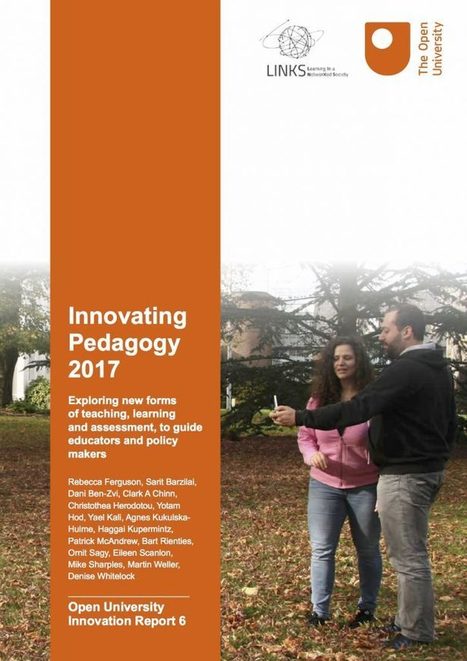
The Open University’s annual Innovating Pedagogy report is out, this time in collaboration with the Learning In a NetworKed Society (LINKS) Israeli Center of Research Excellence (I-CORE). It’s the sixth year we’ve done one (well done to Rebecca Ferguson and Mike Sharples on pushing this through). When we started the intention was to make it distinct from the NMC New Horizon reports by focusing on pedagogy. I think, to be honest, in those early ones there was probably a technology focus still, but as it’s progressed it has really moved away from this to more pedagogy, socially focused issues.
Kim Flintoff's insight:
The Open University’s annual Innovating Pedagogy report is out, this time in collaboration with the Learning In a NetworKed Society (LINKS) Israeli Center of Research Excellence (I-CORE). It’s the sixth year we’ve done one (well done to Rebecca Ferguson and Mike Sharples on pushing this through). When we started the intention was to make it distinct from the NMC New Horizon reports by focusing on pedagogy. I think, to be honest, in those early ones there was probably a technology focus still, but as it’s progressed it has really moved away from this to more pedagogy, socially focused issues.
Scoop.it!
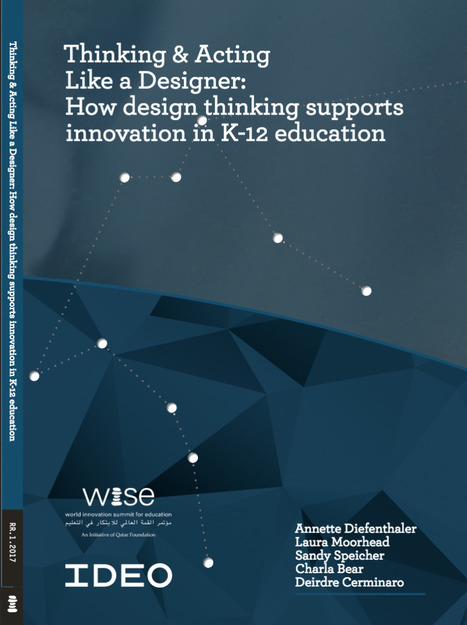
The needs of the twenty-first century demand new approaches to learning. Today, student success requires skills for collaboration, creativity, critical thinking, and problem solving, and these skills are increasingly becoming a focus in both K-12 and higher education settings. But twenty-first century learning needs to be much more if we are to expect young people to both navigate an unknown and complex future and meet the challenges that accompany it. We need change-makers, people who will redefine problems, inspire new ideas, take informed risks, and never stop learning. Change-makers implement and evolve solutions that aim to better the individual and the whole, be it a classroom, a school, a community, or a society. This is the approach of a designer and the focus of this publication. Design touches all aspects of our world. As this publication shows, designers work to impact the human experience, and they generally do this with particular mindsets that encourage looking at challenges as opportunities for design. Four mindsets typically guide the behavior of a designer: human-centered, collaborative, optimistic, and experimental. Designers also often act in a particular way, following a process that helps them generate and evolve ideas, beginning with problem-defining and empathy, using synthesis and prototyping to develop strategic ideas, and ending with implementation. Taken together, how designers think and act make for design thinking, a human-centered approach to creative thinking and problem solving. Thinking and acting as a designer and, in turn, employing design thinking are powerful ways to encourage people to become change-makers in education. Via Edumorfosis
Kim Flintoff's insight:
Taken together, how designers think and act make for design thinking, a human-centered approach to creative thinking and problem solving. Thinking and acting as a designer and, in turn, employing design thinking are powerful ways to encourage people to become change-makers in education.

Carlos Fosca's curator insight,
November 23, 2017 5:06 PM
"Taken together, how designers think and act make for design thinking, a human-centered approach to creative thinking and problem solving. Thinking and acting as a designer and, in turn, employing design thinking are powerful ways to encourage people to become change-makers in education." (WISE - IDEO, 2017)
Scoop.it!

Dr. Scott McLeod, co-author of Different Schools for a Different World, has a frank conversation about the change that needs to happen, how long it will take to happen, and the next steps for promoting creativity in schools.
Kim Flintoff's insight:
Dr. Scott McLeod, co-author of Different Schools for a Different World, has a frank conversation about the change that needs to happen, how long it will take to happen, and the next steps for promoting creativity in schools.
Scoop.it!

The fast-growing co-working company joins a growing list of billionaires trying to reshape American education with their influence and investments.
Kim Flintoff's insight:
Let's hope there's a nod to the notion that "entrepreneurship" is more than just building a building a business:
""Entrepreneurship is much broader than the creation of a new business venture," said Bruce Bachenheimer, a clinical professor of management and executive director of the Entrepreneurship Lab at Pace University. "At its core, it is a mindset – a way of thinking and acting. It is about imagining new ways to solve problems and create value."
Scoop.it!

On Wednesday, October 18, a team from the Media Lab’s Lifelong Kindergarten group is launching a new, experimental online course: Learning Creative Learning. Free, open to anyone, and supported by the Learning Initiative at the Media Lab, the six-week course aims to create a global community of like-minded educators and learners. Unlike a traditional MOOC, the course emphasizes collaboration over instruction; the goal is to foster the same environment of creative learning that it's teaching to participants.
Kim Flintoff's insight:
On Wednesday, October 18, a team from the Media Lab’s Lifelong Kindergarten group is launching a new, experimental online course: Learning Creative Learning. Free, open to anyone, and supported by the Learning Initiative at the Media Lab, the six-week course aims to create a global community of like-minded educators and learners. Unlike a traditional MOOC, the course emphasizes collaboration over instruction; the goal is to foster the same environment of creative learning that it's teaching to participants.
|
Scoop.it!

Creativity’s growing importance
Kim Flintoff's insight:
Creativity’s growing importance As we look at future jobs and technological advancements, having creativity is essential in the workplace. Robots and AI will be able to handle many tasks, even replacing some types of jobs, but we will still need creative thinkers and designers to move ahead globally. As educators, how do we ensure that students learn this skill in our curriculums? Can creativity be taught? Why are some people more creative than others? If you tell students to be creative, do they even know what it means or where to begin?
Scoop.it!
What is the purpose and value of Art education in the 21st Century? Foley makes the case the Art’s critical value is to develop learners that think like Artists which means learners who are creative, curious, that seek questions, develop ideas, and play. For that to happen society will need to stop the pervasive, problematic and cliché messaging that implies that creativity is somehow defined as artistic skill. This shift in perception will give educators the courage to teach for creativity, by focusing on three critical habits that artist employ, 1. Comfort with Ambiguity, 2. Idea Generation, and 3. Transdisciplinary Research. This change can make way for Center’s for Creativity in our schools and museums where ideas are king and curiosity reigns.
Kim Flintoff's insight:
What is the purpose and value of Art education in the 21st Century? Foley makes the case the Art’s critical value is to develop learners that think like Artists which means learners who are creative, curious, that seek questions, develop ideas, and play. For that to happen society will need to stop the pervasive, problematic and cliché messaging that implies that creativity is somehow defined as artistic skill. This shift in perception will give educators the courage to teach for creativity, by focusing on three critical habits that artist employ, 1. Comfort with Ambiguity, 2. Idea Generation, and 3. Transdisciplinary Research. This change can make way for Center’s for Creativity in our schools and museums where ideas are king and curiosity reigns. Cindy Meyers Foley is the Executive Assistant Director and Director of Learning and Experience at the Columbus Museum of Art. Foley worked to reimagine the CMA as a 21st century institution that is transformative, active, and participatory. An institution that impacts the health and growth of the community by cultivating, celebrating and championing creativity. Foley envisioned and led the charge to open the 18,000 sq. ft. Center for Creativity in 2011. In 2013, the museum received the National Medal for Museums in recognition of this work. Foley guest edited and wrote chapters for Intentionality and the Twenty-First-Century Museum, for the summer 2014 Journal of Museum Education. In 2012, Foley received the Greater Columbus Arts Council Community Arts Partnership award for Arts Educator. She was a keynote speaker for the OAEA (Ohio Art Education Association) 2012 Conference. She is on the Faculty of Harvard University’s Future of Learning Summer Institute. Foley is a graduate of the University of Kentucky and The Ohio State University. Prior to joining the Museum, she was with the Institute of Contemporary Art at the Maine College of Art, the Portland Museum of Art, and the Wexner Center for the Arts. In the spirit of ideas worth spreading, TEDx is a program of local, self-organized events that bring people together to share a TED-like experience. At a TEDx event, TEDTalks video and live speakers combine to spark deep discussion and connection in a small group. These local, self-organized events are branded TEDx, where x = independently organized TED event. The TED Conference provides general guidance for the TEDx program, but individual TEDx events are self-organized.* (*Subject to certain rules and regulations)
Scoop.it!
I didn’t know I had entered a hackathon. I had heard the term on a CodeNewbie podcast as someone shared their story. What I remember from that podcast was the recommendation to become part of the community.
Kim Flintoff's insight:
I didn’t know I had entered a hackathon. I had heard the term on a CodeNewbie podcast as someone shared their story. What I remember from that podcast was the recommendation to become part of the community.
Scoop.it!

What is moonshot thinking?
Kim Flintoff's insight:
Classroom teachers and school leaders are hampered by poor educational policies at all levels, cash-hungry textbook publishers, and a school system that is often slow to adopt innovations. If we are truly going to prepare students for their futures, it is time we all start thinking 10x bigger. At Garnet Valley, we have begun to do just that with several of our most recent projects. Moonshot thinking has enabled our medium-size district to achieve extraordinary results within the last few years and all without increasing our budget.
Scoop.it!
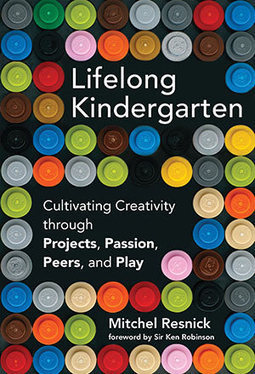
The concept of kindergarten — as a place for young children to learn by interacting with materials and people around them — has existed for over 200 years, but never has the approach been so suited to the way the world works as it is today, says Mitchel Resnick, the LEGO Papert Professor of Learning Research at the MIT Media Lab.
Kim Flintoff's insight:
The concept of kindergarten — as a place for young children to learn by interacting with materials and people around them — has existed for over 200 years, but never has the approach been so suited to the way the world works as it is today, says Mitchel Resnick, the LEGO Papert Professor of Learning Research at the MIT Media Lab. “That approach to kindergarten is really aligned with the needs of today’s society," says Resnick, citing the need to adapt to the speed at which things change in the world. "As kids in the traditional kindergarten were playfully designing and creating things, they were developing as creative thinkers…. That’s exactly what we need.”
Scoop.it!

Michael Michalko unveils the secrets of creative genius and brings life-changing creative techniques within everyone’s reach. His arsenal of powerful creative thinking tools can be used to tackle virtually any type of technical problem and to create new ideas. Without a doubt, his tools are the closest thing there is to a tactical instruction manual for thinking like a genius. His tools will help you approach problems with new vision, and you will discover a world of innovative solutions to everyday, and some not-so-everyday, challenges.
Kim Flintoff's insight:
Michael Michalko unveils the secrets of creative genius and brings life-changing creative techniques within everyone’s reach. His arsenal of powerful creative thinking tools can be used to tackle virtually any type of technical problem and to create new ideas. Without a doubt, his tools are the closest thing there is to a tactical instruction manual for thinking like a genius. His tools will help you approach problems with new vision, and you will discover a world of innovative solutions to everyday, and some not-so-everyday, challenges.
Scoop.it!

To understand how value is created in networks, Microsoft Envisioning and PopTech decided to connect with experts and practitioners from around the world. Join us on our journey of discovery. (Howard interviewed). See also my unsorted collection of links about networks: https://www.diigo.com/user/hrheingold/networks
Kim Flintoff's insight:
To understand how value is created in networks, Microsoft Envisioning and PopTech decided to connect with experts and practitioners from around the world. Join us on our journey of discovery. (Howard interviewed). See also my unsorted collection of links about networks: https://www.diigo.com/user/hrheingold/networks
Scoop.it!

Here are 3 skills to start honing today that give educators an advantage over AI.
Kim Flintoff's insight:
Here are 3 skills to start honing today that give educators an advantage over AI. 1) The Skill of Generating Ideas (Creativity) 2) The Skill of Storytelling 3) The Skill of Continual Improvement
Scoop.it!

Research Showing a Negative Correlation Between Grades and Innovative Orientation
Kim Flintoff's insight:
Increasingly, controlled research studies are also showing no correlation, or even an inverse correlation, between college GPA and innovative orientation or ability. One major study, which has recently come to the attention of the popular press [here and here], was conducted by Matthew Mayhew and his colleagues at NYU.[1] These researchers surveyed thousands of college seniors, at five different institutions of higher education, with a battery of psychological tests and questionnaires. One of their major findings was an inverse relationship between students’ reported GPA and their orientation toward creative or innovative work. The higher the grade point average, the lower was the students’ interest in innovation.
Scoop.it!

“The reuse of the space will also help honour the industrial heritage of this site while injecting new life into it.” The site already attracts more than 2000 students from the Flinders University and TAFE, but a new housing project, which will start to take shape next year, is likely to attract more than 1000 residents into a 850-dwellings development. Innovation in Adelaide: Tonsley precinct a collaborative space for creative thinking
Kim Flintoff's insight:
“The reuse of the space will also help honour the industrial heritage of this site while injecting new life into it.” The site already attracts more than 2000 students from the Flinders University and TAFE, but a new housing project, which will start to take shape next year, is likely to attract more than 1000 residents into a 850-dwellings development.
Scoop.it!

By recent estimates, something like 47% of jobs face the threat of being automated over the next 20 years. That means that what was once done by humans alone will now be done by a machines and algorithms.
Kim Flintoff's insight:
As more of that 47% becomes a reality, all eyes are fixated on that other 53% — the stuff that we used to think was solely the realm of human capacities. If you go back as far as Aristotle and the early scientists, it was reason that made humans unique in the world. And until humans built machines that could use the same logic they do, that was true.
Scoop.it!

THE new Lindfield Learning Village will embrace an innovative educational model vastly different to traditional schools on the north shore.
Kim Flintoff's insight:
THE new Lindfield Learning Village will embrace an innovative educational model vastly different to traditional schools on the north shore.
|




