Your new post is loading...

|
Scooped by
Howard Rheingold
September 18, 2012 12:41 PM
|
The key differentiator between those who feel overwhelmened by the volume of information available today and those who feel empowered and enthusiastic appears to be....know-how. --Howard "But now, there’s proof that all this worry about information overload, message meltdown and attention crash is overinflated hyperventilating. A study out of Northwestern University finds that “very few Americans feel bogged down or overwhelmed by the volume of news and information at their fingertips and on their screens.” Published in the journal The Information Society, the findings were based on seven focus groups with 77 participants from around the country. According to study author Eszter Hargittai, associate professor of communication studies, “We found that the high volume of information available these days seems to make most people feel empowered and enthusiastic. People are able to get their news and information from a diverse set of sources and they seem to like having those options.”"
|
|
Scooped by
Howard Rheingold
September 7, 2012 6:40 PM
|
The "what if Google ISN'T making us stupid, and those darn multitasking kids are adapting well to the contemporary environment? -- Howard "“Interviewer: Our brains have been challenged by the effects of multi-tasking in
many ways brought on by the age of social media and use of computer gadgets. Giedd: The way that we get information, entertain ourselves and interact with each other has changed more in the last ten years than in the previous five hundred—since Gutenberg’s introduction of the printing press. And so these changes are a real challenge for researchers because they happen so rapidly. So, that adolescents today average about eleven and a half hours of media time. And this is up from six and a half hours just five years ago so that the activities of children and teens has been changing so much. We’ve been challenged—how do we keep up with the changing world and how do we assess the impact for good or for bad on the developing brain."
|
|
Rescooped by
Howard Rheingold
from An Eye on New Media
September 5, 2012 2:26 AM
|
Ken's Key Takeaway: I knew about the OCR in photos. I did not know about the OCR .pdf function. Awesome! Ken Are you a digital packrat? Are you in need of a searchable repository for everything you want to recall later? Does the idea of automatic OCR (Optical Character Recognition) for all your scanned PDFs get you excited in a way only seriously organised people could ever understand? If so, Evernote is the tool you need right now – and we’ve got the perfect manual to get you started using it like a professional.
Via Miloš Bajčetić, Ken Morrison
|
|
Scooped by
Howard Rheingold
August 12, 2012 1:17 PM
|
Finally, an analysis of "information overload" that eloquently presents the case that "it isn't as simple as all that." -- Howard "In this sense, technology is neither an abstract flood of data nor a simple machine-like appendage subordinate to human intentions, but instead the very manner in which humans engage the world. To celebrate the Web, or any other technology, as inherently edifying or stultifying is to ignore its more human scale: our individual access to this imagined expanse of pure information is made possible by technologies that are constructed, designed, and constantly tweaked by human decisions and experiences. These technologies do not exist independently of the human persons who design and use them. Likewise, to suggest that Google is making us stupid is to ignore the historical fact that over time technologies have had an effect on how we think, but in ways that are much more complex and not at all reducible to simple statements like “Google is making us stupid.”"
|
|
Rescooped by
Howard Rheingold
from Content Curation World
August 3, 2012 10:28 AM
|
Robin Good: Slices is a news discovery app that allows you to find the news that interest you by "slicing" the Twitter timeline into topic-specific categories, making it much easier to find what you are looking for. From Pandodaily official review: "Slices offers 21 searchable categories – humor, technology, sports, and so on – that lead you to people and lists to follow. Included among those top-level categories is the “Live Events” option, which allows you to select an event – a football match, say, or a TV show – and follow Tweets from a curated list.
Also of note: "...it synchronizes between mobile devices and the Slices website (slices.me), which means it knows which Tweets you’ve already read, no matter where you access it from. ...The “Timeline Slicer” also outdoes Twitter’s Lists as a way to organize the people you follow into specific categories. They’re easier to set up and easier to access, ..." Source: Pandodaily Slices is available on iOS, Android and the Web. Find out more: https://slices.me/
Via Robin Good
|
|
Scooped by
Howard Rheingold
August 1, 2012 8:36 PM
|
Set up a real-time search, filtered by multiple criteria, subscribe to results via RSS or email alerts. -- Howard
|
|
Scooped by
Howard Rheingold
July 31, 2012 5:09 PM
|
Although this is aimed at enterprise customers, it's an expansion of a dashboard that can be used as a powerful infotention tool. -- Howard "Today HootSuite is announcing three new integrations with Zendesk, Storify, and Evernote."
|
|
Scooped by
Howard Rheingold
July 18, 2012 12:43 PM
|
I haven't tried this one yet, but it looks like it might be a more advanced alternative to my present favorite RSS dashboard, Netvibes -- Howard "The FeedBooster is a free, advanced web-based feed reader that offers a new way of discovering relevant and timely information from the wealth of RSS news, blogs and business feeds. Based on Q-Sensei's powerful search and indexing technology, FeedBooster helps you stay on top of your favorite feeds and get the most out of them.
Very special to FeedBooster is that it provides you with more than just a list of feed items. Every single feed imported into FeedBooster is pre-processed in a way that makes it easier to search, browse and explore. FeedBooster is a dynamic knowledge and productivity tool to quickly mine for personally-relevant information that is important to you. Powered by Q-Sensei's unique multi-dimensional search capabilities, FeedBooster presents the available content of feeds in an organized, dynamic and clickable index to hone in quickly on the right sets of news. FeedBooster also provides a fully-customizable dashboard to best suit your feed-reading and information discovery needs"
|
|
Scooped by
Howard Rheingold
July 12, 2012 6:45 PM
|
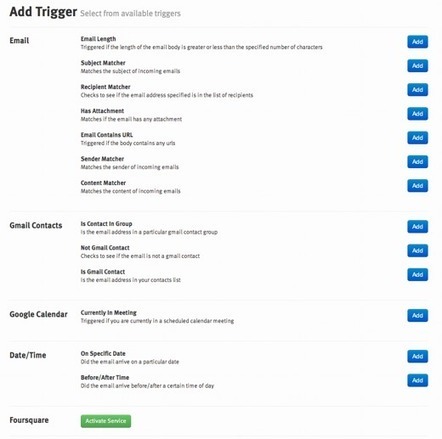
This is really "crap detection," but it shades into Infotention -- Howard "LazyTruth is a free Gmail gadget that automatically triggers fact-checked content when you receive a misleading email forward."
|
|
Scooped by
Howard Rheingold
July 9, 2012 5:39 PM
|
I still use Netvibes, which is one of the recommendations for replacing iGoogle as a homepage-with-feeds, because it gives me three drag-and-drop levels of abstraction with dashboards, tabs, and feeds -- each level easily customizable to fit the day's or the project's priorities. If up-to-date incoming info-streams on topics that may change regularly is one of your needs, you need to learn how to match your attentional priorities to the visual arrangement of your dashboard -- Howard "If you're anything like us, your browser's homepage has remained set to iGoogle since-well, long enough you probably don't remember using anything else. Alas, the powers that be at Google have decided to axe the service, with the web version shutting down this November (the mobile version will disappear at the end of the month). But there's no reason to freak out just yet; a multitude of alternatives are waiting to fill the void. Here's just five of our favorites."
|
|
Scooped by
Howard Rheingold
July 6, 2012 8:13 PM
|
Infotention-technique-rich -- Howard "Keeping up to date with research and managing an ever-increasing number of journal articles is skill that must be well-honed by academics. Here, Alex Hope sets out how his workflow has developed using Zotero, Dropbox, Goodreader and his iPad."
|
|
Scooped by
Howard Rheingold
July 5, 2012 6:11 PM
|
Now available in paperback, "Now You See It: How the Brain Science of Attention Will Transform The Way We Live, Work, and Learn," is essential reading for anyone interested in the way human attention and human-created media are co-evolving. An excellent companion to my own book, Net Smart, for those interested in understanding both the theory and practice of mindful infotention.-- Howard
|
|
Rescooped by
Howard Rheingold
from Content Curation World
July 3, 2012 10:22 PM
|
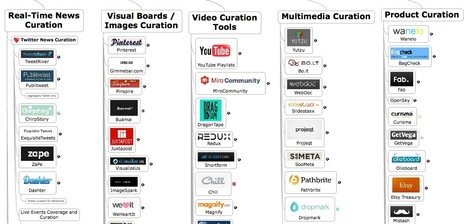
Robin Good: Everytime I see a new post or article claiming to list the best content curation tools I know I am in for some disappointment. Most of these lists just pick up names from other lists without even bothering to check, test or verify what these tools actually do, whether they are still available. Unfortunately the rush to put out "curated" list of tools and services has created more misinformation than useful lists. But if you, like me, are on the lookout for new and effective tools to curate your own content or the one of your customers, I have created a comprehensive map of all the curation tools available online and I keep it fresh and updated almost on a daily basis. The map presently lists over 250 content curation tools which you can navigate much more easily than it was possible on my earlier versions of this map. On the right side of the map you will find all of the news and content curation tools available online today. On the left side, you can find bookmarking, link lists builders, clippers and lots of tools to operate with RSS feeds (which are still at the heart of a curator's job).
Full map: http://bit.ly/ContentCurationUniverse
Share it.
Via Robin Good
|
|
|
Scooped by
Howard Rheingold
September 10, 2012 2:55 PM
|
Unmindful use of email is probably the biggest source of infotention pollution. These tips were recommended by Media Lab director Joi Ito -- Howard "What's the best way to train everyone around you to better e-mail habits? You guessed it: You go first. First, you say, "In order for me to make you more productive, I'm going to adopt this new policy to lighten your load…" Demonstrate a policy for a month, and if people like it, ask them to start doing it too. Use a subject line to summarize, not describe.
People scan their inbox by subject. Make your subject rich enough that your readers can decide whether it's relevant. The best way to do this is to summarize your message in your subject."
|
|
Scooped by
Howard Rheingold
September 6, 2012 1:37 PM
|
When working on large writing projects, Scrivener is my tool of choice. Here, one user gets into his use of Scrivener for infotention workflow. -- Howard "I should note that the way I use Scrivener probably isn’t the traditional way of using the app. If you want a more traditional review of it as a writing tool, take a look at Literature and Latte’s Twitter feed, as they have links to a lot of users reviews. For those who don’t know what Scrivener is, it is one the best all-in-one place writing tools. I compare it to a programming IDE (Integrated development environment), but I’m a bit geeky. I found Scrivener just after they updated to 2.0. I was looking for a solution to manage not only my writing, but also all the random bits of information that help me write."
|
|
Scooped by
Howard Rheingold
September 1, 2012 12:05 PM
|
An article about my appearance on the KQED Forum radio program, focusing on my remarks about infotention. -- Howard "The onslaught of information from the wired world can be overwhelming to anyone — even the savviest online audiences. But rather than completely shut out the digital world, the smarter solution is to learn how to manage it, says author Howard Rheingold."
|
|
Scooped by
Howard Rheingold
August 5, 2012 3:14 PM
|
"There are now many tools available to help us manage email overload. I found and tested 8 web services and 2 methods that can make your email addiction more manageable. To try these out I undertook a big challenge. I take backup very seriously. All my data is backed up at least in three locations and the same goes for my email. For this reason I have a Gmail account that exists solely to backup my other email accounts. I never check it, organise it or archive it, which meant that at the time that I started this test I had 64,805 unread messages in my inbox. Getting this down to 0 is almost impossible so I was really interested to see how these tools were going to cope."
|
|
Rescooped by
Howard Rheingold
from Content Curation World
August 2, 2012 6:15 PM
|
I was an eager enthusiast for Robin Good's early work on curation, which he called "newsmastering" in 2006 -- Howard Robin Good: Digging back into my article archives I have just run into a special gem, dating back to 2006. Thanks to the curious and entrepreneurial spirit of Marshall Kirkpatrick, in this short audio interview (6':21"), I get to explain what was my vision then (six years ago) for what we now call "news curation". Missing any better term for something that had no previous history of practice, at the time I had labelled "newsmaster" the news-curator professional, and "newsradar" the final output (a finely-tuned thematic news channel bringing you the best from many different sources). The interview had been done for the web magazine NetSquared and you can find more info about this and a full transcription of the interview right here: http://www.masternewmedia.org/news/2006/05/24/the_human_news_aggregator_an.htm Let me know what you think. Update: Right after I had posted this short story, I went to check a bit how my old friend Marshall Kirkpatrick, author of the above interview, was doing, and headed to his blog... and what I discovered left me startled and enthusiastic at the same time. Read it by yourself: http://marshallk.com/were-entering-a-golden-age-of-news-geekery Isn't the world amazing?
Via Robin Good
|
|
Scooped by
Howard Rheingold
August 1, 2012 6:12 PM
|
Social media dashboards like this new one, MyLive, and older ones, such as Hootsuite, together with an RSS dashboard such as Netvibes, are becoming essential infotention tools -- Howard. "As the number of commonly used social media platforms proliferates and those sites play an ever-increasing role in the life of an average internet user, the need for tools to manage a user’s online presence grows stronger and stronger. People search and social discovery site MyLife, which was formed in a 2009 merger of Reunion.com and Wink, has launched a social dashboard to allow its 60 million plus members to find connections and manage their multiple social and email accounts via a single interface. Supported social networks include Facebook, Twitter, and LinkedIn as well as email platforms Gmail, Yahoo, AOL, and Hotmail (soon to be Outlook.com) — Pinterest, Tumblr, and others are said to be coming soon."
|
|
Scooped by
Howard Rheingold
July 27, 2012 12:51 PM
|
I use Netvibes as a feed reader -- an essential part of my infotention toolkit. When researching a subject, using this RSS search engine can help me find useful, timely streams of relevant info. -- Howard "The RSS search engine will help you discover the most popular feeds on the web around your favorite topics. You may find blogs, news websites, podcasts, Twitter accounts and more."
|
|
Rescooped by
Howard Rheingold
from Content Curation World
July 17, 2012 9:01 PM
|
Robin Good: Here is a good and well written overview of some of the best news discovery tools out there. These services, generally avaliable as mobile apps and/or desktop tools, aggregate a large number of relevant news sources in different categories of interest, and leverage in many cases your Facebook and Twitter network of contacts to suggest the type of stories you may be interested in the most. Covered in the article: Pulse Zite Google Currents Flipboard Taptu Prismatic News.me LinkedIN Today The Browser Longreads and more Excellent overview. 8/10 Full article: http://www.guardian.co.uk/media-network/media-network-blog/2012/jul/17/what-is-new-news-aggregation
Via Robin Good
|
|
Scooped by
Howard Rheingold
July 11, 2012 6:22 PM
|
This Prezi is about "making assignments 'Prezilicious' but it's really about visual representation of information and learning; i.e., infotention -- Howard

|
Suggested by
Ken Morrison
July 9, 2012 3:01 PM
|
Thanks to Ken Morrison for this -- Howard "The speed with which information hurtles towards us is unavoidable, and it's getting worse. But trying to catch up is counterproductive. Strategic advisor Peter Bregman explains how two simple lists can help us organize what's important."
For more prehistory of the Web, Standage's chapter on coffee-houses in "A History of the World in Six Glasses. -- Howard "Here’s an extract from “Cicero’s Web”, my forthcoming book (due 2013) on the prehistory of social media. (A previous extract, about Martin Luther and social media, is here.)..."
Via JoseAlvarezCornett
|
|
Scooped by
Howard Rheingold
July 4, 2012 6:00 PM
|
Dave Winer was one of the first bloggers, creator of ThinkTank (early outlining program for Apple II), creator of early blogging software, creator of RSS. So it's worth paying attention to his infotention tools -- Howard "My name is Dave Winer. When I designed Radio2, I aimed to create the minimal blogging tool, one that did the least possible and still was useful. Simple yet useful, and usable.
It's for short-form blogging, the kind of stuff we do in Twitter. You're looking at a web page, and think "I want to remember this, or share this." One click on the bookmarklet, quick -- you're still in the flow of what you were doing.
The goal was to create something that has the ease of Twitter, with the open potential of blogging. There are tradeoffs, some things that Twitter will always do better, because they are an all-in-one, centralized system. But there are also many things Radio2 can do that Twitter can't, because we aren't protecting a business model."
|