



The Internet Archive is temporarily eliminating waitlists for tons of ebooks to create a National Emergency Library open to anyone with an internet connection.

 Your new post is loading...
 Your new post is loading...
Your new post is loading...
Current selected tag: 'resource bank'. Clear
 Scoop.it!
The Internet Archive is temporarily eliminating waitlists for tons of ebooks to create a National Emergency Library open to anyone with an internet connection. No comment yet.
Sign up to comment
Scoop.it!

Dr. Rhianna Rogers is an associate professor of interdisciplinary studies at SUNY Empire State College. Part of her work has led her to specialize in remote and online learning in higher education. Dr. Rogers has led numerous remote residency programs, online learning initiatives, and collaborative online international learning (COIL) functions, among other efforts.
Elizabeth E Charles's insight:
Great source of readings on online learning.
Scoop.it!
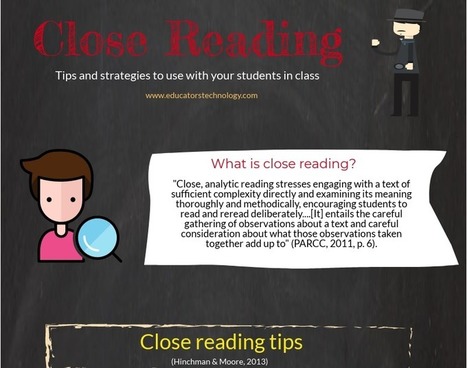
Close reading is an essential survival skill specially now that we live in a data-saturated world where we are constantly bombarded by all forms of textual and non-textual stimuli. At its core, close reading is a metacognitive practice that allows you to achieve a deeper understanding of complex texts. It is a methodically analytical process that aims at deconstructing both the surface and deeper meanings of a text through a close analysis of its language. Close readers pay attention to syntax, lexicon and linguistic cues that can help uncover the implicit import of a textual output.
Scoop.it!

With online teaching and learning becoming the norm for so many teachers and students during the COVID-19 climate, it is important to be aware of what makes an engaging, creative and effective web-based teaching and learning experience. 
Sara Jaramillo's curator insight,
March 25, 2020 4:44 PM
The situation with the covid-19 is something that anybody expected and none of us was prepared to face. Everyone has a big challenge to work, study and do their daily activities. In terms of education, students and teachers must do their best to keep learning and teachng at least in the 50% because we all know that online classes will never be the same as classroom classes but we cannot stop it, This kind of articles are very usefull for teachers and students since all of us must find out the best ways to keep with our process. We need to use all the plataforms, the apps, and the websites that we can and give them the best use in order to learn from our professors and their classes. I think that the cahllenge is bigger for teachers and professors because most of them did not have experience with technological devices, online apps nor virtual classes. And for most of them this is difficult but they are doing their best to share their knowledge with us.
Scoop.it!
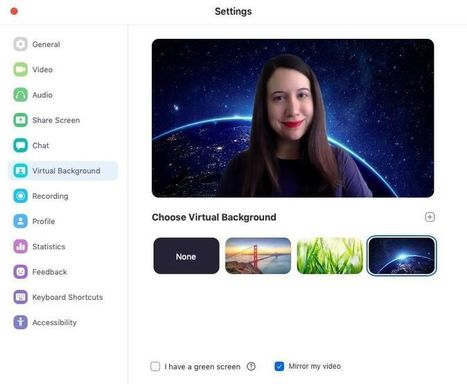
Why show off your messy living room when you can video chat from the beach or the Star Trek Enterprise. Via Ana Cristina Pratas
Scoop.it!

The Rice University-based publisher OpenStax announced Thursday that it will provide free teaching resources through the end of the spring semester to support faculty transitioning to online course delivery in response to the coronavirus pandemic.
Scoop.it!
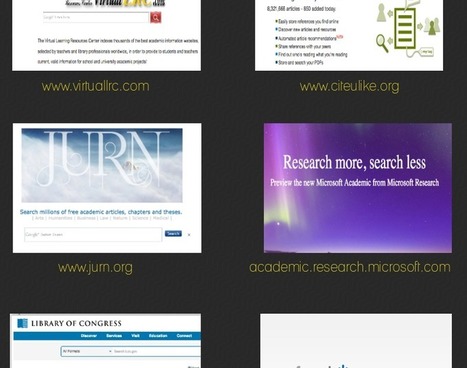
When it comes to searching for niche-specific content Google search engine is not the best option out there. Although Google can be a good starting point from which you can delve deeper into the content area you are searching but you can save much more time by using content-specific search engines. In today’s post, we are sharing with you some examples of academic search engines student researchers and teachers can use to search for, find and access scholarly content.
Scoop.it!

A number of schools and universities may be required to close due to the coronavirus outbreak, but how can you quickly move your teaching online?
Scoop.it!
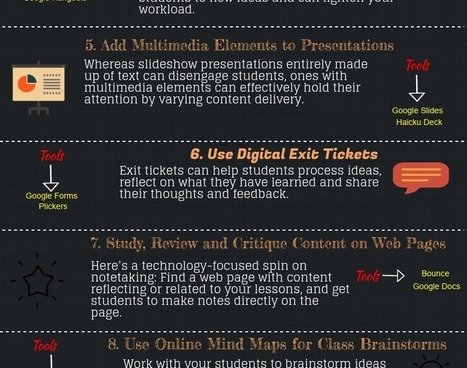
Looking for some tips on how to help you better integrate technology in your instruction? The visual below has you covered. It features 10 activities you can do in your class with the help of web technologies. These are: run a virtual field trip, quiet a noisy classroom, use videos for mini-lessons, coordinate live video, add multimedia elements to presentations, use digital exit tickets, study and critique web content, gather student feedback, launch a wiki page or blog for a collaborative assignment.
Scoop.it!
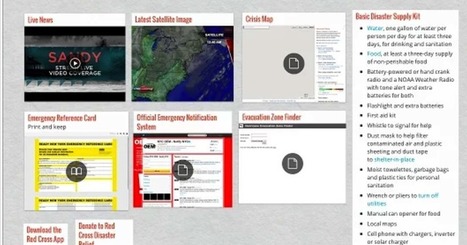
The internet provides us with a treasure trove of all kinds of educational content that is only a click away.However, effective browsing and curation of this content can sometimes be challenging especially for teachers who are already overburdened with different teaching tasks.
Scoop.it!
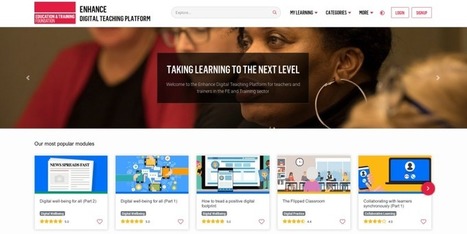
Will you be involved in delivering the roll out of new courses to support the upcoming Essential Digital Skills (EDS) entitlement for adults aged 19 and over?
Scoop.it!

I don't get nearly as many requests for help with file conversion as I did 5-10 years ago, but I still do get them from time to time. Last week I was asked for help converting a PDF into Word for editing. My immediate suggestion was to try the conversion tool available from Online Convert.
Scoop.it!
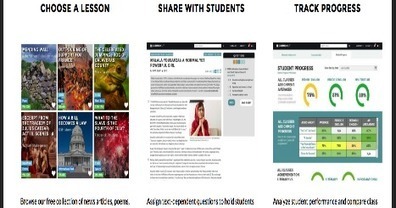
CommonLit is a free website that helps students develop advanced reading and writing skills. It serves hundreds of thousands of students in classrooms across the United States. CommonLit gives teachers access to a full free digital curriculum that enables teachers to assign texts to students, score written responses, send real-time feedback and collect analytics on student progress. |
Scoop.it!
This is a guest post written for students by students Matty Trueman, Kai Ackroyd, Curtis Alexis-Jones and Gagan Warinch to highlight the free collaboration tools available and how they can support remote learning. We are final year students at Sheffield Hallam University.
Scoop.it!

Teachers may sometimes feel overwhelmed by the multitude of resources available online. It might take one a tremendous amount of time to sift through and locate required materials to use in class, which is a taxing task for the already overburdened teacher. To this end, and to help teachers make better use of their time and resources we have curated for you some of the best free websites that provide a treasure trove of educational content most of which is created and shared by fellow teachers and educators. From ready-made lesson plans and study guides to practice exercises and EdTech tools, the websites below provide you with the resources you need to enhance your teaching/learning and grow professionally. This work is also available for free download in PDF format.
Scoop.it!
Ana Cristina Pratas's insight:
Via Ana Cristina Pratas 
Ana Cristina Pratas's curator insight,
March 25, 2020 4:01 AM
Scoop.it!
From
zapier

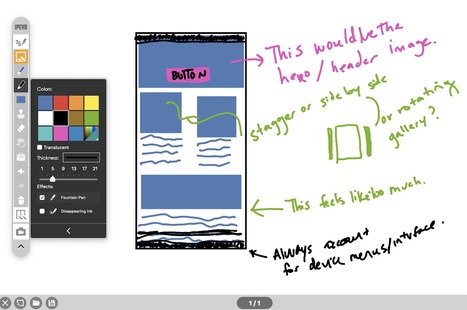
There's something valuable about physically writing something down—or drawing it on a whiteboard. In fact, a study from Indiana University indicates that writing things down can help our brains function better in a whole host of ways, including \ Via Ana Cristina Pratas
Scoop.it!
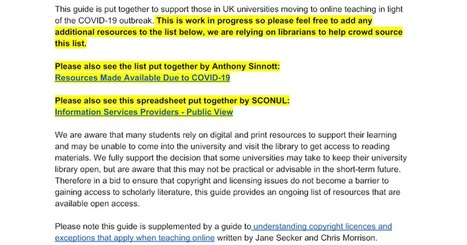
Digital resources to support online teaching This guide is put together to support those in UK universities moving to online teaching in light of the COVID-19 outbreak. This is work in progress so please feel free to add any additional resources to the list below, we are relying on librarians t
Scoop.it!

As the pivot to online gathers apace, some colleagues have been discussing if we have useful resources at the Open University to help. Lots of other people are doing excellent work online, so I won’t try and collate everything that is out there but rather just focus on OU resources. While we do know a lot about distance & online learning, it’s important to recognise that what is happening now is quite different in nature. This is an emergency, swift response in switching classes to online, which is not the same as a carefully planned 5 year strategy.
Elizabeth E Charles's insight:
Great collection of resources.
Scoop.it!
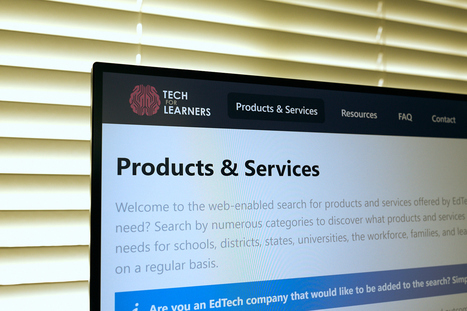
To support the continuity of education for students who can no longer attend classes due to the spread of COVID-19, technology companies have built a repository of free services available to teachers and students during the heath crisis, the White House Office of Science and Technology Policy announced Wednesday.
TechforLearners.org is a searchable online database of educational technology tools that facilitate online learning from edtech companies, including McGraw-Hill, Instructure and Cengage.
Scoop.it!
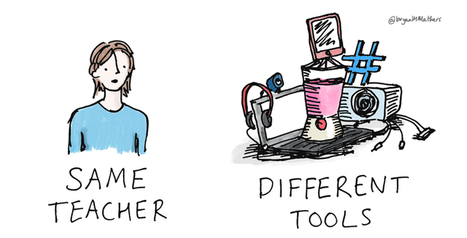
In this free course, Take your teaching online, you will gain knowledge fundamental to delivering effective teaching online.
Elizabeth E Charles's insight:
Great course and very timely!
Scoop.it!

Over the last week I've received a bunch of emails and Tweets from people looking for my suggestions on tools and tactics for teaching online if schools are closed due to COVID-19. I'm going to start this post with some tips for giving online instruction then get into some recommended tools.
Elizabeth E Charles's insight:
Good tips and tools.
Scoop.it!

This year’s forecast was created by nearly five dozen higher education experts, a third of them from institutions outside of the U.S. OER was one of six “emerging technologies and practices” the panelists highlighted as most likely to significantly influence postsecondary teaching and learning in the future.
Scoop.it!

One of the things that I've been reminded of a few times in the last month is to revisit the basics even if you're working with people who have had access to G Suite for a long time. On that note, here are five Google Slides features that all users should know how to use.
Scoop.it!

No matter how many public institutions you visit in a day—schools, libraries, museums, or the dreaded DMV—you may still feel like privatized services are closing in. And if you’re a fan of national parks and public lands, you’re keenly aware they’re at risk of being eaten up by developers and energy companies. The commons are shrinking, a tragic fact that is hardly inevitable but, as Matto Mildenberger argues at Scientific American, the result of some very narrow ideas. |





