Près de 5000 films tombés dans le domaine public sont en téléchargement sur le site archive.org.
Via Laurent Blanquer, Paul Thielen
Your new post is loading...
From
golem13
Près de 5000 films tombés dans le domaine public sont en téléchargement sur le site archive.org. Via Laurent Blanquer, Paul Thielen No comment yet.
Sign up to comment
From latest contribution to Ad Age Digital: Content: Quality content is a great way to attract the people who are needed to form the elusive community that your brand is hoping will to help build. When considering community initiatives, there...
Un memo visuel pour bien faire fonctionner vos communautés online ET offline... Via Carole Maurage
A picture is worth a thousand words, especially when it comes to data and statistics. But creating cool infographics can be time-consuming, so we've found 15 amazing tools to make your life easier. Via Mercédès Remacle
Sur les traces de Facebook… Twitter est en train de développer une option qui permettra aux utilisateurs de télécharger l’ensemble de leurs tweets selon le CEO, Dick Costolo. Via Fabrice
Google+ users with a profile attached to a regular Gmail account and a work-related Google apps account can now blend the two together. Via Matthew Strine
Excerpted from article: "Any good SEO campaign starts with proper keyword identification and categorization. The following keyword research process will provide a good structure and solid foundation for identifying, expanding, and prioritizing the keywords in your universe.
1. Identify Your Keyword Universe: Use your intuition, PPC data, competitor insight, analytics data, internal search data, Google suggest data, and any historical data from your client or your company to construct your initial "seed word" list.
2. Expand the List: Use the Google Keyword Tool (along with tools like Wordtracker and Keyword Discovery if you have access) to expand the seed word list and to understand relative search volumes of all your keywords.
3. Prioritize Your List: Your new expanded list is your "keyword universe." It is then appropriate to prioritize your keywords and choose the most important keywords that you will be targeting with your campaign.
4. Categorize Your Priority Keywords: Once you have a priority list of keywords for your campaign, you should categorize the keywords into segments specific to business goals. This allows for more granular reporting and understanding of performance.
5. Identify Preferred Landing Pages: You may find as you begin to do the on-page optimization (page titles, meta descriptions, H tags, and content) for your preferred landing pages that a particular page may be relevant to only one or two priority keywords.
6. Refine Your Keyword List Over Time: It's good practice to review these data sets monthly to identify any new opportunities that should be integrated into your SEO campaign.
Read full article here: http://searchenginewatch.com/article/2193329/A-6-Step-Process-for-Keyword-Research
Via Giuseppe Mauriello, Gerrit Bes
The Verge is a technology-focused news publication founded in 2011 by Joshua Topolsky and Marty Moe in partnership with Vox Media and its CEO Jim Bankoff. Via vincent tessier
From
www
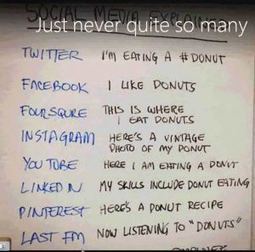
"This hot whiteboard illustration of the nuances of social media is going the distance. After sharing it on Facebook & Pinterest, it now appears here in a new context, Transliteracy."
Librarians gathered together for a one-day conference on ARLD Day 2012 (27 April) in Minnesota to engage, discuss and connect on the theme “Transliteracy: Constructing Knowledge and Networks and more.
____________________________
“Transliteracy is the ability to communicate meaning between media. ...Transliteracy helps us promote literacy across technological barriers.” ____________________________
Lane Wilkinson, Assistant Professor and reference and instruction librarian at the University of Tennessee at Chattanooga, advocated a new literacy taxonomy in his keynote presentation. Lane shared his views on "What is Transliteracy?
See the full presentation with slides & audio, via the original article link here. Via Sue Thomas, Deb Nystrom, REVELN
From
mind42
Caractéristiques, usages, formes de narration, utilisation pédagogiques, appareil critique. A vocation pédagogique, cette "carte mentale" du webdocumentaire a été réalisée (et est mise à jour régulièrement) par le centre départemental de documentation pédagogique du Tarn et Garonne. De nombreuses ressources utiles (via Cristine Vaufrey sur http://www.cursus.edu/?module=document&uid=72084) Via Simon Loubris
La plateforme de curation Scoop.it lancée l’année dernière a passé la barre des 3 millions de visiteurs uniques par mois. Aujourd’hui, la plateforme se dote d’un dashboard, qui ajoute des fonctionnalités et réorganise la curation des contenus vers des critères d’intérêt. Via IOT Valley
Here is a great example of how Robin Good Curates. He noticed this video that Howard Rheingold has spotted. Howard was curating it because of the focus on concept maps and creating insights. Howard wrote:
(Video) Concept mapping with a group can be a powerful exercise in augmenting collective intelligence -- Howard
"An animated presentation about concept mapping. Focuses on how groups can employ the technique as a tool for collaborative planning and problem solving".
Now, go look at how Robin curated this video. He did NOT just do a re-scoop.
Here's what he did:
1.) Viewed the video to see how it relates to his scoop.it on curation and indicated the exact part of the five-minute video that explains content curation
2) He retitled his scoop to support his point - that the making information into knowledge is what the curator does.
3) He thanked the curator who originally found the clip - gave attribution to the person selected it.
Via Howard Rheingold, Beth Kanter, Karen du Toit
Robin Good's comment,
July 23, 2012 1:18 AM
Thanks Beth.
P.S.: A possible overlook "he did simply do a re-scoop"
Beth Kanter's comment,
July 23, 2012 2:31 PM
Hi Robin, thanks for catching that! Sort of a funny typo, don't you think? That is the essence of what you did - you didn't just click a button - you added value for your audiences. Thanks again for being a great role model for all of us who want to learn better curation skills.
Robin Good's comment,
July 23, 2012 4:04 PM
Thank you Beth, for going "meta" and showing the process. Great move. Great job.
RT @Silvae: [veille] serdaLAB - Open Data : La liste des données publiques payantes commentée par Regards Citoyens http://t.co/uUxhlM5K... Via Virginie Mahé |
Le roi des réseaux sociaux aurait t-il les pieds d'argile ? En tout cas sa popularité semblerait être en train de s'effriter. Via André Gentit ✔
Un projet SEO est un projet sur lequel l’attention aux détails est primordiale, car ce sont une multitude de petites choses qui feront de ce projet, un succès ou un échec. Dans la mesure où le trafic naturel représente certainement une grosse partie de votre audience, il apparait important de sécuriser un maximum de points tout au long du projet. En effet, qu’il s’agisse d’un nouveau site, d’une refonte de l’existant ou encore d’une migration, la mise en place d’une stratégie de référencement est une chose délicate car cela demande d’être méticuleux, de penser sur le long terme et de bien la préparer. Via Ma veille
Sur le blog : "Et si l'on parlait Marketing Google s'intéresse à la Serendipité. Ce sujet me tient particulièrement à cœur puisque j'en parle largement et exclusivement dans mon livre "Carnets de Serendipité"). Via Marie-Anne Paveau, Louis Levy
InFlow - Social and Organizational Network Mapping & Measuring Software & Services... Via Claude Super
Important information that you need to know about the information that companies are collecting about you. By the way, the government wants it also. Via Ken Morrison
Ken Morrison's comment,
July 25, 2012 10:23 AM
Thank you for your rescoop. Good luck on your new site.
Ken
* Pushover is on sale this week to welcome IFTTT users! * Via ganassa
What it teaches
Why photos are permanent on the web
Introduction I’m very happy to welcome you all to the first part of this online course on wireframing and creating design documentation.
|
Your new post is loading...