


The Open Web Alliance is a lobby group that is opposed to secure and safe HTTPS traffic over the Internet and forms lobby group for the HTTP2 process to ensure that your Internet traffic can be int...

 Your new post is loading...
 Scoop.it! The Open Web Alliance is a lobby group that is opposed to secure and safe HTTPS traffic over the Internet and forms lobby group for the HTTP2 process to ensure that your Internet traffic can be int... No comment yet.
Sign up to comment
Scoop.it!

From
cursus

Avant-garde, pionnière et sans-cesse en mouvement, la littérature numérique se voit décortiquée dans un dossier créé par la BPI. Via Elena Pérez
Scoop.it!

Synthèse en carte mentale du Vademeccum sur les centres de connaissances et de culture partagée sur Mindmeister http://www.scoop.it/t/classemapping Via Lucas Gruez
Scoop.it!

Dans combien de temps notre civilisation aura-t-elle épuisé ses ressources ? Combien de temps avant la fin de notre monde ? Entretien croisé avec Gabriel Chardin, physicien, et Alexandre Delaigue, économiste. Via Bernard BRUNET
Scoop.it!

This powerful sentiment analysis engine lets you track Twitter search terms, hash tags and mentions. Feel what people are talking about, as well as measuring it. The features from our popular website are also included to let you monitor your social media activity and generate info graphics that help you visualize how you connect and share with your network. ✪ Features
Scoop.it!

(c) IAU Ile-de-France & Paris Region Entreprises, 2015 Je vous invite à découvrir la nouvelle carte économique de l'Ile-de-France, Paris Region Map. Via Virginie Mahé, En Essonne Réussir
Scoop.it!


rossignol.j's curator insight,
February 21, 2015 5:29 PM
LILLIAD LEARNING CENTER INNOVATION Un projet de l’université Lille 1 au cœur du campus de la Cité scientifique Présentation du projet
Scoop.it!
Seulement 5% du web serait visible avec les moteurs de recherche traditionnels comme Google, Yahoo ou Microsoft. Le DARPA, un laboratoire de recherche de l'armée américaine, a développé, Memex, u... Via CECI Jean-François
Scoop.it!

Depuis les récentes attaques terroristes à Paris et Copenhague au cours desquelles 19 personnes ont été tuées, la volonté de créer des bases de données (...) Via Patrick Bouillaud
Scoop.it!

Et si au lieu de regarder passivement les informations, le public les vivait? C'est le pari de Vice news. Via JP Fourcade
Scoop.it!

L’accumulation de données ne pose pas seulement des questions de liberté individuelle, mais aussi de protection des consommateurs et de délitement des assurances collectives, analyse Jean-Pascal Gayant, professeur d’économie à l’université du Mans.
Scoop.it!

DV's curator insight,
February 16, 2015 3:21 AM
approche unique KM/RM, article de Nathalie Morand Khalifa |
Scoop.it!


Jacques Tang's curator insight,
March 5, 2015 2:00 PM
Je trouve cette infographie assez bien faite pour illustrer les différences entre Instagram et Pinterest à un moment T. Pariez vous à moyen terme sur chacun d'entre eux? #instagram #Pinterest
Scoop.it!

Le référencement naturel est parfois difficile à expliquer. Nous avons créé cette infographie, afin de présenter en 3 étapes notre vision du métier. Via FredColantonio
Scoop.it!
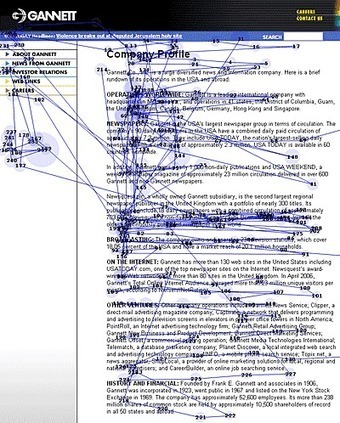
Users hunt for facts online, so factually rich content will attract readers and keep their attention. Via Alessandro Rea
Scoop.it!

ϟ Search Engine Titles Each of the search engines will format your results in their own way. The Search Engine Title Tool is ideal for SEO, as it shows how some of the search engines will display your results. Simply fill out the boxes to see how it affects how your pages show up in the search results. ϟ Search Engine Descriptions Simply fill out the boxes to see how it affects how your description appears in the search results. https://dvana.com/tools/search-engine-description-tool Post Image: http://bit.ly/1AF38o8
Scoop.it!

D’abord annoncée pour 2014, la future gare de Mons dessinée par l’architecte Calatrava ne sera pas terminée avant 2018. Voici à quoi elle ressemblera.
Scoop.it!

La vente des données produites sur les réseaux sociaux est devenue un business à part entière qui transite par des revendeurs de données comme Gnip et DataSift. Ce modèle économique donne un avant-...
Scoop.it!

La publication scientifique est un modèle économique improbable ! Le produit de base est créé par des chercheurs qui réalisent un travail de recherche et écrivent un article pour transmettre ce qu’ils ont appris à d’autres chercheurs. La valeur ajoutée provient également des chercheurs qui évaluent l’article et suggèrent des améliorations. Les clients sont principalement des chercheurs qui à travers leurs laboratoires paient de plus en plus cher pour pouvoir lire leurs articles. Quelque chose vous choque ? ils paient pour accéder à leur propre travail ? Nous avons demandé à Pascal Guitton de nous expliquer pourquoi et comment nous en sommes arrivé à une telle arnaque. Dans un premier article, il nous explique ce qu’est une publication scientifique et son passage au numérique. Via FrancoisMagnan
Scoop.it!
Phil Bradley has put together a list of 170+ general web search engines; that is to say, search engines that search the web. It is not a complete listing, nor is it a 'best of'; it's just a collection of engines that he knows about and that he has blogged about as well. There's a few specialist ones too! Via Profdoc, Françoise Grave
Scoop.it!

Les réseaux sociaux d'entreprise sont utilisés par de nombreuses entreprises. Il existe des solutions généralistes comme Yammer ou SalesForce mais certaine Via Patrick Bouillaud
Scoop.it!
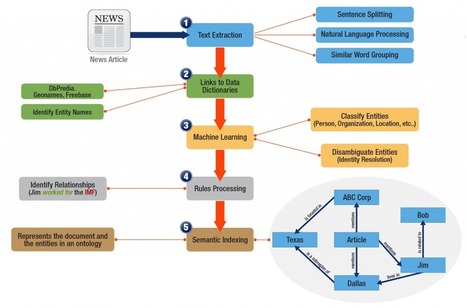
In the not too distant past, analysts were all searching for a “360 degree view” of their data. Most of the time this phrase referred to integrated RDBMS data, analytics interfaces and customers. But with the onslaught… Via Tony Agresta, Edward Chenard, juandoming 
Tony Agresta's curator insight,
February 15, 2015 6:22 PM
Semantic pipelines allow for the identification, extraction, classification and storage of semantic knowledge creating a knowledge base of all your data. Most organizations have struggled to create these pipelines primarily because the plumbing hasn't existed. But now it does. This post discusses how free flowing text streams into graph databases using concept extraction processes. A well coordinated feed of data is written to the underlying graph database while updates are tracked on a continuous basis to ensure database integrity. Other important pipeline plumbing includes tools for disambiguation (used to resolve the definition of entities inside the text), classification of the entities, structuring relationships between entities and determining sentiment. Organizations that deploy well functioning semantic pipelines have an added advantage over their competitors. They have instant access to a completed knowledge base of data. Research functions spend less time searching and more time analyzing. Alerting notifies critical business functions to take immediate action. Service levels are improved using accurate, well structured responses. Sentiment is detected allowing more time to react to changing market conditions. In general, the REST Client API calls out a GATE-based annotation pipeline and sends back enriched data in RDF form. Organizations typically customize these pipelines which consist of any GATE-developed set of text mining algorithms for scoring, machine learning, disambiguation or any of the other wide range of text mining techniques. It is important to note that these text mining pipelines create RDF in a linear fashion and feed GraphDB™. Once the RDF is enriched in this fashion and stored in the database, these annotations can then be modified, edited or removed. This is particularly useful when integrating with Linked Open Data (LOD) sources. Updates to the database are populated automatically when the source information changes. For example, let’s say your text mining pipeline is referencing Freebase as its Linked Open Data source for organization names. If an organization name changes or a new subsidiary is announced in Freebase, this information will be updated as reference-able metadata in GraphDB™. In addition, this tightly-coupled integration includes a suite of enterprise-grade APIs, the core of which is the Concept Extraction API. This API consists of a Coordinator and Entity Update Feed. Here’s what they do:
Other APIs include Document Classification, Disambiguation, Machine Learning, Sentiment Analysis & Relation Extraction. Together, this complete set of technology allows for tight integration and accurate processing of text while efficiently storing resulting RDF statements in GraphDB™. As mentioned, the value of this tightly-coupled integration is in the rich metadata and relationships which can now be derived from the underlying RDF database. It’s this metadata that powers high performance search and discovery or website applications – results are compete, accurate and instantaneous. - See more at: http://www.ontotext.com/text-mining-triplestores-full-semantic-circle/#sthash.fg1RVcQN.dpufIn general, the REST Client API calls out a GATE-based annotation pipeline and sends back enriched data in RDF form. Organizations typically customize these pipelines which consist of any GATE-developed set of text mining algorithms for scoring, machine learning, disambiguation or any of the other wide range of text mining techniques. It is important to note that these text mining pipelines create RDF in a linear fashion and feed GraphDB™. Once the RDF is enriched in this fashion and stored in the database, these annotations can then be modified, edited or removed. This is particularly useful when integrating with Linked Open Data (LOD) sources. Updates to the database are populated automatically when the source information changes. For example, let’s say your text mining pipeline is referencing Freebase as its Linked Open Data source for organization names. If an organization name changes or a new subsidiary is announced in Freebase, this information will be updated as reference-able metadata in GraphDB™. In addition, this tightly-coupled integration includes a suite of enterprise-grade APIs, the core of which is the Concept Extraction API. This API consists of a Coordinator and Entity Update Feed. Here’s what they do:
Other APIs include Document Classification, Disambiguation, Machine Learning, Sentiment Analysis & Relation Extraction. Together, this complete set of technology allows for tight integration and accurate processing of text while efficiently storing resulting RDF statements in GraphDB™. As mentioned, the value of this tightly-coupled integration is in the rich metadata and relationships which can now be derived from the underlying RDF database. It’s this metadata that powers high performance search and discovery or website applications – results are compete, accurate and instantaneous. - See more at: http://www.ontotext.com/text-mining-triplestores-full-semantic-circle/#sthash.fg1RVcQN.dpuf
Scoop.it!

A noter sur les agendas :Le 28 mai à l'Université Rennes 2, une journée d'étude, intitulée "Big et open data : conséquences et compétences pour les professionnels de l'information ?", sera co-organisée par l'ADBS Bretagne, l'URFIST et le CFCB Via DV |






