Your new post is loading...

|
Rescooped by
michel verstrepen
from Media, Business & Tech
May 25, 2016 6:52 PM
|
Apple is upping its game in the field of intelligent assistants. After years of internal debate and discussion about how to do so, the company is preparing to open up Siri to apps made by others. And it is working on an Amazon Echo-like device with a speaker and microphone that people can use t
Via Bruno Renkin
|
|
Rescooped by
michel verstrepen
from Freewares
May 25, 2016 6:26 PM
|
Find out why Microsoft's Get Windows 10 upgrade prompt for Windows 7 and Windows 8.1 devices has the characteristics of malware.
Via Freewares&Tutos
|
|
Scooped by
michel verstrepen
May 25, 2016 6:30 AM
|
Traditionally, UX is a design process where products are designed in such a way that they are easy to use and engaging to interact with…
Want to hear the full interview? Check out this EdSurge On Air podcast extra.
Mitchel Resnick (or Mitch, for short) knows his making—from a lot of different angles. And he’s not too bought into the whole “electronics and gadgets” side of the maker movement.
Resnick has been in this business for more than 30 years, and it’s safe to say that he’s seen the maker movement—and the state of STEM education, in general—go through its phases, its ups and downs. He’s currently the LEGO Papert Professor of Learning Research and head of the Lifelong Kindergarten group at the MIT Media Lab, where he and his team have developed products familiar to many a science educator: the "programmable brick" technology that inspired the LEGO Mindstorms robotics kit, and Scratch, an online computing environment for students to learn about computer science.
It's not the media or materials, but what you do with it.
Mitch Resnick, MIT Professor and head of Lifelong Kindergarten group
Is making something that every school should be doing—and are all interpretations of “making” of equitable value? EdSurge sat down with Resnick in his office at the MIT Media Lab to learn more, and to find out how he and his team are working to bring more creativity into the learning process.
Via John Evans
|
|
Rescooped by
michel verstrepen
from Thinking about Systems
May 24, 2016 12:38 AM
|
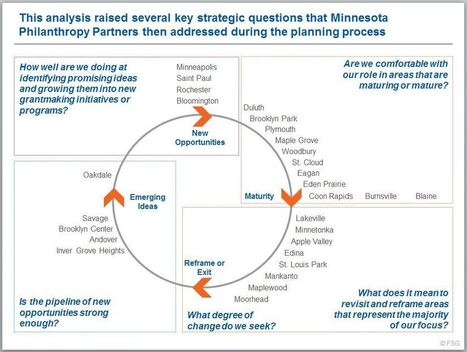
Earlier this month, my colleagues Srik Gopal and Hallie Preskill described the characteristics of complex systems and introduced a framework for applying systems thinking to various stages of a large-scale social
Via Steve Wilhite
|
|
Scooped by
michel verstrepen
May 24, 2016 12:36 AM
|
“In that moment, theory became practice. It was ingrained in me. And, while it might be true that my eye twitches when someone asks me to understand something after the book-slamming experience, I'll always remember—and be thankful for —my professor slamming that book on the table.”
|
|
Scooped by
michel verstrepen
May 22, 2016 11:46 AM
|
Des chercheurs de l'université de Princeton ont décrit une technique qui se sert des données sonores via l'API AudioContext pour identifier un internaute sur le web.
Ever since Charles Babbage’s conceptual, unrealised Analytical Engine in the 1830s, computer science has been trying very hard to race ahead of its time. Particularly over the last 75 years, there have been many astounding developments – the first electronic programmable computer, the first integrated circuit computer, the first microprocessor. But the next anticipated step may be the most revolutionary of all.
Quantum computing is the technology that many scientists, entrepreneurs and big businesses expect to provide a, well, quantum leap into the future. If you’ve never heard of it there’s a helpful video doing the social media rounds that’s got a couple of million hits on YouTube. It features the Canadian prime minister, Justin Trudeau, detailing exactly what quantum computing means.
Trudeau was on a recent visit to the Perimeter Institute for Theoretical Physics in Waterloo, Ontario, one of the world’s leading centres for the study of the field. During a press conference there, a reporter asked him, half-jokingly, to explain quantum computing.
Quantum mechanics is a conceptually counterintuitive area of science that has baffled some of the finest minds – as Albert Einstein said “God does not play dice with the universe” – so it’s not something you expect to hear politicians holding forth on. Throw it into the context of computing and let’s just say you could easily make Zac Goldsmith look like an expert on Bollywood. But Trudeau rose to the challenge and gave what many science observers thought was a textbook example of how to explain a complex idea in a simple way.
Via Wildcat2030
|
|
Rescooped by
michel verstrepen
from #transmediascoop
May 20, 2016 10:24 PM
|
I’ve been fascinated by the lean development principles for quite some time. It is something that feels very right, very modern and very effective, even if the principles and the way of working might take some time getting used to and embracing – more or less time, depending on what kind of company you’re working…
Via Simon Staffans
|
|
Scooped by
michel verstrepen
May 20, 2016 10:09 PM
|
Net use among British people aged over 75 has almost doubled in the last five years, suggest figures from the Office for National Statistics.
Non le marché des objets connectée n'est pas la ruée vers l'or. Les wearables ? Un "bon démarrage" mais une croissance pa
Via sandrinea, Patrick Bouillaud
|
Some U.S. government agencies are using IT systems running Windows 3.1, the decades-old COBOL and Fortran programming languages, or computers from the 1970s.
A backup nuclear control messaging system at the U.S. Department of Defense runs on an IBM Series 1 computer, first introduced in 1976, and uses eight-inch floppy disks, while the Internal Revenue Service's master file of taxpayer data is written in assembly language code that's more than five decades old, according to a new report from the Government Accountability Office.
Some agencies are still running Windows 3.1, first released in 1992, as well as the newer but unsupported Windows XP, Representative Jason Chaffetz, a Utah Republican, noted during a Wednesday hearing on outdated government IT systems.
The government is spending more than US$80 billion a year on IT, and "it largely doesn't work," Chaffetz said during a House of Representatives Oversight and Government Reform Committee hearing. "The federal government is years, and sometimes decades, behind the private sector."
Via Gust MEES
|
|
Scooped by
michel verstrepen
May 25, 2016 6:39 AM
|
Très loin de la "hype" que suscite cette technologie, la Blockchain (o
|
|
Scooped by
michel verstrepen
May 25, 2016 6:27 AM
|
La Région va investir 600 000€ au Pass de Frameries pour créer un espace numérique. Et le privé débloque 225 000€ pour un labo de chimie.
|
|
Rescooped by
michel verstrepen
from Thinking about Systems
May 24, 2016 12:38 AM
|
This post is a part of our systems thinking tools blog series where we’re introducing and sharing guidance for using different tools to support systems thinking and practice.
Via Steve Wilhite
|
|
Rescooped by
michel verstrepen
from Daily Magazine
May 24, 2016 12:37 AM
|
You have made the decision to invest in a DIY home automation and security system from Uxari. That’s a significant first step toward making your home more efficient and secure. Hopefully, you have chosen to include a video surveillance camera in your system. If so, we want to suggest you make it two cameras instead.
Via THE OFFICIAL ANDREASCY
Un arrêt rendu par la Cour de cassation est très clair : les acheteurs d’une éolienne domestique sont en droit d’attendre une réduction effective de leur facture d’électricité, sans quoi la vente peut être annulée.
Les acheteurs d’une éolienne domestique sont « à tout le moins en droit d’attendre de l’installation de l’éolienne une réduction de leur facture énergétique », souligne la première chambre civile de la Cour de cassation dans un arrêt rendu tout récemment. (...)
Via Build Green
Une nouvelle compilation de logiciels libres pour Windows (64 bits) est disponible en téléchargement libre et gratuit. Plus de 60 logiciels libres ont été sélectionnés. Voici les détails.
Via Véronique Meunier
|
|
Rescooped by
michel verstrepen
from Keeping up with Ed Tech
May 20, 2016 10:14 PM
|
Google reveals new products and services at I/O 2016, Nokia comes alive once more, a reminder that Facebook Live broadcasts are public, and the first teaser for the new Star Trek TV series.
Via Dr. Tom D'Amico (@TDOttawa)
|
|
Scooped by
michel verstrepen
May 20, 2016 2:06 PM
|
There’s no silver bullet, but success requires being able to identify technologies, understand their implications, and deploy them in an effective, structured way in your organization.
Successful business technologists need more than pure technical skill: they must know how to solve strategic and operational problems in an integrated way, across multiple technology domains. In this episode of the McKinsey Podcast, principal James Kaplan talks with McKinsey’s Luke Collins about the skills companies are seeking from business technologists and how to acquire them, expanding on the themes identified in his article “Ten books to make you a better business technologist.” An edited transcript of their conversation follows.
|