Your new post is loading...

|
Scooped by
Trevor Lee @ TravConsult
July 7, 9:11 PM
|
✈️ AVIATION THIS WEEK: India's Airspace Crisis | What It Means for Your International Flight Plans
This is one of the most significant aviation developments affecting Indian international travellers in 2026, and the situation is still evolving.
📍 THE SITUATION
Two overlapping disruptions are impacting Indian airlines:
1️⃣ Pakistan has kept its airspace closed to Indian carriers since April 2025, forcing Air India and IndiGo to operate longer routes to Europe, the Middle East, Central Asia, North America, and parts of Southeast Asia.
2️⃣ Ongoing regional conflicts have restricted access to parts of Iranian and West Asian airspace, removing key alternative routes that airlines had been relying on.
📈 THE IMPACT ON TRAVELLERS
• Flight times have increased significantly on many international routes. Some Delhi–London services now take 11–12 hours instead of 8–9 hours. Delhi–Dubai journeys can stretch to 4.5–5 hours.
• Higher fuel burn has increased operating costs, placing additional pressure on airlines already facing elevated aviation fuel prices.
• Air India has reduced or suspended services on select routes, including Toronto, Vancouver, certain New York operations, and Kathmandu.
• IndiGo has also adjusted frequencies on several Middle East and Central Asian routes.
• Reduced capacity and longer journey times have pushed airfares higher on many international sectors.
🌍 WHY FOREIGN AIRLINES HAVE AN ADVANTAGE
Carriers such as Emirates, Etihad, Qatar Airways, British Airways, and Lufthansa continue to access routing options unavailable to Indian airlines.
In some cases, a foreign carrier can operate Delhi–London in around 8 hours, while an Indian carrier may require up to 12 hours on alternate routings.
🛫 WHAT YOU SHOULD DO
✅ Compare total journey time, not just ticket price.
✅ If travelling to Europe, North America, or Central Asia, explore routing options via Dubai, Doha, Abu Dhabi, or Istanbul.
✅ If you hold an Air India booking, review your itinerary and schedule for any changes.
✅ For July and August travel, book early and check route availability carefully.
💡 One positive development: Germany and France have removed airport transit visa requirements for Indian passport holders, making connections through major European hubs more accessible.
✍️ DM me if you have upcoming international travel and would like help evaluating the best routing options.
#AirIndia #IndiGo #AviationAlert #IndianPassport #AirspaceRestrictions #VisaConsultant #TravelAlert
|
|
Scooped by
Trevor Lee @ TravConsult
July 7, 4:53 AM
|
Most people still associate cafes in India with coffee.
But quietly, another trend is growing alongside it.
Artisan bakery culture.
Today, premium croissants, sourdough, and handcrafted desserts are becoming part of urban cafe experience.
And brands are building an entire premium category around it.
Interestingly, Theobroma alone holds nearly 40% India's premium artisan bakery market.
And that says a lot about how Indian's cafe culture is evolving.
The product is just one part of the business.
The real game is becoming part of India's evolving urban lifestyle culture.
And honestly, consumers seem increasingly willing to pay for that experience.
#ConsumerTrends #CafeCulture #BusinessTrends #BrandStrategy #UrbanLifestyle
|
|
Scooped by
Trevor Lee @ TravConsult
July 6, 8:42 PM
|
In India, looking good has become serious business💄📈
India’s beauty and personal care market is growing fast, driven mostly by rising incomes, premiumisation, social media, e-commerce and a new, young generation of consumers who are spending more on skincare, makeup, fragrances and wellness than ever before🧴
This map shows the estimated annual beauty spend per person across Indian states. Even at first glance, a trend is evident: southern India leads the way, followed by metro-led states 🏙️
Karnataka tops the ranking with around ₹5,800 per person each year, followed by Tamil Nadu, Delhi, Maharashtra and Telangana. These states combine strong urbanisation, higher disposable incomes and dense retail networks, creating fertile ground for beauty brands.
Eastern and northeastern states, on the other hand, still record lower average spending, suggesting that they remain promising markets as incomes rise and organised retail continues to expand.
For brands, this is a useful reminder that India is far from a single consumer market. As purchasing power can vary dramatically from one state to the next, so do growth potential and opportunities.
How different do you think the map will look five years from now?
#India #Beauty #Mumbai #Delhi #Bangalore #ConsumerInsights #Skincare #MarketResearch #FMCG #Retail #DataAnalytics #AnalyticsArts
|
|
Scooped by
Trevor Lee @ TravConsult
July 4, 3:20 AM
|
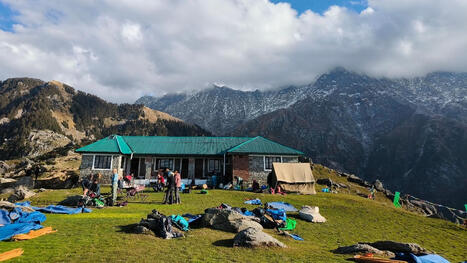
SINGAPORE, 25 June 2026: As temperatures rise this summer, Indian travellers are increasingly considering destinations that offer easy access to trekking routes and outdoor experiences. According to digital travel platform Agoda, accommodation searches for mountain destinations such as Leh, Kasol and McLeod Ganj have risen significantly compared to last year, driven largely by travellers from metro […]
|
|
Scooped by
Trevor Lee @ TravConsult
July 4, 2:59 AM
|
Thailand is actively wooing Indian travelers with the promise of Tomorrowland and easier travel, aiming for over 2.5 million visitors by 2026. Abu Dhabi also sees India as a key market, enhancing connectivity and promoting events. Kenya anticipates a surge in Indian tourists, expanding beyond wildlife. Sri Lanka and Japan are also experiencing significant growth in Indian visitors, driven by improved access and diverse attractions.
|
|
Scooped by
Trevor Lee @ TravConsult
July 4, 1:02 AM
|
India's consumption story is slowly moving beyond just buying more. People now are increasingly buying better: higher quality brands, better experiences & aspirational choices.
With India's per capita income now around ₹2.7–2.8 lakh & is likely to cross ₹3 lakh in coming few years if nominal GDP continues growing at 9–10%, premium spending is gradually becoming a long lasting trend.
This upgrade is already visible in some everyday categories:
1. Autos: SUVs now account for well over 60% of passenger vehicle sales, with models like the Mahindra Scorpio, Mahindra XUV 3XO, Tata Harrier, Hyundai Creta & Kia Seltos continuing to attract buyers over entry level options.
2. Electronics: Consumers are increasingly choosing ₹35,000+ smartphones, larger smart TVs, AI enabled appliances, premium laptops & smart home products.
3. Travel: Domestic air travel continues to touch new highs, while premium hotels are enjoying healthy occupancy and rising room rates as both leisure & business travel remain strong.
4. Dining/F&B: Premium coffee-shop's/cafe's, organised QSR chains & experience driven dining continue gaining popularity. Consumers today are increasingly willing to pay for convenience, consistency, hygiene & the overall experience.
5. Jewellery & Fashion: Consumers are increasingly choosing trusted brands over unorganised players. Branded jewellery, premium apparel, footwear and eyewear continue gaining market share as incomes rise.
6. Brand Upscaling: Some businesses already benefiting from this trend include Titan & Tanishq, Asian Paints & Berger, Havells & Voltas, Nykaa, Trent, United Spirits, Radico Khaitan, IHCL and Eicher Motors. These are just a few examples that come to mind.
For businesses, premiumisation usually means stronger pricing power, better margins & earnings growth that often outpaces revenue growth. The biggest winners are usually brands people trust enough to spend a little more on.
Millions of Indians are expected to move into higher income brackets over this decade. Organised retail should continue gaining market share, while Tier 2 & Tier 3 cities are becoming an increasingly important driver of premium consumption.
One key change is that consumers are not just upgrading products, they are upgrading experiences too. Whether it is holidays, restaurants, gyms, healthcare, education or beauty, more Indians today are willing to spend extra for something they believe is better.
Once people get used to better products and better experiences, they usually don't go back. That is why premiumization tends to last much longer than most people expect. If this trend continues, some of India's biggest wealth creators over the next decade could come from this space.
|
|
Scooped by
Trevor Lee @ TravConsult
July 3, 11:29 PM
|
INDIA'S PREMIUMISATION WAVE IS REAL.
WHAT MOST BRAND BUILDERS ARE MISSING
IS WHAT COMES AFTER IT.
Every market research report says the same thing right now.
~ India's consumers are upgrading.
~ Disposable incomes are rising.
~ Tier 2 and 3 cities are entering the premium conversation.
~ Grade A retail is expanding faster than at any point in the country's history.
All of this is true.
And most brand builders are drawing the wrong conclusion from it.
The premiumisation wave is a distribution opportunity.
It is not a brand architecture.
Premium competes on quality and value perception.
Luxury competes on mythology and symbolic distance.
Premium justifies its price.
Luxury does not need to.
The founders riding the premiumisation wave and calling it luxury building are making a decision that will compound — incorrectly — for the next decade.
When the wave normalises — and every premiumisation wave in every market eventually does — the brands that survive it will be those that built mythology during it.
Not those that rode it and called it luxury.
The wave is rising. This is the moment to build the foundation.
Not to mistake the tailwind for the architecture.
#IndianLuxury #LuxuryStrategy #BrandArchitecture #Premiumisation #IndiaLuxury #LuxuryBrands #FounderThinking #LuxuryConnect #AbhayGupta #LuxuryLeadership
|
|
Scooped by
Trevor Lee @ TravConsult
June 28, 10:48 PM
|
#LUXURYNUGGETS #92
THE PREMIUMISATION TRAP.
WHAT HAPPENS TO PREMIUM BRANDS
WHEN THE WAVE NORMALISES.
India's premiumisation wave is creating real opportunity.
But most founders riding it are building premium.
Not luxury.
The distinction will matter when the wave normalises.
#LuxuryNuggets #92 this week — the premiumisation trap, the premium vs luxury distinction, and what founders building now need to understand before the tailwind becomes a headwind.
Seven slides. One framework.
#LuxuryNuggets #IndianLuxury #LuxuryStrategy #BrandArchitecture #Premiumisation #LuxuryBrands #FounderThinking #LuxuryConnect #AbhayGupta #LuxuryLeadership
|
|
Scooped by
Trevor Lee @ TravConsult
June 20, 8:14 PM
|
A willingness to adopt shadow AI has become a global trend.
|
|
Scooped by
Trevor Lee @ TravConsult
June 20, 8:11 PM
|
Mountain Travel India: Zostel reveals a remarkable 76% year-on-year increase in mountain travel bookings, highlighting a trend of Indian travelers seeking spontaneous escapes to lesser-known hill destinations away from urban congestion this monsoon season.
|
|
Scooped by
Trevor Lee @ TravConsult
June 18, 7:38 PM
|
As if buying an airline ticket wasn’t confusing enough already, Air India has introduced a new ‘Basic’ fare family, adding the new class to its Value
|
|
Scooped by
Trevor Lee @ TravConsult
June 13, 10:53 PM
|
Kantar’s latest ‘State of the Nation’ consumer sentiment study reveals that Indian consumers are becoming increasingly cautious in response to economic and geopolitical uncertainty, creating new challenges and opportunities for brands.
|
|
Scooped by
Trevor Lee @ TravConsult
June 13, 10:49 PM
|
A video of a group of Indian tourists has been making the rounds on social media. Captioned, “POV: gujju anywhere and everywhere”, it shows the group doing garba in a circle on an airport tarmac in Vietnam, with their luggage piled in the middle as they laugh and celebrate.
|
|
|
Scooped by
Trevor Lee @ TravConsult
July 7, 9:05 PM
|
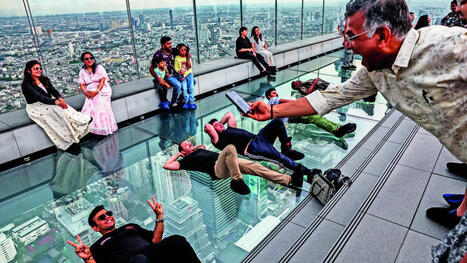
Over the last few months, I’ve watched something striking: Indians are choosing to travel up; not just more often, but more premium. Business-class queues at airports are getting longer, premium cabins are routinely full, and I no longer see a single upright, economy-style seat being accepted as “good enough” for long-haul travel.
On a recent trip from Africa to India via UAE I noticed a telling mismatch. The aircraft used on the Africa→UAE sector was modern, comfortable and clearly chosen to match passenger expectations. The UAE→India sector, by contrast, felt dated — older equipment, less comfort. That contrast isn’t just anecdotal. It’s a market signal.
Two clear takeaways for the industry:
- Indian travellers are learning to fly better. They value comfort, service and modern cabins, and they’re willing to pay for it.
- Airlines can no longer slip older, tired aircraft onto India routes without consequences. Demand for newer, better equipment on India services is only going to grow.
Case in point: I recently flew an European carrier on a Europe–India service and the aircraft and experience were so impressive I made a mental note: when flying to Europe, pick them and not an UAE carrier. That preference—and others like it—will influence booking patterns and brand loyalty.
For airlines this is a wake-up call. Match your product to evolving expectations or risk losing share to carriers that do.
India’s premium traveller is here in force. It’s time the industry treats them that way. | 15 comments on LinkedIn
|
|
Scooped by
Trevor Lee @ TravConsult
July 6, 8:47 PM
|
India’s cafe culture is now moving beyond coffee.
Today, that culture is slowly moving beyond coffee.
Bubble Tea is becoming one of the fastest growing urban beverage trends in India.
And what makes this interesting is that Bubble Tea isn’t competing with chai.
It’s competing with the cafe experience.
The product is just one part of the business.
The real game is creating a trend people want to be part of.
That’s exactly how cafe culture scaled in India too.
And honestly, India’s urban consumers seem ready for it.
Wouldn’t be surprising if Bubble Tea becomes as common in malls and cafes as cold coffee over the next few years.
#ConsumerTrends #BrandStrategy #BusinessTrends #BubbleTea #FMCG
|
|
Scooped by
Trevor Lee @ TravConsult
July 4, 3:23 AM
|
Most people just grab a coffee and move one.
But the business behind that cup is far bigger than it looks.
Starbucks currently leads Indian's cafe market with around 20% of shares.
Cafe Coffee Day follows closely at nearly 18%.
But What's more interesting is what comes after that.
Nearly 30% of the market is still controlled by smaller and regional cafe brand.
This clearly shows on thing.
No single brand truly dominates Indian's cafe culture.
Because in India, coffee is rarely just about coffee.
That's why even newer brands are scaling fast despite global competition.
The real competition isn't only about selling coffee.
It's about building an experience people return to daily.
Next time you order a coffee, notice what you're actually paying for.
#BrandStrategy #CoffeeMarket #BusinessInsights #IndianMarket #CafeCulture
|
|
Scooped by
Trevor Lee @ TravConsult
July 4, 3:19 AM
|
According to insights from Pickyourtrail, culinary experiences are emerging as a key driver of international travel decisions, with nearly 40 percent of travellers now identifying food and local cuisine as a major factor while planning overseas holidays. More notably, 30-40 percent of travellers actively consider a destination's food culture before finalising where they want to travel.
|
|
Scooped by
Trevor Lee @ TravConsult
July 4, 1:04 AM
|
India isn’t just consuming more.
India is consuming differently.
A few years ago, the first question was:
“How much discount?”
Today, it’s increasingly:
“Which brand?”
Tata Starbucks’ ambitious expansion plan isn’t just about opening more coffee stores—it’s a reflection of a much bigger shift in Indian consumer behaviour.
Consumers today are willing to pay a premium for:
☕ Brand trust
✨ Superior experience
📱 Social identity
💚 Consistency
🤝 Emotional connection
This trend isn’t limited to coffee.
We’re witnessing the same transformation across real estate, automobiles, electronics, fashion, beauty, food delivery, and hospitality.
The Indian consumer is evolving from being price-sensitive to value-conscious and brand-led.
Brands are no longer selling products.
They’re selling experiences, aspirations, and communities.
For marketers and business leaders, the takeaway is simple:
Competing on price wins transactions.
Competing on brand wins loyalty.
The next decade will belong to organizations that invest relentlessly in customer experience, trust, and differentiated brand value—not just discounts.
The era of “lowest price wins” is gradually giving way to “best brand wins.”
Do you believe Indian consumers are becoming more brand-led than price-led? I’d love to hear your perspective.
#BrandStrategy #ConsumerBehavior #Marketing #DigitalTransformation #CustomerExperience #BrandBuilding #Retail #SalesLeadership #IndiaGrowth #BusinessStrategy
|
|
Scooped by
Trevor Lee @ TravConsult
July 4, 12:19 AM
|
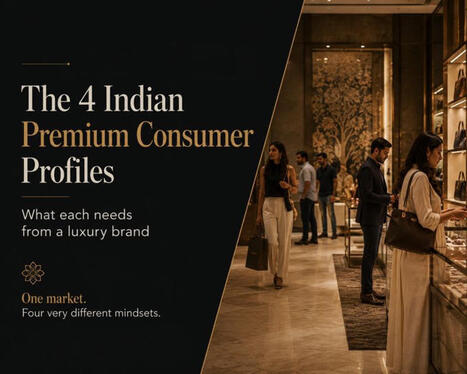
The Indian premium consumer is not one consumer.
They are at least four.
And most brands are still marketing to only one of them.
After working inside high-footfall premium retail environments, I've come to believe that many growth challenges are actually segmentation challenges.
We talk about "the Indian premium consumer" as though they think, buy and aspire in the same way.
They don't.
I see four distinct profiles emerging:
1. The Legacy Wealth Consumer
Understated. Brand-literate. Relationship-driven.
This customer rarely responds to loud campaigns or aggressive selling.
Trust matters more than promotion.
2. The New Urban Professional
A first-generation premium buyer.
They research extensively online, compare brands, read reviews and seek social validation before making a purchase.
They don't just buy a product.
They buy a story they can identify with.
3. The Metro Aspirational Consumer
Highly aware of trends and social signalling.
Selective in spending but willing to invest in categories that create visible impact.
For this audience, the right entry-level luxury product can become a lifelong relationship.
4. The NRI Returnee
Globally benchmarked expectations.
They are looking for an Indian premium experience that feels world-class, not locally compromised.
They expect authenticity with international standards.
The interesting part?
These four consumers often walk through the same mall and enter the same store.
Yet they expect completely different experiences.
One wants privacy.
One wants education.
One wants aspiration.
One wants global sophistication rooted in Indian identity.
Many brands build their proposition around only one of these groups and wonder why growth eventually plateaus.
The strongest premium brands will be the ones capable of adapting their storytelling, service protocols and customer journey without losing the consistency of the brand itself.
Because in India, the challenge isn't finding premium consumers.
It's recognising that there are many versions of them.
And each one defines luxury differently.
#IndiaConsumer #PremiumRetail #IndiaMarketing #ConsumerPsychology #LuxuryIndia #LuxuryMarketing #RetailStrategy #ConsumerBehaviour #MarketingLeadership #BrandStrategy
|
|
Scooped by
Trevor Lee @ TravConsult
July 2, 10:40 PM
|
Dabur: Major multinational and domestic consumer companies are expected to create nearly 5,000 jobs in India over the next two years, driven by the robust local market and the establishment of new manufacturing and tech centres.
|
|
Scooped by
Trevor Lee @ TravConsult
June 20, 8:15 PM
|
tourist visa access to Austria has been easy as Austria welcomes Indian tourists.
|
|
Scooped by
Trevor Lee @ TravConsult
June 20, 8:13 PM
|
Explore the rise of solo female travelers in India, driven by financial independence and adventure. Learn how companies like BizareXpedition cater to their unique needs, transforming travel experiences in the Himalayas and beyond.
|
|
Scooped by
Trevor Lee @ TravConsult
June 19, 3:50 AM
|
In late 2024, De Beers Group cut natural diamond prices by up to 15%. Lab-grown rings are one of the reasons why.
WedMeGood: India's Favourite Wedding Planning Platform's wedding surveys, covering thousands of urban couples, found brides now lead the ring decision, once driven by family.
That one line tells me more than any sales chart could.
In their 2024-25 report, 45.5% of couples chose a lab-grown diamond. The mined stone held a narrow lead. It would be easy to call this a price story, since a lab-grown stone costs 60 to 80% less for the same look. Price matters here. The bigger change is sitting one step behind it.
For decades, the diamond ring was a family choice. Parents picked it. It got passed down. The whole category was built on that feeling of inheritance and forever, of something you were not meant to question.
Now the woman wearing the ring is the one choosing it. She walks in with very different questions.
→ Is it certified?
→ Why does the word "natural" cost three to four times more?
→ Will I actually wear this every day?
I have watched this happen in every category I have worked in. The product rarely changes first. The buyer does. When the decision moves into new hands, the old pitch stops landing.
📍 A diamond brand today is not selling to the family. It is selling to her.
The brands still leading with heritage and rarity are answering a question she never asked.
When did you last make a big purchase that your parents would have made completely differently? | 15 comments on LinkedIn
|
|
Scooped by
Trevor Lee @ TravConsult
June 13, 10:55 PM
|
Travellers are increasingly choosing quieter, offbeat destinations over crowded tourist hotspots. The shift reflects a search for more personal, less scripted journeys in the social media age.
|
|
Scooped by
Trevor Lee @ TravConsult
June 13, 10:52 PM
|
India's home services market is changing. Consumers are now paying more for verified service providers. This shift is driven by a desire for trust and certainty. Women are leading this trend, seeking reliability over lower costs. This signals a move towards formal platforms offering predictable service experiences. The market is evolving beyond just the repair itself.
|