Immunology
199.2K views | +8 today
Immunology
Teaching and Learning Immunology. Information you never would have searched for!
Your new post is loading...
Suggested by Société Francaise d'Immunologie
April 14, 2015 1:27 PM
Scoop.it!

Is the Complement Activation Product C3a a Proinflammatory Molecule? Re-evaluating the Evidence and the Myth [BRIEF REVIEWS]

The complement activation product C3a is often described as a proinflammatory mediator, alongside its downstream cousin, C5a. However, emerging studies show that C3a has several anti-inflammatory facets in vivo.
Gilbert C FAURE's insight:

For example, in the acute inflammatory response, C3a acts in direct opposition to C5a, through preventing the accumulation of neutrophils in inflamed tissues by independently regulating their mobilization. This acute, protective, and opposing activity of C3a to C5a is also illustrated in models of septicemia. In this article, we reinvestigate the discovery and original classification of C3a as a proinflammatory mediator and highlight the emerging studies demonstrating anti-inflammatory effects for C3a in the immune response. It is our hope that this review illuminates these apparently contradictory roles for C3a and challenges the general dogma surrounding C3a, which, historically, has ubiquitously been described as a proinflammatory mediator. In light of this, we urge investigators to use “inflammatory modulator” as the descriptor for C3a.

Krishan Maggon 's curator insight, April 15, 2015 12:40 AM

J. Immunology


doi: 10.4049/jimmunol.1403068                                                  The Journal of Immunology                                                         April 15, 2015vol. 194 no. 8 3542-3548Is the Complement Activation Product C3a a Proinflammatory Molecule? Re-evaluating the Evidence and the MythLiam G. Coulthard and Trent M. Woodruff

+Author Affiliations

School of Biomedical Sciences, University of Queensland, St. Lucia 4072, Queensland, AustraliaAddress correspondence and reprint requests to Dr. Trent Woodruff, School of Biomedical Sciences, University of Queensland, St. Lucia 4072, QLD, Australia. E-mail address:t.woodruff@uq.edu.au
Scooped by Gilbert C FAURE
February 26, 2015 2:34 AM
Scoop.it!

Genetic Analysis of Membrane Cofactor Protein (CD46) of the Complem... - PubMed - NCBI

PLoS One. 2015 Feb 24;10(2):e0117840. doi: 10.1371/journal.pone.0117840.
Gilbert C FAURE's insight:
Abstract

Preeclampsia is a common disorder of pregnancy characterized by endothelial dysfunction. It may be life-threatening for the mother and fetus in severe cases. Dysregulation of the complement system has been suggested to predispose women to preeclampsia. Complement is part of the innate and adaptive immune systems and potentially capable of causing inflammation and tissue damage. Membrane cofactor protein MCP (CD46) is among the potent complement regulators that have recently been linked to a severe form of preeclampsia with or without an underlying autoimmune phenotype. Mutations in CD46 predispose to thrombotic microangiopathy with endothelial cell dysfunction. The exome of CD46 were sequenced in 95 Finnish women with severe preeclampsia. Genetic variations discovered in the full exome were compared to those observed in 95 control women who did not develop preeclampsia. Because A304V (rs35366573) was associated with preeclampsia in one previous study, we sequenced the transmembrane region including the A304V variant and part of the cytoplasmic tail in 95 additional controls. We did not discover any association between A304V or other CD46 SNPs and preeclampsia. This study describes a carefully characterized cohort of severely preeclamptic Finnish women and found no potentially predisposing variants in CD46. However, it is possible that other genetic components of the complement system may affect the pathogenesis of severe preeclampsia and related diseases.

No comment yet.
Rescooped by Gilbert C FAURE from Cancer Pathways inhibitors Collection
February 24, 2015 2:37 AM
Scoop.it!

PTX3 Is an Extrinsic Oncosuppressor Regulating Complement-Dependent Inflammation in Cancer: Cell

PTX3 Is an Extrinsic Oncosuppressor Regulating Complement-Dependent Inflammation in Cancer: Cell | Immunology | Scoop.it
Highlights


•PTX3 deficiency unleashes Complement-dependent tumor-promoting inflammation•Tumors developed in a PTX3-deficient context have higher frequency of mutated Trp53•PTX3 expression is epigenetically repressed in selected human tumors•Complement is an essential component of tumor-promoting inflammation

Via Krishan Maggon
Krishan Maggon 's curator insight, February 22, 2015 3:59 AM

Cell    Volume 160, Issue 4, p700–714, 12 February 2015


PTX3 Is an Extrinsic Oncosuppressor Regulating Complement-Dependent Inflammation in CancerEduardo Bonavita, Stefania Gentile, Marcello Rubino, Virginia Maina, Roberto Papait, Paolo Kunderfranco, Carolina Greco,Francesca Feruglio, Martina Molgora, Ilaria Laface, Silvia Tartari, Andrea Doni, Fabio Pasqualini, Elisa Barbati, Gianluca Basso,Maria Rosaria Galdiero, Manuela Nebuloni, Massimo Roncalli, Piergiuseppe Colombo, Luigi Laghi, John D. Lambris, Sébastien Jaillon,Cecilia Garlanda, Alberto Mantovani DOI: http://dx.doi.org/10.1016/j.cell.2015.01.004
Scooped by Gilbert C FAURE
February 12, 2015 9:21 AM
Scoop.it!

The American Association of Immunologists

The American Association of Immunologists | Immunology | Scoop.it

TRAVEL AWARDS IUIS/AAI

Gilbert C FAURE's insight:

TRAVEL AWARDS IUIS/AAI
The IUIS Education (EDU) and Gender Equality and Career
Development (GEC) Committees in conjunction with the
American Association of Immunologists (AAI) are proud to
announce the continued co-sponsoring of 8 travel awards (4 for
each course) for trainees from the developing world to attend
summer courses.
This year the schedule is as follows:
-The AAI Introductory Course in Immunology (July 14-19, 2015, at
the Long Beach Convention Center, Long Beach, California).
-The AAI Advanced Course in Immunology (August 2-7, 2015,
in the Seaport World Trade Center, in Boston, MA).
Preliminary information is shown on the AAI website
(http://www.aai.org/Education/Courses/index.html). Complete information,
including schedules and registration information, will be posted on the
website in February.
The Introductory Course is an intensive two-part course, taught by worldrenowned
immunologists, to provide a comprehensive overview of the basics of
immunology. This course is for students new to the discipline or those seeking
more information to complement general biology or science training.
The Advanced Course is intensive and directed towards advanced trainees who
wish to expand their knowledge of the field. Leading experts will present recent
advances in the biology of the immune system and its role in health and disease.
This is not an introductory course and all participants need to have a firm
understanding of the principles of Immunology.
AAI will provide registration and housing (for up to 7 nights) for
the 6 attendees. The IUIS Education committee will provide
support for travel and other associated expenses to a maximum
of $2,000 US. Any additional cost will be the responsibility of the
attendee.
The IUIS Education Committee will solicit applications, make the
evaluations, select the participants and pass on the information to
AAI for their approval. AAI will then register the selected
candidates and make their hotel accommodation reservations.
Both AAI and IUIS will send the selected candidates a letter of
invitation for VISA purposes. AAI is specifying that these courses
should represent the first experience in the USA of the attendees.
To apply for these travel awards, please send your curriculum
vitae, a letter describing your research and why you would benefit
from this course as well as confirming that you have not studied
or attended a course in the USA before. You should also request
an email letter of reference from your supervisor. Send all this
information by email to <michelle.letarte@sickkids.ca>. Dr Letarte
is the chair of the IUIS Education Committee, who will be
responsible for the review process with her committee.
All applications should be received prior to February 27, 2015.
Only the selected candidates will be notified, and by March 25th.

No comment yet.
Scooped by Gilbert C FAURE
February 5, 2015 9:35 AM
Scoop.it!

On the Functional Overlap between Complement and Anti-Microbial Pep... - PubMed - NCBI

Front Immunol. 2015 Jan 19;5:689. doi: 10.3389/fimmu.2014.00689. eCollection 2014. Review
Gilbert C FAURE's insight:
Abstract

Intriguingly, activated complement and anti-microbial peptides share certain functionalities; lytic, phagocytic, and chemo-attractant activities and each may, in addition, exert cell instructive roles. Each has been shown to have distinct LPS detoxifying activity and may play a role in the development of endotoxin tolerance. In search of the origin of complement, a functional homolog of complement C3 involved in opsonization has been identified in horseshoe crabs. Horseshoe crabs possess anti-microbial peptides able to bind to acyl chains or phosphate groups/saccharides of endotoxin, LPS. Complement activity as a whole is detectable in marine invertebrates.

No comment yet.
Scooped by Gilbert C FAURE
January 27, 2015 1:34 PM
Scoop.it!

Complement: driver of inflammation and therapeutic target in diverse diseases | Royal Society

Complement: driver of inflammation and therapeutic target in diverse diseases | Royal Society | Immunology | Scoop.it
Explore remarkable recent advances in complement biology inc novel diagnostic and therapeutic opportunities http://t.co/leRZ7AWjRm
No comment yet.
Rescooped by Gilbert C FAURE from Hematology
January 7, 2015 9:36 AM
Scoop.it!

Clinical & Experimental Immunology - Complement Virtual Issue - Wiley Online Library

Clinical & Experimental Immunology - Complement Virtual Issue - Wiley Online Library | Immunology | Scoop.it

The following collection of key articles on complement, from Clinical & Experimental Immunology, were selected by Associate Editor, Marina Botto, in advance of the XXIV International Complement Workshop 2012.


Gilbert C FAURE's curator insight, January 7, 2015 9:35 AM

The following collection of key articles on complement, from Clinical & Experimental Immunology, were selected by Associate Editor, Marina Botto, in advance of the XXIV International Complement Workshop 2012.

Papers from July 2010 and october 2012

Scooped by Gilbert C FAURE
November 26, 2014 3:43 AM
Scoop.it!

Structural basis for sialic acid–mediated self-recognition by complement factor H : Nature Chemical Biology : Nature Publishing Group

Structural basis for sialic acid–mediated self-recognition by complement factor H : Nature Chemical Biology : Nature Publishing Group | Immunology | Scoop.it
The structure of complement regulatory protein factor H in complex with a preferred sialylated trisaccharide and the C3b thioester domain supports the idea of a ternary complex that mediates discrimination between self and nonself in a branch of...
Gilbert C FAURE's insight:

The serum protein complement factor H (FH) ensures downregulation of the complement alternative pathway, a branch of innate immunity, upon interaction with specific glycans on host cell surfaces. Using ligand-based NMR, we screened a comprehensive set of sialylated glycans for binding to FH and solved the crystal structure of a ternary complex formed by the two C-terminal domains of FH, a sialylated trisaccharide and the complement C3b thioester–containing domain. Key residues in the sialic acid binding site are conserved from mice to men, and residues linked to atypical hemolytic uremic syndrome cluster within this binding site, suggesting a possible role for sialic acid as a host marker also in other mammals and a critical role in human renal complement homeostasis. Unexpectedly, the FH sialic acid binding site is structurally homologous to the binding sites of two evolutionarily unrelated proteins. The crystal structure also advances our understanding of bacterial immune evasion strategies.

 
No comment yet.
Scooped by Gilbert C FAURE
November 19, 2014 1:44 PM
Scoop.it!

The two faces of NKG2D - Fred Hutch News Service

The two faces of NKG2D - Fred Hutch News Service | Immunology | Scoop.it
A paradigm-changing discovery reveals that cancer cells can hijack the stimulatory NKG2D lymphocyte receptor to complement the presence of its ligands for self-stimulation of high malignancy traits.
Gilbert C FAURE's insight:

In 2011, a team of Fred Hutch researchers from the Spies Lab in the Clinical Research Division published unexpected findings regarding the stimulatory lymphocyte receptor NKG2D, a well-known mediator of immune surveillance of malignant cells. Signal-triggering molecules that bind to this receptor, NKG2D ligands, are generally not expressed on the surface of normal cells but are induced in most types of cancers, making them a target for cancer-fighting immune cells. The observation that surprised the investigators was that certain cancer cells also express the NKG2D receptor, possibly corrupting this key player into stimulating their own tumor growth (Caballero-Benitez et al. 2011). NKG2D signaling was demonstrated in breast, ovarian, prostate and colon cancer cells, and additional support for the hypothesis was provided through analysis of clinical specimens, positively correlating NKG2D expression with tumor size and spread.

No comment yet.
Scooped by Gilbert C FAURE
October 29, 2014 7:21 AM
Scoop.it!

Citizen News Service - CNS: WHO launches new guidelines on management of latent TB infection

Citizen News Service - CNS: WHO launches new guidelines on management of latent TB infection | Immunology | Scoop.it
RT @haileygetahun: WHO launches new guidelines on management of latent TB infection
http://t.co/uYh75nyM8p
Gilbert C FAURE's insight:

UptoDare!!!

Key recommendations of the guidelines

Selecting those who should be tested-
The guidelines recommend that:

Systematic testing and treatment of LTBI should be considered for:PLHIV, adult and child contacts of pulmonary TB patients initiating anti-tumour necrosis factor treatment, patients receiving dialysis, patients preparing for organ or haematologic transplantation, and patients with silicosisprisoners, health-care workers, immigrants from high TB burden countries, homeless persons and illicit drug users.Systematic testing for LTBI is not recommended in people with diabetes, people with harmful alcohol use, tobacco smokers, and underweight people provided they are not already included in the above recommendations.Individuals should be asked about symptoms of TB before being tested for LTBI.


Standards for testing and treatment 
 LTBI diagnosis and treatment recommendations in the guidelines are based upon a public health approach with individual benefit, keeping in mind that they complement active TB case finding activities and that individual benefits should outweigh the risk.

The guidelines recommend that either tuberculin skin test (TST) or interferon gamma release assays (IGRA) can be used to test for latent TB.

Consistent with existing WHO recommendations, the guidelines reiterated that IGRAs should not replace TST in low and middle income countries.

The following treatment options  are recommended for the treatment of LTBI in the guidelines:
(i) isoniazid daily for 6 months (6H)
(ii) isoniazid daily for 9 months (9H)
(iii) the combination of rifapentine and isoniazid once a week for 12 weeks (3HP)
(iv) the combination of rifampicin and isoniazid daily for 3-4 months (3-4HR)
(v) rifampicin alone daily for 3-4 months (3-4R)

“Currently, these are the only diagnostic tests available  though they are both weak in predicting future development of TB among infected. Development of better diagnostic tools should be priority for research’ said Dr Alberto Matteelli, Medical officer from the TB/HIV and community engagement unit. 

In addition, the Guidelines Development Panel noted the following critical issues for consideration in the implementation of these guidelines:

Strict clinical observation and close monitoring for the development of active TB disease among contacts of multidrug-resistant TB (MDR-TB) cases, preferably for at least two years over the provision of preventive treatment;Regular clinical monitoring of individuals receiving treatment for latent TB through a monthly visit to the health-care provider;Establishment of national TB drug resistance surveillance systems while implementing national latent TB management services;Introduction of flexible interventions and incentives by national TB programmes that are responsive to the specific needs of population groups at risk, as well as tailored to the local context and their needs to ensure acceptable initiation of, adherence to and completion of LTBI treatment.Documentation of treated individuals through a functional, routine monitoring and evaluation system that is aligned with national patient monitoring and surveillance systems.Creation of conducive policy and programmatic environment, including the promotion of universal health coverage, development of national and local policies, standard operating procedures, as well allocation of dedicated resources.

No comment yet.
Scooped by Gilbert C FAURE
September 21, 2014 1:26 PM
Scoop.it!

Crosstalk between the coagulation and complement systems in sepsis - Thrombosis Research

Florea Lupu, Ravi S. Keshari, John D. Lambris, K. Mark Coggeshall


Sepsis is a potent activator of the hemostatic and complement systems. While local activation of these proteolytic cascades contributes to the host defense, their uncontrolled systemic activation has major tissue damaging effects that lead to multiple organ failure and death. We have extensively studied the activation of complement and coagulation cascades in experimental sepsis using baboons challenged with live bacteria, such as Gram-negative Escherichia coli or Gram-positive Staphylococcus aureus and Bacillus anthracis, or with the bacterial product peptidoglycan. We observed that these challenges rapidly induce disseminated intravascular coagulation and robust complement activation. We applied a potent C3 convertase inhibitor, compstatin, which prevented sepsis-induced complement activation, reduced thrombocytopenia, decreased the coagulopathic responses, and preserving the endothelial anticoagulant properties. Overall, our work demonstrates that live bacteria and bacterial products activate the complement and coagulation cascades, and that blocking formation of complement activation products, especially during the organ failure stage of severe sepsis could be a potentially important therapeutic strategy.

Victoria Rahsepar's curator insight, November 16, 2022 10:49 AM
Lien d'une CIVD avec un sepsis provoquée par des bactéries (E. coli, S. aureus,...). Les bactéries vivantes ont la capacité d'activer les compléments et les cascades de coagulation. 
Par contre, l'ajout de la compstatin (inhibiteur de la C3 convertase) préviendrait l'activation du complément, réduirait les thrombocytopénies et diminuerait les réponses coagulantes. 

Scooped by Gilbert C FAURE
September 16, 2014 1:34 PM
Scoop.it!

Complement modulation of T cell immune responses during homeostasis and disease

#NewReview: Complement Modulation of T Cell Immune Responses during Homeostasis and Disease http://t.co/yc402o98c9
Gilbert C FAURE's insight:

The complement system is an ancient and critical effector mechanism of the innate immune system as it senses, kills, and clears infectious and/or dangerous particles and alerts the immune system to the presence of the infection and/or danger. Interestingly, an increasing number of reports have demonstrated a clear role for complement in the adaptive immune system as well. Of note, a number of recent studies have identified previously unknown roles for complement proteins, receptors, and regulators in T cell function. Here, we will review recent data demonstrating the influence of complement proteins C1q, C3b/iC3b, C3a (and C3aR), and C5a (and C5aR) and complement regulators DAF (CD55) and CD46 (MCP) on T cell function during homeostasis and disease

No comment yet.
Scooped by Gilbert C FAURE
August 29, 2014 4:07 AM
Scoop.it!

Complement Patent Database

Gilbert C FAURE's insight:

thanks for sharing this curated database of patents specifically dedicated to complement

No comment yet.
Scooped by Gilbert C FAURE
March 28, 2015 4:16 AM
Scoop.it!

New Insights into the Role of Ficolins in the Lectin Pathway of Innate Immunity. - PubMed - NCBI

New Insights into the Role of Ficolins in the Lectin Pathway of Innate Immunity. - PubMed - NCBI | Immunology | Scoop.it
Int Rev Cell Mol Biol. 2015;316:49-110. doi: 10.1016/bs.ircmb.2015.01.003. Epub 2015 Feb 20.
Gilbert C FAURE's insight:

In the innate immune system, a variety of recognition molecules provide the first-line host defense to prevent infection and maintain endogenous homeostasis. Ficolin is a soluble recognition molecule, which senses pathogen-associated molecular patterns on microbes and aberrant sugar structures on self-cells. It consists of a collagen-like stalk and a globular fibrinogen-like domain, the latter binding to carbohydrates such as N-acetylglucosamine. Ficolins have been widely identified in animals from higher invertebrates to mammals. In mammals, ficolins form complexes with mannose-binding lectin-associated serine proteases (MASPs), and ficolin-MASP complexes trigger complement activation via the lectin pathway. Once activated, complement mediates many immune responses including opsonization, phagocytosis, and cytokine production. Although the precise function of each ficolin is still under investigation, accumulating information suggests that ficolins have a crucial role in host defense by recognizing a variety of microorganisms and interacting with effector proteins.

No comment yet.
Rescooped by Gilbert C FAURE from Cancer Immunotherapy Review and Collection
February 26, 2015 2:33 AM
Scoop.it!

PLOS Pathogens: Prions—Not Your Immunologist’s Pathogen

PLOS Pathogens: Prions—Not Your Immunologist’s Pathogen | Immunology | Scoop.it
The Perverse and Often Baffling Immune Response to Prions


The holy grail of an effective vaccine is sterilizing immunity mediated by powerful neutralizing antibodies. Proof-of-principle has been shown in studies promoting mucosal immunity against prions [22]. The Complement system opsonizes most of the resulting antibody-antigen complexes, marking them for disposal mainly by Kupfer cells, the macrophages of the liver. However, compelling evidence shows that Complement facilitates prion transport to germinal centers within FDCs, where efficient prion replication occurs [9,23,24]. Generating prion-specific antibodies could therefore facilitate Complement trapping and transport of prions to draining lymph nodes—the very place they replicate most efficiently.


So maybe a cell-mediated response is better. Perhaps a more effective prion vaccine stimulates prion-specific T cells in the periphery to produce inflammatory cytokines like IFNγ, that can activate macrophages to phagocytose prions and degrade or at least sequester them, as has been shown to occur [6,7]. Such an atypical, cell-induced innate immune vaccine may be just what a host needs to respond to such an atypical pathogen. Or not, says Anne.


Via Krishan Maggon
Krishan Maggon 's curator insight, February 25, 2015 3:13 AM

Citation: Zabel MD, Avery AC (2015) Prions—Not Your Immunologist’s Pathogen. PLoS Pathog 11(2): e1004624. doi:10.1371/journal.ppat.1004624

Scooped by Gilbert C FAURE
February 22, 2015 1:29 PM
Scoop.it!

A review of the immune molecules in the sea cucumber

A review of the immune molecules in the sea cucumber Fish & Shellfish Immunology http://t.co/ekws7DrPl6 http://t.co/0TeddDOiCr
Gilbert C FAURE's insight:

These genes include lectins, antimicrobial peptides, lysozyme, enzymes, clotting protein, pattern recognition proteins, Toll receptors, complement C3 and other humoral factors that might participate in the innate immune system of sea cucumbers.

No comment yet.
Scooped by Gilbert C FAURE
February 7, 2015 11:39 AM
Scoop.it!

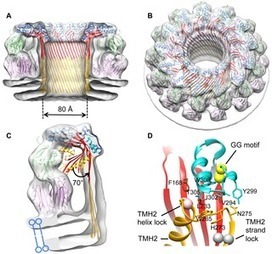
Conformational Changes during Pore Formation by the Perforin-Related Protein Pleurotolysin

Conformational Changes during Pore Formation by the Perforin-Related Protein Pleurotolysin | Immunology | Scoop.it
by Natalya Lukoyanova, Stephanie C. Kondos, Irene Farabella, Ruby H. P. Law, Cyril F. Reboul, Tom T. Caradoc-Davies, Bradley A. Spicer, Oded Kleifeld, Daouda A. K. Traore, Susan M. Ekkel, Ilia Voskoboinik, Joseph A.
Gilbert C FAURE's insight:

Membrane attack complex/perforin-like (MACPF) proteins comprise the largest superfamily of pore-forming proteins, playing crucial roles in immunity and pathogenesis

No comment yet.
Scooped by Gilbert C FAURE
February 2, 2015 1:02 PM
Scoop.it!

Frontiers | Complementing the Sugar Code: Role of GAGs and Sialic Acid in Complement Regulation | Molecular Innate Immunity

Sugar molecules play a vital role on both microbial and mammalian cells, where they are involved in cellular communication, govern microbial virulence and modulate host immunity and inflammatory re...
Gilbert C FAURE's insight:

The complement cascade, as part of a host’s innate immune system, is a potent weapon against invading bacteria but has to be tightly regulated to prevent inappropriate attack and damage to host tissues. A number of complement regulators, such as factor H and properdin, interact with sugar molecules, such as glycosaminoglycans (GAGs) and sialic acid, on host and pathogen membranes and direct the appropriate complement response by either promoting the binding of complement activators or inhibitors. The binding of these complement regulators to sugar molecules can vary from location to location, due to their different specificities and because distinct structural and functional subpopulations of sugars are found in different human organs, such as the brain, kidney, and eye. This review will cover recent studies that have provided important new insights into the role of GAGs and sialic acid in complement regulation and how sugar recognition may be compromised in disease.


for more information on complement system

http://www.scoop.it/t/immunology?q=complement


No comment yet.
Scooped by Gilbert C FAURE
January 15, 2015 2:07 PM
Scoop.it!

Emerging roles of complement in health and disease. : Complement: a key system for immune surveillance and homeostasis : Nature Immunology : Nature Publishing Group

Emerging roles of complement in health and disease. : Complement: a key system for immune surveillance and homeostasis : Nature Immunology : Nature Publishing Group | Immunology | Scoop.it
RT @AJPathology: Emerging roles of complement in health and disease http://t.co/sYyILccgdA via Nature Immunology (2010) 11:785–797 http://t…
Gilbert C FAURE's insight:

it was 2010... to compare to recent paper

No comment yet.
Scooped by Gilbert C FAURE
December 24, 2014 4:41 PM
Scoop.it!

The Long Pentraxin PTX3 as a Key Component of Humoral Innate Immuni... - PubMed - NCBI

Int Arch Allergy Immunol. 2014 Dec 20;165(3):165-178. [Epub ahead of print]
Gilbert C FAURE's insight:

Abstract

The innate immune system is composed of a cellular arm and a humoral arm. Components of the humoral arm include members of the complement cascade and soluble pattern recognition molecules (PRMs). These PRMs recognize pathogen-associated molecular patterns and are functional ancestors of antibodies, playing a role in complement activation, opsonization and agglutination. Pentraxins consist of a set of multimeric soluble proteins and represent the prototypic components of humoral innate immunity. The prototypic long pentraxin PTX3 is highly conserved in evolution and produced by somatic and innate immune cells after proinflammatory stimuli. PTX3 interacts with a set of self, nonself and modified self ligands and exerts essential roles in innate immunity, inflammation control and matrix deposition. In addition, translational studies suggest that PTX3 may be a useful biomarker of human pathologies complementary to C-reactive protein. In this study, we will review the general functions of pentraxins in innate immunity and inflammation, focusing our attention on the prototypic long pentraxin PTX3

No comment yet.
Scooped by Gilbert C FAURE
November 23, 2014 4:57 AM
Scoop.it!

Complement tapping into new sites and effector systems : Nature Reviews Immunology : Nature Publishing Group

Complement tapping into new sites and effector systems : Nature Reviews Immunology : Nature Publishing Group | Immunology | Scoop.it
RT @NatRevImmunol: Complement — tapping into new sites and effector systems http://t.co/3m0AE86nRC
Gilbert C FAURE's insight:

Complement is traditionally known to be a system of serum proteins that provide protection against pathogens through direct cell lysis and the mobilization of innate and adaptive immunity. However, recent work indicates that the complement system has additional physiological roles beyond those in host defence. In this Opinion article, they describe the new modes and locations of complement activation that enable it to interact with other cell effector systems, such as growth factor receptors, inflammasomes and metabolic pathways. They propose that the location of complement activation dictates its function.

No comment yet.
Scooped by Gilbert C FAURE
November 16, 2014 1:04 PM
Scoop.it!

C3d adjuvant effects are mediated through the activation of C3d-specific ... - Nature.com

C3d adjuvant effects are mediated through the activation of C3d-specific ...
Nature.com
In the present studies, we establish further correlations between HLA binding and HLA-specific lymphocyte reactions with select epitope clusters.
Gilbert C FAURE's insight:

Complement fragment C3d covalently attached to antigens enhances immune responses, particularly for antigens lacking T-cell epitopes. Enhancement has been attributed to receptor cross-linking between complement receptor CR2 (CD21) and polysaccharide antigen to surface IgM on naïve B cells. Paradoxically, C3d has still been shown to increase immune responses in CD21 knockout mice, suggesting that an auxiliary activation pathway exists. In prior studies, we demonstrated the CD21-independent C3d adjuvant effect might be due to T-cell recognition of C3d T-helper epitopes processed and presented by major histocompatibility complex class II on the B-cell surface. C3d peptide sequences containing concentrated clusters of putative human C3 T-cell epitopes were identified using the epitope-mapping algorithm, EpiMatrix.

No comment yet.
Scooped by Gilbert C FAURE
October 2, 2014 9:19 AM
Scoop.it!

Immune Defense against Bacterial Pathogens: Innate Immunity

Immune Defense against Bacterial Pathogens: Innate Immunity | Immunology | Scoop.it
Todar's Online Textbook of Bacteriology chapter on innate immunity to bacterial pathogens, including inflammation and phagocytosis.
Gilbert C FAURE's insight:

complement illustrates... inflammation and innate immunity

other recent informations on

 http://www.scoop.it/t/immunology?q=complement


No comment yet.
Scooped by Gilbert C FAURE
September 17, 2014 2:32 PM
Scoop.it!

Frontiers | The Role of the Lys628 (192) Residue of the Complement Protease, C1s, in Interacting with Peptide and Protein Substrates | Molecular Innate Immunity

The C1s protease of the classical complement pathway propagates the initial activation of this pathway of the system by cleaving and thereby activating the C4 and C2 complement components.

Gilbert C FAURE's insight:

... This facilitates the formation of the classical pathway C3 convertase (C4bC2a). C1s has a Lys residue located at position 628 (192 in chymotrypsin numbering) of the SP domain that has the potential to partially occlude the S2–S2′ positions of the active site. The 192 residue of serine proteases generally plays an important role in interactions with substrates.

No comment yet.
Scooped by Gilbert C FAURE
September 5, 2014 2:15 PM
Scoop.it!

C5a and Bradykinin Receptor Cross-Talk Regulates I... [J Immunol. 2014] - PubMed - NCBI

In summary, we describe a novel pathway by which C5aR/B2R cross-talk couples transendothelial leakage of plasma proteins to the cytokine circuitry that coordinates antiparasite immunity.

No comment yet.